


Iweiwa presents itself as a destination for workshop tools and home equipment. Its inexpensive power stations make the catalog especially tempting before an outage.
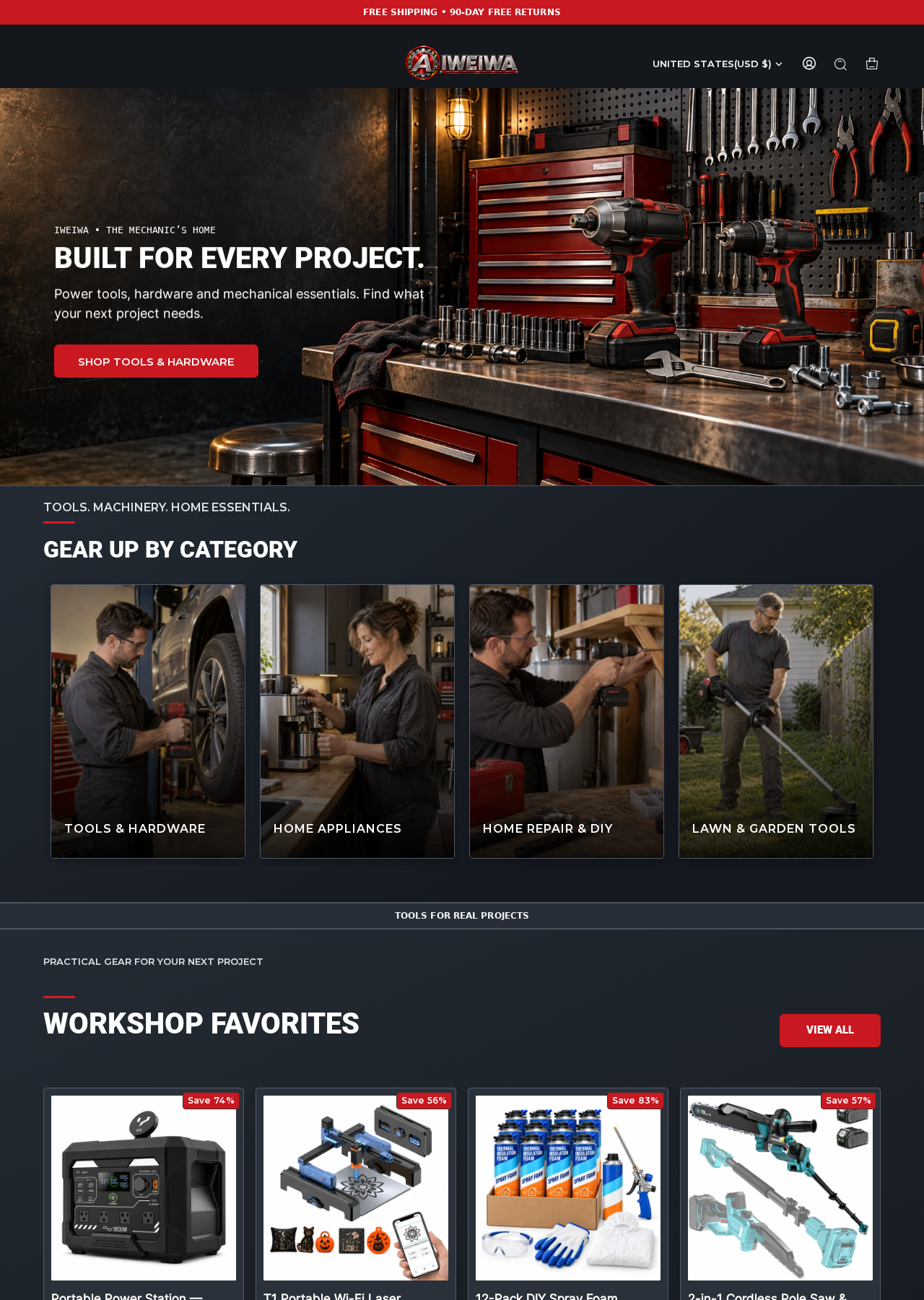
A large battery and solar panel for less than a typical accessory deserve more than a quick glance. The pictured equipment provides an important comparison.
Overview
What Iweiwa.com promises to supply
Iweiwa.com sells tools, garden equipment, appliances, and portable power products. Its power-station listing advertises 1,024Wh storage and 1,800W AC output for $49.97.
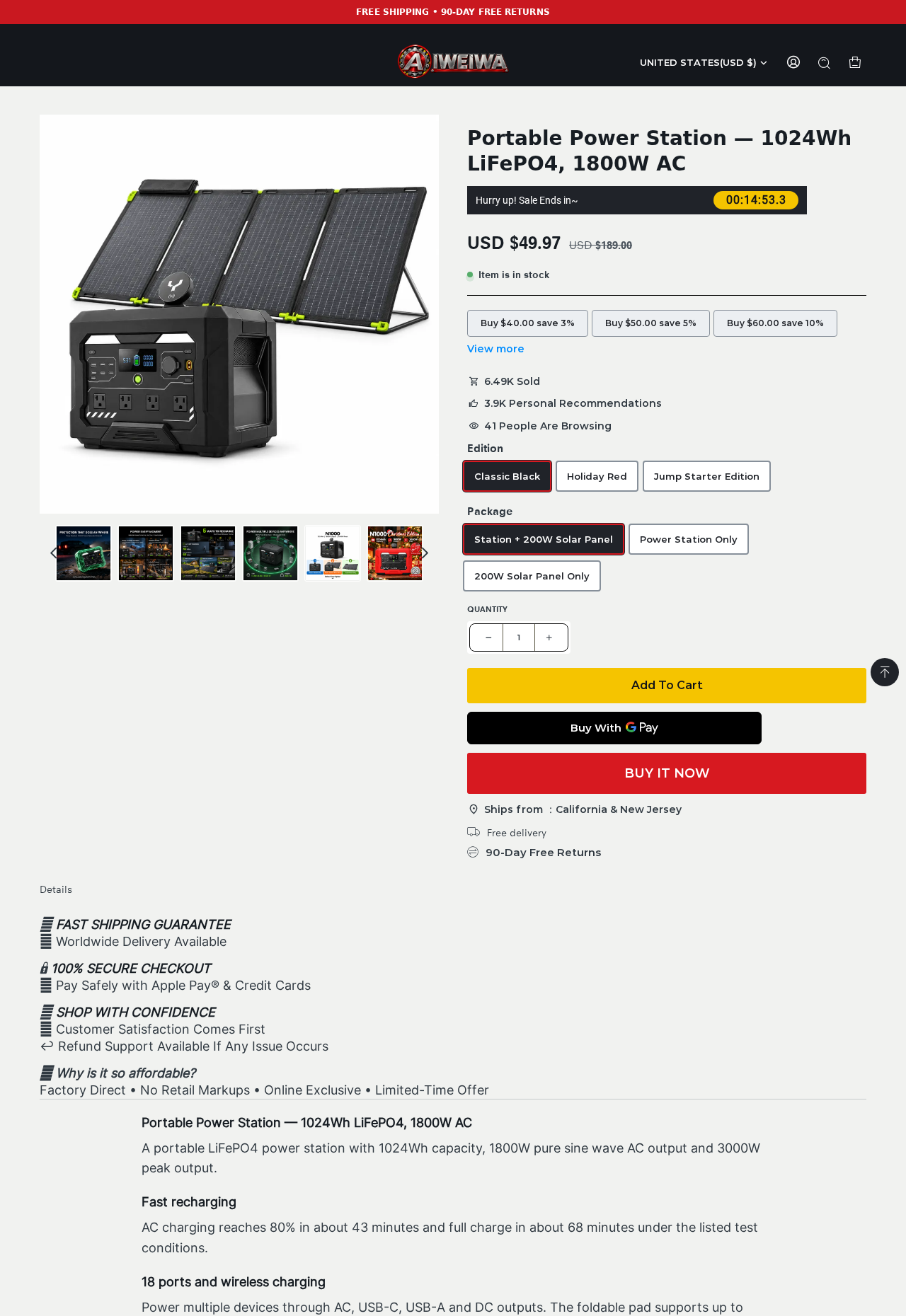
The initially selected package combines the station with a 200W solar panel. Other options separate the station, panel, and different editions.
What the product comparison reveals
The pictures and detailed specifications match the pictured GEYOTO N1000 design. GEYOTO’s own listing displays $399.99 for its basic station, without that selected panel bundle.
- Both listings combine 1,024Wh capacity with 1,800W output and a stated 3,000W peak rating.
- The distinctive charging claims include reaching 80% in 43 minutes and full charge in about 68 minutes.
- The designs include a folding wireless-charging pad, matching front controls, and several unusually specific shared features.
- Iweiwa does not identify a legal operating company or a physical business address in the inspected information pages.
Why the low price needs an explanation
The comparison identifies the pictured design, not a tested unit received from Iweiwa. It does not authenticate Iweiwa as a dealer or establish its inventory.
Do not order this power-station offer without independent seller and supply confirmation. The unexplained price gap is too large to dismiss as ordinary workshop savings.
A $49.97 Offer for a Station and Solar Panel
Iweiwa’s loaded product page shows $49.97 beside a crossed-out $189 price. The selected edition is black, and the selected package includes a 200W panel.
The product image also depicts the battery station alongside a folding panel. This is not merely a low headline price displayed above an obviously panel-only selection.
Separate buttons offer the station alone and the panel alone. Shoppers should preserve the selected combination because a different package would materially change the order.
The page additionally advertises free delivery, free 90-day returns, and dispatch from California and New Jersey. Those are seller promises, not independently inspected warehouse operations.
Its sales presentation includes a countdown, thousands of claimed sales, personal recommendations, and a live-browsing figure. None of those counters establishes that stock exists.
A reassuring layout cannot resolve the basic question: what business can supply the pictured battery and panel at this price, and under whose warranty?
Before considering any deal, separate its actual contents from the surrounding pictures. A spare cable, empty enclosure, panel, or small battery would not satisfy this selected package.
The order description must preserve capacity, output, package contents, and model identity. A receipt saying only portable power equipment leaves too much room for disagreement.
The Pictured Equipment Matches the GEYOTO N1000 Design
The strongest comparison is not simply that both products are black boxes. The front-panel arrangement, side housing, fold-up charging surface, and specific performance claims align.
The shared specification cluster includes LiFePO4 battery chemistry, 1,024Wh storage, 1,800W continuous output, and a stated 3,000W peak. Those figures describe a substantial battery system.
Iweiwa also repeats the unusual 43-minute charging claim, 68-minute full-charge claim, 25W wireless charging, Wi-Fi and Bluetooth connectivity, and more than 4,000 battery cycles.
GEYOTO identifies its corresponding model as N1000. Its detailed page separates the standard station, jumper-cable version, and packages containing one or two solar panels.
The manufacturer’s displayed price for the basic station is $399.99. That is roughly eight times Iweiwa’s $49.97 selected station-and-panel offer.
This comparison is deliberately not presented as two identical checkout totals. Iweiwa’s selected offer includes a panel, while the manufacturer’s displayed base product is the station.
That difference makes the cheap bundle more demanding to explain, rather than making the comparison disappear. An additional panel does not normally explain a much lower total.
Prices can change, and discounted resale is possible. The unanswered issue is whether Iweiwa can demonstrate authentic stock and authorized warranty support for the pictured equipment.
The match concerns advertised imagery and specifications, not the internals of an Iweiwa-delivered unit. No purchase, capacity measurement, teardown, or delivery test was performed.
Nor does the matching design prove that GEYOTO supplies or endorses this store. Product photographs can appear on a seller’s page without establishing a commercial relationship.
What These Battery Specifications Actually Mean
The distinction between watts and watt-hours is useful here. Watts describe power supplied at a moment; watt-hours describe how much energy the battery stores.
A claimed 1,800W output does not mean the station runs a 1,800W appliance all day. Duration depends on stored energy, conversion losses, and operating conditions.
Even an ideal 1,024Wh battery would supply a steady 1,000W load for only about one hour. Real usable AC runtime would be shorter.
A seller presenting the equipment as emergency backup should therefore provide a model-specific manual, safe operating limits, and a credible warranty route.
The panel’s 200W rating is another different measurement. It describes rated generating power under specified conditions, not an extra 200Wh permanently added to the battery.
Solar charging varies with sunlight, orientation, shade, weather, and electrical compatibility. A panel pictured behind a station does not establish a tested complete system.
These distinctions protect shoppers from buying the wrong category of product. They also explain why exact model identification matters more than a dramatic percentage discount.
GEYOTO’s page lists separate specifications, package options, support details, and member-warranty conditions. Those manufacturer statements still should not be silently transferred to an unrelated merchant’s order.
Consider the same battery with a modest 100W continuous load instead. Its advertised capacity gives an ideal upper calculation of 10.24 hours before accounting for losses.
That example is arithmetic, not a tested runtime. It shows why a legitimate specification is useful only when the delivered battery actually matches it.
An emergency purchase also needs appropriate electrical compatibility. Confirm the outlet voltage and appliance requirements rather than assuming every pictured socket fits every destination.
The Free-Return Promise Still Requires Approval
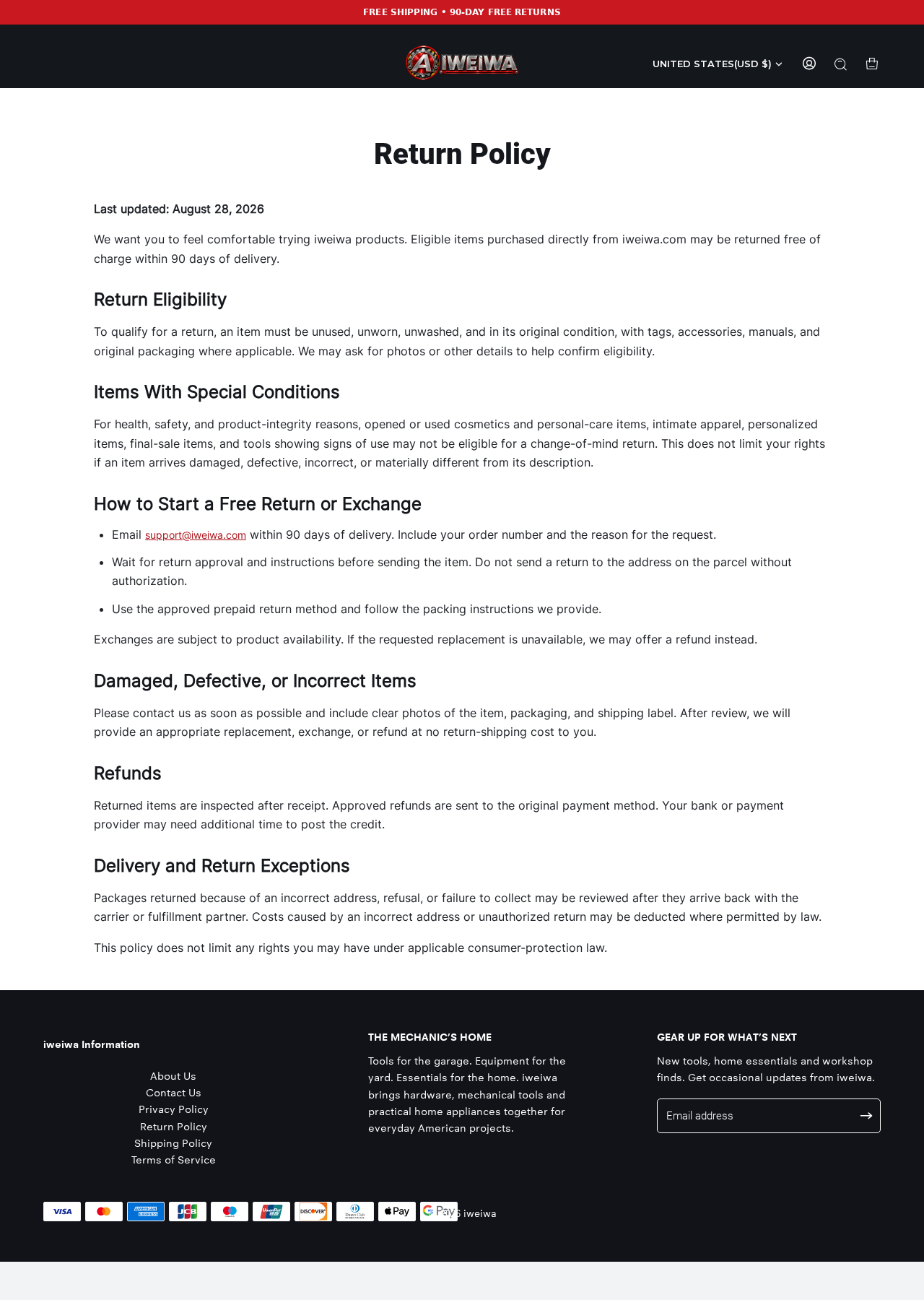
Iweiwa’s current policy promises free eligible returns within 90 days after delivery. It describes an approved prepaid method, rather than universally charging the customer return postage.
The policy nevertheless requires approval before shipping anything back. It specifically warns against returning goods to the parcel’s sender address without authorization.
Ordinary eligibility requires original condition and applicable packaging, manuals, accessories, and tags. Tools showing use may be excluded from change-of-mind returns.
Separately, the policy preserves remedies for goods that arrive damaged, defective, incorrect, or materially different from their description. It says qualifying defect returns carry no return-shipping charge.
For the power station, those categories matter. Receiving a different capacity or a panel without the ordered battery would concern the description, not simply buyer preference.
For a returned station and panel, ask whether the merchant expects separate packages. Obtain its approved carrier and packing instructions before dispatching either item.
Keep all accessories together until those instructions arrive. A generic address from the box does not explain how the merchant expects this bulky equipment returned.
A 90-day promise is useful only if the merchant supplies a working approval process and prepaid method. The policy itself cannot demonstrate successful refund performance.
No confirmed return destination or independently verified Iweiwa refund history was established here. That practical gap remains even though the written policy offers favorable terms.
Who Would Be Responsible for Your Iweiwa Order?
The storefront does not name its legal operator
The inspected About, contact, and terms pages describe Iweiwa as a retail business without naming an incorporated company responsible for purchases.
No physical business address or telephone contact appears in those inspected information pages. An email address is available, but it is not equivalent to identifying the merchant.
The warehouse statement is not a return address
The product page names California and New Jersey as dispatch locations. It does not provide enough detail to independently identify or inspect either warehouse.
A dispatch region also would not automatically be the destination for a return. Use only the actual address and prepaid method approved for your order.
The shipping policy allows partner fulfillment
Iweiwa’s shipping information describes factory-direct fulfillment partners and potentially separate parcels. Its general policy does not identify a single manufacturing country for every catalog item.
Split shipments are not automatically suspicious, especially when a bulky panel and battery travel separately. They become a problem if the full purchased package never arrives.
The warranty relationship needs independent confirmation
A matching manufacturer picture does not enroll an Iweiwa buyer in GEYOTO’s warranty. Ask the manufacturer through its independently located contact channel about this specific seller.
Request the exact model, serial-number arrangements, invoice requirements, and warranty provider. Do not accept a generic statement that the item carries a satisfaction guarantee instead.
GEYOTO’s own page describes a five-year warranty for members. That qualification belongs to its own offering and should not become an unconditional promise about Iweiwa.
A merchant return period and a manufacturer warranty serve different purposes. The first concerns returning an order; the second may concern later faults under specific conditions.
If the unidentified merchant disappears, a broad return badge offers little practical help. Independent warranty confirmation matters particularly when buying equipment intended for emergencies.
How the Price Presentation Can Distract From the Missing Details
Step 1: Familiar workshop imagery establishes the setting
The homepage uses a polished garage presentation and recognizable tool categories. That setting encourages visitors to read the store as a specialist supplier rather than a temporary offer.
However, a convincing workshop illustration says nothing about the merchant’s stock, engineering support, or ability to honor a battery warranty.
Step 2: The catalog makes large equipment look inexpensive
Power stations appear alongside low-priced garden machinery and tools. The repeated discount labels can make a dramatic battery bargain seem consistent with the rest of the store.
Compare products by exact model and included accessories, not by nearby crossed-out prices. Those prices do not provide an independent market benchmark.
Step 3: The selected package creates the purchase expectation
The station-and-panel selection is the important record. The quantity initially shown is one package, not evidence of an undisclosed recurring order or post-payment quantity change.
Inspect the final itemization and total without submitting payment. Stop if the merchant changes the package or cannot identify the battery being sold.
Step 4: Guarantees postpone the difficult questions
Free returns and secure-payment messages can make postponing verification feel harmless. They still leave the shopper depending on an unidentified seller to carry out the promise.
A checkout logo concerns a payment method. It does not independently certify the advertised capacity, dispatch location, or relationship with the pictured manufacturer.
What to Do If You Already Paid Iweiwa
The return policy directs requests to support@iweiwa.com. Use the address from your saved policy and retain the complete correspondence with the order number.
-
Save the complete selected package and order confirmation, including capacity, output, quantity, panel, currency, shipping promise, and the actual account charge.
-
Ask Iweiwa for the exact manufacturer, model, complete package contents, dispatch date, and warranty provider. Keep the answer together with your receipt.
-
Request cancellation immediately if you no longer want the order. Do not assume a cancellation email alone proves the merchant stopped processing it.
-
Track each parcel separately if the package is split. A delivery scan for one accessory does not confirm arrival of the entire battery-and-panel order.
-
Document the unopened parcel, labels, included items, and model markings on arrival. Describe any discrepancy precisely without guessing its internal battery capacity.
-
For an approved return, request the promised prepaid method. Keep authorization, tracking, and inspection correspondence instead of sending the equipment to an unconfirmed address.
-
Contact your payment provider promptly about unresolved non-delivery, misdescription, or billing problems. Explain the actual transaction and ask about its evidence requirements and deadlines.
The FTC’s online-shopping advice emphasizes matching products by manufacturer and model, retaining purchase records, and checking delivery and refund conditions.
Frequently Asked Questions
Is Iweiwa.com safe for buying the power station?
The $49.97 package has an unexplained gap from the matching manufacturer’s listed equipment. Combined with the unidentified operator, that makes it unsuitable to recommend.
Is the pictured device a GEYOTO N1000?
Its advertised design and distinctive specification cluster match that model. This identifies the pictured offer, not the authenticity or contents of a delivered Iweiwa unit.
Is $49.97 only the solar-panel price?
The captured initial selection shows the station together with a 200W panel. Save the selected package because the page also offers separate equipment options.
Does Iweiwa refuse all returns or require overseas postage?
The current written policy instead promises eligible free prepaid returns within 90 days. Actual performance and a confirmed return destination remain separate questions.
Does the countdown prove the sale is fake?
A running countdown alone does not prove that conclusion. The stronger documented concern is the equipment-and-price comparison alongside missing merchant accountability.
What should I do if only an accessory arrives?
Check whether another parcel has genuinely been dispatched, then document the incomplete package. Raise the missing equipment with the seller and payment provider promptly.
The Bottom Line
Do not buy Iweiwa’s power-station bundle on the strength of its discount and guarantees. The manufacturer comparison exposes a major price gap that the offer does not explain.
If you already paid, preserve the selected station-and-panel package and request concrete fulfillment details. Escalate an unresolved discrepancy or missed delivery through your payment provider.

Reviews & discussion
0 commentsShare a firsthand experience, or ask a question.
Community reviews
iweiwa.com
Moderated reader experiences, not an editorial verdict.
Start the conversation
Have a question or something useful to share? Add the first comment.