

JCPenney is one of the largest department store chains in the United States. However, JCPenney’s widespread name recognition has caught the attention of scam websites running elaborate fake JCPenney clearance sales primarily promoted on Facebook. This comprehensive guide will dive into how these fraudulent JCPenney clearance scams work, red flags to spot them, and vitally, what you must do if you fall victim.
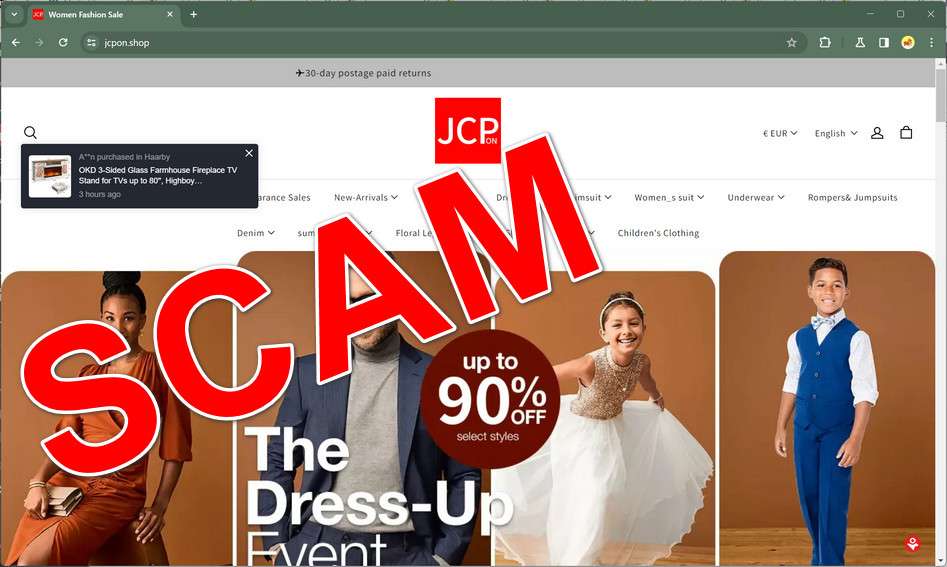
Overview of Fake JCPenney Clearance Sale Scams
In recent months, convincing imposter websites promoting massive JCPenney clearance events with discounts up to 90% off have proliferated on Facebook. They leverage JCPenney’s reputation and mimic official branding and promotions to fool deal-seeking shoppers into handing over payment and personal data.
However, these websites are complete shams with the sole purpose of stealing your money and information. Customers who place orders through these fraudulent JCPenney sales typically experience one of the following unfortunate outcomes:
- Nothing at all – The most likely result is your order and payment simply disappears with no products shipped.
- Inferior knockoffs – Some orders arrive with poor quality replica apparel, shoes or accessories made with inferior materials that clearly aren’t real JCPenney products.
- Used or defective goods – You may receive items that are visibly flawed, damaged or worn out, indicating no new products are being shipped.
- Completely wrong items – Orders sometimes contain products that are totally different than what was pictured on the scam website.
- Stolen personal and financial data – All customer payment details and personal information entered on the sites goes directly into the hands of scammers.
These elaborate fake JCPenney websites are run by interconnected international scam networks that also create fraudulent websites for many other retailers. They operate entire portfolios of retail scam sites designed to steal from victims worldwide.
How Fake JCPenney Clearance Sale Scams Work
The sophisticated criminals running these fake JCPenney clearance scams have developed an efficient process to rip off customers:
Step 1: Create a Fake JCPenney Website
The scammers first obtain and set up lookalike domain names containing the JCPenney name plus terms like “clearance”, “sale”, “shop”, etc. They make the sites appear legitimate by copying JCPenney’s logo, product images, and overall visual design.
Many scam sites also steal JCPenney’s “About Us” page, Terms of Service, Privacy Policy, and other legal information verbatim from JCPenney’s actual website to seem valid at first glance. However, close inspection reveals grammar errors, typos, and duplicated passages a real brand would avoid.
Step 2: Promote Using Facebook Ads and Imposter Influencers
Once the fake sites are ready, the scammers launch campaigns using Facebook ads and fake influencer accounts directing users to their scam portal. The ads tout absurd discounts like “90% off everything” to attract bargain hunters.
Often the influencers pretend someone ordered a haul of products from the “clearance sale” to seem more realistic. But users who call them out for being complicit in the scam get blocked or deleted.
Step 3: Lure In Victims with Unbelievably Low Prices
The scam websites prominently tout outlandish discounts up to 90% off retail prices on all products that are far too good to be true. For example, a $60 dress discounted to just $6 or a $100 appliance lowered to only $10.
These unrealistic prices are intended to get shoppers to drop their guard and jump on what they assume is an amazing clearance deal. In reality, the scammers never intend to ship out any real products.
Step 4: Collect Credit Card Details and Personal Info During Checkout
During checkout on the scam websites, customers are prompted to enter their name, home address, phone number, email address and other personal details the fraudsters can use for identity theft purposes.
The sites also collect your credit card number, expiry, CVV code and other payment information. All this sensitive data goes straight into the hands of scammers rather than legitimate orders.
Step 5: Cut Off All Communication After Orders Are Placed
Once payments go through, shocked customers find they have absolutely no way to contact the sham company besides an email address that is either fake or simply ignored.
The influencer accounts promoting the clearance sales also immediately block anyone calling them out for being complicit. The fraudulent websites soon vanish or get taken down quickly once identified as scams.
Step 6: Repeat the Scam Using New Domain Names and Websites
The scammers then repeat the process with new domain names and website designs. They continue promoting too-good-to-be-true JCPenney clearance sales, targeting users who missed previous versions of the scam and believe the deals are real.
This cycle continues, duping wave after wave of eager deal seekers who get tricked by the seemingly amazing discounts and authentic looking websites. The longer the scams operate undetected, the more victims are defrauded and exposed.
8 Red Flags to Identify Fraudulent JCPenney Clearance Websites
While the scam JCPenney sites may seem legitimate at first glance, several key characteristics expose their fraudulent nature:
- Unrealistically high discounts over 80% off – Genuine JCPenney sales rarely exceed 25-30% off. Sites offering more like 90% are too good to be true.
- Recently registered domain names – Scam sites use new domains often registered just weeks before launching campaigns. A WhoIs lookup reveals their fresh creation dates.
- No customer service contact information – No working phone number, address, live chat or support email are provided on scam sites.
- No social media presence – Fraudulent sites won’t have actively used business Facebook, Instagram or Twitter profiles with real engagement.
- Legal pages are copied – About Us, Terms of Service, etc. text is stolen from JCPenney’s real website to seem valid.
- Spelling and grammar errors – Scam sites have obvious mistakes no professional brand’s real website would contain.
- No reviews – There are absolutely no product or website reviews anywhere for the scam portal or items it claims to sell.
- Credit card payments only – Scam sites avoid payment methods with buyer protections like PayPal that could lead to refunds.
If a supposed JCPenney clearance website shows any combination of these red flags, it can be safely assumed the website is a total scam and should be avoided.
What to Do If You Are Victimized by a Fake JCPenney Clearance Sale
If you placed an order through one of the many scam websites disguised as an authorized JCPenney clearance event, urgent actions are required:
Step 1: Report fraudulent charges to your credit card provider immediately
If you paid by credit card, contact your card issuer ASAP to report the charges as fraudulent. Provide all details about the deceptive website, items you ordered, discounts offered, and reasons showing it was a scam.
The credit card company should open an investigation and issue a chargeback since the retailer is fabricated. This stops your money from fully reaching the criminals.
Step 2: Place fraud alerts and security freezes on your credit reports
Since these scams steal personal information during checkout like your name, address and birth date, your identity is at high risk of theft. Place an initial 90 day fraud alert on your Equifax, Experian and TransUnion credit reports as a critical safeguard.
For even stronger protection, you can freeze access to your credit reports which blocks access until you unfreeze. This requires contacting each credit bureau individually.
Step 3: Reset all account passwords that may be compromised
If you use similar login credentials across online accounts, the scammers may attempt to access your other accounts like email, banking and social media. Reset all passwords immediately as a security precaution. Turn on two-factor authentication as well wherever possible.
Step 4: Watch out for phishing attempts via email or text
Scammers will sometimes send phishing emails or text messages containing malicious links or attachments to victims whose information they’ve obtained. For example, fake shipping notifications that install malware. If you receive any suspicious correspondence, do not click on anything and report the phishing attempt.
Step 5: Expose and report the fraudulent website
To limit the scam’s spread, comprehensively report the fake JCPenney clearance website, domain registrar, web hosting provider, and any social media platforms used for advertising. Provide as many details and records as possible to get the scam portal shut down quickly before more are duped.
Step 6: Share scam warnings on social media
Post about your experience with the fraudulent JCPenney clearance sale website on your social media accounts and consumer warning sites to bring awareness to the scam. Make sure to identify the specific website URL, store names, influencers, and coupon codes used by the scam.
Step 7: Seek help recovering losses from legal and credit experts
For extensive damages like significant financial fraud or identity theft stemming from the scam, you may need to take legal action or enlist credit repair assistance. Consult professionals regarding your options for both recovering stolen funds and restoring any credit damage.
Taking urgent and thorough actions after falling victim to fake JCPenney clearance sales can significantly limit the damage and prevent further misuse of your compromised information. Remaining vigilant by spotting red flags and vetting deals is key to avoid being scammed in the first place.
Here is a section on how to spot fake JCPenney clearance sale scam ads on Facebook:
How to Spot Fake JCPenney Clearance Sales on Facebook
The scam ads promoting fraudulent JCPenney clearance sale websites are often found on Facebook. Here are some tips to identify the sham Facebook ads and avoid these scams:
- Be skeptical of sponsored posts touting clearance sales with discounts over 70% off. Legitimate JCPenney sales rarely exceed 30-40% off.
- Watch for ads using urgent messaging like “final hours” or “going out of business” to pressure you into clicking.
- Verify the destination website domain is jcpenney.com in the ad content before clicking any links. Scam sites use lookalike domains.
- Inspect user accounts running the ads. Scammers often use fake profiles with stock images. Legitimate ads come from the official JCPenney Facebook page.
- Check the comment sections on scam ads. You’ll often see users exposing the fraud and warning others it is fake.
- Reverse image search any product photos used. Scammers steal product images from other sites which will show up in a reverse image search.
- Ask yourself – are these prices believably low even for a JCPenney clearance event? If it seems too good to be true, it is.
Staying vigilant for these signs of fraudulent Facebook ads can help you identify and avoid JCPenney clearance sale scam websites aiming to steal your money and information. Don’t take the bait of unrealistic discounts.
Conclusion
Fraudulent JCPenney clearance websites that advertise unbelievable discounts up to 90% off are an increasingly common scam designed to steal payment card and personal data from eager customers. However, looking out for red flags like prices that are too good to be true, no contact info, stolen content, and other signs can help you steer clear of these fake deals entirely.
If you did place an order and are now at risk from an elaborate JCPenney clearance scam, take quick precautions like contacting your card provider, freezing credit reports, changing compromised passwords, and reporting the fake websites. Stay informed about the latest retail scams targeting major department stores to keep your data safe. Your caution is the best defense against phony deals that seem too amazing to be true.
Frequently Asked Questions
Q: How can I confirm a JCPenney clearance sale website is legitimate?
A: Verify the domain is jcpenney.com, check for real customer service contacts, social media presence, and reviews. Scam sites have telltale signs like no contact info, new domains, and unrealistic prices.
Q: Are the products sold on these sites real JCPenney inventory?
A: No. These scam websites sell no authentic JCPenney products. You’ll either get counterfeits, used goods, completely wrong items, or nothing after checkout.
Q: Is it safe to enter my payment details on these JCPenney clearance sites?
A: Absolutely not. Your credit card and personal data goes right into the hands of scammers to use fraudulently. Never provide sensitive information on unverified third-party retailers.
Q: What should I do if I already ordered from a fake JCPenney clearance site?
A: Immediately contact your credit card company to dispute the charges as fraudulent so they can hopefully reverse the payment. Also place freezes on your credit reports to protect your identity.
Q: How can I recover my money lost to a fraudulent JCPenney clearance scam?
A: Your best chance for a refund is reporting unauthorized charges to your credit card provider to initiate a chargeback. Recovering direct from scammers is very rare.
Q: Where does JCPenney advertise its real clearance sales?
A: JCPenney only advertises sales on its legitimate website jcpenney.com. Any other sites promoting JCPenney discounts or clearance events will almost certainly be scams. Double check you are on JCPenney’s actual site.
Q: What steps can I take to avoid these clearance sale scams moving forward?
A: Carefully vet sites for red flags before providing payment info, only shop on official brand domains, and don’t believe unrealistic discounts. Stay vigilant and protect yourself as an informed consumer.
Q: Where can I report fake JCPenney websites to help warn others?
A: You can report scam sites to the FTC, cybercrime authorities, social media platforms, domain registrars, and consumer warning forums to bring awareness about the fraud.

Join the discussion
0 commentsShare your experience or ask a question about this article.
Discussion
Start the conversation
Have a question or something useful to share? Add the first comment.