

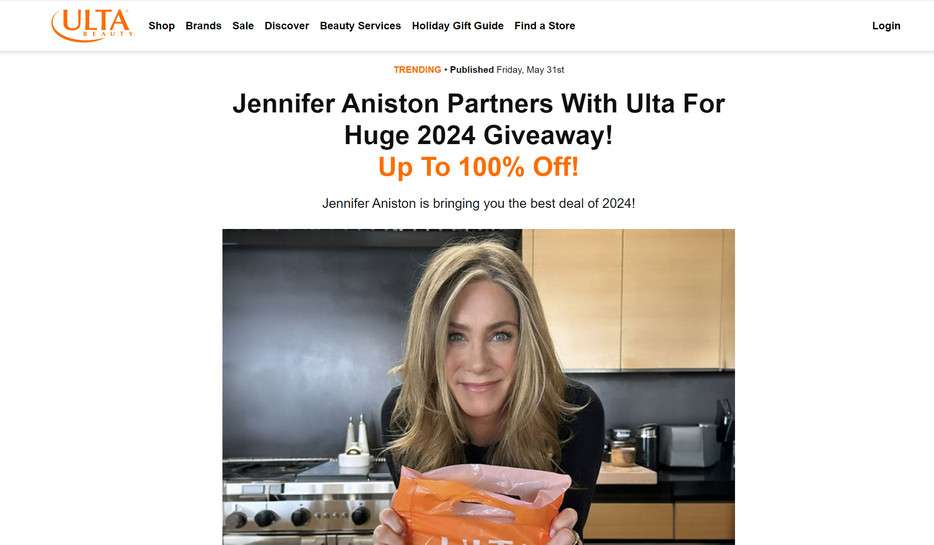
Recently, an ad featuring Jennifer Aniston has been circulating on social media, claiming that the actress has partnered with Ulta Beauty to promote a new anti-aging serum called Derm La Fleur. The ad shows Jennifer holding an Ulta bag and claims that if you click through, you can get the serum for free or heavily discounted. Unfortunately, this is a scam designed to trick people into signing up for unwanted subscriptions or providing their credit card information.
In this article, we will provide an in-depth look at how this scam works, what to watch out for, and most importantly, how to protect yourself.
Overview of the Scam
The Jennifer Aniston Ulta scam is a fraudulent advertising campaign designed to mislead social media users into signing up for expensive subscriptions or providing sensitive personal information under false pretenses. This deceptive scam has been circulating widely on platforms like Facebook and Instagram.
The core premise involves the use of popular celebrity Jennifer Aniston to promote a fake anti-aging skincare product called “Derm La Fleur.” The scam ads show images of the actress along with sensational claims that she is providing huge giveaways or special deals on this product in partnership with beauty retailer Ulta.
In reality, there is no association whatsoever between Jennifer Aniston and this scam. The ads are completely fabricated with the sole intent of driving traffic to external websites controlled by scammers. These external sites utilize tricky designs and psychological tactics meant to convince victims the offers are authentic in order to secure credit card or personal data.
Once lured in by the ads’ deceitful claims, users are funneled through a deliberately confusing sequence of web pages. These pages reinforce the false narrative using strategic product imagery, fake celebrity endorsements, fraudulent “free trial” offers, and other manipulative techniques.
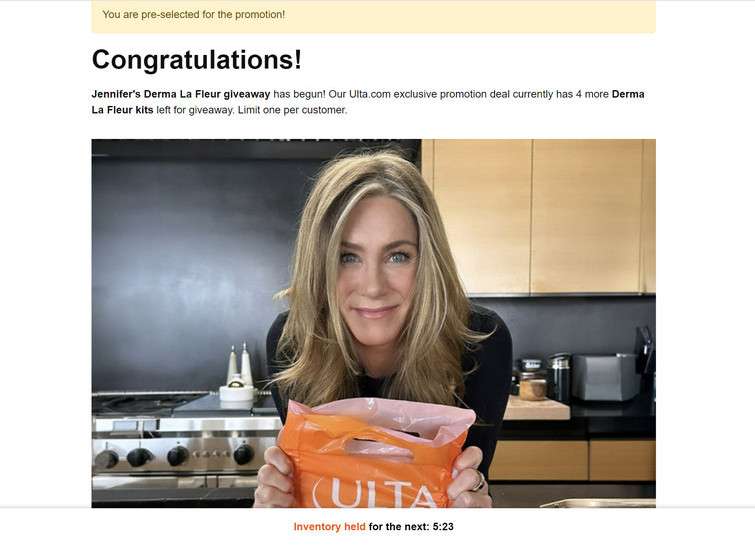
Ultimately users are prompted to input sensitive financial information under the guise of paying minor shipping and handling fees. However, in the fine print of lengthy terms and conditions documents are hidden clauses about enrolling in expensive recurring subscription plans.
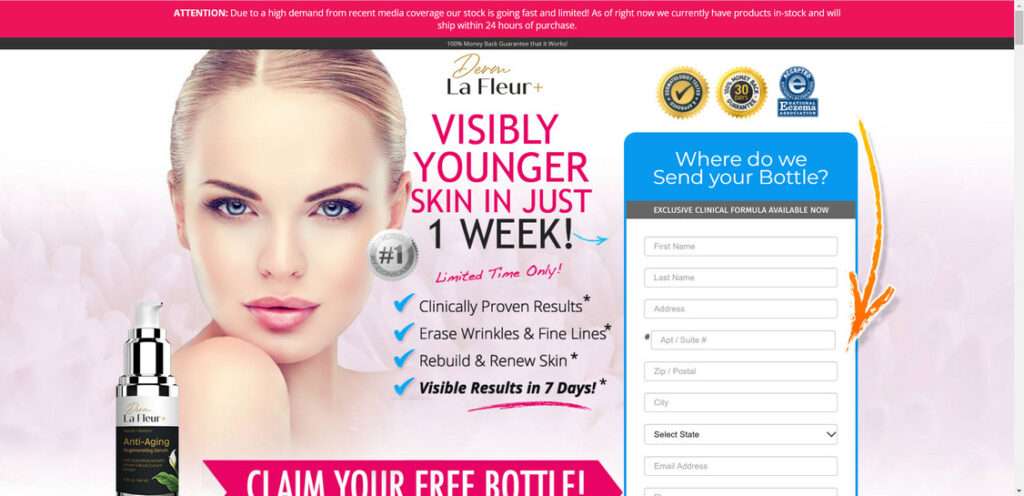
These monthly subscriptions can include physical products that are never shipped, or “memberships” to dubious services or clubs. The victims’ credit cards are billed repeatedly without consent, resulting in frequent fraudulent charges.
Some variations of the scam forgo the free trial route and instead direct users to ecommerce sites selling the fictitious anti-aging serum at deeply discounted prices. These sites obtain victims’ financial data by encouraging bulk purchases to “stock up” on the limited-time deals.
Once credit card information is obtained, it is used to bill victims repeatedly through recurring subscription plans or sold in bulk to other cybercriminals. Cancelling these unauthorized renewals is made virtually impossible through shady business practices.
The Federal Trade Commission has warned that scams utilizing fake celebrity endorsements and free trials are on the rise, costing victims millions annually. The products being peddled through these scams are never legitimately associated with the celebrities shown.
Key traits of the Jenifer Aniston Ulta scam include:
- Baiting victims with images of a major celebrity (Jennifer Aniston) holding beauty retailer bags (Ulta)
- Using sensational headlines about exclusive deals or free gifts
- Directing users to external sites disguised as official brand pages
- Funneling through misleading sequences of web pages
- Offering free trials tied to recurring monthly billing
- Charging credit cards repeatedly without authorization
- Preventing victims from cancelling unwanted subscription plans
- Obtaining users’ personal and financial data under false pretenses
- Using credit card info to bill victims continually or sell data in bulk
This scam ultimately seeks to commit credit card fraud through deceptive online marketing techniques and psychological manipulation. Caution is required, as scammers are constantly evolving their tactics to exploit new victims.
This scam has been also investigated by Jordan Liles on his YouTube channel, where he offers a detailed video on the subject. We recommend watching his content for a comprehensive understanding of the scam.
Next, let’s break down exactly how scammers carry out this scam from start to finish.
How the Scam Works
Here is a step-by-step look at how the Jennifer Aniston Ulta scam operates:
1. Seeing the Fake Ad
The scam starts with a sponsored ad on social media, typically Facebook or Instagram. The ad features an image of Jennifer Aniston holding an Ulta bag and claims she has partnered with the beauty retailer for a special promotion.
Headlines like “Jennifer Aniston Partners with Ulta for Huge 2024 Giveaway!” are used to grab attention. The ad claims that by clicking through, users can get free or heavily discounted anti-aging products.
2. Falling for the Clickbait
When users click on the ad, they are taken to a website made to look like Ulta’s official site. However, the URL will clearly show it is not affiliated with Ulta.com.
The site uses Ulta’s branding and images of the beauty retailer’s storefront to appear legitimate. Headlines reinforce the false claim that users can get free products thanks to Jennifer Aniston.
3. Taking the “Eligibility Quiz”
To keep users engaged, the sites use various tricks to make them believe they are moments away from getting free products. One method is an “eligibility quiz” consisting of ridiculous questions not relevant to receiving beauty products.
For example:
- Do you have a valid US address to ship to?
- Have you participated in an Ulta promotion in the last 90 days?
- Do you agree to pay $6.97 for shipping?
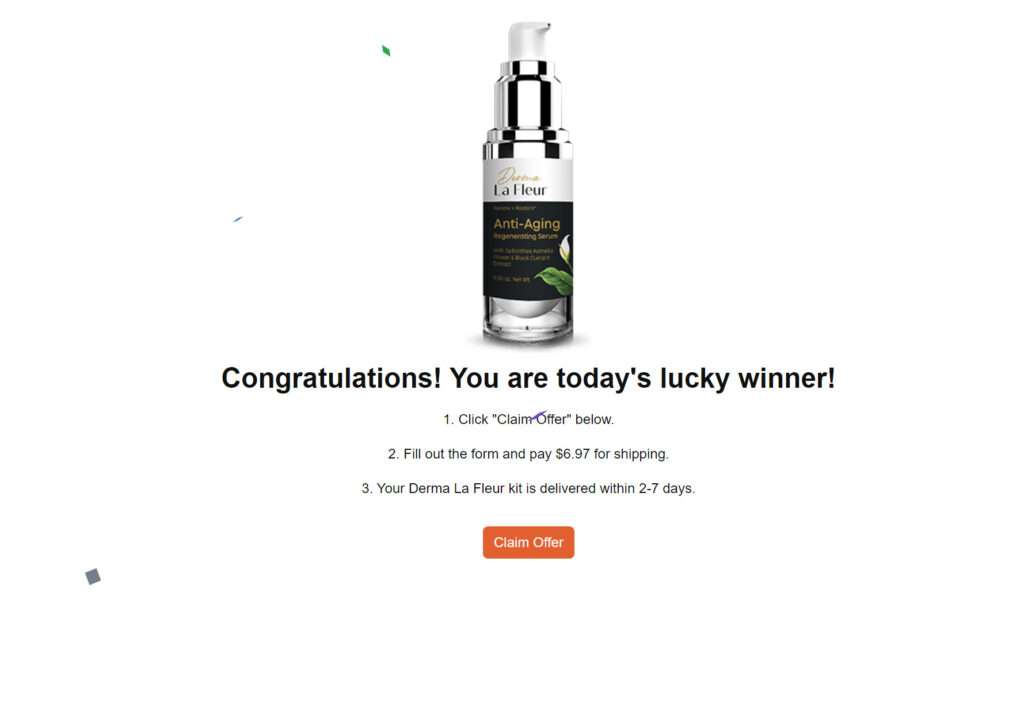
Regardless of responses, users are told they “passed” the quiz and are eligible for the promotion. Images of Ulta products are shown as if they are the gifts users are about to receive.
4. Paying for “Shipping”
After passing the meaningless eligibility quiz, users are prompted to enter their payment information to cover a small $6.97 “shipping fee.”
It is made to seem like this is the only cost and users will receive their free anti-aging products after paying this nominal fee. In reality, this small charge is pretext to get users’ credit card details.
5. Getting Signed Up for Recurring Charges
While users expect their free gifts to arrive shortly after paying the shipping fee, the real purpose is to enroll them in expensive monthly subscriptions without consent. The fine print users ignored to get their “free gifts” contains terms about automatically billing their credit card monthly.
These recurring charges are for unneeded and unwanted products or services, such as sketchy dietary supplements, ebooks, or club memberships. The small $6.97 charge was pre-authorization to approve further billing.
6. Cancelling Unwanted Charges
Once the unauthorized charges show up, cancelling them is extremely difficult. The companies behind them make it nearly impossible to stop payments. They ignore calls and emails, while continuming to charge monthly fees.
Getting issued refunds for these bogus charges involves filing disputes with banks. Credit card companies will investigate the unauthorized billing and illegal practices. Still, victims typically have to get new cards to fully stop recurring charges.
What to Do If You Are a Victim
If you fell for the Jennifer Aniston Ulta scam and provided your credit card information, here are the steps to take:
Review Your Credit Card Statements
Closely review your statements for any unusual, unauthorized, or recurring charges from unfamiliar companies. Watch for small charges from shortly after you entered your information, as these pre-authorizations turned into expensive monthly billings.
Call Your Credit Card Company
Contact your credit card company or bank immediately to report the fraudulent charges. Inform them you did not approve any monthly subscriptions or recurring payments. Ask to dispute all associated charges and block any future billings.
Change Your Credit Card
To fully stop payments to the scammers, the best option is to get a new credit card number issued by your bank. Even if charges are reversed, the scammers have your info and can try billing again in the future. A new card prevents this.
Beware Other Scams
Realize that falling for this scam means your personal info is likely circulating among other scammers. Be vigilant about other calls, emails, or texts asking for any sensitive info, as they are likely also scams.
Report the Scam
You can report the scam to the Federal Trade Commission (FTC) to help warn others and potentially build a case against the companies. You can also report it to Facebook or Instagram if that is where you saw the ad.
Frequently Asked Questions About the Jennifer Aniston Ulta Scam
1. What is the Jennifer Aniston Ulta scam?
The Jennifer Aniston Ulta scam is a fraudulent online campaign that uses fake ads and websites to trick users into signing up for recurring subscription charges or providing their personal information. The scam ads falsely claim Jennifer Aniston has partnered with Ulta Beauty to promote an anti-aging skincare product called Derm La Fleur.
2. How does the Jennifer Aniston Ulta scam work?
The scam starts with sponsored ads on social media featuring Jennifer Aniston with an Ulta bag, advertising a giveaway or major discount on Derm La Fleur. People who click on the ads are taken to fake websites made to look like Ulta.com. Through various deceptive techniques, users are prompted to take a meaningless “eligibility quiz” before paying a small shipping fee to receive their “free” product. In reality, this enrolls them in expensive monthly subscriptions they didn’t approve.
3. What techniques does this scam use?
This scam utilizes fake celebrity endorsements, false claims of free trials or gifts, fake ecommerce websites, and fine print subscription traps to obtain users’ financial information without consent. Sensational headlines, pressure tactics, and, urgency are used to convince victims the offers are legitimate.
4. Are the products and offers real?
No. There are no actual free gifts, trials, or discounts. The only real purpose is to fraudulently collect credit card information through recurring monthly billing.
5. What happens after users enter payment information?
Entering payment information authorizes initial small charges by the scammers. But in reality, it enrolls users in ongoing monthly subscriptions for unneeded and unwanted products or services that are nearly impossible to cancel. Legitimate refunds or free gifts are never sent.
6. What are signs this is a scam?
Warning signs include celebrity endorsements in ads, offers for free trials or gifts, acting urgently to qualify, eligibility quizzes, requiring credit card info for minor fees, fine print contradicting headline claims, or being unable to easily cancel billings.
7. Can this scam really use Jennifer Aniston’s name and image?
No. These scams falsify celebrity endorsement claims without permission. No celebrities have authorized or endorsed these products or offers. All images are taken out of context and used deceptively.
8. What should I do if I provided my information?
If you entered payment information, contact your credit card company immediately to report fraudulent charges, cancel your card, and dispute charges. Monitor statements closely for recurring fees and be wary of any further contact requesting info. Report the scam to the FTC.
9. How can I protect myself from similar scams?
Avoid limited-time offers requiring credit card info from unfamiliar sites. Read all terms carefully before purchasing. Be skeptical of celebrity endorsements used as bait. Only enter payment info on secure, official brand websites you trust.
The Bottom Line
The Jennifer Aniston Ulta scam preys on unsuspecting consumers with promises of free or discounted beauty products. In reality, it exists solely to commit credit card fraud through unauthorized monthly subscriptions.
Protect yourself by being wary of too-good-to-be-true offers online. Seek out beauty products from real trusted retailers directly. If you do fall victim, act fast to stop payments and report the scam. Remember, nothing is really free, so avoid giving your information to suspicious sites claiming to offer amazing freebies or discounts.

Join the discussion
0 commentsShare your experience or ask a question about this article.
Discussion
Start the conversation
Have a question or something useful to share? Add the first comment.