


Kieveo Discount Store sold home and car gadgets through kieveo.com in 2025, under a banner that called it the AMZ Global Discount Store. The website has since closed.
Many people also search for a Finveo review alongside Kieveo. Finveo is a separate online trading broker, and nothing connects it to this store beyond a similar-sounding name.
Overview
A gadget store with an Amazon-style pitch
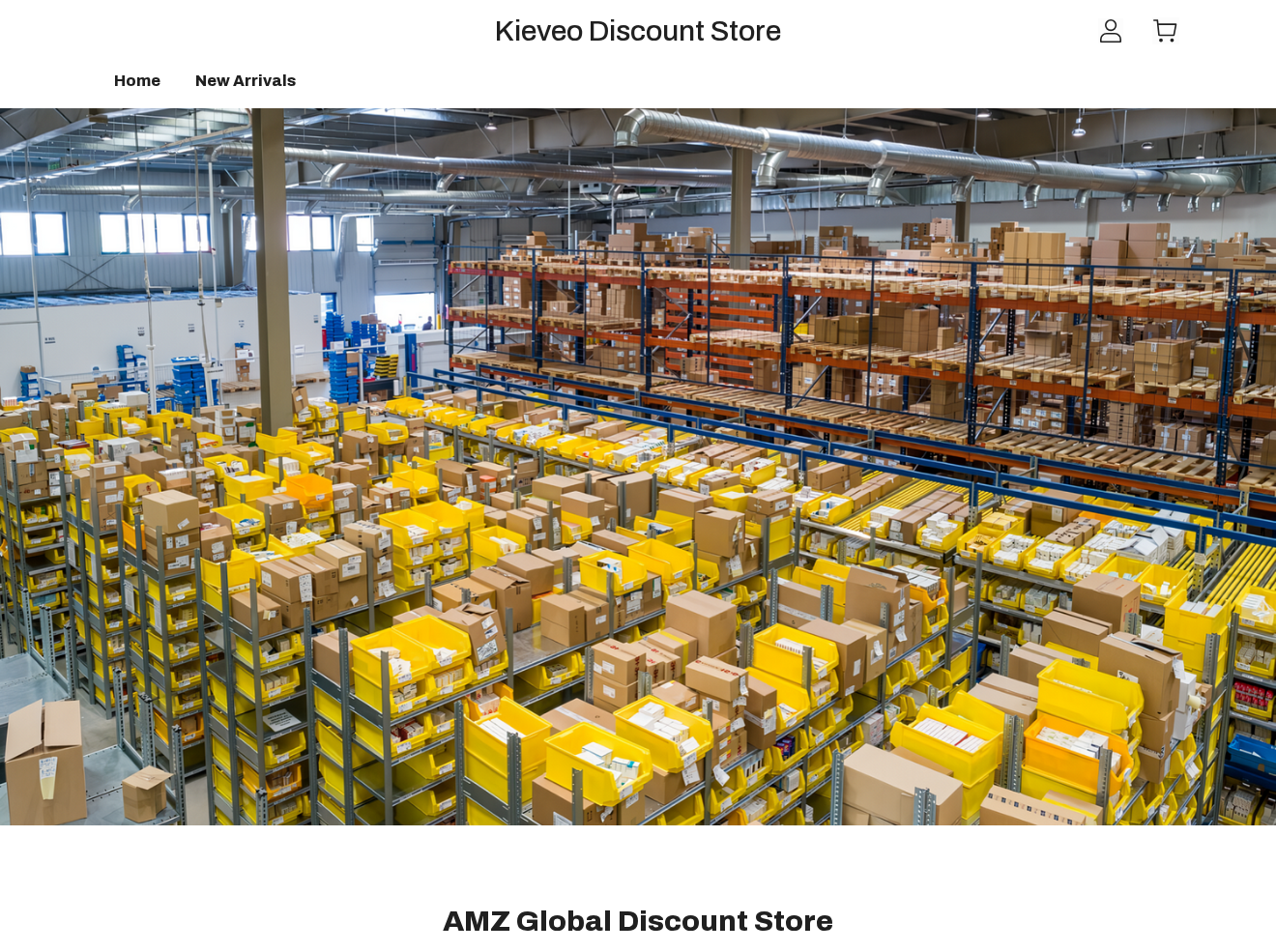
Kieveo ran on Shoplazza, a hosted store builder. Its homepage showed a warehouse photo and the heading AMZ Global Discount Store, promising low prices on home goods and electronics.
Products ranged from a handheld car vacuum to a curling iron, a kids’ piggy bank and a tumbling tower party game, mostly priced between $9 and $29.
Where Kieveo stands now
The kieveo.com domain is no longer registered, and Trustpilot notes that the company’s website has closed. The store left no customer reviews behind.
Kieveo and Finveo are different things
Finveo is a broker for trading contracts for difference, known as CFDs, at finveo.com. It doesn’t sell gadgets and has no visible link to Kieveo.
Someone searching for a Finveo review is weighing a trading account, which carries very different risks from a cheap gadget order.
- Don’t order from any store that reuses Kieveo’s AMZ Global Discount Store pitch under a new name.
- If you ordered from Kieveo, start with your card issuer or PayPal, because the store’s site is gone.
- Treat Finveo as its own question, and check any broker’s licence on the regulator’s register before depositing money.
- Keep any emails from service@assurward.com, the store’s support address.
Is Kieveo Legit?
Little suggests Kieveo was a store a buyer could rely on. It named no company, gave no address or phone number and used a support email on another domain.
Its marketing leaned on pressure. Products carried labels like Last Day Promotion and Early Christmas Sale in early September, alongside crossed-out prices about twice the sale price.
The AMZ Global Discount Store heading echoes Amazon’s name, but the store had no connection to Amazon that it disclosed anywhere. It showed no Amazon storefront, seller ID or partnership.
The store has closed, so new buyers can’t order. For past buyers, the missing seller name is the main problem, because no named business can be held to a refund.
Taken together, Kieveo is a store to avoid if it reappears. It sold low-cost gadgets with invented urgency and gave buyers no way to verify who was behind it.
What Kieveo Sold and Charged
In September 2025, a handheld car vacuum cleaner sold for $28.98 against a crossed-out $47.96, under a Last Day Promotion label promising 50% off.
A mini dual-purpose curling iron cost $24.98 instead of $48.90, and a wooden piggy bank for children $11.99 instead of $23.51.
A smart car phone holder with wireless charging was tagged Early Christmas Sale 49% Off, at $26.88 against $53.50, more than three months before Christmas.
Other listings included weather stripping for doors at $8.99, a sink splash guard from $9.99 and a tumbling tower game of icebreaker questions at $19.98 instead of $66.60.
Several titles promised Buy 2 Get Free Shipping or Buy 2 Get 1, which nudged shoppers toward larger orders.
None of the crossed-out prices named a source, such as an earlier selling price or a manufacturer’s list price, so the advertised savings couldn’t be verified.
In May 2025, a Special Offer pop-up listed six coupon tiers, from 5% off orders over $50 to 72% off orders over $300, applied automatically at checkout.
Taken at face value, the top tier would cut a $300 basket to $84. A bar at the bottom of the page showed how much more to spend.
The free shipping threshold also moved. It stood at $69 in May 2025 and $55 by September, with free shipping advertised worldwide.
Finveo Review: A Trading Broker, Not a Store
Finveo describes itself as a globally trusted broker for professional traders. Its site offers CFDs on currencies, stock indices, commodities and shares, plus trading platforms and education.
The finveo.com domain dates from 2018. Its Montenegrin company, FINVEO JSC Podgorica, was incorporated in August 2020, according to the corporate details on its site.
Finveo says that company is regulated by the Capital Market Authority of Montenegro under licences 03/2-2/11-20, issued in July 2020, and 03/2-2/13-21, issued in May 2021.
It also lists FINVEO MA Ltd, incorporated in Mauritius in January 2023 with an office in Trianon, under Financial Services Commission licence GB22200832.
Both companies are described as part of the Inveo Holding group, which also includes Marbaş Securities, a broker regulated in Türkiye by the Capital Markets Board.
Finveo advertises more than 60 CFDs, fixed spreads, leverage of up to 1:500 and trading on Match-Trader and MetaTrader 5.
It also promotes a Discord community for traders and a dedicated account manager.
Leverage of 1:500 is far above the 1:30 cap that European and UK rules set for retail traders on major currency pairs, so losses can grow quickly.
At 1:500, a $100 margin controls a $50,000 position. A price move of only 0.2% against that position is enough to wipe out the whole $100.
Trade press reported in 2023 that Finveo gave up its UK licence from the Financial Conduct Authority and no longer serves the UK market. Trustpilot has no profile for finveo.com.
Finveo’s site also says it doesn’t offer services where they would be prohibited or restricted, so availability depends on where you live.
None of that connects Finveo to Kieveo. They share part of a name, nothing more, and no shared address, email, payment route or ownership appears anywhere.
If you’re weighing Finveo itself, check its licences directly on the Montenegrin and Mauritian regulators’ registers. CFDs are leveraged products, and most retail traders who use them lose money.
How to Check a Broker Like Finveo Before Depositing
Real brokers are often copied by clone sites that use their name, so the checks below matter even when the brand itself is licensed.
- Look up the licence number on the regulator’s own website, not through a link the broker sends.
- Confirm which legal entity you would sign with, since one brand can run companies in several countries.
- Check that the entity is allowed to serve clients where you live.
- Only use the website address shown on the regulator’s register, and type it yourself.
- Be wary of account managers who push larger deposits, crypto transfers or remote access to your device.
- If someone using Finveo’s name contacts you out of the blue, don’t deposit or install anything until the broker confirms they work there.
In Montenegro, the regulator is the Capital Market Authority. In Mauritius, it’s the Financial Services Commission. Both publish their licensed firms on their own websites.
A licence from outside your country also matters. Local investor protections, such as compensation schemes or a financial ombudsman, may not cover a broker licensed elsewhere.
Kieveo Discount Store Reviews
Kieveo left no public review trail. Its Trustpilot profile is unclaimed and has no reviews, and Trustpilot has closed it to new ones.
The store’s own pages changed over time. In May 2025, its About page talked about custom products to help shoppers express themselves.
By September 2025, the About page had switched to generic copy about finding the coolest items and creative, useful products from around the world.
Copy that changes with the catalog, with no named team or company, is typical of stores that test different products under one domain before closing.
With no customer reviews left, the store’s archived pages are the main record of how it worked, from its pricing to the contact details it gave buyers.
How a Kieveo Order Was Set Up
Step 1: A discount store with a borrowed sounding name
The AMZ Global Discount Store heading and a warehouse photo suggested a large retailer with its own stock, though the store never named a warehouse or company.
Step 2: Gadgets with doubled reference prices
Most products showed a crossed-out price roughly twice the sale price. Savings badges such as Save $46.62 made the discounts feel larger.
No product page explained where the higher price came from.
Step 3: Urgency that didn’t match the calendar
Last Day Promotion and Early Christmas Sale labels ran in early September, months before any real Christmas deadline.
Step 4: Coupons and bundles push the basket up
Stacked coupons rose from 5% off at $50 to 72% off at $300, and bundle offers rewarded buying two or three items.
A bar along the bottom of the page showed how close the basket was to the next tier.
Step 5: Support moves to a separate email
The contact page asked buyers to wait two to five days for processing and then write to service@assurward.com, an address on an unrelated domain.
Buyers had no phone number or live chat to fall back on.
Who Runs Kieveo?
No company or address
Kieveo’s pages named no business, registration number, street address or phone number. The footer read only 2025 Kieveo Discount Store.
Without a legal name, a buyer can’t look the seller up in a company register or tell which country’s consumer law applies.
A support email on another domain
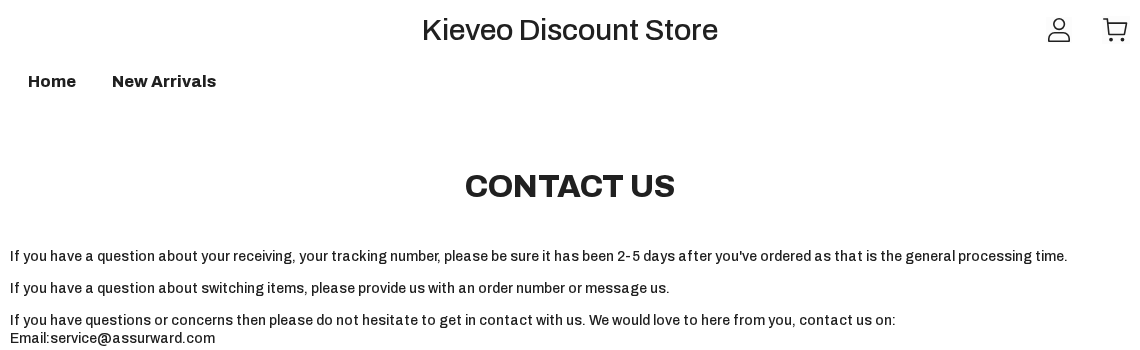
The assurward.com domain was registered in January 2025 and has no website. Its email is handled by NetEase, a Chinese email provider.
A support address on a domain with no site gives buyers nothing to check. If the store disappears, the email can vanish with it.
Built on Shoplazza
Kieveo ran on Shoplazza, the same hosted platform behind the Polish Rabat LIDI store in our Christmas Discount Shop report. A shared platform doesn’t show a shared owner.
A closed store with no reviews
Kieveo’s Trustpilot profile is unclaimed and has no reviews. Trustpilot now says reviews can’t be left because the company’s website has closed.
Is Kieveo Still Online?
No. The kieveo.com name no longer resolves, and no current registration record exists for it. The store’s product, policy and contact pages went with it.
Discount stores like this often return under new names. Our reports on Tommydiscount.com and Eudiscounthub.top show the same discount-store style on other domains.
Past buyers may still get emails in the store’s name. Treat any request for card details or a fee to release a parcel as phishing.
Signs a Store Like Kieveo Is Back
Closed stores often reopen on a fresh domain with the same template. These details from Kieveo’s pages can help you spot a repeat.
- A retailer-style heading such as AMZ Global Discount Store, with no company named anywhere.
- A support email on a domain that doesn’t match the store, such as assurward.com.
- Last Day Promotion or Christmas sale labels months away from any real deadline.
- A coupon ladder that climbs to 70% off or more for bigger baskets.
- Crossed-out prices roughly double the sale price on almost every product.
- A footer that shows only a year and the store’s name.
How to Spot Fake Gadget Stores
Fraudulent shopping websites often share common patterns that make them easier to detect once you know what to look for. Before entering personal information or making a payment, take a few minutes to check for these warning signs:
- Unrealistic prices and discounts
If a website offers products at prices far below trusted retailers, it’s often a red flag. Many of these sites advertise luxury or high-demand products at massive discounts to create a sense of urgency. A $300 product listed for $49.99 should immediately raise suspicion. - Recently registered or suspicious domain names
Many fraudulent websites operate on newly created domains that disappear after a few weeks. Look for signs like random characters in the URL, misspellings of well-known brands, or hyphenated domains.
You can check a site’s age using tools like WHOIS lookups or ScamAdviser. - Missing or vague company details
Legitimate businesses clearly display their company name, tax information, phone numbers, physical address, and return policies. Fraudulent sites often provide incomplete, fake, or no company details at all. A lack of verifiable contact information is a major warning sign. - No reliable customer service
Real businesses provide clear ways to contact support—email, phone, live chat, or physical return addresses. Fake stores often list nonfunctional contact forms, invalid phone numbers, or reply with generic automated messages. - Poor website quality and structure
Many fake stores are set up quickly with low-effort templates. Look for poor grammar, spelling errors, low-resolution product images, broken links, or missing legal pages (Terms of Service, Privacy Policy, Return Policy). A sloppy website often signals something isn’t right. - Copied product descriptions and images
Fraudulent sites often lift product listings directly from real retailers or marketplaces. If you reverse image search a product photo and find it on multiple unrelated websites, the listing is likely not original. - Lack of credible reviews or suspicious review patterns
A real store will usually have a mix of customer reviews across different platforms. Warning signs include no reviews at all, obviously fake five-star reviews, or multiple identical reviews posted on the same day. Searching “[website name] reviews” or “[website name] scam” on Google often reveals warnings from other consumers. - Unclear or unfair return and refund policies
Fake stores often use vague language around returns and refunds—or avoid the topic entirely. If you can’t easily find clear instructions for how to return an item or get a refund, proceed with caution. - Aggressive urgency and pressure tactics
Fraudulent websites commonly use fake scarcity (e.g., “Only 2 left in stock!”) or countdown timers (“Sale ends in 10 minutes!”) to push you to buy before you think it through. Legitimate stores don’t rely on fabricated urgency to make sales.
Quick Steps to Verify a Website’s Legitimacy
Before entering payment or personal details on a new shopping website, take a few simple precautions:
- Search for the store’s name along with words like “reviews” or “complaints” on Google and Trustpilot.
- Check the website’s domain registration using Whois.com.
- Use trusted tools to scan for malicious or fraudulent links:
- Malwarebytes ScamGuard – detect scams and unsafe links before they reach you on Android and iOS phone.
- Malwarebytes Browser Guard – block dangerous or fake websites on Windows and macOS browsers.
- Verify the business address on Google Maps to ensure it’s a legitimate location.
- Review the store’s accepted payment methods – credit cards and PayPal are traceable and safer than cryptocurrency or bank transfers.
- Trust your instincts; if something feels off, it’s better not to proceed.
How to Spot Similar Scams on Social Media
Many fraudulent shopping websites rely heavily on sponsored social media ads to draw in large numbers of potential buyers. These ads often promise extraordinary discounts—sometimes up to 90% off—and use emotionally charged language to push users into buying immediately.
They frequently appear on Facebook, Instagram, and TikTok, blending in with legitimate content. However, these ads follow predictable patterns that make them easier to identify once you know what to look for.
Spotting Fraudulent Facebook Ads
Facebook’s advertising platform is a favorite tool for fake online stores because of its massive reach. These ads often feature “unbelievable” offers designed to create urgency and bypass critical thinking. Warning signs include:
- Extreme, unrealistic discounts such as “90% OFF,” “Store Closing Sale,” or “Final Liquidation.” Real retailers rarely discount new products this aggressively.
- Poor grammar, awkward phrasing, or inconsistent language throughout the ad or website, indicating low-effort, mass-produced content.
- Generic stock photos or images with watermarks, suggesting the images were taken from legitimate brands or stolen from other sources.
- Recently created Facebook Pages, which is common for temporary fraudulent campaigns. Check the “Page Transparency” section to see when the page was created.
- Limited or no engagement from real customers. Authentic brands usually have reviews, comments, and visible user interaction.
If an ad raises doubts, search for reviews of the website or reverse image search the product photos to see if they’re copied from elsewhere. Never provide payment information until the site is verified.
Spotting Fraudulent Instagram Ads
Instagram is another major platform used to promote fake shopping sites through eye-catching visuals and short-lived “flash sale” captions. Warning signs to look for:
- New or disposable accounts with few posts and followers, often created just weeks or days before launching ads.
- Lack of tagged users in product posts. Legitimate stores often feature real customers, influencers, or product usage.
- Unsecured checkout pages. If the website linked in the bio does not use HTTPS, do not enter payment information.
- Fake or missing customer reviews. Fraudulent stores rarely have authentic purchase feedback.
- Unclear or restrictive return policies, often hidden or written vaguely to make refunds difficult.
When in doubt, search for independent reviews before buying, and only enter payment details on verified, secure websites.
Catching Fake TikTok Ads
TikTok is increasingly used to promote questionable shopping deals through short, persuasive videos. While many ads look polished, the same red flags apply:
- Links to unknown stores that don’t appear in search results or have no external reputation. Many of these sites are temporary and disappear after a short time.
- No verification badge on the TikTok account. While not every legitimate store is verified, the lack of a badge is one more indicator to check further.
- Aggressive countdown timers or “one-day only” promotions designed to rush decision-making.
- Lack of genuine customer reviews or real user content demonstrating the product in actual use.
- Comment sections filled with complaints or warnings from other users. This is often the first place victims speak up.
TikTok scams often rely on impulse buying. Take a moment to verify the website, read independent reviews, and use trusted browser protection before visiting external links.
What to Do If You Ordered From Kieveo
- Find the exact charge on your card or PayPal statement. The merchant name may not say Kieveo, so match it by date and amount.
- Keep your order confirmation, any tracking number and every message from service@assurward.com, the address the store used for support.
- Check tracking on the carrier’s own website rather than a store link, and note the last scan and its date.
- If an item arrived but differs from the listing, photograph it next to any screenshot of the product page you saved.
- With the store closed, ask your card issuer or PayPal about a dispute for goods not received or not as described, and which deadlines apply to your order date.
- Ignore anyone who offers to recover your money for a fee or asks for your card details by email in the store’s name.
- US shoppers can report the store to the FTC. Reporting helps investigators but doesn’t trigger an automatic refund.
Frequently Asked Questions
Is Kieveo legit?
Kieveo named no company, used invented urgency and a support email on another domain, and its website has closed. It isn’t a store to trust if it returns.
Is kieveo.com still working?
No. The domain no longer resolves, and Trustpilot notes that the company’s website has closed.
Is Kieveo connected to Finveo?
No connection appears anywhere. Finveo is a CFD broker with its own domain since 2018, while Kieveo was a gadget store. The names are only similar.
Is Finveo a legitimate broker?
Finveo says it holds licences in Montenegro and Mauritius. Confirm them on each regulator’s register before trading, and remember that CFDs carry a high risk of loss.
What is assurward.com?
It’s the domain behind Kieveo’s support email. It has no website, was registered in January 2025 and uses a Chinese email provider.
Can I get my money back from Kieveo?
Not from the store, which has closed. Your card issuer or PayPal is the realistic route, so contact them with your order records and tracking details as soon as possible.
The Bottom Line
Kieveo was a short-lived gadget store with an Amazon-style heading, out-of-season urgency and no named seller. Its website is gone, and past buyers should work through their payment provider.
Finveo is a different business entirely. If you’re researching it, judge it as a broker on its own licences and risks, not by its name’s resemblance to Kieveo.
If a store with Kieveo’s heading, coupon ladder or assurward.com email turns up again, close the page and don’t enter your payment details.
This article is for informational purposes only and should not be relied upon for financial or business decisions. We identify potential scams using research, user experiences, and expert analysis. However, all claims should be independently verified. Mistakes may occur, and legitimate products could be flagged. We strive for accuracy but make no warranties regarding the completeness or reliability of the information.

If you are the owner of the website or product in question and wish to offer clarifications regarding your business or website, please reach out to us via our Contact form.

Join the discussion
0 commentsShare your experience or ask a question about this article.
Discussion
Start the conversation
Have a question or something useful to share? Add the first comment.