


Kimeo-shop.com sells household goods, garden supplies and gadgets at prices that make you stop scrolling: a fraction of what other shops charge.
Looking at the photos, you’d expect something great. The mail often delivers something else, and getting a refund can be much harder than checking out.
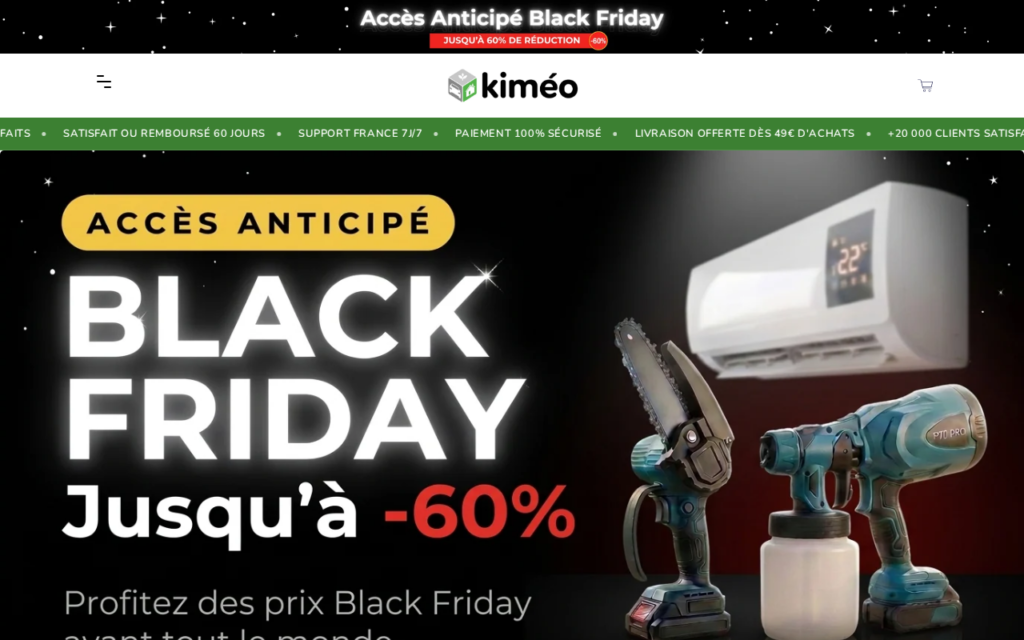
Overview
A storefront for dropshipping, not a brand
Like thousands of similar shops, Kimeo-shop.com doesn’t make its own products. It lists items from cheap suppliers, then has them sent straight from warehouses in China.
The store’s job ends at prices, ads and payments. It never touches the products, and a supplier you’ll never hear from packs and ships your order.
The name on the website changes, but the setup doesn’t. Kimeo-shop.com is part of a scam network of near-identical stores with shared templates, product photos and return policies.
Low-quality goods that bear no resemblance to the ads
Very low quality items arrive looking nothing like the ads. The reason is simple: the photos usually come from other sellers or brands and show a product you won’t receive.
Sending it back: more expensive than it’s worth
It’s easy to feel reassured by the refund policy. Then you get to the details:
- Sending it back means sending it abroad. Returns usually go to China, with the postage paid by you, not the store.
- You can lose money returning. Sending a $25 item abroad can cost more than the item itself.
- Full refunds are hard to get. A return request usually gets you an offer to keep the item for 15% to 30% back, instead of your money in full.
- Answers come slowly. You’ll usually have nothing but an email address, and every reply can take days.
Do not buy from Kimeo-shop.com. This is a high-risk store, and the likely result is an item worth far less than you paid that you can’t practically return.
What Happens When You Order from Kimeo-shop.com
The pattern behind most orders is predictable. Seeing it in advance can spare you both the cost and weeks of trading emails.
Step 1: You spot an ad with an unusually cheap price
You’re usually scrolling Facebook, Instagram or TikTok when it appears: a short video or polished photo, a steep discount on the product, and often a “limited time” tag.
Dozens of other shops often advertise with that same product video. Same suppliers, same borrowed marketing material.
Step 2: A store that seems bigger than it really is
Browse Kimeo-shop.com and it feels established, with categories, star ratings and a friendly About Us page. Often, there’s little more than a template and a supplier list underneath.
The About Us story is usually part of the package. Whether it features a small family business or a passionate founder, many unrelated shops use the same wording.
Step 3: The package is slow to show up
Your order ships from China, so the promised 5 to 7 days can stretch into three or four weeks. Tracking can also stall on a single update for days.
Instead of one box, some orders arrive as several small packages, each tracked on its own. Lose one, and it can be hard to show what never came.
Step 4: The item looks different from the listing photos
After the wait, the package lands, and the item is a smaller, thinner or simpler version of what the ad showed, worth pocket change in other shops.
Complaints about household goods bought from sites of this kind follow a pattern: cheap finishes that chip or crack, sizes far smaller than the listing and pieces that don’t fit together.
Step 5: The return trip eats your refund
The refund path runs through photos and a parcel to China. Pay for that postage and you can end up with the refund wiped out.
Keeping the item for 15% to 30% back is the usual offer. It’s presented as fair, but you’re still paying most of the price for something you didn’t want.
Many shoppers stop fighting right here, and that’s exactly what the policy is written to achieve.
Red Flags at Kimeo-shop.com
On the surface, Kimeo-shop.com looks like a great deal. These signs tell a different story, and each one can be checked in a minute before you pay.
Bargain prices that don’t fit the item
Rock-bottom prices on household goods, garden supplies and gadgets aren’t a lucky find. At those prices you’re getting a much cheaper version than the one in the photos.
The deal looks even sweeter next to a crossed-out “original” price. That figure is rarely real; it simply makes an ordinary price look discounted.
Images you can track down elsewhere
Drop a product photo into a reverse image search. It often surfaces on other stores, marketplaces or the website of the brand itself.
Where the image belongs to a brand, the product you receive won’t be from it. Where it belongs to a marketplace, the same item often costs less there.
No business details to look up
You’ll rarely find a registered company name, tax number or local address on stores in this network. That leaves you guessing who’s behind the shop when an order goes wrong.
Reaching support means sending an email
Weeks can pass before a problem gets sorted, because support usually runs through an email address or a contact form. There’s no phone or live chat to speed things up.
Don’t let the wait cost you. Slow replies also eat into the time you have to open a bank or PayPal dispute, so keep those deadlines in view.
Sales timers and invented stock limits
The urgency is staged. Timers reset with a page reload, every listing claims “only 2 left,” and no store with real stock looks like that.
Close the tab now and look again later. If nothing has changed and the “sale” continues, it never had a real limit.
Surprise extras at the checkout stage
Your basket can already include shipping protection, priority handling or a second item, ticked without you choosing them. Check each line of the total before paying.
Those add-ons rarely deliver faster shipping or real cover. They inflate the bill for an order that may already be worth far less than what it costs.
An unrelated business name on the payment screen
Your card details shouldn’t go to a stranger. If checkout moves you to a payment page with a different, unrelated name, that’s exactly what’s happening, so stop.
Linked to a scam network of lookalike stores
Dozens of shops run on the same About Us story, policies and product photos. When one disappears, a replacement shows up with a different name and the same catalog.
How to Check an Online Store Before You Buy
A few minutes of checking can tell you whether an online shop is worth your money. Start with these questions before you pay:
- Who is selling to you? Look for a company name, a registration or tax number and an address. A shop that names nobody is hard to hold to a promise.
- Where do returns go? Find the return address in the refund policy. If it’s overseas or missing, assume a return will cost more than it’s worth.
- How old is the website? Paste the address into the MalwareTips Website Scanner. It shows the domain’s age and any known warning signs in seconds.
- Are the photos original? Run a reverse image search on a product photo. If the same picture appears on many sites, the item is a generic product.
- What do buyers say elsewhere? Search the store on Trustpilot and in search results, not just the reviews on the shop itself.
- Is the ad real footage? Many shop ads now use AI-generated videos and photos. If the product only ever appears in slick renders, expect something plainer.
- Does the price make sense? Compare it with the same item on a major marketplace. A huge markdown on an unknown shop is a reason to slow down.
- Can you reach a person? A phone number or live chat is a good sign. An email address alone means problems will take a long time to solve.
If several answers come back wrong, close the tab. There’s almost always a seller with a clearer return policy and a company you can actually look up.
For extra protection while you browse, Malwarebytes Browser Guard warns you about many known scam and phishing sites before they load.
Where to Buy Instead
For anything on Kimeo-shop.com that tempted you, these are safer ways to buy it:
- Find the same product on a large marketplace. Buyer protection and honest reviews come standard there, and the price is often much lower.
- Go for sellers with a local return address. A return you can mail cheaply is a return you’ll actually bother to make.
- Seek out customer photos. Pictures from people who bought it show the actual item, not the advertised version.
- See where the seller ships from. Marketplaces list the seller’s location, and a local warehouse gets you faster delivery and returns you can really make.
- Use a payment method with protection. A credit card or PayPal lets you open a dispute if needed.
Paying a bit more may sting, but you’ll get the right item from a seller that honors its refunds.
What to Do If You Already Ordered from Kimeo-shop.com
Ordering from a shop like this doesn’t mean the money is gone. Acting early gives you the best chance of fixing the order or getting a refund.
- Save everything. Keep the order confirmation, the tracking number, every email from the store and screenshots of the product page as it looked when you bought.
- Photograph what arrives. Take clear photos of the item, the label and the packaging, especially anything that doesn’t match the listing.
- Ask the store in writing. Email support, describe the problem plainly and say what you want: a full refund or a replacement. Give them a short deadline.
- Don’t pay for an overseas return yet. If the store asks you to ship the item to China, check with your card issuer or PayPal first.
- Don’t accept a token refund. Offers of 15% to 30% back to keep the item are common. If the item isn’t as described, a dispute may get you more.
- Open a dispute if the store stalls. Use “item not received” or “not as described” with your card issuer or PayPal, and attach your evidence.
- Watch the deadlines. Card disputes often allow around 120 days, and PayPal generally accepts claims within 180 days of payment. Don’t let weeks of unanswered emails use them up.
- Ignore “customs fee” texts. Fake delivery messages asking you to pay a fee or update your address often follow online orders. Don’t pay or click.
- Leave an honest review. A short review on an independent site, with photos, helps the next shopper decide.
If you paid by bank transfer, contact your bank right away and ask whether the payment can be recalled. The sooner you call, the better the odds.
If the store won’t cooperate, file a complaint at econsumer.gov, which handles cross-border shopping complaints, or at ReportFraud.ftc.gov in the US.
Frequently Asked Questions
Is Kimeo-shop.com a scam?
A package may reach you from Kimeo-shop.com, a high-risk shop in a scam network, but what’s inside is very low-quality and returning it costs too much. Do not buy.
Where does Kimeo-shop.com ship from?
Most items are sent directly from suppliers in China. That explains why delivery can stretch to several weeks and why tracking updates often lag behind.
Why does the product look so different from the photos?
A low price drives the whole thing. The photos usually come from other sellers or brands, and the item you receive is a cheaper version made to meet that price.
Can I return an item to Kimeo-shop.com?
You’ll usually have to ship it to China and pay for it yourself. That math can fall apart on a cheap item, because the postage can top the refund.
Instead of paying to send it back, first ask your card issuer or PayPal whether a “not as described” dispute would cover you.
My order never arrived or isn’t as described. What now?
Gather item photos and listing screenshots, then contact the store in writing. If it refuses or stalls, use that evidence in a dispute with your card issuer or PayPal.
Are the reviews on Kimeo-shop.com real?
Don’t take them at face value. Reviews hosted on the store’s own site are simple to stack with praise. Buyer photos and comments on independent sites are a better guide.
The Bottom Line
The ads look nothing like what Kimeo-shop.com sends. It’s a high-risk store in a scam network of lookalike shops, its items are very low quality, and returns rarely make sense.
Do not buy anything from Kimeo-shop.com. Like what you saw in the ad? Look for that item on a marketplace that protects buyers.
Ordered already? The order email, product screenshots and photos of what arrives are all worth keeping. When the store won’t fix things, open a card or PayPal dispute.

Reviews & discussion
0 commentsShare a firsthand experience, or ask a question.
Community reviews
kimeo-shop.com
Moderated reader experiences, not an editorial verdict.
Start the conversation
Have a question or something useful to share? Add the first comment.