


Sign up at Lenopex.com with the promo code and a big bonus lands instantly, framed by the slick lobby and familiar games of what looks like a modern crypto casino.
Try to cash out, and the generous act ends. That single request is when Lenopex.com shows what it was made to do.



Overview
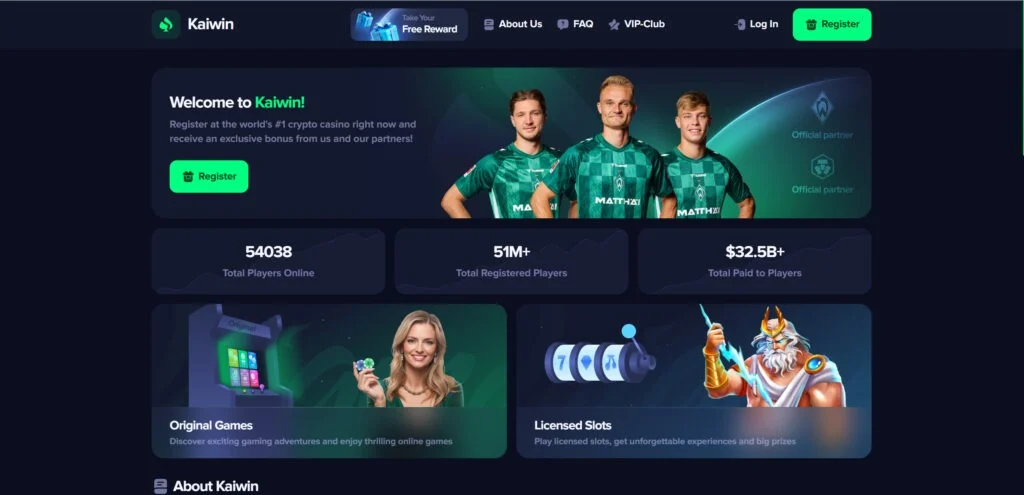
Every detail aims to make this crypto casino look trustworthy
Lenopex.com bills itself as a decentralized gaming platform, and it works hard to look like one, using the same signals people expect from a genuine crypto casino:
- A “#1” platform label that cites no source at all.
- The usual crypto vocabulary: “blockchain,” “decentralized” and “provably fair.”
- A slick lobby styled after well-known crypto casinos.
- Well-known game types such as slots, Crash, Mines and Plinko.
- An oversized bonus that pops up immediately after you create an account.
- “Recent wins” and “withdrawals” feeds that keep scrolling without end.
The polish works on first contact: lots of activity, a modern look, a sense of deep pockets. Judge it like anything else that holds your money, and the gaps show.

Why the balance never leaves the site
Your first withdrawal is where it turns. Up to then, sign-up and play are easy, but cashing out triggers a request for a new crypto deposit to “verify” your account.
That deposit is where the scam lives. Send it and another request follows. Refuse and the balance on your screen doesn’t move.
Usually, the demand shows up under an official-sounding label:
- Verification deposit
- Activation fee
- Network fee
- Security deposit
- Wallet validation
Swap the label and nothing else changes: you still pay extra before you can reach a balance that’s supposedly yours already.

Don’t deposit on Lenopex.com, because it’s a fake crypto casino. And don’t pay any “verification” or “activation” fee to unlock a withdrawal.
What Our Investigation Found on Lenopex.com
Here’s what stands out about Lenopex.com:
- Lenopex.com was registered on November 20, 2026, only 2 days ago.
- Lenopex.com is built from the same site kit as polybased.com, bc-game.cam, polymgloss.org and cas.lc, which MalwareTips has already exposed as scams.
How the Lenopex.com Scam Works
Every step in this funnel has one job: get you to that first withdrawal, where the real ask begins. It’s the same on every site running the scam.
Step 1: Promo codes show up in ads and chat groups
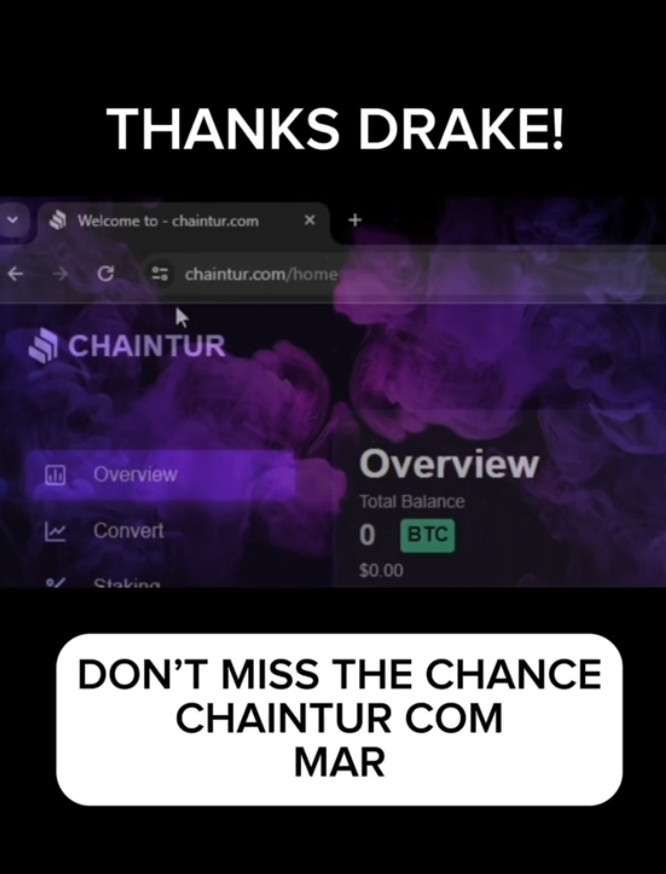
Searching rarely leads anyone to sites like Lenopex.com. They’re pushed through TikTok clips, YouTube ads and Facebook or Instagram posts, plus messages in Discord and Telegram groups.
The offer itself is always similar. Along with a promo code and a bonus worth thousands, you’ll see a “limited time” warning and screenshots of huge balances or payouts.
The format pushes you to act before you check. A clip lasts only seconds, the code looks exclusive, and the comments fill up with people claiming they were paid.




Step 2: Sign-up is finished in seconds
You won’t be asked for much. Identity checks are missing, proof of address isn’t required, and often your email isn’t even confirmed.
There’s a reason it’s this quick. The shorter your stay before playing, the lower the odds you’ll check for reviews and warnings.
There’s another version where the site asks you to connect a crypto wallet. Never approve those permissions. One approval can let a site like this drain your wallet.
Step 3: The site hands you bonus funds to play
Bonuses from the promo code are large, often $2,000 to $10,000. That’s what you start playing with, and it was never really your money.
Early on, wins are common. Confidence grows with your balance, and by the time you think about cashing out, it feels like a formality.
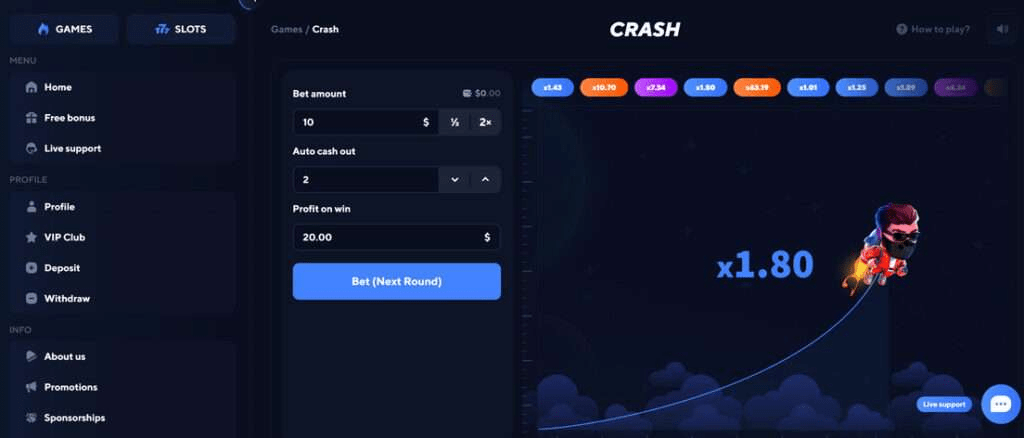
Crash, Plinko, Mines, dice, slots: the games play smoothly. That polish doesn’t prove anything. It’s built to make you believe your withdrawal will work.
Step 4: The first payout request stalls
Everything feels different once you try to cash out. No money moves. A message pops up about verification, a locked wallet or a minimum deposit instead:
- “Withdrawals are locked until verification is complete”
- “Minimum deposit required to withdraw”
- “You must verify your wallet before payout”
- “Security check in progress”
Notice that none of them say no. They say yes, right after one more step. That promise is what keeps your hope alive.
Step 5: You’re told to make a “verification deposit”
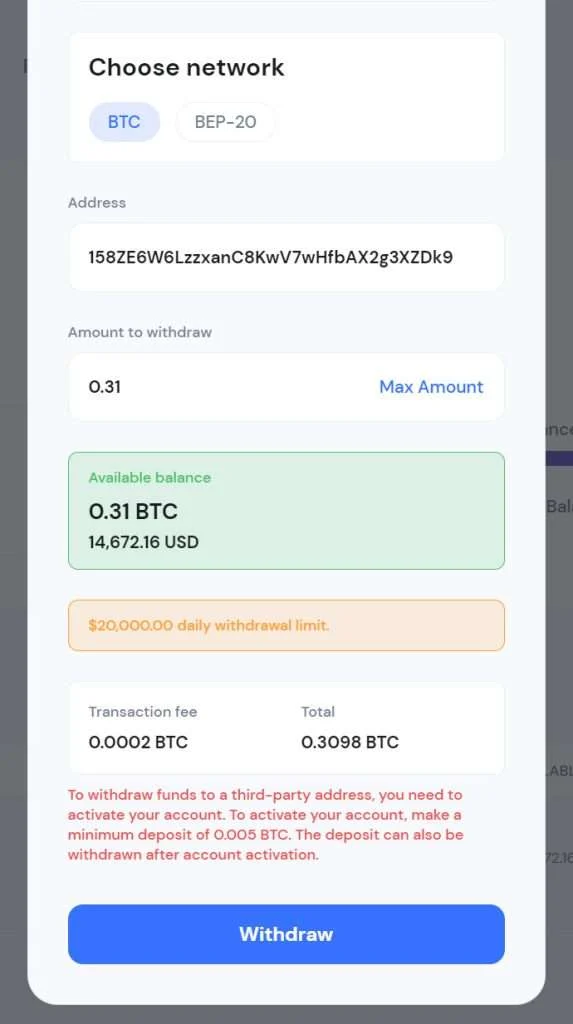
This is the step that takes your money. The site or support chat wants a new crypto deposit, commonly between $100 and $500, to “activate” withdrawals.
Some sites turn up the pressure with a ticking countdown or a “pending” payout. It’s theater: the withdrawal never lands, whatever amount you send.
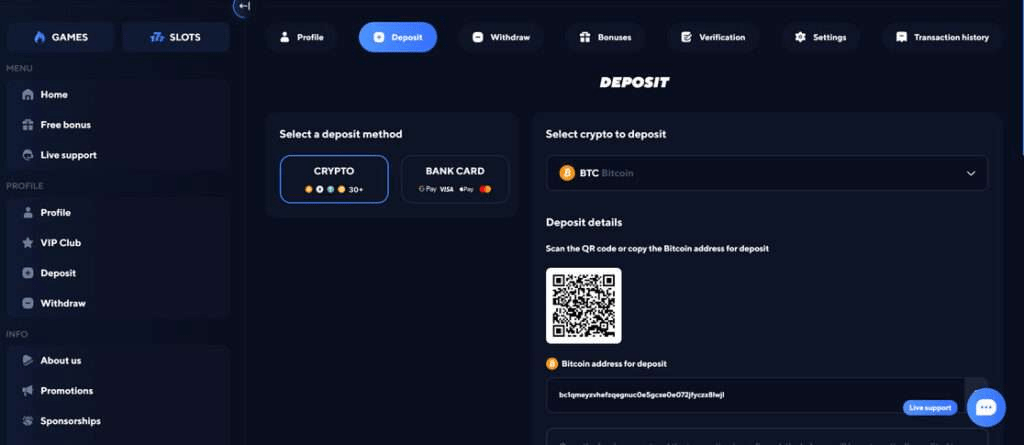
Step 6: More charges, then the site goes quiet
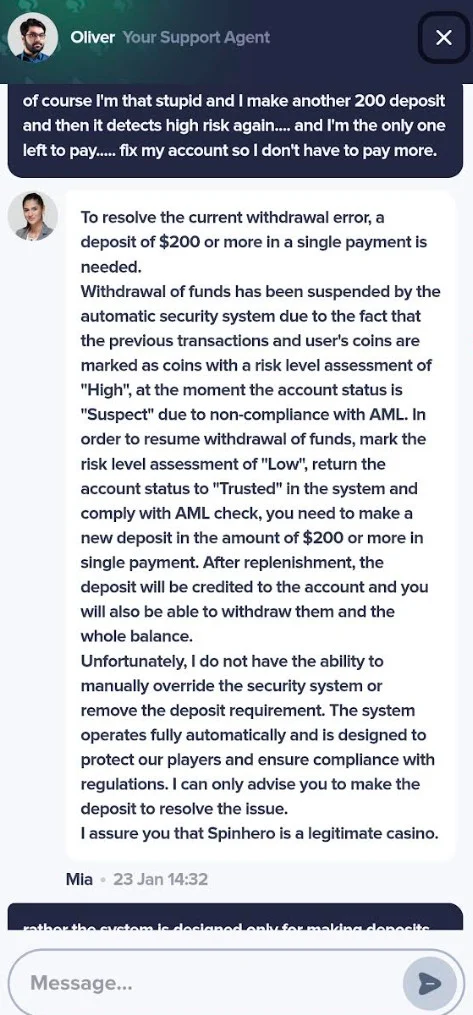
Send the fee and the goalposts move. Now there’s a higher verification tier, a VIP upgrade, a tax on your winnings or a bigger deposit to cover.
A lot of replies simply stall: “try again later,” “your withdrawal is pending,” “you chose the wrong network.”
As long as you’re paying, support stays polite. When it becomes clear no more money is coming, answers get slower, then vaguer, then stop completely.
Red Flags at Lenopex.com
Most of these warning signs can surface independently. The first, though, is enough all by itself. Line them up and they point to the crypto casino scam kit behind Lenopex.com.
New money demanded to release your balance
This sign alone answers the question. No real payout is waiting when a site insists you send fresh money to release winnings it claims you have.
If there truly were a charge, the site could just keep it from your winnings. Demanding a fresh transfer to “unlock” the balance only works in the scammer’s favor.
A bonus balance that’s too big to believe
No-strings money worth thousands isn’t a promotion. It’s bait. Genuine casinos attach clear limits and wagering rules to the welcome offers they make.
Look for bonus terms, if there are any. Sites like this usually leave them out, keep them vague or copy them, and never say how you’d withdraw the bonus.
Numbers that keep moving around the clock
A steady scroll of players online, recent wins and fresh withdrawals never lets up. On sites like this, it’s usually a scripted animation rather than real activity.
Here’s a quick test: refresh the page a few times. Identical names and amounts tend to return, a sign the feed is looping rather than reporting live data.
Operator, license and dispute route can’t be verified
Look for the operator, the license and the dispute route. Real gambling sites name all three. Fake casinos like Lenopex.com usually omit them or invent them outright.
Copy the license number into the regulator’s register search. When the site offers no number or the number fails to match, treat it as unlicensed.
Anyone can join, but no one can cash out
Here’s the reversal the trap depends on: sign-up takes seconds with no checks, yet cashing out abruptly demands “verification.”
When a legitimate casino verifies you, it asks for documents at sign-up or before the first payout. It doesn’t ask for a crypto transfer instead.
Support chats that always come back to deposits
Ask where your withdrawal is, and support steers the conversation back to paying. Legitimate support would explain the delay, not ask for another payment to fix it.
No card payments, only crypto
Crypto-only deposits suit sites like this perfectly: those payments are almost impossible to reverse.
Same Scam Playbook, Different Domains
You’ll find the same layout, games, bonus pitch and withdrawal message on a long list of other domains. Lenopex.com is just one of them, and they come and go.
Line them up, and the matching fingerprints are easy to spot:
- A shared headline style (“Decentralized Crypto Gaming Platform #1” is a typical example)
- An identical page layout, with the same game carousel and game list
- The same supersized bonus pitch
- One shared message: no payout until you make a deposit
The same kit powers lookalike domains, including:
- Bunodex.com
- TryGamb.cc
- Olympus-games.net
- KaiWin.cc
- Betaras.com
- Bezhope.bet
- Acegam.com
- 8BitWin.com
- 7Spiny.com
- Nexusball.com
- Germibet.cc
- Telaxplay.com
- EnyBex.com
- Roarax.com
- Siodex.com
- RuseWin.cc
- Epicdrops.life
Each domain puts a different name on the lobby, yet the withdrawal message gives it away every time.
These fingerprints mean one thing: don’t pay the site anything to prove it’s honest. For a casino you’re unsure about, run the free test below.
Why these sites keep switching domains
Switching to a fresh domain pays off for the operators in more than one way:
- Complaints and bad reviews don’t follow them to the new domain.
- The ads don’t stop; they just point to a “clean” new address.
- The new name has no warnings in search results yet.
- Running one script on many sites puts it in front of more people.
What counts is the behavior, not the name. Each fresh domain still arrives at the same withdrawal wall.
The Withdrawal Wall Test
Doubtful about a crypto casino? Give it this quick test before your first deposit.
A simple two-minute test
- Go straight to the withdrawal page after signing up with a throwaway email and a fresh password used nowhere else.
- Start a cash-out for part of the bonus. $10 is plenty.
- Then read the response word for word.
- The wall looks like a request for a deposit, a fee, a wallet connection or a “wallet verification” transfer. See any of them at any point? Don’t deposit.
It costs nothing to learn this before depositing. Learning it later can cost you every payment you made.
How the trap sounds in writing
Here’s the kind of wording that gives the playbook away:
- “Verification deposit required to withdraw”
- “Activate withdrawals by making a deposit”
- “Pay the network fee to process your withdrawal”
- “One final step to unlock your funds”
One question to put to support
Ask support to deduct the fee from your withdrawal. If nothing ever lands in your wallet, don’t pay. Save the chat and walk away.
What to Do If You Have Fallen Victim to This Scam
If your deposit has already gone through, shift your focus to stopping the losses, protecting your accounts and keeping evidence for investigators.
- Cut off the payments. Whether it’s a verification deposit, activation fee or network fee, don’t pay it. Each payment only leads to the next demand.
- Capture the proof. Your screenshots should show the balance, the withdrawal messages and every support chat. Alongside them, record the promo code, the deposit addresses and each transaction hash.
- Talk to your exchange. Sent the payment from an exchange account? Then report the date, amount, transaction hash and recipient address, since they may flag the wallet.
- Secure your email and exchange. Change both passwords and enable two-factor authentication. If you approved wallet permissions on the site, revoke them too.
- Look at what you installed. If you put an app or extension on your device for the casino, delete it and run Malwarebytes Free.
- Don’t pay for recovery. The FBI warns about exactly this: people promising to recover your crypto for an upfront fee. It’s a second scam.
- Report the scam. Americans should file at ReportFraud.ftc.gov and with the FBI’s Internet Crime Complaint Center (IC3). Everyone else can reach their national cybercrime unit or local police.
- Flag the promotion. Go back to the platform where you saw it and report the ad, the posting account and the promo code.
- Cut off the source. Casinos like this recruit players with ads and fake posts. With AdGuard in your browser, many malicious ads and pop-ups are blocked, so fewer reach you.
- Post a warning. Mention the bonus, the deposit demand and the wallet address, and keep it short and factual. That helps the next person spot the same trap.
Act fast. A crypto transfer is hard to reverse, so speed counts more than anything else. Get the details to the exchange and the authorities early.
Frequently Asked Questions
Is Lenopex.com a legitimate crypto casino?
No, it isn’t. Lenopex.com is a fake crypto casino: the bonus balance keeps you playing, and every withdrawal attempt is met with a demand for new money.
The same trap, layout and all, runs on many other domains. Finding no warnings online about a new name is not a reason to trust a site as safe.
Is the sign-up bonus real money?
No. The bonus is just a number on the screen, there to get you playing. No deposit you make will ever turn it into a payout.
Can I withdraw my winnings from Lenopex.com?
No. You can’t withdraw without a “verification” deposit, and paying it only brings the next demand. No payout ever arrives.
Why does Lenopex.com want a deposit to verify my account?
That deposit is where the scam happens. Real platforms use documents to verify identity. They don’t use a crypto payment.
The payment feels routine because it’s called “verification.” In reality, it’s an advance fee. You pay extra to free up money that was never in the account.
I already paid the verification deposit. Should I pay again?
Don’t. Each deposit just opens another requirement while your balance stays locked. Stop now, hold on to your records and tell your exchange about the transactions.
Can someone recover my crypto for a fee?
Handle these offers with great care. A common second scam targets people who just lost funds, promising recovery as long as you pay a fee first.
Even the FBI’s IC3 warns specifically about recovery services that want their fees upfront. The safer move is to report your losses to the authorities, free of charge.
The Bottom Line
Lenopex.com is a fake crypto casino. The bonus, the busy lobby and the promises on the page all lead to one place: a deposit demand at the first withdrawal.
Your decision is simple: no deposits on Lenopex.com, and no payments to unlock a withdrawal. If you’d like to gamble with crypto, use a licensed platform with a named operator.
Paid already? Hold back any further payment, keep a record of every transaction hash and screenshot, and report the wallet addresses to your exchange and the authorities today.

Reviews & discussion
0 commentsShare a firsthand experience, or ask a question.
Community reviews
lenopex.com
Moderated reader experiences, not an editorial verdict.
Start the conversation
Have a question or something useful to share? Add the first comment.