

A new wave of online shopping scams has recently emerged on Facebook, luring unsuspecting victims with fake advertisements for Lidl electric scooters priced at an unbelievable €89.99. These convincing ads mimic Lidl branding and employ enticing slogans like “Warehouse Sale” and “Store Closing Sale” to hook bargain hunters looking to score an unbeatable deal. However, consumers who place orders through these fraudulent sites never receive the touted electric scooters. Instead, they either receive nothing at all or a cheap trinket like a pair of sunglasses.
This article will provide an in-depth examination of this pervasive electric scooter scam – how it works, red flags to watch out for, and most importantly, how to avoid becoming the next victim.
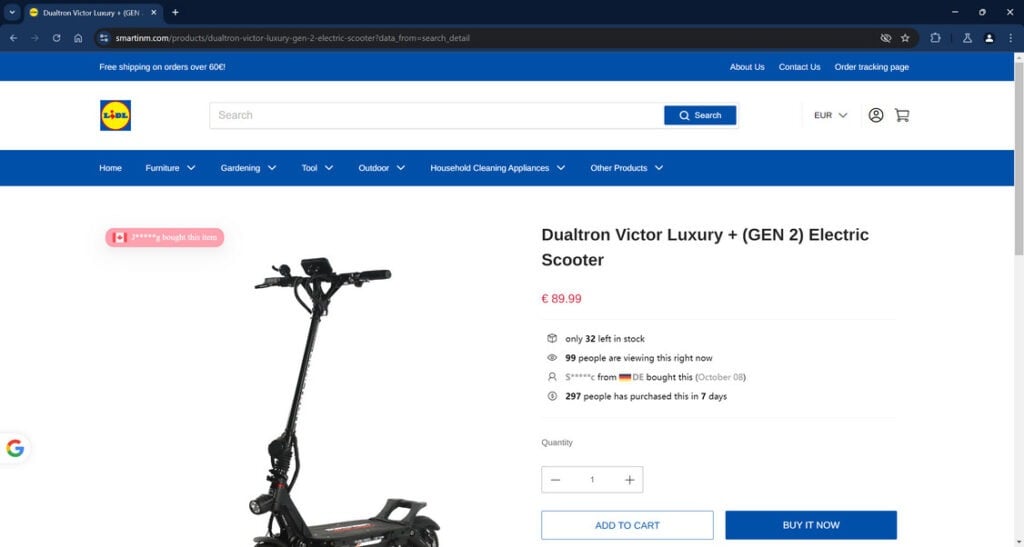
Overview of the Fake Lidl Electric Scooter Scam
The fake Lidl electric scooter scam operates by setting up persuasive Facebook ads that direct users to convincing but fraudulent e-commerce sites. These sites closely mimic the Lidl logo, color scheme, and overall visual branding to dupe customers into thinking they are purchasing items directly from the German discount supermarket chain.
The ads typically showcase high-end electric scooters like the Dualtron Thunder and EcoSmart Metro models at prices ranging from €79.99 to €109.99 – massive 90% discounts off the normal retail value. For example, a Dualtron Thunder that normally retails for €1,799 is advertised at a steep €99.99 price.
These unrealistic prices are intended to entice bargain shoppers who think they’ve stumbled upon an unbelievable deal. The accompanying ad copy utilizes slogans like “Warehouse Sale,” “Store Closing Sale,” and “Limited Time Offer” to create a false sense of urgency and pressure shoppers into buying before this one-time opportunity is gone.
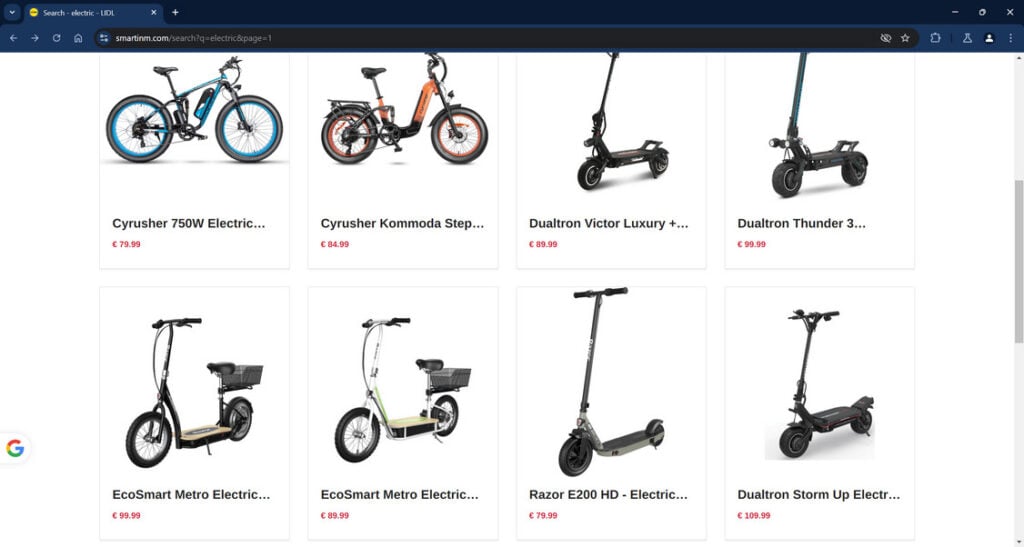
Unfortunately, those who purchase through these scam websites never receive the advertised electric scooters. The sites are purely virtual storefronts with no actual inventory or intent to fulfill orders. Any submitted customer payment information is likely stolen for fraudulent purposes. Those lucky enough to receive anything at all report only getting a cheap item like a pair of sunglasses or a silicone bracelet in the mail.
These copycat sites manage to slip through Facebook’s ad approval process by remaining online just long enough to conduct their scam before getting reported and shut down. Then the scammers simply create new sites and ads to continue their fraudulent operation. Thus far, the scam has succeeded in funneling untold thousands from unsuspecting electric scooter buyers.
How the Fake Lidl Electric Scooter Scam Works Step-by-Step
The fake Lidl electric scooter scam ensnares victims by capitalizing on their desire to get an unbeatable deal and own the latest personal electric vehicle. Here is a step-by-step breakdown of how the scam successfully tricks customers:
Step 1 – Baiting Victims with Social Media Ads
The scam begins by baiting victims through Facebook ads featuring high-end electric scooters at impossibly low prices of €79.99 to €109.99. The accompanying copy uses enticing slogans promising once-in-a-lifetime deals only available through their “limited time warehouse sale.” These professional-looking ads are optimized for electric scooter-related keywords and target users likely to be in the market for an e-scooter.
Step 2 – Directing Victims to Elaborate Fake Sites
When users click on these social media ads, they are taken to sophisticated fake e-commerce sites dressed up to nearly identical Lidl’s visual branding. Product photos and stock content are ripped directly from Lidl’s official site to make the scam sites seem authentic. To reinforce the facade, fake trust badges like Norton Shopping Guarantee are displayed.
Step 3 – Collecting Order and Payment Details
If the flashy pseudo-Lidl facade convinces the visitor, they proceed to place the unrealistic low-priced electric scooter in their cart and enter payment information during checkout. The site collects the victim’s name, address, phone number, email address, and most critically, payment card details or bank account info.
Step 4 – Failing to Fulfill Orders
Victims complete their seemingly amazing deal and await the arrival of their €99 Dualtron Thunder electric scooter. However, the order is never fulfilled. At best, victims receive a cheap item like a pair of sunglasses that costs a fraction of what they paid. More commonly, they receive nothing at all.
Step 5 – Stealing Personal and Payment Data
Meanwhile, the scammers behind the fake site collect and steal the victim’s submitted personal information and payment card details. This data enables them to perform identity theft or make fraudulent purchases under the victim’s name. The site often disappears within days, before customers realize their order will never arrive.
Step 6 – Vanishing Without a Trace
By the time customers notice that weeks have passed without their package being delivered, the fake Lidl site has typically vanished. The domain no longer exists, and all the contact email addresses provided bounce back. Victims have no way to recover stolen money or data. For the scammers, it’s a perfect cybercrime executed almost entirely risk-free.
The bait of unbelievable electric scooter deals exploited in this scam hooks many who don’t look closely enough to spot the façade. Avoiding becoming the next victim requires being able to recognize the red flags of a fraudulent site.
How to Spot Fake Lidl Electric Scooter Scams on Social Media
Spotting the Scam on Facebook
The fake Lidl electric scooter scam primarily spreads on Facebook through sponsored ads in the News Feed. Here’s what to watch out for:
- Ads promoting scooters like Dualtron or EcoSmart models for €79-€109 when they normally cost €1000+
- Slogans like “Warehouse Sale,” “Store Closing Sale,” or “90% Off Clearance Event”
- Stolen product images copied from Lidl’s website
- Link goes to a suspicious site instead of lidl.com
- The Facebook Page running the ads has no posts or followers
For example, you may see an ad for a “Dualtron Thunder for €89.99 – Today Only! 90% Off!” with Lidl’s logo. But clicking the ad leads to “lidl-electricscootershq.com” instead of the real Lidl site. This is a major red flag for the scam.
Spotting the Scam on Instagram
Watch for these signs of the Lidl e-scooter scam on Instagram:
- Rapidly growing Instagram accounts promoting €89 Lidl scooters in Stories/posts
- Profile uses Lidl’s logo but the account was just created recently
- Link in bio goes to a sketchy lidl-dealz.store instead of lidl.com
- Uses enticing captions like “Going out of business!” or “Today only blowout sale!”
- Posts use stolen Lidl product images or AI-generated fake Lidl videos
For example, be suspicious of @lidlmegaoutlet rapidly posting Stories daily about a “Store closing sale!” with €99 EcoSmart scooters. The web link directs to a fishy site not affiliated with Lidl.
Spotting the Scam on TikTok
Here are signs of the electric scooter scam on TikTok:
- Video ads with captions like “Lidl scooters 90% off!” or “Insane Lidl limited-time deals!”
- Links in bios and video captions direct to lidl-promotionz.shop instead of lidl.com
- Uses short high-energy videos with stolen Lidl visuals to captivate viewers
- Video view counts seem inflated by fake bot accounts
- Comment sections flooded with suspicious accounts hyping the deal
For example, discountdeals743 posting a TikTok about “Crazy Lidl electric scooter sale ending soon!” that links to a sketchy site should raise alarms. Scrutinize social channels pushing unbelievable Lidl discounts.
How to Identify Fake Lidl Electric Scooter Scam Websites
While the scam sites try to mimic the look of Lidl’s real website, a trained eye can spot some red flags that expose the frauds. Watch out for:
- Domain registered very recently like Lidl-warehouseblowout.com
- Contact page only shows non-clickable email addresses
- No customer service phone number or physical address provided
- Dualtron and EcoSmart scooters listed at €89 instead of €1000+
- Copy on site uses broken English and grammar/spelling errors
- Images of scooters stolen directly from Lidl and other sites
- Bogus trust badges copied from legitimate sites to seem credible
For example, if you search for Lidl scooters and find a site called “Lidl-outletstore.deals” selling €99 Dualtrons using Lidl’s logo, this is a scam. Signs like no contact info, prices that are too good to be true, stolen scooter images, and no HTTPS should raise red flags.
Other telltale signs of a fake include:
- Entire About Us or Contact pages copied from other sites
- No social media links or profiles can be found
- Site has no history or online reputation
Trust your instincts. If a site looks suspicious, do not enter your information or make purchases there. Only buy directly from Lidl’s official website to avoid scams.
What to Do If You’ve Fallen Victim to the Fake Lidl Scooter Scam
Unfortunately, those fooled into ordering through one of these fraudulent Lidl scooter sites often have limited recourse after discovering the scam. However, some steps can be taken to try and minimize resulting damage:
Act Quickly to Cancel Payment
If you provided your payment card details, immediately contact your credit card company or bank to report fraudulent charges, block payments, and cancel the card altogether since the number is compromised. Acting quickly can limit charges made on the stolen card.
Place Fraud Alert on Your Credit Reports
Since scammers have your personal information, also place an initial 90-day fraud alert on your credit reports. This requires creditors to verify your identity before opening new accounts to prevent identity theft. You can renew the fraud alert after it expires.
Reset All Account Passwords
The scammers may attempt to break into other accounts using passwords obtained through the scam site. Be proactive by changing passwords on all your online accounts, especially financial accounts and email. Enable two-factor authentication wherever possible for enhanced security.
Monitor Your Credit Reports and Bank Accounts
Keep a close eye on your credit reports from Equifax, Experian, and TransUnion to check for any signs of fraudulent accounts opened in your name. Also monitor bank and credit card statements closely for any unauthorized charges. Immediately report any suspicious activity.
Report the Scam Website and Ad
Lookup and report the scam website to the hosting provider, domain name registrar, and any organizations whose logos were fraudulently used. Also report the original Facebook ad to get it removed so others don’t fall victim. Provide as many details as possible.
File a Report with Authorities
File a cybercrime complaint with the FBI’s Internet Crime Complaint Center (IC3) and notify your local police department. Provide all available details about the scam website, fraudulent ad, and any losses. The information will help authorities track down these scam operators and hold them accountable.
While being scammed can be extremely frustrating, taking these steps quickly after discovering the fraud can greatly limit the damage and prevent further issues. Be proactive and remain vigilant.
Frequently Asked Questions about the Fake €89 Lidl Electric Scooters Sale Scam
1. What is the Fake €89 Lidl Electric Scooters Sale scam?
The Fake €89 Lidl Electric Scooters Sale scam is a fraudulent scheme being promoted through Facebook ads. The ads promote unbelievable deals on electric scooters for just €89.99 and use Lidl branding without authorization. The ads link to convincing fake websites that closely mimic Lidl’s e-commerce site to dupe visitors. However, orders through these fake sites are never fulfilled. Customers either receive nothing or a cheap item like sunglasses. The scammers behind the sites steal submitted payment information and personal data.
2. What electric scooter models are used in the scam ads?
The most common electric scooter models promoted are the Dualtron Thunder, Dualtron Spider, EcoSmart Metro, Razor E200, and Cyrusher XF800. These are high-end electric scooters typically priced from €1,000 to €2,000. However, the scam ads list them for €79.99 to €109.99. These unrealistic prices are intended to entice victims.
3. What slogans and tactics do the scam ads use?
The Facebook scam ads utilize slogans intended to pressure and rush customers into buying. Some common slogans are “Limited Time Offer,” “Warehouse Closing Sale,” “Store Closing Sale,” and “Going Out of Business Sale.” Countdown timers are sometimes used to further rush customers. Fake discounts of 90% off are also listed.
4. What are some telltale signs these are fake Lidl sites?
Fake Lidl sites have grammar/spelling errors, lack contact details, use new domains, don’t support HTTPS, and have no social media presence or customer service channels. Prices that are too good to be true are a clear red flag. No legitimate retailer would sell a €1,500 scooter for €89.
5. What happens when you place an order through the fake sites?
Orders via the fake Lidl electric scooter sites are never fulfilled as promised. Customers either receive nothing, or sometimes a cheap item like a pair of sunglasses costing a few dollars. Meanwhile, the scammers collect and steal your payment card and personal info entered during checkout.
6. What should you do if you placed an order through a fake site?
Immediately contact your bank/credit card company to halt payments and have your card cancelled/replaced due to the compromised details. Put a fraud alert on your credit reports and reset passwords on all accounts as a precaution. Closely monitor statements for further abuse of your data.
7. How can you avoid falling for the Lidl electric scooter scam?
Apply extra scrutiny to unusual deals and verify sites are legitimate before providing payment info. Beware of new domains with no history or online presence. Only shop directly through Lidl’s official website and stay vigilant for unbelievable prices. If an offer seems too good to be true, it almost always is.
8. Where should you report fake Lidl electric scooter ads or sites?
Report fake Lidl ads to Facebook so they’re removed. Report fraudulent sites to the hosting provider, domain registrar, and organizations whose logos were misused. Also file complaints with the FBI’s IC3 cybercrime division and your local police to aid investigation of the scammers.
The Bottom Line
The fake €89 Lidl electric scooter ads and scam websites prey on unsuspecting bargain hunters and effectively convince them to willingly hand over payment information and personal data. By mimicking official branding and using enticing slogans, these sophisticated scams manage to slip through the cracks and lure many victims.
However, armed with the right information, consumers can recognize the red flags that expose these fraudulent sites and ads for what they are. Always apply extra scrutiny to deals that seem too good to be true, no matter how convincing a site may appear at first glance. The old adage holds truth – if it seems too good to be true, it almost always is.
Stay vigilant for unbelievable offers and warning signs like grammatical errors and contact-less sites. When in doubt, go directly to the official retailer’s site or local store rather than clicking links and trusting your data with an unknown operator. A bit of added skepticism and smart online shopping practices can help consumers avoid ending up as the next victims of online shopping scams. Don’t let the lure of scooping up an unbeatable deal overshadow common sense.

Join the discussion
0 commentsShare your experience or ask a question about this article.
Discussion
Start the conversation
Have a question or something useful to share? Add the first comment.