If you have been scrolling Facebook, Instagram, or TikTok lately, you have probably seen it.
A confident “doctor” or “pharmacist” in a white coat. A slick product box. Big badges like “FDA” and “GMP.” A promise that sounds almost too perfect to ignore.
A once-daily microneedle patch that claims to melt stubborn fat, control appetite, balance blood sugar, and deliver “visible changes in 7 days.”
The name varies, too. Sometimes it is Luxarise. Sometimes it looks like the same product under another brand, with the same story, the same before-and-after photos, and the same countdown discount.
So what is really going on here?
This article breaks down what the Luxarise Moringa & Berberine Microneedle Patch claims, why the marketing raises major red flags, how the dropshipping-style operation typically works behind the scenes, and what to do if you already bought it.
Overview
What the product claims to be
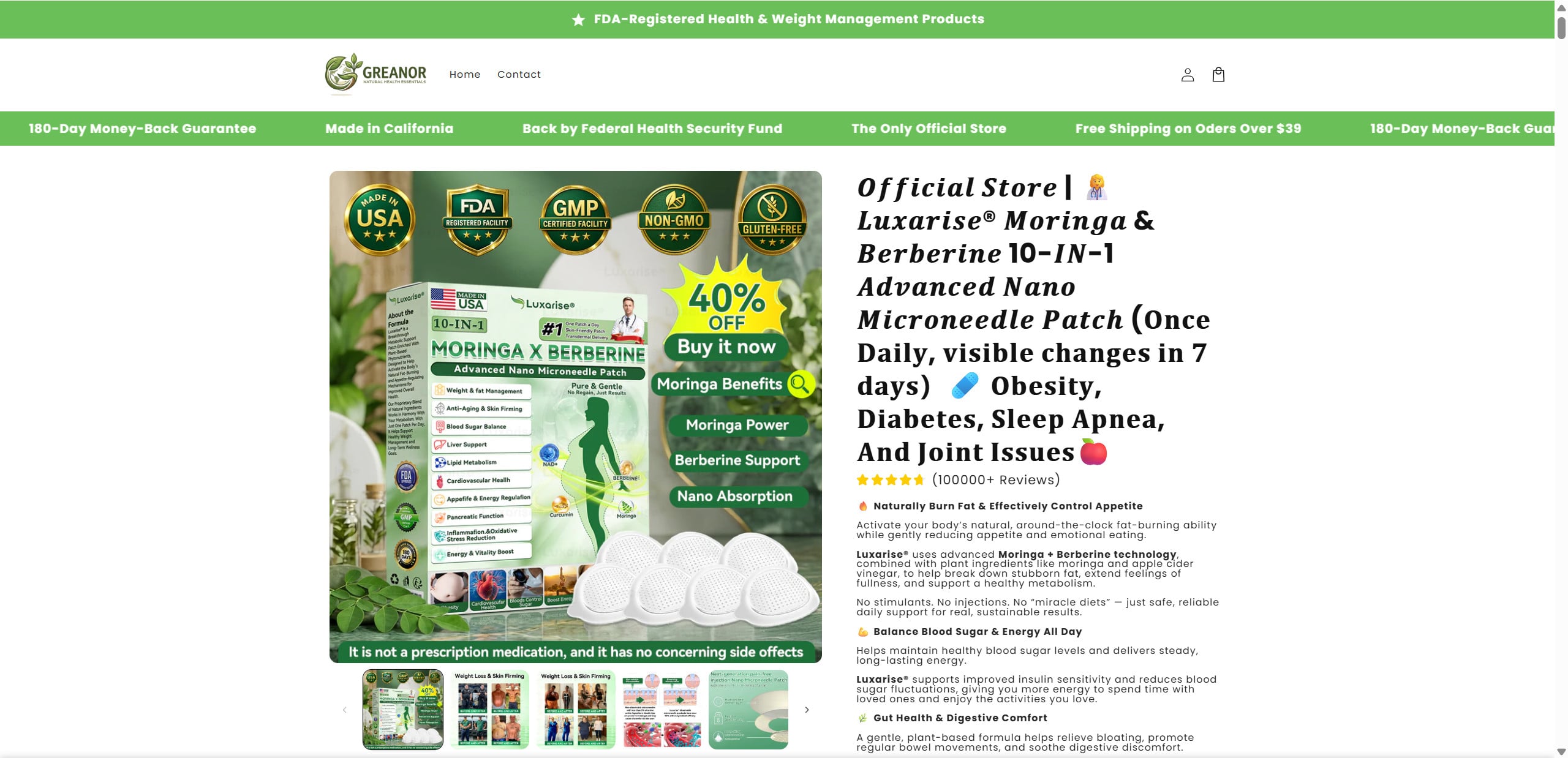
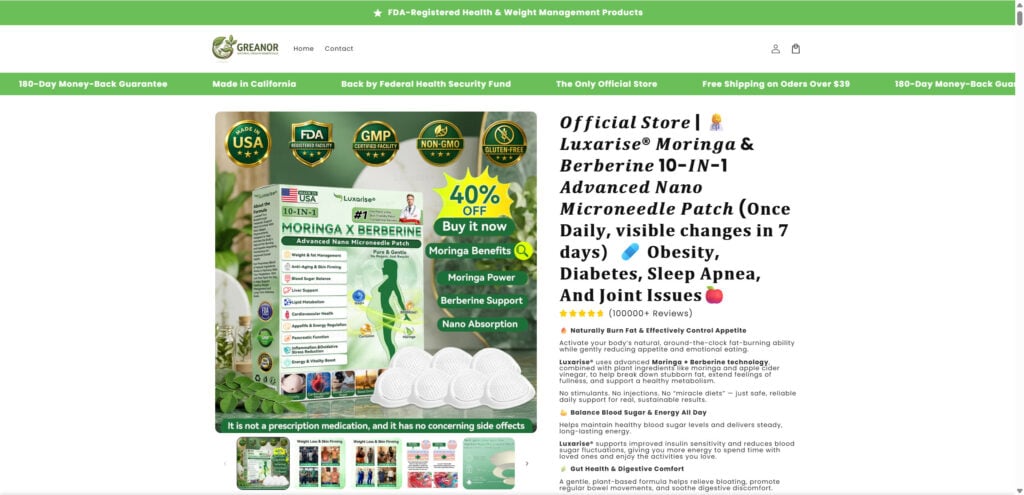
Luxarise is marketed as an “advanced nano microneedle patch” that you apply once per day. The pitch is that microneedles help “deliver” active ingredients through the skin more effectively than capsules or powders.
On the storefronts and ads circulating online, you will often see claims like:
- “Once daily, visible changes in 7 days”
- Significant weight loss in days or weeks
- Appetite suppression and reduced cravings
- Blood sugar support and “metabolic” improvement
- Help for obesity-related conditions, sometimes including diabetes, sleep apnea, and joint issues
- “No injections,” “no stimulants,” “no side effects,” or “safe and gentle”
- Huge review counts, sometimes in the tens of thousands or even “100,000+ reviews”
- Heavy trust signaling such as FDA, GMP, “trusted by Google,” and other official-sounding badges
Some versions also push a “10-in-1” formula and add extra buzzwords like NAD+.
Why microneedle patches sound believable (and where the hype starts)
Microneedle technology is real. In legitimate medical research and medical-grade products, microneedle arrays can be used to deliver certain substances across the outer skin barrier.
That reality makes the pitch feel credible at first glance.
But here is the problem: consumer supplement-style patches sold through aggressive social ads often stretch the science far beyond what is reasonable.
Skin is designed to keep things out. It is an effective barrier. Delivering meaningful amounts of complex compounds through the skin is not as simple as saying “nano absorption” or “advanced delivery.”
And when a product claims it can do all of the following quickly:
- burn fat
- suppress appetite
- control blood sugar
- reshape body composition
- improve multiple medical conditions
…that is the moment you should slow down and look at the operation, not the promises.
The moving target problem: the same patch under different names
One of the most important patterns people notice with these products is that the branding can change constantly.
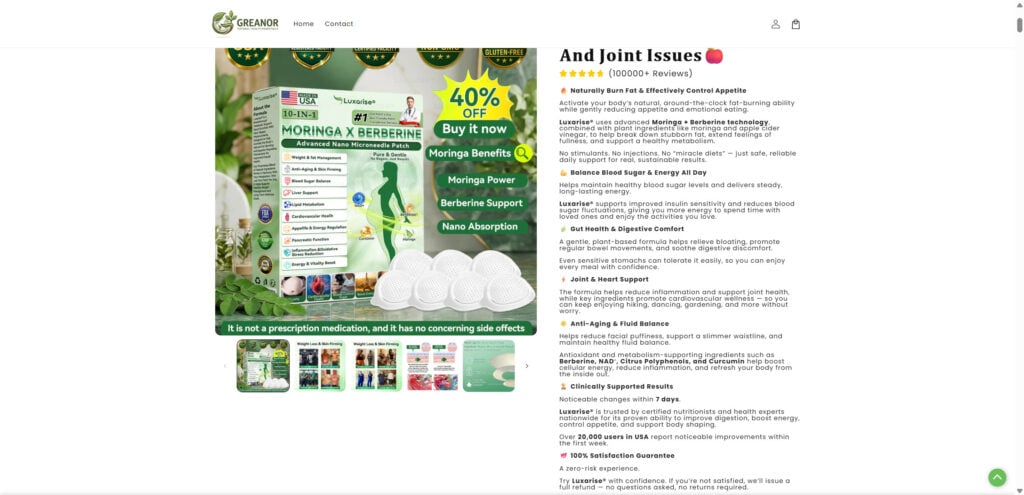
You might see:
- Luxarise
- another “official store” name
- another brand label with the same box design
- the same patch photos and the same testimonials reused
That matters because trustworthy consumer health brands do not usually behave like this. Real companies build a consistent brand presence, publish clear labeling, and maintain stable customer support channels.
When the product identity keeps shifting, it becomes harder to verify who is actually behind it, where it is manufactured, and what you will do if something goes wrong.
Trust badges that are used as persuasion, not proof
A common feature on these pages is a cluster of official-looking icons and credibility claims, such as:
- FDA
- GMP
- “Made in USA”
- “Certified facility”
- “Non-GMO”
- “Gluten-free”
- “Trusted by Google”
- “Backed by” some official-sounding fund or program
- “Patented” or “protected by patents”
These badges are powerful psychologically. They are designed to short-circuit doubt.
But badges are not evidence by themselves.
Here is the key detail many shoppers miss:
FDA does not “approve” most supplements the way it approves prescription drugs.
A supplement company can follow certain manufacturing rules, and facilities can be registered, but that is not the same thing as FDA confirming the product treats obesity or diabetes, or that it causes fast, reliable weight loss.
When you see phrases like “FDA certified” used loosely, especially next to dramatic health claims, it is a sign you are dealing with marketing first, science second.
The “7 days” promise and other high-pressure claims
Many versions of this offer emphasize speed:
- “visible changes in 7 days”
- “noticeable changes within the first week”
- dramatic transformation stories
- before-and-after photos with huge body changes
If you have worked in consumer protection content or scam research, you already know this pattern: short timelines sell impulsive decisions.
Real metabolic change is usually slower and more complicated. Even when a legitimate product supports appetite or energy, results vary widely, and reputable brands are careful about how they describe outcomes.
A storefront that promises fast, sweeping results for almost everyone is not being careful. It is selling a fantasy.
The testimonial machine: stories that feel scripted
Another pattern that appears again and again:
- “Hospital pharmacist” or “nutrition expert” origin story
- A personal struggle narrative
- A “this is what finally worked” hook
- Screenshots of social posts or comments used as “proof”
- A long page that reads like an advertorial, not a normal product listing
This style is extremely common in dropshipping funnels because it converts well. It also makes it difficult for buyers to separate real customer experiences from curated marketing content.
The biggest red flags people report
When these microneedle patch offers go bad, complaints tend to fall into a few predictable buckets:
- The “money-back guarantee” is hard to use in real life
- Customer support is slow, vague, or unresponsive
- Shipping takes longer than expected, sometimes suggesting overseas fulfillment
- The product arrives looking cheaper than the ads implied
- Refunds require complicated steps or are denied
- Some buyers report unexpected continuity billing or subscription-style charges
- The company identity is unclear, and the store name does not match what appears on the charge
Not every buyer will experience every issue. But the pattern is consistent across many aggressive supplement-style funnels: the front end is polished, the back end is messy.
So, scam or legit?
Based on the marketing patterns commonly used with “moringa + berberine microneedle patch” offers, the safest conclusion is this:
Treat Luxarise-style microneedle patch ads as high-risk and potentially misleading.
Even if a patch arrives in the mail, that does not make the operation trustworthy. The core issue is not “does a package show up.”
The core issue is whether the advertising is honest, whether the company is transparent, whether claims are responsible, and whether customers can reliably get support and refunds.
When you see fake-looking doctor endorsements, sweeping medical claims, and shifting storefront identities, you are not looking at a normal wellness brand. You are looking at a conversion funnel.
How The Dropshiping Operation Works
1) The ad is engineered to trigger urgency and trust
The journey usually starts with a social media ad.
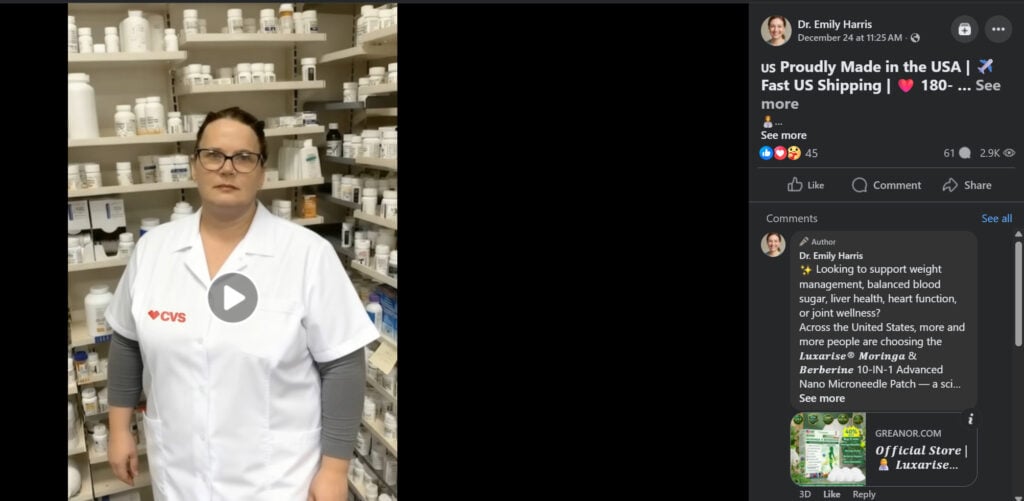
The ad commonly uses one of these angles:
- A “doctor” or “pharmacist” speaking directly to camera
- A fake authority identity (white coat, clinic setting, medical props)
- A dramatic “breakthrough” claim, often implying the medical world is “finally telling the truth”
- Fear-based framing about obesity, blood sugar, or long-term health risks
- A quick transformation promise, often tied to “7 days” or a short window
Then comes urgency:
- “Limited stock”
- “First 100 orders”
- “Today only”
- “$99.99 down to $25.95”
- “Save 74%” or “Save 80%”
This is not just marketing style. It is strategy.
Urgency reduces comparison shopping. It pushes the buyer to act before they verify anything.
2) The click goes to an “official store” that is built to convert, not inform
Next, the ad sends you to a storefront that looks professional at first glance.
Common design patterns include:
- “Official Store” language at the top
- A banner that claims fast shipping, easy returns, or a long guarantee
- Multiple trust badges clustered near the product image
- A long wall of text with “science” framing
- “As seen on” style credibility cues
- A single product focus with limited navigation
This type of page is usually not built like a normal brand site. It is built like a landing page.
The purpose is to keep you on one track: scroll, believe, buy.
3) The page stacks claims faster than you can verify them
As you scroll, you may see claims such as:
- advanced nano microneedle delivery
- “one-seventh the thickness of a human hair”
- “clinically supported results”
- a specific percentage reduction in appetite or food intake
- large numbers of reviews and repurchase rates
Here is what matters: the page often gives you conclusions without giving you the underlying proof.
You might see “clinical research shows…” without a clear citation, or with references that are hard to check.
You might see impressive numbers without a way to verify the review source.
In trustworthy health marketing, claims are usually narrower, and evidence is easier to trace.
In aggressive funnels, claims are designed to feel scientific while staying just vague enough to avoid accountability.
4) Bundles and upsells maximize the amount you spend
A major hallmark of these funnels is pricing psychology.
Instead of a simple “buy 1” option, you will often be pushed into:
- buy 2, get a bigger discount
- buy 3 or 6 for “best value”
- free gifts if you buy more
- reminders like “most customers order 6 boxes”
This is not random.
If a seller is using paid ads, they need a higher average order value to afford the ad costs. Bundles and upsells solve that problem.
It is also why the page leans so hard into big claims: the bigger the promise, the easier it is to justify a larger bundle “so you do not run out.”
5) The checkout experience can hide important details
Not every store does this, but enough do that it is worth stating clearly.
Risk points at checkout include:
- unclear refund rules in the fine print
- strict return conditions that are hard to meet
- “processing insurance” add-ons that appear pre-checked
- continuity billing language that is easy to miss
- multiple merchant names used for payment processing
If someone later sees a charge they do not recognize, it is often because the merchant descriptor does not match the brand name in the ad.
That makes disputes and cancellations harder, which is exactly why some operators structure it that way.
6) Fulfillment often comes from overseas, even when the site implies otherwise
Many of these storefronts lean heavily into “Made in USA” messaging or local credibility cues.
But customers frequently report shipping patterns consistent with overseas fulfillment, including long delivery windows and limited tracking detail early in the process.
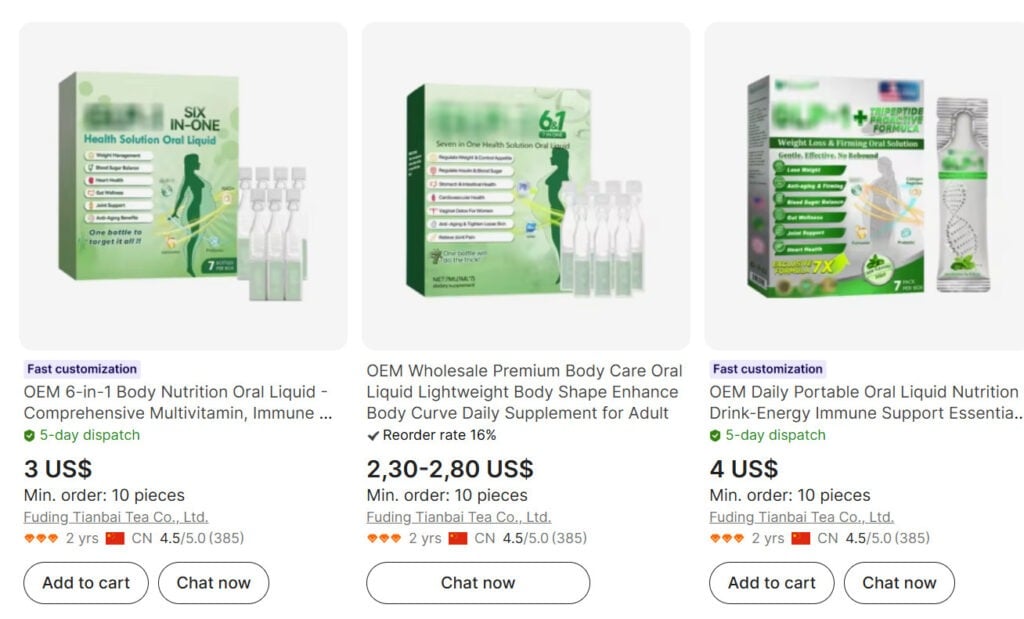
This is where dropshipping comes in.
A common setup looks like this:
- The storefront is run by a marketer, not a manufacturer
- Orders are routed to a third-party supplier or fulfillment partner
- The product is shipped directly to the buyer
- Customer support is handled by a thin email support layer, sometimes outsourced
This model can work ethically when it is transparent.
The problem is that the most aggressive versions are not transparent. They use local-sounding branding and official-looking badges to imply a level of legitimacy the operation has not earned.
7) Refund friction is part of the business model
A “180-day money-back guarantee” sounds comforting.
But the practical reality can be very different.
Here is how refund friction typically plays out:
- The buyer requests a refund
- The company asks for extra steps (photos, forms, long email chains)
- The company offers a partial refund to avoid a full refund
- The company delays responses until the chargeback window is closer
- The buyer gives up, or misses the dispute deadline
Again, not every seller will do this.
But the more the funnel relies on emotional persuasion and urgency, the more likely the back-end support is built to reduce refunds, not to help customers.
8) The brand can disappear and reappear under a new name
This is one of the strongest signals you are looking at a questionable operation.
Because the storefront is often just a marketing layer, it can be replaced quickly.
If a domain gets too many complaints, bad reviews, or ad account issues, the same product can be relaunched with:
- a new domain
- a new logo
- a new “official store” name
- the same patch photos and the same ad scripts
This is why you see the same microneedle patch concept recycled across multiple names.
And it is why it can feel impossible to pin down whether “Luxarise” is legit. Sometimes the name is not the real business at all. It is just the current wrapper.
9) Why “fake doctors” show up so often in these ads
A real doctor or pharmacist endorsement is hard to obtain, expensive, and risky to fake.
So why do so many of these ads still do it?
Because it works.
A white coat and a confident tone can override skepticism instantly, especially for people worried about weight, blood sugar, or long-term health.
If the “expert” image is fake, stolen, AI-generated, or misleading, that is not a minor issue. It is a sign the operation is willing to manipulate trust to make a sale.
If they are comfortable doing that in public, you should assume they will be difficult in private when you ask for a refund.
What To Do If You Have Fallen Victim to This Scam
- Stop further charges immediately
- Check your email for order confirmations and any wording about “membership,” “subscription,” “auto-ship,” or continuity billing.
- If you used PayPal, go into your PayPal settings and remove any automatic payment authorization connected to the merchant.
- If you used a credit card, consider asking your bank about blocking future charges from that merchant descriptor.
- Document everything while it is easy
- Screenshot the ad you clicked (if you can still find it).
- Save screenshots of the product page, pricing, and the refund policy.
- Save your order confirmation, invoice, and any tracking emails.
- Take photos of what arrived, including packaging and labels.
- Contact the seller, but keep it short and structured
- State your order number.
- State what you want (refund, cancellation, stop shipments).
- Set a clear deadline for response, such as 48 hours.
- If support stalls, move to a dispute or chargeback
- If you paid by credit card, contact your card issuer and ask about disputing the charge.
- If you paid by debit card, ask the bank what protections apply and whether a dispute is possible.
- Provide your screenshots and timeline.
- Do not keep “testing it” if you feel unwell
- If you experience irritation, rash, dizziness, heart symptoms, or anything that worries you, stop using the product and talk to a healthcare professional.
- Be especially cautious if you have diabetes, take blood sugar medication, take blood pressure medication, or are managing a chronic condition.
- Report the ad and the storefront
- Report the ad directly on the platform where you saw it (Facebook, Instagram, TikTok).
- File a complaint with consumer protection agencies relevant to your country.
- If you believe the ad used fake medical endorsements or misleading medical claims, mention that clearly in your report.
- Warn others without exposing your personal info
- Post a brief warning where you found the ad, or in a consumer forum.
- Share the domain name and the tactics you saw (fake doctor, big guarantee, “official store,” dramatic claims).
- Do not post your address, phone number, or full card details.
The Bottom Line
Luxarise Moringa & Berberine Microneedle Patch ads are built around a familiar, high-pressure formula: dramatic promises, official-looking badges, urgency pricing, and authority-style endorsements that are often difficult to verify.
That does not look like a careful, transparent wellness brand. It looks like a conversion funnel.
If you want to support weight management or blood sugar health, you are safer choosing options sold by established companies with clear labeling, verifiable business identity, and realistic claims.
And if you already bought this patch and regret it, focus on stopping further charges, documenting everything, and escalating to your payment provider quickly if support becomes evasive.
FAQ: Luxarise Moringa & Berberine Microneedle Patch Scam
Is Luxarise Moringa & Berberine Microneedle Patch legit or a scam?
Many versions of this offer show classic scam and dropshipping red flags: exaggerated medical claims, fake or misleading “doctor” marketing, questionable trust badges, and refund complaints. Even if a product arrives, the advertising and business practices can still be deceptive.
Does the patch really cause “visible changes in 7 days”?
Be very skeptical. Rapid, guaranteed body changes are a common marketing hook in scammy weight-loss funnels. Real weight and metabolic change varies widely and rarely follows a fixed timeline for most people.
Are the “FDA” and “GMP” badges on the site real?
Badges are often used as persuasion, not proof. FDA does not approve most supplements the way it approves prescription drugs. “GMP” can be used loosely. The presence of these icons does not confirm the product is clinically proven or safe for the dramatic claims being advertised.
Are the reviews and “100,000+ customers” claims trustworthy?
Often, no. Many scam and dropshipping sites display huge review counts without verifiable sources. Some reuse testimonials, show generic comments, or display numbers that cannot be independently confirmed.
Why do the ads use doctors, pharmacists, or clinic imagery?
Because it boosts trust and conversions. In many scam campaigns, the “doctor” is not verifiable, is a stock image, or is used in a misleading way. If you cannot confirm the identity and credentials, treat the endorsement as marketing, not evidence.
Is this a subscription or does it come with recurring charges?
Some buyers report unexpected recurring billing or “continuity” charges with similar offers. Check your receipt, the checkout page terms, and your card statement merchant descriptor. If anything looks unclear, contact your bank and block future charges.
Why do these sites call themselves the “only official store”?
That language is common in scam funnels. The same patch concept often appears under different brand names and domains. “Official store” wording does not prove a brand is legitimate.
Where does it ship from?
Many buyers report shipping patterns consistent with overseas fulfillment, even when the site implies the product is made or shipped locally. Long delivery windows and vague tracking updates are common in dropshipping operations.
Can the patch actually deliver moringa and berberine effectively through skin?
Microneedle technology is real in medical contexts, but consumer “miracle patch” claims are often overstated. Without clear independent testing, exact dosing information, and credible clinical evidence for the specific product, you should not assume effective delivery or meaningful results.
Is it safe to use?
If you have any reaction like rash, irritation, dizziness, heart symptoms, or you take medications (especially for blood sugar or blood pressure), stop using it and speak with a healthcare professional. Be cautious with any product making strong metabolic or diabetes-related claims.
What should I do if I already ordered it?
- Save screenshots of the ad, product page, and refund policy
- Save your order confirmation and tracking emails
- Contact the seller and request cancellation or refund in writing
- If they stall, dispute the charge with your bank or card issuer quickly
- Check for and cancel any PayPal automatic payment authorization if used
How do I cancel or get a refund if they ignore me?
If customer support is unresponsive or keeps delaying, move to a dispute or chargeback with your payment provider. Provide your documentation, including screenshots, emails, and proof of misleading claims.
How can I avoid scams like this in the future?
- Avoid ads that promise fast, guaranteed results like “7 days”
- Be wary of “doctor” endorsements you cannot verify
- Do not trust badge clusters as proof
- Look for a real company identity: address, phone, clear policies, and consistent brand history
- Search the brand name plus “reviews,” “complaints,” “refund,” and “subscription charge” before buying