

A jumpsuit can look like an easy summer purchase, especially when the shop behind it tells a story that feels warm and familiar.
Mary & Susan Savannah attracted buyers with that kind of boutique appeal. What should someone considering an order, or waiting for one, know now?
Overview
The boutique identity that buyers encountered
Mary & Susan Savannah used marysusansavannah.com to sell women’s clothing. Its indexed About page described a friendship-led business with a Savannah connection.
That presentation matters because customers can reasonably picture a small American boutique, with someone nearby selecting the clothes and handling problems.
A story creates that impression. It does not establish where an individual parcel starts, what fabric it contains, or where a return must go.
The complaint pattern is difficult to ignore
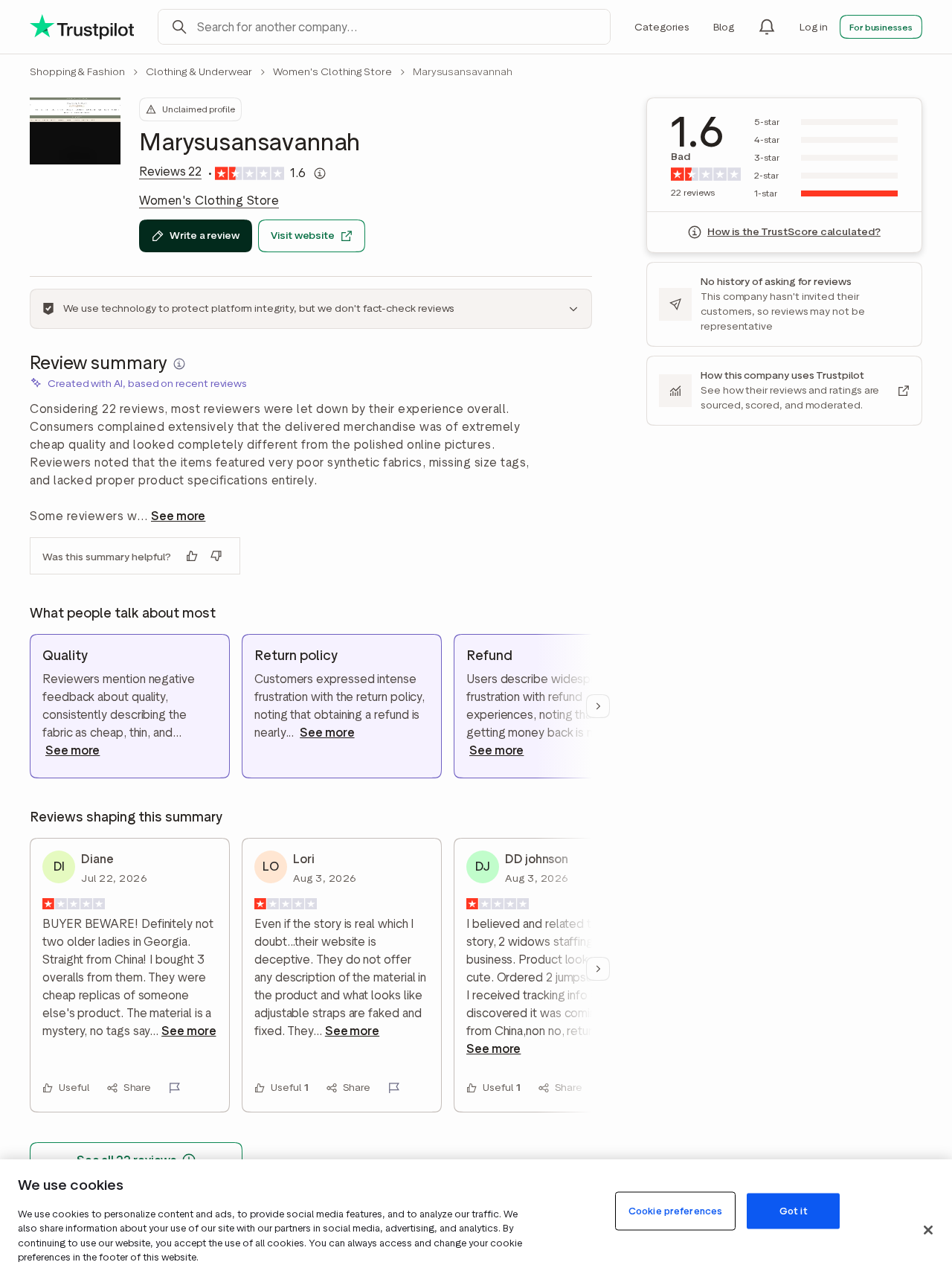
The Trustpilot profile displayed a 1.6 score from 22 reviews when checked. All 22 visible ratings in that snapshot were one-star.
Individual accounts describe disappointing materials, garments differing from their pictures, difficulty arranging returns, and costly overseas return proposals.
These are customer reports, not independent laboratory tests or a court finding. Their repeated purchase-related themes still give prospective buyers substantial reasons to stay away.
- Look beyond the local-boutique story.
- Require precise fabric and garment specifications.
- Find out where an authorized return would go.
- Keep payment-dispute deadlines separate from support promises.
Our verdict for someone thinking of ordering
Do not place a fresh order on the strength of this brand story. The visible complaint record offers too little confidence in product matching and after-sales help.
The storefront also returned an unavailable response during this check, so current checkout terms could not be established. That alone does not explain why access failed.
Existing buyers should focus on preserving their own transaction evidence and seeking a concrete remedy, rather than waiting for the website to become reassuring again.
What the Mary & Susan Savannah Complaints Actually Describe
The most useful reviews describe specific purchase problems. General insults tell a reader less than a comparison between what was ordered and what arrived.
A July reviewer described ordering several overalls and receiving garments she considered poor replicas, with missing fabric information.
An August reviewer said expected adjustable straps were fixed and material descriptions were absent. Another described synthetic-looking fabric and a return quote of $30 to $40.
Other accounts describe unsuccessful attempts to arrange returns. The recurring concern is not simply that someone disliked a color or chose an unsuitable size.
It is a reported gap between the product presentation and the delivered garment, followed by a difficult or uneconomic route to a refund.
The store’s indexed anniversary pages also advertised larger basket discounts, with additional reductions for ordering several items together.
That historical promotion helps explain why a disappointed customer might have several garments to resolve, rather than one inexpensive test purchase.
A basket discount does not reduce the importance of checking each item. Several poorly matched pieces can leave more money exposed to the same return difficulty.
If your order contains multiple items, document each discrepancy separately. One photograph of the whole parcel may not explain why individual garments were unsuitable or incorrect.
You can read the individual Mary & Susan Savannah reviews rather than relying on a score alone.
The review dates visible on the profile include July and August 2026. They should not be presented as proof that new complaints arrived this morning.
Nor should a reviewer’s guess about AI, a manufacturer, or a company’s identity be promoted into a verified fact.
The purchasing warning is strong enough without that leap. Specific accounts of mismatched clothing and expensive returns are directly relevant to the decision at hand.
How the Reported Mary & Susan Savannah Buying Journey Unfolds
Step 1: A personal story makes the shop feel local
The indexed About page described two friends, a long-running friendship, and the growth of a clothing business. Savannah formed part of the brand identity.
For a reader, that may suggest a different relationship from buying an anonymous garment through a distant marketplace.
The trouble starts when that feeling replaces practical checks. A story about friendship does not tell you who will inspect a defective item or accept its return.
Before trusting the narrative, look for a named legal seller, usable contact details, garment specifications, and an order-specific return destination.
Step 2: Attractive pictures carry the product promise
Online clothing purchases depend heavily on photographs. Texture, drape, straps, stitching, and fit can influence a decision before the buyer reads a description.
When those details matter, save the pictures as well as the text. A later disagreement may turn on a visible feature rather than a general quality claim.
For example, an adjustable strap and a fixed strap are different features. A clear listing photograph can help explain that distinction to the merchant.
Do not describe every disappointing garment as counterfeit. Describe the actual mismatch, including measurements, labeling, fabric description, and construction.
Step 3: Delivery is where the promise can be tested
Several reviews describe disappointment after opening the parcel. That is the first point at which a buyer can compare the physical item with the advertised one.
Keep the shipping label and photograph the unopened package if possible. Then document the garment, its tags, and the feature that differs.
A parcel’s dispatch location can also matter to delivery expectations. It should be recorded from tracking or packaging, not assumed from the brand name.
Some reviewers reported China-related shipping or returns. Those experiences do not establish that every past or future shipment follows an identical route.
Step 4: Return discussions can turn the bargain into a loss
A cheap-looking garment is frustrating. Being asked to pay a large amount to send it back makes the original bargain harder to recover.
One reviewer described return shipping of $30 to $40 for an item priced at $47. That account illustrates the practical problem.
If a substantial part of the purchase price disappears into postage, a nominal refund offer may provide little real relief.
Do not assume that an expensive return request is the only remedy available. Your payment provider may consider a documented wrong-item or not-as-described complaint.
Step 5: Delay can weaken the buyer’s position
A support conversation can continue without moving toward a decision. Repeated requests for patience are not the same as return authorization or an approved refund.
Set out the problem, provide the relevant evidence, and ask for a specific response. Keep the exchange in one thread where possible.
At the same time, find out your payment provider’s deadline. Do not allow an open-ended email conversation to consume the period for raising a dispute.
This is particularly important when a storefront becomes difficult to access. Your receipt and existing correspondence may then become the main record of the transaction.
Business Identity, Contact, and Return Checks
A Savannah name does not identify the fulfillment location
A place name can be part of a brand without being the address from which every package ships.
For this purchase, the important question is practical: which business accepted your money, and which party is responsible for the item you received?
Use your order confirmation and payment statement to answer that question. Preserve a merchant descriptor even when it differs from the storefront name.
The receipt is more useful than an unverified company guess
Reviews sometimes propose connections to other businesses based on labels or internet searches. Those connections need transaction-level evidence before being treated as established ownership.
A different company name on a parcel may identify a logistics provider, a platform, a manufacturer, or the seller. The role should be clarified.
Ask the merchant to identify the entity responsible for your order. Give the payment provider the documents rather than a speculative network diagram.
Support should answer the remedy question
Use the contact details already supplied with your purchase. A recently created social-media page or a search advertisement may not belong to the same merchant.
Your message should ask for a refund, replacement, or authorized return, depending on the problem. Include a photograph when it demonstrates a specific mismatch.
If the response offers only a discount on another order, decide whether that solves anything. Another purchase can simply increase your exposure.
The return destination must be confirmed before posting
Do not treat the sender address on a shipping label as permission to return a garment there.
Obtain the recipient name, full destination, authorization requirements, and cost allocation in writing. Ask why a particular destination applies if it contradicts the purchase presentation.
If the proposed address is overseas, get a tracked postage quote. Keep that quote with the support exchange if you later challenge the offered remedy.
What to Do if You Ordered from Mary & Susan Savannah
- Build a short transaction timeline.
List the order date, promised dispatch or delivery date, payment amount, tracking updates, arrival date, and first complaint.
Attach the receipt and the relevant screenshots. A clear timeline helps a payment provider understand the issue without reading dozens of scattered messages.
- Document a product mismatch before wearing or altering the item.
Photograph labels, seams, straps, measurements, and the whole garment in good light. Keep the original packaging.
Compare these with the listing’s actual claims. Do not wash, repair, or modify the item while asking for a return unless the merchant expressly agrees.
- Request a specific remedy from the merchant.
Explain what differs and what outcome you want. If the wrong item arrived, say so plainly rather than presenting it as an ordinary change of mind.
Ask for return authorization and prepaid postage where appropriate to the fault. Keep a copy of the request outside the store’s account system.
- Evaluate any partial-refund proposal carefully.
Work out the amount you would actually receive. Compare it with the cost and uncertainty of an authorized return.
Ask whether accepting the payment settles the entire complaint. Do not assume you can accept a final settlement and then pursue the same amount again.
- Contact the payment provider before its deadline.
Explain the real category of problem: missing delivery, an item materially different from the description, an incorrect amount, or an agreed refund not received.
The CFPB describes credit-card dispute procedures. Ask your issuer about the process for your circumstances and retain its instructions.
- Report the experience without exaggerating it.
A useful complaint gives the domain, dates, amount, product discrepancy, and the merchant’s response. Remove your address, card details, and order-access links before posting publicly.
You can also notify the platform that carried a misleading advertisement. Supply the ad itself when available, not just a screenshot of an unrelated boutique.
How to Assess a Boutique Story Without Getting Distracted
A shop can have a personal origin story and still provide poor service. Equally, a polished website does not establish that its story is false.
You do not need to resolve every biographical detail before making a safe buying decision. You need credible product information and workable purchase terms.
Start with material composition. A photograph that looks like textured cotton is not a written promise of cotton unless the listing says so.
Then inspect measurements rather than a broad small, medium, or large label. Ask whether the dimensions describe the body or the finished garment.
Check whether the merchant explains dispatch location and delivery timing before payment. A local-sounding name cannot answer those questions for you.
Finally, price the return risk. An apparently inexpensive garment can become an expensive mistake when international postage exceeds its remaining value.
When several independent purchase accounts describe the same problems, you do not owe the shop a test order to see whether you are luckier.
Frequently Asked Questions
Is Mary & Susan Savannah safe to order from?
We recommend avoiding a new order. The visible review record raises substantial concerns about clothing matching its presentation and customers obtaining practical return assistance.
The store’s current checkout conditions were not accessible during this check, leaving no reliable basis for reassurance about a fresh purchase.
What do the reviews say?
Customers describe disappointing materials, construction or labeling differences, and difficulties arranging returns. The checked profile displayed 1.6 from 22 reviews.
Read individual accounts and their dates. A reviewer’s opinion about fraud or AI should not be confused with independently established evidence.
Does the clothing come from China?
Some reviewers report China-related tracking or return instructions. That is relevant consumer testimony, not proof of the origin of every item sold under this name.
For your own order, preserve the shipping label, carrier history, and written return instructions.
Can I return an item to a Savannah shop?
Do not assume a local retail return exists because Savannah appears in the name. Request the authorized return destination for your order.
Sending a parcel to an unconfirmed address can leave you without the clothing or a recognized return record.
Does an unavailable website mean my money is lost?
No. A website access problem does not cancel the receipt, payment record, or any dispute process available through your provider.
Gather your documents and raise the issue promptly. Do not wait indefinitely for the storefront to return before asking for help.
Should I pay someone to recover the purchase price?
Be wary of unsolicited recovery offers that demand an upfront fee or account access. Use the merchant’s documented route and your payment provider first.
A person appearing beneath a complaint thread is not automatically an authorized representative of the store or your bank.
The Bottom Line
A friendly boutique story is not enough. Mary & Susan Savannah’s visible complaints make this a purchase to avoid, especially without clear, accessible current terms.
If you already paid, preserve the product comparison and seek a specific remedy now. Keep your payment provider’s deadline in view while the merchant responds.

Join the discussion
0 commentsShare your experience or ask a question about this article.
Discussion
Start the conversation
Have a question or something useful to share? Add the first comment.