

Forgetting a name once is easy to laugh off. When it starts happening more often, a bottle promising better memory can suddenly feel worth trying.
MemoForce speaks straight to that worry. Before you reach for your card, take a closer look at the offer behind the bottle.
Overview
The FDA badge gives buyers the wrong impression
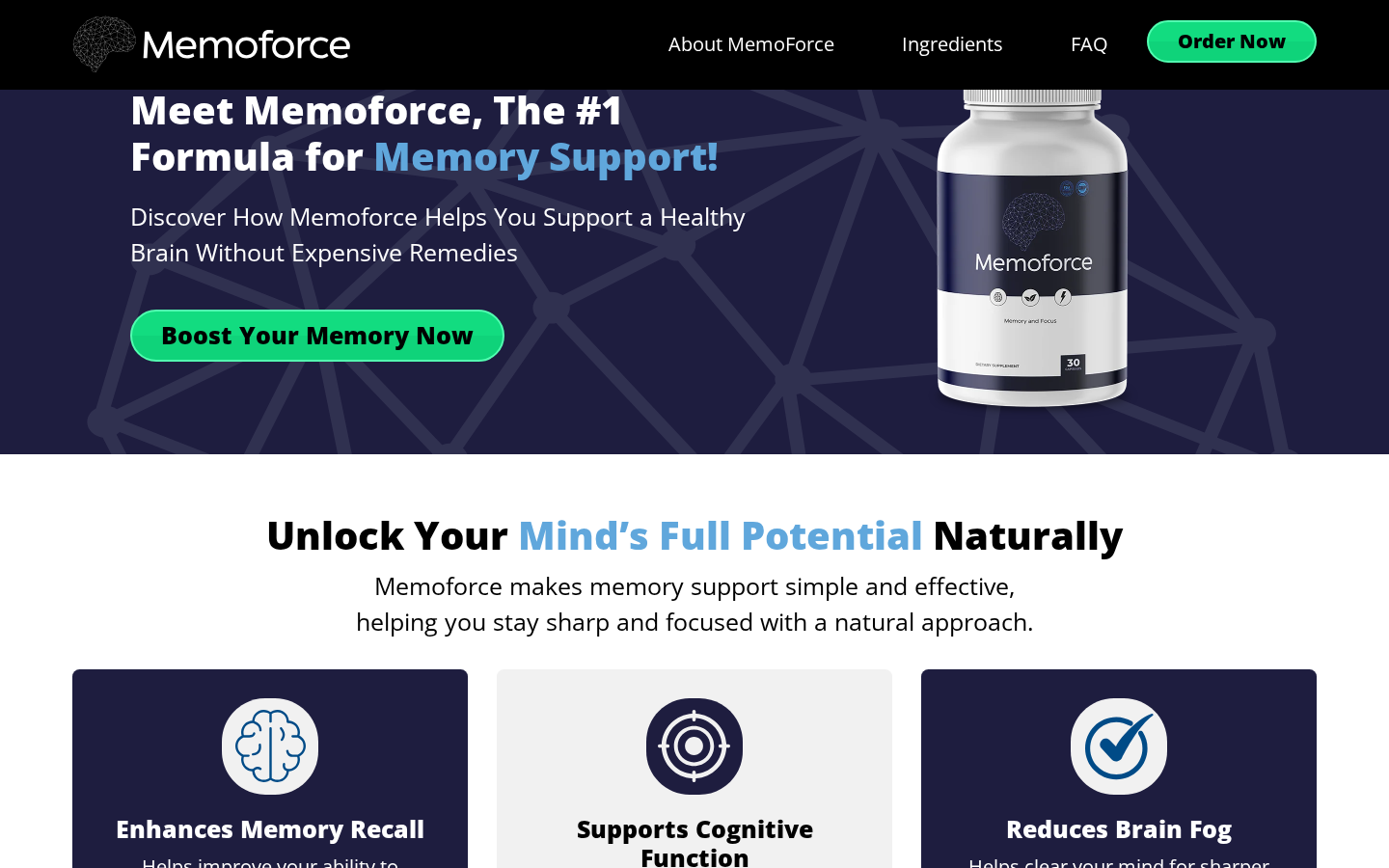
MemoForce is sold for memory, focus, and brain fog. One promotional website, memory-force.com, places an FDA Approved badge beside the product.
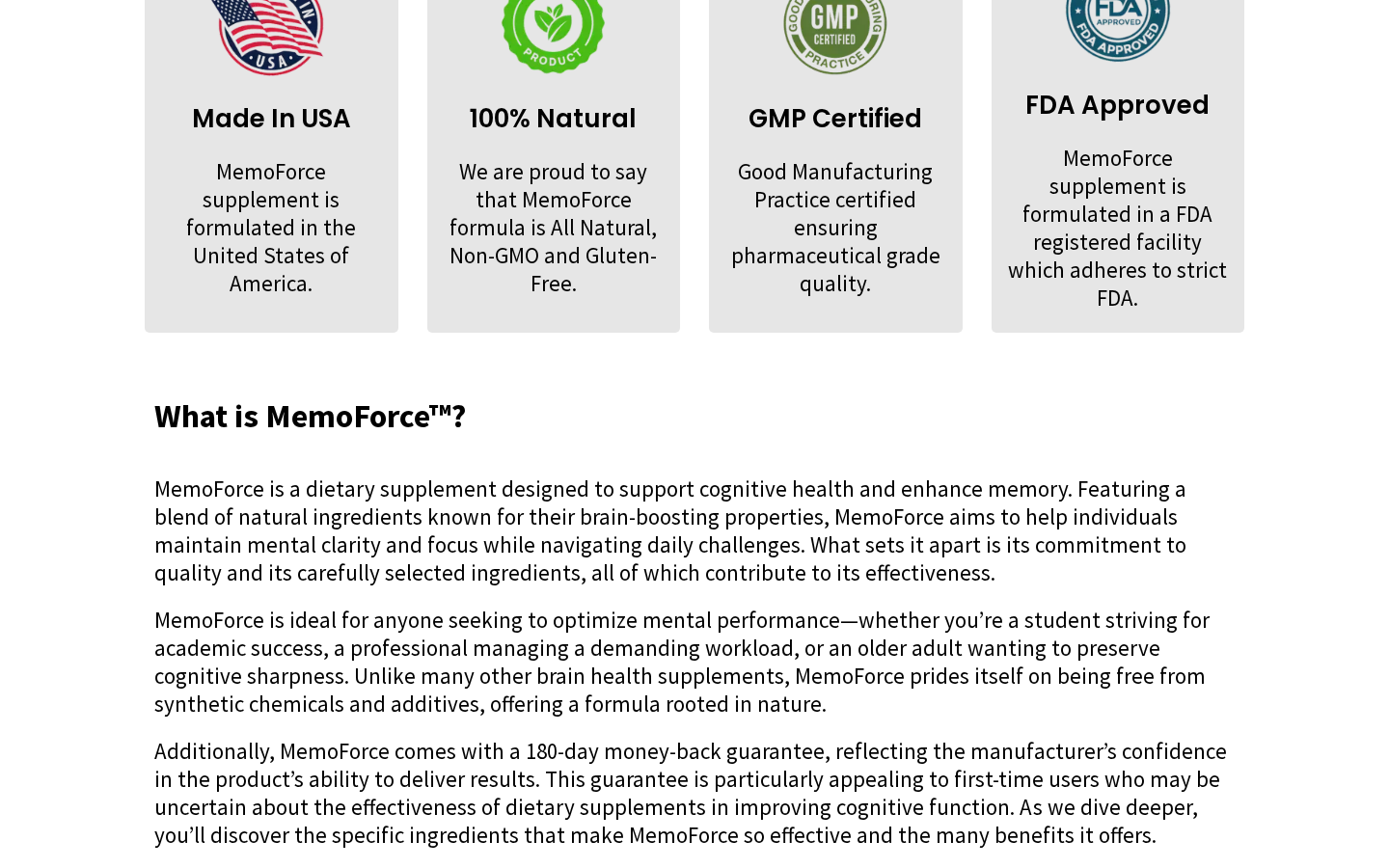
The smaller explanation talks about an FDA-registered facility. That does not mean the FDA approved the capsules, tested their effectiveness, or endorsed their memory claims.
Someone scanning the badges could easily leave with the opposite impression. The claim needs correcting, regardless of whether the bottle eventually arrives.
The price and guarantee change between pages
On getmemoforce.com, the lowest advertised unit price comes with six bottles. At $49 each, the package costs $294.
That page gives buyers a 60-day guarantee. The other promotional site promises 180 days, leaving an obvious question about which terms cover the purchase.
You should have that answer before paying. A guarantee on the page you first visited may differ from the one attached to your receipt.
- Two bottles: $158, plus the listed shipping charge.
- Three bottles: $207, with free shipping advertised.
- Six bottles: $294, also advertised with free shipping.
- The main refund policy starts its 60-day clock at shipment.
- That policy asks for all bottles back, including empty ones.
The formula needs a clearer explanation
The sales page describes several ingredients and their possible benefits. It does not show that this particular mixture has delivered the promised results in a clinical trial.
A readable label is missing from the material examined. Without individual amounts and clear serving instructions, you cannot make a meaningful comparison with ingredient research.
Our advice is to wait until those basics are clear. If memory problems are affecting your daily life, make an appointment rather than guessing at the cause.
What You Would Actually Be Buying
The main offer presents MemoForce as a daily supplement. Its appeal is familiar: sharper recall, easier concentration, and less of that foggy feeling.
Those promises cover several different experiences. Losing your train of thought after poor sleep is not the same problem as a noticeable change in everyday functioning.
A shopping page cannot tell which applies to you. That matters because the explanation determines what kind of help is useful.
The ingredient section highlights ginkgo biloba, phosphatidylserine, carnitine, St. John’s wort, bacopa, and huperzine A. Each is paired with a short benefit description.
For a shopper, those names can sound reassuringly familiar. They still leave the most practical question unanswered: how much of each ingredient is in a serving?
Ask for a clear photograph of the complete Supplement Facts panel. It should also show the serving size, other ingredients, warnings, and responsible manufacturer.
Check the bottle count and capsule count separately. The length of a supply depends on the actual directions, not simply the number printed on the package.
If support sends only the front of the bottle or repeats the marketing description, ask again for the back label. That is the information you need.
A Long Research List Is Not a Product Trial
MemoForce’s page includes a lengthy bibliography. At first glance, it makes the purchase look backed by years of work.
Read what those references concern. Studies of separate ingredients cannot automatically tell you how a finished mixture will work at different amounts.
A useful study should let you identify the product tested, participants, dose, duration, and result. Those details give the research meaning.
A paper about mood, for example, does not necessarily answer whether a capsule improves memory. Nor does a laboratory result establish a benefit in people.
NCCIH’s review of cognitive supplements describes mixed findings for ginkgo. It does not find conclusive evidence that ginkgo prevents or slows dementia or cognitive decline.
It also describes a trial involving more than 3,000 older adults that did not establish dementia prevention. That trial used a defined ginkgo product.
The distinction matters when an advertisement borrows the reputation of a studied ingredient. You still need a reason to expect the advertised bottle to perform similarly.
Ask the seller for the trial supporting MemoForce itself, rather than another general research list. Look for results that match the benefit you are buying it for.
Customer stories can describe someone’s experience, but they cannot answer all those questions. Better concentration is a personal report, not proof that a medical condition was treated.
Why the FDA Badge Should Not Reassure You
The memory-force.com panel is headed FDA Approved. Beneath it, the explanation says the supplement is formulated in an FDA-registered facility.
Facility registration and product approval are different. A registration statement does not tell you that the FDA checked the formula or agreed with its sales promises.
The FDA explains that dietary supplements generally do not undergo approval before sale. The badge suggests reassurance the smaller wording cannot provide.
GMP claims have a similar limit. Manufacturing standards concern how products are made; they do not establish that a memory claim works as advertised.
You should be able to trace either claim to the named manufacturer. A row of seals offers little help if the company behind the formula remains unclear.
How the MemoForce Offer Leads to a Purchase
Step 1: The page puts a name to a familiar worry
The opening promises help remembering names, dates, and details. If those little lapses have been bothering you, it is easy to see yourself in the description.
The next step feels simple: try the bottle. There is no appointment to arrange and no uncomfortable conversation to start.
Pause there. Write down what has changed and how often it happens. That gives you something useful to discuss with a clinician, even if you buy nothing.
Step 2: Ingredient descriptions make the answer sound settled
The page connects each ingredient with a brain-related benefit. The overall impression is that the formula neatly covers the concerns mentioned at the start.
The missing amounts make that impression difficult to check. Knowing that an ingredient has been researched does not tell you whether this serving resembles the one studied.
Keep the label and research questions together. If the seller cannot connect them, the confidence of the wording should not make the decision for you.
Step 3: The lowest unit price pulls you toward six bottles
The six-bottle package receives the strongest value label. Its $49 figure is easier to remember than the $294 total.
The smaller packages cost more per bottle, which makes the larger purchase look economical. But you would be committing more money before knowing whether the product suits you.
Think about the amount leaving your account today. A lower unit price offers little comfort if you would rather have tried a smaller purchase.
The advertised choices are two, three, and six bottles. These package cards do not show that a seller secretly adds bottles after payment.
Step 4: The payment page needs to match the offer
The getmemoforce.com package buttons point to ClickBank payment pages. The site’s footer identifies ClickBank as the retailer and separates order support from product support.
The other promotional website uses a referral link with a different vendor identifier. That alone does not settle which product would appear at the end.
Read the final product name, quantity, retailer, and guarantee before entering payment details. If any of them differ, get an explanation first.
ClickBank’s presence does not certify the health claims. The main page’s own disclosure says its role as retailer is not an endorsement.
Step 5: The refund period may end while bottles remain
The main FAQ encourages a three- or six-month supply. Its detailed refund policy gives you 60 days from shipment.
Those periods do not line up. A six-month package can leave months of unused supply after the stated refund window has ended.
A week in transit also uses roughly a week of that window. The clock is already running before you first open the parcel.
Check the shipping date as soon as the confirmation arrives. Do not wait until you finish the last bottle to find out whether you can still request a refund.
The Companies, Contacts, and Return Destination
Who handles the payment, and who makes the capsules?
The main footer names Click Sales Inc. through its ClickBank disclosure. It also uses MemoForce Research in the copyright line.
Those names do not identify a verified manufacturer of the formula. Ask for that company separately, especially if the invoice and bottle use different names.
A payment processor or retailer may handle an order without making the product. You need the right contact for each question.
What the Aurora address is for
The return instructions list 19655 E 35th Drive, Suite 100, Aurora, CO 80011. The page gives it as a place to send returned bottles.
A returns address does not necessarily locate a factory or headquarters. Use it for the purpose stated, after getting the authorization requested by the policy.
If you purchased through a different MemoForce website, ask its retailer for instructions. Do not assume every similarly named order goes to the same depot.
Where to ask for help
The published product email is support@getmemoforce.com. The contact page also lists (833) 685-1388 for order-status questions and promises a response within 48 hours.
These contacts have not been tested by a call or message here. Keep your own replies, especially anything confirming a refund or cancellation.
A useful answer should address your order and the question you asked. Another list of benefits does not explain where to send a return.
What to look for on the delivered bottle
Check the complete ingredients, serving directions, lot number, expiration information, and manufacturer’s details. Photograph them before throwing away any packaging.
Compare that label with the one supplied before purchase. An unexplained difference deserves a response from the vendor before you start taking the capsules.
A country-of-origin claim or GMP logo cannot replace those details. There are no laboratory results here establishing what is inside each batch.
Check St. John’s Wort Before Taking the Formula
St. John’s wort appears in the main ingredient description. If you take medication, bring that detail to your pharmacist or clinician.
NCCIH warns that St. John’s wort can interact with important medicines. An ingredient can be natural and still cause a problem with your treatment.
Show the actual label, not just the product name. The amount and the rest of the formula matter when someone checks it against your medicines.
Do not stop a prescribed medicine to make room for a supplement. Ask for advice before adding the capsule to your routine.
What to Do If You Bought MemoForce
-
Start with the receipt. Find the exact product, package size, retailer, amount paid, and shipment date. Keep the email somewhere you can easily retrieve it.
If the receipt names another product, raise that difference promptly. Save the page that led you to buy, so your explanation has something concrete behind it.
-
Put the refund deadline in your calendar. The main policy counts 60 days from shipment. Use the date in your shipping confirmation.
If another guarantee was promised during checkout, ask the retailer to confirm it in writing. Do not borrow a longer deadline from an unrelated promotional page.
-
Keep the bottles, including empties. The refund instructions ask for all of them back. Throwing one away can leave you missing an item the seller expects.
Photograph the labels and lot information first. Those pictures may also help a pharmacist understand which formula you received.
-
Ask support for return approval. Include the order number and say that you want a refund. Confirm the destination, postage cost, and amount to be returned.
The policy says you pay return postage. Keep tracking and email the tracking number as requested, rather than relying on a parcel arriving without identification.
-
Check whether you agreed to future payments. The packages described here do not establish an automatic refill plan. Your own receipt is the place to check.
If it includes renewals you no longer want, cancel those separately and keep the confirmation. Sending bottles back may not cancel a continuing payment arrangement.
-
Get help with symptoms or medication questions. Explain any memory changes and bring the bottle if you have already used it.
You do not need to wait for the seller’s suggested trial period before seeking care. The refund process can continue while you arrange an appointment.
-
Contact the payment provider if the issue remains unresolved. Send the receipt, guarantee, correspondence, and return tracking, and ask about its dispute deadline.
Explain what happened plainly. A wrong product, missing delivery, disputed refund, and payment you never authorized each need a different account of the facts.
Frequently Asked Questions
Is MemoForce FDA approved?
No product approval is established by the promotional badge. Its smaller text refers to facility registration, which does not mean the FDA approved the capsule’s effectiveness.
Why do the websites give different refund periods?
They advertise different terms. The main refund page gives 60 days from shipment, while another promotion says 180. Confirm the guarantee attached to your order.
Can I buy just one bottle for $49?
That is not the package shown on the main offer. The $49 rate applies to six bottles costing $294 together.
Does the research list prove MemoForce improves memory?
It does not show that on its own. Ingredient studies need to match the formula, amounts, and result being promised before they can support that conclusion.
Will my order include automatic refills?
That cannot be answered from these package cards. Look for a renewal amount and schedule on your checkout page and receipt.
Can I return bottles I have already opened?
The main policy asks for both empty and unopened bottles. Contact support first and follow its instructions within the stated guarantee period.
The Bottom Line
Do not buy MemoForce through these offers. The misleading FDA badge, conflicting guarantees, and missing formula details are enough reason to skip the purchase.
If you already ordered, check the shipment-based refund deadline and request return instructions now. For worrying memory changes, arrange medical advice instead of buying more capsules.








