

MemoHive is presented as a premium memory supplement with transparent dosing, thousands of happy customers, and a straightforward daily routine.
Looking beyond the bottle artwork reveals two newly created promotional sites, incompatible formulas, questionable support details, and two very different order outcomes.
Overview
What MemoHive claims to offer
MemoHive is promoted as a 60-capsule supplement for memory, focus, clarity, stamina, and everyday cognitive wellness.
The most consistent version lists five ingredients totaling 1,030 mg per two-capsule serving and describes a 30-day supply.
Why the promotional network is misleading
memo-hive.net and memo-hive.org were registered two seconds apart on September 15, 2026, through the same registrar.
Both use matching bottle art and similar affiliate links, but their copy does not maintain one reliable ingredient story or purchase route.
What the investigation found
The .net site reaches a functioning MemoHive sales page. The .org site’s order button falls onto an unfinished WordPress homepage.
- The promotional sites appeared almost simultaneously.
- One page contains incompatible ingredient formulas.
- A claimed customer total lacks transparent support.
- One published support number resembles placeholder information.
- Only one observed order route reaches a real product page.
This distinction matters. The existence of a real MemoHive order page does not make every page using the MemoHive name accurate or authorized.
Likewise, a broken affiliate page does not prove that every MemoHive bottle is counterfeit or that no buyer receives a shipment.
The evidence supports a focused warning about deceptive promotion, formula inconsistency, unreliable affiliate routing, and an identity trail buyers should verify carefully.
How the MemoHive Scam Works
Step 1: Search-focused pages pose as complete product guides
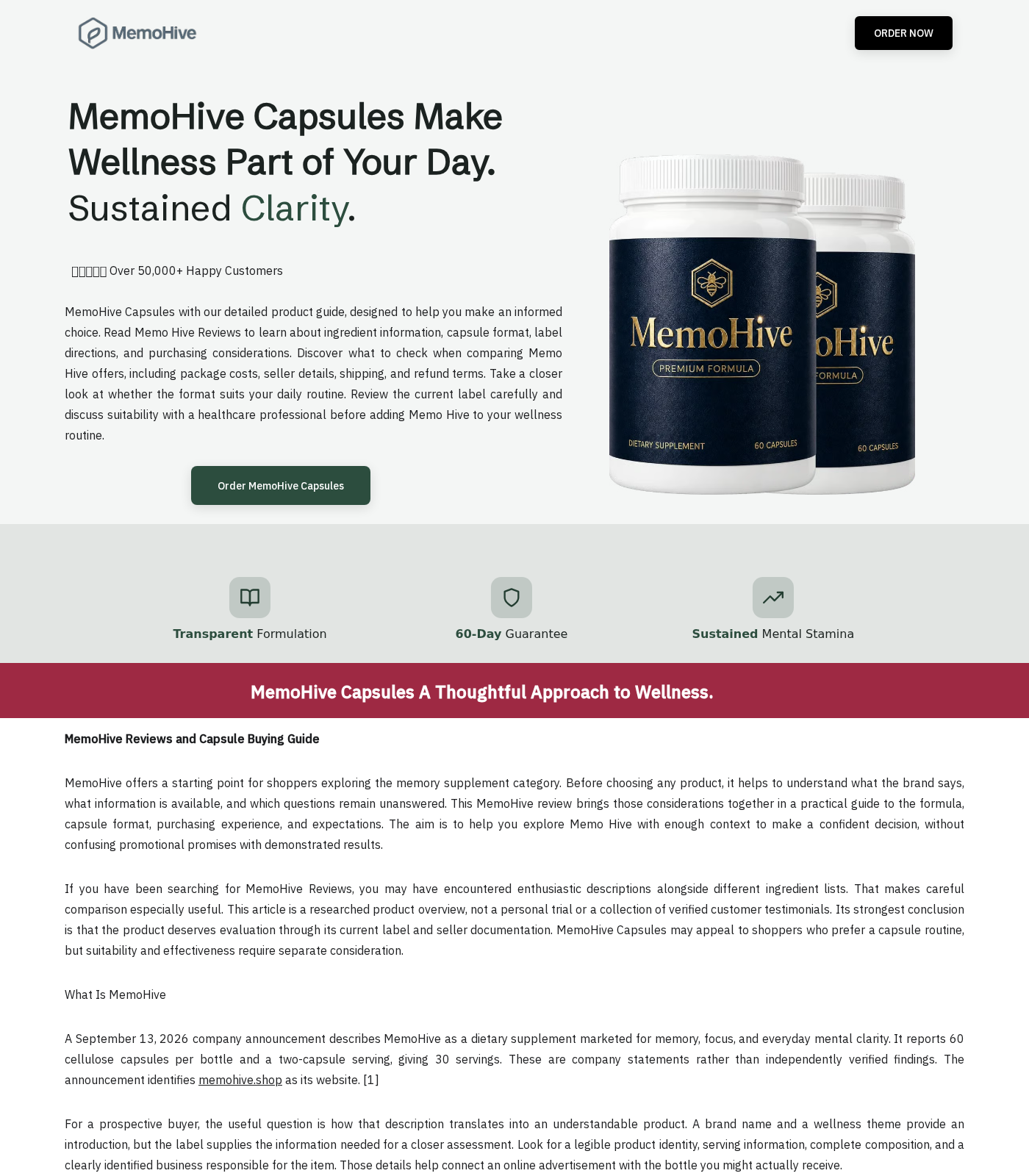
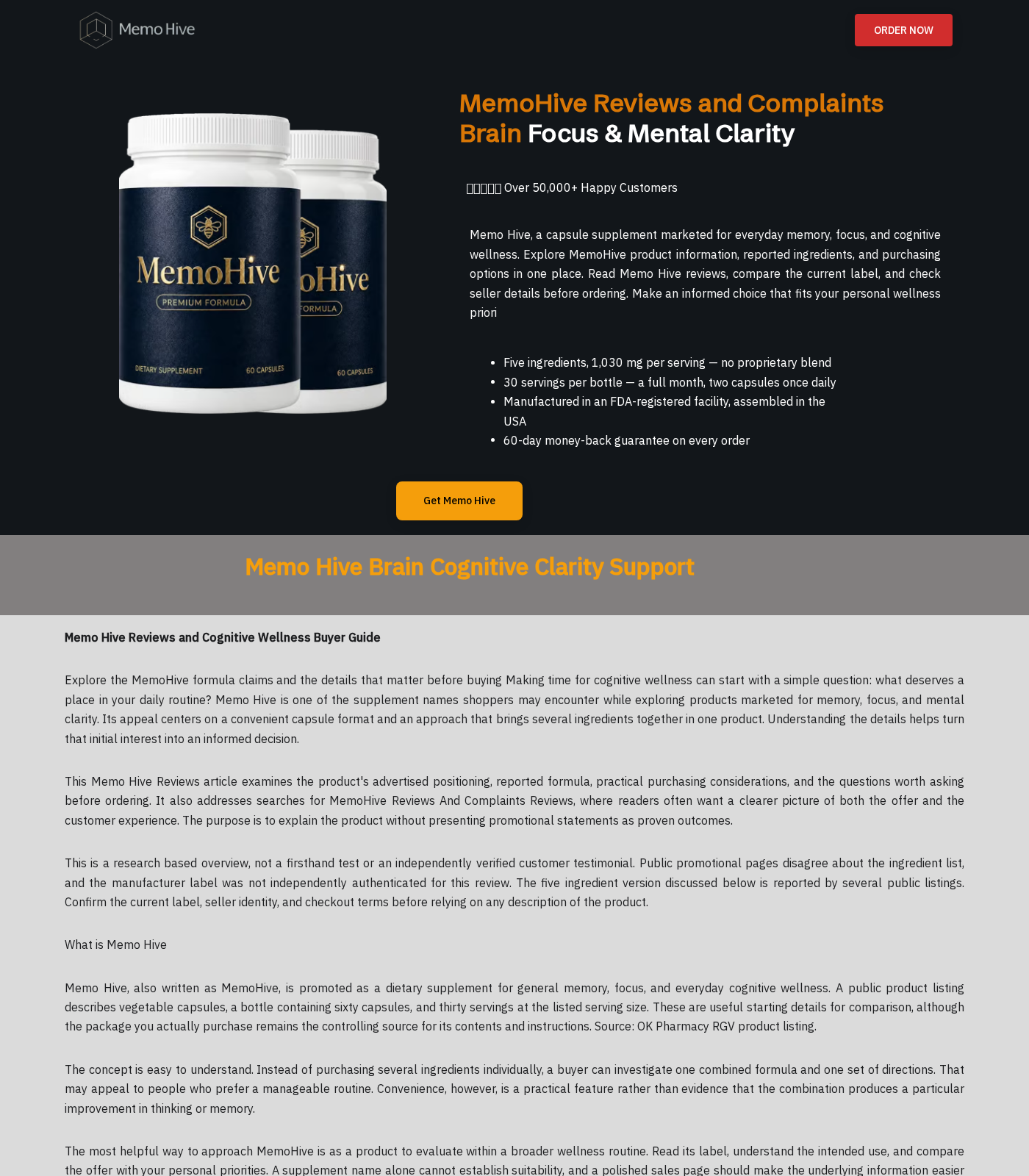
Both affiliate sites use long review-style text, polished product renders, wellness explanations, package references, and prominent Order Now buttons.
The length creates an impression of research. Much of the copy repeats cautious buying advice while steering readers toward an affiliate click.
That structure can rank for phrases such as “MemoHive reviews and complaints” without supplying independent testing or authenticated customer evidence.
Step 2: The bottle render makes the brand feel established
The sites show white bottles with dark labels, gold lettering, a bee emblem, and premium styling.
The artwork looks digitally rendered. That does not prove artificial intelligence was used, and it does not prove the bottle is fictional.
However, a front-facing mockup cannot verify a physical lot, sealed package, ingredient contents, or delivery history.
Step 3: Big popularity claims reduce skepticism
Both promotional designs display more than 50,000 happy customers near the top of the page.
No transparent review database, sales audit, date range, or methodology was provided to substantiate that figure.
Elsewhere, the review copy admits that ratings were not independently authenticated. The confident headline therefore outruns the page’s own evidentiary caution.
Step 4: Formula details contradict each other
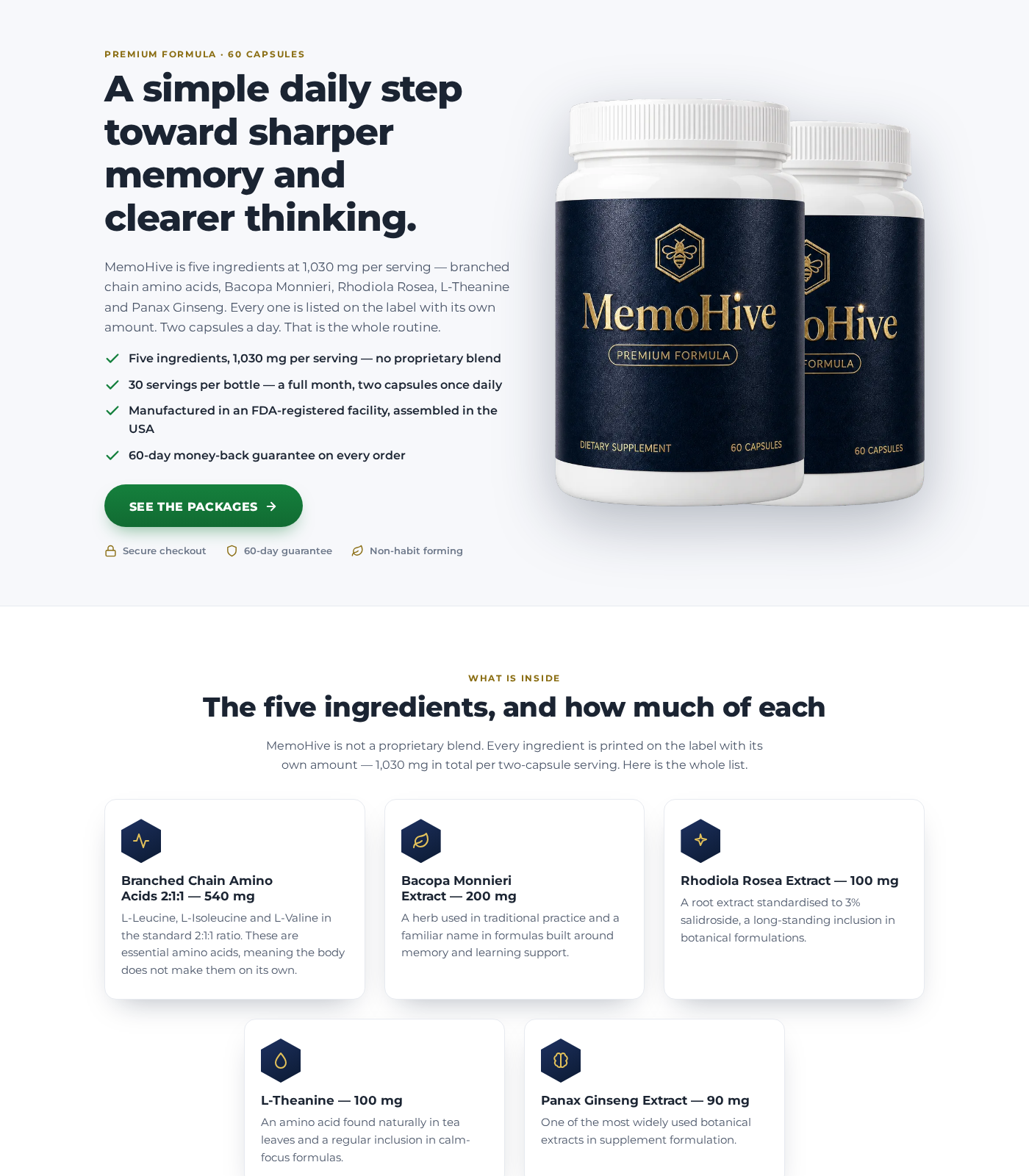
One description lists branched-chain amino acids, Bacopa, Rhodiola, L-Theanine, and Panax Ginseng, totaling 1,030 mg.
On memo-hive.org, a later section instead highlights L-Theanine 200 mg, Bacopa 300 mg, and Citicoline 250 mg.
Citicoline does not appear in the five-ingredient version. The listed L-Theanine and Bacopa amounts also change.
These are not small editorial differences. They describe materially different formulas under the same product name.
Step 5: One route reaches a more complete sales page
The memo-hive.net button redirects through Rush My Offers to getmemohive.com, where a coherent five-ingredient product page appears.
That page shows amounts, directions, a label image, distributor information, support contact, a 60-day guarantee, and BuyGoods checkout links.
The smallest bundle totals $158 plus shipping. Three bottles total $207, while the promoted six-bottle option totals $294.
This stronger destination is relevant, but it does not validate the conflicting claims published by outside affiliate pages.
Step 6: The second route reaches a dead end
The memo-hive.org order button uses a different Rush My Offers path. It redirects to the affiliate site’s generic homepage.
The destination contains the default WordPress “Hello world!” post and placeholder links rather than a MemoHive checkout.
A visitor cannot confirm a price, bottle quantity, seller, recurring terms, or refund policy from that route.
Step 7: Large bundles shift attention toward savings
The working sales page emphasizes the six-bottle package through lower unit pricing and prominent placement.
A shopper investigating a newly encountered supplement is encouraged to commit $294 before independent effectiveness or customer satisfaction is established.
No automatic refill term was visible on the reviewed package screen. This report does not claim proven subscription enrollment.
The documented concern is the promotional network, not an invented billing allegation. Buyers must inspect the exact checkout they personally receive.
The Ingredient Conflict Is a Safety and Trust Problem
Formula consistency is not merely an SEO detail. People use ingredient lists to evaluate allergies, interactions, doses, and overlap with other supplements.
A reader following the three-ingredient section could expect Citicoline. A buyer following the working order route sees a label without Citicoline.
The amounts for Bacopa and L-Theanine also differ sharply between the two descriptions.
Consumers should rely only on the sealed bottle’s current Supplement Facts panel, not descriptions copied across affiliate domains.
If the delivered label differs from the page that influenced the purchase, pause before taking the capsules and request clarification.
A pharmacist or clinician can assess the actual label in the context of medicines, health conditions, and other supplements.
What the Real Sales Page Does and Does Not Prove
getmemohive.com is more complete than the affiliate pages. It identifies ingredients, directions, distributor location, telephone number, policies, and a retailer.
Those details make the transaction easier to evaluate. They do not prove that memory or focus benefits will occur.
The page says the product is made in an FDA-registered facility. That phrase does not mean FDA approved the supplement.
Under federal rules, most supplements reach the market without FDA preapproval of either their safety or claimed effectiveness.
The page also states that BuyGoods is the retailer and does not endorse promotional claims. That distinction should be understood before ordering.
A 60-day guarantee is useful only when the buyer follows the actual policy. Save it before payment and note any return authorization requirements.
The Two Promotional Domains Look Coordinated
The registration timestamps are unusually close. memo-hive.net appeared at 08:25:55, only two seconds after memo-hive.org.
Both use the same registrar, related hosting infrastructure, matching bottle artwork, similar review language, and parallel Rush My Offers links.
These indicators support a coordinated campaign. They do not reveal the legal identity of the person or company controlling every domain.
The distinction matters because technical linkage is evidence of coordination, not automatic proof of criminal ownership.
What consumers can verify is simpler. The coordinated pages fail to maintain consistent product information and functioning sales routes.
They also appeared very recently, leaving little public history for independent buyers to examine.
The 50,000 Customer Claim Needs a Source
A large customer total creates social proof. It suggests that many people bought the product, tested the seller, and accepted the result.
For a domain registered days earlier, that number deserves a clear explanation. The total could refer to another channel, older sales, or unsupported marketing.
The pages do not explain when purchases occurred, which seller counted them, or how satisfaction was measured.
They also do not link the figure to an independent review platform where readers can inspect the underlying feedback.
That does not prove the number is fabricated. It means consumers should not treat it as verified evidence.
Authentic customer evidence normally includes dates, order context, a range of experiences, and enough detail to identify the exact product and seller.
Memory Support Claims Still Need Product-Specific Proof
Bacopa, Rhodiola, L-Theanine, Ginseng, and amino acids may appear in research, but ingredient familiarity does not validate every finished supplement.
Evidence must match the form, amount, serving schedule, population, outcome, and complete formula involved in the advertising claim.
FTC guidance expects health benefit claims to be supported by competent and reliable scientific evidence.
A page cannot solve weak evidence by placing scientific terms beside a premium bottle image or by calling its formula transparent.
The formula disagreement makes this problem sharper. Research cannot be matched to a finished product when the promoter changes the ingredients.
No verified clinical trial of the complete MemoHive formula was presented on the pages reviewed for this investigation.
Persistent memory problems deserve professional evaluation. A supplement advertisement should never delay assessment of symptoms affecting daily life.
Read the Guarantee Before Choosing a Large Package
The working sales page promises a full refund within 60 days. That headline sounds simple, but return procedures still matter.
Confirm when the period begins, whether opened bottles qualify, and whether every container from a bundle must be returned.
Ask whether original shipping, return postage, taxes, or handling costs are excluded from the refund.
Record any return authorization number and use tracked shipping. Keep the package receipt until the refund appears on your statement.
If support gives instructions by telephone, request the same instructions by email so the terms are documented.
A guarantee should reduce risk, not pressure buyers into purchasing six bottles before they understand the product.
How to Evaluate the Bottle That Actually Arrives
Start with the seal and packaging. Do not use a bottle that arrives opened, damaged, leaking, or without basic lot information.
Compare the product name, capsule count, serving size, ingredients, amounts, warnings, and distributor with the saved sales page.
Look for unexplained changes, especially Citicoline or altered amounts that appeared on one affiliate page but not the working label.
Check the order quantity as soon as the parcel arrives. Photograph the unopened package if more bottles were shipped than authorized.
Keep the mailing label because the return location may differ from the distributor address or retailer’s registered address.
If anything looks wrong, contact the seller before opening additional bottles. That preserves evidence and may protect return eligibility.
Company, Address, and Fulfillment Checks
The affiliate pages do not clearly name their operator
The two newly registered review domains provide extensive copy, yet they do not clearly identify the legal business operating each promotional page.
That omission matters because one route works, another fails, and the ingredient claims differ.
The address trail separates distributor and retailer
The working product page says MemoHive is distributed from Pinellas Park, Florida. BuyGoods separately identifies itself as a Delaware retailer.
Neither address should be casually described as the manufacturing plant. The page says ingredients are globally sourced and the product is assembled in America.
Some support details look unreliable
memo-hive.net displays support@memohive.com and “1-800-555-HIVE,” which resembles placeholder-style contact information rather than the product site’s published support details.
The working sales page instead publishes contact@getmemohive.com and (888) 338-0317. Buyers should use contacts attached to their actual receipt and policy.
Supply-chain claims require documentation
No evidence reviewed supports describing MemoHive as mass-produced in China. The current sales page makes a different, qualified sourcing claim.
Buyers who need stronger assurance should request batch testing, manufacturer identity, and documentation tied to the exact lot they will receive.
Never assume that an affiliate’s attractive bottle render proves the origin, purity, potency, or clinical performance of a shipped product.
What to Do if You Have Fallen Victim to This Scam
- Identify the exact seller and product. Compare the affiliate domain, final checkout, receipt, card descriptor, package, and label. Do not rely on the search result title.
- Save all evidence. Capture the conflicting formula, customer claim, order route, package total, guarantee, confirmation, and support correspondence.
- Request cancellation or refund in writing. Use the contact listed on your receipt and explain any formula, quantity, or advertising mismatch.
- Contact your payment provider. Dispute unauthorized quantities, undisclosed charges, or refused refunds within the applicable deadline.
- Monitor later statements. No subscription was verified in this review, but watch for unexpected merchant charges after any unclear transaction.
- Pause before using a mismatched bottle. Ask a pharmacist or clinician to review the actual label, especially when medications or health conditions are involved.
- Report the problem. Send deceptive marketing evidence to the FTC and supplement safety or labeling concerns to the FDA.
- Check your device when necessary. Run Malwarebytes after unknown downloads. AdGuard can reduce exposure to malicious advertising and repeat tracking.
Frequently Asked Questions
Is MemoHive a completely fake product?
A functioning MemoHive product page and checkout exist. The warning concerns misleading affiliate promotion, conflicting formulas, and a broken second route.
Which MemoHive formula is shown at checkout?
The working sales page lists five ingredients totaling 1,030 mg. Buyers should confirm the current sealed label before use.
Why is the other formula suspicious?
It introduces Citicoline and changes Bacopa and L-Theanine amounts on the same promotional page that previously described another formula.
Does MemoHive use a subscription?
No automatic refill term was visible on the reviewed package screen. Check your personal checkout because terms can change.
Is MemoHive FDA approved?
No dietary supplement should be treated as FDA approved for safety and effectiveness merely because a page mentions an FDA-registered facility.
Should I order from the affiliate pages?
Avoid the broken route. For any purchase, verify the exact label, seller, total, guarantee, and return policy at the final checkout.
The Bottom Line
MemoHive may correspond to a real purchasable supplement, but the newly created affiliate ecosystem around it is unreliable and internally contradictory.
One page reaches a complete product offer. Another reaches a dead homepage, while its own formula changes mid-page. Verify everything before paying or swallowing anything.








