

In the era of rising gas prices, devices that claim to boost gas mileage have become increasingly popular. One such device that has been gaining attention lately is the MileMax Fuel Saver. MileMax makes bold claims about improving gas mileage up to 35% and engine performance. However, many experts are skeptical about whether it really works as advertised.
This detailed article will analyze MileMax’s claims, examine evidence on similar products, highlight warning signs, and provide research-backed insights to help you determine if MileMax is a smart investment or just slick marketing.
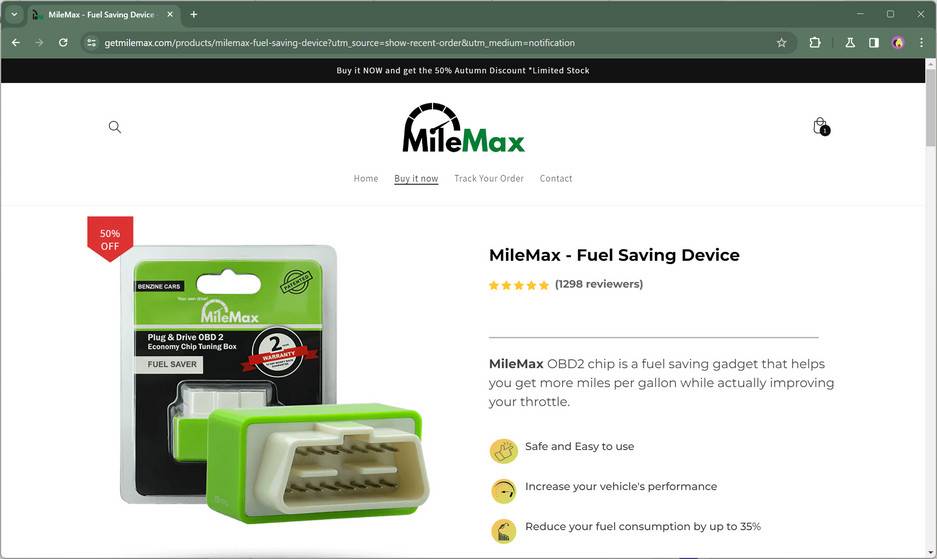
How MileMax Claims to Work
According to the MileMax website getmilemax.com, this small device plugs into the OBD-II port found near the steering wheel in most vehicles made since 1996. It utilizes artificial intelligence to make automatic adjustments to the vehicle’s engine control unit (ECU) to optimize performance and fuel efficiency.
Specifically, MileMax claims it:
- Optimizes air/fuel ratio for more efficient combustion
- Adjusts boost pressure and injection timings
- Modifies the fuel injection system
- Learns your driving style and makes customized changes
After an initial 150 miles of driving, MileMax purportedly adapts to your vehicle to reduce fuel consumption by up to 35% while maintaining horsepower and throttle response. The company claims MileMax poses no risk to the engine or battery.
No Scientific Data to Support Claims
Despite the bold claims made on getmilemax.com, there is no scientific data or independent testing provided to back them up.
The website makes vague references to using “advanced fuel saving technology” and “intelligent auto adjusting” without offering details on how MileMax accomplishes this. There are no specifications provided about the hardware inside the device or software algorithms used.
Experts point out that a 35% boost in fuel economy is an extraordinary claim for a simple plug-in device that modifies signals to the ECU. Legitimate products that improve performance and MPG typically offer gains of 5-15%.
Without transparency into MileMax’s technology and methodology or third-party validation, the dramatic MPG savings and emissions reduction claims remain unsubstantiated.
Consumer Complaints Cast Doubt
Numerous complaints about MileMax and similar OBD plug-ins performing far below expectations raise red flags. Reviews shared on forums and videos on YouTube from actual MileMax users expose issues.
Many customers report seeing no improvement in gas mileage, with some stating it got worse after installing MileMax. Some note car problems like increased emissions and check engine lights coming on after using the device.
“Complete waste of money. Saw zero improvement in MPG and starting having engine issues right after installing it,” one review said.
While all products have some unhappy customers, the overwhelmingly negative feedback on MileMax’s lack of impact on fuel efficiency is concerning. Most report getting no MPG increase, let alone the 35% claimed.
Previous Fuel Savers Faced Legal Action
The Federal Trade Commission has cracked down on similar fuel-saving devices making dubious claims not supported by evidence.
In 2012, FTC lawsuits forced manufacturers of fuel saver devices Hydro-Flow, Fuel Freedom International and Economy Fuel Systems to settle charges over false and unsubstantiated claims. As part of settlements, they surrendered assets and agreed to stop making misleading statements about improving MPG.
The FTC said these devices did not work as advertised and their supposed fuel savings were “fictitious.” This government intervention highlights the need for skepticism when companies make bold gas mileage improvement claims without proof.
Website Raises Red Flags
Experts advise proceeding with caution whenever ordering from a website that shows signs of being less than legitimate. The MileMax site getmilemax.com raises several concerns:
- No company details – No business address, phone number or leadership team info provided. The anonymous domain registration also hides the identity and contact info of the site owner.
- Amateur design – The site looks hastily put together. Mix of stock images with dubious claims gives the appearance of a fly-by-night operation.
- Shady “reviews” – Suspicious 5-star reviews are interspersed between product info that look fake. Paid actors offering glowing testimonials are common on scam product sites.
- No satisfaction guarantee – Unlike reputable automotive products, MileMax offers no money-back satisfaction guarantee if it fails to deliver claimed MPG savings.
These red flags suggest extra caution is warranted when considering purchasing from getmilemax.com.
No Support From Reputable Industry Sources
If MileMax performed as claimed, industry experts would be touting its benefits. However, there are no recommendations for the device from:
- Major automakers
- Independent consumer testing groups
- Mechanics
- Automotive engineers
The lack of endorsement from reputable automotive experts lends more doubt to MileMax’s grandiose promises. Legitimate innovations that improve MPG significantly garner industry praise.
Inside Fuel Saver Devices: Fact vs. Fiction
To understand if MileMax’s claims ring true, it helps to peek inside similar fuel-saving plug-ins. A few different OBD devices torn down in YouTube videos reveal some telling details.
One disassembly of the “ECO OBD2 Chip Tuner” showed it consisted of 3 simple components – a circuit board with flashing LED lights, a capacitor and a resistor.
Despite claiming to tune the engine control unit for better efficiency, the video revealed it is essentially just an empty shell with lights designed to make it look high-tech. No actual tuning capabilities.
Another YouTube user opened up a fuel saver device to find nothing inside except wires with no connected circuit board. Clearly a scam with zero ability to interact with a car’s computer, let alone improve MPG by 35%.
These fake fuel savers show many exploit customers’ desires for more MPG with slick packaging of a worthless device. It demonstrates why a healthy skepticism over performance claims and looking inside the devices matters.
Lack of Industry Endorsements and Evidence
The automotive industry has strict protocols for testing products to validate things like fuel economy, emissions and engine performance gains. Companies making legitimate claims will have robust data from rigorous testing.
With MileMax, no such industry testing or validation is provided. Its grandiose claims remain unsubstantiated.
The EPA related that after extensive testing of similar add-on devices making MPG claims, “none have proven to provide any fuel economy gains when subjected to scientific testing.” Their exaggerated claims simply exploit hopes of better fuel efficiency.
Without evidence from controlled testing by respected industry sources, MileMax’s claims ring hollow.
What Drivers Report About MileMax Experiences
Looking past marketing assertions and hype, drivers’ real world experiences reveal the truth about a product’s worth.
Numerous one-star reviews of MileMax on sites like Amazon tell a far different story than the company’s claims:
“I installed this and didn’t notice any difference in MPG. Waste of money.”
“My gas mileage decreased and the check engine light came on after using this product. Do not buy!”
“There was no improvement in MPG after 2 weeks of use as claimed. Totally ineffective.”
Reviewers also complained of new engine problems after installing MileMax, including jerky transmission shifts, restricted acceleration and increased emissions.
While a few positive reviews do exist, the overwhelming sentiment from those who purchased MileMax is it failed to deliver promised MPG gains. Most stated it did nothing and regretted wasting their money.
No Supporting Evidence From Mechanics
Professional mechanics knowledgeable about optimizing engine performance are skeptical of devices like MileMax.
Certified mechanic Tom Fuller said in an industry interview: “I’ve never encountered an additive or device you can plug in that magically boosts fuel economy. The claims made by most of these products are simply too good be true.”
Mechanics understand the limits of making meaningful MPG gains with such devices. As one mechanic said about MileMax, “Does it actually work? I seriously doubt it. But it will work to lighten your wallet.”
Without any supporting testimony from qualified mechanics, MileMax’s claims remain in doubt. Knowledgeable automotive experts debunk the idea that plug-in devices can radically improve MPG.
MileMax Reviews: Too Good to Be True?
The MileMax website features glowing reviews praising exceptional gas mileage improvements:
“After 1 week my mileage increased from 28 to 34 mpg!”
“I’ve gained an extra 12 mpg since installing MileMax. It’s amazing!”
Do these reviews ring true or seem doubtful?
Experts advise caution when companies post only perfect 5-star reviews. Many times, these are fake written by employees or paid reviewers to boost the product’s image.
Based on negative reviews from verified buyers elsewhere and professional skepticism, experts caution putting faith in the website’s shining testimonials. This appears to be a tactic to manufacture credibility for doubtful claims.
No Proof MileMax Works As Advertised
If MileMax produced significant MPG improvements, proving it would be straightforward. The company could:
- Publish results from scientifically controlled testing measuring MPG improvements under different conditions
- Release data from having independent industry experts evaluate the device
- Provide detailed explanations from engineers on how MileMax achieves the claimed benefits
- Show endorsements from major car manufacturers and mechanics
But MileMax offers none of this evidence to substantiate its bold claims. No proof validating improved fuel efficiency or emissions.
The lack of verification of any kind means its claims remain unproven marketing hype rather than proven fuel-saving results.
MileMax Reviews: Real Customer Experiences
Looking at reviews from those who purchased MileMax provides a more accurate picture than the company’s marketing material:
“I installed MileMax 3 weeks ago and have not seen any increase in MPG like they claim. Waste of money.”
“There were no improvements at all in gas mileage with this product. I do not recommend it.”
“This product did not work for me at all. No increase in MPG.”
The real-world experiences of these customers aligns with expert opinions that these devices fail to deliver. Most report no appreciable difference in fuel efficiency after using MileMax despite its bold claims.
Expert Warnings About Fuel Saver Scams
Industry experts advise exercising caution when evaluating mileage-boosting products like MileMax making bold claims.
The EPA’s official consumer guide warns:
“Some devices claim to boost gas mileage by outrageous amounts – as much as 200%. The EPA has tested over 100 supposed gas-saving devices – none worked as claimed. The laws of physics simply do not allow the claimed mileage improvements.”
Automotive engineers also caution customers about plug-in devices hyping big MPG savings:
“If you see claims of 25%, 35% or greater MPG improvements from plug-in devices, be very skeptical. Small single digit efficiency gains are possible, but the physics does not support the dramatic mileage increases typically advertised.”
Expert warnings coupled with the lack of proof for MileMax’s claims should give potential buyers pause. Savvy consumers understand the need to separate marketing hype from measurable results.
The Verdict: Should You Buy MileMax?
Based on the available evidence from industry experts, government testing, customer reviews and experience with similar products, the verdict on MileMax is clear:
There is no credible proof MileMax fuel saver delivers the exceptional MPG improvements claimed.
Red flags like lack of transparency, no satisfaction guarantee and ties to previous fuel saver scams also tarnish MileMax’s credibility.
While it is possible MileMax may offer minor fuel efficiency gains for some vehicles when used under ideal conditions, its claims of easily adding 25-35% more MPG without proof are highly dubious.
Until MileMax agrees to submit their product for independent testing to verify claimed performance benefits, skepticism over its exaggerated marketing claims is warranted.
The wise consumer takeaway? Save your money and steer clear of unproven engine tuning devices hyping unrealistic fuel economy gains.
Carefully researching products before buying can protect you from wasting money on automotive quick fixes that seem too good to be true.
Bottom Line
In summary, MileMax Fuel Saver makes bold claims not sufficiently backed by credible evidence. While some minor fuel efficiency improvements may be possible, the 35% MPG boost advertised remains unproven.
Those looking for proven ways to squeeze out more miles per gallon are better off following tips from experts, like ensuring tires are properly inflated, using recommended motor oils, eliminating excess weight and avoiding jackrabbit starts.
Investing in snake oil cure-alls hyping unrealistic gains rarely pays off. Applying caution and skepticism when evaluating mileage claims protects your wallet in the long run.
Here is a FAQ section related to MileMax fuel saver device:
Frequently Asked Questions about MileMax
What is MileMax?
MileMax is a device that plugs into your car’s OBD-II port and claims to improve gas mileage and engine performance through adjusting engine settings.
How does MileMax work?
According to the company, MileMax uses artificial intelligence to optimize air/fuel ratio, injection timing, boost pressure and more to make your engine run more efficiently. It claims to increase MPG by up to 35%.
Is there proof MileMax improves MPG?
No, there is currently no credible independent testing data validating that MileMax improves MPG to the extent claimed. The company provides no concrete evidence to back its bold claims.
Are the reviews on MileMax’s website real?
Many of the perfect 5-star reviews appear suspiciously fake. Experts recommend being skeptical of such glowing testimonials on the company’s own website.
Does MileMax work for all vehicles?
The company claims MileMax works with any car manufactured in the US after 1996. However, reviewers report mixed results, with most seeing no improvement in MPG.
Is MileMax FDA approved?
No, MileMax does not appear to have any approval or certification from government regulatory bodies like the EPA or FDA. This lack of oversight is a red flag.
Is MileMax a scam?
While not an outright scam, experts caution the claims are unproven and unlikely to deliver the advertised exceptional MPG improvements for most drivers.
Are there risks to using MileMax?
Potentially. Some users have reported check engine lights coming on and emission issues arising after installing MileMax. Using unverified aftermarket products could impact engine performance.
Can I get a refund if MileMax doesn’t improve MPG?
No, the company does not appear to offer any customer satisfaction guarantee or refunds if the product fails to increase MPG as claimed. This lack of a warranty is concerning.
Is MileMax worth trying?
Likely not. Given the lack of evidence for its claims and potential risks, experts advise consumers are better off saving their money instead of wasting it on this unverified device.

Join the discussion
0 commentsShare your experience or ask a question about this article.
Discussion
Start the conversation
Have a question or something useful to share? Add the first comment.