

Celebrities “raving” about a tinnitus cure that sounds too perfect.
AI-generated videos spreading fast across Facebook, TikTok, YouTube, and Instagram.
Big promises, tiny details, and a checkout page that shows up before real proof does.
That’s the NeuroDyne Drops story in a nutshell: a product pushed hard through viral-style ads that look convincing at first glance, but raise serious questions once you slow down and examine what you’re actually being sold.
Below, we break down what NeuroDyne Drops claims to be, the ad tactics that make it feel credible, and the risks of trusting a “miracle cure” pitch before talking to a real medical professional.
Tinnitus is not a trivial problem.
Anything claiming fast relief deserves careful scrutiny.
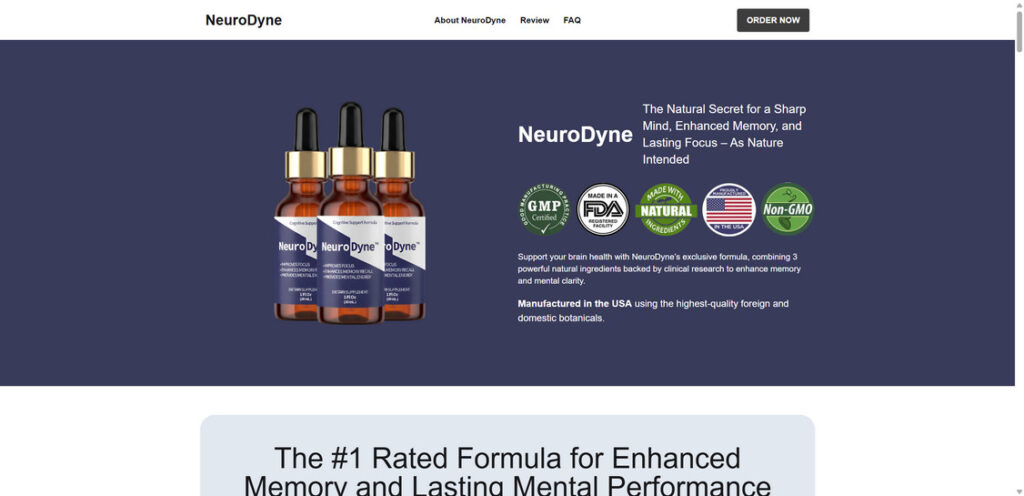
What Is NeuroDyne Drops?
NeuroDyne Drops is marketed as an “ear care” product that claims to support ear health and reduce the intensity and frequency of tinnitus.
The sales pitch usually includes claims like:
- Natural ingredients designed to “target the root cause” of ringing ears
- A soothing, cooling sensation and quick relief
- Improved hearing clarity
- Better sleep, calmer mood, and reduced stress
- A more focused, more “peaceful” day-to-day life
In many versions of the marketing, NeuroDyne Drops is framed as more than a product. It’s positioned as a lifestyle fix, promising emotional relief and mental calm, not just ear support.
That is exactly why the ads deserve a closer look.
Why The NeuroDyne Drops Ads Raise Red Flags
Many people do not discover NeuroDyne Drops through a doctor, pharmacist, or audiology clinic.
They discover it through highly engineered social media ads.
These campaigns often rely on the same persuasive playbook: credibility by association, emotional urgency, and “proof” that cannot be verified.
1. AI Celebrity Endorsements and Deepfake-Style Videos
One of the biggest warning signs is the use of AI-generated or manipulated videos that appear to feature celebrities or public figures such as Dr. Oz, Joe Rogan, or Kevin Costner.
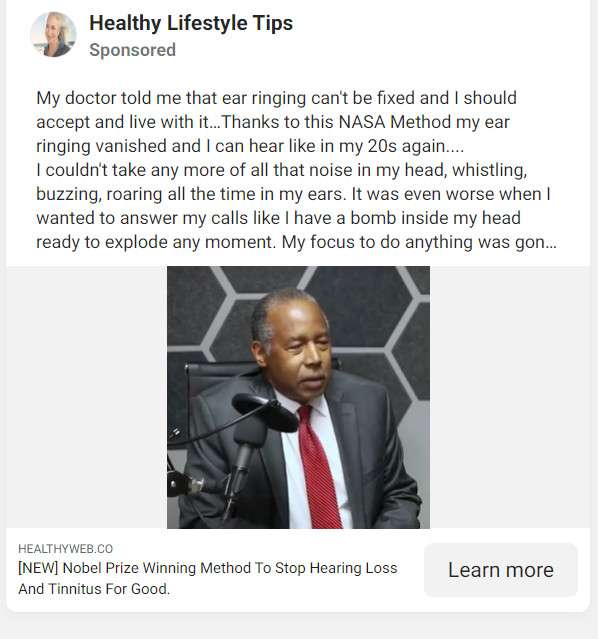
These clips are designed to create a powerful first impression:
- “If this person said it, it must be real.”
- “If it’s on video, it must be true.”
- “If they’re confident, it must be safe.”
But viral video is not medical evidence.
And “celebrity endorsement” becomes meaningless if the celebrity never actually endorsed anything.
When a product leans heavily on synthetic-looking videos, odd mouth movements, mismatched audio, or vague claims that avoid specifics, it’s a signal to step back and verify everything.
2. Fake Testimonials and Manufactured Social Proof
Another common tactic is the flood of “customer stories” that feel unusually perfect:
- Dramatic turnaround in days
- Vague phrases like “my life is back” or “silence at last”
- Few concrete details (age, diagnosis, cause of tinnitus, medical history)
- Reviews that sound alike, use the same rhythm, or read like ad copy
Testimonials can be useful when they are real and verifiable.
But on many aggressive supplement funnels, testimonials function as props.
They are there to create momentum, not truth.
3. Outlandish Claims Without Solid Evidence
The NeuroDyne Drops marketing often makes claims that sound medical, but do not come with the kind of proof you would expect for a real tinnitus treatment.
Watch for promises like:
- “Targets the root cause” with no explanation of what the root cause is
- “Works for all tinnitus” regardless of the trigger
- “Clinically proven” without published studies you can actually read
- “Immediate relief” without clearly defined outcomes or timelines
Tinnitus is a symptom, not a single disease.
It can be linked to hearing loss, noise exposure, earwax blockage, medications, jaw issues, infections, blood pressure problems, stress, and more.
Any ad claiming one simple fix for all cases is oversimplifying a complex reality.
4. The Funnel: From Viral Video to Checkout in Minutes
A lot of these campaigns are built like a trapdoor:
- You see a shocking video or “doctor” clip.
- You’re told you might have a hidden cause.
- You’re promised a simple drop-based solution.
- You’re pushed toward “limited supply” or “today only” pricing.
- You’re routed to an order page before you’ve seen meaningful proof.
The goal is speed.
The less time you spend thinking, the more likely you are to buy.
5. Vague Regulatory Language and Missing Medical Accountability
When a product is marketed like medicine but avoids medical accountability, it’s a problem.
Common warning signs include:
- No clear clinical evidence linked or published
- No named medical team responsible for the claims
- Lots of “supports” and “promotes” language paired with huge implied outcomes
- Heavy reliance on marketing, not transparency
How NeuroDyne Drops Scam Ads Spread on Social Media
A big part of the NeuroDyne Drops push is not traditional advertising. It’s viral, algorithm-friendly content designed to look like breaking news, a celebrity interview, or a “hidden cure” discovery.
One common hook looks like the “astronaut brain hack” style creative: a dramatic headline, a short clip, and a promise that ringing ears can be “silenced” quickly. The goal is to stop your scroll, spike curiosity, and get you to click before you have time to question it.
Deepfakes, Fake News Segments, and Stolen Credibility
A central tactic in these campaigns is the use of AI-generated deepfakes and manipulated audio to impersonate trusted public figures.
You may see videos that falsely depict people like Dr. Peter Attia, Keanu Reeves, Alexandra Grant, and CBS News anchor Norah O’Donnell. Some versions even stage a fabricated CBS News segment, sometimes labeled “CBS This Weekend.”
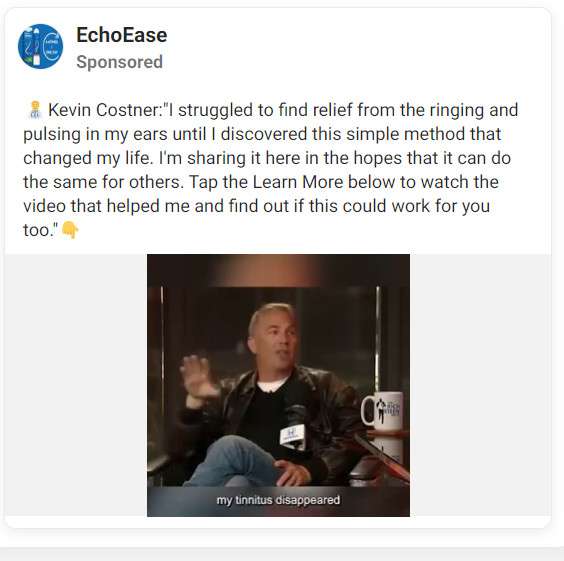
These individuals and CBS News have no connection to NeuroDyne, and none of them endorsed the product. The same pattern shows up with other recognizable names and outlets, including “CNN-style” branding and clips implying support from Dr. Oz or similar personalities.
The Funnel: From Viral Video to “Advertorial” to Checkout
These ads rarely send you straight to a normal store page.
Instead, they often route you through scam advertorials: long-form pages and video “presentations” that mimic journalism, documentaries, or medical briefings. They’re built to feel authoritative while avoiding verifiable proof.
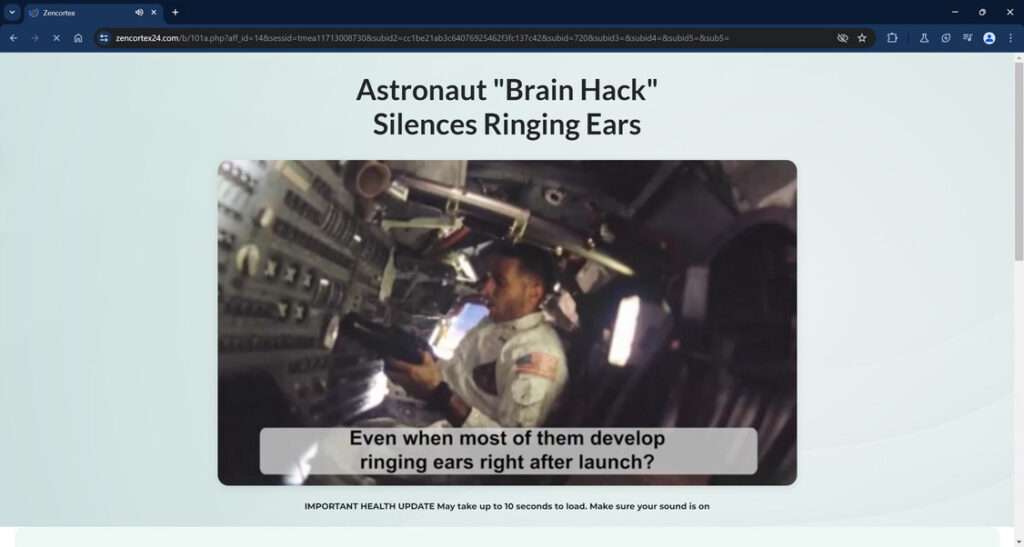
From there, you’re pushed to a separate checkout site that may look unrelated to the original ad. This is intentional. It makes it harder to trace who’s behind the promotion and easier to swap domains if complaints pile up.
The Most Harmful Part: Unwanted Upsells and Hard-to-Cancel Subscriptions
Victims commonly report the same end result: they try to buy one bottle, but get funneled into multiple add-ons, bundles, and “today only” upgrades.
In the worst cases, customers later discover an unexpected monthly subscription or continuity plan they did not clearly agree to. Then cancellation becomes a nightmare: slow support, confusing policies, and endless “confirmations” that never seem to stick.
Why This Works So Well on Facebook, TikTok, and YouTube
These platforms reward watch time and engagement. Deepfake celebrity clips and fake news framing get comments fast, even angry ones, which still boosts reach.
Once the algorithm sees people stopping, rewatching, and sharing, the ad spreads wider, especially to anyone searching tinnitus relief content or interacting with hearing-related posts.
Quick Red Flags to Call It a Scam Ad
- A famous person “endorses” a supplement in a shaky, too-perfect clip
- A “news segment” you cannot find on the real network site
- Claims of a cure, instant silence, or one fix for all tinnitus
- A long video that feels like a documentary but offers no real studies
- Checkout pages that push bundles, “free trials,” or hidden continuity billing
The Risks of Buying Into the Hype
Even if a product arrives and looks legitimate, the ad ecosystem around it can still be deceptive. Here are the risks people underestimate.
Unverified Safety for Your Specific Situation
Without clear, trustworthy documentation, you cannot confidently assess:
- whether the ingredients are appropriate for you
- potential interactions with medications
- allergy risks
- side effects or contraindications
If you have existing conditions or you take prescriptions, “natural” is not a safety guarantee.
Wasting Money on Something That Might Not Work
The biggest practical risk is paying for a product that does not meaningfully help tinnitus.
That can lead to repeat purchases, upsells, and subscriptions, especially if the checkout flow includes recurring billing or “VIP” offers tucked into the fine print.
Delaying Proper Diagnosis and Treatment
This is the part that matters most.
Tinnitus can sometimes be a sign of something treatable, or something that needs medical attention.
If you rely on a viral product instead of getting evaluated, you can lose time.
Emotional Fallout: False Hope, Then Frustration
These ads are designed to hit a nerve.
They speak to exhaustion, insomnia, anxiety, and the quiet fear that you will never get relief.
When the product doesn’t match the promise, people often blame themselves, not the marketing.
That emotional crash is part of why this style of advertising is so harmful.
What You Should Do Instead
If you’re seeing NeuroDyne Drops ads and you’re tempted, here’s the safer path.
- Pause and verify the endorsement.
If a celebrity “promotes” it, look for confirmation outside the ad. If you cannot verify it, assume it’s marketing. - Do not trust testimonials alone.
Look for independent, credible reviews and detailed reporting that explains what’s verifiable. - Read the checkout page carefully.
Watch for subscriptions, auto-ship, surprise bundles, and “processing fees.” Screenshot your order terms. - Talk to a real professional.
An audiologist or ENT can help identify likely causes and evidence-based treatments (sound therapy, hearing aids when appropriate, CBT-based tinnitus management, stress reduction strategies, and more). - Treat “miracle cure” language as a warning sign.
If it promises silence fast, works for everyone, and needs no diagnosis, it’s almost always too good to be true.
The Bigger Pattern: NeuroDyne Drops and “Template” Tinnitus Products
NeuroDyne Drops is not alone. A lot of tinnitus products follow a near-identical marketing template, often resembling other names like Cortexi, CerebroZen, and Echo Ease.
The similarities are usually striking:
- Same style landing pages
- Same tone and structure of “doctor discovery” stories
- Same urgency tactics
- Same type of customer review blocks
- Same implied promises without real clinical transparency
When you spot the pattern, the campaigns become easier to recognize.
It’s less about the product name and more about the sales machine behind it.
FAQs
Is NeuroDyne Drops a real tinnitus cure?
No reputable medical source treats a supplement drop as a proven “cure” for tinnitus. Tinnitus is a symptom with many possible causes, and legitimate care typically starts with diagnosis and evidence-based management, not miracle-cure claims.
Are the NeuroDyne Drops social media ads legitimate?
Many campaigns appear to rely on deceptive ad formats, including fake news-style segments, AI-generated deepfakes, and manipulated audio. If an ad claims a major network covered NeuroDyne, verify it on the network’s official site. If you can’t, treat the ad as untrustworthy.
Did Dr. Peter Attia, Keanu Reeves, Alexandra Grant, Norah O’Donnell, Dr. Oz, or CNN endorse NeuroDyne Drops?
No. Videos implying endorsements from these people or outlets are a major red flag. This style of marketing often uses impersonation or edited clips to borrow credibility.
What is an “advertorial” and why is it used in these scams?
An advertorial is a sales page designed to look like a news article or investigative report. Scammers use it to build trust, tell a dramatic story, and keep you watching or reading long enough to click “buy,” even when there’s no real evidence.
Why do the ads mention an “astronaut brain hack” or secret discovery?
It’s a classic hook. The goal is to make the offer feel exclusive and scientific, even when the claim is exaggerated or unsupported. “Hidden secrets” and “brain hacks” are common in supplement scams because they generate clicks.
Can these ads lead to unwanted subscriptions?
Yes. A frequent complaint with aggressive supplement funnels is continuity billing: you think you’re buying once, but you later see recurring charges. It may be buried in fine print, pre-checked boxes, or explained vaguely during the checkout flow.
What should I check before buying anything from these ads?
Look for:
- Clear company identity (real address, support contact, and policies)
- Transparent pricing and shipping terms
- No forced bundles or confusing “trial” language
- A checkout page that clearly states whether recurring billing is involved
If any of that is missing, don’t buy.
I already ordered and now I’m getting charged again. What should I do?
- Screenshot your order confirmation, terms, and any subscription language you can find
- Contact the seller in writing and request cancellation plus confirmation
- If you can’t cancel or they keep charging, contact your bank/card issuer to dispute unauthorized or misleading charges
- Monitor statements and consider replacing your card if charges continue
Is it safe to try NeuroDyne Drops if I have tinnitus?
If you have tinnitus, the safer move is to consult an ENT or audiologist first. Tinnitus can be linked to issues that need medical evaluation. Don’t rely on viral ads for healthcare decisions.
What treatments for tinnitus are actually evidence-based?
There’s no universal cure, but many people improve with:
- Stress reduction and sleep support strategies guided by clinicians
- Treating underlying causes (when identifiable)
- Sound therapy or masking
- Hearing aids (when hearing loss is present)
- CBT-based tinnitus management
Conclusion
NeuroDyne Drops is being pushed through a style of advertising that thrives on speed, emotion, and credibility-by-illusion.
AI celebrity-style videos, suspicious testimonials, oversized promises, and a funnel designed to rush you to checkout are not signs of a trustworthy medical solution. They’re signs of a campaign built to convert clicks into purchases.
If tinnitus is affecting your sleep, focus, or mental health, you deserve real answers.
Start with diagnosis and evidence-based care, not viral ads.








