


When you’ve been waiting for money from a failed investment, a recovery headline can feel like the first good news in years.
NovaTech FX investors now have a real development to examine. The important part is knowing what the New York action changes, and what it doesn’t promise.
Overview
The recovery announcement is genuine
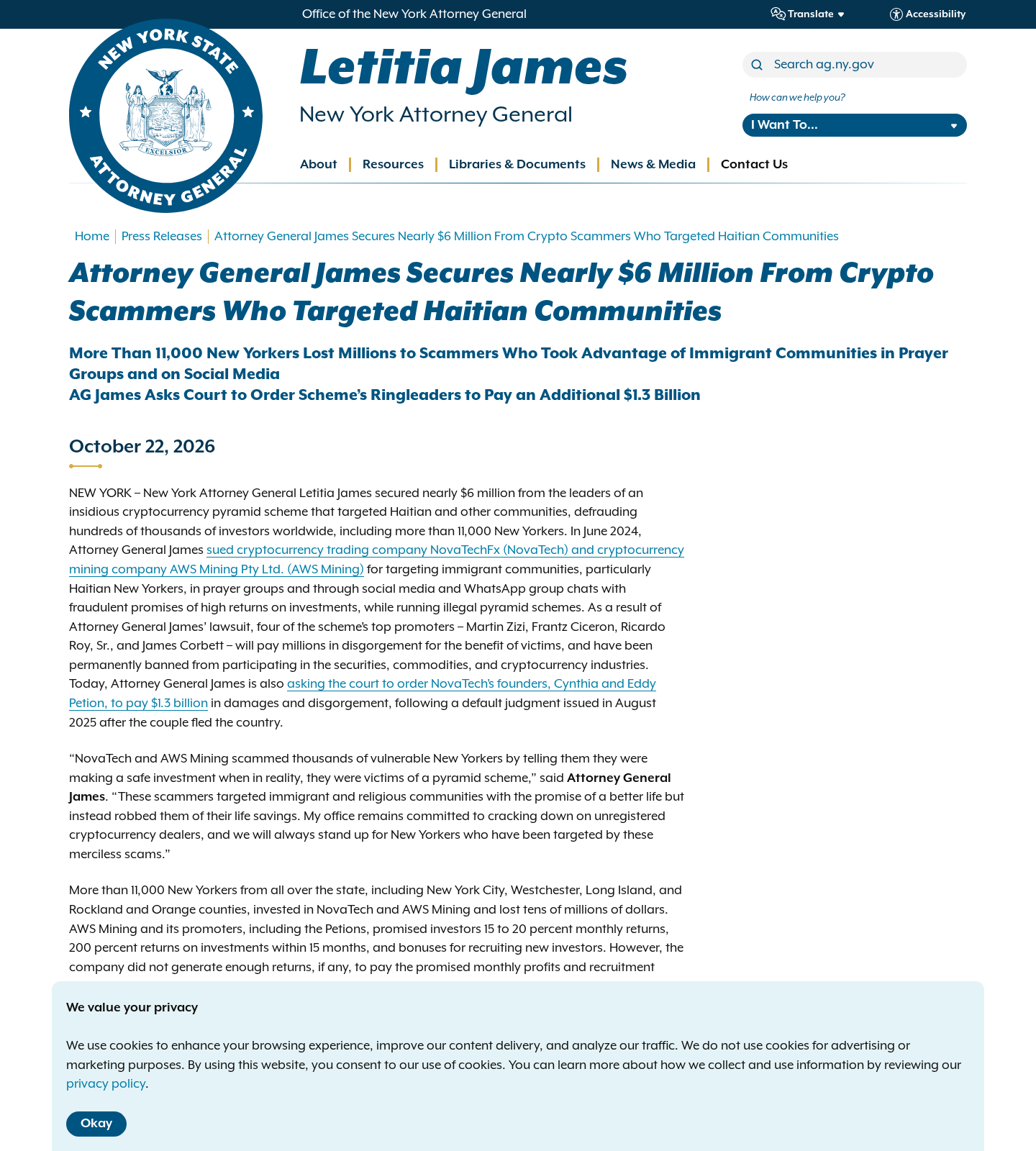
New York’s attorney general announced agreements totaling nearly $6 million from four promoters associated with NovaTech FX and AWS Mining.
The October 22, 2026 announcement concerns money payable for victims’ benefit and permanent industry bans. It is an official enforcement development, not a private recovery firm’s promise.
It doesn’t say every investor can immediately collect their full balance. A headline about funds secured isn’t an individual payment confirmation.
The underlying case concerns more than unsuccessful trading
The attorney general describes fraudulent return claims, recruitment rewards, and solicitation through religious communities and social networks. The case concerns the investment scheme, not cryptocurrency generally.
According to the state’s investigation, more than $1 billion in cryptocurrency entered NovaTech, while less than $26 million was traded on its platform.
That gap is central to the case. A dashboard’s apparent weekly gains can’t be assumed to represent an actual portfolio producing those profits.
Victims need records and official instructions, not another payment demand
The same announcement says the attorney general is seeking $1.3 billion from the founders following an earlier default judgment. That request is a different procedural step.
Don’t combine the figures into a claim that billions are already available for distribution. Keep the different stages straight:
- A lawsuit sets out claims and requests relief.
- A settlement creates obligations under its particular terms.
- A court award isn’t automatically money collected.
- A victim distribution needs its own verified process and eligibility instructions.
What the Nearly $6 Million Actually Refers To
The announced amounts are $2.05 million from Frantz Ciceron, $750,000 from James Corbett, $275,861 from Ricardo Roy, Sr., and $2.9 million from Martin Zizi.
Together, those figures total $5,975,861. That’s why a report may refer to nearly $6 million rather than a single round-number payment.
The state says the four are permanently banned from the securities, commodities, and cryptocurrency industries. The actual agreements and orders determine each person’s obligations.
For example, the Ciceron stipulation says the defendants neither admit nor deny the complaint’s allegations. A civil settlement shouldn’t be rewritten as a criminal conviction.
That distinction doesn’t erase the payment obligations or the bans. It keeps the legal outcome accurate while explaining what matters to an investor seeking help.
The official announcement and linked documents are available through the New York Attorney General’s website. Start there rather than a recovery advertisement.
How the NovaTech FX Scam Worked
Step 1: Trusted communities helped the invitation travel
The state’s account describes recruitment in prayer groups, through social media, and in WhatsApp conversations. Haitian and other immigrant communities were particularly targeted.
That setting matters because an invitation from someone you know can feel safer than an unsolicited advertisement. Trust in the relationship can spill into trust in the investment.
Religious language and shared experience can strengthen that feeling. Neither establishes who controls the assets, whether the return is real, or whether the business is authorized.
Responsibility belongs with the deceptive financial promotion. Being approached through a church or community group isn’t a failing on the part of the people targeted.
Step 2: Trading and licensing claims supplied the financial explanation
NovaTech was promoted as a registered hedge fund broker and as licensed to trade cryptocurrency in the US. The attorney general says those representations were false.
The pitch also included high weekly profits and the ability to withdraw funds and profits at any time. Recruitment bonuses gave promoters another reason to share it.
A prospective investor could hear a trading explanation, a licensing assurance, and a personal recommendation in the same conversation. Together, they can seem mutually reinforcing.
They still require separate verification. An acquaintance’s positive experience cannot authenticate a license, and a license claim cannot prove that a reported profit was earned.
Step 3: Deposits and displayed profits concealed a different funding picture
The state’s 2024 complaint alleged that announced weekly profits were fabricated and payments came from other investors’ money rather than the advertised trading results.
Its investigation compared the large volume deposited with the much smaller amount actually traded. That is more meaningful than looking at an account’s reassuring earnings display.
In such a scheme, early payments can be persuasive without validating the business model. A participant may receive something while the broader operation remains unsustainable.
Referral earnings create another misleading comparison. Being paid for bringing in a participant doesn’t show that independent trading generated the advertised investment return.
Step 4: Withdrawal promises failed as the operation collapsed
The attorney general’s account says NovaTech collapsed in May 2023, leaving tens of thousands unable to withdraw. That isn’t simply a story about a temporary market decline.
A person may still have had a balance on screen while lacking the ability to retrieve the underlying assets. Display and access are separate things.
Once that happens, pressure to wait, recruit, or pay again can be especially difficult to resist. Money already committed makes the next promise feel important.
The right response is to document the loss and use legitimate reporting channels, not treat another proposed investment as the missing step in recovering the first one.
Why the New York Case Has Several Different Outcomes
The original lawsuit was filed in June 2024. It addressed NovaTech, AWS Mining, founders Cynthia and Eddy Petion, and other defendants.
The latest announcement brings together settlements reached at different times. The fact that they’re summarized in one release doesn’t make them one simultaneous refund program.
It also discusses a default judgment against the founders from August 2025. Separately, the attorney general requested a monetary award of $1.3 billion.
A request asks the court to grant relief. Don’t describe that requested amount as a newly paid award unless a later official record confirms it.
The same care applies to collection and distribution. Money owed under an order may still require collection, and money collected may need an approved distribution process.
For victims, those distinctions prevent false expectations. They also make it easier to recognize a message claiming you must act immediately to release an already assigned payout.
NovaTech Names, Promoters, Trading Claims, and Recovery Checks
Match the investment to the legal case
Documents use names including NovaTechFx, NovaTech FX, and Nova Tech Ltd. Search by the actual investment and case details, not the word NovaTech alone.
Other businesses can have similar names. Don’t send records or allegations to an unrelated company just because a search result appears first.
AWS Mining in this case is a named cryptocurrency-mining business. The initials aren’t a basis for associating the scheme with an unrelated technology provider.
A local promoter wasn’t an independent regulator
A person’s community standing or reassuring explanation didn’t give them authority to certify the scheme. The state specifically pursued claims involving false statements and unregistered promotion.
Keep the identity and role of the person who solicited you in your private records. Don’t assume every participant had the same knowledge or responsibility.
Officials can assess documented conduct. Publicly accusing everyone in a group can obscure the useful evidence and expose victims’ personal information.
The important transaction record isn’t a profit screenshot
Preserve transfers into the scheme, any amounts actually returned, and fees separately. A portal balance may include credits that were never withdrawable.
A blockchain transaction hash helps identify a transfer. It doesn’t, by itself, establish the legal identity behind every receiving address.
Pair payment records with the messages explaining why money was requested. Together, they show the solicitation and the movement of funds.
If different cryptocurrencies were involved, retain the original quantities and dates instead of replacing every transfer with today’s estimated value. The relevant reporting process may specify its valuation method.
Note whether a return came from the same destination or somewhere else, without assuming you know who controlled either address.
A clear record should let someone follow your history without needing your login. Export documents rather than handing a helper access to the financial account itself.
Recovery instructions must come from a verifiable source
A caller knowing your NovaTech history may sound authoritative. Knowledge of the scheme doesn’t make that person the attorney general, a court administrator, or your representative.
Verify a claimed role through independently obtained official contact information. Don’t rely on the number or website included in the recovery message itself.
The official announcement doesn’t establish a universal deadline or fee for individual payouts. Don’t invent one from a social-media summary or a stranger’s instructions.
What to Do if You Have Fallen Victim to the NovaTech FX Scam
-
Stop sending money into related promises. Decline a new deposit, membership upgrade, account migration, or investment offered as necessary to recover the old balance.
Consider the new request on its own terms. Your earlier loss doesn’t make a fresh payment an obligation or a safe route back.
-
Build a clear loss timeline. Record when you joined, who introduced the offer, which entity or address received payment, and what was promised.
List deposits, withdrawals, recruitment payments, and fees separately. Avoid counting an internal profit credit as money you actually recovered.
-
Save the evidence outside the old portal. Keep agreements, bank or exchange records, transaction hashes, promotional messages, and withdrawal correspondence.
If you have screenshots, retain the date and account context. Don’t edit away the information an investigator would need to understand the transaction.
-
Check the official New York case update. Use the attorney general’s website and its linked records to verify any claim about settlements, payments, or a distribution process.
If someone offers filing help, independently verify their role before sharing documents. An official-looking logo in a message isn’t authentication.
-
Report through the authority relevant to you. New York investors can contact the state’s Investor Protection Bureau through official channels; other investors should also consider their local regulator.
US internet-crime reports can be submitted to IC3. Supply facts and records rather than a copied online accusation.
-
Ask the sending provider about any remaining options. Explain the scheme and provide original payment references to the bank, exchange, or payment service used.
Older transfers and completed blockchain payments may be difficult to recover. Don’t interpret a reporting acknowledgment as confirmation that funds have been frozen or returned.
-
Protect the accounts and documents you still control. Replace reused passwords, safeguard exchange access, and keep financial records somewhere you can retrieve them.
Never give a purported recovery specialist a wallet recovery phrase. That information can give them control of assets unrelated to the original loss.
-
Get independent advice before signing away a claim. A proposed settlement, assignment, or private recovery contract may affect your rights.
Read the terms with a qualified professional where appropriate. Don’t accept a guarantee of full recovery merely because it uses the correct case name.
How to Discuss the Loss With Family or a Community Group
Start with what happened, not who should feel embarrassed. A familiar person and a shared community can be part of how a deceptive offer becomes persuasive.
If you recommended the scheme, correct the recommendation plainly. Tell people you no longer endorse payments and direct them to the official enforcement information.
Don’t gather everyone else’s passwords or identity documents to coordinate a response. Each person can preserve records and use a legitimate reporting route privately.
A group can still help by sharing verified updates and warning about new payment demands. Clearly separate a court document from someone’s interpretation of it.
Most importantly, don’t organize a new pooled investment to replace what was lost. The pressure to recover quickly can make another doubtful proposition feel unusually attractive.
Frequently Asked Questions
Is the nearly $6 million NovaTech announcement real?
Yes. New York’s attorney general announced the promoter settlements on October 22, 2026. Verify the details on the official state website.
Does that mean every investor can withdraw their balance now?
No. The announcement isn’t an individual payment confirmation. Eligibility, collection, and distribution require their own official instructions.
Has the additional $1.3 billion already been paid?
The announcement describes a request for that monetary relief following a default judgment. A request isn’t proof that the amount has been collected.
Were the settlements criminal convictions?
No. These are civil enforcement outcomes. Their payment and industry-ban provisions matter, but they shouldn’t be described as criminal convictions.
Why did receiving an early payment not prove NovaTech was safe?
The state’s complaint alleged payments came from incoming investors rather than genuine weekly trading profits. One payment couldn’t validate the operation’s underlying finances.
Should I pay someone to activate a NovaTech recovery payout?
No. Verify any claimed process directly with the responsible official authority. Don’t send a stranger money or wallet credentials to unlock a promised reimbursement.
The Bottom Line
Do not send more money to NovaTech-related investment or recovery promises. The New York settlements are real, but they aren’t a guarantee of immediate, complete repayment.
Preserve your transaction history, follow official case updates, and report through verified authorities. Treat every new payment demand as a separate risk, not the price of getting closure.

Join the discussion
0 commentsShare your experience or ask a question about this article.
Discussion
Start the conversation
Have a question or something useful to share? Add the first comment.