

Promises of easy cash in exchange for simple online activities seem too good to be true. And in the case of the $750 Reward Shein Program scam, they absolutely are. This lucrative offer preys on shoppers eager to earn rewards for their favorite fashion retailer Shein. But it’s all an elaborate ruse designed to steal personal information and money. Keep reading to uncover everything you need to know about recognizing and avoiding this scam.

Scam Overview
The $750 Reward Shein Program scam operates through questionable websites advertising unbelievable cash payouts. These sites claim users can earn up to $750 just by completing “sponsored deals” within 7 days. The deals involve activities like:
- Downloading apps
- Signing up for subscriptions
- Completing free trials
- Shopping online deals
The scam site also promises chances to win up to $1000 through additional deals.
To get your alleged reward, you must complete ID verification too. But this is just a scheme to harvest your personal details for identity theft and reselling. In reality, if you participate in any deals, you’ll be at high risk of fraud. And you won’t receive any cash payouts despite completing all requirements.
This scam baits victims by promising easy rewards if they just complete a few activities. But it’s all a front to expose people’s data and make money from commissions, subscriptions, and selling your information.
How the Scam Sites Advertise
The $750 Reward Shein Program scam pops up in Google search results, social media ads, and spam emails. Scammers optimize these channels to target people searching for Shein coupons or rewards programs.
The scam sites closely mimic Shein’s branding with the company logo and similar layouts. This makes them appear credible at first glance. Prominent text and banners highlight the $750 reward potential. Clicking anywhere leads to pages requesting your personal information to “verify your eligibility” for rewards.
Here’s an example directly from one scam site:
Get $750 Towards SHEIN Shopping
Earn your reward by doing things you already enjoy doing!
———————————————————
- Play mobile games
- Stream movies & music
- Shop online deals
The layout, promises of easy money, and Shein branding are all tactics to make the scam more convincing. But legitimate rewards programs would never offer huge sums of cash for minimal effort.
How the Scam Works
The $750 Reward Shein Program scam unfolds in several key stages:
1. Bait: Lucrative Cash Reward Offers
Scam sites advertise enticing rewards like $750 in Shein credit or cash. The amounts seem suspiciously high, but scammers know people find it hard to resist.
To earn the rewards, you just have to complete simple activities like free app downloads. The low effort required makes the payoff even more appealing.
2. Hook: Requests for Personal Information
Clicking on a scam site brings you to a page asking for personal details to “verify your eligibility.” You’ll need to enter info like:
- Full name
- Email address
- Phone number
- Physical address
- Birthdate
- Payment details
Scammers claim they need to validate your identity before you can participate and receive your reward. But this is just a scheme to harvest your information.
3. Scare Tactics: Limited Time Offers
Scam pages emphasize you need to act quickly to earn up to $750 in Shein rewards. Countdown timers create urgency, pressuring you to hand over personal data fast.
Limited time offers make the bait seem hot and scarce. This gets victims to stop thinking rationically in the heat of the moment.
4. Sign Ups: Downloads, Trials, Subscriptions
After entering your info, the site prompts you to complete “sponsor offers” to earn your reward. These include:
- Downloading and signing up for mobile apps
- Starting free trials of products/services
- Purchasing subscriptions
- Online shopping deals
You must complete a certain number of these offers within 7 days to get your alleged payout. Offers seem harmless since many are free initially. But they actually expose you to identity theft and unwanted charges.
5. No Payouts Despite Completing All Requirements
Here’s the ugly truth: even if you complete all sponsored offers, you won’t get your $750 Shein reward. Victims who fully participate never get the promised payout.
Scammers disappear once they have your personal information and make money from commissions on sign ups. The reward promises are completely fabricated to drive conversions.
6. Ongoing Risks: Identity Theft, Unwanted Charges, Spam
These scams put victims at major risk of:
- Identity theft – Scammers have your full name, birthdate, address, etc. to commit fraud.
- Unwanted charges – Free trials convert into expensive subscriptions if you don’t cancel in time.
- More spam – Your email and phone number get sold to shady marketers.
- Malware – Downloaded apps/files can infect devices with viruses, spyware, and malware.
Even after avoiding initial charges, victims suffer from ongoing account breaches, spam calls/emails, and device corruption.
What to do if You’ve Fallen Victim
If you already got hooked by a $750 Reward Shein Program scam, take the following steps right away:
Step 1: Scan Devices for Malware
If you downloaded any suspicious apps or files, scan all your devices immediately. Use Malwarebytes to detect and remove any malware lurking on your system.
Malware like spyware can monitor your activity and steal credentials. So it’s crucial to sweep your device and delete anything suspicious.
Step 2: Change All Passwords
Once scammers have your personal information, they can try accessing your online accounts. Reset the passwords for all of your online accounts like email, banking, social media, and shopping sites.
Use strong, unique passwords for each account moving forward. Password manager apps also help you generate and store secure passwords. Enabling two-factor authentication provides an extra layer of security too.
Step 3: Contact Banks and Credit Card Companies
Contact your bank and credit card providers to monitor for any fraudulent activity. Report any charges you don’t recognize or account access that seems suspicious.
Financial institutions can freeze accounts, dispute charges, and reissue compromised cards. This limits the damage scammers can do with your payment details.
Step 4: Cancel Unwanted Subscriptions
Review all services you signed up for through sponsored offers. If you find any unwanted subscriptions, call the companies immediately to cancel.
Some shady vendors make it extremely difficult to unsubscribe online. Cancelling over the phone ensures you won’t get billed again after any free trial periods.
Step 5: Beware of Follow Up Scams
Fresh personal info makes you vulnerable to follow up scams. Be vigilant of any calls or emails claiming there was an issue with your reward.
Scammers often pose as Shein support staff saying you need to provide more details or verify payment info. Ignore these outright – any contact is just another scam attempt.
Step 6: Report the Scam Activity
To protect others, report scam sites and accounts whenever possible. Submit details to:
- FTC – File complaints at ReportFraud.ftc.gov for the FTC to investigate.
- Shein – Contact Shein customer support so they can address scam sites imitating their brand.
- Social media sites – Report scam ads or accounts on platforms like Facebook, Instagram, and Twitter.
- Google – Report misleading ads you see in Google search results.
- Domain registrars – Lookup site registration details at Whois.com and report them to the listed registrar.
- Ad networks – Report scammy affiliate networks misusing ads from Google Ads, Outbrain, Taboola, etc.
The more reports filed, the faster authorities can disrupt scams and protect other shoppers from falling victim.
Is Your Device Infected? Run a Free Malware Scan
Slow performance, constant pop-ups, or strange behavior? These are classic signs of a malware infection. The fastest way to find out is to scan your device with Malwarebytes Free — one of the most trusted malware removal tools available.
The free version detects and removes the most common threats, including:
- Adware — the cause of those annoying pop-ups
- Browser hijackers — unwanted redirects and changed homepages
- Trojans and spyware — hidden programs stealing your data
- Potentially unwanted programs (PUPs) — software you never asked for
👉 Select your device below — Windows, Mac, or Android — then follow the simple steps to download Malwarebytes, scan your system, and remove any threats it finds. The scan usually takes 5 to 20 minutes.
Run a Malware Scan with Malwarebytes for Windows
Malwarebytes is one of the most popular and trusted anti-malware tools for Windows — and it’s completely free for removing infections. It catches threats that many antivirus programs miss, including adware, browser hijackers, and trojans. Follow the steps below to scan and clean your PC in just a few minutes.
Download Malwarebytes
Click the button below to download the latest version of Malwarebytes for Windows from the official source. The free version is all you need — it will scan your computer and remove adware, browser hijackers, and other malicious software at no cost.
Download MalwarebytesOfficial installer for Windows 11 and 10. Your download starts right away.Want real-time protection? See Malwarebytes Premium Malwarebytes Free for WindowsScans and removes malware at no cost
-
Install Malwarebytes
When the download finishes, open your Downloads folder and double-click the MBSetup file. If Windows shows a User Account Control pop-up, click “Yes” to allow the installation.
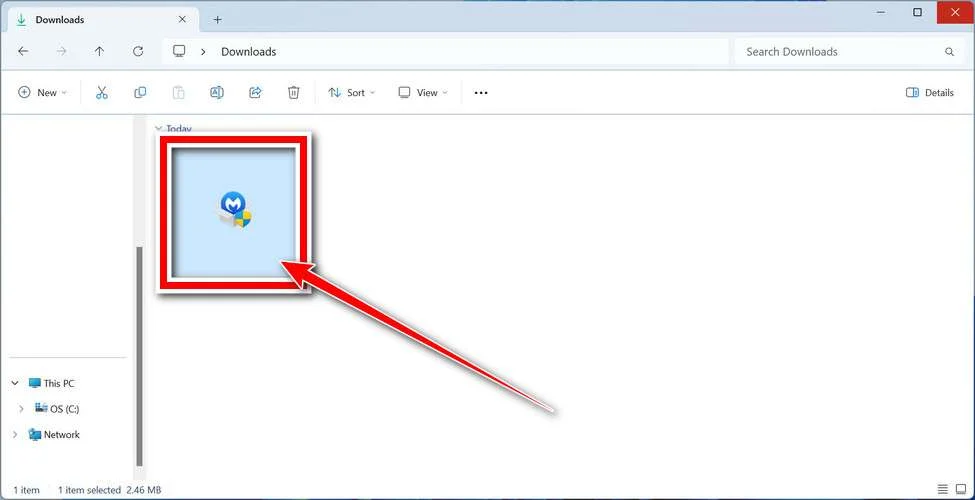
Follow the On-Screen Prompts to Install Malwarebytes
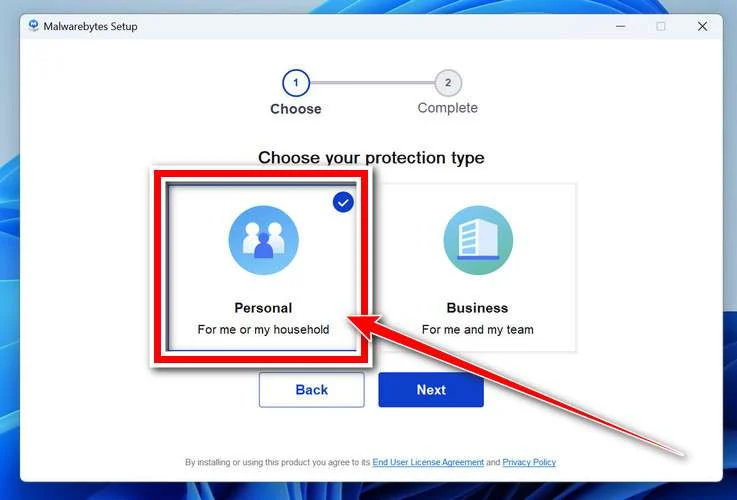
The setup wizard will walk you through a few quick screens:
-
Choose where you’re installing the program — “Personal Computer” or “Work Computer” — then click Next.
-
Malwarebytes will now install on your device. This usually takes under a minute.

-
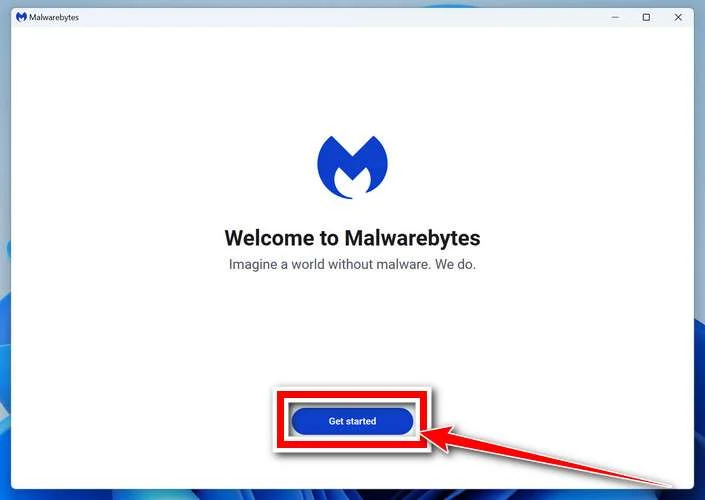
When installation is complete, the “Welcome to Malwarebytes” screen will open automatically.
-
On the final screen, click Open Malwarebytes to launch the program.

-
Enable “Scan for Rootkits”
Before scanning, turn on rootkit detection so Malwarebytes can find even the most hidden threats. Click the Settings gear icon on the left side of the screen.
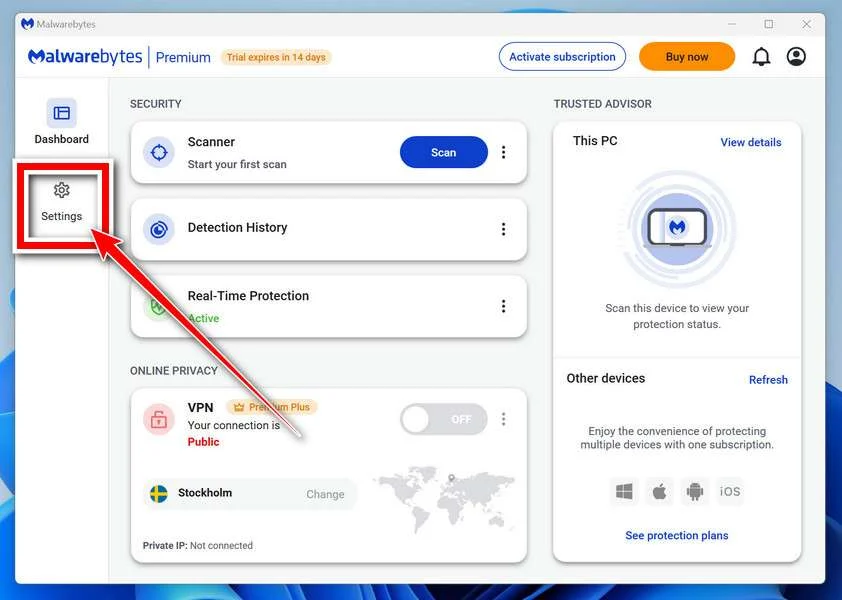
In the settings menu, find “Scan for rootkits” and click the toggle so it turns blue.

Done? Click “Dashboard” in the left pane to return to the main screen.
Start the Scan
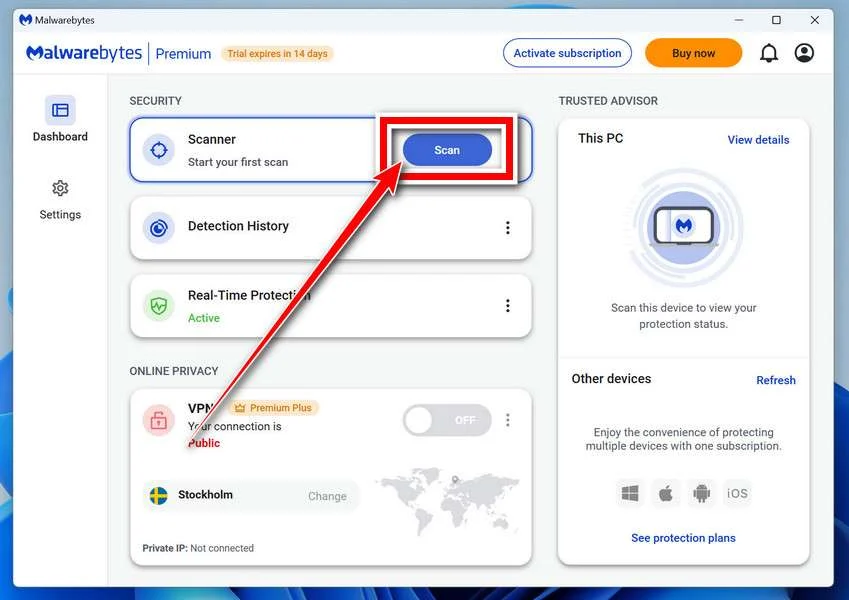
Click the blue Scan button. Malwarebytes will automatically update its virus database and start checking your computer for malware.
-
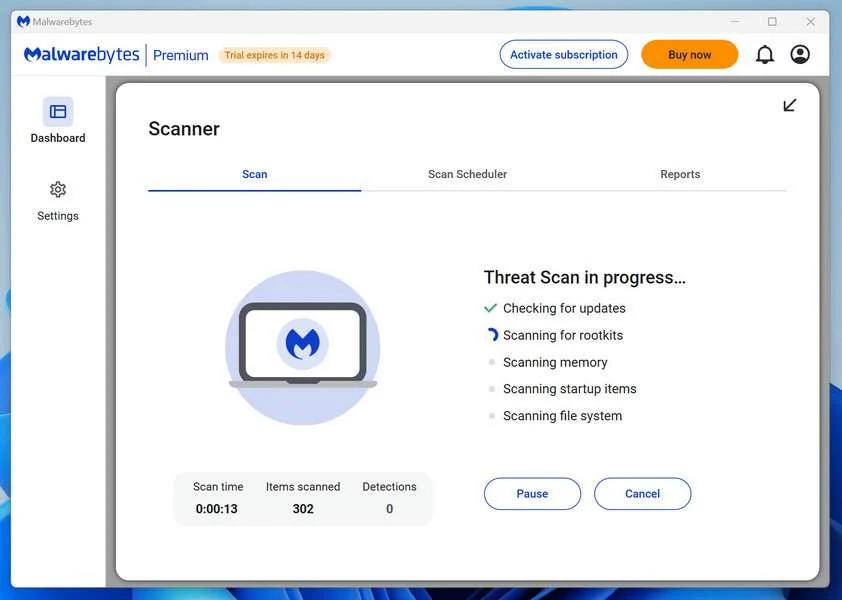
Wait for the Scan to Finish
The scan checks your entire system for browser hijackers and other malicious programs, so it can take 5 to 20 minutes depending on your computer. Feel free to do something else — just check back occasionally to see the progress.
-
Quarantine the Detected Threats
When the scan is done, you’ll see a list of everything Malwarebytes found — malware, adware, and potentially unwanted programs. Click the “Quarantine” button to remove all of them at once.
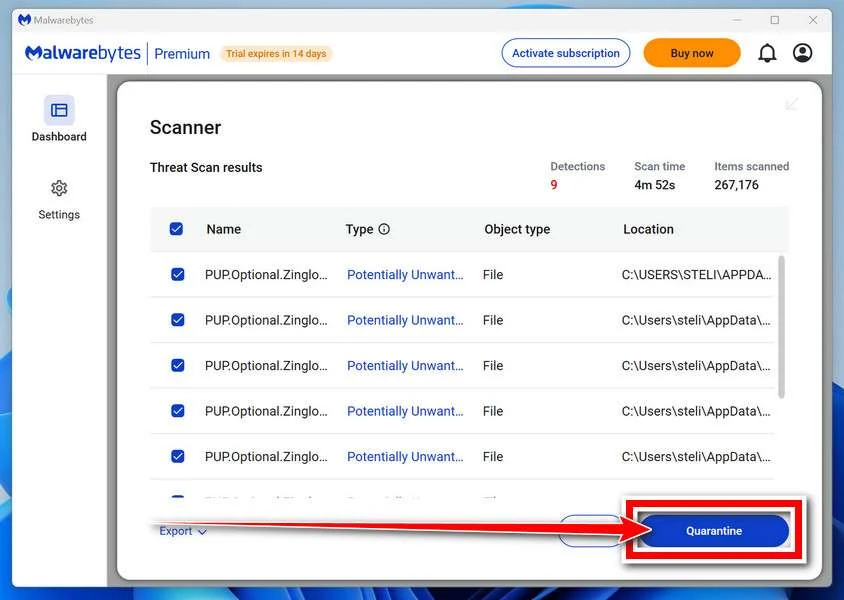
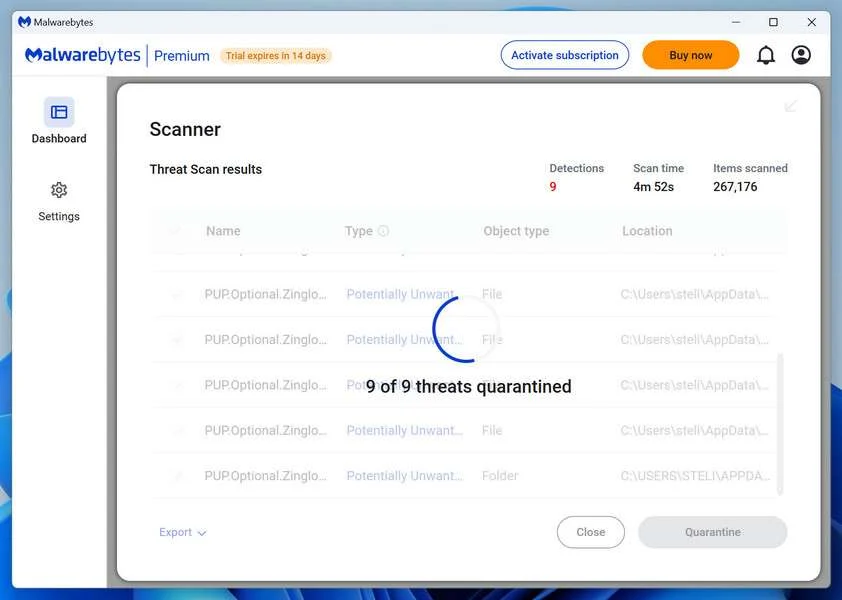
Malwarebytes will now remove the malicious files and registry entries and move them safely into quarantine.
-
Restart Your Computer
Some threats can only be fully removed after a reboot. If Malwarebytes asks you to restart, click Yes. Once you’re logged back in, Malwarebytes has finished removing the threats it found.
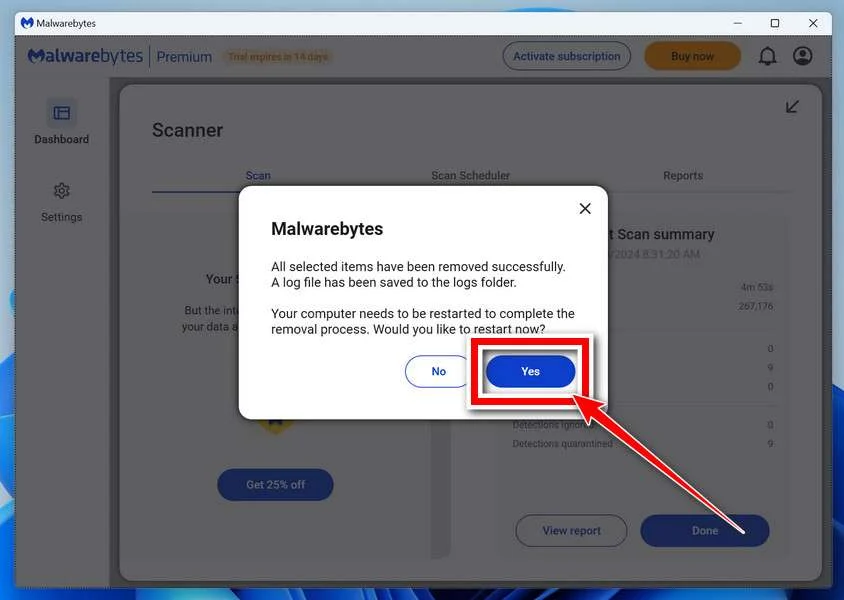
That’s it — your Windows PC is now clean of trojans, adware, and other malware, and should be back to running smoothly.
If you are still having problems with your computer after completing these instructions, then please follow one of the steps:
- Run a computer scan with ESET Online Scanner
- Ask for help in our Windows Malware Removal Help & Support forum.
Run a Malware Scan with Malwarebytes for Mac
Malwarebytes for Mac is a free on-demand scanner that removes the malware other security software tends to miss — adware, browser hijackers, and unwanted programs included. Cleaning an infected Mac with Malwarebytes has always been completely free, and it’s our go-to recommendation. Follow the steps below to scan and clean your Mac in just a few minutes.
-
Download Malwarebytes for Mac
Click the button below to download the latest version of Malwarebytes for Mac.
Download MalwarebytesOfficial installer for macOS. Your download starts right away.Want real-time protection? See Malwarebytes PremiumMalwarebytes Free for MacScans and removes malware at no cost -
Open the Malwarebytes setup file
When the download finishes, open your Downloads folder and double-click the setup file to begin the installation.
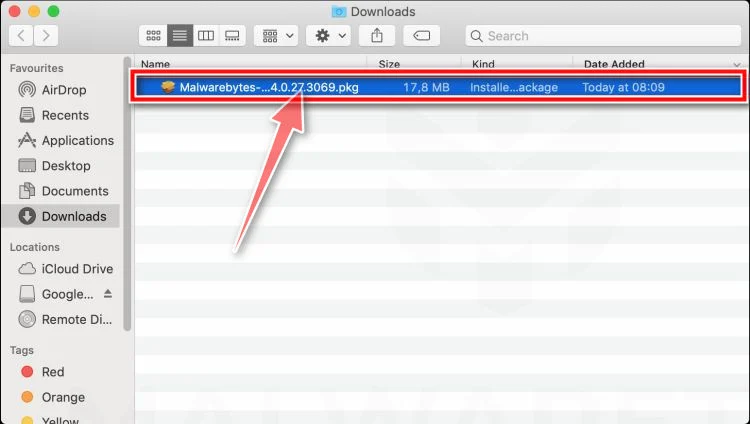
-
Follow the On-Screen Prompts to Install Malwarebytes
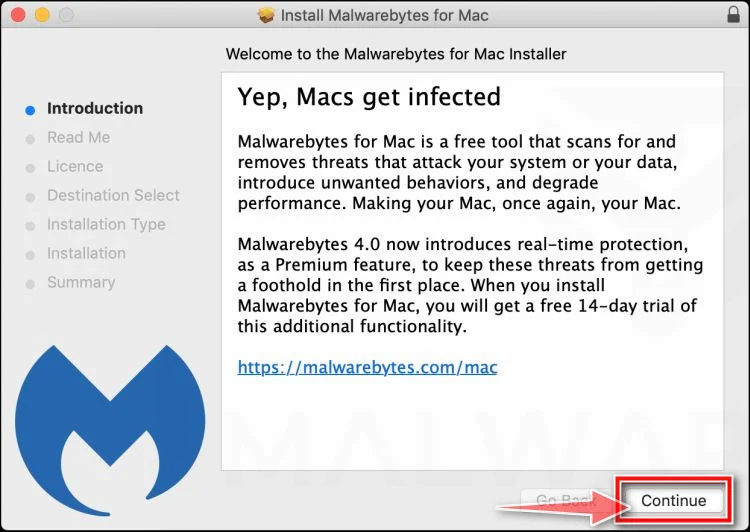
The Malwarebytes for Mac Installer will guide you through a few quick screens. Click “Continue” and keep following the prompts until the installation completes.
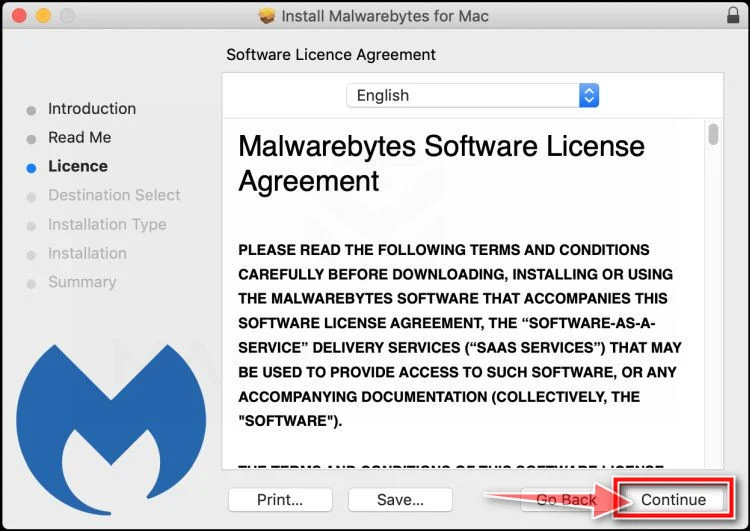
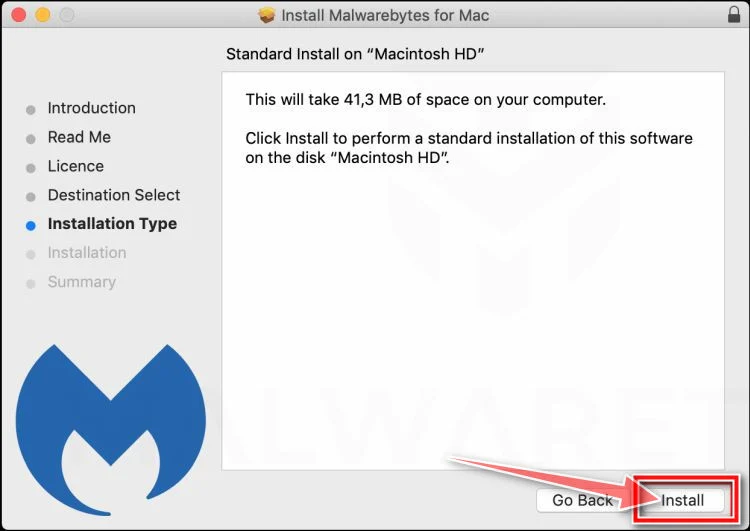
When the installation is complete, Malwarebytes opens to the Welcome to Malwarebytes screen. Click “Get started“.
-
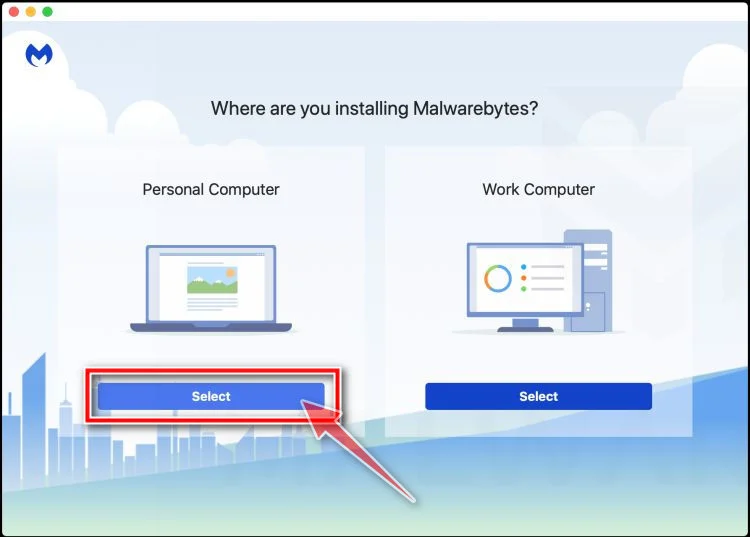
Select “Personal Computer” or “Work Computer”
Malwarebytes will ask what type of computer you’re installing it on. Click either Personal Computer or Work Computer, whichever applies.
-
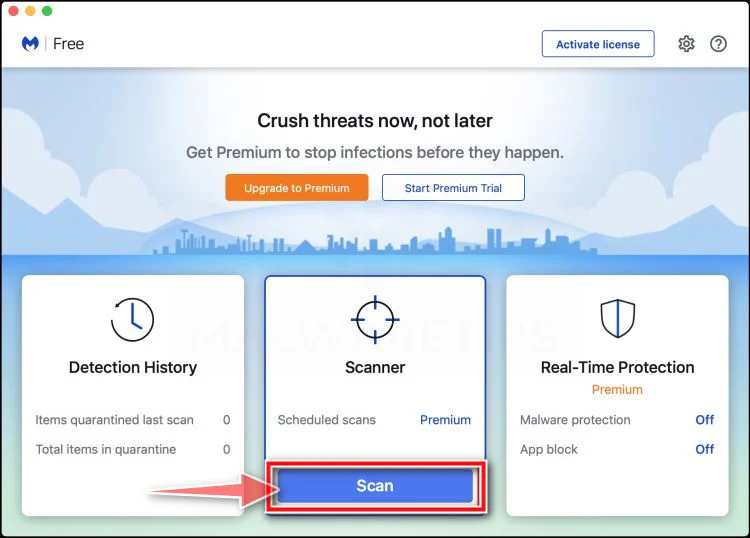
Start the Scan
Click the “Scan” button. Malwarebytes will automatically update its detection database and begin checking your Mac for malware.
-
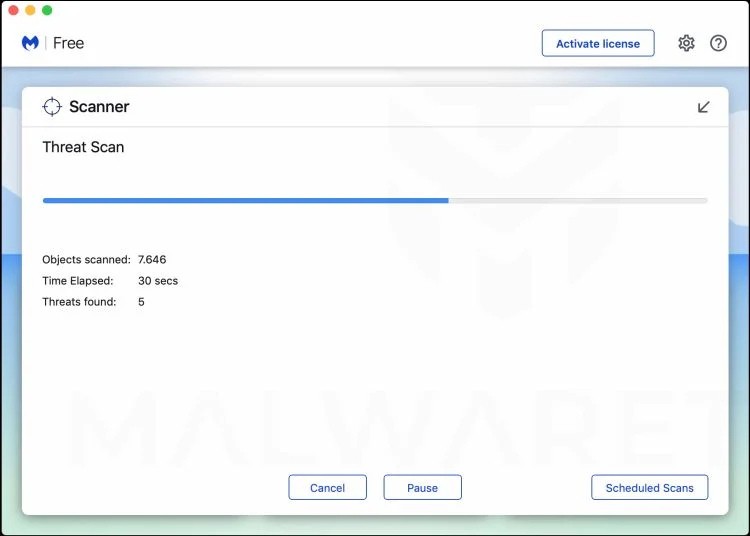
Wait for the Scan to Finish
Malwarebytes will scan your Mac for adware, browser hijackers, and other malicious programs. This can take a few minutes, so feel free to do something else — just check back occasionally to see the progress.
-
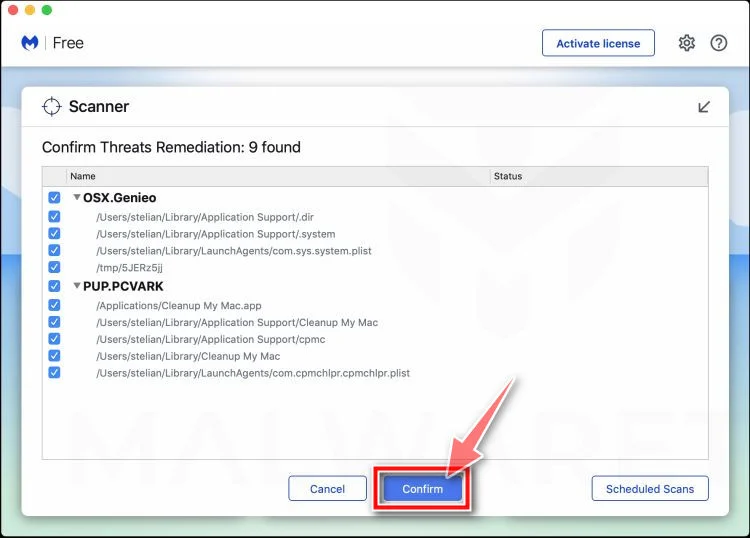
Quarantine the Detected Threats
When the scan is done, you’ll see a list of everything Malwarebytes found. Click the “Quarantine” button to remove all the threats at once.
-
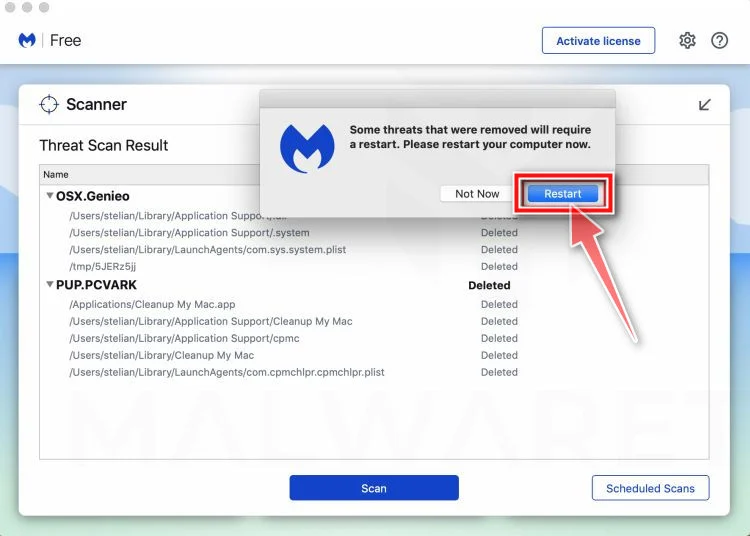
Restart Your Mac
Malwarebytes will now remove all the malicious files it found. Some threats can only be fully removed after a reboot — if Malwarebytes asks you to restart, allow it. Once you’re logged back in, your Mac is clean.
That’s it — your Mac is now free of adware, rogue browser extensions, and other potentially harmful software.
If you are still experiencing problems while trying to remove a malicious program from your computer, please ask for help in our Mac Malware Removal Help & Support forum.
Run a Malware Scan with Malwarebytes for Android
Malwarebytes for Android automatically detects and removes dangerous threats like malware and ransomware so you don’t have to worry about your most-used device being compromised. Aggressive detection of adware and potentially unwanted programs keeps your Android phone or tablet running smooth.
-
Download Malwarebytes for Android.
You can download Malwarebytes for Android by clicking the link below.
Get Malwarebytes for AndroidOpens Google Play in a new tab.Want real-time protection? See Malwarebytes Premium for AndroidMalwarebytes for AndroidScans your phone and removes malware at no cost -
Install Malwarebytes for Android on your phone.
In the Google Play Store, tap “Install” to install Malwarebytes for Android on your device.

When the installation process has finished, tap “Open” to begin using Malwarebytes for Android. You can also open Malwarebytes by tapping on its icon in your phone menu or home screen.

-
Follow the on-screen prompts to complete the setup process
When Malwarebytes will open, you will see the Malwarebytes Setup Wizard which will guide you through a series of permissions and other setup options.
This is the first of two screens that explain the difference between the Premium and Free versions. Swipe this screen to continue.
Tap on “Got it” to proceed to the next step.
Malwarebytes for Android will now ask for a set of permissions that are required to scan your device and protect it from malware. Tap on “Give permission” to continue.
Tap on “Allow” to permit Malwarebytes to access the files on your phone.
-
Update database and run a scan with Malwarebytes for Android
You will now be prompted to update the Malwarebytes database and run a full system scan.

Click on “Update database” to update the Malwarebytes for Android definitions to the latest version, then click on “Run full scan” to perform a system scan.

-
Wait for the Malwarebytes scan to complete.
Malwarebytes will now start scanning your phone for adware and other malicious apps. This process can take a few minutes, so we suggest you do something else and periodically check on the status of the scan to see when it is finished.

-
Click on “Remove Selected”.
When the scan has been completed, you will be presented with a screen showing the malware infections that Malwarebytes for Android has detected. To remove the malicious apps that Malwarebytes has found, tap on the “Remove Selected” button.

-
Restart your phone.
Malwarebytes for Android will now remove all the malicious apps that it has found. To complete the malware removal process, Malwarebytes may ask you to restart your device.
That’s it — your Android phone is now clean — no more malicious apps, adware, or browser redirects.
If you are still having problems with your phone after completing these instructions, then please follow one of the steps:
- Restore your phone to factory settings by going to Settings > General management > Reset > Factory data reset.
- Ask for help in our Mobile Malware Removal Help & Support forum.
Stay Protected: Block Ads and Malicious Sites
Now that your device is clean, keep it that way. Most infections start with a malicious ad or a fake download button — so blocking them at the source is your best defense.
We recommend AdGuard, which blocks malicious ads, phishing pages, and dangerous redirects before they can reach you.
👉 Download AdGuard and browse safely
Frequently Asked Questions
What is the $750 Reward Shein Program scam?
This scam operates through fake websites that mimic Shein’s branding and promise $750 rewards for completing sponsored offers. The offers expose people to identity theft, unwanted charges, and more. No matter how many offers you complete, you won’t get a real payout.
How do scammers advertise the fake rewards program?
Scam ads are optimized for search and social media. They target people looking for Shein coupons and rewards. The pages feature urgent calls to action and request personal info upfront to “verify eligibility” for $750 rewards.
What personal information do the scam sites ask for?
Scammers ask for full name, email, phone number, physical address, birthdate, and payment information. This enables them to commit identity theft and sell your data.
What sponsored offers do you have to complete?
Offers include free app downloads, subscription trials, online shopping deals, etc. This exposes you to identity theft, hidden subscription fees, malware infections, and marketing spam.
Do you actually get a $750 Shein reward if you complete all the offers?
No, the $750 rewards are completely fabricated. No matter how many offers you complete, you will not get a Shein gift card or cash payout. Victims never receive promised rewards.
What risks are you exposed to by providing your information?
Major risks include identity theft, financial fraud, hidden subscription fees, device malware infections, breached online accounts, and endless marketing spam calls and emails.
What should you do if you already shared your information with a scam site?
- Scan devices for malware and delete anything suspicious
- Reset all account passwords and enable two-factor authentication
- Contact banks and credit card companies to monitor for fraud
- Cancel any unwanted subscriptions
- Beware of follow up scam calls or emails
- Report the scam to authorities like the FTC
How can you avoid falling for the $750 Reward Shein Program scam?
Stick to Shein’s official site instead of questionable links, don’t enter personal info on sketchy sites, don’t download unverified apps, and consult trustworthy consumer sites about unfamiliar rewards offers.
The Bottom Line
The promise of earning $750 in Shein rewards or gift cards for minimal effort is a complete scam. These fake reward programs only exist to harvest your personal data for identity theft and resell it for profit. No matter how many sponsored offers you complete, you won’t receive any payout.
Protect yourself by learning to recognize the warning signs of this scam:
- Rewards that sound too good to be true usually are. Legitimate rewards programs rarely pay out high sums for little work.
- Requests for personal info early on should raise red flags. No legitimate site would demand extensive details just to “verify eligibility.”
- High pressure tactics like countdown timers or limited time offers should make you step back and think logically.
- Expect identity theft, unwanted charges, malware, and spam if you hand over information or complete dubious offers.
- Customer service and support channels are non-existent – huge red flag for a scam.
Avoid clicking on questionable links, entering personal details on sketchy sites, or downloading unverified apps. Stick to Shein’s official site and channels to find authentic promotions and rewards programs. And consult trustworthy consumer protection sites when unsure about unfamiliar offers.
Being vigilant against increasingly convincing scam tactics will keep your identity and wallet safe. Don’t let coveted rewards blind you – if it seems too good to be true, it always is.

Join the discussion
0 commentsShare your experience or ask a question about this article.
Discussion
Start the conversation
Have a question or something useful to share? Add the first comment.