

A prevalent Facebook scam is promoting $40 off-road karts and dune vehicles using enticing ads and fake websites. But the amazing deals are fraudulent – a ploy to steal victims’ money and information. This article exposes how this viral scam works and provides tips to avoid getting duped.
Scam Overview
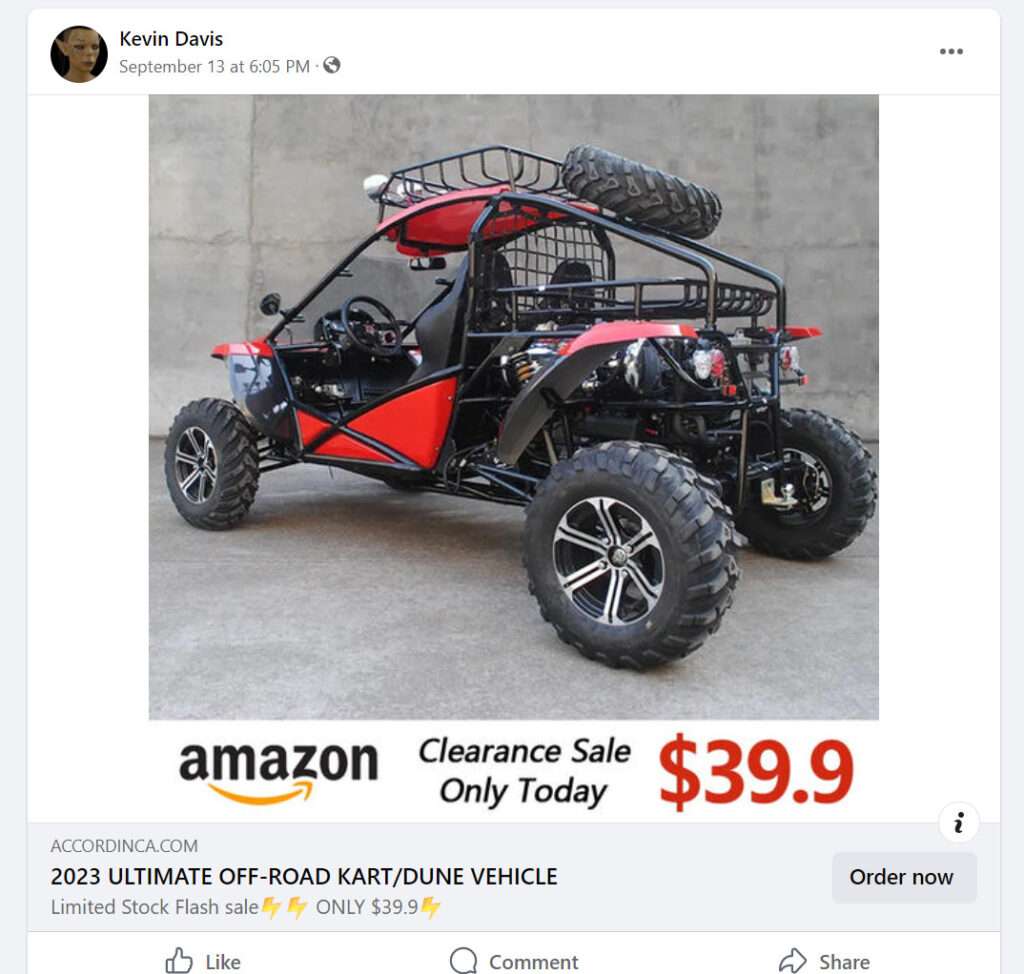
This scam operates by running flashy Facebook ads promoting extreme off-road go-karts and dune buggy style vehicles at absurdly low prices like $39.90. The ads tout these recreational vehicles as high-performance racing karts built for rugged terrain.
To purchase, users are directed to elaborate fake websites impersonating real retailers. These sites encourage entering personal and credit card information to finalize the incredible deal. However, it’s merely a scam to steal victims’ details and money.
The websites have no actual connection to any warehouse or dealer that can supply vehicles. After payment, victims receive nothing or a low-quality kids toy car unrelated to the ads.
This off-road vehicle scam exhibits all the typical red flags:
- Ridiculously low prices like $40 for a full-sized recreational kart.
- Claims the karts have “racing-inspired” design and premium build quality.
- Fake limited-time sale countdowns and urgency tactics.
- No indication of an actual business behind the website.
- Amateur site with spelling/grammar errors.
- Pressuring users to enter personal information to “purchase.”
With awareness of these and other warning signs, consumers can hopefully recognize these Facebook ads for what they are – an attempt to swindle and steal from unsuspecting shoppers.
How the Scam Works
This off-road kart scam ensnares victims using social media ads and fake websites. Here’s an inside look at how they operate:
Bait: Flashy Facebook Ads
The scam begins with enticing video ads run on Facebook showcasing extreme off-road karts tearing through mud and sand dunes. For example:
“💥Clearance Sale! 🔥ONLY 39.9!🏍2023 ULTIMATE OFF-ROAD KART/DUNE VEHICLE✅This is a high performance off-road machine inspired by racing!✅It’s one of the most exciting and well-built off-road vehicles Europe has ever built!💥Buy today to enjoy 90-day no questions asked return and 5-year warranty! DOROTMA.COM”
The professional-quality ads tout the karts as high-performance racing-inspired machines built for rugged terrain. Terms like “clearance sale” and “only $39.90” spark interest and imply unbelievable savings.
While compelling, these ads are completely fabricated. They aim to drive traffic to fake sites to execute the actual scam.
Hook: Elaborate Fake Websites
Clicking the Facebook ads leads users to sophisticated fake websites that further the deception. These sites have domain names like Dorotma.com, XtreemDuneStore.com, or OffRoadKartzing.co.
They feature images, videos, and descriptions of high-end recreational off-road karts just like the ads promote. Fake limited-time sale countdowns pressure visitors to purchase fast before the low prices expire.
In reality, these sites are total scams unconnected to any actual dealership. But the polish and detail makes them appear credible.
Reel-In: Collecting Personal and Payment Data
To purchase the $40 kart, users must enter personal and payment information like full name, address, credit card number, CVV code, etc.
The sites claim this is to process orders, calculate precise shipping costs, and finalize the amazing deal. But in fact, it’s just a scheme to harvest users’ sensitive data directly into the hands of scammers.
The Catch: Stolen Money and Details
After submitting information and payment, users receive nothing but stress. The fake websites disappear with victims’ details and money in hand.
At best, credit card info gets sold on black markets. At worst, scammers steal identities and drain accounts. Some victims eventually receive a cheap $1 kiddie car, unrelated to the ads, so scammers can claim they delivered something.
But the reality is – the $40 recreational vehicles promoted simply don’t exist. The whole scheme only exists to steal from unsuspecting shoppers.
How to Spot the Off-Road Kart Scam on Facebook
It’s important to be able to recognize signs of the off-road kart scam on Facebook to avoid falling victim. Here are some tips:
- Look for unbelievable low prices – If a full-sized recreational go-kart is advertised at an absurdly cheap price like $39.99, it’s likely a scam. Legit karts cost $1000+ normally.
- Research unfamiliar sellers – Thoroughly vet any unfamiliar website you land on from a Facebook ad. Look for signs it’s a real dealership, not a scam front.
- Watch for exaggerated claims – If basic karts are touted as “racing-inspired” high-performance vehicles, take it with a grain of salt. Scams often make unbelievable claims.
- Check for fake countdown timers – Real sales don’t pressure you with ever-expiring countdown clocks. This is a common scam tactic to create false urgency.
- Evaluate language and grammar – Sloppy writing with lots of styling errors indicates an amateur scam, not a real retail business.
- Look for contact information – Legitimate dealers have real mailing addresses, phone numbers, email addresses to contact. Scams typically show none.
- See if they sell more than one product – Real stores sell inventory of multiple products, not just a single item. One-product sites are highly suspicious.
- Go with your gut – If an ad or deal gives you pause, trust your instincts and close the page. It’s better to be safe than scammed.
What to Do If You Are a Victim
Falling for online scams can have serious impacts. Here are important steps to take if you suspect you got duped by the off-road kart scam:
Contact Your Credit Card Provider Immediately
If you entered your card details, call your provider ASAP to report fraudulent charges. Alert them your information was entered on a fake website impersonating a dealer. Request a new card number to prevent additional fraud.
Ask the provider to reverse any pending or recent charges from the scam merchants. Act quickly, as early intervention can limit damages. Monitor statements closely.
Place Freezes on Credit Reports
Contact Equifax, Experian, and TransUnion to place freezes on your credit reports. This blocks scammers who stole your info from opening fraudulent accounts. Temporarily lift freezes only when legitimately applying for credit.
Reset Online Account Passwords
Change the passwords on your online accounts in case the scam site also obtained passwords or email addresses. Use unique, complex passwords for each account. Enable two-factor authentication where possible.
Learn From This Experience
While being scammed is disheartening, try to use this as a lesson for the future. Reflect on what drew you to the ad originally and warning signs you overlooked. Let this motivate you to be even more vigilant moving forward.
Frequently Asked Questions about the Off-Road Kart Scam
What is this off-road kart scam on Facebook?
This scam runs flashy ads promoting extreme off-road go-karts at absurdly low prices like $40. The ads link to fake websites that steal victims’ personal and payment information under the guise of selling dune buggy style vehicles.
What are some clear signs this is a scam?
Obvious red flags include the unrealistic low prices, claims the basic karts are high-performance racing vehicles, fake limited-time countdowns, no real company information, pressure to enter details quickly, etc.
How are people tricked by this scam?
The compelling Facebook ads drive traffic to sophisticated fake sites mimicking real vehicle dealerships. Victims entering their information don’t realize the sites are complete scams.
What happens after someone provides their details?
Victims never receive any off-road karts after entering their information. Instead, their details are used to commit identity theft or make fraudulent purchases online.
What should you do if you already entered your information?
Immediately contact your credit card company to report fraudulent charges, cancel your current card, and have a new one issued. Also place freezes on your credit reports and reset account passwords as a precaution.
How can this kart scam be avoided?
Look for the warning signs, research unfamiliar sellers thoroughly, avoid deals that seem too good to be true, only buy directly from real trusted sites, and never enter info on an unknown website.
Can these scam ads be reported?
Yes, you can report suspicious ads on Facebook by clicking the three dots icon and selecting “Report Ad.” Reporting them helps get scams removed from the platform.
Conclusion
The off-road kart scam on Facebook provides an important reminder about always using caution when evaluating deals online that appear too good to be true. No legitimate retailer can offer $40 full-sized recreational vehicles built for extreme terrain and racing.
Take time to research unfamiliar sellers and watch for signs of scams before providing personal information. And never enter payment details unless you are absolutely certain you are on the real site of a known, trusted retailer. If a deal gives you pause, trust your instincts.
With vigilance and awareness, consumers have the power to recognize scams and make smart decisions to protect their hard-earned money. Report suspicious ads so social platforms can remove them. And arm yourself with the knowledge needed to outsmart scammers aiming to take advantage of innocent shoppers.

Join the discussion
0 commentsShare your experience or ask a question about this article.
Discussion
Start the conversation
Have a question or something useful to share? Add the first comment.