

Many Pennsylvania drivers have recently reported receiving an alarming text message claiming their vehicle has unpaid Pennsylvania Turnpike invoices. This scam directs victims to a fake website intending to harvest their personal and financial details for identity theft and fraud. This comprehensive guide will examine how this text toll scam works, provide tips to spot and avoid it, and offer guidance if you unfortunately fell prey.
Overview: Breaking Down the PA Turnpike Toll Invoice Text Scam Targeting Drivers
This scam begins when an unsolicited text message is sent to random cell phone numbers across Pennsylvania, structured to appear as if it originated from the official “PA Turnpike Tolls” system. The message claims the recipient’s vehicle has unpaid toll invoices, threatening hundreds in additional fines if immediate payment is not made.
A link is included that appears to direct to the real PA Turnpike website, but actually routes victims to an elaborate fraudulent toll payment portal controlled entirely by scammers. If users enter personal or financial information, it is harvested by criminals to commit identity theft and drain accounts.
These text scams leverage fears over racking up penalties from unpaid toll road invoices to override critical thinking. The seemingly small $7.60 unpaid toll amount appears plausible enough for a rushed driver. And the threat of $76 in new fees causes panic that obscures the underlying fraud.
In truth, the PA Turnpike never contacts customers by text message or allows payments on third-party websites. But the fake professional-looking portal and convincing urgent threats deceive recipients.
This article will break down exactly how this toll invoice text phishing scam works, provide tips to avoid falling victim, outline steps if you were targeted, and offer guidance to safeguard your identity and accounts going forward. Understanding this fraud is key to protecting yourself on Pennsylvania toll roads.
How the Pennsylvania Turnpike Toll Invoice Scam Unfolds to Target Victims
The PA Turnpike toll invoice text phishing scam operates in targeted stages:
Stage 1: Recipients Get a Text Message About Unpaid Tolls
The scam starts with an unsolicited SMS text sent to random phone numbers with Pennsylvania area codes stating:
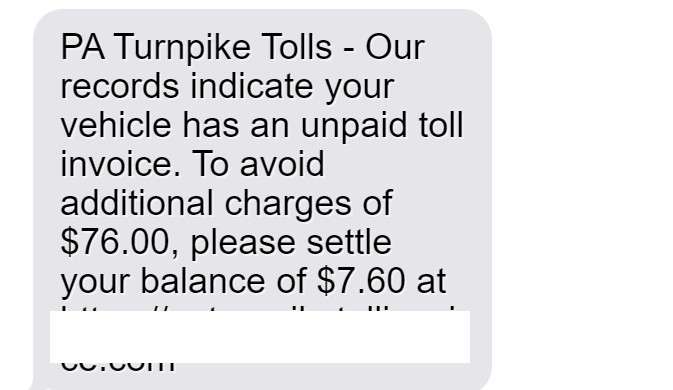
“PA Turnpike Tolls – Our records indicate your vehicle has an unpaid toll invoice. To avoid additional charges of $76.00, please settle your balance of $7.60 at https://paturnpiketollinvoice.com”
The small invoice amount and threat of steep penalties are structured to immediately panic recipients.
Stage 2: The Text Includes a Link to a Fake Website
While made to look legitimate, the URL embedded in the text actually directs to a sophisticated forgery of the real Pennsylvania Turnpike website.
If clicked, the link sends victims to the fraudulent site completely controlled by scammers aiming to directly harvest personal details.
Stage 3: Victims Visit the Elaborate Fake Website
Victims who click the link out of fear over owing toll fees are led to the imposter PA Turnpike payment portal dressed up to mirror the look and feel of the real website.
This tricks users into believing they’ve been directed to the official channel to pay their outstanding balance and avoid menacing extra penalties.
Stage 4: The Site Requests Personal and Financial Information
The fraudulent website presents an online form asking users to enter personal, identity, credit card, and account details to supposedly settle their unpaid toll bill, including:
- Full legal name
- Date of birth
- Driver’s license number
- Vehicle information
- Home address
- Phone number
- Email address
- Credit card number
- CVV code
- Expiration date
This allows scammers to directly steal identity and financial account access.
Stage 5: Scammers Harvest All Submitted Information
Once victims enter and submit their personal information, it is directly harvested by the scammers who created the fake PA Turnpike portal.
A fake confirmation screen states that the unpaid toll has been settled. In reality, users just handed their details directly over to criminals.
Stage 6: Criminals Commit Identity and Financial Theft
Armed with stolen personal and financial data, scammers can now easily commit serious identity theft by impersonating victims online and financial fraud by making unauthorized purchases.
Criminals can also open new credit cards and loans, take out payday advances, file fake tax returns, access health insurance, and commit other fraud using the stolen information.
The Outcome: Dealing with the Aftermath of Identity and Financial Theft
Victims now face the lengthy, difficult process of repairing identity theft damages, disputing fraudulent charges, constantly checking credit reports, changing compromised account passwords, and monitoring for future misuse of their details obtained through the fake texted link.
This demonstrates why it’s critical to be wary of any texts related to unpaid toll invoices and verify their legitimacy directly with the PA Turnpike before providing personal or financial data.
What to Do if You’re Targeted by the PA Turnpike Toll Text Scam
If you receive a suspicious text demanding payment for PA Turnpike toll invoices, take these key steps:
- Do not click any links in the text message. This could lead to device infection or providing data to scammers.
- Contact the PA Turnpike directly at 1-877-736-6727 to confirm the legitimacy of the text.
- Look up the official PA Turnpike website independently through an online search or your paperwork. Do not use links or numbers provided in texts.
- Forward the scam text to 7726 (SPAM) to have your cell provider potentially block the sender’s number.
- File a scam report with the PA Attorney General at www.attorneygeneral.gov and the FTC at www.reportfraud.ftc.gov. Include the phone number, screenshot, website link, and message content.
- Monitor bank and credit card statements closely for any fraudulent charges for several months following scam targeting. Report unauthorized transactions immediately.
- Consider placing fraud alerts or freezing credit files while monitoring reports to protect from potential identity theft damages.
Being proactive and alert protects against substantial identity theft and financial damages from providing data to scammers through fake PA Turnpike toll payment websites.
How to Avoid Falling Victim to the PA Turnpike Toll Invoice Text Scam
Here are important tips to identify and avoid PA Turnpike toll invoice text phishing scams:
- The PA Turnpike never initiates contact via text messages or allows online payments anywhere except their official website. Regard any texts claiming outstanding tolls as suspicious.
- Slow down and read any payment demands fully before clicking links or providing data. Scams create false urgency to override critical thinking.
- Independently look up the official PA Turnpike site and contact info instead of using what’s provided in texts. Search for contact details on Turnpike.com.
- Contact the PA Turnpike directly if you receive a surprising notice by phone, email, mail or text to validate it before providing any personal or financial details.
- Carefully check the full URL of any websites before entering information, looking for the secure “https://” prefix and lock icon indicating a valid SSL certificate.
- No legitimate company will request sensitive account details via unsolicited text messages or emails. Only enter information on verified websites you directly navigate to yourself.
- Configure text blocking through your phone provider to filter out messages from unknown numbers as an initial defense.
- Place fraud alerts and consider credit freezes after any potential compromise of details to prevent damages from identity theft and fraudulent accounts.
Exercising skepticism, verifying invoices independently, and never rushing to click texted links can help avoid falling victim to toll invoice scams impersonating the PA Turnpike.
Frequently Asked Questions About the PA Turnpike Toll Invoice Text Scam
1. How can I identify the PA Turnpike toll invoice text scam?
Red flags include getting an unprompted text demanding payment, threats of additional fees, and a link to an unknown third-party website rather than the official PA Turnpike portal. The PA Turnpike also confirms they never contact customers by text.
2. What details are contained in the PA Turnpike scam texts?
The scam texts reference a specific unpaid toll invoice around $7.60 and threaten extra charges over $75 if immediate payment is not made. They include a link to a fraudulent website disguised as the real PA Turnpike.
3. What information does the fake PA Turnpike website ask for?
The fake portal prompts entry of personal identity details, contact information, vehicle data, and crucially full credit card information including card number, CVV, and expiration.
4. How can scammers use my personal details entered on the site?
Scammers can use your stolen identity information like full name, license number, and address to open fraudulent accounts in your name, file fake tax returns, access medical services, and commit other identity fraud.
5. What can criminals do with my credit card information obtained through the site?
Scammers can make expensive unauthorized purchases with your card information or withdraw cash advances from associated bank accounts. They can resell card data or use it themselves to commit financial fraud at your expense.
6. Why do the scam texts create urgency with penalties threats?
Threatening immediate steep fines causes panic which overrides critical thinking that would otherwise identify the texts and website as fraudulent. This gets victims to provide data quickly without scrutiny.
7. How can I report the PA Turnpike toll scam?
Report scam texts to the PA Attorney General at www.attorneygeneral.gov, the FTC at www.reportfraud.ftc.gov, and forward to 7726 (SPAM) so your cell provider can potentially block the sender.
8. What should I do if I entered info into the fake PA Turnpike site?
Contact your credit card company and bank to monitor for fraud. Place fraud alerts on credit files, change account passwords, and consider a credit freeze to prevent identity theft damages from stolen details.
9. How can I avoid the PA Turnpike text toll scam in the future?
Carefully review any text messages about unpaid tolls, verify directly with the PA Turnpike instead of using links/numbers provided, routinely monitor financial statements, and learn to spot signs of text invoice scams.
10. Who is responsible for sending the deceptive PA Turnpike texts?
PA Turnpike officials confirm these scam texts are sent by cybercriminal groups aiming to steal personal data, not the actual agency. Reporting scams aids law enforcement investigations.
The Bottom Line
This scam leveraging fears of owing Pennsylvania Turnpike toll fees illustrates how text messages are now a prime vector for phishing attempts meant to steal personal data and account access. But understanding the detailed tactics used in invoice scams makes identifying and avoiding them much simpler. Those targeted still must act fast to minimize any potential identity theft and financial damages enabled by provided information. However, awareness of these text invoice scams allows Pennsylvania drivers to confidently travel turnpike roads without diversion by fraudulent texts demanding payment.
Citizens now face an obligation to approach unsolicited texts with increased scrutiny rather than blind trust. We must think before clicking mysterious links, verify legitimacy independently, and understand the threats hoping to take advantage through fear and false urgency. By leveraging knowledge, we can steer clear of toll invoice scams and deny criminals the personal data they rely on to commit larger identity and financial crimes against innocent victims.








