

A new extortion scam has emerged, tricking victims into believing they have committed crimes and coercing them into paying large sums of money. Known as the “Podría tener problemas con la ley” or “You could be in legal trouble” email scam, this scheme preys on innocent recipients’ fears of prosecution and public shaming.
This devious scam starts with an email claiming the recipient’s device has been hacked and their personal information stolen. It goes on to say embarrassing or incriminating videos were recorded and threatens to send the “evidence” to the victim’s contacts unless they pay a Bitcoin ransom.
While unnerving, these claims are completely fabricated. This article will uncover how the “Podría tener problemas con la ley” scam ensnares its victims, the false threats it makes, and most importantly, how to protect yourself.
Overview of the Scam
The “Podría tener problemas con la ley” scam is a form of sextortion, using fabricated claims and intimidation to extort money. Emails are crafted to instill fear, making accusations like:
- Your device’s operating system was hacked
- Malware was installed to record you
- Videos of you watching explicit content were captured
- Illegal files were found on your device
- Evidence will be sent to your contacts unless you pay a ransom in Bitcoin
None of these claims are true, but many recipients understandably panic. The emails often include a deadline, usually 2 business days, creating further urgency to comply.
This scam exploits common fears like being hacked, blackmailed, publicly embarrassed, or charged with crimes. But rest assured, these threats are completely empty, meant only to coerce payment. No videos exist and no illegal actions occurred.
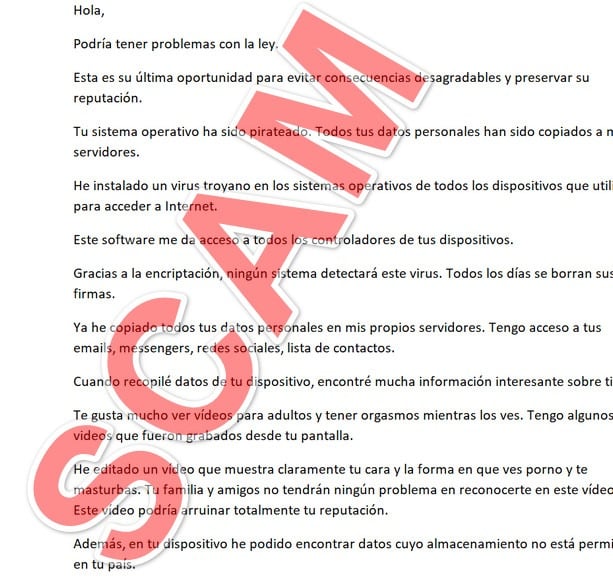
Here is how this email scam might look:
Hola
Podría tener problemas con la ley.
Esta es su última oportunidad para evitar consecuencias desagradables y preservar su reputación.
Tu sistema operativo ha sido pirateado. Todos tus datos personales han sido copiados a mis servidores.
He instalado un virus troyano en los sistemas operativos de todos los dispositivos que utilizas para acceder a Internet.
Este software me da acceso a todos los controladores de tus dispositivos.
Gracias a la encriptación, ningún sistema detectará este virus. Todos los días se borran sus firmas.
Ya he copiado todos tus datos personales en mis propios servidores. Tengo acceso a tus emails, messengers, redes sociales, lista de contactos.
Cuando recopilé datos de tu dispositivo, encontré mucha información interesante sobre ti.
Te gusta mucho ver vídeos para adultos y tener orgasmos mientras los ves. Tengo algunos videos que fueron grabados desde tu pantalla.
He editado un vídeo que muestra claramente tu cara y la forma en que ves porno y te masturbas. Tu familia y amigos no tendrán ningún problema en reconocerte en este vídeo. Este vídeo podría arruinar totalmente tu reputación.
Además, en tu dispositivo he podido encontrar datos cuyo almacenamiento no está permitido en tu país.
Podrías tener problemas con la ley.
Puedo enviar pruebas de tus actividades ilegales a todos tus contactos, hacerlo público a todo el mundo en internet.
Tengo muchos de tus datos personales. Tu historial de navegación, tu correspondencia en Messenger y redes sociales, tus llamadas telefónicas, tus fotos y vídeos personales. Puedo hacer públicos todos tus datos.
Seguro que la policía se interesaría por ti después de eso. Y otros organismos de seguridad de tu país.
Basta un clic de mi ratón para hacer pública toda la información almacenada en tu dispositivo. Entiendes las consecuencias.
Va a ser un verdadero desastre.
Tu vida se arruinará.
Seguro que te gustaría evitarlo, ¿verdad?
Es muy sencillo.
Tienes que transferirme 1300 USD (US dollars) (en equivalente bitcoin al tipo de cambio en el momento de la transferencia). Después de eso, borraré toda la información sobre ti de mis servidores.
No volveré a molestarte.
Mi monedero bitcoin para el pago: bc1q3f99952f8cqcesy0ut6em3etrf98t2f25krc58
¿No sabes qué es Bitcoin y cómo usarlo? Usa Google.
Tienes 2 días laborables para pagar.
Después de leer este correo electrónico, el plazo se inicia automáticamente.
Ya he recibido una notificación de que has abierto este correo electrónico.No hay necesidad de responder a mí, este correo electrónico se creó automáticamente y es imposible de rastrear. No hay necesidad de contactar con nadie para pedir ayuda. El monedero Bitcoin es irrastreable, así que sólo perderás el tiempo.
La policía y otros servicios de seguridad tampoco te ayudarán. En cada uno de estos casos, publicaré todos los videos sin demora.
Simply ignore and delete the email. Do not engage with the scammers or pay any ransom. Read on to learn exactly how this scam unfolds and why their threats are false.
How the Scam Unfolds
The “Podría tener problemas con la ley” scam is carefully orchestrated to maximize fear and pressure victims into paying. Here is how it typically unfolds, step-by-step:
1. Deceptive Email is Sent
Victims receive an unsolicited email with a alarming subject line like “Your data has been hacked” or “Evidence of your crimes.” The sender name and address are spoofed to appear real but untraceable.
2. Threats of Blackmail and Extortion
The email claims the recipient’s device was hacked and contains fabricated “evidence” of crimes or misconduct. It threatens to send the info to contacts and police unless a large Bitcoin ransom is paid.
3. False Sense of Urgency
A short deadline, usually 48 hours, is given to pay the ransom. This creates a false sense of urgency, pressuring victims to comply rather than think rationally.
4. Demand for Untraceable Ransom
Payment is demanded in Bitcoin, an untraceable cryptocurrency. A Bitcoin wallet address is provided to send funds to.
5. Pressure Tactics Backfire
Victims are told not to contact police or others for help, but this often encourages recipients to seek assistance and realize it’s a scam.
6. No Further Contact After Payment
If any ransom is paid, there is no further communication or data released. Scammers take the money and disappear.
7. Deletion of Email
Whether or not a ransom is paid, the best course is deleting the email immediately. Do not engage with these criminal extortionists.
This walkthrough reveals how the scam operates. Next, we dispel the specific lies and fabricated threats made in the emails.
Lies and Threats – Why They Are All False
While intimidating, all the claims and threats made in a “Podría tener problemas con la ley” email are demonstrably false. Here’s why:
Lie: Your Device Was Hacked
The scammers have no access to your device or accounts. The email was sent in bulk to many recipients without any prior hacking. No malware or tracking software has been installed.
Lie: Videos Were Recorded of You
No videos exist of you watching inappropriate content or doing anything illegal. The scammers have no capability to record you or access your webcam.
Lie: Illegal Files Were Found
Scammers cannot view your files or downloads to uncover any illegal activity. No incriminating data of any kind exists.
Lie: Evidence Will be Sent to Contacts
Scammers have no files, videos or other data to share with anyone. Their threats to expose you are completely empty.
Lie: Bitcoin Payment Is Untraceable
While hard to trace, Bitcoin transactions can be tracked by law enforcement. Paying only enables and emboldens these criminals.
Lie: Failure to Pay Will Result in Consequences
There are no consequences for ignoring these empty threats. The scammers will simply move on to other victims. You will not be contacted further or publicly shamed.
When we analyze the scam’s tactics, it becomes clear all the threats are designed to frighten but completely lack merit. Do not let these lies trick you into paying.
What to Do If You Receive This Scam Email
If you receive a “Podría tener problemas con la ley” extortion email, stay calm and take these steps:
- Do not respond or engage with the scammer in any way. Delete the email immediately.
- If you feel extremely concerned, contact local law enforcement to make them aware. They can reassure you it is only a scam.
- Run anti-virus software to confirm your devices are secure. Change passwords as an added precaution.
- Warn friends and family about this scam so they don’t fall victim.
- Never pay any ransom. This only emboldens the scammers to continue victimizing others.
Remember, the threats are fake and no consequences will follow if you ignore the demand. Do not let shame or fear push you into complying with extortion. Stand strong against this manipulation.
Frequently Asked Questions About the “Podría tener problemas con la ley” Extortion Scam
1. What is the “Podría tener problemas con la ley” email scam?
The “Podría tener problemas con la ley” scam is a form of extortion where recipients receive an email claiming their device was hacked, embarrassing or illegal videos recorded, and that the “evidence” will be sent to police and contacts if they don’t pay a Bitcoin ransom. The threats are completely fabricated with the intent to frighten victims into paying.
2. How does the “Podría tener problemas con la ley” scam work?
The scam starts with an alarming email sent en masse to recipients. It contains false claims of hacking, recording explicit videos, and finding illegal files. A short deadline is given to pay a Bitcoin ransom or have the “evidence” released publicly. The threats prey on fears but are totally fake. No hacking or recording occurred.
3. What threats are made in the email?
The email threatens to:
- Send explicit or illegal videos to the victim’s contacts
- Share evidence of “illegal” online activities with police
- Publicly expose private data online
- Ruin the victim’s reputation forever
4. Are the threats real?
No, the threats are completely fabricated. The scammers have no proof of illegal activity or embarrassing videos. Their threats are empty lies designed to trick victims into paying. There will be no consequences for ignoring them.
5. Should I pay the ransom?
No, you should never pay the ransom demand. The scammers will just take your money and continue victimizing others. Paying encourages them to keep scamming. All evidence is fabricated, so nothing will be shared if you don’t pay.
6. What should I do if I get the email?
Delete it immediately. Do not respond. Run anti-virus software on your devices for peace of mind, but know that no hacking occurred. You can report the scam attempt to local law enforcement. Under no circumstances should you pay the ransom.
7. Can the scammers really record me through my webcam?
No, the scammers cannot access your webcam or record your activity. They have no malware or viruses installed on your device, despite their claims. No videos exist.
8. What is the goal of this scam?
The only goal is to extort money through deception. The scammers fabricate threats to frighten recipients into paying Bitcoin ransoms. Don’t let them succeed in manipulating you.
9. How can I protect myself from this scam?
Be wary of any email claiming your device was hacked or making threats of extortion. Remember that compromising someone’s device is very difficult for scammers to do. Assume it’s a scam and never pay. Report the email and warn others.
10. What should I do if I already paid the ransom?
Contact local law enforcement immediately to make them aware. They may be able to trace the Bitcoin payment to the scammers. Learn from this experience and share your story to help prevent others from falling victim. Never pay ransoms that will only embolden criminals.
The Bottom Line – An Empty Threat to Disregard
The disturbing “Podría tener problemas con la ley” extortion scam preys on innocent victims’ fears. But we must not allow these deceptive tactics to succeed.
Now that this scam’s ploys have been exposed, we can rise above the deception. Have confidence knowing these threats are fabricated lies with no basis in reality. Avoid becoming another statistic taken in by these abrasive tactics.
Delete any such emails immediately and do not engage the scammers in any way. Forewarned is forearmed. We must spread awareness so these frauds fail and fade away.
Stand strong together against extortion scams. Our greatest defense is awareness, vigilance and looking out for one another. United, we have the power to protect our community from deceit and manipulation, today and in the future.

Join the discussion
0 commentsShare your experience or ask a question about this article.
Discussion
Start the conversation
Have a question or something useful to share? Add the first comment.