

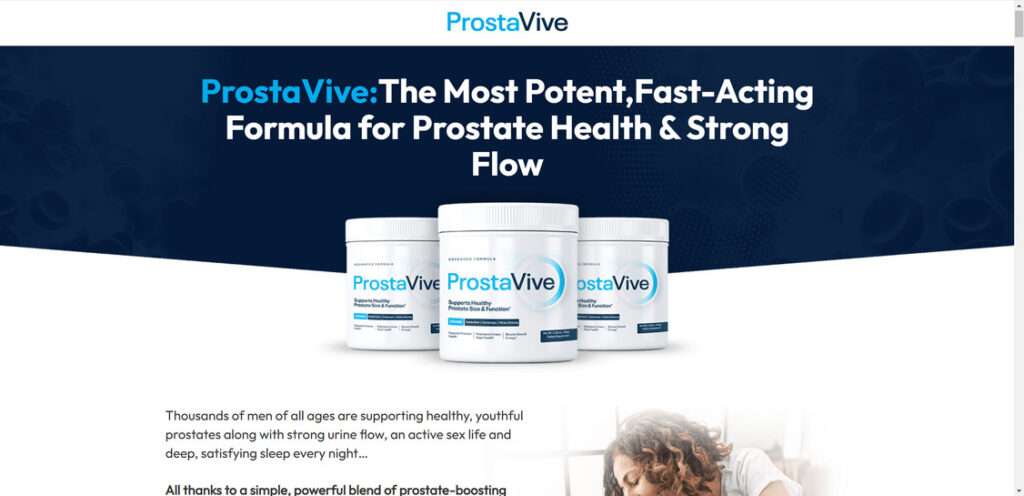
ProstaVive has recently flooded the supplement market with remarkable claims of supporting prostate health through unique ingredients like “Tibetan crystals.” But can you trust these lofty promises from an obscure product? This investigative article analyzes the facts behind ProstaVive.
Questionable Research and Development
At first glance, ProstaVive appears credible by citing prestigious universities like Fukushima Medical University and Lima University as playing a role in the product’s research. However, upon closer inspection, there is no evidence these schools had any verifiable involvement with ProstaVive’s creation or testing.
The connections seem fabricated to feign legitimacy. This tactic of name-dropping respected institutions is concerning and requires further proof.
Secret Ingredients from Exotic Locations?
ProstaVive is marketed as containing special minerals sourced from places like Tibet and Peru that can provide prostate benefits. However, no details are provided on the actual ingredients, dosages, or clinical research behind the formula.
There is also no evidence to support the advertised quick relief or “dissolving” of prostate problems. Claims regarding exotic, secret ingredients should be met with skepticism without transparent data.
Misleading Ad Tactics
The ProstaVive sales video employs several misleading advertising tricks. These include a progress bar slowed to keep viewers watching longer and a storyline about an incredible discovery – tactics commonly used to pressure sales.
Savvy consumers should be wary of these gimmicks aimed at driving urgency rather than providing full information.
No Substitute for Qualified Medical Care
ProstaVive is advertised as a solution for prostate concerns, but experts agree there is no substitute for professional medical advice regarding such health issues.
While supplements may provide adjunct support, they should not replace doctor-recommended treatments. Consulting a urologist or qualified provider is strongly advised.
Lack of Transparency in Company Details
Interestingly, ProstaVive’s terms and conditions reference Toronto, Canada, though the company does not appear to be based there. This vagueness about the manufacturer’s origins raises more credibility questions.
Full transparency about a supplement company is essential, especially when making such bold claims about the product.
Exercise Caution with ProstaVive
In summary, ProstaVive relies heavily on marketing tactics like dramatic origin stories, exotic ingredients, and miracles cures instead of proven science. Their research claims do not hold up to scrutiny either.
For those experiencing any prostate concerns, consult medical professionals and be very wary of supplements making outrageous promises without transparent evidence. Your health is too important to experiment with questionable products. Insist on truth from legitimate sources you can trust.
Frequently Asked Questions About ProstaVive
1. What is ProstaVive?
ProstaVive is a prostate health supplement marketed online as containing unique ingredients that can help with prostate issues. The advertising makes dramatic claims about the formula’s effectiveness, safety, and origins. However, there is little transparency or scientific proof provided.
2. What are the ingredients in ProstaVive?
The ingredients are not clearly listed. The marketing only vaguely references exotic-sounding components like “Tibetan crystals” and minerals from Peru. Without transparent details and dosages, the actual formula raises skepticism.
3. Is ProstaVive clinically proven?
There are no references to rigorous clinical trials, research studies, or data to substantiate the remarkable claims made about ProstaVive. The product appears completely unproven scientifically.
4. Is ProstaVive FDA-approved?
ProstaVive does not seem to be approved by the FDA. Dietary supplements do not require FDA pre-market approval, only post-market safety monitoring. So lack of FDA approval is not necessarily a red flag, but the dramatic effectiveness claims require proof.
5. Does ProstaVive have any side effects?
Potential side effects are unknown since the company does not provide safety details or studies. Without FDA oversight or trials, side effects cannot be ruled out. Users proceed at their own risk.
6. Can ProstaVive replace medical treatment?
No, ProstaVive should never replace or delay qualified medical care. Prostate issues require professional diagnosis and oversight from a urologist. Supplements are not an alternative to proper medical treatment.
7. Are the university claims about ProstaVive real?
No, the marketing’s claims of university research connections cannot be verified. The prestigious schools mentioned deny any involvement with ProstaVive. This false claim is concerning.
8. Where can I buy ProstaVive?
ProstaVive can only be purchased through the product’s website. It is not sold in stores. We advise caution when purchasing supplements only available directly from the manufacturer.
9. Does ProstaVive come with a money-back guarantee?
Yes, the website offers a refund policy. However, many customers report issues getting refunds from similar supplement companies. The guarantee may be exaggerated or misleading.
10. Is ProstaVive safe to take?
Without detailed ingredients or clinical trials, the safety of ProstaVive is unknown. There is no evidence or oversight establishing its safety for consumers, so potential risks cannot be ruled out.
11. Is ProstaVive a scam?
Considering the questionable marketing tactics, dramatic claims without proof, lack of transparency, and false university affiliations, there are definite scam concerns with ProstaVive that require further investigation.
12. What precautions should I take with ProstaVive?
We strongly advise consulting a doctor before trying ProstaVive or any supplement, especially if you have underlying health conditions. Do not believe claims that it can replace medical care. And thoroughly research a product’s legitimacy before purchasing.
This article is for educational purposes only and does not constitute professional, financial or legal advice. The content is intended for general information and should not be construed as definitive guidance. Information contained herein is subject to change without notice.  For concerns, please contact us via the provided form.
If you are the owner of the website or product in question and wish to offer clarifications regarding your business or website, please reach out to us through the provided Contact Form.








