


Cookies Control (by cookies-control.com) is a malicious Google Chrome extension (Rogue.ForcedExtension) which may hijack your default search engine or display pop-up ads and unwanted advertisements on web pages that you visit.
The Cookies Control Chrome extension is promoted via a malicious JavaScript code from cookies-control.com, which will force the users to install this unwanted extension. Most often, your browser will be redirect to the cookies-control.com malicious websites from a crack, keygen, or adult entertainment site.
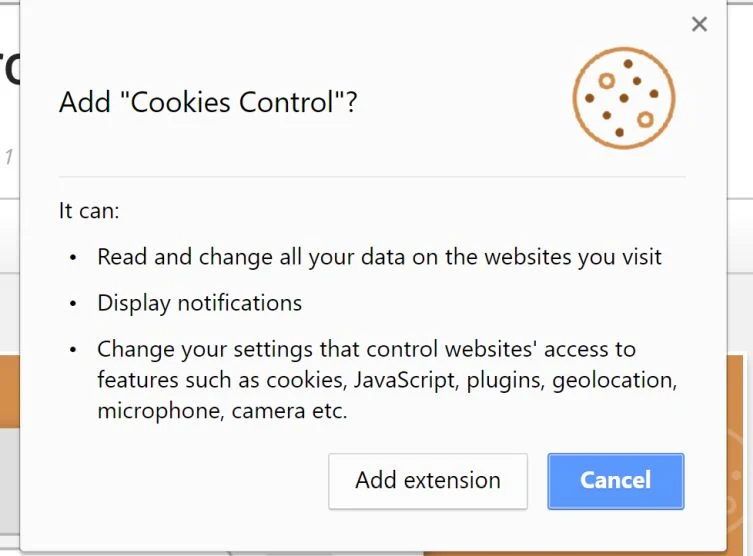
The cookies-control.com malicious site runs a JavaScript producing a dialog box, telling you you’ll have to “Add Extension to Leave”. Clicking “Cancel” once changes it to add a tick box marked “Prevent this page from creating additional dialogs” Thinking that this is the ticket out of the page, you will tick that box and click “OK”. At this point, your tab will go into “Full Screen” mode, and you will be prompted to install the Cookies Control extension.
A typical behavior for the Cookies Control malicious extensions is:
- Advertising banners are injected with the web pages that you are visiting.
- Random web page text is turned into hyperlinks.
- Browser popups appear which recommend fake updates or other software.
- Your browser homepage and default search may be changed
- Your browser search queries are being redirected or tracked
If your Windows machine gets stuck on a malicious site like cookies-control.com, use the Ctrl-Alt-Del key combination to open the Task Manager. Use “End Process” on every active “chrome.exe” process until the browser shuts down.
How to remove Cookies Control extension (Virus Removal Guide)
Please perform all the steps in the correct order. If you have any questions or doubt at any point, STOP and ask for our assistance.
- STEP 1: Reset the Group Policy to the default settings to remove Cookies Control extension
- STEP 2: Reset Google Chrome to the default settings
- STEP 3: Use Zemana AntiMalware Portable to remove adware
- STEP 4: Scan and clean your computer with Malwarebytes
- STEP 5: Double-check for malicious programs with HitmanPro
STEP 1: Reset the Group Policy to the default settings to remove Cookies Control extension
- Open the Command Prompt by pressing “Windows Key + X”, and click on “Command Prompt (Admin)” to open it in Administrator mode.
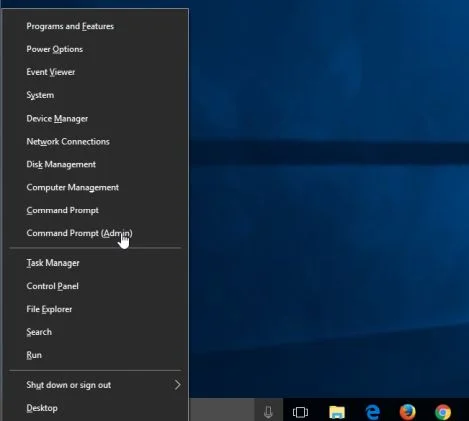 You can easily open the command prompt by typing “cmd” into the search box (Win + S), then right-click and choose Run as Administrator
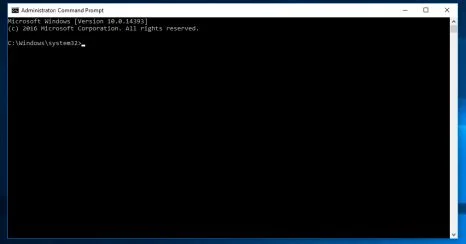
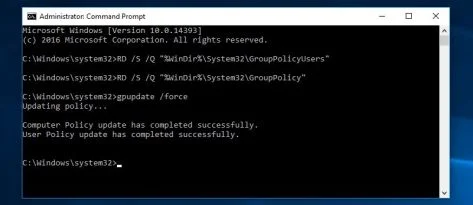
- In the Command prompt type (or copy/paste) the following commands:
- Type:
rd /S /Q "%WinDir%\System32\GroupPolicyUsers"
Press Enter. - Type:
rd /S /Q "%WinDir%\System32\GroupPolicy"
Press Enter. - Type:
gpupdate /force
Press Enter.
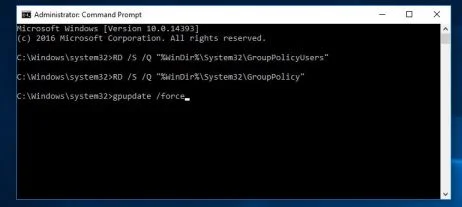 You should see the following notifications after the commands been run:
User Policy update has completed successfully.
Computer Policy update has completed successfully
- Type:
- The “Installed by enterprise policy” permissions will now be removed from Chrome, and you should be able to remove the Cookies Control extension.
STEP 2: Reset Google Chrome to the default settings
Google Chrome has an option that will reset itself to its default settings. You might need to do this if apps or extensions you installed changed your settings without your knowledge. Your saved bookmarks and passwords won’t be cleared or changed.
- On your computer, open Google Chrome.
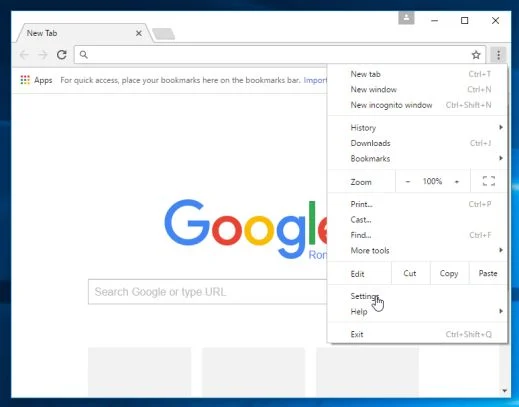
- At the top right, click “More” (represented by the three dots) and then “Settings”
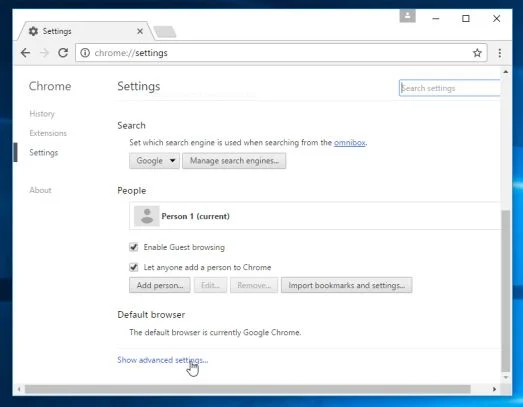
- At the bottom, click “Show advanced settings”.
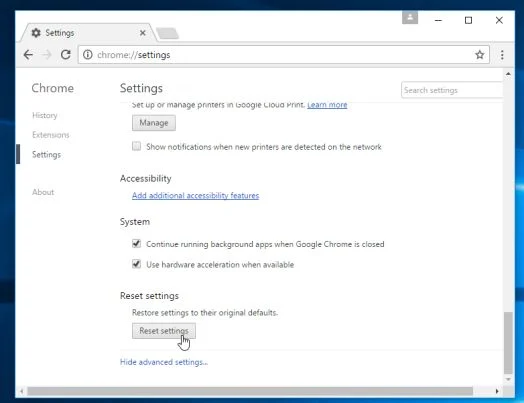
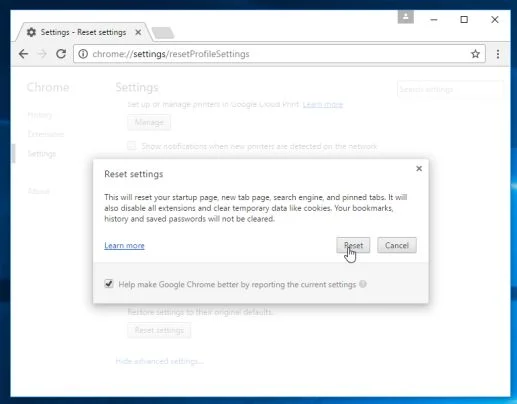
- Under the section “Reset settings”, click Reset settings.
- In the box that appears, click Reset.
STEP 3: Use Zemana AntiMalware Portable to remove adware
Zemana AntiMalware Portable is a free utility that will scan your computer for the Cookies Control extension and other malicious programs.
- You can download Zemana AntiMalware Portable from the below link:
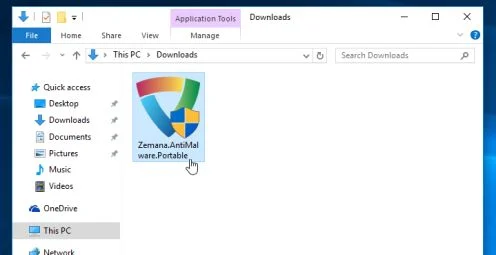
Download Zemana AntiMalwareOpens the download page in a new tab. - Double-click on the file named “Zemana.AntiMalware.Portable” to perform a system scan with Zemana AntiMalware Free.
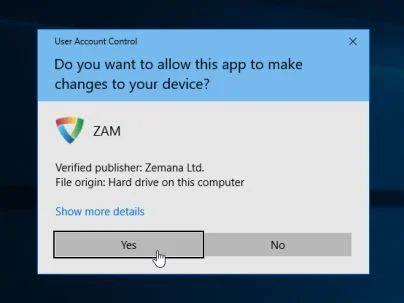
You may be presented with a User Account Control dialog asking you if you want to run this program. If this happens, you should click “Yes” to allow Zemana AntiMalware to run.
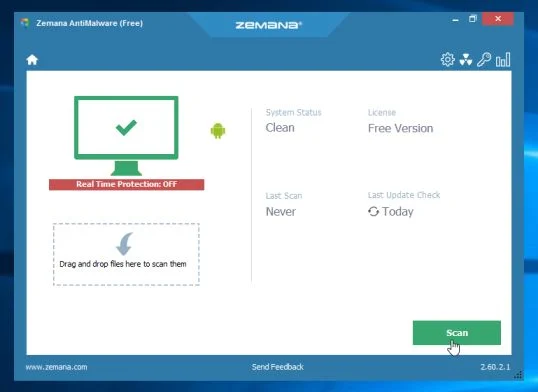
- When Zemana AntiMalware will start, click on the “Scan” button to perform a system scan.
- Zemana AntiMalware will now scan your computer for malicious programs. This process can take up to 10 minutes.
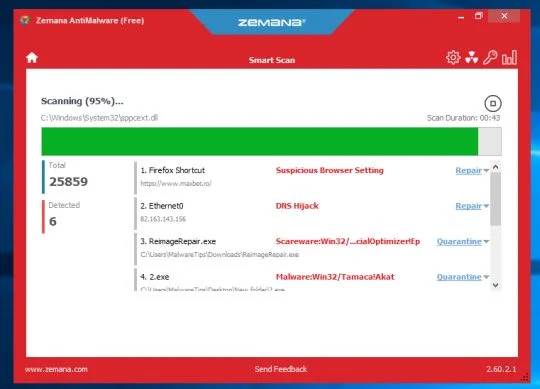
- When Zemana has finished finished scanning it will show a screen that displays any malware that has been detected. To remove all the malicious files, click on the “Next” button.
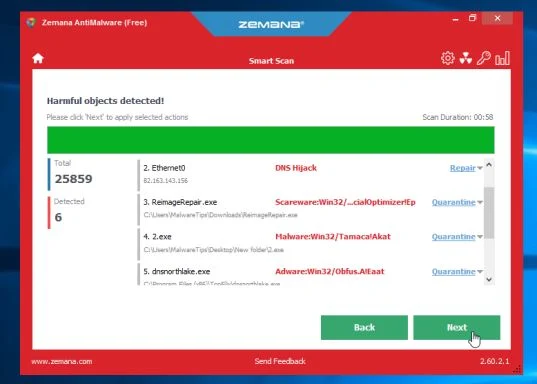
Zemana AntiMalware will now start to remove all the malicious programs from your computer. When the process is complete, you can close Zemana AntiMalware and continue with the rest of the instructions.
STEP 4: Scan and clean your computer with Malwarebytes
Malwarebytes is a powerful on-demand scanner which should remove the Cookies Control extension from Windows. It is important to note that Malwarebytes will run alongside antivirus software without conflicts.
- You can download download Malwarebytes from the below link.
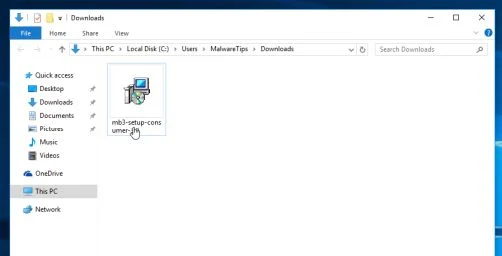
Download MalwarebytesFree official installer. Your download starts right away. - When Malwarebytes has finished downloading, double-click on the “mb3-setup-consumer” file to install Malwarebytes on your computer.
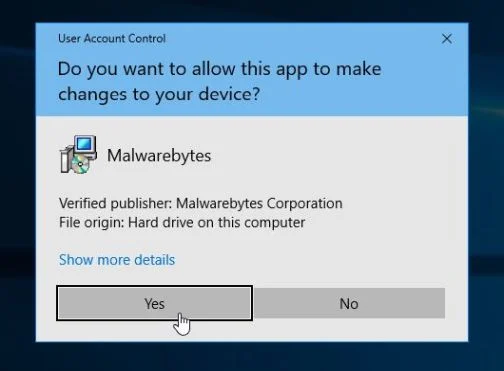
You may be presented with an User Account Control pop-up asking if you want to allow Malwarebytes to make changes to your device. If this happens, you should click “Yes” to continue with the installation.
- When the Malwarebytes installation begins, you will see the Malwarebytes Setup Wizard which will guide you through the installation process.
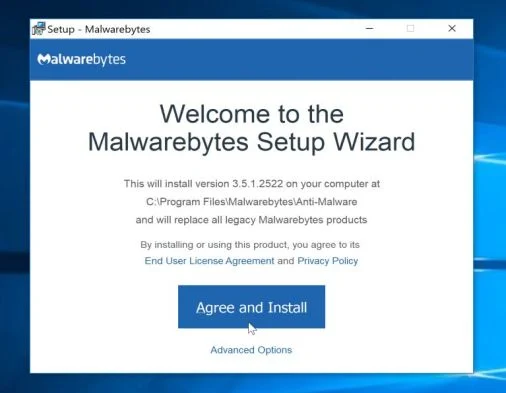
To install Malwarebytes on your machine, keep following the prompts by clicking the “Next” button.
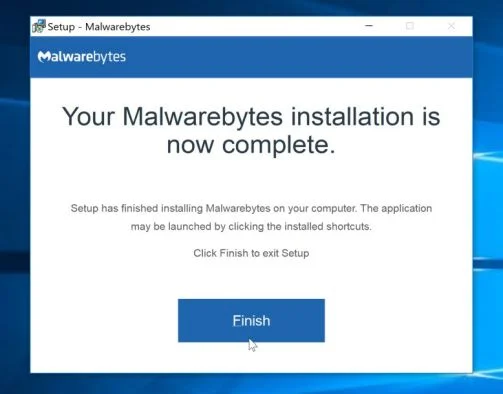
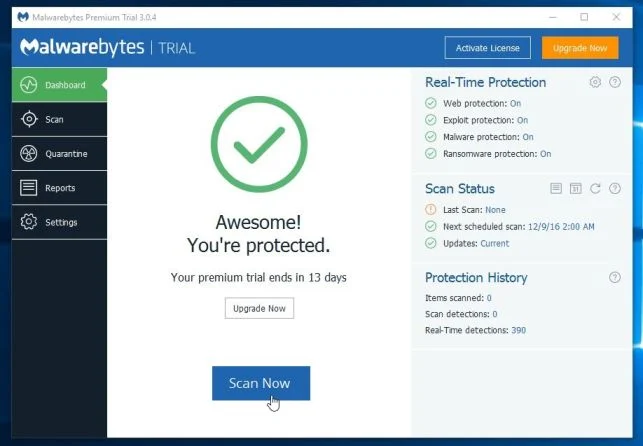
- Once installed, Malwarebytes will automatically start and update the antivirus database. To start a system scan you can click on the “Scan Now” button.
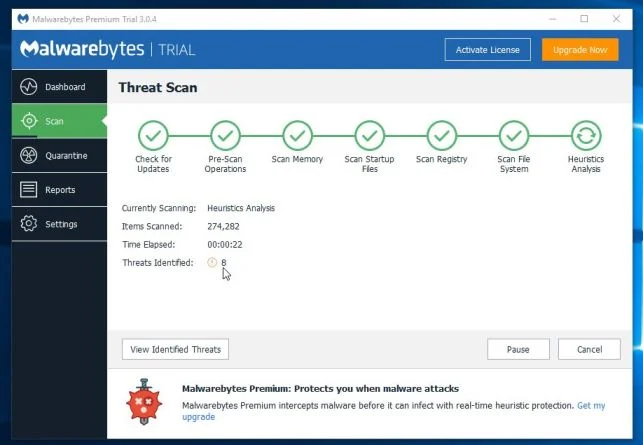
- Malwarebytes will now start scanning your computer for malicious programs.
This process can take a few minutes, so we suggest you do something else and periodically check on the status of the scan to see when it is finished.
- When the scan has completed, you will be presented with a screen showing the malware infections that Malwarebytes has detected.
To remove the malicious programs that Malwarebytes has found, click on the “Quarantine Selected” button.
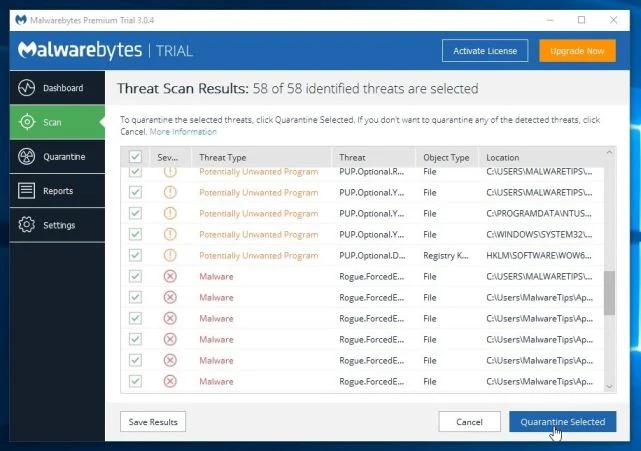
- Malwarebytes will now quarantine all the malicious files and registry keys that it has found.
To complete the malware removal process, Malwarebytes may ask you to restart your computer.
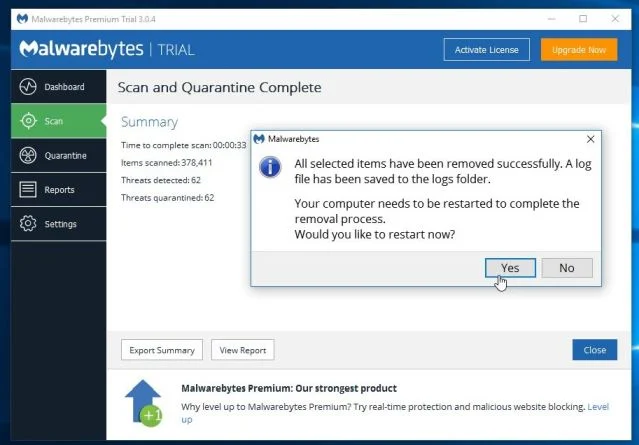
When the malware removal process is complete, you can close Malwarebytes and continue with the rest of the instructions.
STEP 5: Double-check for malicious programs with HitmanPro
HitmanPro can find and remove malware, adware, bots, and other threats that even the best antivirus suite can oftentimes miss. HitmanPro is designed to run alongside your antivirus suite, firewall, and other security tools.
- You can download HitmanPro from the below link:
Download HitmanProOfficial Sophos download. Free scan, free 30-day trial to remove threats. - When HitmanPro has finished downloading, double-click on the “hitmanpro” file to install this program on your computer.
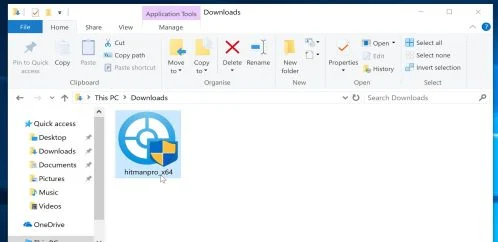
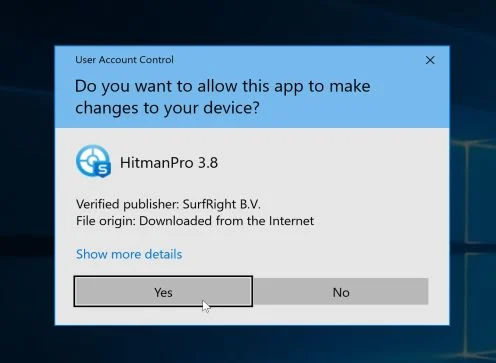
You may be presented with an User Account Control pop-up asking if you want to allow HitmanPro to make changes to your device. If this happens, you should click “Yes” to continue with the installation.
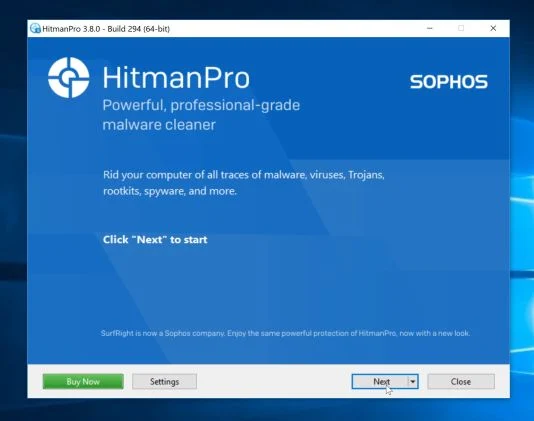
- When the program starts you will be presented with the start screen as shown below. Now click on the Next button to continue with the scan process.
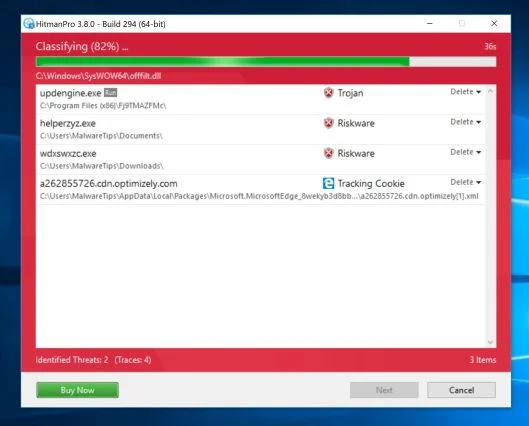
- HitmanPro will now begin to scan your computer for malware.
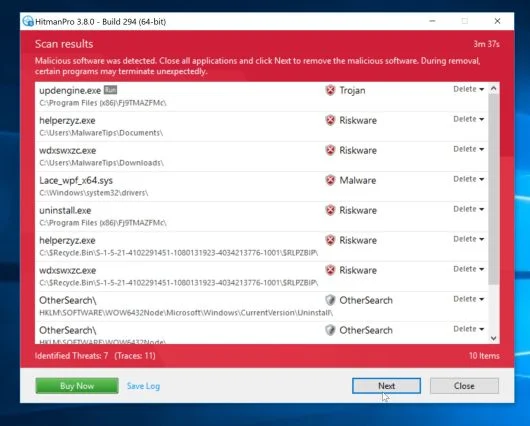
- When it has finished it will display a list of all the malware that the program found as shown in the image below. Click on the “Next” button, to remove malware.
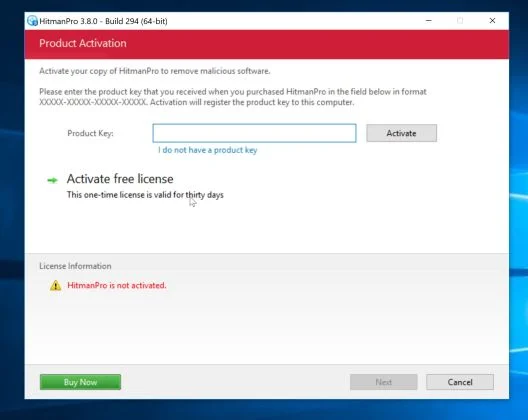
- Click on the “Activate free license” button to begin the free 30 days trial, and remove all the malicious files from your computer.
When the process is complete, you can close HitmanPro and continue with the rest of the instructions.

Join the discussion
18 commentsShare your experience or ask a question about this article.
Your progress
Did these steps help?
Let us know how the guide worked for you.
Describe what you see and the step you reached. Keep passwords and other private information out.
Discussion
thanks you, its worked, group policy update
In reply to Nandakumar N
Glad that did it. The Group Policy route is the one people usually need when the setting keeps reverting – the policy re-applies it every time, so cleaning the browser alone never holds.
One thing worth doing afterwards: whatever wrote that policy is often still on the machine, so a full scan with something like Malwarebytes is worth running, and it is worth checking for any leftover scheduled tasks or unfamiliar browser extensions.
Thanks a lot!! I was struggling to remove it since days..This updating group policy worked successfully for me..:) Good luck
In reply to Shristy Jha
Glad it finally gave way – days of fighting one of these is exhausting. The Group Policy step is usually the answer when nothing else holds, because the policy re-applies the setting every time the browser starts, so cleaning the browser alone never sticks.
Worth running a full scan afterwards, since whatever wrote the policy is often still on the machine, and checking for leftover scheduled tasks and unfamiliar extensions. Good luck to you too.
Great !! Thanks a lot for this..
In reply to Iries
You are welcome – good to hear it worked. If it ever returns, say so here and I will help.
thanks a lot team. helped me!
In reply to Swaminathan J
Glad it helped – thanks for letting us know. If it ever returns, say so here and we will take another look.
Step 1 did it all. Thanks a lot.
In reply to Adi Xavi
Excellent – and it is good to know step one is enough on its own for some people. If it ever returns, say so here and we will take another look.
this was amazing and it helped me get the stupid virus off my computer! love this website!
In reply to Pizzarado
Thank you, that is kind – and glad it is off your machine. If it ever returns, say so here and we will help.
Worth running a full scan now that the symptom is gone, since whatever made the change is sometimes still sitting there.
Thank you!
In reply to Clement P.
You are welcome – glad it did the job. If it ever comes back, post what you are seeing and I will help.
This page was really helpful, awesome. Keep up the great work.
In reply to Sandeep Akula
Thank you, that is kind. If you ever run into something the guide does not cover, post the details and I will try to help – the awkward cases are usually where these articles get better.
This helped me remove this exact piece of mal/adware (Cookies Control), when all other guides fail. Others should look into this method for “enterprise policy” extension issues.
In reply to Samuel Smallman
Thank you – and that is a genuinely useful point, so I am glad you spelled it out. The “installed by enterprise policy” case is the one where every ordinary guide fails, because the extension cannot be removed from the browser at all: a policy written into the system re-applies it on every launch, so uninstalling is like closing a door that a script keeps reopening. Clearing the policy is the only thing that works, which is exactly what you found.
For anyone else who lands here with that message: check the browser’s managed-policy page – chrome://policy – to see what is being enforced and where it comes from, then clear the relevant policy keys and restart. On Windows the entries live under the browser’s policy keys in the registry; on macOS they are configuration profiles under System Settings. Afterwards, run a full scan, because the program that wrote the policy is usually still present and will write it again, and check for scheduled tasks that reinstate it.
Thanks for taking the time to come back and describe what worked – that is how these guides improve.