


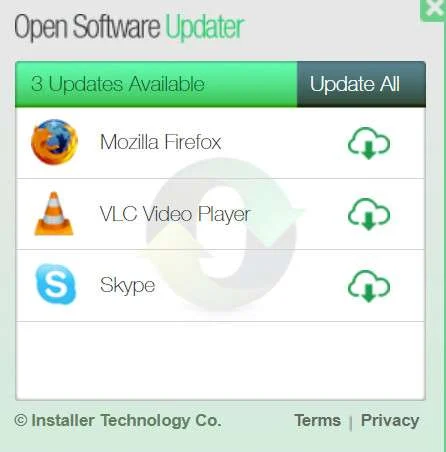
Open Software Updater is a potentially unwanted program (PUP) that claims to check your installed software and update it if needed. At first glance, this seems like a useful service. However, Open Software Updater often comes bundled with adware, browser toolbars, and other questionable programs.
If you suddenly notice Open Software Updater on your computer even though you didn’t intentionally download it, you’re not alone. Many people are finding Open Software Updater installed without their permission or knowledge. This comprehensive guide will explain everything you need to know about Open Software Updater – what it is, how it gets on your PC, its questionable activities, and most importantly, how to get rid of it for good.
What is Open Software Updater?
Open Software Updater is a program that runs in the background on Windows PCs as a scheduled task. It checks for available updates for any software downloaded from the OpenSoftwareUpdater website. If updates are found, it can automatically download and install them or alert the user, depending on configured settings.
The company behind Open Software Updater claims it helps users keep their software up-to-date for better security and functionality. However, most reputable software already includes auto-update capabilities without needing third-party programs like Open Software Updater.
Some key facts about Open Software Updater:
- The owner company is Installer Technology Co.
- Adds background services that run continuously
- Very difficult to fully remove due to deep system integration
- Often bundled sneakily with other free software installs
- Frequently installs additional questionable programs during setup
While the concept of a centralized software update manager could be useful, Open Software Updater exhibits many behaviors of precarious PUPs. The way it installs itself without consent and hides in the background are red flags.
How Does Open Software Updater Get Installed on Your Computer?
Open Software Updater is rarely directly downloaded and installed by users. Most people find themselves with Open Software Updater unintentionally installed after the fact.
Here are some of the common ways Open Software Updater covertly makes its way onto computers:
1. Bundled with Other Free Software Installs
One of the most common methods is bundling. Many free programs, such as media players, download managers, and file sharing programs will option to install Open Software Updater during their setup wizards.
These offers are typically opt-out, meaning Open Software Updater will be installed unless the user specifically unchecks the box. Because many people gloss over installation screens, it’s easy to miss these sneaky bundled installs.
2.Misleading Advertisements and Popups
Another distribution method is through fake update alerts or phony security warnings. These will prompt users to download scareware tools or updates, which then bundle Open Software Updater with their installers.
Some examples include:
- Fake “Flash Player is out of date” alerts
- Fake antivirus program warnings
- Fake “Windows System Update” popups
- Warnings that your PC is infected or compromised
These alerts look convincing but are completely fabricated to get users to unintentionally download PUPs and adware.
3. Malware Infections
Some malware threats will actually install Open Software Updater themselves after infecting a computer. This allows them to have persistent access to continue installing other unwanted programs in the background.
If Open Software Updater shows up immediately after a malware infection, it’s likely the malware planted it as part of their process.
4. Software Cracks and Illegal Programs
Finally, pirated software and illegal program downloads often include Open Software Updater as part of their installer packages.
Peer-to-peer sharing networks and torrent trackers for cracked software are common sources that bundle Open Software Updater with downloads.
What are the Risks of Having Open Software Updater Installed?
On the surface, Open Software Updater seems benign. After all, keeping software updated is generally a good thing. However, because of how it installs itself without permission, Open Software Updater is classified as a “potentially unwanted program” (PUP).
PUPs like Open Software Updater may not be directly malicious, but they exhibit questionable behavior and security risks. Here are some of the potential issues caused by Open Software Updater:
1. Difficult to Remove
Once installed, Open Software Updater embeds itself deeply into the Windows system, making complete removal challenging even for experienced users. It adds background services and registry values that continue running even if you uninstall through standard methods.
Without special removal tools, Open Software Updater will likely remain on your PC continuing to consume resources and be a nuisance.
2. Privacy Concerns
To check for software updates, Open Software Updater likely transmits data about your system and installed programs back to its servers. This raises privacy concerns, as the company can gain insights into your personal software usage and PC details.
3. Resource Heavy
The background services and constant update checking use extra memory and CPU cycles. This slows down your PC’s performance, especially if you have limited RAM and processing power.
4. May Install Other PUPs
As highlighted earlier, Open Software Updater will often install additional potentially unwanted programs (PUPs) during its initial setup process. These extras include adware, browser toolbars, and other questionable add-ons.
5. Security Risks
Any program that installs itself without your approval poses inherent security risks. Open Software Updater creates background services and processes that could be exploited by other malware. The auto-update behavior also means it can download files and alterations without your knowledge.
For these reasons, security experts universally recommend removing Open Software Updater and any other PUPs from your system.
What are the Symptoms of Open Software Updater?
Open Software Updater runs silently in the background for the most part. However, there are some common symptoms that indicate Open Software Updater was installed:
- New scheduled tasks named “OneUpdate” in the task scheduler
- Running services named “Open Software Updater” or “OpenSoftwareUpdater”
- Strange programs you don’t remember installing now on your PC
- More frequent pop-up advertisements
- Browser homepage and defaults changed without your permission
- PC slowdowns and performance lag
You may also directly spot the Open Software Updater program listed in your Windows Programs & Features list or see its shortcut icon on your desktop or start menu. However, it’s designed to operate discretely so you’ll likely have to look closely to find direct evidence.
If you are experiencing any unusual PC behavior like more ads, redirects, or slowness, there’s a good chance Open Software Updater was installed recently.
How to Remove Open Software Updater
If you notice Open Software Updater on your computer, you’ll want to remove it right away along with any other bundled programs to regain privacy and performance.
However, fully removing Open Software Updater is tricky due to how deeply embedded it is in Windows. The standard uninstall process will not completely get rid of Open Software Updater.
Here is a step-by-step process to effectively remove Open Software Updater yourself:
- STEP 1: Use Rkill to terminate malicious processes
- STEP 2: Uninstall malicious programs from your computer
- STEP 3: Remove malicious browser policies from Windows
- STEP 4: Remove malicious files and folders from Windows
- STEP 5: Reset your browser settings to their defaults
- STEP 6: Use Malwarebytes to remove trojans and browser hijackers
- STEP 7: Use HitmanPro to scan your computer for rootkits and other malware
- STEP 8: Use AdwCleaner to remove adware and malicious browser policies
STEP 1: Use Rkill to terminate malicious processes
In this first step, we will download and run Rkill to terminate malicious processes that may be running on your computer.
RKill is a program that was developed at BleepingComputer.com that attempts to terminate known malware processes so that your normal security software can then run and clean your computer of infections. When RKill runs it will kill malware processes and then removes incorrect executable associations and fixes policies that stop us from using certain tools.
-
Download Rkill.
You can download RKill to your computer from the below link. When at the download page, click on the Download Now button labeled iExplore.exe. We are downloading a renamed version of Rkill (iExplore.exe) because some malware will not allow processes to run unless they have a certain filename.
Download RKillOpens the BleepingComputer download page in a new tab. RKillStops malware processes so other tools can run
-
Run RKill.
After downloading, double-click the iExplore.exe icon to kill malicious processes. In most cases, downloaded files are saved to the Downloads folder.
The program may take some time to search for and end various malware programs.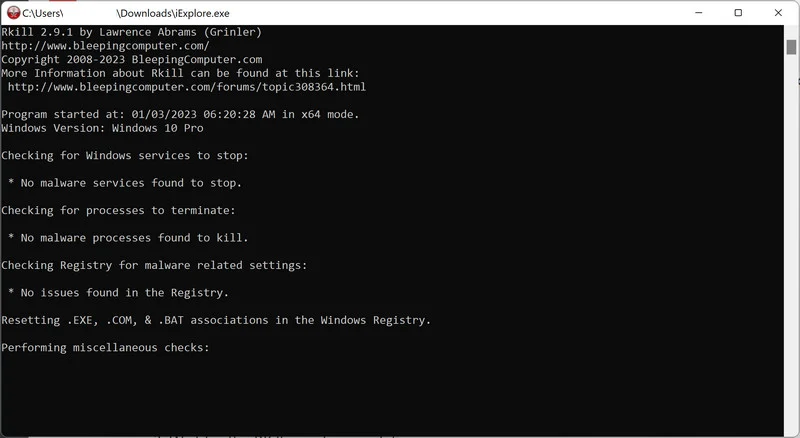
When it is finished, the black window will close automatically and a log file will open. Do not restart your computer. Proceed to the next step in this guide.
STEP 2: Uninstall malicious programs from your computer
In this second step, we will manually check if any unknown or malicious programs are installed on the computer. Sometimes adware and browser hijackers can have a usable Uninstall entry that can be used to remove them.
-
Open the Settings app
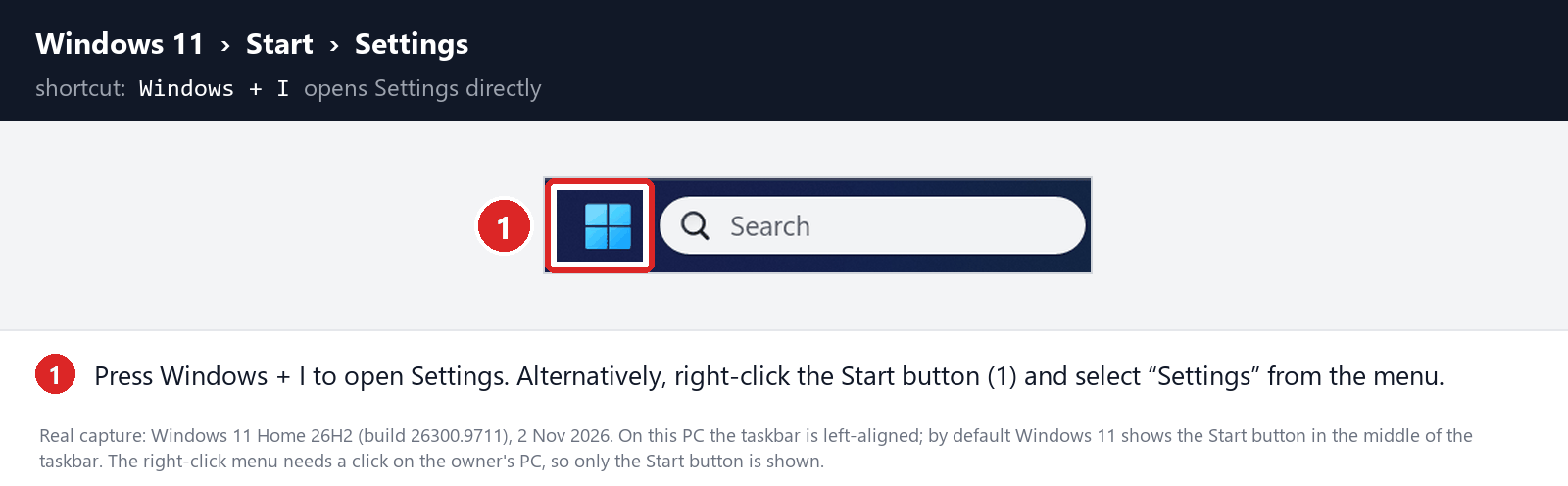
Press Windows + I on your keyboard to open Settings. Alternatively, right-click the Start button and select “Settings” from the menu.
-
Go to “Installed apps”
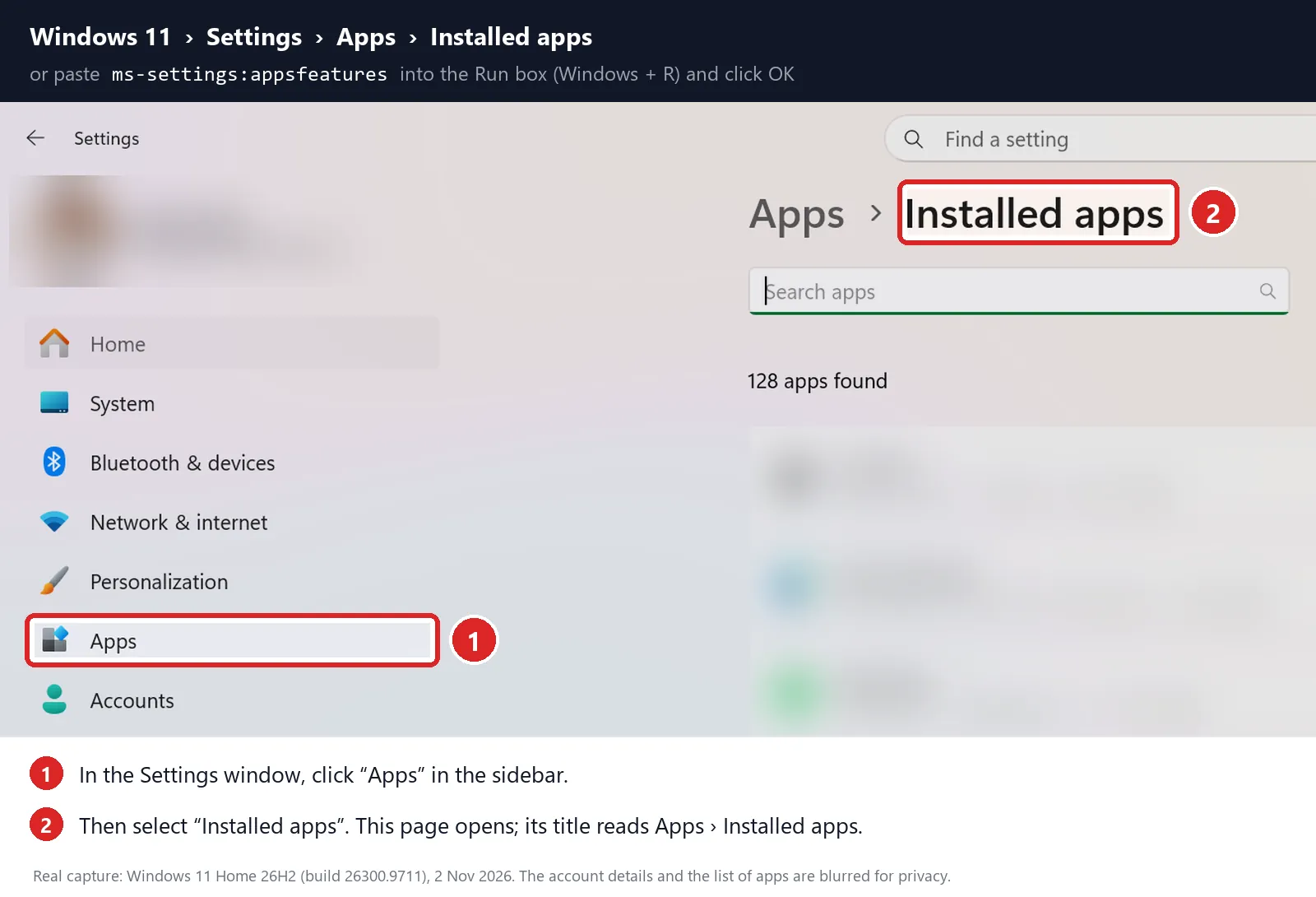
In the Settings window, click “Apps” in the sidebar, then select “Installed apps“.
-
Find and uninstall the malicious program
Scroll through the list of installed apps and look for anything suspicious — a program you don’t remember installing, or one with a strange or generic name.
Quick tip: click “Sort by” and choose “Date installed“. Malware is usually one of the most recently installed programs, so it will appear near the top.
When you find the malicious program, click the three dots next to it and select “Uninstall“.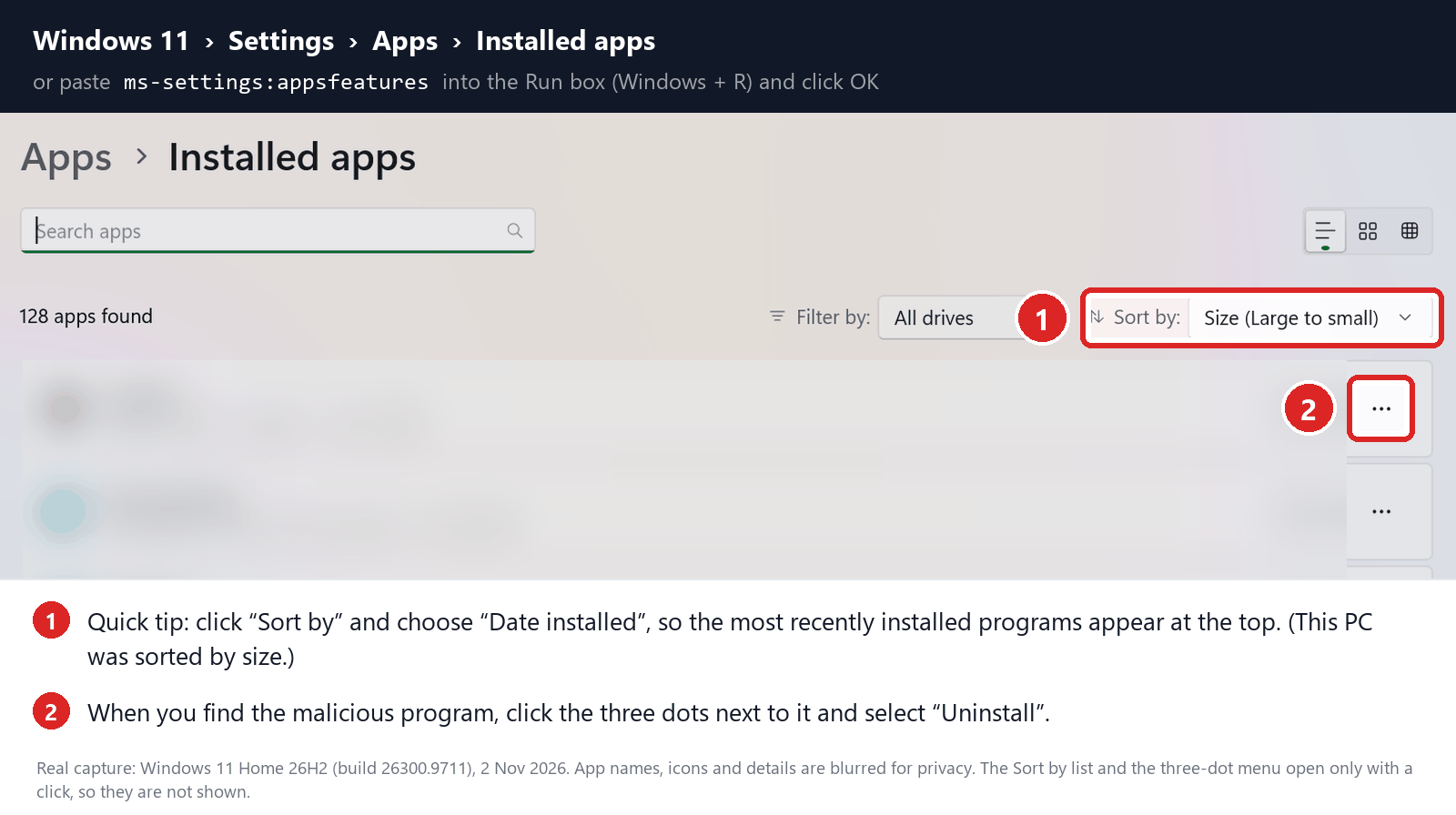 Didn’t find any suspicious programs? That’s fine — not all infections install visible apps. Just continue with the next step in this guide.
-
Complete the uninstall
Confirm by clicking Uninstall in the message box, then follow the remaining prompts.
Read each prompt carefully — some malicious programs use confusing wording or pre-ticked boxes hoping you’ll click through without looking.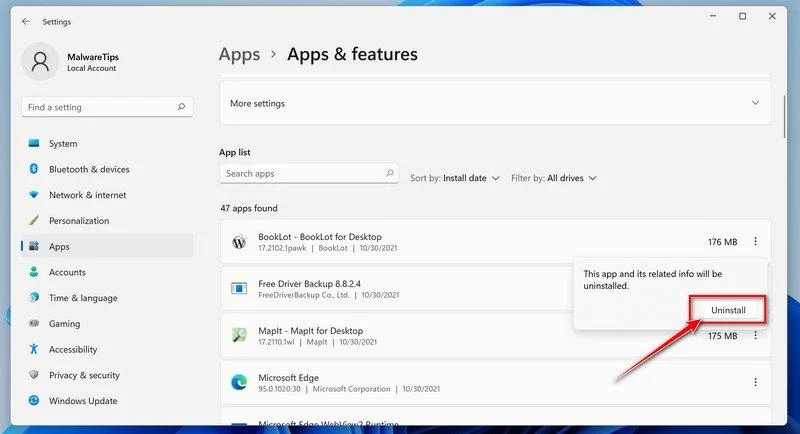
-
Open the Settings app
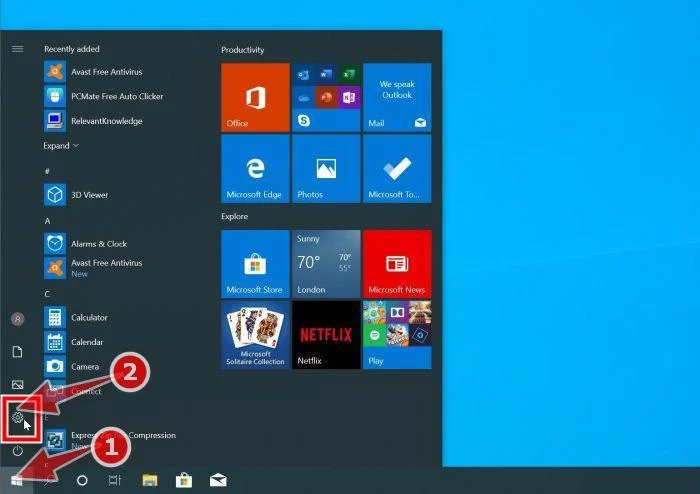
Press Windows + I on your keyboard to open Settings. Alternatively, click the Start button on the taskbar and select “Settings” (the gear icon).
-
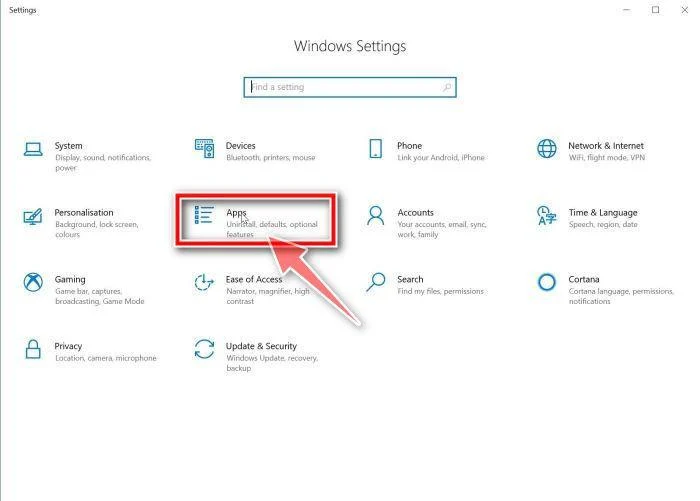
Click on “Apps”
In the “Windows Settings” window, click “Apps“. The “Apps & Features” section should open by default — if it doesn’t, select it from the list on the left.
-
Find and uninstall the malicious program
Scroll through the list of installed apps and look for anything suspicious — a program you don’t remember installing, or one with a strange or generic name.
Quick tip: click “Sort by” and choose “Install date“. Malware is usually one of the most recently installed programs, so it will appear near the top.
When you find the malicious program, click on it and select “Uninstall“.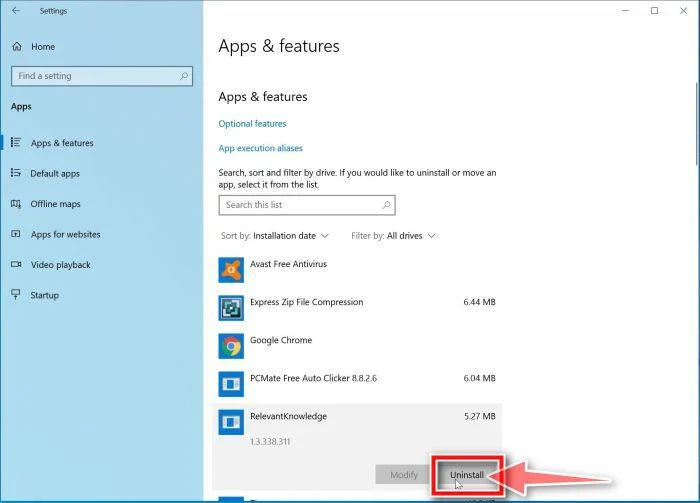 Didn’t find any suspicious programs? That’s fine — not all infections install visible apps. Just continue with the next step in this guide.
-
Complete the uninstall
Confirm by clicking Uninstall in the message box, then follow the remaining prompts.
Read each prompt carefully — some malicious programs use confusing wording or pre-ticked boxes hoping you’ll click through without looking.
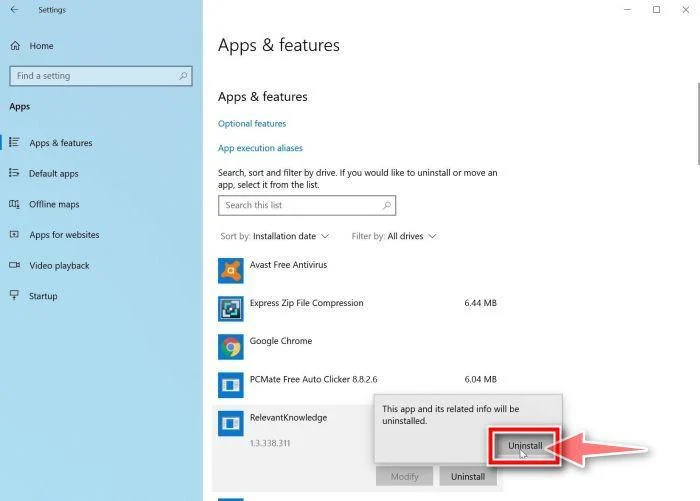
With the malicious programs removed, you’re ready for the next step in this guide.
STEP 3: Remove malicious browser policies from Windows
In this third step, we will download the Chrome Policy Remover file (credits to Stefan Van Damme) and remove the malicious browser policies. .
-
Download the Chrome Policy Remover
Click the button below to download the Chrome Policy Remover for Windows — a small batch script that automatically removes the malicious policies that malware uses to lock your Chrome settings.
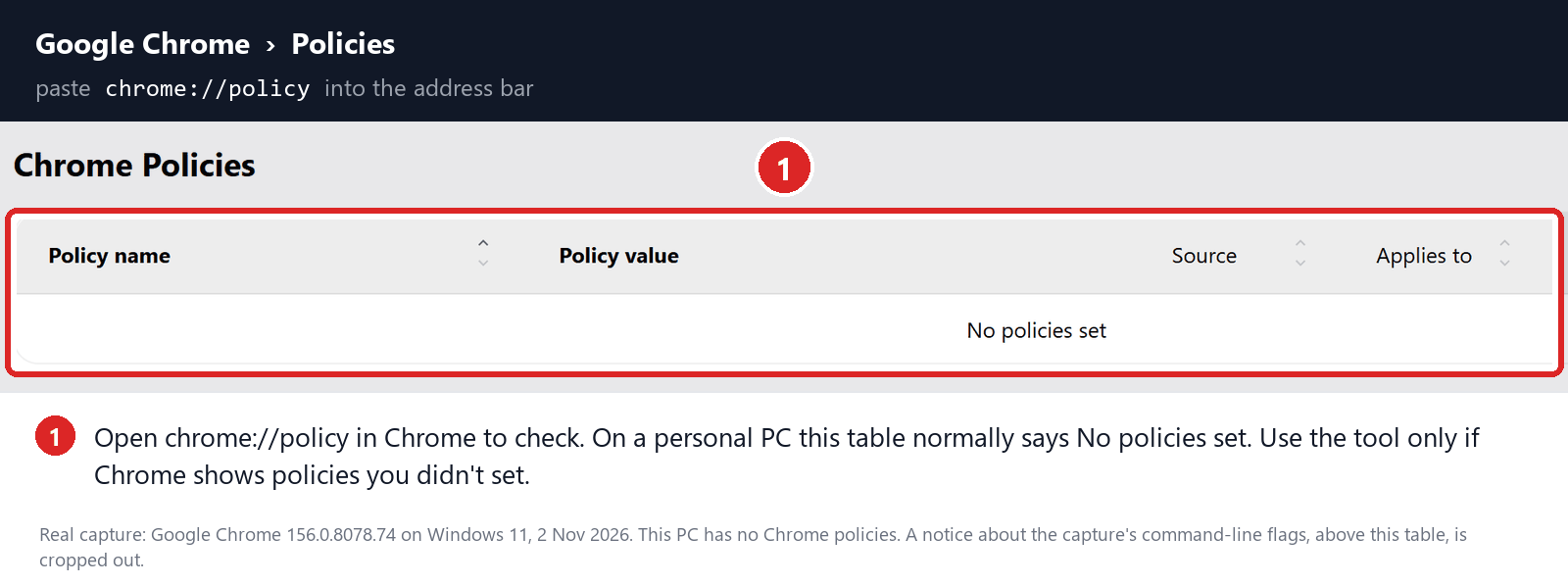
Download Chrome Policy RemoverDownloads the delete_chrome_policies file from the developer’s site. Chrome Policy RemoverFree script that removes the policies malware adds to ChromeBefore you use this tool: run it only on your own personal PC, and only if Chrome shows policies you didn’t set. Open chrome://policy in Chrome to check. The script removes every Chrome policy, so don’t use it on a work or school computer, where policies are usually set on purpose.
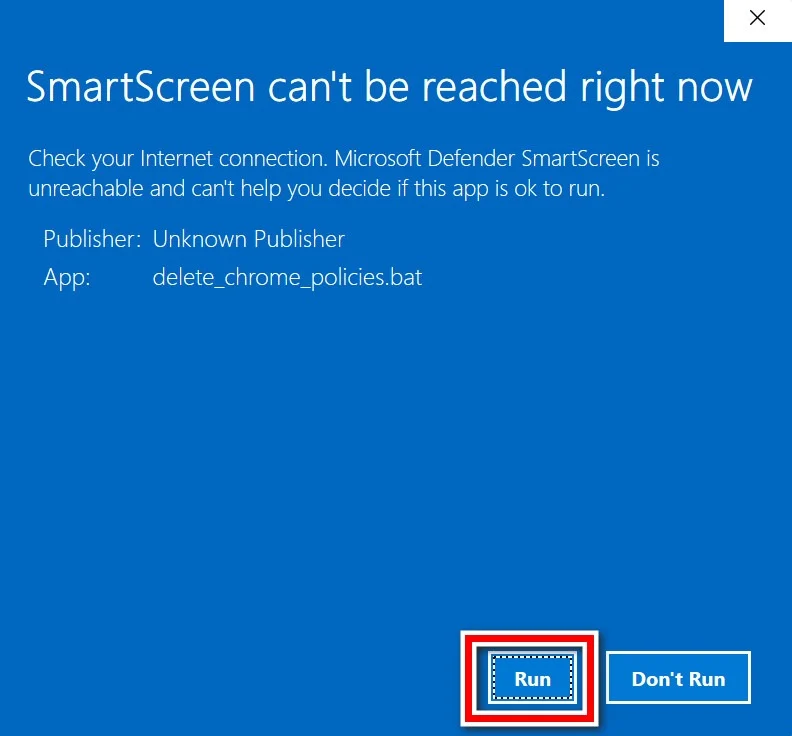
 Seeing a security warning? Browsers and Windows often warn about batch (.bat) files. Don’t override a warning out of habit. Check that the file came from the developer’s site linked above and is named delete_chrome_policies.bat. If you can’t confirm that, delete the file and ask for help in our forum instead.
-
Run the file as administrator
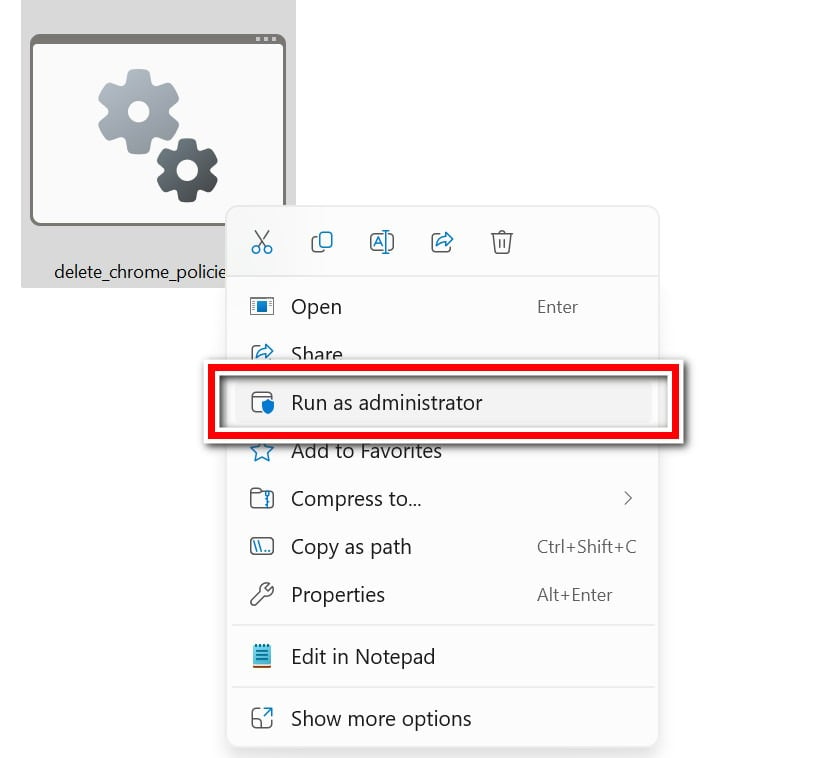
Right-click the “delete_chrome_policies.bat” file (usually in your Downloads folder) and select Run as administrator. Administrator rights are required because Chrome policies are stored in protected system settings — without them, the tool can’t remove the policies.
Confirm and let the script finish
Windows will ask for confirmation before allowing the script to make changes — click “Yes” (or “Run“, depending on your Windows version). A Command Prompt window will open and the script will remove the policies automatically; this only takes a few seconds. When it’s done, close the window.
With the malicious policies removed, Chrome’s settings are unlocked again. In the next step, we’ll reset the browser to its defaults.
STEP 4: Remove malicious files and folders from Windows
In this fourth step, we will manually search and remove malicious scheduled tasks and folders on your computer.
1. Delete Malicious Scheduled Tasks
This infection often creates a scheduled task in the Windows Task Scheduler that reinstalls the malware every few minutes after you delete it. That’s why the redirects keep coming back even after a cleanup — until this task is removed, the infection will keep restoring itself.
- Type “Task Scheduler” in the Windows search bar and open the app, as shown below.
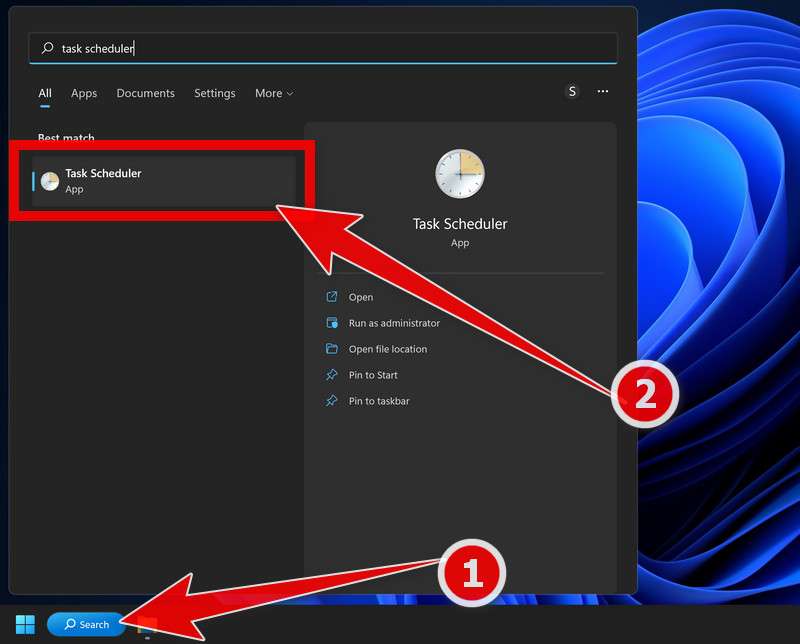 Alternatively, press Windows + R, type “taskschd.msc“, and press Enter.
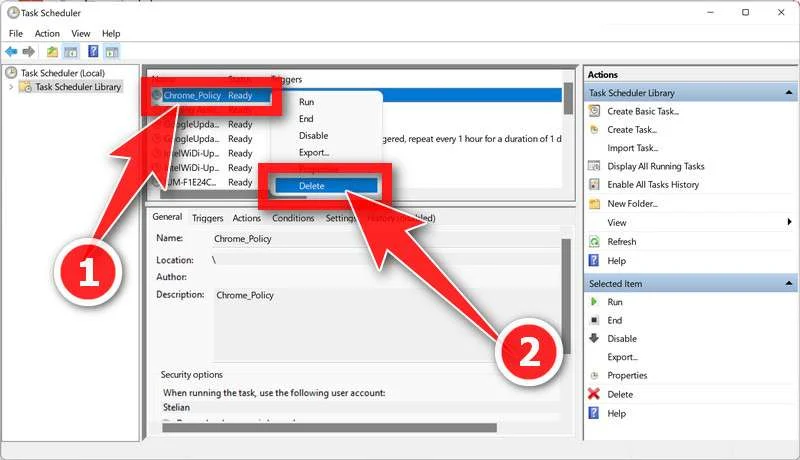
- In the Task Scheduler window, click Task Scheduler Library in the left pane.
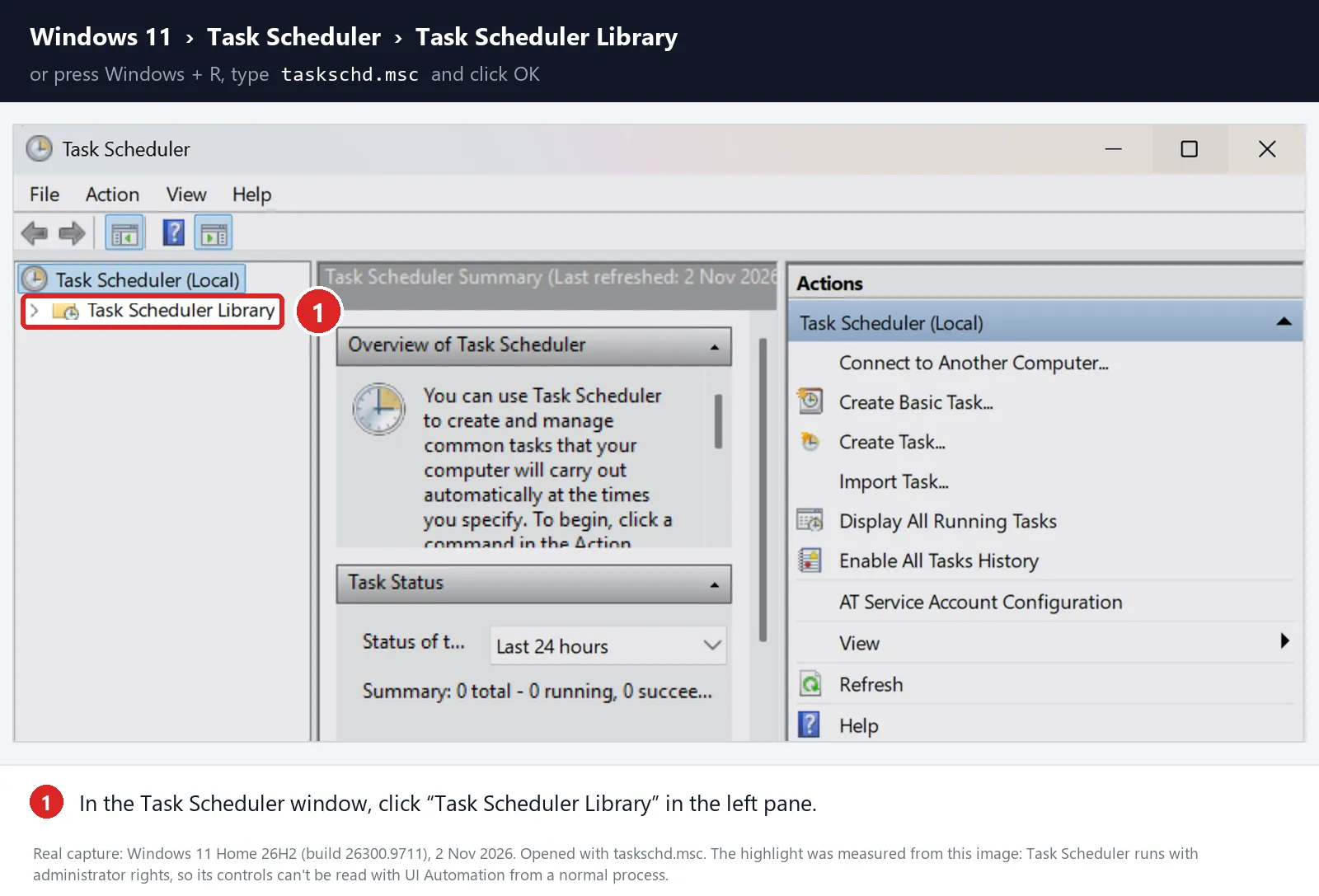
- Look through the list for the malicious scheduled task. It often imitates a legitimate name (e.g. Chrome_Policy, Chrome_Bookmarks, Chrome_Folder) or has a random string of characters as its name. Before you delete anything, click the task and look at the Actions tab to see which file it runs. Many legitimate apps also run tasks from the AppData folder, so delete a task only if its file matches the infection, for example a file a scanner flagged or one of the folders described below. Then right-click the task and select “Delete“.
2. Delete Malicious Files from the AppData\Roaming Folder
Next, we’ll delete the malicious files the infection stores in the AppData\Roaming folder.
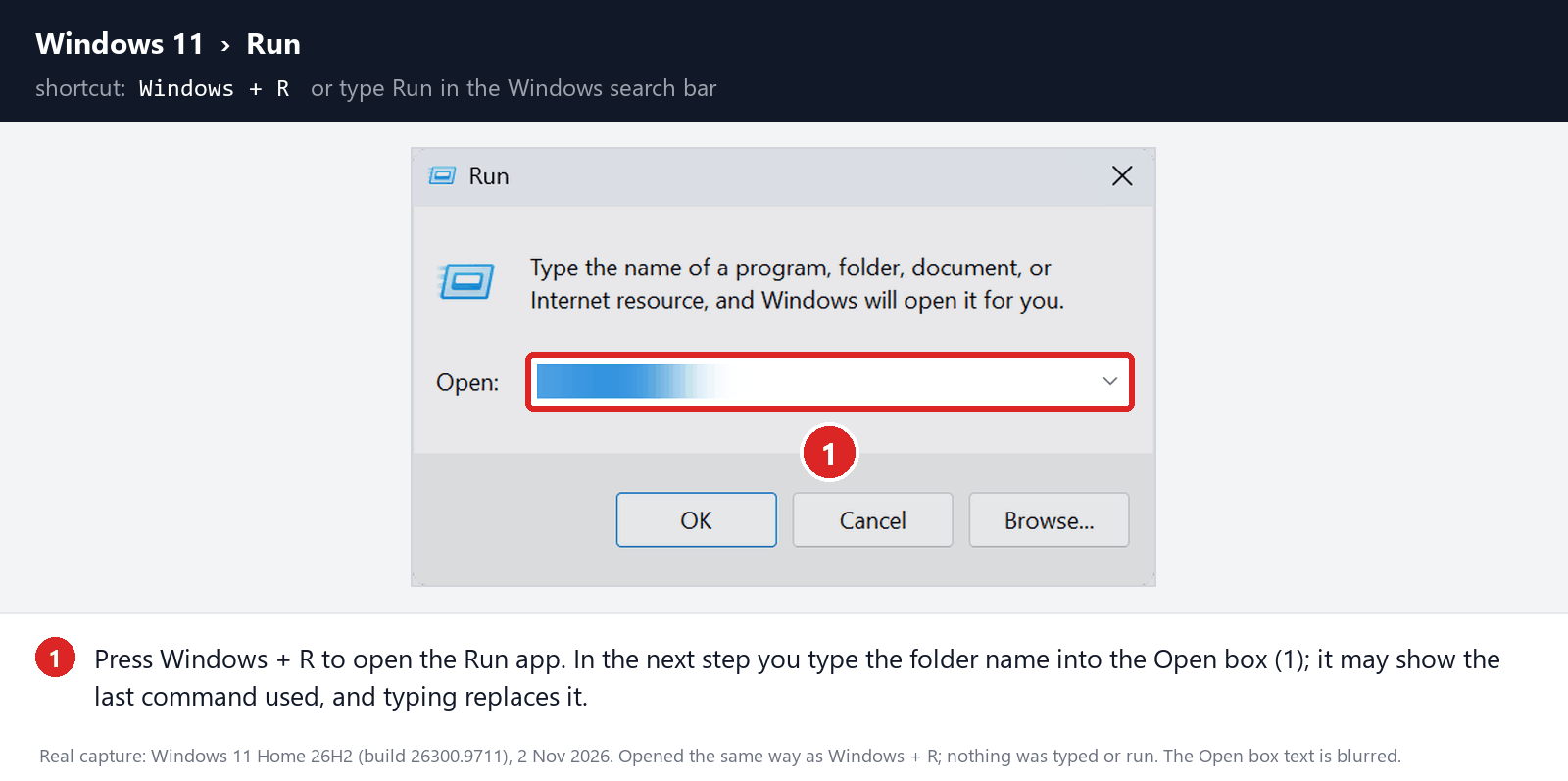
- Press Windows + R to open the Run app (or type “Run” in the Windows search bar).
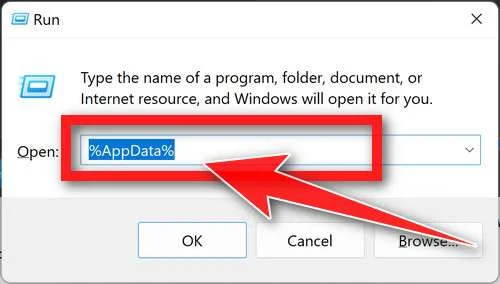
- In the Run box, type “%AppData%” and click OK. Windows will open the Roaming folder directly.
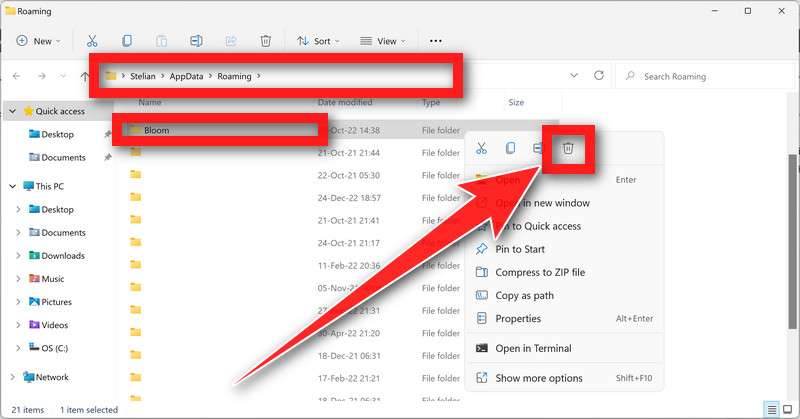
- Look for folders that belong to the infection. Names seen in this kind of infection include Default, Chrome32, Energy, Bloom, and Travel, but a name alone is not proof. Delete a folder only if the malicious scheduled task or a scan result points to it.
Be careful: only delete folders you’re confident don’t belong to a real program. Legitimate apps (Adobe, Spotify, Discord, etc.) also store their data here. If you’re unsure about a folder, search its name online first, or leave it alone and let the scanners later in this guide check it.
3. Delete Malicious Files from the AppData\Local Folder
Now we’ll do the same in the AppData\Local folder, and also remove the malicious Chrome extension the infection installed.
- Press Windows + R to open the Run app (or type “Run” in the Windows search bar).
- In the Run box, type “%localappdata%” and click OK. Windows will open the AppData\Local folder directly.
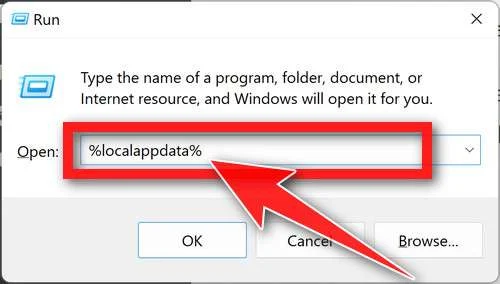
- Check for folders named Default, WindowsApp, or ServiceApp. Delete one only if the malicious scheduled task or a scan result points to it, because legitimate programs can use the same names.
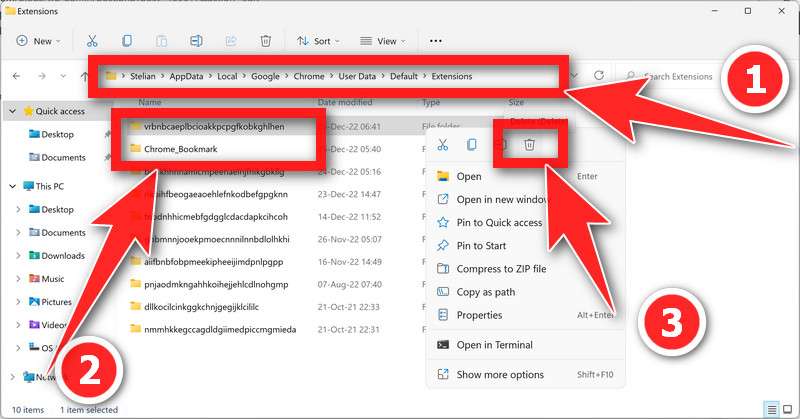
Next, open the Google folder and navigate to Google > Chrome > User Data > Default (or Profile) > Extensions. Inside the Extensions folder, find and delete the malicious extension’s folder — it will have a long, random-looking name. If you’re not sure which one it is, you can check each folder’s contents, or turn on Developer mode in chrome://extensions to see each extension’s ID, then compare the IDs with the folder names.
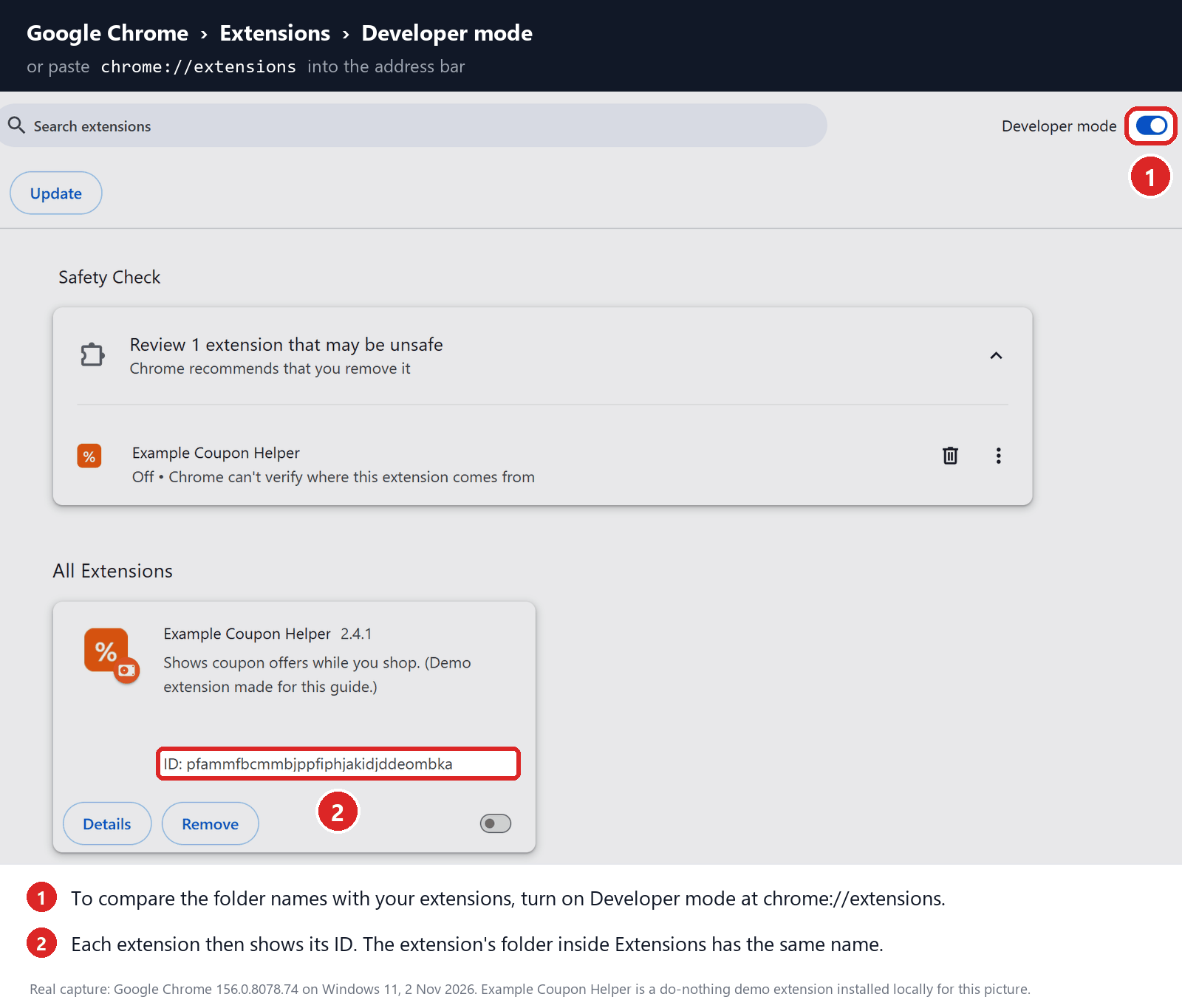 Important: inside User Data, the folder named “Default” is your legitimate Chrome profile — do not delete it. Only delete the individual extension folder inside Extensions.
4. Fix the Hijacked Chrome Shortcut
This malware often modifies your Chrome shortcut so that every time you open the browser, the malicious extension loads with it. Here’s how to clean the shortcut:
- Right-click the Google Chrome shortcut on your desktop or Start Menu and select “Properties“.
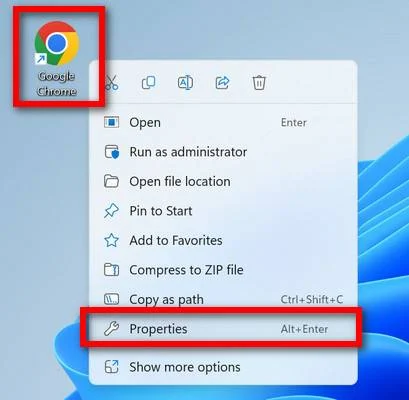
- On the Shortcut tab, check the “Target” field. It should end with chrome.exe” or with Chrome’s own –source-shortcut-location=… switch. Delete anything else after it — especially anything referencing the AppData folder, such as:
–load-extension=C:\Users\%USERNAME%\AppData\Local\Default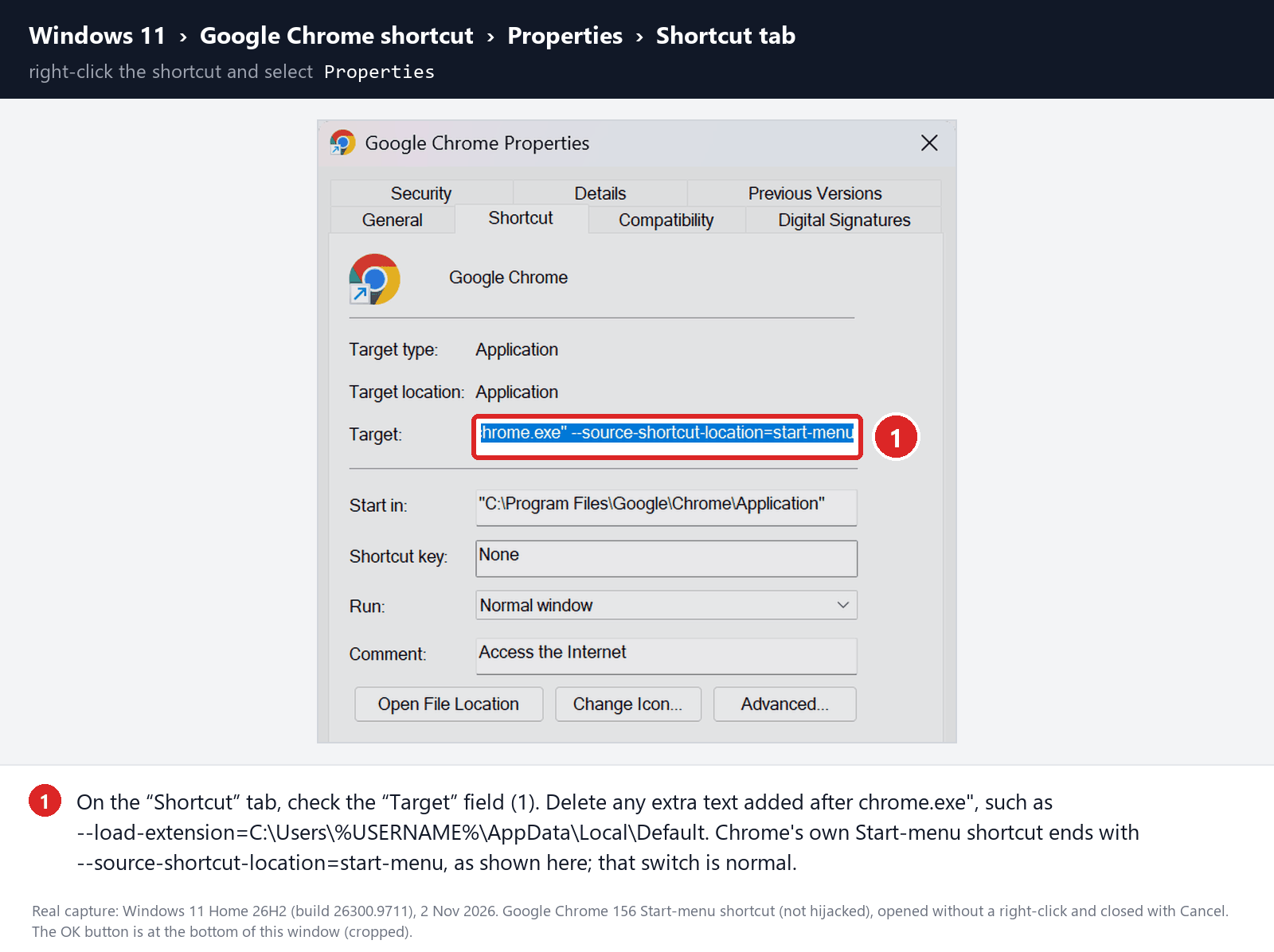
- Click OK to save the changes.
- Open Chrome from the shortcut as usual — the malicious extension should no longer load at startup.
Tip: if you’d rather not edit the Target field, there’s an easier fix — right-click the shortcut, select “Open File Location“, then drag chrome.exe to your taskbar to create a fresh, clean shortcut. Delete the old one.
With the malicious tasks, folders, and shortcut modifications removed, we can continue with the next step of this guide.
STEP 5: Reset your browser settings to their defaults
In this step, we will remove spam notifications, malicious extensions, and change to default any settings that might have been changed by malware.
Please note that a Chrome or Edge reset turns off all your extensions, and a Firefox refresh removes them. Your bookmarks and favorites stay intact. For each browser that you have installed on your computer, please click on the browsers tab below and follow the displayed steps to reset that browser.
Reset Chrome for Windows to default settings
We will now reset your Chrome browser settings to their original defaults. This will reset your startup page, new tab page, search engine, and pinned tabs. It will also disable all extensions and clear temporary data like cookies. Your favorites, history, and saved passwords will not be cleared.
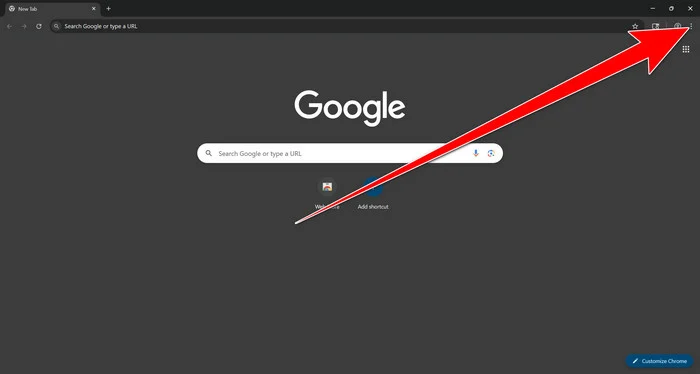
Open the Chrome menu
Open Google Chrome and click the three-dot (⋮) icon in the top-right corner.
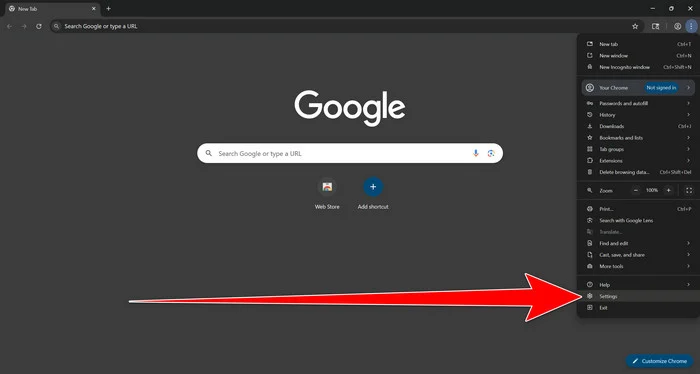
Open Chrome Settings
Select Settings from the Chrome menu.
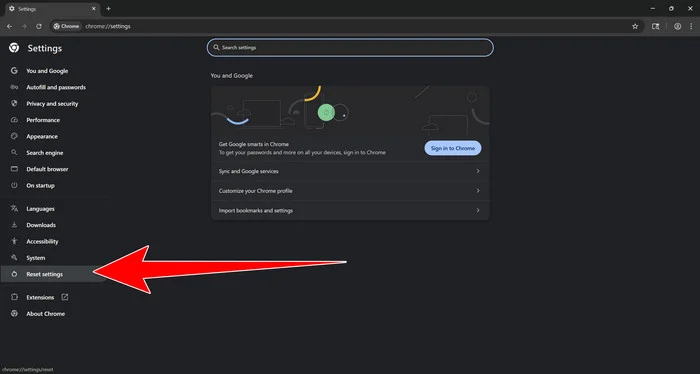
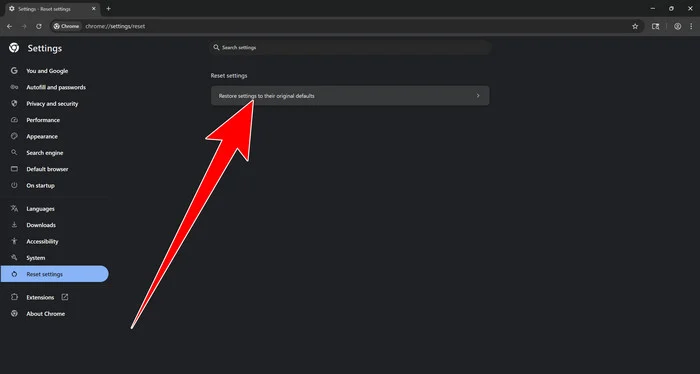
Select “Reset settings”
Look at the menu on the left side of the Settings page. Scroll down and click Reset settings.
Restore Chrome’s original settings
Click Restore settings to their original defaults.
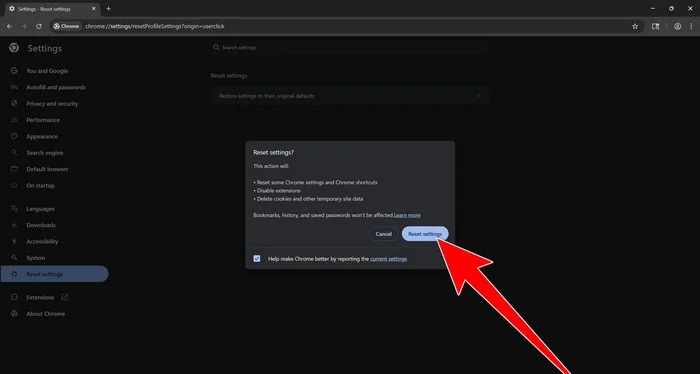
Confirm the Chrome reset
A confirmation window will appear. Click Reset settings.
This will:
- Restore the default search engine, homepage, and new tab page
- Reset startup pages and pinned tabs
- Reset site permissions, such as notifications and pop-ups
- Disable installed extensions
- Clear temporary cookies and website data
Don’t worry: Chrome will not delete your bookmarks, browsing history, or saved passwords. If you’re signed in to Chrome, the reset applies on all devices where you’re signed in.
Restart Chrome and perform a test search. If your searches now open normally in Google, you can stop here.
If searches are still redirected through shady domains complete the additional step below.
Remove persistent search hijacker data
Only complete this step if the redirect continues after resetting Chrome.
Some browser hijackers hide inside Chrome’s local search-engine database. A standard Chrome reset may not remove this database, which is why searches can continue to pass through shady sites.
The following procedure creates a backup of the affected database and allows Chrome to build a new, clean version. This is safer and less disruptive than deleting the entire Chrome profile.
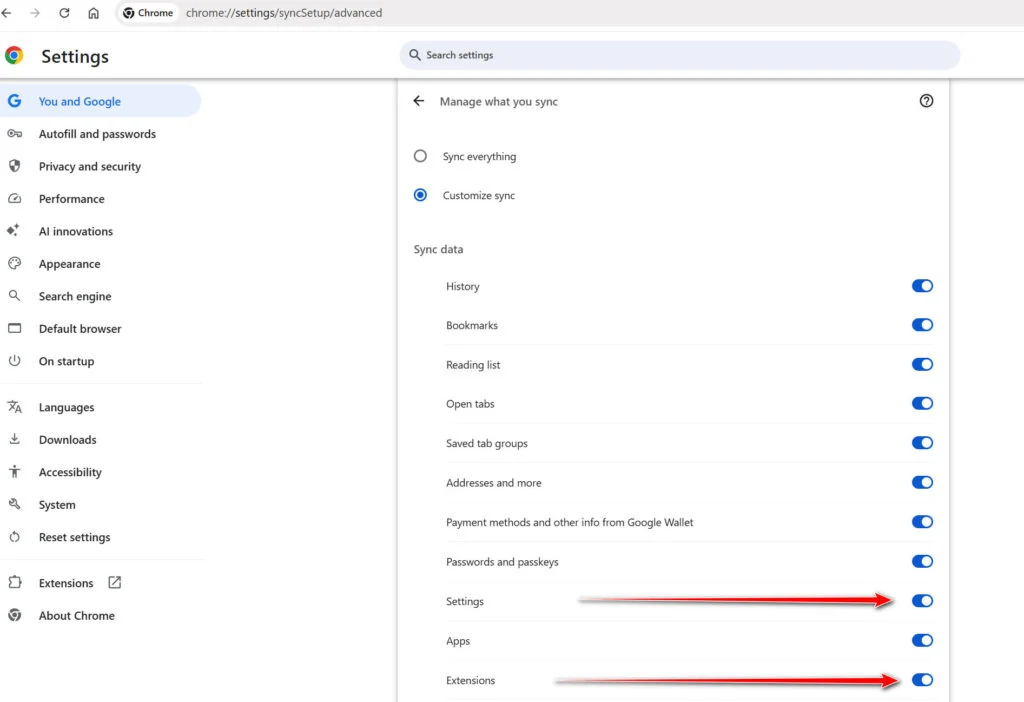
First, prevent Chrome Sync from restoring the hijacked settings:
- Open a new Chrome tab.
- Copy the following address, paste it into Chrome’s address bar, and press Enter:
chrome://settings/syncSetup/advanced - Under Manage what you sync, select Customize sync.
- Turn off Settings and Extensions.
- You can leave Bookmarks and Passwords enabled so your important data remains synchronized.
Note: Some newer Chrome versions may automatically redirect this address to the Google Account settings page. If that happens, locate the list of synchronized Chrome data and turn off Settings and Extensions there.
Now save anything you are working on and close every Chrome window.
Run the cleanup command:
- Press the Windows key on your keyboard.
- Type PowerShell.
- Open Windows PowerShell. Administrator access is not required.
- Copy the entire command shown below.
- Right-click inside the PowerShell window to paste the command, then press Enter.
- If Windows warns you about pasting multiple lines, select the option to continue.
$stamp = Get-Date -Format "yyyyMMdd-HHmmss"

Get-Process chrome -ErrorAction SilentlyContinue |
 Stop-Process -Force

$root = "$env:LOCALAPPDATA\Google\Chrome\User Data"

if (Test-Path $root) {
 $profiles = Get-ChildItem $root -Directory |
 Where-Object {
 $_.Name -eq "Default" -or
 $_.Name -match "^Profile \d+$"
 }

 foreach ($profile in $profiles) {
 foreach ($name in @(
 "Web Data",
 "Web Data-journal",
 "Web Data-wal",
 "Web Data-shm"
 )) {
 $file = Join-Path $profile.FullName $name

 if (Test-Path $file) {
 $backup = "$file.search-hijacker-backup-$stamp"
 Move-Item -LiteralPath $file -Destination $backup
 Write-Host "Backup created: $backup"
 }
 }
 }
}

Write-Host ""
Write-Host "Chrome search data has been cleaned."
Write-Host "You can now reopen Chrome."
Wait until PowerShell displays the following message:
Chrome search data has been cleaned.
You can now reopen Chrome.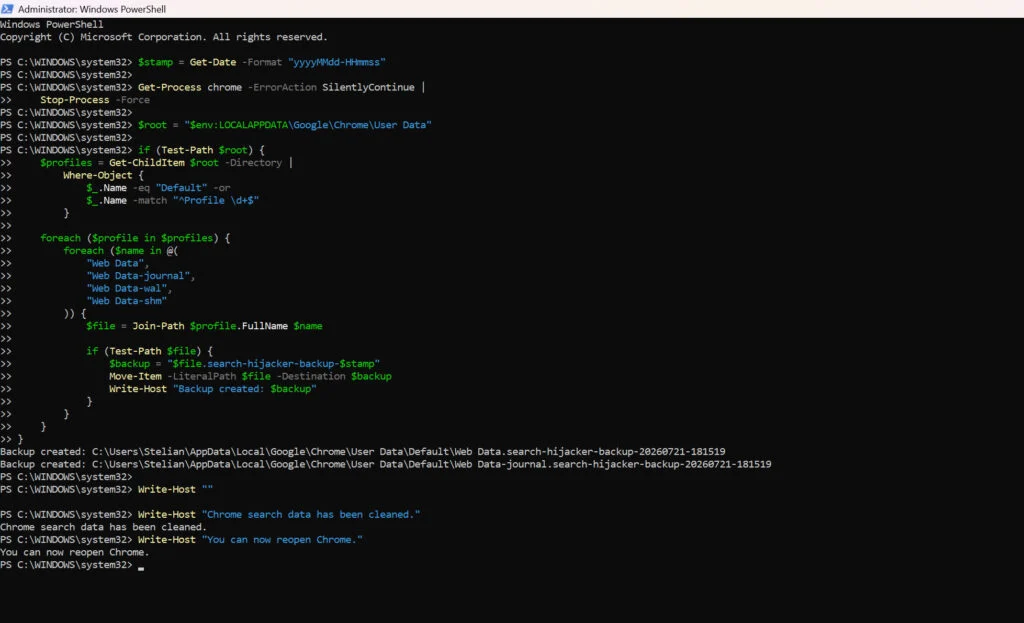
Close PowerShell and reopen Google Chrome. Chrome will automatically create a clean search database for every local profile.
Next, copy the following address, paste it into Chrome’s address bar, and press Enter:
chrome://settings/searchEngines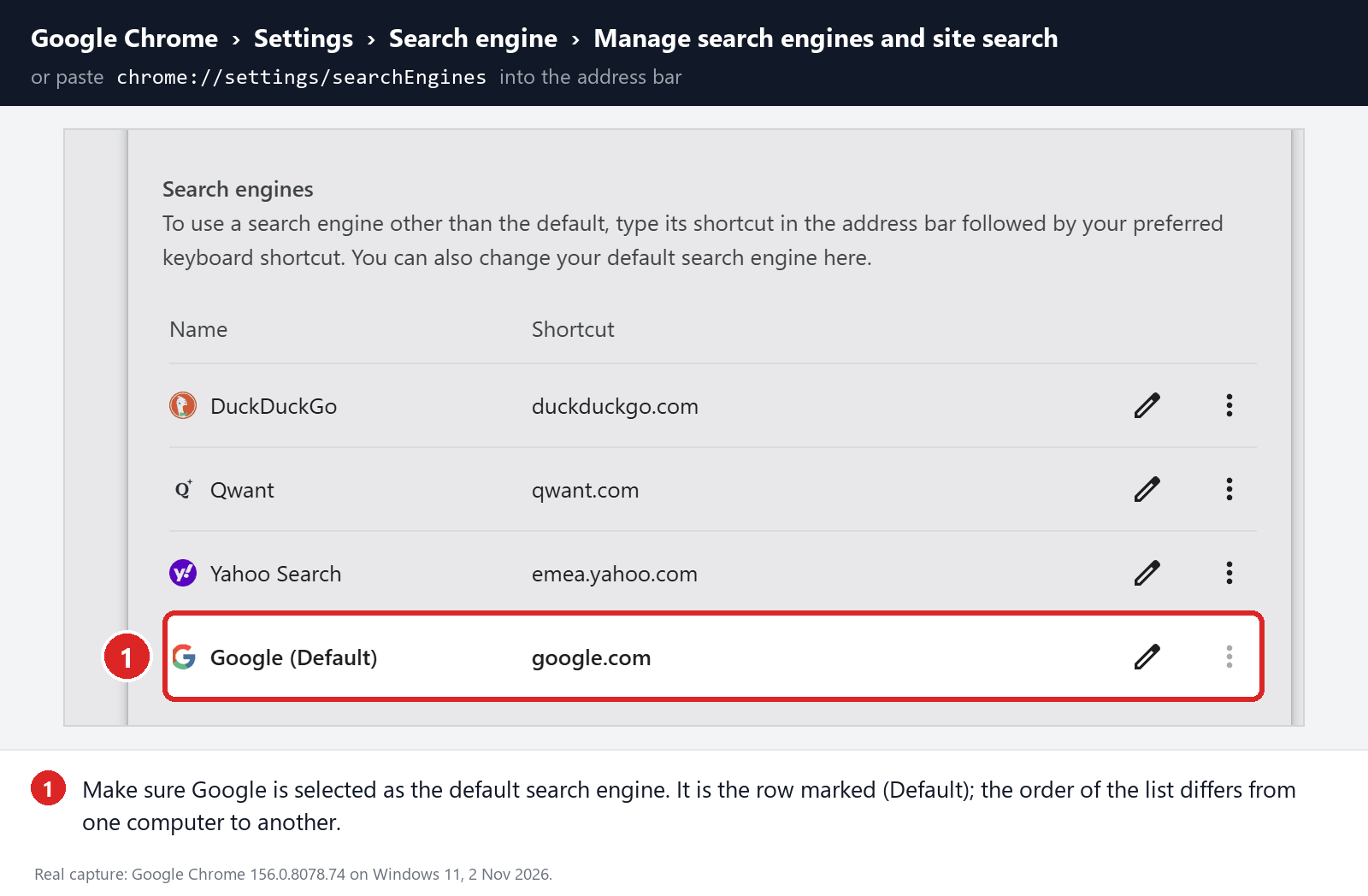
Make sure Google is selected as the default search engine. Test several searches from the address bar and confirm that they no longer pass through shady search engines.
Your important Chrome data is protected: the PowerShell cleanup does not remove bookmarks, saved passwords, browsing history, cookies, or installed extensions. However, it may reset locally stored Autofill addresses, payment cards saved only on this computer, and form suggestions.
The original search database is not deleted. PowerShell renames it and adds
search-hijacker-backupto its filename so it can be recovered if necessary.Keep Settings and Extensions synchronization disabled while testing Chrome. Do not enable every extension at once. Enable only the extensions you recognize, one at a time, and test Chrome after each one.
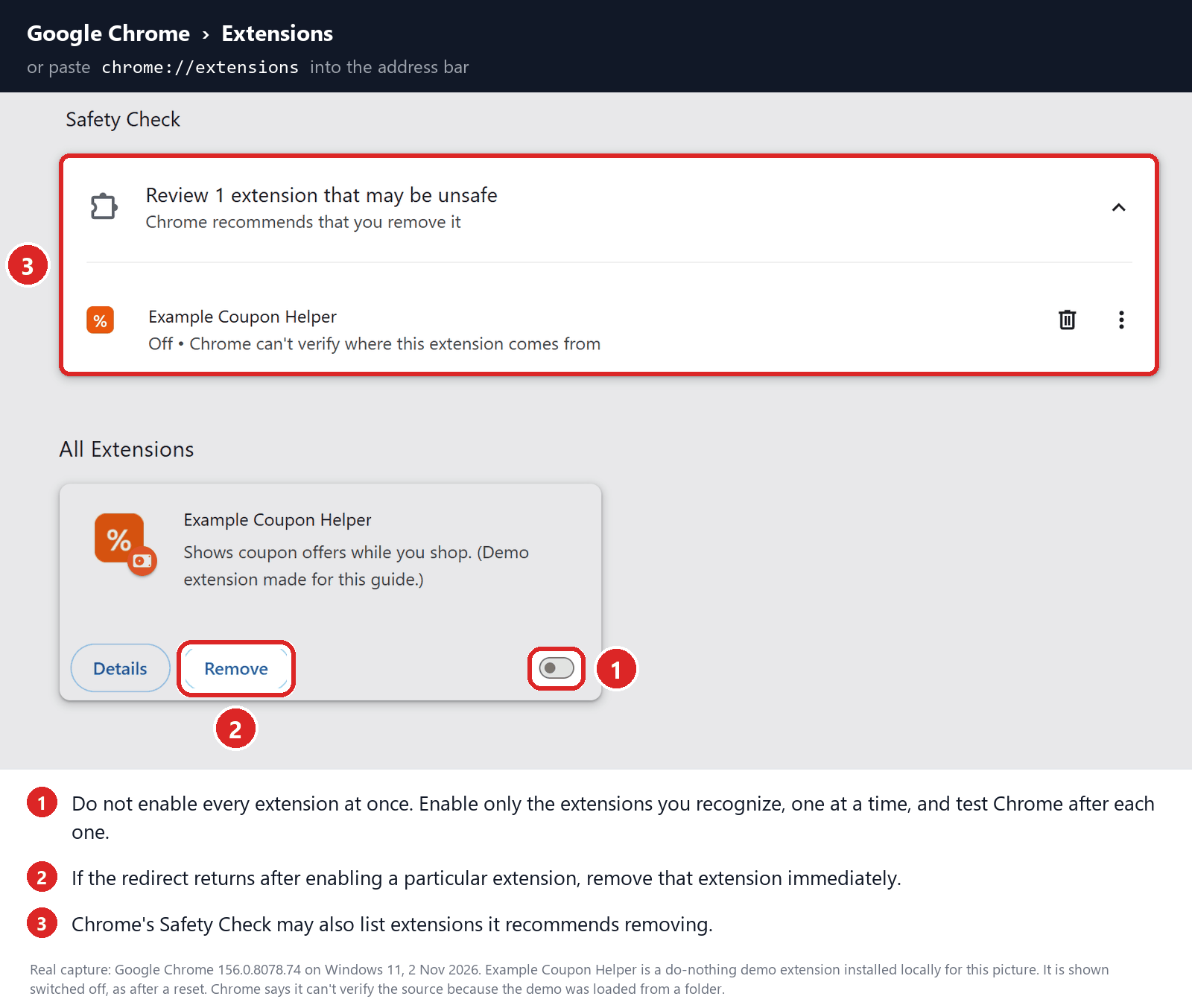
If the redirect returns after enabling a particular extension, remove that extension immediately.
Reset Firefox for Windows to default settings
We will now reset your Firefox browser settings to their default. The reset feature fixes many issues by restoring Firefox to its factory default state while saving your essential information like bookmarks, passwords, web form auto-fill information, browsing history, and open tabs.
-
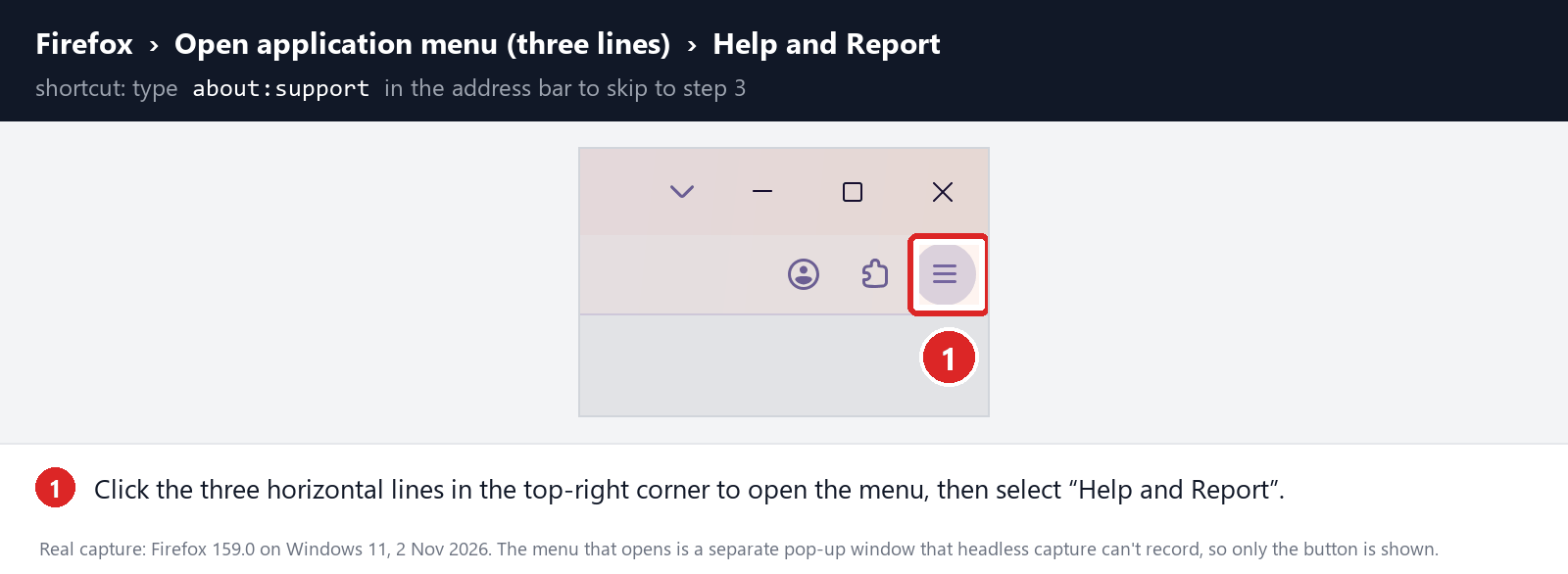
Open the Firefox menu and click “Help and Report”
Click the three horizontal lines in the top-right corner of Firefox to open the main menu, then select “Help and Report“.
-
Click “More troubleshooting information”
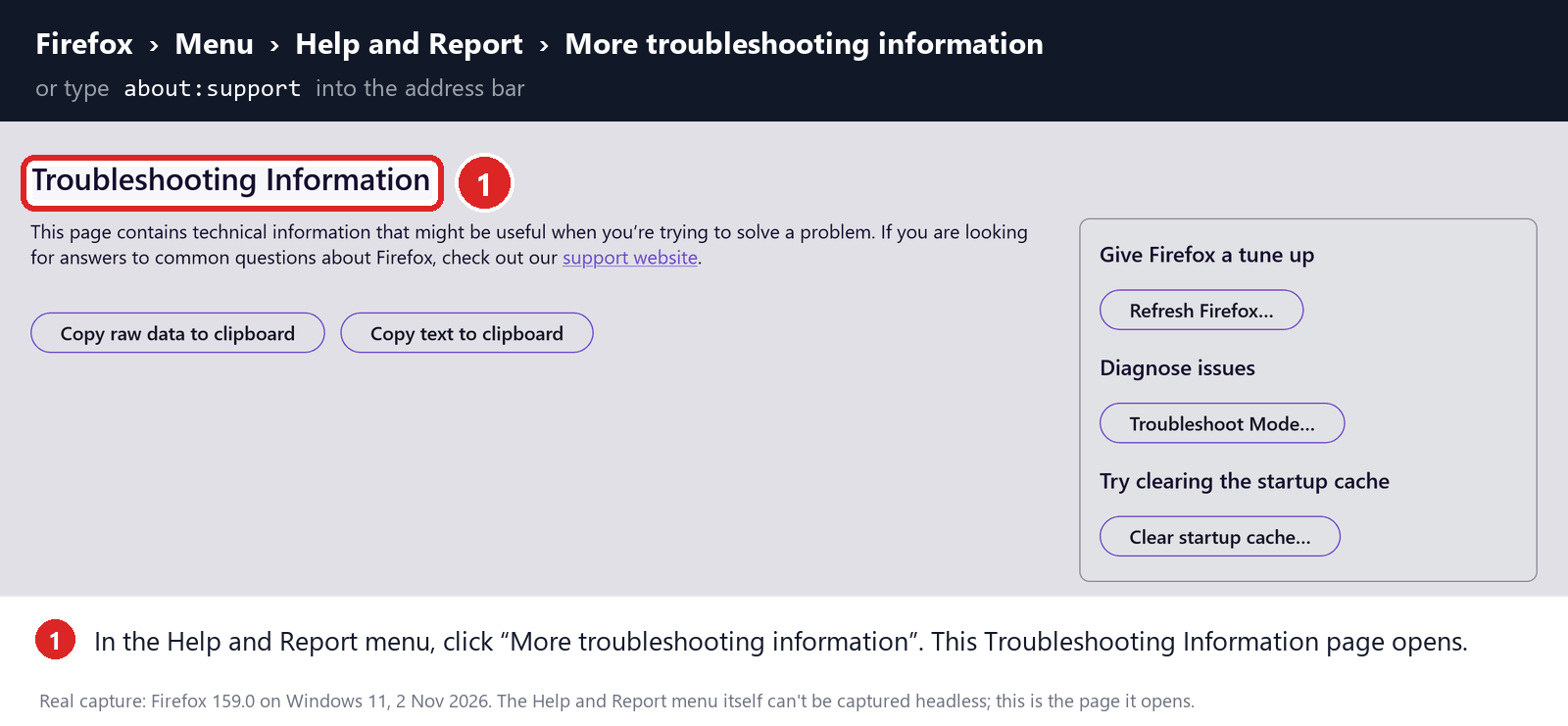
In the Help and Report menu, click “More troubleshooting information“.
-
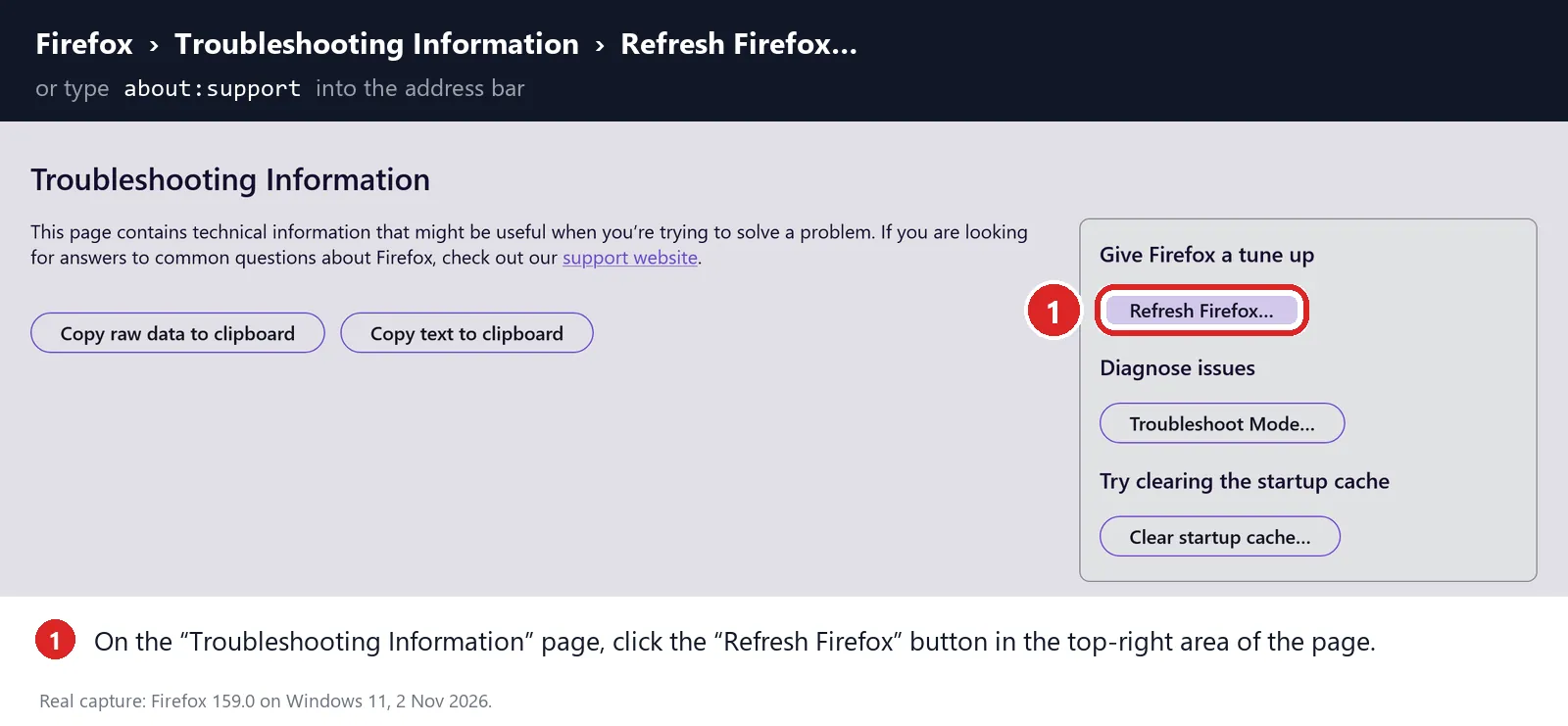
Click “Refresh Firefox”
On the “Troubleshooting Information” page, click the “Refresh Firefox” button in the “Give Firefox a tune up” box in the top-right area of the page.
-
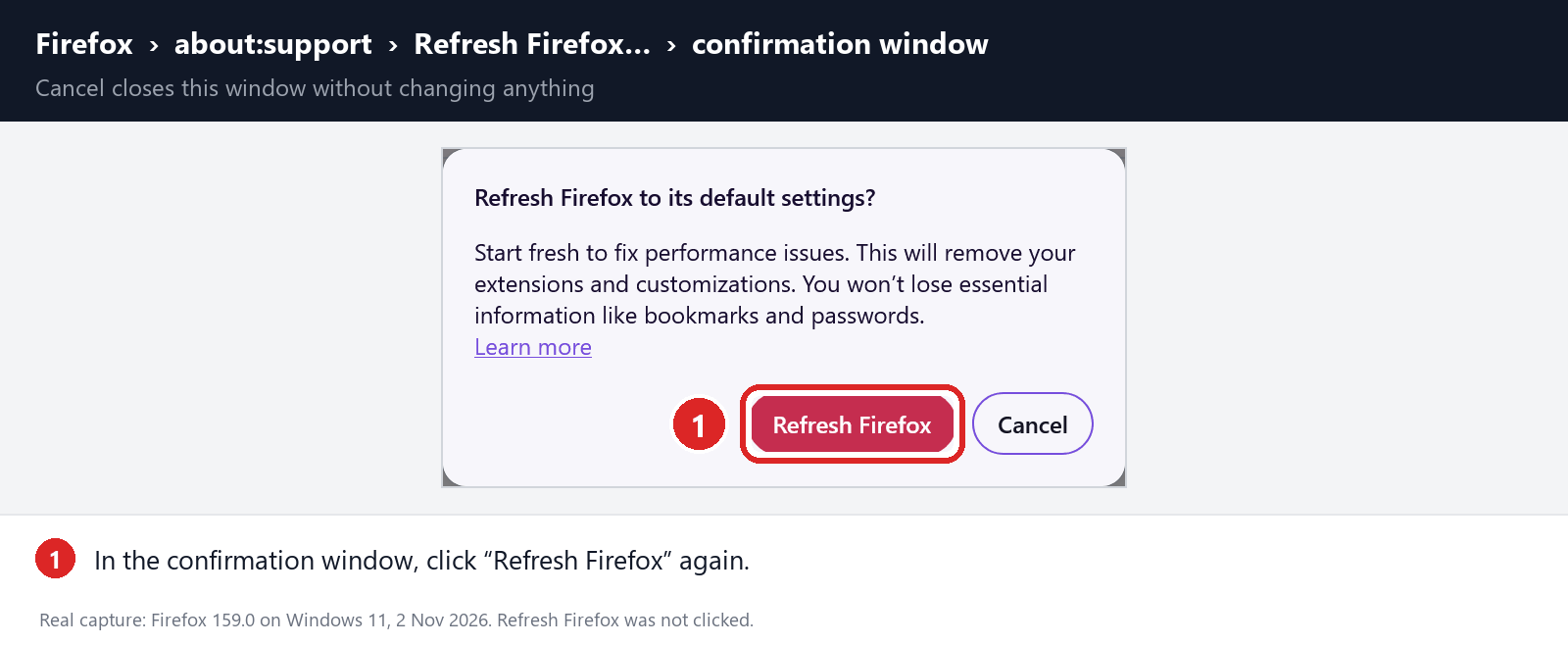
Confirm the refresh
In the confirmation window, click “Refresh Firefox” again. This removes extensions, themes, and customized settings — the usual hiding places for browser hijackers — while keeping your bookmarks, history, and saved passwords safe.
-
Click “Finish”
Firefox will close, reset itself to default settings, and reopen with a window listing the information that was restored. Click “Finish“. Then test Firefox before you add back any extensions.
About the “Old Firefox Data” folder: Firefox saves a copy of your old profile on your desktop. If something you need is missing after the reset, you can recover it from this folder. Otherwise, delete the folder — it contains sensitive data like passwords and cookies, and may also still hold the malicious files you just removed.
Reset Microsoft Edge to default settings
We will now reset your Microsoft Edge browser settings to their default. This will reset your startup page, new tab page, search engine, and pinned tabs. It will also disable all extensions and clear temporary data like cookies. Your favorites, history, and saved passwords will not be cleared.
Updated for Microsoft Edge on Windows 10 and Windows 11 — July 2026.
-
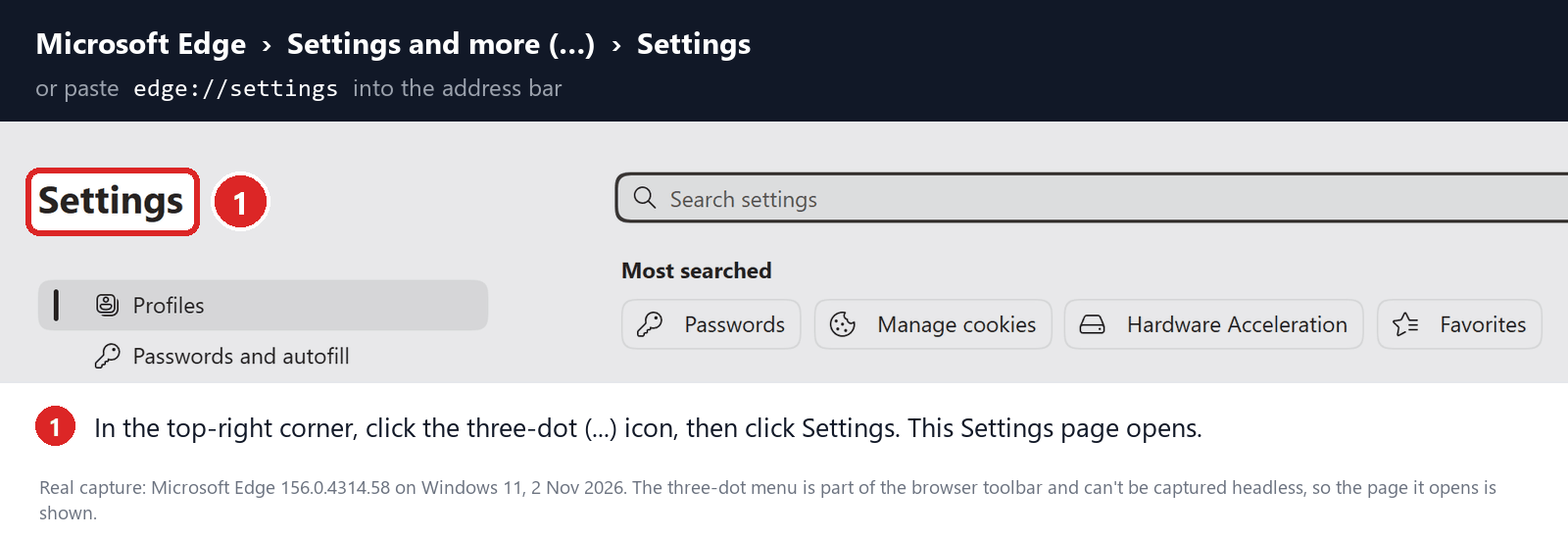
Open the Edge menu and click “Settings”
Open Microsoft Edge. In the top-right corner, click the three-dot (…) icon, then click Settings.
-
Prevent the unwanted settings from returning through Edge Sync
If you are signed in to Microsoft Edge, a bad setting or extension may be stored in your Microsoft account and return after the reset.
Copy the following address, paste it into the Edge address bar, and press Enter:
edge://settings/profiles/syncOn the Sync page, turn off these two options:
- Settings
- Extensions
You can leave Favorites and Passwords turned on.
If Edge says that sync is already off, simply continue to the next step.
Important: Edge Sync settings are separate for each profile. If you use more than one Edge profile, switch to each affected profile and repeat this step.
You do not need to sign out of your Microsoft account or delete the Edge profile.
-
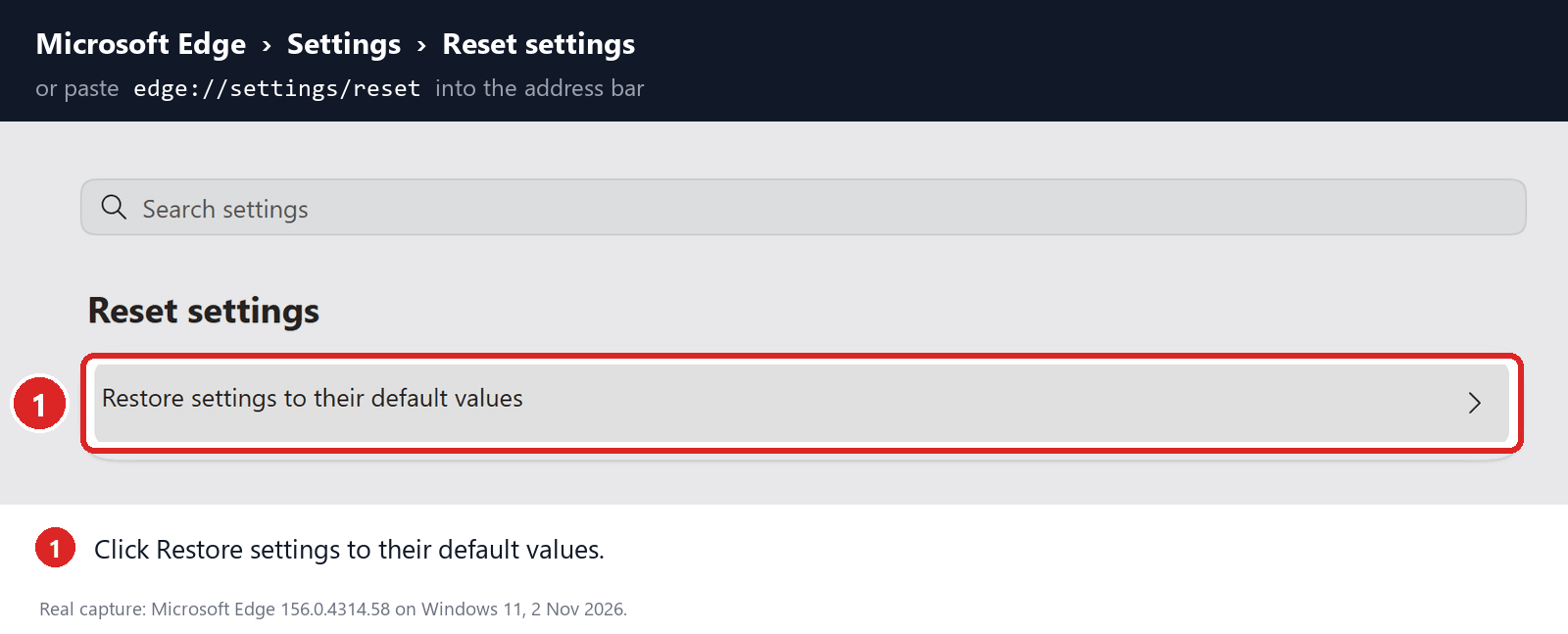
Open “Reset settings”
In the left sidebar, click Reset settings.
You can also open the reset page directly. Copy the following address, paste it into the Edge address bar, and press Enter:
edge://settings/reset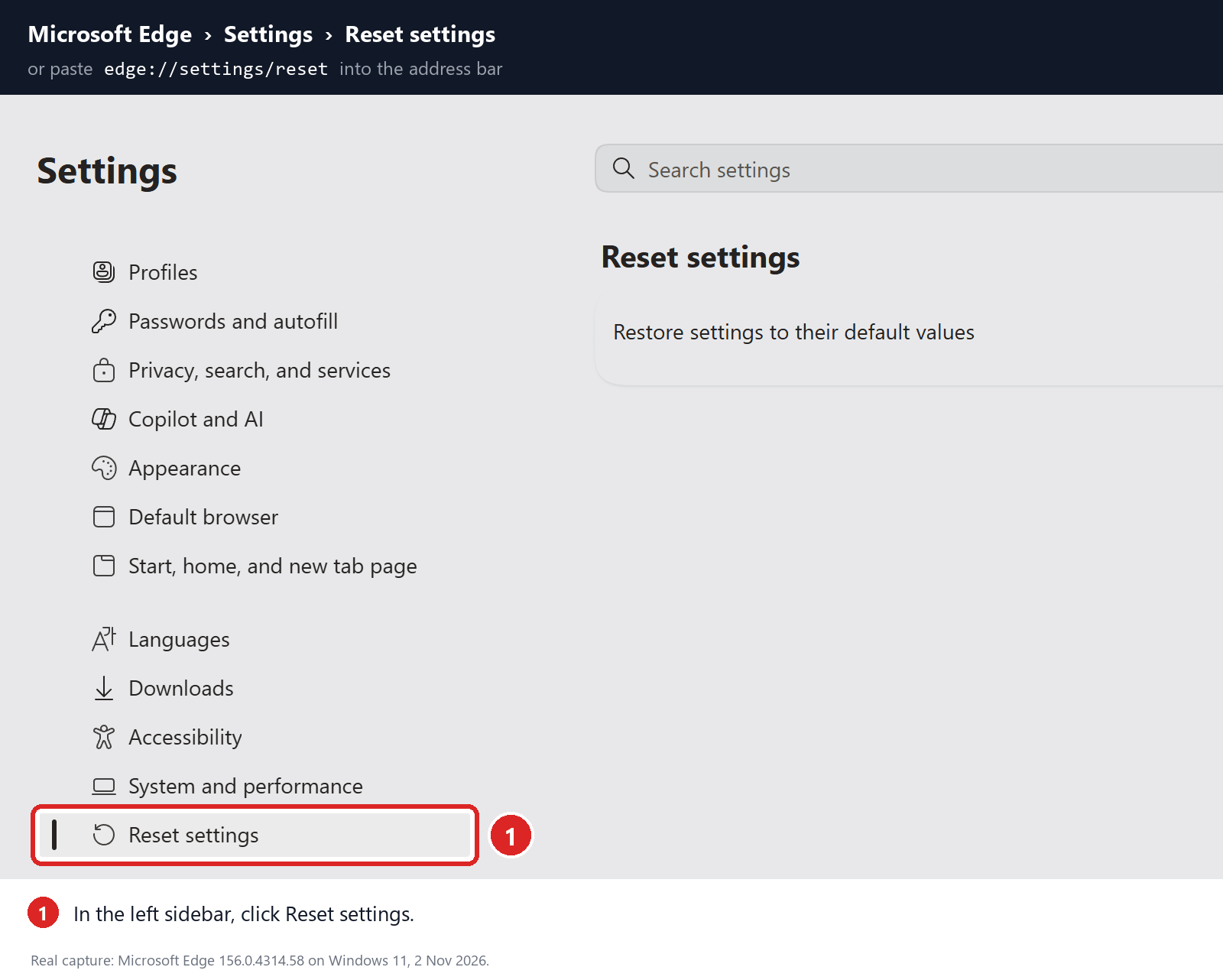
-
Click “Restore settings to their default values”
Click Restore settings to their default values.
-
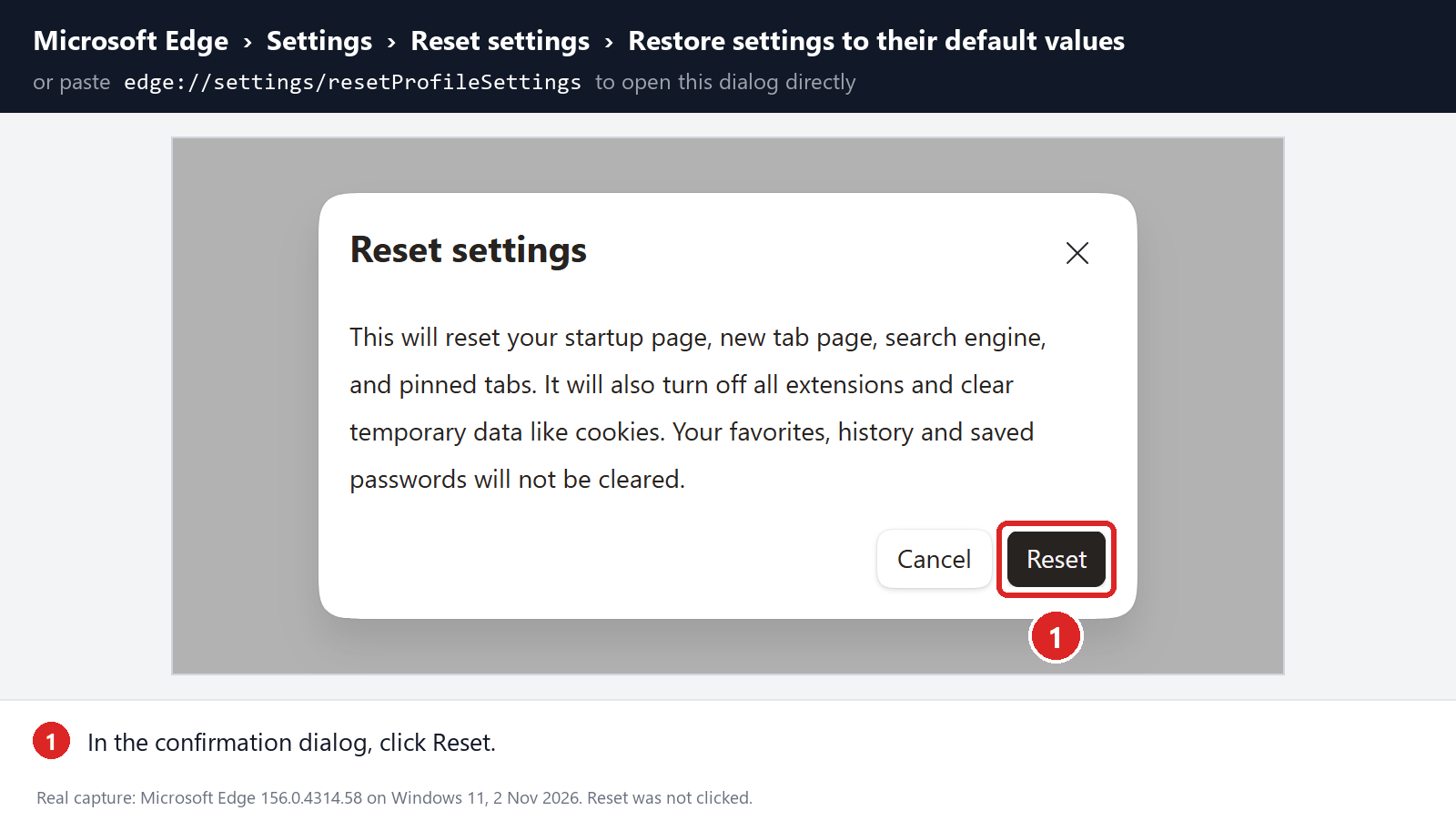
Confirm the reset
In the confirmation dialog, click Reset.
This resets the startup page, new tab page, search engine, and pinned tabs. It also disables all extensions and clears temporary site data, such as cookies.
Don’t worry: your favorites, browsing history, and saved passwords will not be deleted.
-
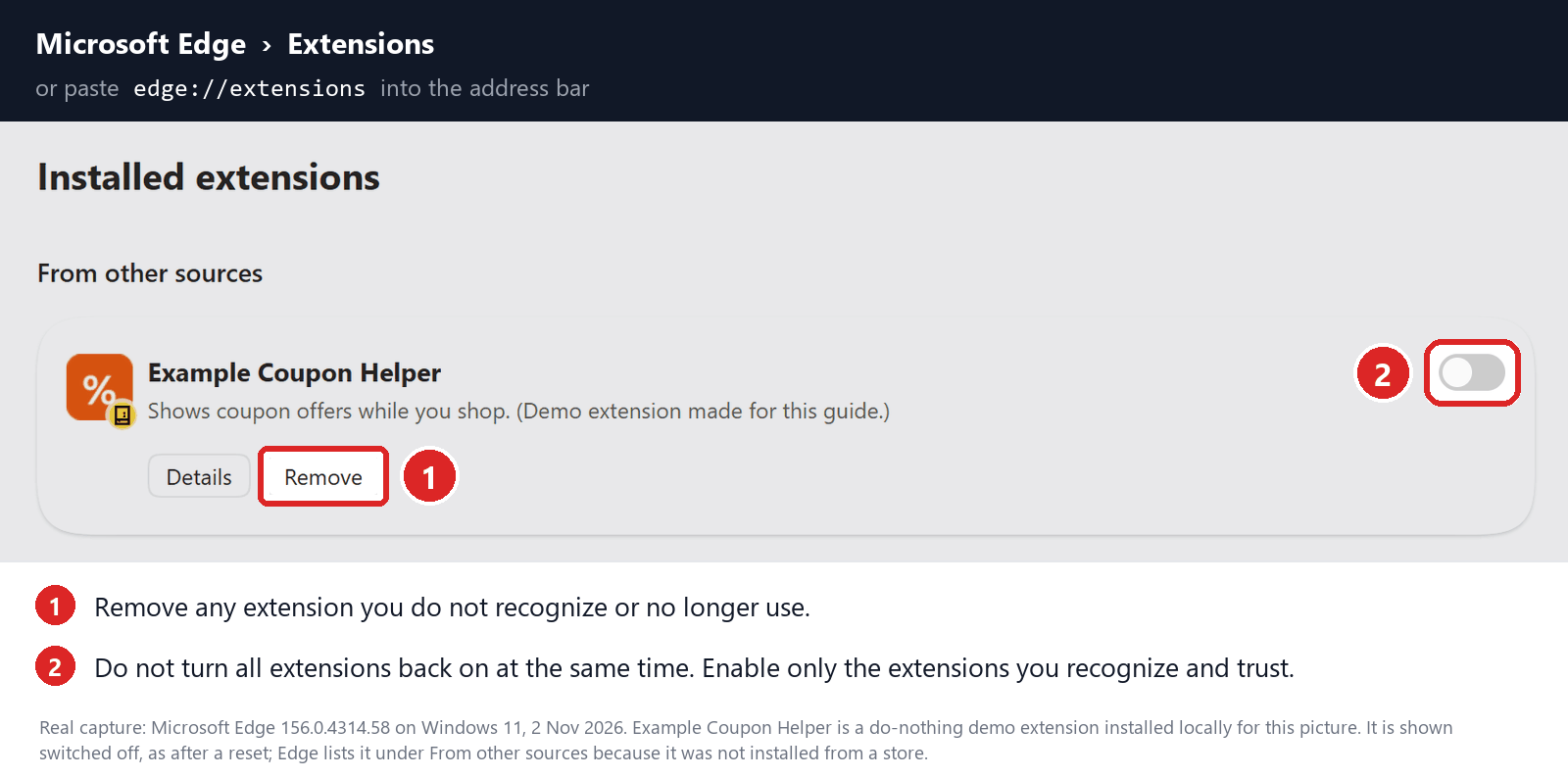
Check your extensions before turning them back on
Copy the following address, paste it into the Edge address bar, and press Enter:
edge://extensionsRemove any extension you do not recognize or no longer use. Pay particular attention to extensions related to search, coupons, shopping, PDF conversion, browser protection, new tabs, or video downloading.
Do not turn all extensions back on at the same time. Enable only the extensions you recognize and trust.
-
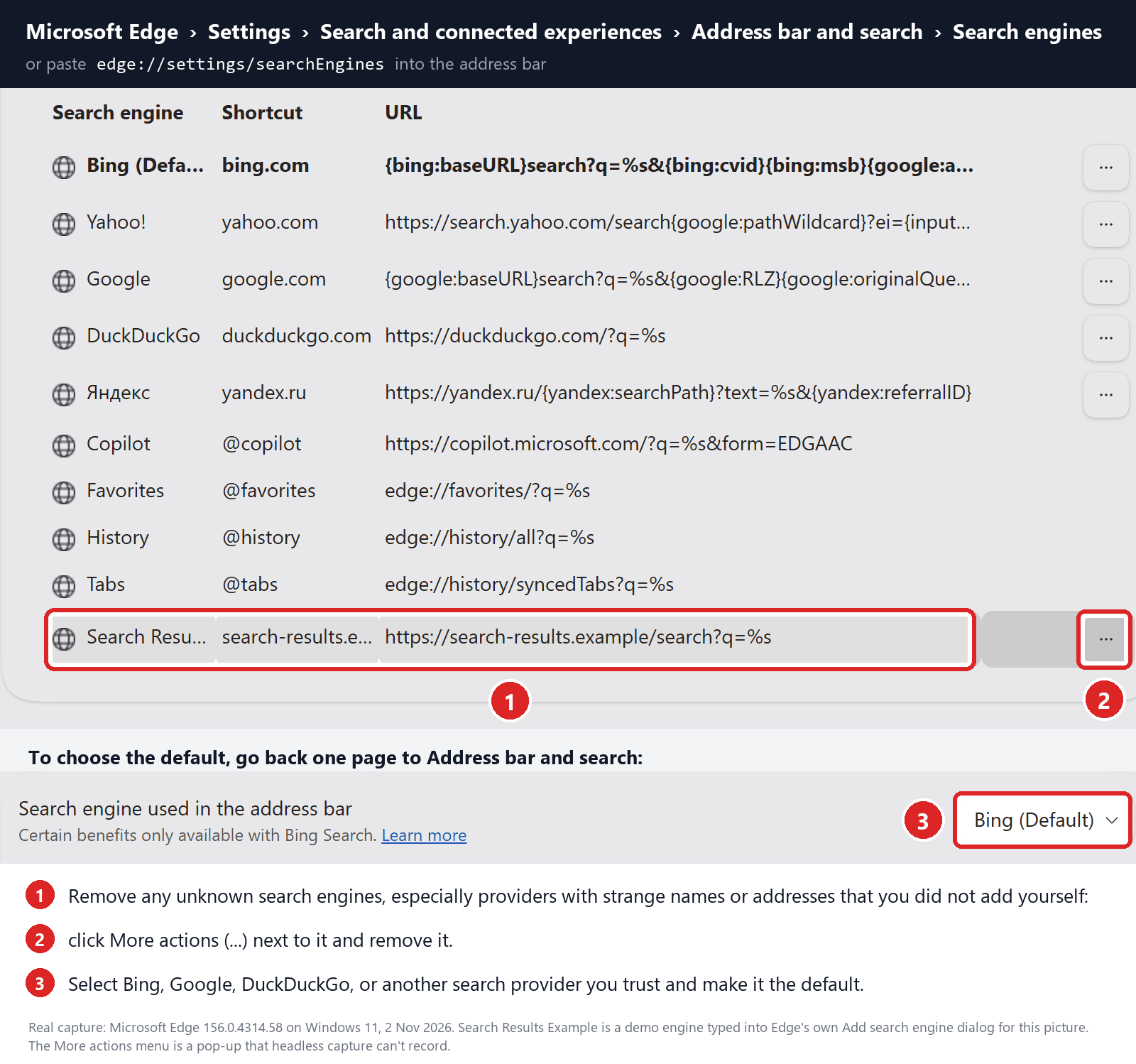
Select a trusted search engine
Copy the following address, paste it into the Edge address bar, and press Enter:
edge://settings/searchEnginesSelect Bing, Google, DuckDuckGo, or another search provider you trust and make it the default. This address opens the list of search engines; the default is set one page back, on Address bar and search, under Search engine used in the address bar.
Remove any unknown search engines from the list, especially providers with strange names or addresses that you did not add yourself: click More actions (…) next to the engine and remove it.
Restart Edge and perform a search from the address bar. If searches are no longer redirected, you can stop here.
-
If the redirect remains, clean the corrupted search data without deleting the Edge profile
Use this additional step only if Edge continues to redirect searches after the normal reset.
This command cleans the search-engine database from every local Edge profile while keeping your favorites, saved passwords, browsing history, cookies, and profiles.
Before continuing: save anything you are working on because the command will close Microsoft Edge.
- Open the Windows Start menu.
- Type PowerShell.
- Open Windows PowerShell. Administrator access is not required.
- Copy the entire command below.
- Paste it into PowerShell and press Enter.
$stamp = Get-Date -Format "yyyyMMdd-HHmmss"
$root = Join-Path $env:LOCALAPPDATA "Microsoft\Edge\User Data"

Get-Process -Name msedge -ErrorAction SilentlyContinue |
    Stop-Process -Force -ErrorAction SilentlyContinue

Start-Sleep -Seconds 2

if (-not (Test-Path -LiteralPath $root)) {
    Write-Host "The Microsoft Edge profile folder was not found:"
    Write-Host $root
    return
}

$profiles = Get-ChildItem -LiteralPath $root -Directory |
    Where-Object {
        $_.Name -eq "Default" -or
        $_.Name -match "^Profile \d+$"
    }

$movedFiles = 0

foreach ($profile in $profiles) {
    foreach ($name in @(
        "Web Data",
        "Web Data-journal",
        "Web Data-wal",
        "Web Data-shm"
    )) {
        $file = Join-Path $profile.FullName $name

        if (Test-Path -LiteralPath $file) {
            $backup = "$file.search-reset-backup-$stamp"

            try {
                Move-Item -LiteralPath $file -Destination $backup -ErrorAction Stop
                Write-Host "Cleaned: $($profile.Name)\$name"
                $movedFiles++
            }
            catch {
                Write-Warning "Could not clean: $file"
            }
        }
    }
}

Write-Host ""

if ($movedFiles -gt 0) {
    Write-Host "Microsoft Edge search data has been cleaned." -ForegroundColor Green
    Write-Host "You can now reopen Microsoft Edge."
}
else {
    Write-Host "No Edge search database files were found." -ForegroundColor Yellow
}
The command does not permanently delete the original files. It renames them as backup files, and Edge creates a clean search database when it starts again.
Note: this additional cleanup may also reset saved form-fill suggestions, saved addresses, payment cards saved only on this computer, and manually added search engines. It does not delete favorites, passwords, or browsing history.
-
Reopen Edge and test the browser
Open Microsoft Edge again, visit edge://settings/searchEngines, and select your preferred search engine (one page back, on Address bar and search, under Search engine used in the address bar).
Perform several searches from the address bar to confirm that the redirect is gone.
Keep synchronization for Settings and Extensions turned off until you are certain that the computer and extensions are clean. If you enable them again, turn them on one at a time and test Edge after each change.
-
If Edge still redirects your searches
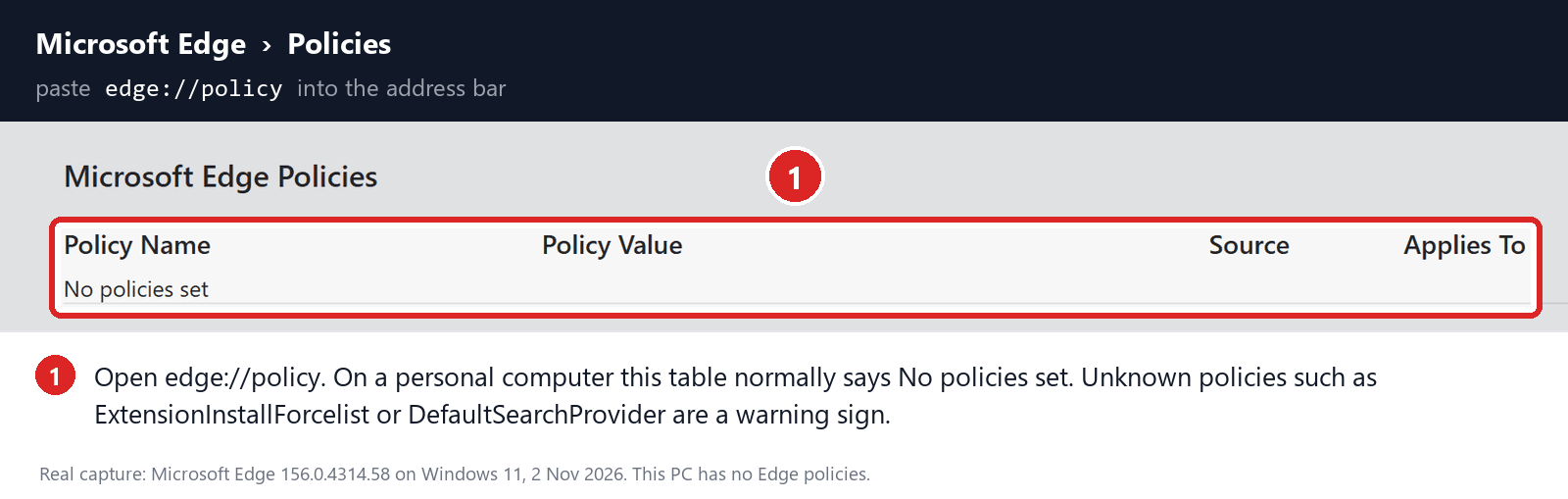
Open edge://policy. If this is your personal computer and Edge displays unknown policies such as ExtensionInstallForcelist or DefaultSearchProvider, the hijacker may be installed outside the browser profile.
In that situation, continue with the next malware-removal steps and run a complete antivirus scan. If the computer belongs to a company or school, contact its IT administrator before changing any policies.
STEP 6: Use Malwarebytes to remove trojans and browser hijackers
In this step, we will install and run a scan with Malwarebytes Free to remove any infections, adware, or potentially unwanted programs that may be present on your computer.
Malwarebytes is one of the most popular and trusted anti-malware tools for Windows — and it’s completely free for removing infections. It catches threats that many antivirus programs miss, including adware, browser hijackers, and trojans. Follow the steps below to scan your PC and remove what Malwarebytes finds.
Download Malwarebytes
Click the button below to download the latest version of Malwarebytes for Windows from the official source. The free version is all you need — it will scan your computer and remove adware, browser hijackers, and other malicious software at no cost.
Download MalwarebytesOfficial installer for Windows 11 and 10. Your download starts right away.Want real-time protection? See Malwarebytes Premium Malwarebytes Free for WindowsScans and removes malware at no cost
-
Install Malwarebytes
When the download finishes, open your Downloads folder and double-click the MBSetup file. If Windows shows a User Account Control pop-up, click “Yes” to allow the installation.

Follow the On-Screen Prompts to Install Malwarebytes
The setup wizard will walk you through a few quick screens:
-
Choose where you’re installing the program — “Personal Computer” or “Work Computer” — then click Next.

-
Malwarebytes will now install on your device. This usually takes under a minute.

-
When installation is complete, the “Welcome to Malwarebytes” screen will open automatically.

-
On the final screen, click Open Malwarebytes to launch the program.

-
Optional: Check for rootkits with a Custom Scan
You don’t need to change any settings for a normal scan. The standard Threat Scan in the next step is enough for most problems, so you can go straight to it.
If you also want to check for rootkits, use a Custom Scan. In current versions of Malwarebytes, rootkit scanning is only available there:
- On the Scanner tile, click the three-dot menu and select Advanced Scan.
- Choose Custom Scan. In its options, check Scan for rootkits.
- Select your system drive (usually C:\) as the location to scan, then start the scan. It takes longer than a Threat Scan.
- When it finishes, review and quarantine the results as described in the steps below.
Rootkit scanning isn’t available on Windows devices with ARM processors.
Start the Scan
Click the blue Scan button. Malwarebytes will automatically update its virus database and start checking your computer for malware.

-
Wait for the Scan to Finish
The scan checks your entire system for browser hijackers and other malicious programs, so it can take 5 to 20 minutes depending on your computer. Feel free to do something else — just check back occasionally to see the progress.

-
Quarantine the Detected Threats
When the scan is done, you’ll see a list of everything Malwarebytes found — malware, adware, and potentially unwanted programs. Click the “Quarantine” button to remove all of them at once.

Malwarebytes will now remove the malicious files and registry entries and move them safely into quarantine.

-
Restart Your Computer
Some threats can only be fully removed after a reboot. If Malwarebytes asks you to restart, click Yes. Once you’re logged back in, Malwarebytes has finished removing the threats it found.

STEP 7: Use HitmanPro to scan your computer for rootkits and other malware
In this next step, we will scan the computer with HitmanPro to check for any other malicious programs that may be installed on your device.
HitmanPro is a second-opinion scanner — it’s designed to catch what your main antivirus might have missed. Instead of relying on a single detection engine, it checks the behavior of files in the locations where malware usually hides. Anything suspicious is checked online, where it’s analyzed by several antivirus engines in HitmanPro’s Scan Cloud.
Good news: scanning is completely free, with no limits. You only need a license when it’s time to remove what was found — and even then, you can activate a free one-time 30-day trial to remove what it finds at no cost. The trial works once per computer. After that, removal needs a paid license, and the purchase screen shows the current price.
-
Download HitmanPro
Click the button below to download HitmanPro. Remember — the scan is free, so you have nothing to lose by checking your PC.
Download HitmanProFree scan. Removing threats needs the free 30-day trial. Opens the official HitmanPro page in a new tab. HitmanProSecond-opinion malware scanner from Sophos
-
Install HitmanPro
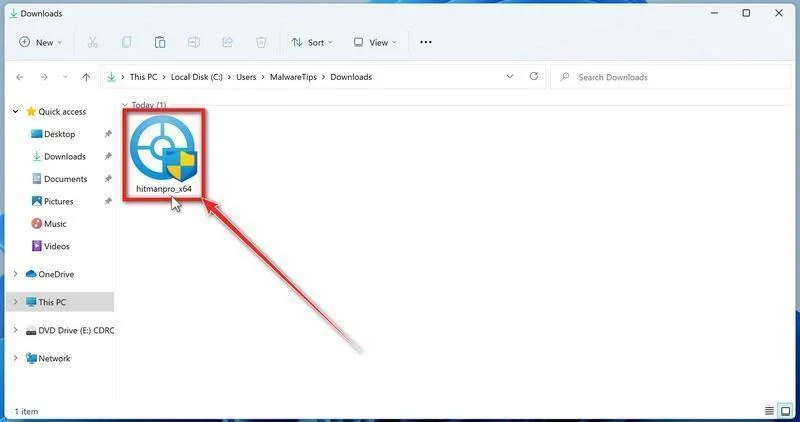
When the download finishes, open your Downloads folder and double-click the file “hitmanpro_x64.exe”. (On 32-bit Windows 10, the file is named “hitmanpro.exe”.)
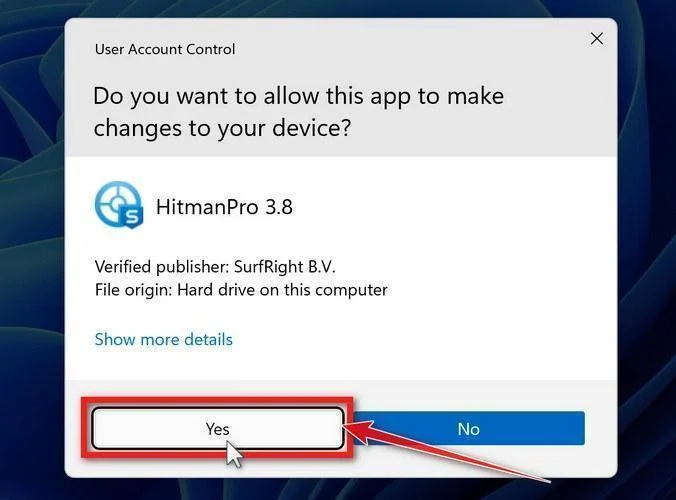
If a User Account Control pop-up asks whether HitmanPro can make changes to your device, click “Yes” to continue.
-
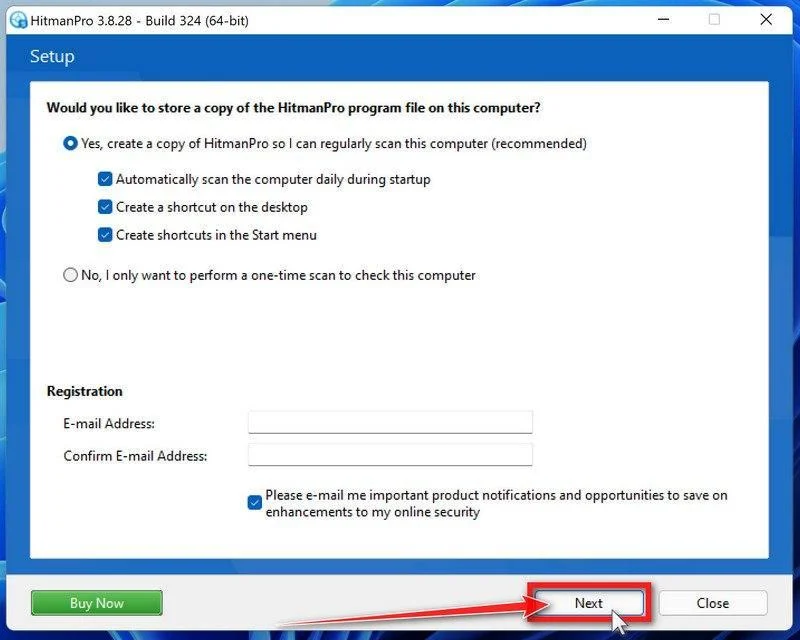
Follow the On-Screen Prompts
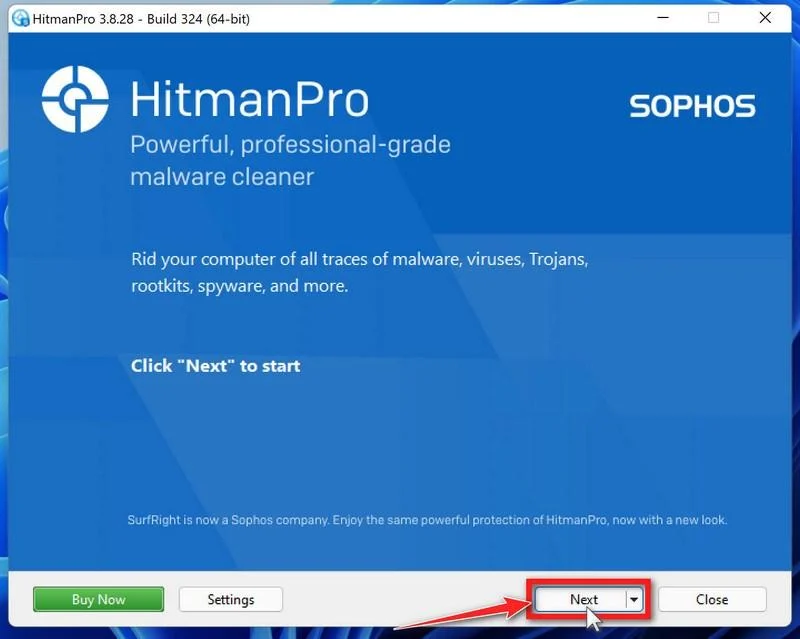
On the HitmanPro start screen, click “Next” to begin the system scan. No lengthy setup required — it goes straight to work.
-
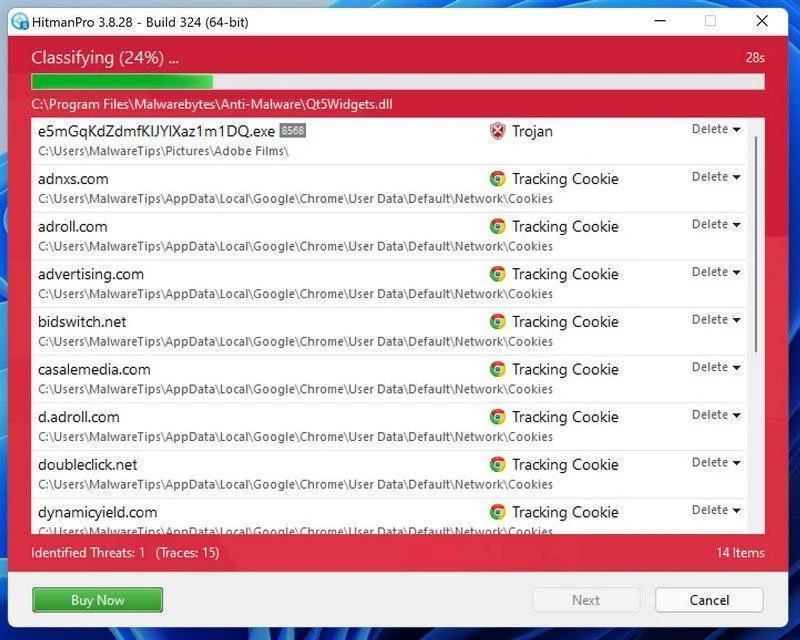
Wait for the Scan to Finish
HitmanPro will now check your computer for malicious programs. This usually takes just a few minutes thanks to its cloud-based scanning.
-
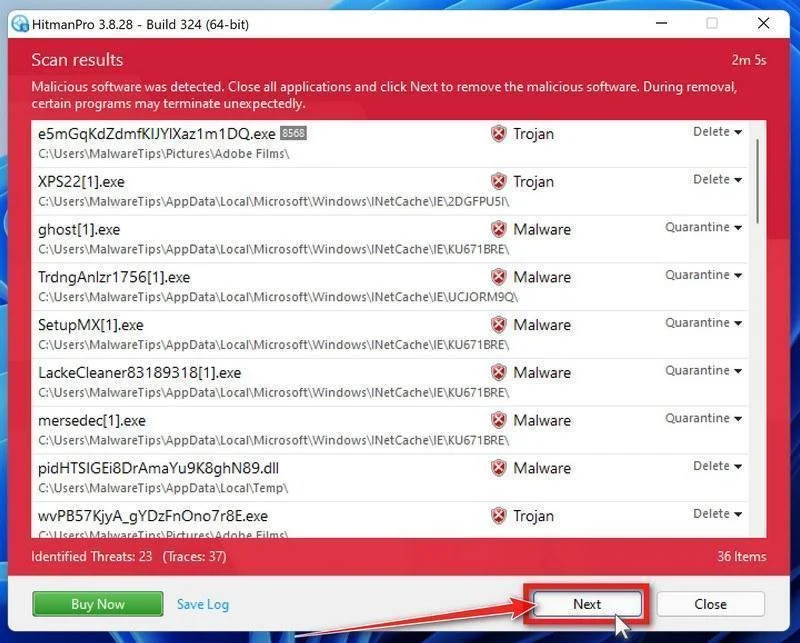
Review the Results and Click “Next”
When the scan is done, HitmanPro will show you everything it found. Click “Next” to remove the detected threats.
-
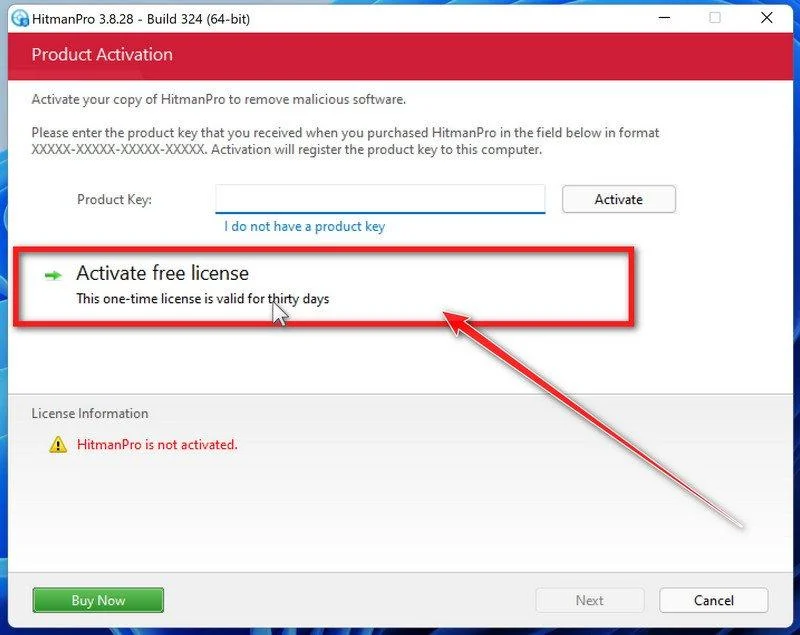
Click “Activate Free License”
To remove the malicious files, click the “Activate free license” button. This starts your free 30-day trial — no payment details needed — and unlocks the full cleanup.
When the removal is complete, HitmanPro will show a summary of everything it cleaned. Click Next, then click Reboot if prompted. If there’s no reboot prompt, click Close. Then check whether the problems you noticed have stopped. If they come back, save the HitmanPro log and ask for help in our forum.
STEP 8: Use AdwCleaner to remove adware and malicious browser policies
In this final step, we will download and install AdwCleaner to remove the malicious browser policies that were set by browser hijackers on your computer and delete malicious browser extensions.
AdwCleaner is a free on-demand scanner that specializes in adware, browser hijackers, and unwanted toolbars — the exact threats that mainstream antivirus programs often miss. It also includes tools that repair the damage malware leaves behind, like hijacked browser settings and malicious policies. It’s a quick scan that’s well worth running.
-
Download AdwCleaner
Click the button below to download AdwCleaner — it’s free, portable, and requires no installation.
Download AdwCleanerOpens the official download page in a new tab. Malwarebytes AdwCleanerRemoves adware and unwanted programs at no cost
-
Run AdwCleaner
Open your Downloads folder and double-click the file named “adwcleaner.exe“. There’s no installation — the program starts right away.
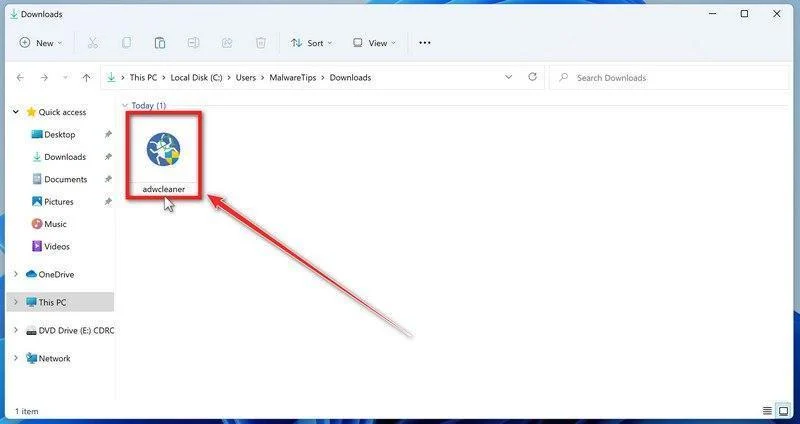
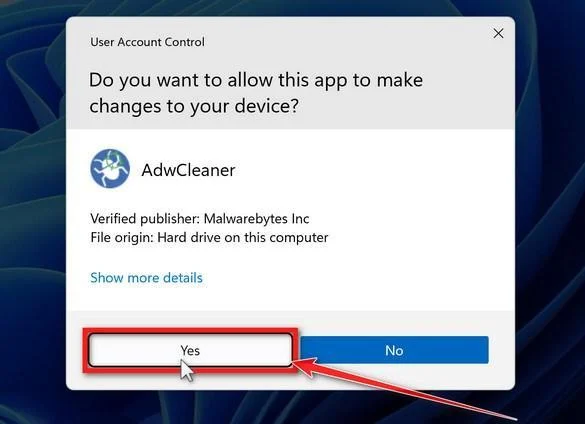
If Windows asks whether you want to allow AdwCleaner to run, click “Yes“. When the license agreement appears, click I agree to continue.
-
Leave “Reset Chrome policies” off unless you need it
AdwCleaner can reset Chrome policies, the settings that malware sometimes uses to lock your browser so you can’t change it back. This option removes every Chrome policy, including legitimate ones set by an employer, a school, or parental-control software, so leave it off for a normal scan.
AdwCleaner applies this option only if you run Basic Repair at the end of the cleanup. Malwarebytes advises running Basic Repair only when a support agent asks you to, and it also runs every other repair action that is turned on in the same list. If this is your own personal PC and chrome://policy in Chrome lists policies you didn’t set, ask for help in our forum instead. On a work or school computer, ask the IT administrator.
-
Start the Scan
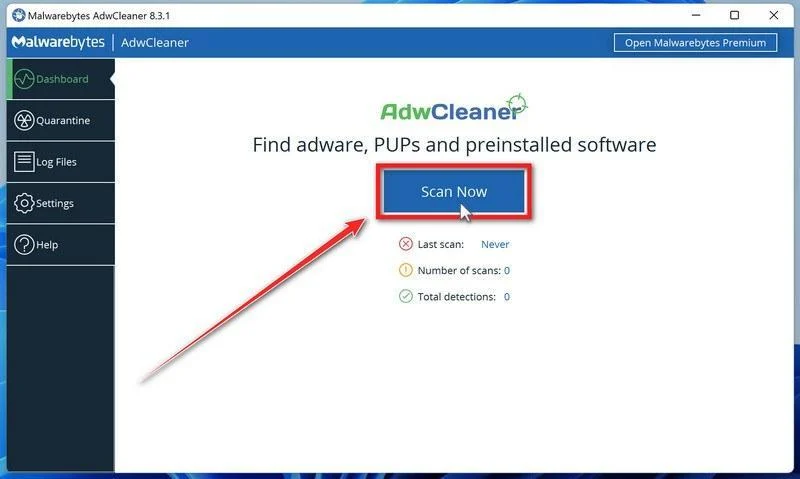
Click “Dashboard” on the left side of the window, then click the “Scan Now” button.
-
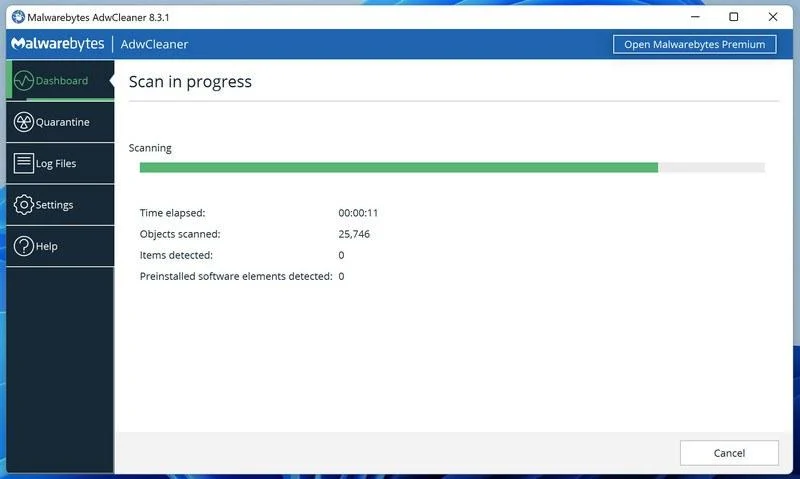
Wait for the Scan to Finish
AdwCleaner will now check your computer for adware and other malware. This usually takes only a few minutes — it’s one of the fastest scanners around.
-
Quarantine the Detected Threats
When the scan finishes, AdwCleaner lists everything it found. Review the list and uncheck any program you installed on purpose and want to keep, then click Next. If AdwCleaner also found preinstalled software, it shows that list next. Review it the same way, then click “Quarantine“. Older versions show the Quarantine button on the first list, as in the image below.
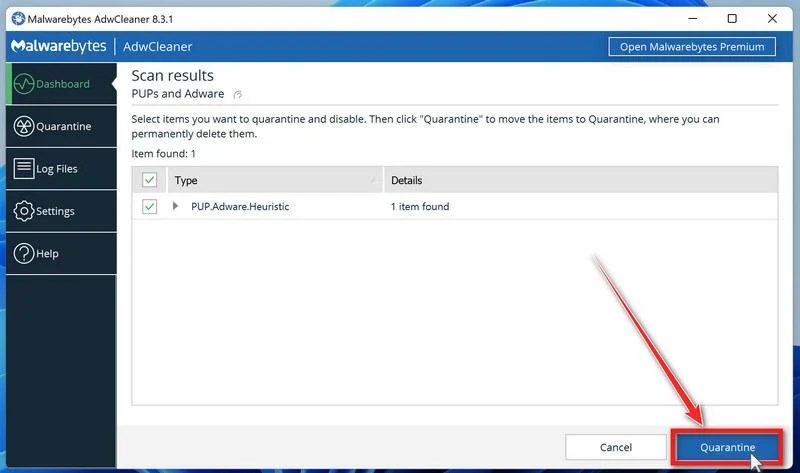
-
Click “Continue” to Finish the Cleanup
Save any open work first — AdwCleaner needs to close your open programs before it can clean. When you’re ready, click the “Continue” button.
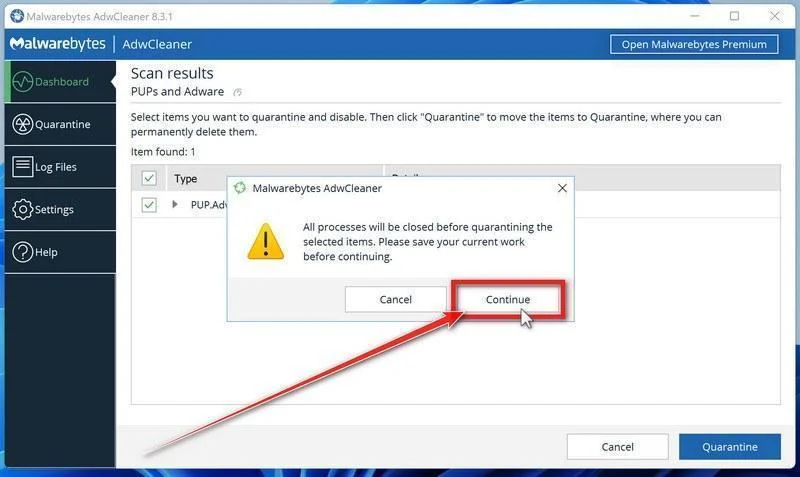
AdwCleaner will now move the selected items to quarantine. If it asks you to restart your PC, allow it. When you’re back in Windows, AdwCleaner may offer a Basic Repair. Click Skip Basic Repair. Malwarebytes recommends running Basic Repair only when a support agent asks you to. Then check whether the problems you noticed have stopped.
How to Prevent Open Software Updater from Installing Again
Here are some tips to prevent Open Software Updater from reinstalling after removing it:
1. Avoid Sketchy Downloads
Be very cautious when downloading free software, media files, and games from shady websites and piracy sources. Only download from reputable sites like official vendor websites to avoid bundled PUPs.
2. Say No to Bundled Offers During Installs
Always carefully read through installation wizards when installing new programs. Uncheck any pre-checked boxes or offers to install additional software like Open Software Updater.
3. Scan Downloads with Antivirus Software
Configure your antivirus program to automatically scan new downloads before they can be opened or installed. This will detect and quarantine any PUPs included with installers.
4. Make Sure Software Updates Automatically
Enable auto-update options in programs whenever possible so 3rd party updaters like Open Software Updater are not needed. Keeping all software updated closes security holes.
5. Review Installed Programs Frequently
Periodically check your installed programs list and browser extensions. Remove any unknown or dubious programs right away to prevent issues.
6. Use a Secondary Scanner Like Malwarebytes
Run periodic scans with reputable tools like Malwarebytes to detect and remove any PUPs like Open Software Updater that got through. Great for second opinions.
7. Lock Down Windows Hosts File
Edit Windows hosts file to block known PUP download sites. Prevents access to install their software in the first place.
8. Reset Browser Settings After Infections
If you get hit with an infection that drops PUPs like Open Software Updater, immediately reset all browser settings to defaults after disinfecting.
9. Always Say No to Browser Redirects
Never follow along if get redirected to download sites for fake updates or virus scans. Close browser immediately if this happens.
Staying vigilant is key to keep sneaky programs like Open Software Updater off your PC. Following these tips will help prevent unwanted installs in the future.
Frequently Asked Questions about Open Software Updater
Open Software Updater is a questionable program that makes its way onto many computers unknowingly. If you see Open Software Updater on your system, you likely have lots of questions. Here are answers to the most frequently asked questions about Open Software Updater to help you understand and remove it properly.
What is Open Software Updater and How Does it Work?
Open Software Updater is a potentially unwanted program (PUP) that claims to manage updates for your installed software. It runs in the background and will automatically check for and download available updates for programs installed via the OpenSoftwareUpdater site.
It adds services and scheduled tasks that run continuously without user interaction. Open Software Updater does not actually update any legitimate software – it only updates other programs bundled with it by the same developer.
How Did Open Software Updater Get on My Computer?
Most users find Open Software Updater installed without understanding how it got there. The most common methods include:
- Bundling with other free program installers
- Being installed after clicking on fake upgrade/update alerts
- Landing on your system after a malware infection
- Being included with pirated software or illegal program downloads
The Real way is usually obscured on purpose to hide Open Software Updater’s questionable behavior.
Is Open Software Updater Dangerous? What Risks Does it Pose?
Open Software Updater exhibits many behaviors of a potentially unwanted program (PUP) including:
- Difficult to fully remove due to deep system integration
- Privacy concerns from data about your system being transmitted
- Slows down your PC’s performance from resource-heavy operation
- Serves as a gateway for installing additional unwanted programs
- Potential security risks from running constantly in the background
While not directly destructive like viruses, Open Software Updater does pose threats to your privacy, performance, and security.
What Symptoms Indicate Open Software Updater is on Your PC?
Some signs Open Software Updater may be on your system already include:
- Presence of scheduled tasks called “OneUpdate”
- Background services named “Open Software Updater” or “OpenSoftwareUpdater”
- Unknown programs you don’t remember installing
- More frequent pop-up ads
- Browser settings/homepage changed mysteriously
- PC running slower than usual
Look for unfamiliar processes, files, services, browser extensions and other software if you suspect Open Software Updater.
How Do I Manually Remove Open Software Updater?
You’ll need to take the following steps to fully uninstall Open Software Updater:
- Delete associated files/folders from Program Files and AppData
- Remove related registry entries
- Uninstall bundled OpenSoftwareUpdater software
- Disable relevant services
- Delete any Open Software Updater tasks in Task Scheduler
- Reset web browser settings and extensions
Open Software Updater blocks standard uninstalls, so manual deletion is required. Make sure to restart your PC afterwards.
How Can I Prevent Open Software Updater from Returning?
To block Open Software Updater from reinstalling later:
- Only download software from official sources
- Decline additional offers during install wizards
- Install an antivirus to scan downloads automatically
- Enable auto-updates for your legitimate programs
- Routinely check for unknown programs and remove them
- Run anti-malware tools to detect PUPs
- Use a hosts file editor to block PUP sites
- Never follow browser redirects to fake update links
Staying vigilant about what’s on your system prevents unwanted installs.
Is Open Software Updater Associated with Other Potentially Unwanted Programs?
Yes, Open Software Updater is often bundled with other PUPs including adware, browser hijackers, and toolbars. Examples include OpenSoftwareUpdater, BetterSurf, GameSpinner, PriceMinister, and SmartBar.
Be sure to remove all unfamiliar programs if you find Open Software Updater on your computer to fully clean it.
Should I Use Open Software Updater to Keep My Software Updated?
No, Open Software Updater should not be used for updating legitimate software. Most reputable programs already include auto-update capabilities within themselves.
Open Software Updater only updates questionable software also installed without your consent. Relying on it poses privacy and security issues.
What Should I Do If Open Software Updater is on My PC?
If you confirm Open Software Updater is on your system, immediately uninstall it and any other unknown programs according to the detailed manual removal instructions covered earlier.
Also run reputable anti-malware scanners to find and remove any other PUPs or infections. Change all account passwords after cleaning your PC.
Following proper removal best practices will remove Open Software Updater fully and prevent it from returning.
Is There an Easier Way to Remove Open Software Updater Other Than Manual?
Yes, you can use automated malware removal tools that will locate and uninstall Open Software Updater for you. Examples include Malwarebytes, HitmanPro, and Eset Online Scanner.
Just be sure to download the removal tool from the official company website first before running it. Let it scan your system and allow it to clean or quarantine anything suspicious.
What If Open Software Updater Keeps Coming Back After I Remove It?
If Open Software Updater reappears after uninstalling, try restarting in Safe Mode and run your anti-malware scanner again to catch any traces left behind. You may need to show hidden files/folders and dig deeper to remove stubborn remnants left in the registry or other hard-to-reach spots.
Preventative measures like blocking PUP sites are also recommended. A reinstall of your operating system may be required in severe cases.
This FAQ should provide a detailed overview of what Open Software Updater is, how to remove it, and how to prevent it from returning in the future. Let us know if you have any other questions!
The Bottom Line
Open Software Updater is a potentially unwanted program that embeds deep into your system without permission under the guise of managing software updates. In reality, it exhibits questionable behavior and security risks.
Full removal is difficult without using the detailed manual uninstall steps highlighted in this guide. To prevent Open Software Updater from returning, avoid shady downloads, scan software with antivirus tools, review installed programs frequently, and leverage other proactive measures.
While keeping your software updated is generally good, Open Software Updater is an invasive and deceptive way to do it. You are better off using the integrated update capabilities already included in your legitimate programs and operating system.
Stay safe online and don’t let unwanted programs like Open Software Updater sneak onto your computer. Leverage this comprehensive guide anytime Open Software Updater shows up so you can eliminate it for good.

Join the discussion
1 commentShare your experience or ask a question about this article.
Discussion
You need a Donate page. Thanks for the information.