


A fashion order can be finished long before the card saved with it stops mattering. Revolve customers now have a reason to revisit those payment details.
If a breach notice has arrived, the useful questions are personal: which card was involved, what information was exposed, and what should happen next?
Overview
The notification concerns customer payment information
Revolve Group operates Revolve.com and FWRD.com. Its public breach notice says an unauthorized actor accessed its shopping platform on September 11, 2026.
The sample notification identifies names, addresses, payment-card numbers, and expiration dates as information that may have been acquired. Individual letters identify the relevant card’s last four digits.
A separate SEC filing describes potential automated acquisition involving certain customers who stored payment details. This is a retailer security incident, not evidence that Revolve itself is a scam.
The published documents leave important limits
The company says the actor may have acquired the information. That wording does not establish a fraudulent transaction on every affected customer’s account.
Neither the sample letter nor the cited filing gives a confirmed nationwide victim total. Large figures circulating in headlines should not substitute for your own notification.
The disclosed fields also do not establish that Social Security numbers, account passwords, or card security codes were taken. Do not turn an omission into a guarantee.
The immediate priority is the affected card
Customers should verify the notice independently, identify the card, and contact its issuer about appropriate protection. Suspicious charges deserve prompt reporting, even when the amount is small.
- Check whether the last four digits in your letter match a current or previously used card.
- Review that card’s transactions and enable suitable alerts through the issuer’s genuine app or website.
- Ask the issuer whether replacement or another restriction is appropriate for the reported exposure.
- Be suspicious of unsolicited breach-related calls requesting a code, transfer, or payment.
- Keep the notice, card-provider case number, and any disputed transaction details together.
What Revolve’s Own Notice Says
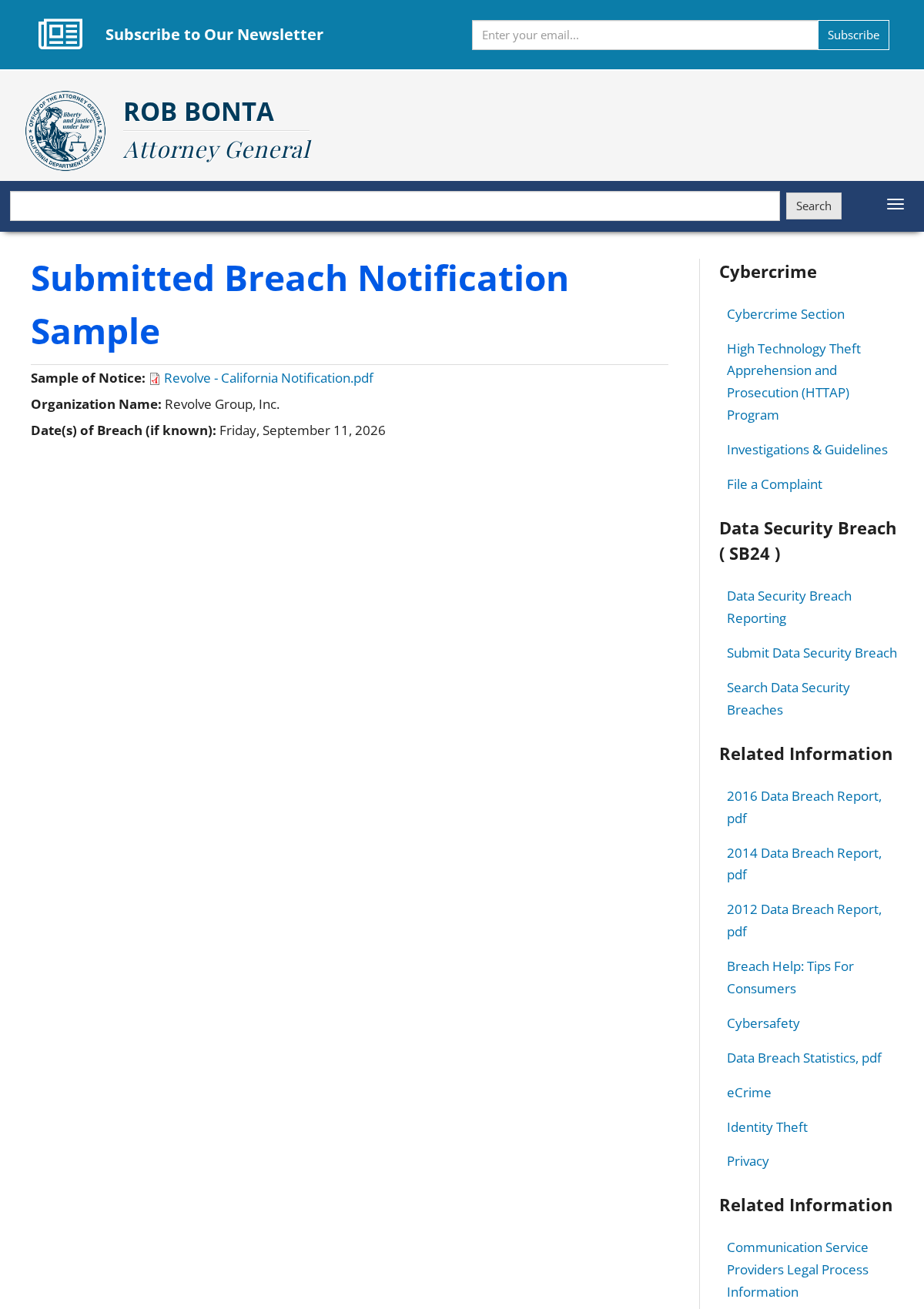
The California Attorney General’s public record identifies Revolve Group and links a sample customer notification.
That letter says the investigation found unauthorized access on September 11. On September 29, the company determined the involved data included specified customer and card details.
Those are different dates serving different purposes. The date access occurred is not necessarily the date the company learned exactly which information was involved.
The letter also says Revolve contained the activity, investigated, notified law enforcement, and took measures to enhance security. It does not describe the intrusion’s precise technical route.
There is no basis in that notice to name a particular attacker, blame an individual employee, or claim that a customer’s own device was infected.
The SEC filing, dated October 29, likewise discusses unauthorized access and possible acquisition of certain stored payment details. It says operations were not disrupted.
That corporate statement addresses the company’s operations. A retailer continuing to trade normally does not answer whether a particular payment card should be replaced.
For customers, the practical reference is the combination of the notification and their issuer’s advice. A share-price discussion is not a payment-protection plan.
Which Information Creates Which Risk?
A card number and expiration date deserve issuer attention
These fields can be useful to criminals attempting unauthorized purchases. A transaction might still require additional authentication, but that is not a reason to ignore an exposure.
Do not assume a missing security code makes the number harmless. Different merchants and payment systems apply different checks to transactions.
The right person to assess your card is its issuer. Explain that a retailer reported possible exposure of the number and expiration date, rather than describing an unspecified hack.
A replacement decision can depend on the account, card type, existing restrictions, and what the issuer already knows. Ask about the specific card rather than every account you own.
Be especially prompt with a debit card, where an unauthorized transaction may affect money available for ordinary bills. Explain any immediate hardship when reporting it.
Credit and debit disputes can follow different procedures. Ask which process applies, what temporary protection is available, and how the issuer will communicate its decision.
A name and address can make a later message convincing
Someone who knows where you live may sound like a delivery service, retailer, or bank. Familiar details can lower your guard without proving the caller’s identity.
A caller might refer to a real shopping account and then ask for a one-time code. The accurate opening does not authorize the request that follows.
Keep the distinction simple: information someone knows about you is not the same as a secure channel you chose to contact.
A card exposure is not the same as a stolen password
The published incident details do not establish that an account password was acquired. A blanket claim that every Revolve login is compromised would go beyond those documents.
If you see an unknown login or independently suspect password exposure, secure that account and any accounts using the same password. Otherwise, address the reported card risk first.
A bank code or password you later give a fraudulent caller would be a separate exposure. Tell the bank exactly what happened so its response matches the problem.
How to Check a Breach Letter Without Following a Trap
A genuine breach creates an opportunity for imitators. An email or letter can contain the correct company name and still give you a false contact route.
Start outside the incoming message. Use the company’s established website or app, or locate the notice through the regulator’s public breach-notification record.
Compare the company name, incident description, and affected card details. A sample letter can confirm a notice’s general format, but it cannot authenticate every envelope using that format.
The public sample contains a dedicated information line. Rather than copying a number from an unsolicited text, verify it against the actual published notification first.
For card protection, use the number on your card, the issuer’s official app, or an independently verified banking website. You do not need an incoming caller’s permission.
No legitimate verification should require sending money to a supposedly safe account. Do not install a remote-control app so someone can manage your breach response.
Likewise, a request to read a banking code aloud needs scrutiny. A code can approve a login, payment, or other action that the caller has initiated.
You can end an unexpected call and start a fresh conversation through your bank. Losing the caller’s running commentary is a useful safety measure, not an obstacle.
What the Large Affected-Customer Numbers Do Not Tell You
Coverage of the incident has referred to more than a million people. The publicly cited company filing and sample notification do not themselves confirm that nationwide figure.
A total can depend on how an authority collects reports, whether records count people or cards, and whether a figure is national or state-specific.
A confirmed nationwide total is not supplied by those primary documents. Your card-provider response should follow your own notice, not a changing headline number.
Your own notice is more relevant. If it names a payment card, address that card even if a headline’s total changes later.
If you have not received a notice, that alone does not prove inclusion or exclusion. Check your account messages and ask the company through an established channel if concerned.
Do not submit card details to a third-party website claiming to check whether you appear in a leaked database. That can create a new exposure while pretending to resolve one.
What to Do If You Received the Revolve Notice
- Verify the notification through Revolve’s established channel or the regulator’s published sample. Do not authenticate it solely because it knows your name or address.
- Identify the listed card using its last four digits. Check whether it is a credit, debit, prepaid, replacement, expired, or supplementary card.
- Contact the issuer through your usual banking route. Explain the reported fields and ask about replacement, temporary restrictions, alerts, and any action already taken.
- Review recent statements and pending transactions. Report unfamiliar activity promptly, including small test charges, and request a case reference.
- Follow the issuer’s dispute instructions and preserve written records. Ask about deadlines and whether a written billing-error notice is needed in addition to your call.
- If the number changes, update legitimate recurring payments through the real service providers. Check that essential payments continue without using links from unexpected renewal messages.
- Watch for follow-up impersonation. Reject requests for a safe-account transfer, remote access, a recovery fee, or security codes supplied to an unsolicited caller.
- If you discover broader identity misuse, use official identity-theft reporting and credit-protection resources. Explain what misuse occurred rather than assuming every personal record was exposed.
The CFPB advises prompt reporting of suspicious card activity. Its guidance also explains why small charges should not be dismissed.
Replacement, Monitoring, and Credit Freezes Solve Different Problems
A new card number addresses future use of the old payment details. Monitoring helps detect transactions and other account changes, but does not itself prevent them.
A temporary card lock may be useful while contacting the issuer. Its effect depends on the issuer and may not cover every kind of recurring or pending transaction.
Ask what the control actually blocks. Do not assume a button labeled lock reverses a completed purchase or resolves a dispute already on the account.
A credit freeze targets new credit applications using your identity. It is not a mechanism for stopping unauthorized spending on an existing payment card.
The notification includes information about credit reports, fraud alerts, and freezes. These can be relevant when identity misuse is suspected, but they do not replace the issuer conversation.
Similarly, deleting a stored card from a retailer’s account is sensible housekeeping but cannot erase information already acquired elsewhere.
Think of the tasks separately: prevent further use where possible, detect misuse, dispute actual losses, and reduce opportunities for a second scam.
Keep a Small Record You Can Actually Use
Save the notification somewhere accessible without publishing it. It may contain your address and a partial card identifier, neither of which needs to appear in a public complaint.
Write down when you contacted the issuer, the channel used, and the reference number. Note which charges you disputed and what evidence the bank requested.
If a replacement arrives, record its activation and check upcoming legitimate bills. A missed insurance or utility payment can become an avoidable distraction from the original incident.
Keep suspicious emails and texts as evidence without opening attachments or revisiting their links. A screenshot of the visible message is often enough for an initial report.
Do not send a full card photograph to a stranger claiming to work on the breach. An institution’s investigation should have a verified, appropriate document channel.
If someone claims a refund is waiting, verify the transaction with the issuer. A refund does not require you to transfer the same amount somewhere else first.
What This Incident Does Not Require From Every Customer
Simply having shopped at the retailer does not show that malware is installed on your phone or computer. A compulsory antivirus purchase is not a card-breach remedy.
There is also no reason to reset a device solely because this notification arrived. A reset would not change a payment-card number held by somebody else.
If a later fake support call caused you to install software or disclose credentials, that deserves its own response. Explain that additional event separately.
Do not ignore a notice because the card has expired, either. Confirm the identifier and ask the issuer whether there is any remaining account-level concern.
Practical protection does not require proving who carried out the intrusion. You can act on a credible report of exposure while the wider investigation continues.
Frequently Asked Questions
Does the Revolve incident also relate to FWRD?
The public sample says Revolve Group operates both Revolve.com and FWRD.com. Use your own notification to identify the card and information the company says were involved.
Was every customer’s card definitely stolen?
No such conclusion follows from the published wording. The documents describe unauthorized access and information that may have been acquired from certain customers.
Were card security codes or passwords exposed?
Those fields are not identified in the cited notification. That limits what can be claimed; it does not independently certify the safety of every unmentioned field.
Should I replace my card immediately?
Contact its issuer promptly with the notice details and ask for a specific recommendation. If you see an unauthorized transaction, report it immediately rather than waiting for more.
Will a credit freeze stop charges on my existing card?
No. A credit freeze concerns new credit access. Existing-card protection and transaction disputes must be handled with the card issuer.
Is an incoming breach-support call safe if it knows my address?
That information does not authenticate the caller. End the call and independently contact the relevant company or bank before sharing information or approving an action.
The Bottom Line
Take a genuine Revolve card-exposure notice seriously. Verify it independently, identify the affected card, and work with its issuer on protection and any disputed transactions.
Do not let a breach response become a second loss. Refuse unsolicited demands for codes, remote access, transfers, or fees, even when the caller knows real personal details.

Join the discussion
0 commentsShare your experience or ask a question about this article.
Discussion
Start the conversation
Have a question or something useful to share? Add the first comment.