

Recently, scammers have been running fake Saks OFF 5TH store promotions across social media platforms like Facebook, TikTok, and Instagram. These scam ads tempt shoppers with seemingly unbelievable deals like 90% off high-end products. However, customers soon discover the painful truth – the “store” is completely fake and the deals are just a ploy to steal your money and information.
This article will provide an in-depth overview of how the elaborate Saks OFF 5TH Clearance Sale 90% off scam works, what to watch out for, and most importantly, how to protect yourself from falling victim. With online shopping more popular than ever, awareness around these fraudulent schemes is critical. Continue reading to learn how to spot a Saks OFF 5TH Clearance Sale 90% off scam before it’s too late.
Scam Overview
The Saks OFF 5TH Clearance Sale 90% off scam advertisements are carefully designed to mimic real promotions run by the high-end Saks Fifth Avenue discount chain, Saks OFF 5TH. Scammers use the company’s official logo, brand images, and language referencing real sales terms like “clearance” and “warehouse deals” to make the ads appear credible.
The scam ads are run through social platforms like Facebook, Instagram and TikTok, where they can reach millions of users. More recently, scammers have expanded to posting the scam deals in Facebook groups, forums, and on other websites. The advertisements use enticing language like “90% off everything,” “massive holiday sale,” and “store closing clearance,” along with professional-looking imagery of the Saks OFF 5TH storefront or products.
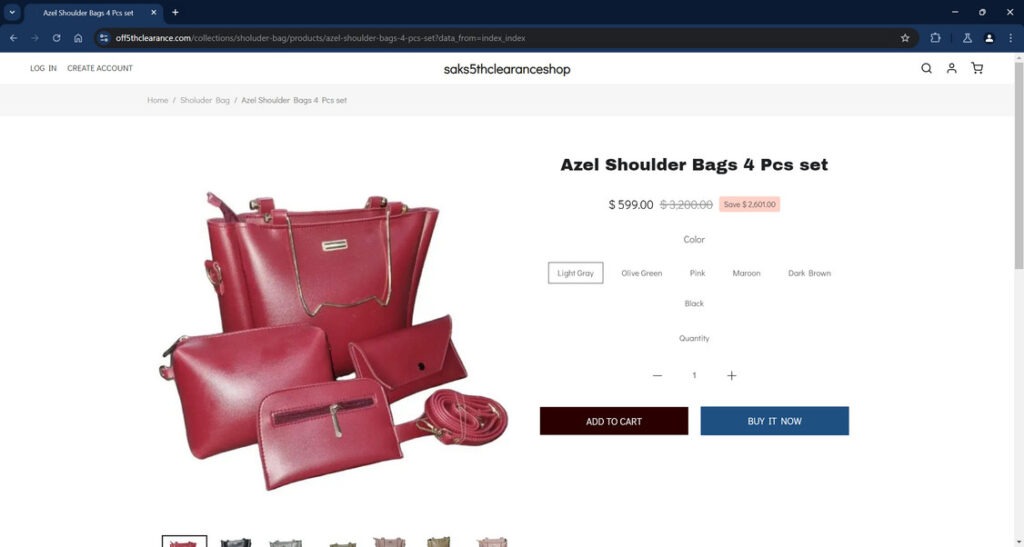
When users click on the advertisements or deals, they are directed to elaborate fake e-commerce stores that continue impersonating Saks OFF 5TH. The stores display all the details one would expect – products, customer reviews, an about page, shipping details etc. But it’s all a front to part victims from their money, bank information, or personal data.
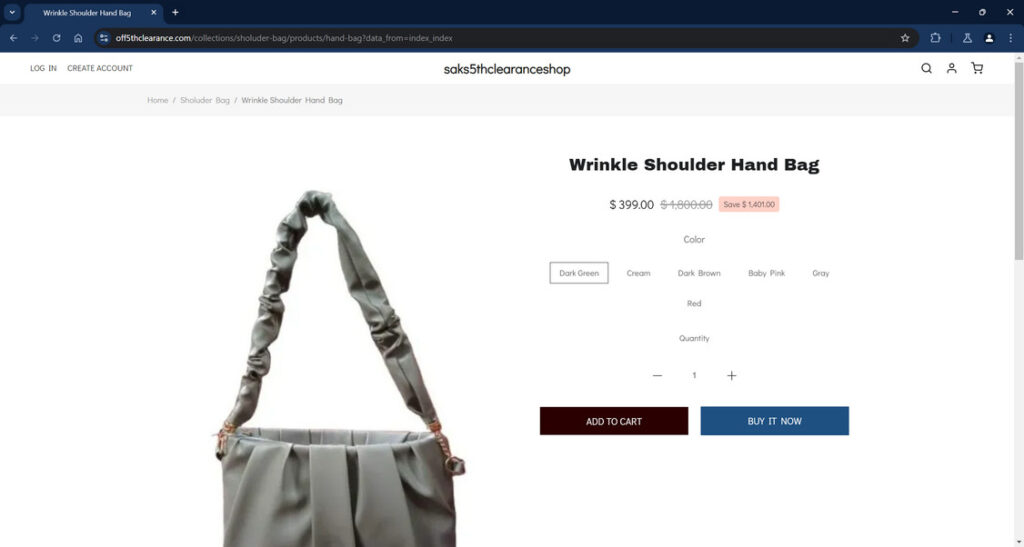
Once a purchase is made, victims either receive nothing, a cheap product not even worth the shipping fee, or an item completely different from what was pictured. Either way, the scammers have already accomplished their goal – taking your money without providing anything promised in return.
How the Scam Works
The scammers behind the fake Saks OFF 5TH deals run their seamless scheme in just a few easy steps:
Step 1: Creating Fake Ads and Deals
The first step is running irresistible teaser advertisements and promotions across social media. The scam ads use Saks OFF 5TH’s branding along with convincing language like “entire store 90% off for holiday sale!” or “all items $29, $39, $49.” The professional photographs of products and stores make the deals look authentic. Targets get excited thinking they can score designer items for pennies on the dollar.
Step 2: Driving Traffic to Elaborate Fake Sites
Once a user clicks an ad, they are taken to a fake e-commerce store cloned to look just like the real Saks OFF 5TH website. The site has all the details you would expect – sections for men, women, handbags, deals, sales terms, and more. The products all have names, descriptions, reviews and discounted prices ranging from $29 to $49, adding to the illusion of scoring an unbelievable bargain.
Step 3: Collecting Payment and Personal Information
If a victim decides to make a purchase from the fake site, they are directed to a payment page. All major credit cards are accepted to build trust, along with options for PayPal. The site may ask for personal information, like name, email, phone number and address for shipping purposes. Victims will feel reassured entering details given how authentic the store looks.
Of course, all the payment and information goes right to the scammers. Once submitted, victims will not receive what they ordered. The scam store site may even disappear days later once the criminals have what they want.
Step 4: Never Receiving the Products
Weeks go by without any order confirmation or shipping details from the scam Saks OFF 5TH store. For victims who do receive a package, it will contain a cheap item like a basic bracelet or blanket not even worth the few dollars spent.
At this point, victims realize they have been scammed. But attempts to contact the store go unanswered, as all site details were fictitious. The scammers already have the payment and personal information they were after.
How to Spot the Saks OFF 5TH Clearance Sale 90% off scam on Social Media
Identifying the Scam on Facebook
The Saks OFF 5TH Clearance Sale 90% off scam ads are commonly run through Facebook ads and Facebook groups. Here’s what to watch out for:
- Ads promoting unbelievably low prices like “Entire store 90% off!”
- Use of enticing slogans like “Warehouse Sale”, “Store Closing”, “Everything Must Go!”
- Posts in Facebook groups offering Saks products for $29, $39, $49.
- Comments on the posts questioning if it’s a scam or fake deleted.
- Shoppers replying they ordered but never received items.
- URLs to fake store sites containing the words “offer,” “sale,” “limited time,” “saksoff5th” or other scam keywords.
- Stolen product images from the real Saks OFF 5TH site used in the ads.
- Videos of models with Saks bags likely AI-generated and fake.
Spotting the Scam on Instagram
Look for these signs of a scam Instagram post promoting Saks OFF 5TH deals:
- Post caption claiming store is going out of business, moving, or having a closing sale.
- Comments containing complaints about orders never arriving.
- Language like “blowout sale – everything 90% off for limited time only!”
- Profile using Saks OFF 5TH’s logo but not verified with a blue checkmark.
- Photo advertising sale prices of $29, $39, or $49 on designer items.
- Link in bio sends to sketchy website instead of saksoff5th.com.
- Limited followers and following, or followers appear fake.
- Product images are direct copies from Saks’s official Instagram account.
How to Detect the TikTok Saks Scam
Scammers are moving to TikTok ads to target younger audiences. Watch for:
- Video ad promises discounted prices like “Gucci bag just $29!”
- Link in bio redirects to scam website rather than Saks OFF 5TH.
- Comments about non-delivery flooded with fake bot replies like “Thanks!”
- Video clips showing Saks OFF 5TH products, store, and bags likely AI-generated or stolen.
- Profile lacks any other content besides scam ads.
- No blue verification checkmark seen on real brand profiles.
Stay vigilant about offers too good to be true on social media. Only shop Saks OFF 5TH deals directly through their official website and profiles.
How to Spot Fake Saks OFF 5TH Websites
When clicking on a tempting Saks OFF 5TH ad or deal, you may be directed to an elaborate fake e-commerce store impersonating the real retailer. Here are some red flags to watch out for:
The Domain Name
Fraudulent sites will often have domain names containing words like “SaksSale,” “SaksOff5thSale,” “Saks90Off” or other combinations with scam keywords. They may use slight misspellings like “Saksoff5th” to appear legitimate. Fake sites also typically use .net, .org, or .info instead of .com.
Contact Information
Scam sites will lack any real store locations, phone numbers, or contact information besides an email address. Any info provided will be completely falsified. Genuine retail sites always provide multiple methods to get in touch.
Pricing and Language
Fraudulent Saks OFF 5TH pages advertise unrealistic low prices like $29 bags or “90% Off Everything!” Other telltale language includes “Going out of business,” “Store closing sale,” “Clearance deals,” and “Limited time offer” which play on fear of missing out on deals.
Layout and Design
While scam stores mimic the look of the real retailer, there will often still be subtle giveaways like low-resolution logos, product photos lifted from other sites, typos, grammatical errors, and sloppy or template webpage design.
Social Media and Company History
No scam retail website will have valid social media profiles or any real “About Us” company background. At most, you may see stock content and stolen images used in the About section.
Only shop Saks OFF 5TH through saksoff5th.com to ensure you avoid falling for elaborate fake retailer scams advertised online and on social media.
What to Do If You’re a Victim
If you unfortunately fell for the fake Saks OFF 5TH Clearance Sale 90% off scam deals, take these steps right away to minimize damages:
- Report Fraudulent Charges: Call your credit card company and report the charges as fraudulent. Most major cards have protection policies against scams so you can likely receive a refund.
- Freeze Accounts: If you entered any financial account numbers, freeze the accounts immediately. Monitor them closely for any suspicious activity.
- Change Passwords: If you used the same password anywhere else as on the fake site, change it. Use strong, unique passwords for all accounts.
- Beware of Phishing: Scammers may send fake “order” emails with links asking you to submit more information. Do not click anything.
- Contact the FTC: File a scam report with the Federal Trade Commission so they can open an investigation into the criminal activity.
- Warn Others: Leave comments about the scam on social media posts advertising the fake Saks OFF 5TH deals to prevent others being victimized.
Frequently Asked Questions about the Saks OFF 5TH Clearance Sale 90% off scam
1. What is the Saks OFF 5TH Clearance Sale 90% off scam?
The Saks OFF 5TH Clearance Sale 90% off scam is a fraudulent scheme where scammers create fake promotions and deals posing as the real Saks OFF 5TH store. They run ads on social media and websites advertising clearance sales like “90% off everything” using Saks OFF 5TH’s logo and images. When users click on the ads, they are directed to elaborate fake e-commerce stores impersonating the real Saks OFF 5TH website. However, it’s all a scam to steal money, personal information, credit card details etc. from victims.
2. How does the Saks OFF 5TH Clearance Sale 90% off scam work?
The scammers first run fake ads on social platforms like Facebook and Instagram advertising unbelievable deals and discounts on Saks OFF 5TH products using the company’s branding. When users click the ads, they are directed to sophisticated fake sites cloned to look exactly like the real Saks OFF 5TH store. If a victim makes a purchase on the fake site, they either receive nothing, a cheap item not worth the money, or a random product not what they ordered. The scammers collect all payment and personal data entered on the site.
3. What are some telltale signs of a Saks OFF 5TH Clearance Sale 90% off scam site?
Warning signs of a fake Saks OFF 5TH store include prices that are too good to be true like 90% off everything, scam words like “closing sale” in the URL, no contact information, fraudulent customer service numbers, scam domain names, strange email addresses, duplicated images and product descriptions from the real site, and broken English or typos.
4. What happens if you purchase something from a Saks OFF 5TH Clearance Sale 90% off scam website?
If you buy something from a scam Saks OFF 5TH site, you will either receive nothing, a cheap product not even worth the minimal shipping fee, or a random item like a basic bracelet. The scammers receive your payment and personal information but do not send the actual product advertised at the steep discount.
5. What should you do if you are a victim of the Saks OFF 5TH Clearance Sale 90% off scam?
If you have fallen for the scam, immediately call your credit card company to report the fraudulent charges, freeze financial accounts used on the site, change passwords, monitor your credit, and file complaints with the FTC and social media platforms used to advertise the deals.
6. How can you avoid the Saks OFF 5TH Clearance Sale 90% off scam?
Avoid scam schemes by being wary of any promotions too good to be true, only shopping directly at saksoff5th.com, watching for signs of a scam site, reading online reviews, and avoiding clicking suspicious advertisements on social media or websites promoting unbelievable deals and discounts.
7. How can you report a Saks OFF 5TH Clearance Sale 90% off scam ad or site?
If you come across a scam Saks OFF 5TH ad or site, you should report it directly to Saks Fifth Avenue, the social media platform running the ad, the FTC, and leave comments warning others wherever you see the scam promoted. This helps stop the criminals and protects other shoppers.
8. Are there real Saks OFF 5TH clearance sales and deals?
Yes, Saks OFF 5TH runs legitimate promotional sales on their website at saksoff5th.com. However, no credible retailer would ever offer discounts of 90% off everything or designer items for $29. Be very wary of advertised deals too good to be true, as they are undoubtedly scams trying to steal your information and money.
The Bottom Line
The Saks OFF 5TH clearance sale scam takes advantage of eager shoppers looking to score ridiculous deals and discounts. But if an offer seems too good to be true, it always is. Protect yourself by looking out for signs of a scam site, like no contact information, misspellings, fake reviews, and prices that make no logical sense. Only shop directly through saksoff5th.com for any real sales.
Be vigilant about scams involving brands you trust, especially around the holidays. No legitimate retailer will ever offer items for 90% off or dollars on the dollar. Avoid letting the desire for bargains cloud your judgment – if you avoid shady sites and deals, you can ensure you really are getting a good deal. Don’t let scammers steal your hard-earned money or personal data this season.

Join the discussion
0 commentsShare your experience or ask a question about this article.
Discussion
Start the conversation
Have a question or something useful to share? Add the first comment.