If you have recently received an alarming email with the subject line “Security Alert – We’ve Detected Trojan Malware”, you are not alone. This email claims that malicious messages have been detected in your inbox and urges you to take immediate action by clicking on a link to review the so-called security alert. At first glance, the message looks urgent and authentic. However, this is not a legitimate warning from your email provider. It is a phishing scam designed to steal your login credentials and potentially compromise your personal or financial data.
In this article, we will explore in detail what this scam is, how it operates step by step, what risks it poses, and most importantly, what you should do if you have already interacted with it. By the end, you will have a full understanding of the “Security Alert – We’ve Detected Trojan Malware” email scam and how to protect yourself from similar phishing attempts.
Scam Overview
The “Security Alert – We’ve Detected Trojan Malware” email is a fraudulent message crafted by cybercriminals to exploit fear and urgency. It pretends to be an official notification from your email service provider, warning that Trojan malware-infected messages have been detected in your inbox. To make the message appear convincing, it often includes:
A subject line with “Security Alert” or “Malware Detected”.
A timestamp to suggest accuracy and authenticity.
Formal-looking formatting with a red banner and “review” button.
A warning that the quarantined messages will be automatically deleted in seven days if no action is taken.
The scam leverages social engineering tactics. By suggesting that your account is compromised, it plays on fear, urgency, and the natural instinct to protect personal information. The primary goal is to trick recipients into clicking the provided button, which usually reads “Review Security Alert” or something similar.
Why the Scam Looks Convincing
Scammers carefully design these emails to resemble official communication from reputable providers such as Microsoft Outlook, Gmail, Yahoo Mail, or other services. They may use:
Imitation of corporate branding: Red banners, icons, and layout mimic real notifications.
Urgent warnings: Phrases like “Trojan Malware detected” or “Immediate action required” are designed to pressure you.
Technical language: Including “malware quarantine” and “security review” creates a false sense of legitimacy.
Threat of consequences: The warning that quarantined messages will disappear after seven days increases the urgency to click without verifying authenticity.
For an unsuspecting recipient, especially one unfamiliar with phishing tactics, this message can easily be mistaken for a real security alert.
What Happens After Clicking
Once you click on the “Review Security Alert” button, you are redirected to a fake login page. This fraudulent site is designed to look exactly like your email provider’s sign-in portal. The design may include official logos, background colors, and even working links to genuine help pages to increase credibility.
However, the sole purpose of this site is to harvest your login credentials. Once you enter your username and password, attackers immediately capture this information and gain full access to your email account.
Why Your Email Account is Targeted
Email accounts are valuable to cybercriminals because they are gateways to nearly every aspect of your digital life. By gaining access, attackers can:
Steal sensitive personal data, such as financial information, addresses, and ID documents.
Reset passwords for other online accounts linked to your email.
Spread further phishing scams to your contacts using your compromised account.
Sell your credentials on the dark web.
In short, falling victim to this scam can result in identity theft, financial fraud, and widespread account compromise.
Broader Context of Similar Scams
This type of phishing scheme is not new. Cybercriminals often rotate variations of similar emails, changing details such as the subject line, timestamp, or wording of the threat. Common variants include:
“Unusual login attempt detected”
“Your account will be deactivated”
“New security message”
“Mailbox storage full”
All of these share the same underlying strategy: to scare recipients into clicking malicious links and handing over credentials. The Trojan Malware variant is particularly dangerous because it invokes the fear of viruses and malicious infections, which most users instinctively want to fix immediately.
This overview shows that the Security Alert Trojan Malware email is carefully engineered for maximum deception. Next, let us break down step by step how the scam works from the attacker’s perspective.
How The Scam Works
To fully understand the “Security Alert – We’ve Detected Trojan Malware” phishing scam, it helps to analyze it from the perspective of the attackers. Cybercriminals follow a specific series of steps designed to lure victims, capture their information, and exploit it for financial or strategic gain.
Step 1: Crafting the Fake Email
Attackers begin by designing an email that looks professional and legitimate. They may use stolen branding materials or replicate layouts from real service providers. In this case, the message includes:
A bold red banner with “Security Alert.”
Personalized greeting such as “Dear [your email address]” to appear authentic.
Technical-sounding details like a precise timestamp of the malware detection.
A call to action button labeled “Review Security Alert.”
The overall design aims to mimic the style of real security alerts that providers send out.
Step 2: Spoofing the Sender Address
To further enhance credibility, the email may display a forged or spoofed sender address. For instance, it might appear to come from “SecureAuth Notification”, “Microsoft Security Team”, or similar. Some phishing campaigns even use domains that closely resemble official ones, such as “steemchina.com” instead of “steamchina.com.”
This technique tricks recipients into believing the message originated from a trusted source.
Step 3: Creating the Phishing Website
Cybercriminals set up a fraudulent login page hosted on a compromised or newly registered domain. This page is designed to look identical to the legitimate sign-in portal of an email provider. Elements often included are:
Logos of Microsoft, Google, or Yahoo.
Login form requesting username and password.
Fake “Need help?” or “Forgot password?” links.
Secure-looking padlock icons to suggest encryption.
The goal is to capture credentials as soon as victims enter them.
Step 4: Luring Victims to Click
The email message applies psychological manipulation to push recipients into clicking quickly without thinking. It does this by:
Suggesting the presence of Trojan malware, which most users fear.
Imposing a seven-day deadline before deletion, adding urgency.
Framing the action as protective rather than harmful, making users believe they are securing their accounts.
This technique is known as fear-based phishing or threat-based social engineering.
Step 5: Harvesting Credentials
When the victim clicks the button and enters their details, the phishing site silently collects their email address and password. Depending on the sophistication of the scam, attackers may also capture:
Two-factor authentication codes (if prompted).
Security questions and answers.
Device or location information.
Once credentials are stolen, attackers immediately gain access to the victim’s inbox.
Step 6: Exploiting the Compromised Account
With full access, cybercriminals can execute multiple malicious activities:
Data theft: Searching emails for financial details, confidential files, or sensitive personal information.
Account takeover: Resetting passwords for online banking, shopping, or social media accounts linked to the email.
Spreading the scam: Using the victim’s account to send phishing messages to their contacts, thereby expanding the reach of the scam.
Monetization: Selling stolen credentials on underground forums or using them for fraud.
Step 7: Covering Tracks
To remain undetected, attackers often:
Set up email forwarding rules to monitor incoming messages.
Delete traces of phishing emails from the victim’s inbox.
Change recovery settings to lock the victim out of their own account.
By the time victims realize what has happened, their information may already be compromised beyond recovery.
Why This Scam is Effective
This phishing scheme is effective because it combines multiple psychological triggers:
Fear of malware infection.
Urgency of limited time (7-day deletion).
Authority of an official-looking email provider.
Convenience of a simple “review now” button.
These elements push recipients into reacting quickly instead of pausing to verify the legitimacy of the message.
Understanding how the scam works helps highlight why vigilance is so important. Next, we will cover what steps you should take if you have already fallen victim to this phishing attack.
What To Do If You Have Fallen Victim to This Scam
If you clicked the link or entered your login credentials on the fake sign-in page, you should act immediately. Time is critical in minimizing damage. Follow these steps:
1. Change Your Email Password Immediately
Go directly to your email provider’s official website by typing the address manually into your browser.
Log in (if you still can) and change your password to something strong and unique.
Avoid reusing old passwords.
2. Enable Two-Factor Authentication (2FA)
Activate 2FA on your email account if it is available.
This adds an extra layer of security, requiring a code from your phone or app in addition to your password.
3. Check for Unauthorized Activity
Review your account’s login history for unknown devices or IP addresses.
Look for unusual emails sent from your account that you did not write.
Check for suspicious email forwarding rules that may redirect messages to the attacker.
4. Revoke Access for Connected Apps
Many email accounts allow integration with third-party apps.
Go to your account’s security settings and remove access for any unknown or suspicious applications.
5. Secure Your Other Accounts
Since email is often used for password recovery, attackers may attempt to access your banking, shopping, or social media accounts.
Change passwords for any accounts linked to your compromised email.
Enable 2FA where possible.
6. Scan Your Device for Malware
Although this phishing scam is primarily about credential theft, it is wise to run a full system scan with reputable antivirus software. Some phishing campaigns also deliver malicious attachments or links.
7. Warn Your Contacts
Attackers may use your email to spread phishing attempts to your friends, family, or coworkers.
Inform your contacts that your email was compromised.
Advise them not to click on any suspicious links received from your account.
8. Report the Scam
Reporting helps providers and cybersecurity organizations track and shut down phishing operations.
Forward the message to your IT department if using a work account.
Consider filing a complaint with organizations like the FTC (Federal Trade Commission).
9. Monitor Your Accounts and Credit
Identity theft can occur long after credentials are stolen.
Keep an eye on your bank statements for unauthorized charges.
Consider using a credit monitoring service.
Watch for unusual activity in any online accounts.
10. Educate Yourself to Avoid Future Scams
Finally, take time to learn how to spot phishing emails. Red flags include:
Generic greetings instead of personalized ones.
Suspicious email addresses with misspellings.
Links that do not match the official domain.
Urgent calls to action demanding immediate clicks.
By recognizing these signs, you can avoid becoming a repeat victim.
Is Your Device Infected? Scan for Malware
If your computer or phone is slow, showing unwanted pop-ups, or acting strangely, malware could be the cause. Running a scan with Malwarebytes Anti-Malware Free is one of the most reliable ways to detect and remove harmful software. The free version can identify and clean common infections such as adware, browser hijackers, trojans, and other unwanted programs.
Malwarebytes works on Windows, Mac, and Android devices. Choose your operating system below and follow the steps to scan your device and remove any malware that might be slowing it down.
Malwarebytes for WindowsMalwarebytes for MacMalwarebytes for Android
Run a Malware Scan with Malwarebytes for Windows
Malwarebytes stands out as one of the leading and widely-used anti-malware solutions for Windows, and for good reason. It effectively eradicates various types of malware that other programs often overlook, all at no cost to you. When it comes to disinfecting an infected device, Malwarebytes has consistently been a free and indispensable tool in the battle against malware. We highly recommend it for maintaining a clean and secure system.
Download Malwarebytes
Download the latest version of Malwarebytes for Windows using the official link below. Malwarebytes will scan your computer and remove adware, browser hijackers, and other malicious software for free.
(The above link will open a new page from where you can download Malwarebytes)
Install Malwarebytes
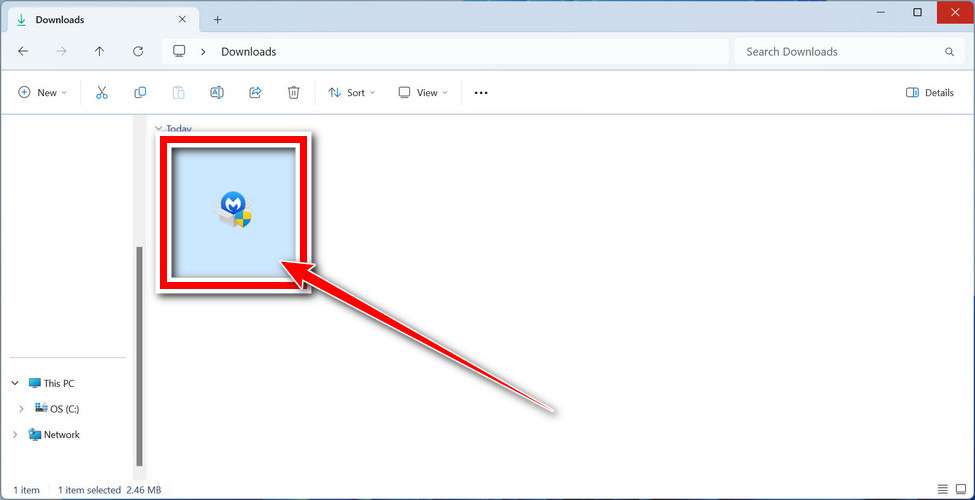
After the download is complete, locate the MBSetup file, typically found in your Downloads folder. Double-click on the MBSetup file to begin the installation of Malwarebytes on your computer. If a User Account Control pop-up appears, click “Yes” to continue the Malwarebytes installation.
Follow the On-Screen Prompts to Install Malwarebytes
When the Malwarebytes installation begins, the setup wizard will guide you through the process.
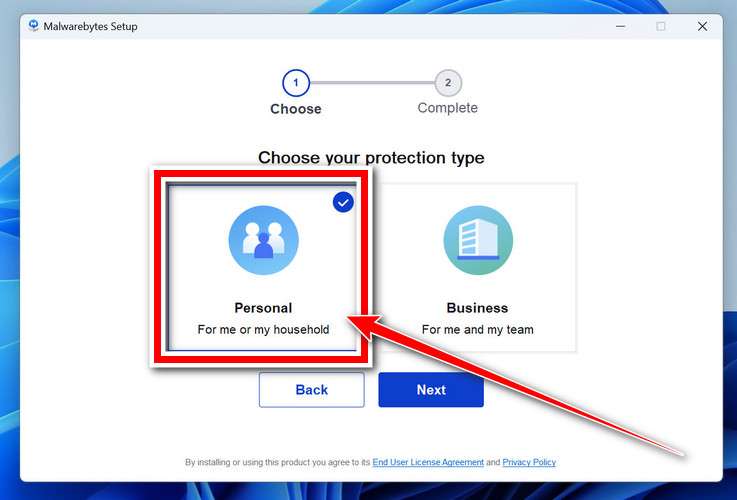
You’ll first be prompted to choose the type of computer you’re installing the program on—select either “Personal Computer” or “Work Computer” as appropriate, then click on Next.
Malwarebytes will now begin the installation process on your device.
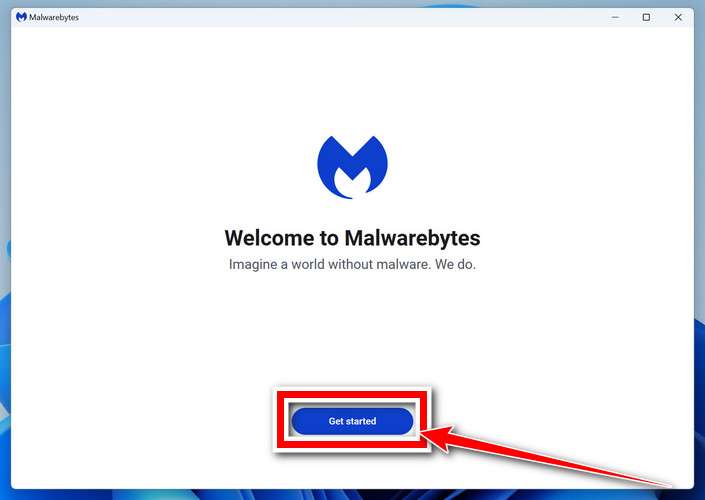
When the Malwarebytes installation is complete, the program will automatically open to the “Welcome to Malwarebytes” screen.
On the final screen, simply click on the Open Malwarebytes option to start the program.
Enable “Rootkit scanning”.
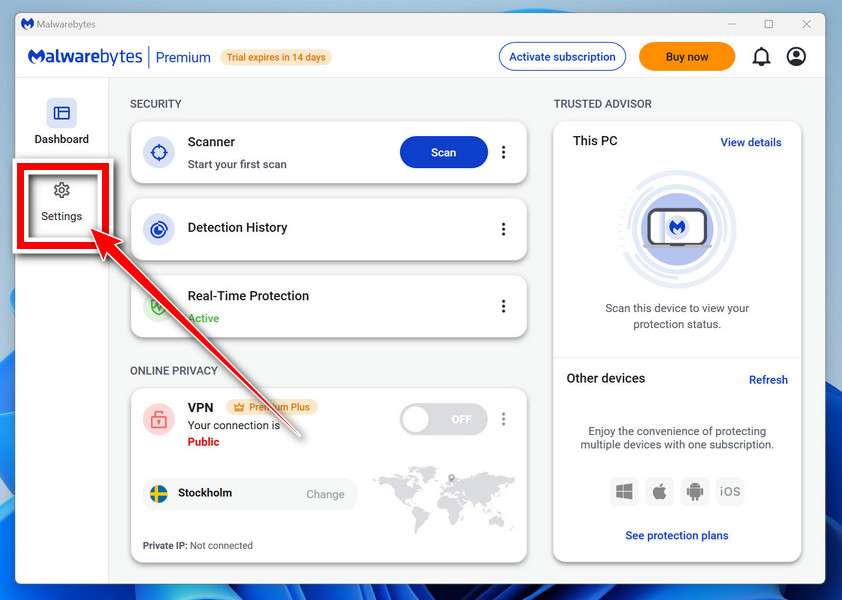
Malwarebytes Anti-Malware will now start, and you will see the main screen as shown below. To maximize Malwarebytes’ ability to detect malware and unwanted programs, we need to enable rootkit scanning. Click on the “Settings” gear icon located on the left of the screen to access the general settings section.
In the settings menu, enable the “Scan for rootkits” option by clicking the toggle switch until it turns blue.
Now that you have enabled rootkit scanning, click on the “Dashboard” button in the left pane to get back to the main screen.
Perform a Scan with Malwarebytes.
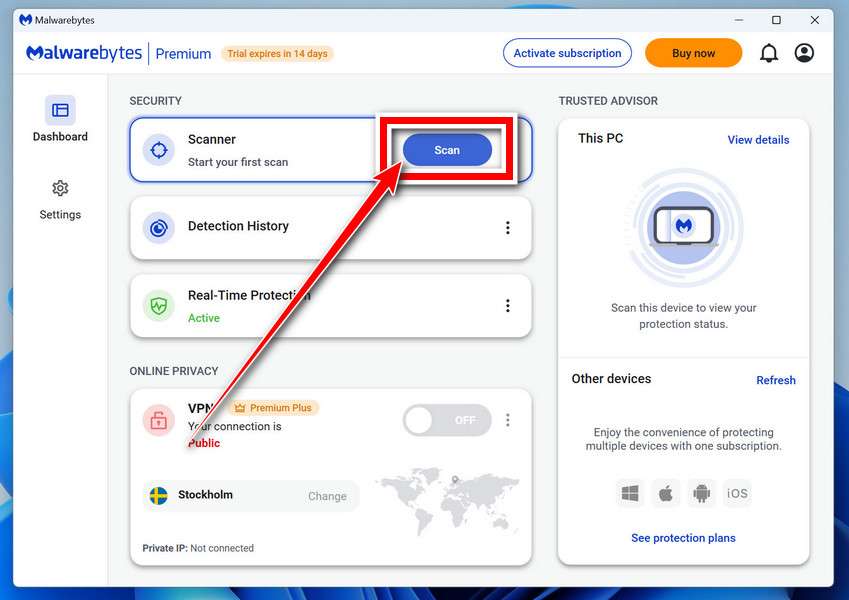
To start a scan, click the Scan button. Malwarebytes will automatically update its antivirus database and begin scanning your computer for malicious programs.
Wait for the Malwarebytes scan to complete.
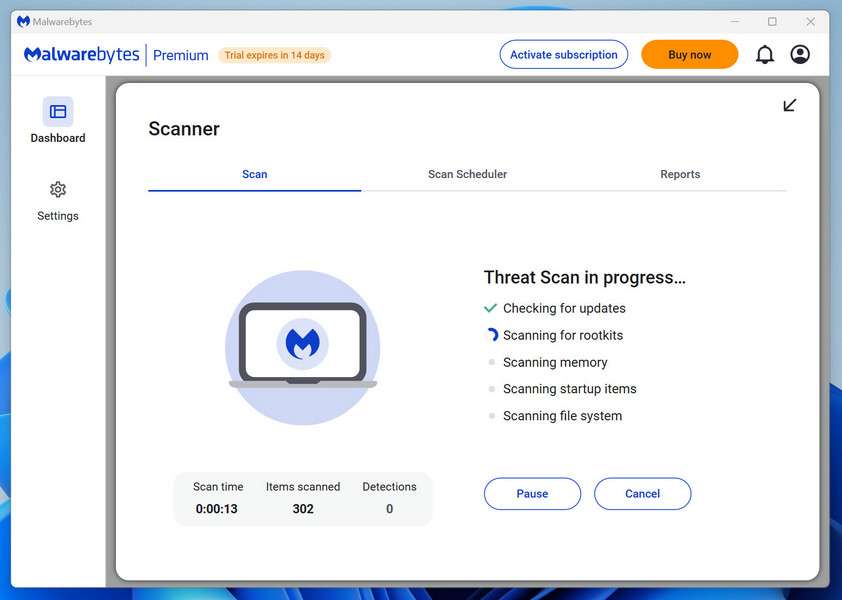
Malwarebytes will now scan your computer for browser hijackers and other malicious programs. This process can take a few minutes, so we suggest you do something else and periodically check the status of the scan to see when it is finished.
Quarantine detected malware
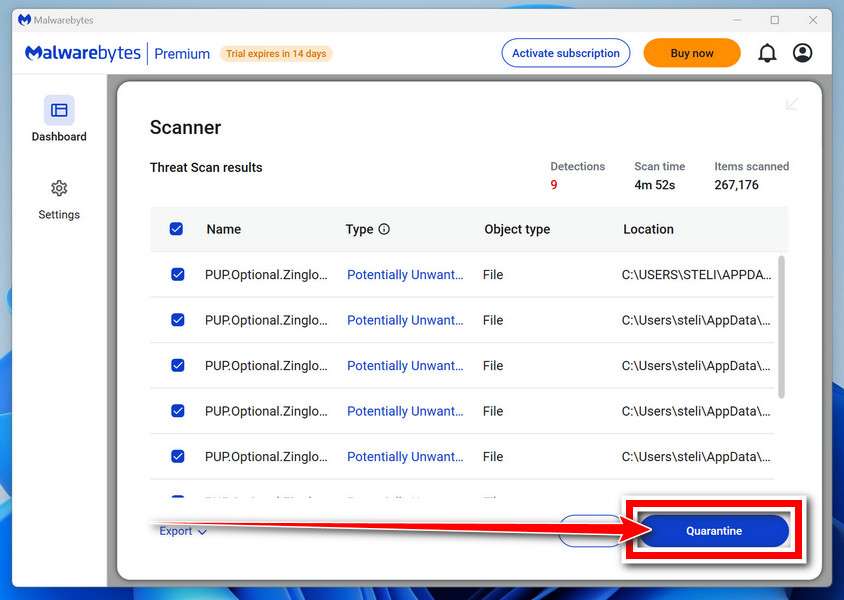
Once the Malwarebytes scan is complete, it will display a list of detected malware, adware, and potentially unwanted programs. To effectively remove these threats, click the “Quarantine” button.
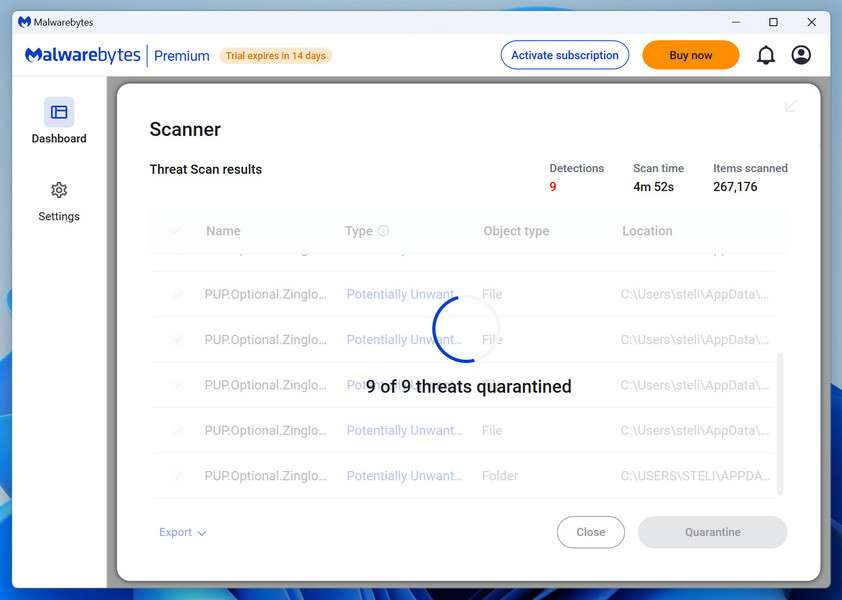
Malwarebytes will now delete all of the files and registry keys and add them to the program’s quarantine.
Restart your computer.
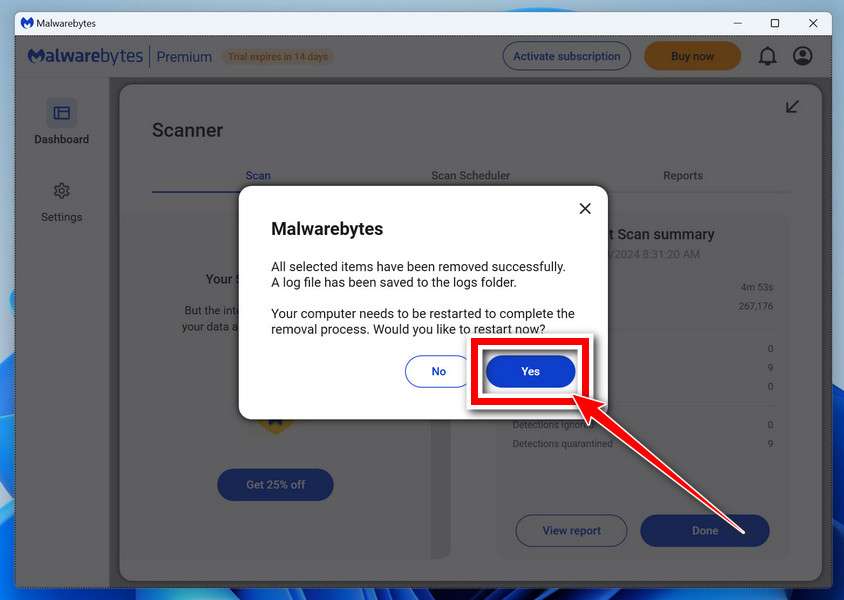
When removing files, Malwarebytes may require a reboot to fully eliminate some threats. If you see a message indicating that a reboot is needed, please allow it. Once your computer has restarted and you are logged back in, you can continue with the remaining steps.
Once the scan completes, remove all detected threats. Your Windows computer should now be clean and running smoothly again, free of trojans, adware, and other malware.
If your current antivirus allowed this malicious program on your computer, you may want to consider purchasing Malwarebytes Premium to protect against these types of threats in the future. If you are still having problems with your computer after completing these instructions, then please follow one of the steps:
Malwarebytes for Mac is an on-demand scanner that can destroy many types of malware that other software tends to miss without costing you absolutely anything. When it comes to cleaning up an infected device, Malwarebytes has always been free, and we recommend it as an essential tool in the fight against malware.
Download Malwarebytes for Mac.
You can download Malwarebytes for Mac by clicking the link below.
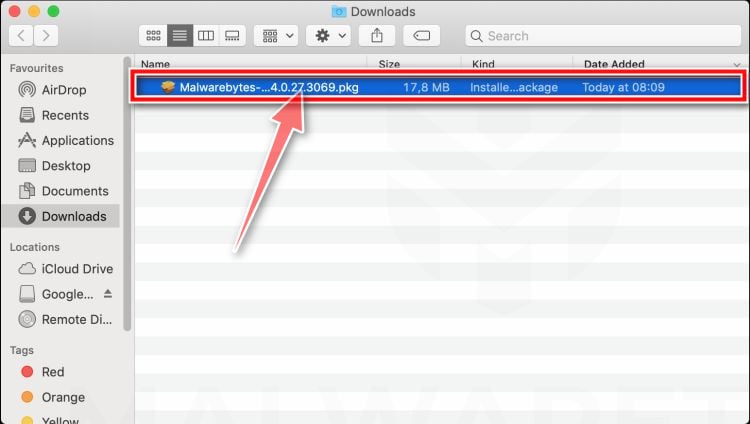
When Malwarebytes has finished downloading, double-click on the setup file to install Malwarebytes on your computer. In most cases, downloaded files are saved to the Downloads folder.
Follow the on-screen prompts to install Malwarebytes.
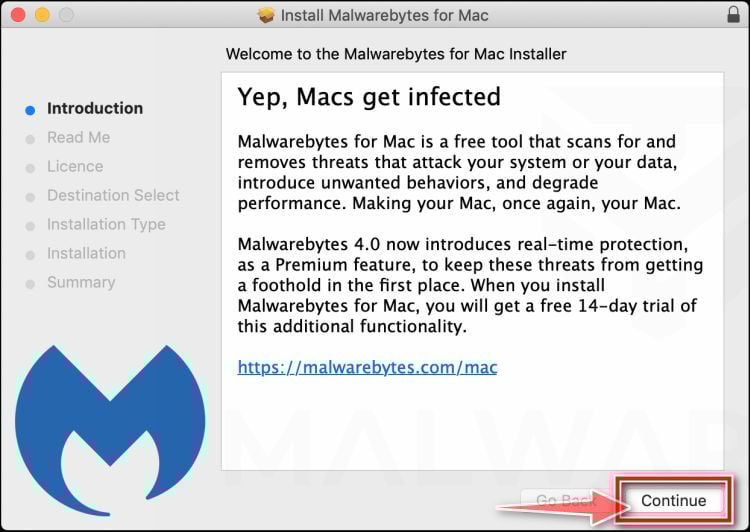
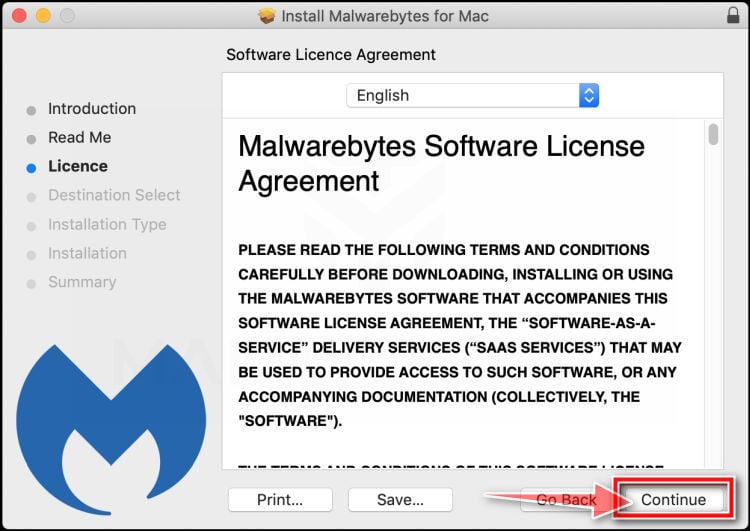
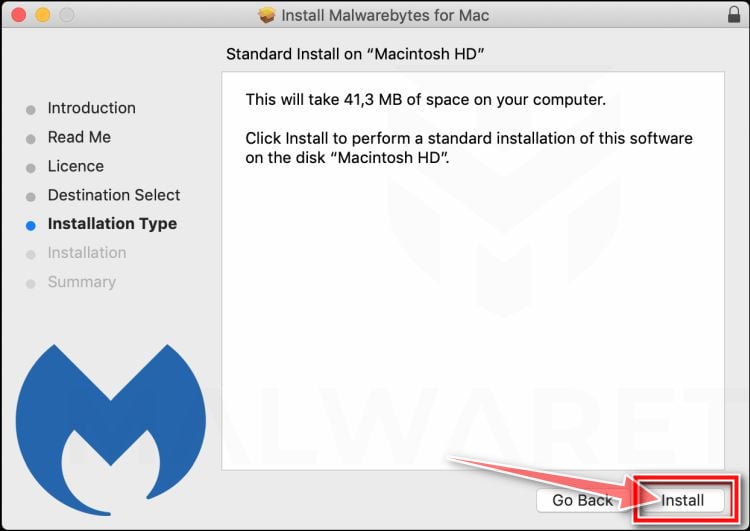
When the Malwarebytes installation begins, you will see the Malwarebytes for Mac Installer which will guide you through the installation process. Click “Continue“, then keep following the prompts to continue with the installation process.
When your Malwarebytes installation completes, the program opens to the Welcome to Malwarebytes screen. Click the “Get started” button.
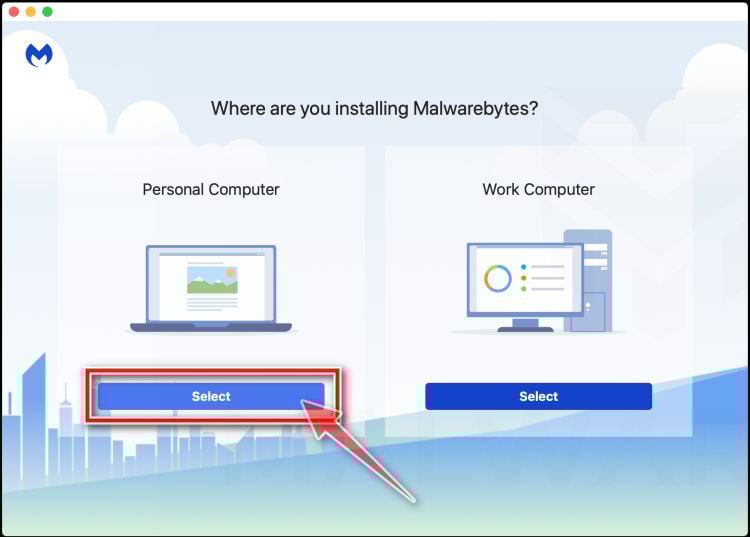
Select “Personal Computer” or “Work Computer”.
The Malwarebytes Welcome screen will first ask you what type of computer are you installing this program, click either Personal Computer or Work Computer.
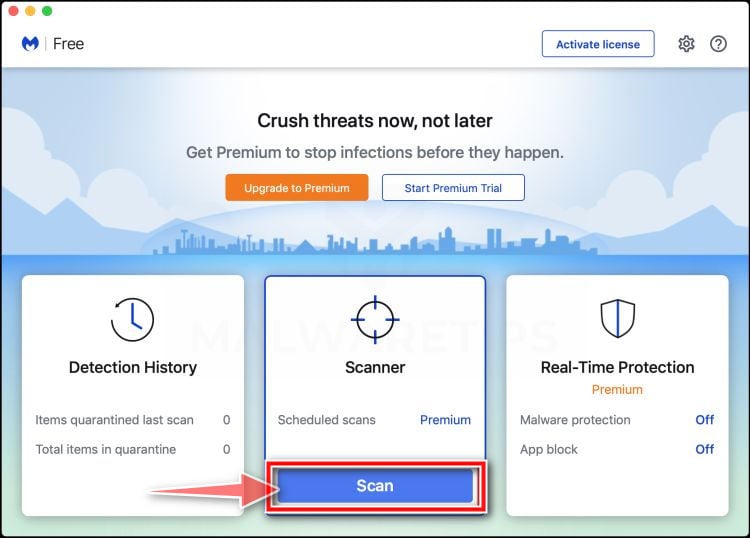
Click on “Scan”.
To scan your computer with Malwarebytes, click on the “Scan” button. Malwarebytes for Mac will automatically update the antivirus database and start scanning your computer for malware.
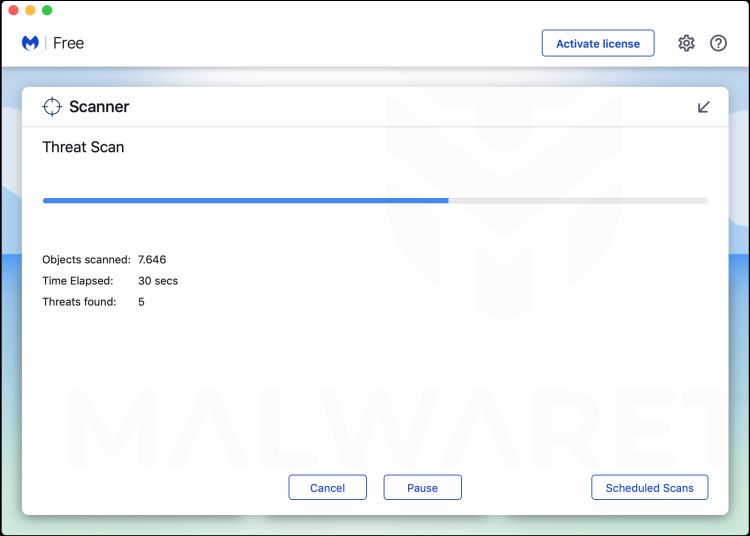
Wait for the Malwarebytes scan to complete.
Malwarebytes will scan your computer for adware, browser hijackers, and other malicious programs. This process can take a few minutes, so we suggest you do something else and periodically check on the status of the scan to see when it is finished.
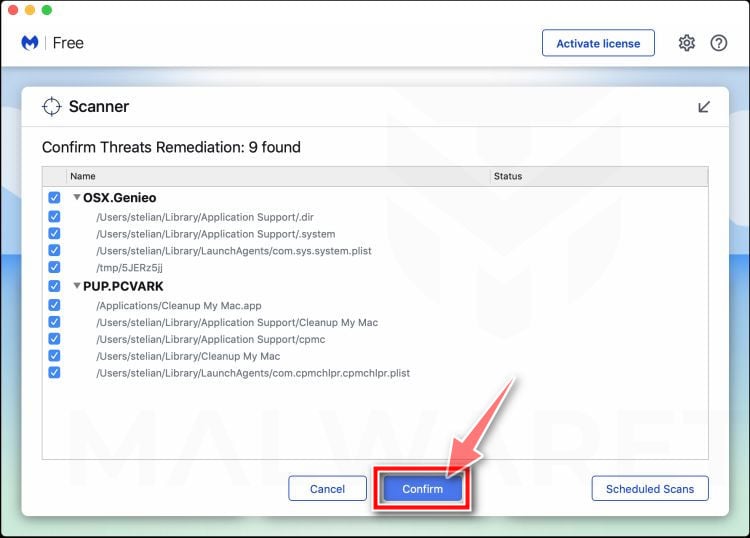
Click on “Quarantine”.
When the scan has been completed, you will be presented with a screen showing the malware infections that Malwarebytes has detected. To remove the malware that Malwarebytes has found, click on the “Quarantine” button.
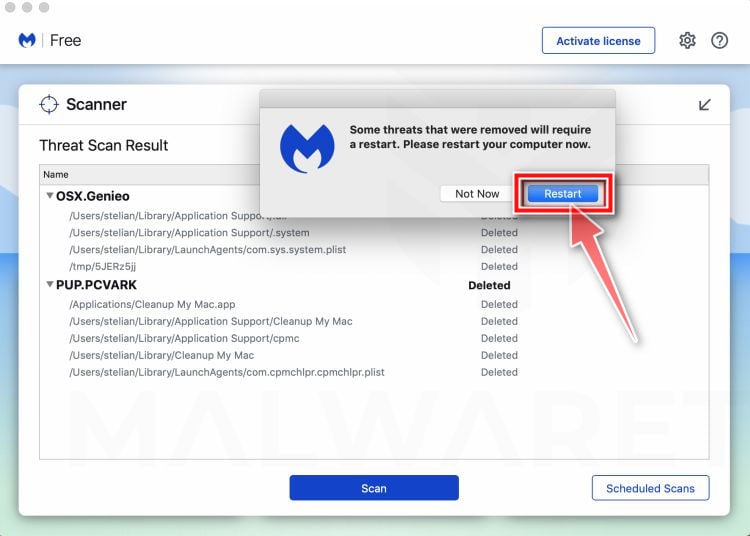
Restart computer.
Malwarebytes will now remove all the malicious files that it has found. To complete the malware removal process, Malwarebytes may ask you to restart your computer.
After scanning, delete any detected threats. Your Mac should now be free from adware, unwanted extensions, and other potentially harmful software.
If your current antivirus allowed a malicious program on your computer, you might want to consider purchasing the full-featured version of Malwarebytes Anti-Malware to protect against these types of threats in the future. If you are still experiencing problems while trying to remove a malicious program from your computer, please ask for help in our Mac Malware Removal Help & Support forum.
Run a Malware Scan with Malwarebytes for Android
Malwarebytes for Android automatically detects and removes dangerous threats like malware and ransomware so you don’t have to worry about your most-used device being compromised. Aggressive detection of adware and potentially unwanted programs keeps your Android phone or tablet running smooth.
Download Malwarebytes for Android.
You can download Malwarebytes for Android by clicking the link below.
In the Google Play Store, tap “Install” to install Malwarebytes for Android on your device.
When the installation process has finished, tap “Open” to begin using Malwarebytes for Android. You can also open Malwarebytes by tapping on its icon in your phone menu or home screen.
Follow the on-screen prompts to complete the setup process
When Malwarebytes will open, you will see the Malwarebytes Setup Wizard which will guide you through a series of permissions and other setup options. This is the first of two screens that explain the difference between the Premium and Free versions. Swipe this screen to continue. Tap on “Got it” to proceed to the next step. Malwarebytes for Android will now ask for a set of permissions that are required to scan your device and protect it from malware. Tap on “Give permission” to continue. Tap on “Allow” to permit Malwarebytes to access the files on your phone.
Update database and run a scan with Malwarebytes for Android
You will now be prompted to update the Malwarebytes database and run a full system scan.
Click on “Update database” to update the Malwarebytes for Android definitions to the latest version, then click on “Run full scan” to perform a system scan.
Wait for the Malwarebytes scan to complete.
Malwarebytes will now start scanning your phone for adware and other malicious apps. This process can take a few minutes, so we suggest you do something else and periodically check on the status of the scan to see when it is finished.
Click on “Remove Selected”.
When the scan has been completed, you will be presented with a screen showing the malware infections that Malwarebytes for Android has detected. To remove the malicious apps that Malwarebytes has found, tap on the “Remove Selected” button.
Restart your phone.
Malwarebytes for Android will now remove all the malicious apps that it has found. To complete the malware removal process, Malwarebytes may ask you to restart your device.
When the scan is finished, remove all detected threats. Your Android phone should now be free of malicious apps, adware, and unwanted browser redirects.
If your current antivirus allowed a malicious app on your phone, you may want to consider purchasing the full-featured version of Malwarebytes to protect against these types of threats in the future. If you are still having problems with your phone after completing these instructions, then please follow one of the steps:
Restore your phone to factory settings by going to Settings > General management > Reset > Factory data reset.
After cleaning your device, it’s important to protect it from future infections and annoying pop-ups. We recommend installing an ad blocker such as AdGuard. AdGuard blocks malicious ads, prevents phishing attempts, and stops dangerous redirects, helping you stay safe while browsing online.
The Bottom Line
The “Security Alert – We’ve Detected Trojan Malware” email scam is a classic phishing attack that preys on fear and urgency. It tricks recipients into clicking a fraudulent link and entering their login credentials on a fake site. Once compromised, victims risk identity theft, financial fraud, and further phishing attacks spreading through their accounts.
If you ever encounter such an email, the best response is to ignore and delete it without clicking any links. If you have already interacted with the scam, swift action is critical: change your passwords, enable two-factor authentication, and monitor your accounts for unusual activity.
Cybercriminals are constantly evolving their tactics, but staying informed and cautious remains your best defense. By recognizing warning signs and practicing good security hygiene, you can protect yourself from falling victim to dangerous phishing scams like this one.
Stelian leverages over a decade of cybersecurity expertise to lead malware analysis and removal, uncover scams, and educate people. His experience provides insightful analysis and valuable perspective.