

Iron Vision is marketed as a groundbreaking nutritional supplement that can allegedly restore perfect 20/20 vision, reverse decades of eye damage, and eliminate virtually every age-related vision condition. The campaign claims that researchers from Oxford University uncovered a hidden cause of blindness and vision decline known as “ocular clog,” and that a simple “red root hack” can clear it within days.
These claims sound compelling—maybe even exciting—but once you examine the ads, the websites, and the promotional videos behind Iron Vision, a very different picture emerges. Instead of science-backed eye health support, the Iron Vision campaign appears to be built on fake credibility, fabricated testimonials, misleading medical claims, and high-pressure sales tactics.
This comprehensive investigation breaks down exactly how the Iron Vision scam works, why so many consumers are being misled, and what red flags you need to watch out for.
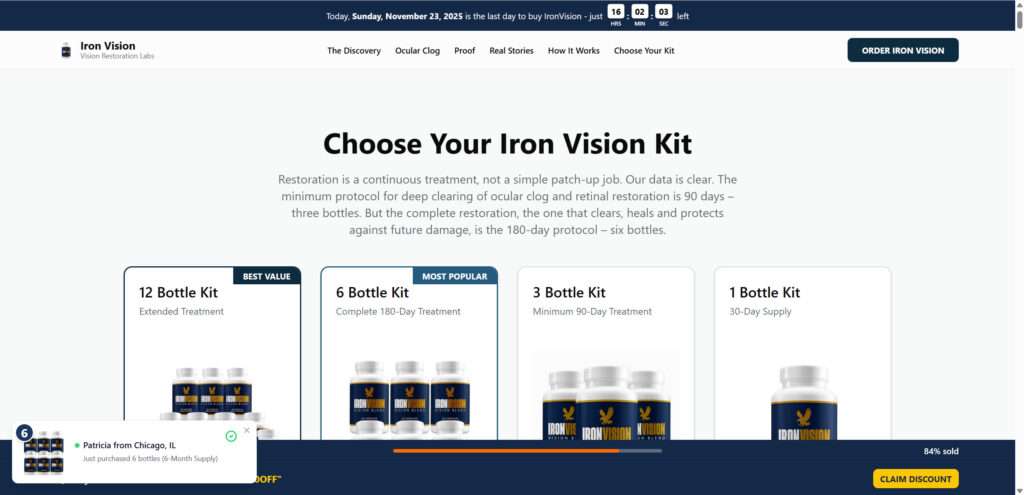
Scam Overview
The Iron Vision operation is not a typical supplement marketing campaign—it is a sophisticated, multi-layered funnel built to impersonate scientific authority, hijack trust, and pressure consumers into high-priced purchases. Every major component of the campaign—from the origin story to the scientific references to the testimonials—is manufactured or altered to appear credible despite lacking real evidence.
Below is a detailed breakdown of the scam’s major components.
1. False Medical Claims and Unscientific Promises
Iron Vision claims to cure or reverse:
- Cataracts
- Macular degeneration
- Glaucoma
- Blurred vision
- Diabetic retinopathy
- Age-related vision decline
- “Ocular clog,” a made-up condition
No supplement can legally or scientifically cure these serious medical conditions. The term “ocular clog” does not exist in medical literature. The claim that red root extract “restores perfect 20/20 vision” or “rebuilds inner eye cells” is unsupported.
2. Fake Experts and Fabricated Credentials
One of the central characters in the Iron Vision story is “Dr. Paul Cox,” described as an ethnobotanist who allegedly discovered the secret behind reversing vision loss while studying plants in Guam.
There is no verifiable link between this supposed individual and the Iron Vision formula. The story is constructed as a dramatic narrative—common in supplement scams—to give a sense of discovery and urgency.
The video also features “researchers” in lab coats, many of whom appear in stock footage or repurposed media clips. On some versions of the landing page, the video even displays an HBO logo, insinuating documentary legitimacy where none exists.
3. Fake Scientific Institutions and Logos
The website uses logos from institutions such as:
- Stanford University
- Harvard Medical School
- Oxford University
- The Turkish Society of Nephrology
- Swansea University
None of these institutions endorse Iron Vision. None of their research is linked or cited. These logos are copied and pasted as visual persuasion, not factual evidence.
4. Fake News Layouts and Clickbait Funnels
The Iron Vision campaign frequently begins with ads on:
- Taboola
- Outbrain
- Fake Facebook posts featuring “friends” sharing a “miracle eye method”
Users are then directed to websites designed to look like:
- CNN Health
- Fox News
- CBS News
- Medical journals
These are not real news articles. They are templated advertorial pages designed to appear like trustworthy media outlets.
5. Fake User Reviews and Fabricated Social Proof
Every Iron Vision sales page includes:
- Pop-up notifications such as “Jennifer from Seattle just purchased 3 bottles”
- Facebook-style comments featuring profile pictures and glowing testimonials
- Review counters showing “42,000+ 5-star reviews”
- Claims that “427 users are watching now”
None of these reviews or social notifications originate from real customers. They are scripts coded into the page to generate artificial engagement and urgency.
6. High-Pressure Sales Tactics
Throughout the purchase funnel, consumers encounter:
- Countdown timers
- “84% of stock sold” progress bars
- “Today only” discounts
- Fake scarcity like “Last day to buy Iron Vision”
These tactics are classic hallmarks of online scam funnels. No legitimate health product expires nightly at midnight.
7. Hidden Company Identity and Questionable Checkout System
Iron Vision uses multiple untrustworthy checkout platforms, primarily:
- CartPanda
Consumers have reported:
- Difficulty getting refunds
- Unauthorized charges
- No customer service responses
- Delays or failure to ship products
The company behind Iron Vision does not disclose a physical address, corporate name, medical advisor, manufacturing facility, or third-party testing information.
8. No Ingredient Transparency
Despite promoting a dramatic scientific story, Iron Vision does not clearly disclose:
- Ingredient list
- Dosages
- Potential side effects
- Interactions with medications
- Safety certifications
This lack of transparency is a critical red flag, especially for a product claiming to reverse medical conditions.
How the Iron Vision Scam Works
Below is a detailed, step-by-step breakdown of how consumers are drawn into the Iron Vision scam funnel.
Step 1: Fake Facebook Posts and Sensational Ads
The scam begins with ads appearing on social media platforms. These ads often feature:
- A woman claiming she “threw away her glasses”
- A man saying “Doctors hate this red root hack”
- Clickbait lines like “Harvard doctor warns Americans to stop wearing contacts”
These ads intentionally mimic organic Facebook posts from “real people,” but they are paid ads with manipulated images and fake profiles.
Step 2: Redirect to Fake News Pages
When users click the ad, they are sent to a domain such as:
- lasthealthnews.com
- activenewsjourney.com
- purehealthnavigator.online
These sites use:
- Fake mastheads similar to CNN or Fox
- Stock photos of “medical experts”
- Fabricated articles describing a medical breakthrough
The pages often include a “video interview” that claims to have been broadcast on major networks. This is false.
Step 3: The Long “Red Root Hack” Video Presentation
The fake article redirects to a long video with:
- Dramatic music
- Stock lab footage
- Actors in white coats
- A narrator claiming Big Pharma is hiding the truth
- A fabricated story about indigenous villagers using red root
The video never gives a free “red root hack.” Instead, it ends with the message that:
“The only way to access the red root formula is to buy Iron Vision.”
Step 4: False Urgency and Fear-Based Messaging
The video claims:
- Vision loss is caused by toxins in the bloodstream
- Glasses and contacts make it worse
- Eye doctors intentionally hide cures
- The eye care industry profits from people staying blind
These statements are dangerous and medically false.
Step 5: High-Pressure Checkout Page
After the video, users are directed to a purchase page selling:
- 1 bottle
- 3 bottle kit
- 6 bottle kit
- 12 bottle “extended treatment”
The page includes:
- Fake stock counters
- Pop-ups showing fake purchases
- Countdown timers
- Claims of “today only” pricing
Checkout is processed through CartPanda, a platform repeatedly associated with scam supplement funnels.
Step 6: Difficult Refunds and Lost Money
Many buyers report:
- No confirmation email
- No shipment tracking
- No response to refund requests
- Recurring charges
- Customer service that redirects endlessly
By the time the consumer realizes they were misled, the company behind the product has usually rotated domains or stopped responding.
What To Do If You Have Fallen Victim to the Iron Vision Scam
If you purchased Iron Vision or entered your billing information into one of its associated checkout pages, take these steps immediately.
1. Contact Your Bank or Credit Card Provider
Request:
- A chargeback
- Fraud protection
- Blocking of future charges
Banks handle supplement scam disputes regularly and usually help quickly.
2. Cancel Any Rebilling or Subscriptions
Some scam funnels silently enroll victims into recurring payment plans. Cancel immediately.
3. Document Everything
Keep:
- Screenshots of the website
- Screenshots of your receipt
- Email correspondence
- Bank statements
This will help with disputes or consumer protection complaints.
4. Avoid Taking the Product
No ingredients or dosages were disclosed. Do not ingest unknown supplements.
5. Report the Scam
You can file complaints with:
- FTC.gov
- Econsumer.gov (international)
- Your local consumer protection agency
- The platform where the ad was seen (Facebook, Instagram, etc.)
6. Monitor Your Statements for Unauthorized Charges
Some victims report additional charges weeks later.
7. Use a Scam-Blocking Browser Extension
This helps prevent future misleading ads or harmful redirect pages.
The Bottom Line
Iron Vision is not a medically validated product, nor is the “red root hack” a real scientific breakthrough. The entire marketing campaign is structured to mislead consumers through fabricated stories, fake experts, manipulated images, stolen logos from universities, false testimonials, and high-pressure sales strategies.
There is no evidence that Iron Vision can restore damaged eyes, reverse blindness, or cure any medical condition.
If it sounds too good to be true, it is.
Consumers searching for real solutions for eye health should always consult licensed medical professionals, optometrists, or ophthalmologists—not rely on supplements sold through deceptive funnels.









I am so glad I found this post. I had seen the as Red Root Hack and since I am having visual
Problems their information sounded good. I have learned to investigate further and came across your claim that it is a scam. That stopped me in my tracks. I think their long video that goes on and on was my first indication that this might not be what they claim. I am seeing 3 eye doctors in the same clinic and I guess I just have to trust them even though I developed double vision after my cataract surgery.
I am glad it stopped you in your tracks, Georgia, and your instinct about the video was exactly right. The length is deliberate: a written page can be skimmed for the price and the claims, whereas an hour of narration controls what you learn and when, and the ordering button only appears once the pitch has done its work. Nothing in a capsule addresses double vision, which comes down to how the two eyes are aligned rather than to anything nutritional, so there was never anything in that bottle for you. Do keep pressing the clinic on it though. If it started after your cataract surgery, say that in those words to the surgeon rather than only mentioning it at a routine check, because it is a recognised complication with real options behind it, from a prism in your glasses to a referral to someone who specialises in eye alignment. Trusting the doctors who can actually examine you over an advert is the right call.
Watched way too much of https://getretinaclear.com/video/… linked from a weather website advertisement, in a site that seems to aggregate health scams(?).
Pretty obvious BS. but sometimes cleverly presented.
Your instinct was right, and the structure you noticed is the giveaway. Those long, unskippable video pages exist precisely because nothing in them survives being written down and read – no named clinic, no published trial, a “doctor” who is a stock photo or a paid actor, and the whole thing built to end on a subscription checkout.
The aggregator you landed on is part of it too: the health-news look and the weather-site ad slot are bought traffic, and the same video gets swapped between a dozen domains as each one gets flagged. If you want to do something useful with it, report the ad through the ad network’s own “report this ad” link on the page it appeared on, and file it at reportfraud.ftc.gov – claims about reversing eye disease are exactly the kind that regulators act on.
2026/4/24: seebettertoday.com via advertising on youtube: exactly this.
Hi Daan, thank you for the update. That helps document another version of the same ad pattern. These campaigns often move between domains while using the same core claims.