

If you are looking for a way to make money online, you might have come across SocialOasis, a platform that claims to pay you for completing daily tasks and referring others. But is SocialOasis a legit opportunity or a scam? In this review, we will examine the SocialOasis website, its business model, and its red flags. We will also provide some tips on how to avoid falling victim to such scams.
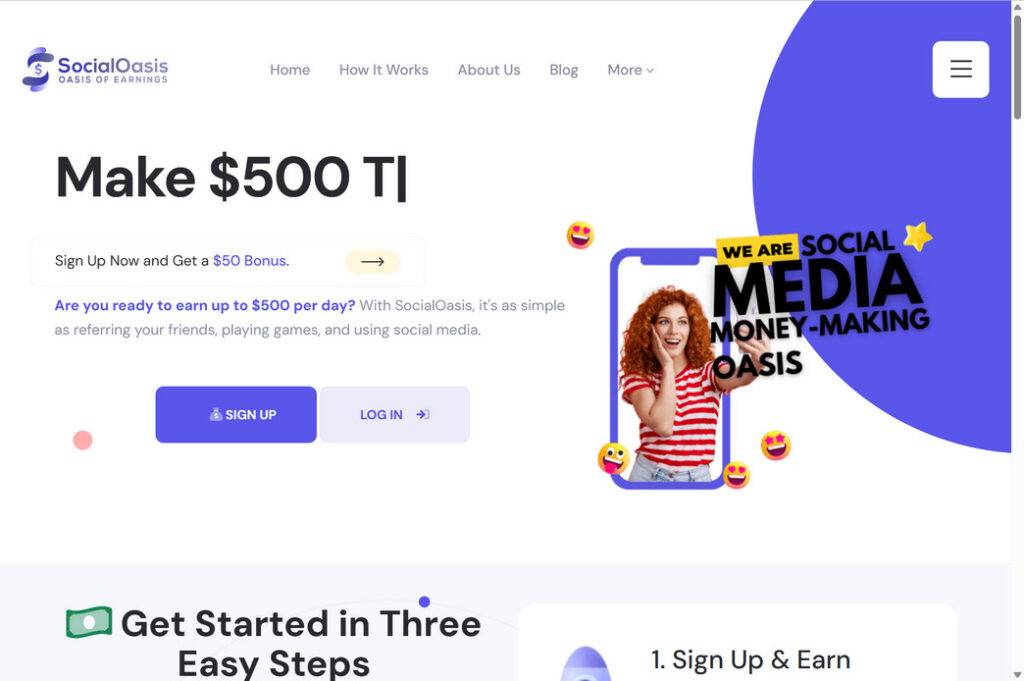
What is SocialOasis?
SocialOasis is an online earning platform that promises to pay you up to $500 per day for completing simple tasks such as watching videos, taking surveys, and downloading apps. You can also earn $18 for each person you refer to the platform.
According to the SocialOasis website, the platform is based in Geneva, Switzerland, and has been operating since May 2023. However, there is no information about the founders or the company behind SocialOasis. The website also features some testimonials from supposed members who claim to have made thousands of dollars with SocialOasis.
According to SimilarWeb, the total number of visits on its website is 760K+ with the top countries reaching the United States (79%), United Kingdom (7%), and Netherlands (6%).
SocialOasis Red Flags
After doing some research on SocialOasis, we found several red flags that indicate that it is not a trustworthy platform. Here are some of them:
- No information about the founders or the company. This is a common sign of a scam website that wants to hide its identity and avoid accountability.
- Precise address of headquarters not provided. The website only mentions Geneva, Switzerland, as its location, but does not provide any street name or building number. This makes it hard to verify the legitimacy of the platform or contact them in case of any issues.
- Lack of transparency. The website does not provide any details about how the platform works, how it generates revenue, how it pays its members, or what are the terms and conditions of using the service.
- False testimonials on the website. The website features some testimonials from supposed members who claim to have made thousands of dollars with SocialOasis. However, these testimonials are fake and use stock photos and generic names. There is no evidence that these people actually exist or have used the platform.
- False claims on the website. The website claims that you can earn up to $500 per day by completing daily tasks and that you will get $18 for each successful sign-up referred by you. These claims are unrealistic and exaggerated. No legitimate platform can afford to pay such high amounts for such simple tasks.
- Negative reviews on the internet. There are many negative reviews or feedback about SocialOasis on the internet.
Is SocialOasis a scam?
Based on our analysis, we conclude that SocialOasis is a scam website that tries to lure people with false promises of easy money. The platform does not provide any proof of its legitimacy or credibility. It also has several red flags that indicate that it is not trustworthy or reliable.
We advise you to stay away from SocialOasis and avoid giving them any personal or financial information. You will not make any money with this platform and you might end up losing your money or compromising your security.
What to do if you have fallen victim?
If you have already signed up for SocialOasis or given them any information, you should take some steps to protect yourself from further harm. Here are some suggestions:
- Stop using the platform and delete your account if possible.
- Change your passwords and security questions for any other online accounts that you have used with SocialOasis.
- Contact your bank or credit card company and inform them about the situation. Ask them to block any transactions or charges from SocialOasis.
- Report the scam to the relevant authorities in your country or region. You can also report it to online platforms such as Scamwatch or Trustpilot.
- Educate yourself and others about how to spot and avoid online scams.
Conclusion
SocialOasis is a scam website that tries to trick people into joining their platform with false claims of high earnings and easy tasks. The platform does not provide any information about its founders or company, and has several red flags that indicate that it is not legitimate or trustworthy.
We recommend that you avoid SocialOasis and look for other ways to make money online that are more reliable and transparent. You should also be careful and vigilant when dealing with any online platform that asks for your personal or financial information.

Reviews & discussion
0 commentsShare a firsthand experience, or ask a question.
Community reviews
socialoasis.co
Moderated reader experiences, not an editorial verdict.
Start the conversation
Have a question or something useful to share? Add the first comment.