SodaPeak Gummies Exposed: Fake or Real? Our Full Website Investigation
Written by: Lapain Epuran
Published on:
SodaPeak arrived with polished bottle art, enormous savings, and several websites each appearing ready to accept an order.
The surface looks confident. The details underneath become harder to reconcile once the pages are compared carefully.
Overview
What SodaPeak is supposed to be
SodaPeak is promoted as a daily gummy for male energy, stamina, circulation, confidence, and sexual performance.
One current page describes six named botanicals and amino acids, including Tongkat Ali, maca, ashwagandha, L-arginine, horny goat weed, and grape seed.
Another version presents a different proprietary blend built around muira puama, catuaba, green tea, tribulus, and a small declared caffeine amount.
Those are not trivial wording changes. They describe meaningfully different formulas sold beneath the same name and near-identical horse logo.
Why the online footprint deserves caution
Our investigation found numerous domains presenting themselves as an official or authoritative SodaPeak destination.
They do not consistently display the same dosage form, ingredient profile, distributor details, product photographs, or refund language.
Some pages call SodaPeak a gummy. Others show capsules, compare an “old version” with Alpha Rock, or claim unusually broad sexual benefits.
A buyer cannot safely assume every SodaPeak page represents one verified manufacturer, formula, inventory source, or customer-service operation.
What our investigation can and cannot prove
We found serious transparency and consistency problems, but no reliable evidence proving every SodaPeak order is fraudulent.
The primary checkout materials we reviewed explicitly describe a one-time purchase and deny automatic renewals or hidden subscriptions.
That statement matters. It would be inaccurate to claim a SodaPeak refill trap without evidence from the exact checkout used.
The strongest documented concerns are these:
Multiple sites use official-looking SodaPeak branding.
Ingredient lists and dosage forms conflict between pages.
Some medical-style benefits extend far beyond ordinary wellness support.
Large crossed-out prices make the discount appear extraordinary.
Refund messaging sounds simple before the detailed conditions appear.
Some pages provide little verifiable corporate identity.
No independent product-specific clinical trial was located.
Several “Official” Websites, Several Different Products
A normal brand can operate regional pages, affiliate pages, and campaign-specific landing sites. Multiple domains alone do not establish deception.
The problem appears when those pages disagree about facts a consumer needs before swallowing the product.
One site describes a gummy containing six named ingredients. Another describes an 82 mg blend spread across numerous extracts.
Separate pages promote capsules, gummies, or a replacement formula while retaining the SodaPeak name and familiar visual identity.
Claims also move between broad vitality support and promises involving testosterone, erectile performance, penis size, weight loss, or near-immediate results.
Those are distinct propositions requiring distinct evidence. A logo cannot bridge the scientific and commercial gaps between them.
Even the product photography deserves attention. Some bottle renders appear highly polished, synthetic, or composited into medical-looking scenes.
Artificial imagery does not prove the physical product is fake. It does remove one common source of reassurance.
A rendered bottle shows what a designer wants the package to resemble. It does not show inventory, manufacturing, sealing, or laboratory verification.
Before ordering, capture the exact page, label, ingredients, quantity, merchant name, total, and guarantee attached to your checkout.
The Ingredient and Evidence Problem
SodaPeak pages frequently rely on the general reputation of individual herbs instead of testing the complete commercial formula.
An ingredient having some published research does not prove every dose, combination, extraction method, or finished gummy produces the advertised result.
That distinction is especially important when a proprietary blend gives one combined weight but conceals each component’s amount.
A long ingredient list can look impressive while leaving too little room for research-level quantities of every advertised botanical.
Different SodaPeak pages further complicate the question by showing formulas that do not match one another.
A positive study about ashwagandha cannot validate an unidentified amount inside a mixed gummy, much less every product bearing the brand.
The same caution applies to maca, L-arginine, Tongkat Ali, horny goat weed, green tea, and other familiar supplement ingredients.
Possible interactions, stimulant sensitivity, underlying heart conditions, blood-pressure treatment, and other medications should be discussed with a clinician.
Sexual dysfunction or unusual fatigue can also signal a health issue that deserves assessment, rather than an anonymous online solution.
“Natural” describes an ingredient source. It does not automatically establish effectiveness, purity, suitable dosing, or safety for a particular person.
How the SodaPeak Marketing Funnel Works
Step 1: Advertising turns a private concern into an urgent problem
The pitch begins with energy, confidence, aging, or sexual performance, subjects that many consumers find uncomfortable discussing openly.
That discomfort makes a discreet gummy seem easier than arranging an appointment or comparing medical evidence.
The ad offers emotional relief first. Product specifications arrive later, after the viewer already imagines a personal transformation.
Step 2: An official-looking page supplies instant authority
The visitor sees laboratory language, quality badges, United States manufacturing claims, polished bottles, and confident testimonials.
“FDA registered facility” may sound like product approval, although dietary supplements are not preapproved for effectiveness like prescription medicines.
A badge must be supported by identifiable manufacturing information. Decorative seals alone cannot verify the finished formula.
Step 3: A steep discount reframes a large bundle as savings
The pages emphasize a low per-bottle figure, often around $49, beside much larger crossed-out totals.
Six bottles can therefore feel cheaper than one, even though the buyer commits substantially more money before trying anything.
Free shipping and digital bonuses add perceived value without resolving questions about dosage, efficacy, or return eligibility.
Step 4: Testimonials make uncertain outcomes feel typical
Sales pages describe restored intimacy, stronger erections, renewed confidence, weight changes, or faster results through personal stories.
Testimonials cannot replace controlled research, and the identities or medical circumstances behind them are rarely independently verifiable.
Some pages acknowledge that featured outcomes may not represent an average customer’s experience. That disclaimer deserves more attention than the headline.
Step 5: The guarantee removes hesitation, then adds conditions
SodaPeak prominently advertises a 60-day money-back promise, creating the impression that trying several bottles is nearly risk-free.
Detailed language on one page requires at least 30 days of use, accepts only sealed bottles, excludes shipping, and deducts a 20% restocking fee.
Those conditions can sharply reduce a refund after the customer follows the suggested trial and opens the product.
Step 6: The exact checkout determines the real obligation
The pages reviewed state that SodaPeak orders are one-time purchases without automatic renewal.
Buyers should still inspect the final order summary because affiliate redirects, look-alike sites, or future changes can produce different terms.
The decisive evidence is the selected quantity, complete charge, merchant descriptor, renewal disclosure, and policy visible before payment.
Claims That Need More Than Marketing Language
Supporting normal energy is different from treating erectile dysfunction, correcting testosterone deficiency, or changing anatomy.
The latter claims enter medical territory and require much stronger evidence than ingredient citations or customer quotations.
One page says SodaPeak can increase penis size. That is an extraordinary assertion and was not supported by credible product-specific clinical evidence.
Other pages promise harder erections, rapid performance improvements, or hormonal balance with unusually confident wording.
Such outcomes vary for medical, psychological, medication-related, vascular, hormonal, and lifestyle reasons.
A supplement seller cannot responsibly diagnose those causes through a landing page questionnaire or generalized age-based story.
Independent testing would need to confirm identity, purity, contaminants, actual dose, and consistency across manufactured lots.
We did not locate publicly accessible certificates tying current SodaPeak batches to comprehensive third-party laboratory results.
That absence does not prove contamination. It means the strongest quality claims remain difficult for an ordinary buyer to verify.
What a Trustworthy SodaPeak Label Would Need to Resolve
A dependable label should identify one finished formula, its serving size, every active amount, inactive ingredients, warnings, lot code, and responsible distributor.
Consumers should be able to match that panel with the exact bottle photograph, checkout description, confirmation email, and delivered package.
Current SodaPeak pages make that basic comparison unusually difficult because the highlighted ingredients and dosage formats change.
Ask the seller to email a clear label photograph before ordering, including every side of the container.
Compare the response with the image shown on the page rather than accepting a copied ingredient list in the message.
A lot number permits the company to trace when and where a particular batch was made.
An expiration date should be printed on the physical container, not supplied only through customer service.
Manufacturer and distributor statements should use legal names that can be connected with genuine business records.
“Made in the USA” and “manufactured in the USA” can describe different levels of domestic processing and ingredient origin.
A serious seller should explain what “globally sourced” means for the specific formula instead of using patriotic imagery as the entire answer.
Testing certificates should identify the laboratory, tested lot, methods, dates, analytes, and results rather than presenting a generic quality badge.
Look for microbial, heavy-metal, identity, potency, and undeclared-drug screening appropriate to a male-enhancement product.
Sexual-performance supplements deserve particular care because regulators repeatedly find undeclared pharmaceutical ingredients in parts of that market.
An unknown compound can interact dangerously with nitrates, blood-pressure medicines, heart conditions, or other treatments.
If the seller cannot reconcile its own formulas, a buyer has no reliable basis for assessing interactions or expected exposure.
Do not let a discount deadline replace the time needed to obtain those answers.
The 60-Day Refund Promise Examined
The word “guarantee” encourages consumers to treat uncertainty as temporary because they expect their money can be recovered later.
SodaPeak’s detailed page makes the practical route narrower than the headline suggests.
A customer must contact support, obtain authorization, return eligible merchandise, pay postage, and wait for inspection and processing.
Only sealed bottles qualify under the displayed rules, despite language encouraging at least a 30-day product trial.
That creates a tension: using the supply to judge results can make opened inventory ineligible for reimbursement.
A 20% restocking deduction and excluded shipping costs further reduce the amount recovered.
The 60-day period begins from purchase on some pages, not necessarily delivery, so shipping time can consume part of the window.
Consumers should request the return address and authorization instructions before buying, then save the written answer.
If support will not confirm those basics in advance, the advertised safety net should not guide the purchase.
Company, Address, and Fulfillment Checks
The brand name does not identify the seller
“SodaPeak” appears prominently, while legal ownership varies or remains difficult to establish across the many promotional domains.
Some materials name Instituto Experience. Other official-looking pages provide branding without comparably clear corporate details.
The entity charging the card matters more than the name printed on a bottle.
Address information must match the transaction
A post-office box or return warehouse may receive packages without being the manufacturer, headquarters, or party responsible for advertising claims.
Compare the label, terms, receipt, checkout, card statement, and return authorization for one consistent company and location.
Conflicting identities create friction precisely when a refund or safety question becomes urgent.
Support details need a practical test
One SodaPeak page directs customers to a generic support email and promises replies within 48 business hours.
Ask support to confirm the exact formula, order total, return address, unopened-bottle rule, restocking deduction, and any renewal before paying.
A useful answer should address the questions directly, not repeat advertising language.
Fulfillment does not prove manufacturing quality
A warehouse can ship mass-produced supplements bearing a custom label while knowing nothing about formulation or advertising.
Globally sourced ingredients are common, but origin, testing, and traceability require documentary evidence rather than assumptions about China or America.
Without lot-specific records, buyers cannot confirm that the pictured bottle matches the received formula.
What to Check Before Ordering SodaPeak
Start with the address bar. Record the exact domain because similarly named sites may lead to different products and policies.
Download or capture the Supplement Facts panel and compare it with every ingredient claim on the page.
Reject a checkout that hides the full total behind a per-bottle price.
Confirm whether the selection is one-time, subscription, trial, continuity plan, or membership in plain language.
Read the refund exclusions before opening anything. The sealed-bottle requirement may determine whether returning a bundle is worthwhile.
Use a credit card with dispute protections, never cryptocurrency, a wire transfer, or a payment method that eliminates meaningful recourse.
Tell a clinician about all medicines and supplements you use, particularly when cardiovascular, hormonal, or sexual symptoms are involved.
What to Do if a SodaPeak Order Went Wrong
Preserve the complete offer. Save the advertisement, domain, label, selected package, order summary, guarantee, receipt, and every message exchanged with support.
Identify the actual merchant. Compare the confirmation email and card descriptor with the company named in the checkout and policies.
Cancel anything unexpected in writing. State that you reject future shipments, memberships, or renewals and request written confirmation.
Request return authorization promptly. Ask for the correct address, deadline, eligible bottles, deductions, and tracking requirements before sending the parcel.
Contact the card issuer. Explain any undisclosed bundle, incorrect total, non-delivery, refused cancellation, or charge that differs from the authorized order.
Do not consume an uncertain product. Stop and seek medical advice after unusual symptoms, damaged seals, missing labels, or ingredients inconsistent with the purchased page.
Secure the device used for checkout. Run Malwarebytes if a redirect caused downloads, pop-ups, or browser changes, then remove unfamiliar extensions.
Reduce dangerous advertising. AdGuard can block many malicious advertisements and redirect chains, but it cannot validate supplement claims or reverse a completed payment.
Is Your Device Infected? Run a Free Malware Scan
Slow performance, constant pop-ups, or strange behavior? These are classic signs of a malware infection. The fastest way to find out is to scan your device with Malwarebytes Anti-Malware Free — one of the most trusted malware removal tools available.
The free version detects and removes the most common threats, including:
Adware — the cause of those annoying pop-ups
Browser hijackers — unwanted redirects and changed homepages
Trojans and spyware — hidden programs stealing your data
Potentially unwanted programs (PUPs) — software you never asked for
👉 Select your device below — Windows, Mac, or Android — then follow the simple steps to download Malwarebytes, scan your system, and remove any threats it finds. The whole process takes about 5 minutes.
Malwarebytes for WindowsMalwarebytes for MacMalwarebytes for Android
Run a Malware Scan with Malwarebytes for Windows
Malwarebytes is one of the most popular and trusted anti-malware tools for Windows — and it’s completely free for removing infections. It catches threats that many antivirus programs miss, including adware, browser hijackers, and trojans. Follow the steps below to scan and clean your PC in just a few minutes.
Download Malwarebytes
Click the button below to download the latest version of Malwarebytes for Windows from the official source. The free version is all you need — it will scan your computer and remove adware, browser hijackers, and other malicious software at no cost.
(The link opens in a new page where your download will start)
Install Malwarebytes
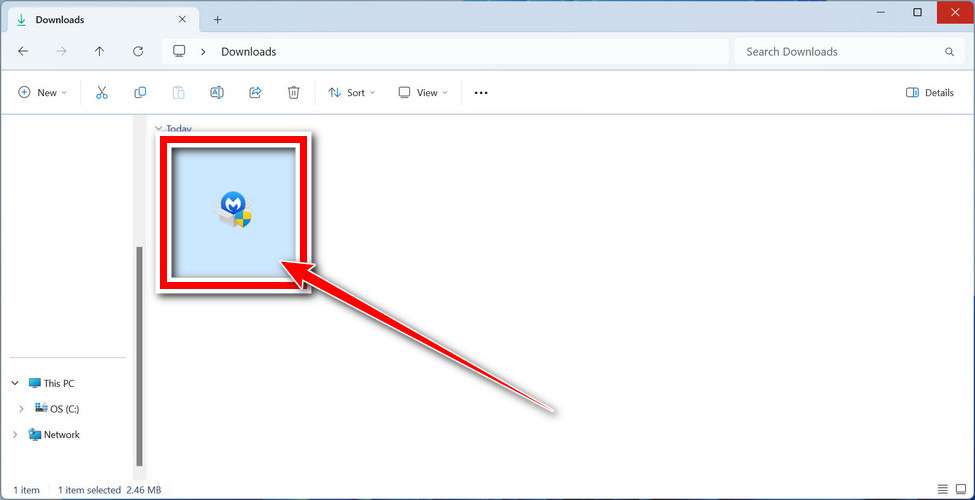
When the download finishes, open your Downloads folder and double-click the MBSetup file. If Windows shows a User Account Control pop-up, click “Yes” to allow the installation.
Follow the On-Screen Prompts to Install Malwarebytes
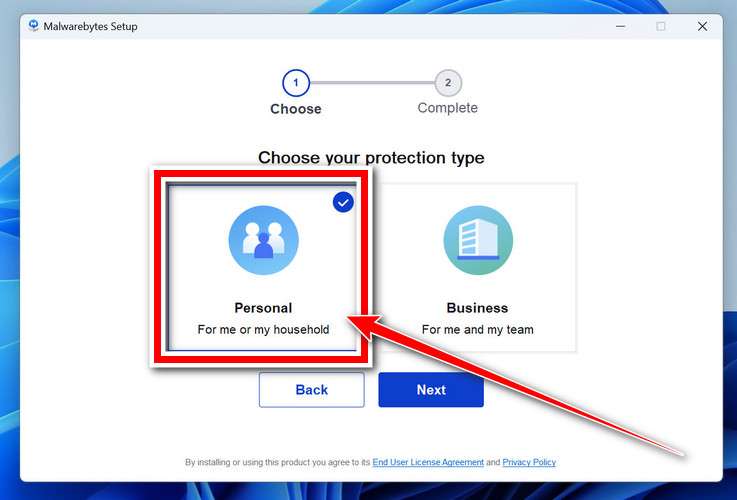
The setup wizard will walk you through a few quick screens:
Choose where you’re installing the program — “Personal Computer” or “Work Computer” — then click Next.
Malwarebytes will now install on your device. This usually takes under a minute.
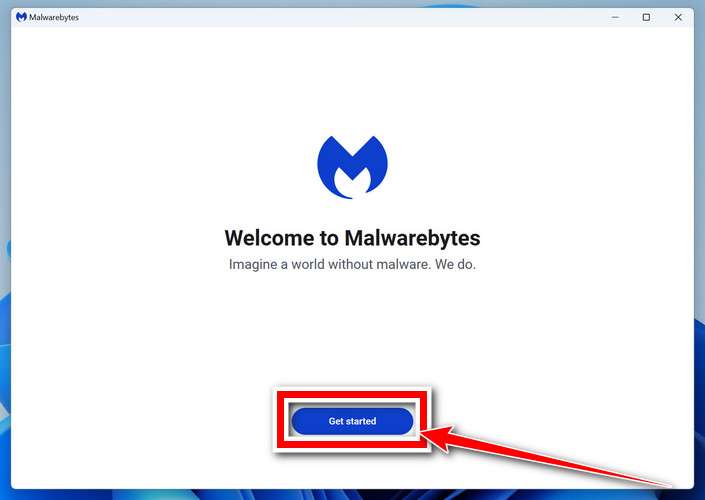
When installation is complete, the “Welcome to Malwarebytes” screen will open automatically.
On the final screen, click Open Malwarebytes to launch the program.
Enable “Scan for Rootkits”
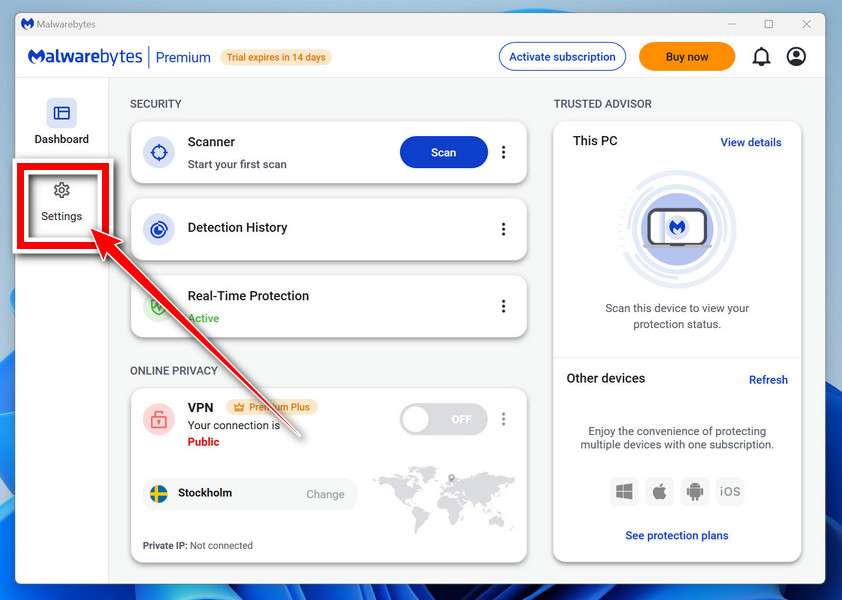
Before scanning, turn on rootkit detection so Malwarebytes can find even the most hidden threats. Click the Settings gear icon on the left side of the screen.
In the settings menu, find “Scan for rootkits” and click the toggle so it turns blue.
Done? Click “Dashboard” in the left pane to return to the main screen.
Start the Scan
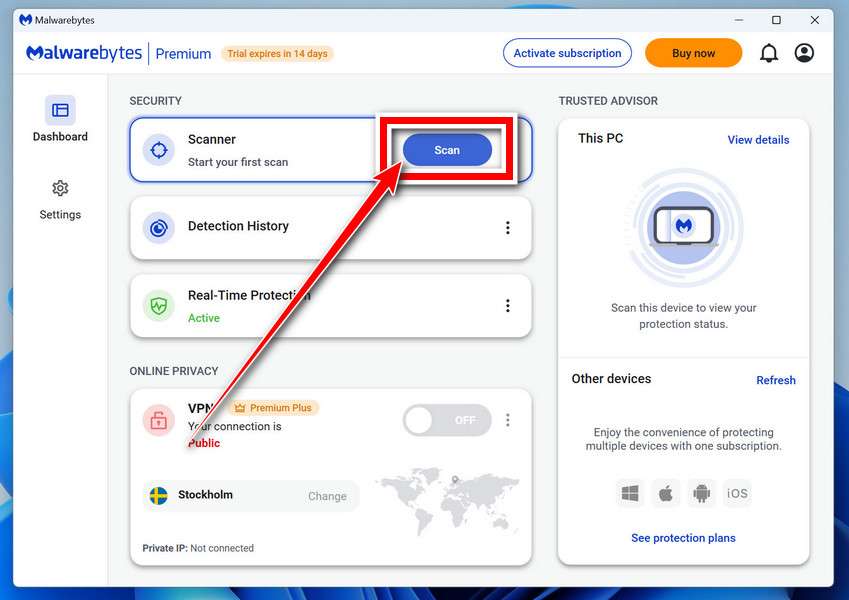
Click the blue Scan button. Malwarebytes will automatically update its virus database and start checking your computer for malware.
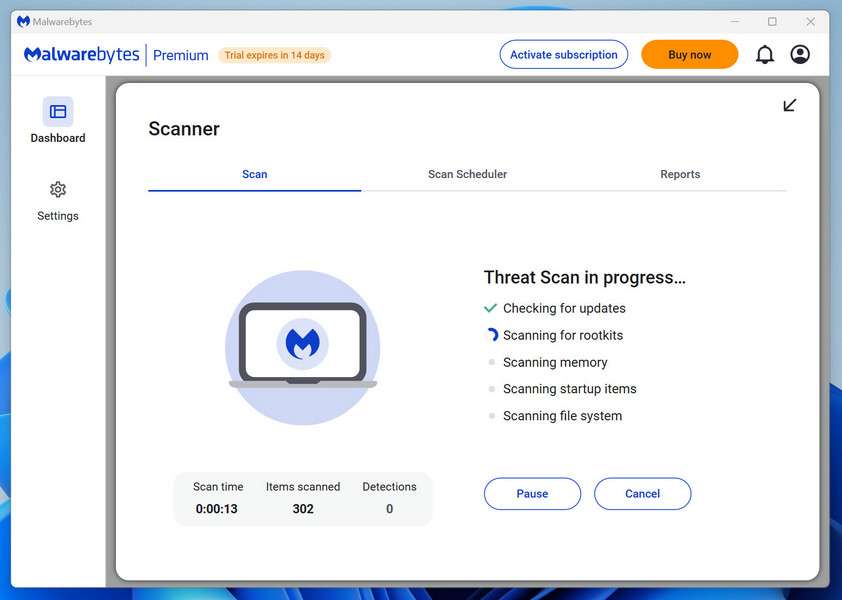
Wait for the Scan to Finish
The scan checks your entire system for browser hijackers and other malicious programs, so it can take several minutes. Feel free to do something else — just check back occasionally to see the progress.
Quarantine the Detected Threats
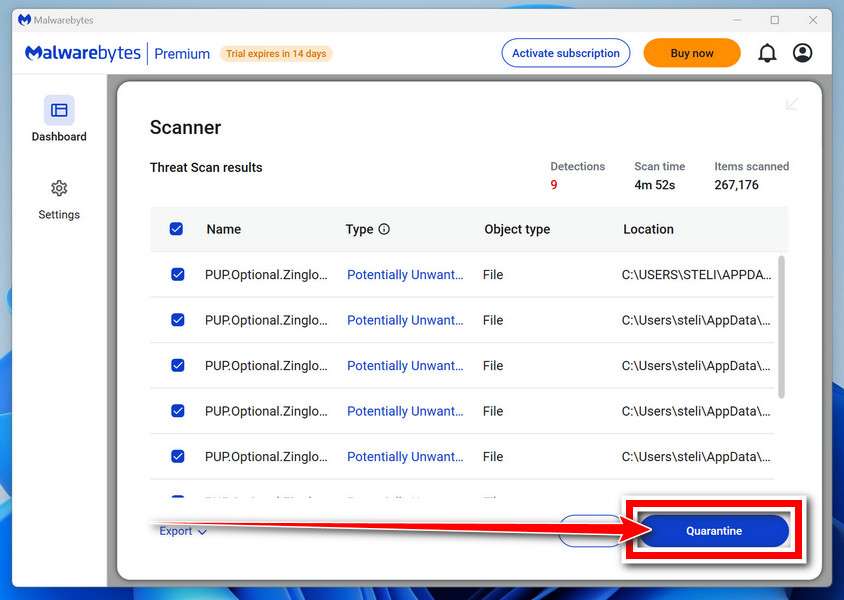
When the scan is done, you’ll see a list of everything Malwarebytes found — malware, adware, and potentially unwanted programs. Click the “Quarantine” button to remove all of them at once.
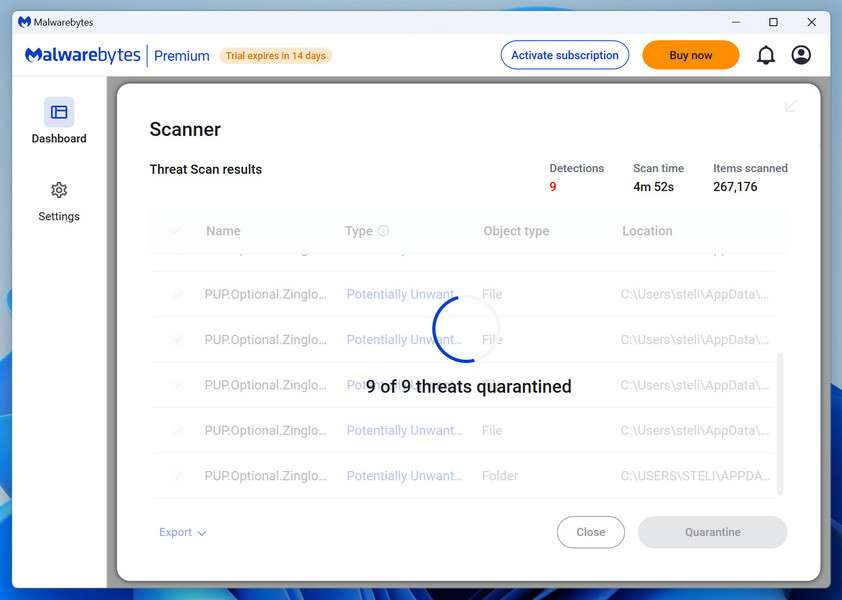
Malwarebytes will now remove the malicious files and registry entries and move them safely into quarantine.
Restart Your Computer
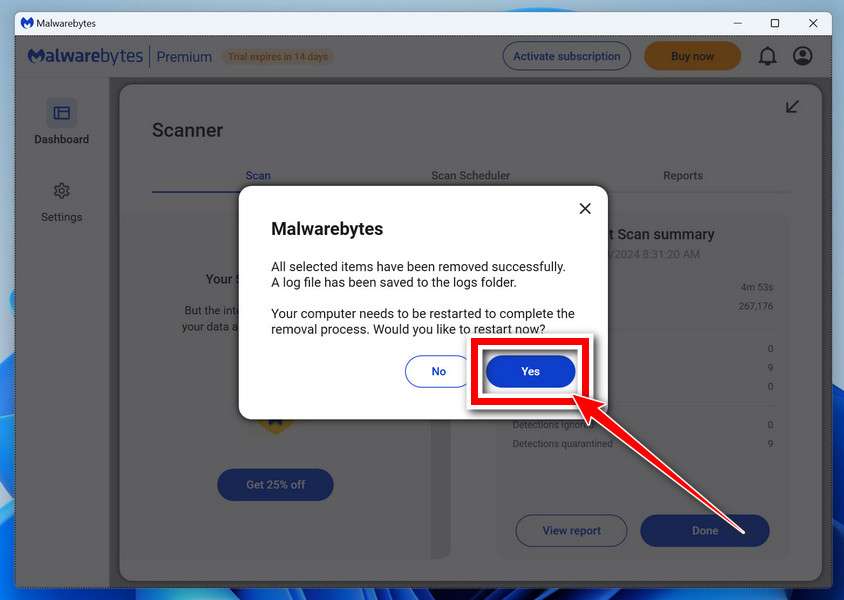
Some threats can only be fully removed after a reboot. If Malwarebytes asks you to restart, click Yes. Once you’re logged back in, your PC is clean and you can continue with the next steps in this guide.
When the scan finishes, click Quarantine to remove everything Malwarebytes found. That’s it — your Windows PC is now clean of trojans, adware, and other malware, and should be back to running smoothly.
If your current antivirus allowed this malicious program on your computer, you may want to consider purchasing Malwarebytes Premium to protect against these types of threats in the future. If you are still having problems with your computer after completing these instructions, then please follow one of the steps:
Malwarebytes for Mac is a free on-demand scanner that removes the malware other security software tends to miss — adware, browser hijackers, and unwanted programs included. Cleaning an infected Mac with Malwarebytes has always been completely free, and it’s our go-to recommendation. Follow the steps below to scan and clean your Mac in just a few minutes.
Download Malwarebytes for Mac
Click the button below to download the latest version of Malwarebytes for Mac.
When the download finishes, open your Downloads folder and double-click the setup file to begin the installation.
Follow the On-Screen Prompts to Install Malwarebytes
The Malwarebytes for Mac Installer will guide you through a few quick screens. Click “Continue” and keep following the prompts until the installation completes.
When the installation is complete, Malwarebytes opens to the Welcome to Malwarebytes screen. Click “Get started“.
Select “Personal Computer” or “Work Computer”
Malwarebytes will ask what type of computer you’re installing it on. Click either Personal Computer or Work Computer, whichever applies.
Start the Scan
Click the “Scan” button. Malwarebytes will automatically update its detection database and begin checking your Mac for malware.
Wait for the Scan to Finish
Malwarebytes will scan your Mac for adware, browser hijackers, and other malicious programs. This can take a few minutes, so feel free to do something else — just check back occasionally to see the progress.
Quarantine the Detected Threats
When the scan is done, you’ll see a list of everything Malwarebytes found. Click the “Quarantine” button to remove all the threats at once.
Restart Your Mac
Malwarebytes will now remove all the malicious files it found. Some threats can only be fully removed after a reboot — if Malwarebytes asks you to restart, allow it. Once you’re logged back in, your Mac is clean.
Once the scan is done, remove every threat it detected. Your Mac is now free of adware, rogue browser extensions, and other potentially harmful software.
If your current antivirus allowed a malicious program on your computer, you might want to consider purchasing the full-featured version of Malwarebytes Anti-Malware to protect against these types of threats in the future. If you are still experiencing problems while trying to remove a malicious program from your computer, please ask for help in our Mac Malware Removal Help & Support forum.
Run a Malware Scan with Malwarebytes for Android
Malwarebytes for Android automatically detects and removes dangerous threats like malware and ransomware so you don’t have to worry about your most-used device being compromised. Aggressive detection of adware and potentially unwanted programs keeps your Android phone or tablet running smooth.
Download Malwarebytes for Android.
You can download Malwarebytes for Android by clicking the link below.
In the Google Play Store, tap “Install” to install Malwarebytes for Android on your device.
When the installation process has finished, tap “Open” to begin using Malwarebytes for Android. You can also open Malwarebytes by tapping on its icon in your phone menu or home screen.
Follow the on-screen prompts to complete the setup process
When Malwarebytes will open, you will see the Malwarebytes Setup Wizard which will guide you through a series of permissions and other setup options. This is the first of two screens that explain the difference between the Premium and Free versions. Swipe this screen to continue. Tap on “Got it” to proceed to the next step. Malwarebytes for Android will now ask for a set of permissions that are required to scan your device and protect it from malware. Tap on “Give permission” to continue. Tap on “Allow” to permit Malwarebytes to access the files on your phone.
Update database and run a scan with Malwarebytes for Android
You will now be prompted to update the Malwarebytes database and run a full system scan.
Click on “Update database” to update the Malwarebytes for Android definitions to the latest version, then click on “Run full scan” to perform a system scan.
Wait for the Malwarebytes scan to complete.
Malwarebytes will now start scanning your phone for adware and other malicious apps. This process can take a few minutes, so we suggest you do something else and periodically check on the status of the scan to see when it is finished.
Click on “Remove Selected”.
When the scan has been completed, you will be presented with a screen showing the malware infections that Malwarebytes for Android has detected. To remove the malicious apps that Malwarebytes has found, tap on the “Remove Selected” button.
Restart your phone.
Malwarebytes for Android will now remove all the malicious apps that it has found. To complete the malware removal process, Malwarebytes may ask you to restart your device.
After the scan, tap Remove Selected to delete all detected threats. Your Android phone is now clean — no more malicious apps, adware, or browser redirects.
If your current antivirus allowed a malicious app on your phone, you may want to consider purchasing the full-featured version of Malwarebytes to protect against these types of threats in the future. If you are still having problems with your phone after completing these instructions, then please follow one of the steps:
Restore your phone to factory settings by going to Settings > General management > Reset > Factory data reset.
Now that your device is clean, keep it that way. Most infections start with a malicious ad or a fake download button — so blocking them at the source is your best defense.
We recommend AdGuard, which blocks malicious ads, phishing pages, and dangerous redirects before they can reach you.
We found inconsistent websites, formulas, and claims, but not proof that every order is fraudulent. The exact seller and checkout must be evaluated individually.
Does SodaPeak enroll buyers in automatic refills?
The primary pages reviewed explicitly deny subscriptions. Still, verify the final order summary because another domain or affiliate path may present different terms.
Why do SodaPeak ingredient lists differ?
Several sites present distinct formulas beneath similar branding. That makes it essential to save the exact label attached to the specific purchase.
Is an FDA-registered facility the same as FDA approval?
No. Facility registration does not mean the FDA approved a dietary supplement’s effectiveness, medical promises, or individual marketing claims.
Can SodaPeak treat erectile dysfunction?
No product-specific evidence we found establishes SodaPeak as an approved treatment. Persistent sexual symptoms should be evaluated by a qualified healthcare professional.
What is the biggest warning sign?
The conflicting official-looking pages are the central concern because buyers may not know which formula, seller, policy, or support channel applies.
The Bottom Line
SodaPeak may be a real shipped supplement, yet its fragmented online identity prevents a simple endorsement. Conflicting formulas and expansive promises deserve substantial caution.
Judge the exact domain and checkout, not the horse logo. If the label, merchant, total, and usable refund route remain unclear, keep your money.
10 Rules to Avoid Online Scams
Here are 10 practical safety rules to help you avoid malware, online shopping scams, crypto scams, and other online fraud. Each tip includes a quick “if you already got hit” action.
Stop and verify before you click, log in, download, or pay.
Most scams win by creating urgency. Verify using a trusted method: type the website address yourself, use the official app, or call a known number (not the one in the message).
If you already clicked: close the page, do not enter passwords, and run a malware scan.
Keep your operating system, browser, and apps updated.
Updates patch security holes used by malware and malicious ads. Turn on automatic updates where possible.
If you saw a scary “update now” pop-up: close it and update only through your device settings or the official app store.
Use layered protection: antivirus plus an ad blocker.
Antivirus helps block malware. An ad blocker reduces scam redirects, phishing pages, and malvertising.
If your browser is acting weird: remove unknown extensions, reset the browser, then run a full scan.
Install apps, software, and extensions only from official sources.
Avoid cracked software, “keygens,” and random downloads. During installs, choose Custom/Advanced and decline bundled offers you do not recognize.
If you already installed something suspicious: uninstall it, restart, and scan again.
Treat links and attachments as untrusted by default.
Phishing often impersonates delivery services, banks, and popular brands. If it is unexpected, do not open attachments or log in through the message.
If you entered credentials: change the password immediately and enable 2FA.
Shop safely: research the store, then pay with protection.
Be cautious with brand-new stores, “closing sale” stories, and prices that make no sense. Prefer credit cards or PayPal for dispute options. Avoid wire transfers, gift cards, and crypto payments.
If you already paid: contact your card issuer or PayPal quickly to dispute the transaction.
Crypto rule: never pay a “fee” to withdraw or recover money.
Common patterns include fake profits, then “tax,” “gas,” or “verification” fees. Another is a “recovery agent” who demands upfront crypto.
If you already sent crypto: stop paying, save evidence (wallet addresses, TXIDs, chats), and report the scam to the platform used.
Secure your accounts with unique passwords and 2FA (start with email).
Use a password manager and unique passwords for every account. Enable 2FA using an authenticator app when possible.
If you suspect an account takeover: change passwords, sign out of all devices, and review recent logins and recovery settings.
Back up important files and keep one backup offline.
Backups protect you from ransomware and device failure. Keep at least one backup on an external drive that is not always connected.
If you suspect infection: do not connect backup drives until the system is clean.
If you think you are a victim: stop losses, document evidence, and escalate fast.
Move quickly. Speed matters for disputes, account recovery, and limiting damage.
Stop payments and contact: do not send more money or respond to the scammer.
Call your bank or card issuer: block transactions, replace the card if needed, and start a dispute or chargeback.
Secure your email first: change the email password, enable 2FA, and remove unfamiliar recovery options.
Secure other accounts: change passwords, enable 2FA, and log out of all sessions.
Scan your device: remove suspicious apps or extensions, then run a full malware scan.
Save evidence: screenshots, emails, order pages, tracking pages, wallet addresses, TXIDs, and chat logs.
Report it: to the payment provider, marketplace, social platform, exchange, or wallet service involved.
These rules are intentionally simple. Most online losses happen when decisions are rushed. Slow down, verify independently, and use payment methods and account controls that give you recourse.
Hello! I'm Lapain Epuran, your go-to source for detailed and honest product reviews. From tech gadgets to miracle cures, I provide insights to help you make informed choices. Join me as we discover what's truly worth your time and money.