

Social media feeds and online marketplaces are being flooded with too-good-to-be-true ads for the Staroner Mini Jeep. Prices starting at just $29.99 are touted as an unbelievable deal on this popular off-road vehicle. But every single one of these ads is a complete scam designed to rip off buyers.
This article will take an in-depth look at how the Staroner Mini Jeep scam works, the deceptive techniques used, and most importantly, how to avoid becoming the next victim. With the right knowledge, consumers can help shut down these criminals and their fraudulent bait-and-switch scheme.
Overview of the Staroner Mini Jeep Scam
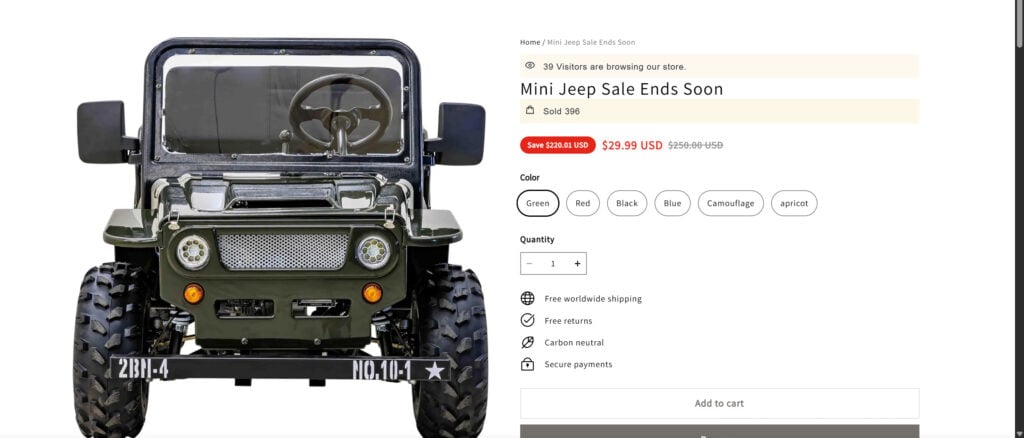
The Staroner Mini Jeep scam takes advantage of consumers looking for fun, compact vehicles for recreation and utility. Scammers have created an intricate bait-and-switch scheme involving fake social media ads and knockoff websites advertising the “Staroner Mini Jeep” at unbelievable prices starting from just $29.99.
These ads tout the Staroner Mini Jeep as the perfect summer toy – a nostalgic, scaled-down replica of the classic Willys Jeep. Highlights include a supposedly powerful 125cc engine, padded seats with seatbelts, working lights, a 300 lb load capacity, and a max speed of 28 mph.
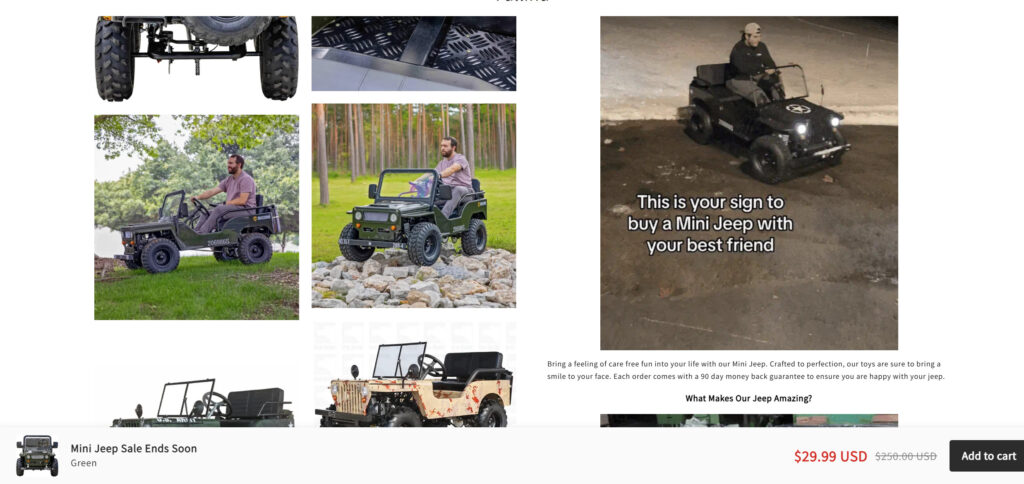
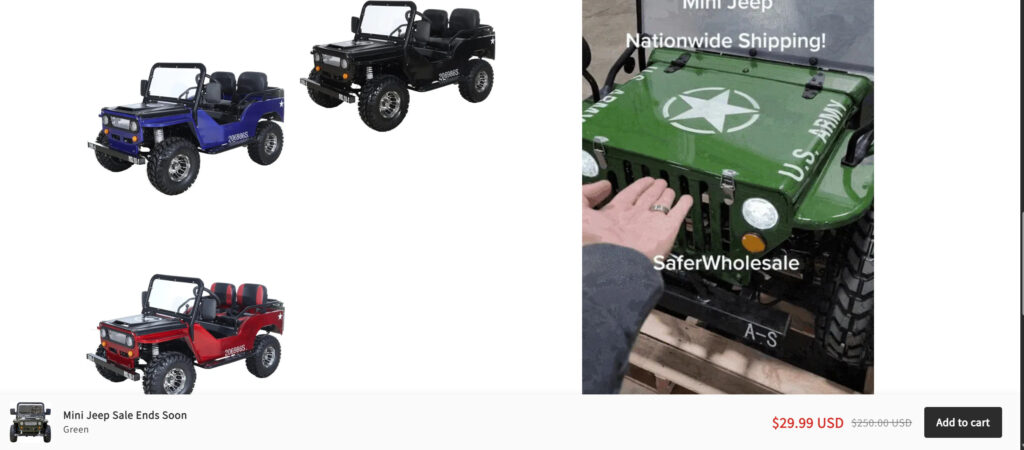
The Nova ads tempt buyers with the prospect of carefree, affordable fun for the whole family. Fake reviews and money-back guarantees are used to build trust and credibility. Of course, the vehicles pictured are not actual seller images – they are stock photos taken from sites selling real mini jeeps and UTVs.
After enticing victims with the bait of a feature-packed mini jeep for a ludicrously low price, the scammers pocket the payments and disappear. No products are ever shipped, and customer service becomes totally unresponsive after checkout.
In reality, there is no such vehicle as the “Staroner Mini Jeep” being sold at these prices. The ads and websites are entirely fabricated by criminals to enable their scam. They utilize high-pressure tactics and fabricated discounts to trick buyers into ignoring the clear warning signs:
- Absurdly low prices like $29.99 for a powerful gas vehicle
- Complete lack of legitimate company information
- Scarcity claims and countdown timers urging immediate purchase
- Domains registered very recently
- Layouts copied from other known scams
- No indication of any real inventory or manufacturing
While the online storefronts appear professional at first glance, a closer look reveals that they are skeletal sham sites built specifically to steal money. There are no “90 day money back guarantees” or any other buyer protections.
These scammers have no intention of delivering anything to customers. Their only goal is to process payments before victims catch on to the scam. They bank on the temptation of an unbelievable bargain causing buyers to ignore common sense and clear red flags.
So while the Staroner Mini Jeep is touted in ads as the “perfect summer toy,” the reality is that customers who purchase from these scam websites end up with nothing except frustration and financial loss. The only feeling these sites bring is the sinking realization that you’ve been conned out of your hard-earned money.
This prevalent bait-and-switch scam has flooded social media and e-commerce sites, with new fraudulent “stores” popping up daily. But armed with knowledge of how these scams operate and the deceptive techniques they employ, consumers have the power to avoid falling victim and help shut down these criminal enterprises for good.
How the Staroner Mini Jeep Scam Works
These criminals have fine-tuned their bait-and-switch technique into a science. Here is a play-by-play of their malicious process:
1. Bait – The Tempting Ad
The first step is placing ads across social media platforms touting unbelievable deals on the Staroner Mini Jeep. For example:
“We’re practically giving away these Staroner Mini Jeeps for only $29.99”
“50% OFF all Staroner Mini Jeeps – clearance sale ends today!”
The purpose is purely to attract attention and bait victims into clicking for more information. Warning signs like absurd prices and high-pressure tactics are ignored in the excitement of a potential bargain.
2. The Knockoff E-Commerce Storefront
Clicking these social media ads leads to fake storefronts the scammers have built to enable their scam. Stock photos of jeeps are shown along with inflated MSRPs of $4,999 crossed out to showcase the supposed huge discount.
Various text and symbols like badges and countdown timers aggressively push the false urgency to purchase immediately. There’s also fabricated 5-star reviews and descriptions plucked from legitimate brands.
But a closer inspection reveals many red flags:
- No company information or history
- No business address or working customer service channels
- No indication the seller actually has any real inventory
- Domains registered very recently
- Layout copied from other known scam sites
- Vehicle specs are totally unrealistic for a $29.99 mini jeep
Still, the desire for an amazing deal causes many victims to ignore these warnings. The scammers are betting on it.
3. Process Payment and Disappear
The less-skeptical shoppers now purchase this seemingly miraculous bargain by entering credit card or PayPal account details. Of course, checkout works perfectly and payment is processed efficiently.
But that’s the last you’ll hear from the “company.” No shipping confirmation or tracking number arrives. Customer service is totally unresponsive. The site might even disappear altogether.
You ultimately realize no Staroner Mini Jeep will ever arrive, and you’ll have to battle with your bank to get the fraudulent charge reversed. But for the scammers, mission accomplished – they already pocketed your money and moved on to the next victims.
What to Do if You’re the Victim of a Staroner Mini Jeep Scam
If you made the mistake of purchasing from one of these Staroner Mini Jeep scam websites, take these steps immediately to maximize your chances of getting your money back:
1. Contact your credit card provider or bank. Report the charge as fraudulent right away and request a chargeback. Emphasize you are the victim of a scam.
2. Gather all documentation. Save the website, screenshots, order confirmation, emails, etc. as evidence to help your bank dispute the payment.
3. Report fraud everywhere possible. File complaints against the website, social media accounts, and payment processors used to enable this scam. The more paper trail the better.
4. Spread awareness. Post on social media and scam reporting sites about your experience to help warn others away from these criminals.
5. Monitor accounts closely. Check bank and credit accounts routinely for any further suspicious activity and dispute immediately.
6. Learn from this. Become more aware of online shopping scams that use fake discounts, pressuring language, and limited purchase windows. Shop smarter moving forward..
Frequently Asked Questions About the Staroner Mini Jeep Scam
1. What models of mini jeeps are used in this scam?
The ads reference a made-up model called the “Staroner Mini Jeep.” Images of actual mini jeeps and UTVs are stolen from legitimate brands and used to falsely promote the imaginary Nova model.
2. What is the Staroner Mini Jeep normally priced at?
There is no such vehicle as the Staroner Mini Jeep. The scammers completely fabricated this model name to create the illusion of an amazing discount. In reality, comparable 125cc mini jeeps retail for $2,000+ from authorized sellers.
3. Are the discount deals advertised real?
Absolutely not. The claimed huge discounts, limited-time sales, and clearance events are 100% fake. They are high-pressure tactics to spur impulse purchases before buyers scrutinize the scams.
4. What payment methods do these sites accept?
Mostly credit cards, as credit card companies often have the best fraud protections and chargeback processes for scam victims to pursue refunds. They avoid options with stronger buyer protections like PayPal.
5. Are these Staroner Mini Jeep deals legal?
No. These scammers violate various laws against false advertising, consumer fraud, breach of contract, bait-and-switch selling, and outright theft. But most operate overseas using fake identities, making legal repercussions unlikely.
6. How can I recognize a Staroner Mini Jeep scam site?
Warning signs include absurd prices under $500, stock images, fake discounts/sales, limited purchase windows, no company information, recent domain registrations, and duplicated layouts. See this article for more red flags.
7. What should I do if I already paid a scam site?
Immediately contact your bank and credit card company to report fraudulent charges. Gather evidence and file complaints everywhere possible. Spread awareness to help warn others. See the “What to Do If Scammed” section above for more detailed steps.
8. How can these criminals be stopped?
Reporting them extensively for fraud, filing complaints, contacting their service providers, and spreading public awareness all help shut them down faster. Educating consumers on recognizing retail scams is key to limiting their success.
9. Can I buy a real mini jeep for $99?
No, any dealer advertising a working gas-powered mini jeep for under $500 is guaranteed to be a scam. Legitimate mini jeeps cost $2,000+ from authorized sellers. Always thoroughly research sellers before making purchases.
The Bottom Line on the Staroner Mini Jeep Scam
The bottom line is do not trust ads promoting the Staroner Mini Jeep at absurdly low prices. No matter how convincing the fake websites and social accounts may appear, they are guaranteed scams looking to swindle consumers out of money.
Legitimate mini jeeps sell for thousands of dollars at authorized dealers – not $29.99 on sketchy sites you’ve never heard of. If an advertised deal seems too good to be true, it absolutely is, without exception.
These criminals will keep adjusting their tactics, sites, and product offerings to stay under the radar. But armed with the knowledge of how these bait-and-switch scams operate, consumers can avoid being ripped off and help put a stop to them for good. Your awareness makes a real difference.

Join the discussion
0 commentsShare your experience or ask a question about this article.
Discussion
Start the conversation
Have a question or something useful to share? Add the first comment.