

In this blog post, we will discuss a type of scam email that has been circulating online for some time. The email is titled “Summon To Court For Pedophilia” and claims that the recipient is accused of child abuse or possession of child pornography. The email is designed to scare and extort money from unsuspecting victims. We will explain what this scam email is, how it works, and what to do if you have received it or fallen for it.
What is the Summon To Court For Pedophilia Scam Email?
The Summon To Court For Pedophilia Scam Email is a form of phishing, which is a fraudulent attempt to obtain sensitive information or money from someone by impersonating a legitimate entity. In this case, the scammers pretend to be representatives of governmental bodies, such as the police, the court, or the prosecutor’s office. They send emails to random people, accusing them of being involved in pedophilia-related activities. The emails may look official and convincing, as they use logos, seals, and names of real authorities. They may also include attachments that supposedly contain evidence or legal documents.
The scammers use various tactics to pressure the recipients into paying a fine or a bribe to avoid legal consequences. They may threaten to arrest them, expose them to the public, or send them to prison. They may also claim that they have a limited time to respond or pay, and that ignoring the email will result in further action. The scammers usually ask for payment in cryptocurrency, such as Bitcoin, which is difficult to trace and recover.
Here is how a typical Summon To Court For Pedophilia Scam Email looks:
Subject: Fwd_ N°5326EU-FR2022 PROCÈS VOUS CONCERNANT..eml
Bonjour
Vous trouverez en pièces jointes
Bien cordialement
Mr Christian RODRIGUEZ
Directeur général de la gendarmerie nationale
TEL:+33 6 44 66 00 73MINISTÈRE de la JUSTICE
RÉPUBLIQUE FRANÇAISE
Gendarmerie
nationale
MAIL :gendarmerienationale545@gmail.comCONVOCATION EN JUSTICE
Pou r les nécessités d’une enquête judiciaire (Article 390-1 du Code de procédure pénale)
À votre attention
À la demande de Madame. Catherine DE BOLLE commissaire générale de la police fédérale, élue au poste de Directrice d’Europol ” Brigade de protection des mineurs (BPM) ” nous vous adressons cette convocation. La COPJ ou convocation par officier de police judiciaire est prévue par l’article 390-1 du Code de Procédure Pénale. Elle vaut citation devant le Tribunal et est décidée par le Procureur de la République. En application des dispositions de l’article 372 du code pénal énonce : ” Tout attentat à la pudeur commis sans violences ni menaces sur la personne ou à l’aide de la personne d’un enfant de l’un ou de l’autre sexe, âgé de moins de 16 ans accomplis, sera puni de la réclusion. L’article 227-23 du Code pénal dispose : « Le fait, en vue de sa diffusion, de fixer. d’enregistrer ou de transmettre l’image ou la représentation d’un mineur lorsque cette image ou cette représentation présente un caractère pornographique est puni de cinq ans d’emprisonnement et de 75 000 Euros d’amende. Nous engageons à votre encontre, des poursuites judiciaires peu après une saisie informatique de la Cyber-infiltration pour :
– Pédopornographie
– Pédophilie
– Exhibitionnisme
– Cyber pornographie
– Trafic sexuelPour votre information. la loi 390-1 du Code de procédure pénale de mars 2007 aggrave les peines lorsque les propositions. les agressions sexuelles ou les viols ont pu être commis en recourant à internet. Vous avez commis l’infraction après avoir été ciblé sur internet (site d’annonce), visualisation de vidéo à caractère pédopornographique . des photos/vidéos dénudées de mineur ont été enregistrées par notre cyber-gendarme et constituent les preuves de vos infractions.
Dans un souci de confidentialité nous vous adressons cet e-mail. vous êtes prié de vous faire entendre par mail en écrivant vos justifications pour qu’elles soient mises en examen et vérifiées afin d’évaluer les sanctions : cela dans un délai strict de 72 heures. Passé ce délai. nous nous verrons dans l’obligation de transmettre notre rapport à Mme Maryvonne CAILLIBOTTE. Procureur de la République de Versailles pour établir un mandat d’arrêt à votre encontre et nous procéderons à votre arrestation immédiate par la gendarmerie la plus proche de votre Lieu de résidence et vous serez fiché au registre national des délinquants sexuels. Dans ce cas. votre dossier sera également transmis aux associations de lutte contre la pédophilie et aux medias pour publication de personne fiché au RN DS.Cordialement,
Mr. Christian RODRIGUEZ,
Directeur général de la Gendarmerie Nationale
MAIL :gendarmerienationale545@gmail.com
—-
DIRECTION CENTRALE DE LA GENDARMERIE
BRIGADE DE PROTECTION DES MINEURS
Adresse : 4 rue Claude-Bernard 92130 Issy-les-Moulineaux
How does the Summon To Court For Pedophilia Scam Email work?
The Summon To Court For Pedophilia Scam Email works by exploiting the fear and shame of the recipients. Many people may panic when they see such an email, especially if they have visited some questionable websites or downloaded some files that could be considered illegal. They may think that they have been caught or monitored by the authorities, and that they have no choice but to comply with the demands. They may also be afraid of being exposed to their family, friends, or employers, and of facing social stigma or legal repercussions.
The scammers rely on the fact that most people are not familiar with the legal procedures and their rights. They may not know how to verify the authenticity of the email or how to contact the real authorities. They may also not realize that no legitimate governmental body would send such an email or ask for payment in cryptocurrency.
What to do if you have received or fallen victim to the Summon To Court For Pedophilia Scam Email?
If you have received a Summon To Court For Pedophilia Scam Email, do not panic and do not reply or pay anything. The email is a scam and has nothing to do with the real authorities. Here are some steps you can take to protect yourself and others:
- Delete the email immediately and do not open any attachments or click on any links.
- Report the email to your local police or cybercrime unit. You can also forward it to phishing@apwg.org, which is an international organization that collects and analyzes phishing data.
- If you have paid any money to the scammers, contact your bank or cryptocurrency provider as soon as possible and try to cancel or reverse the transaction.
- If you have downloaded any files from the email or visited any suspicious websites, scan your device with Malwarebytes Free and remove any malware.
- If you feel distressed or traumatized by the email, seek professional help from a counselor or a support group.
Is Your Device Infected? Run a Free Malware Scan
Slow performance, constant pop-ups, or strange behavior? These are classic signs of a malware infection. The fastest way to find out is to scan your device with Malwarebytes Free — one of the most trusted malware removal tools available.
The free version detects and removes the most common threats, including:
- Adware — the cause of those annoying pop-ups
- Browser hijackers — unwanted redirects and changed homepages
- Trojans and spyware — hidden programs stealing your data
- Potentially unwanted programs (PUPs) — software you never asked for
👉 Select your device below — Windows, Mac, or Android — then follow the simple steps to download Malwarebytes, scan your system, and remove any threats it finds. The scan usually takes 5 to 20 minutes.
Run a Malware Scan with Malwarebytes for Windows
Malwarebytes is one of the most popular and trusted anti-malware tools for Windows — and it’s completely free for removing infections. It catches threats that many antivirus programs miss, including adware, browser hijackers, and trojans. Follow the steps below to scan and clean your PC in just a few minutes.
Download Malwarebytes
Click the button below to download the latest version of Malwarebytes for Windows from the official source. The free version is all you need — it will scan your computer and remove adware, browser hijackers, and other malicious software at no cost.
Download MalwarebytesOfficial installer for Windows 11 and 10. Your download starts right away.Want real-time protection? See Malwarebytes Premium Malwarebytes Free for WindowsScans and removes malware at no cost
-
Install Malwarebytes
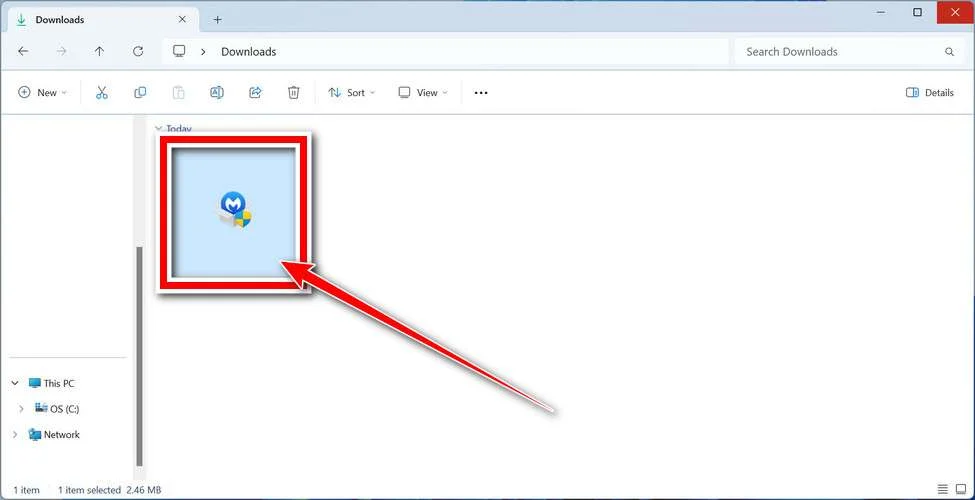
When the download finishes, open your Downloads folder and double-click the MBSetup file. If Windows shows a User Account Control pop-up, click “Yes” to allow the installation.
Follow the On-Screen Prompts to Install Malwarebytes
The setup wizard will walk you through a few quick screens:
-
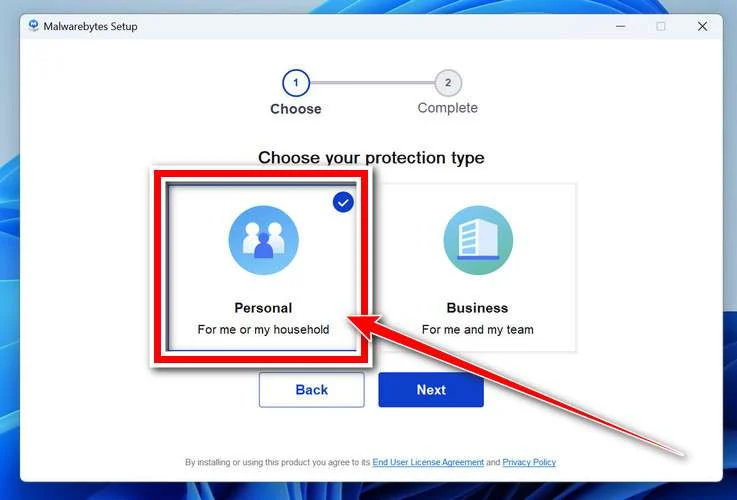
Choose where you’re installing the program — “Personal Computer” or “Work Computer” — then click Next.
-
Malwarebytes will now install on your device. This usually takes under a minute.

-
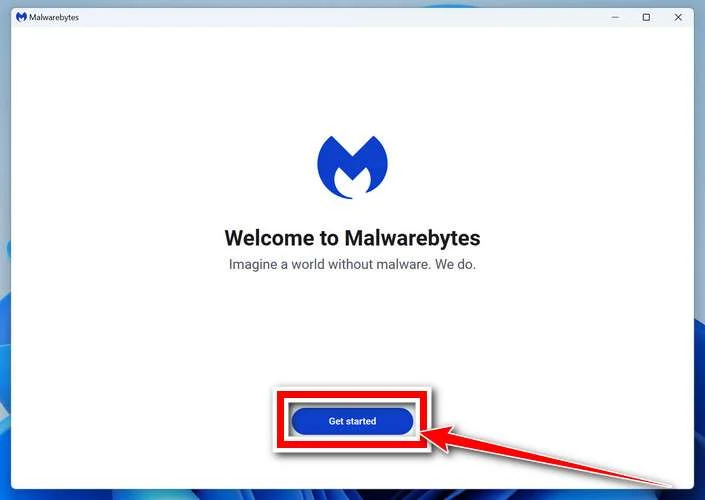
When installation is complete, the “Welcome to Malwarebytes” screen will open automatically.
-
On the final screen, click Open Malwarebytes to launch the program.

-
Enable “Scan for Rootkits”
Before scanning, turn on rootkit detection so Malwarebytes can find even the most hidden threats. Click the Settings gear icon on the left side of the screen.
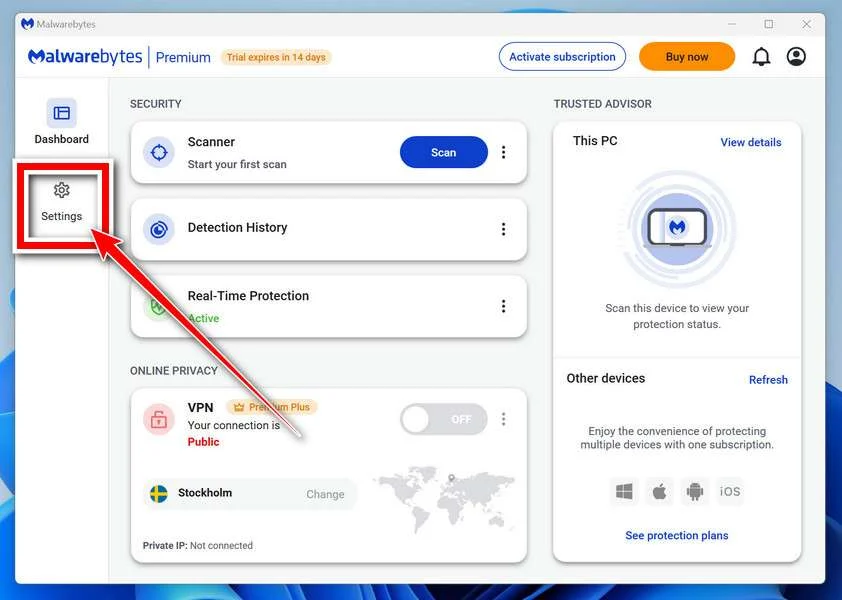
In the settings menu, find “Scan for rootkits” and click the toggle so it turns blue.

Done? Click “Dashboard” in the left pane to return to the main screen.
Start the Scan
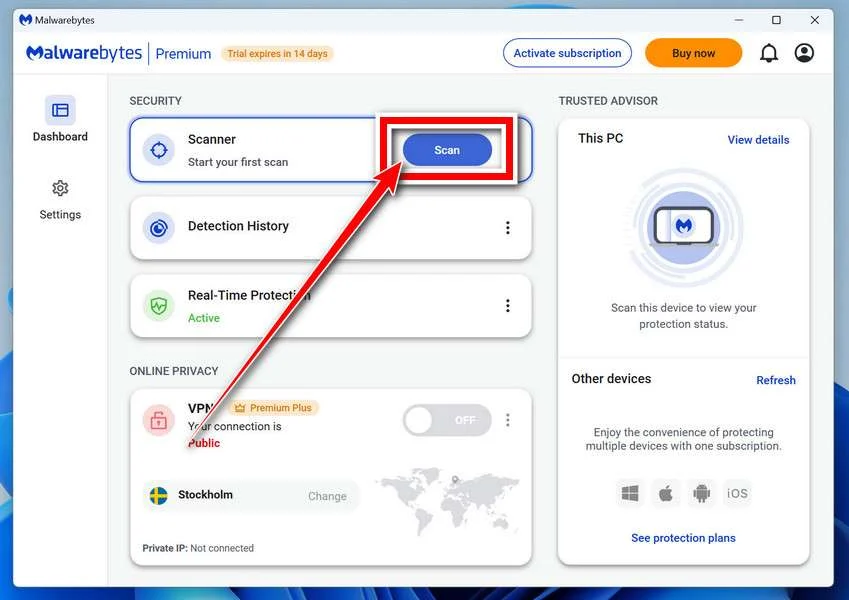
Click the blue Scan button. Malwarebytes will automatically update its virus database and start checking your computer for malware.
-
Wait for the Scan to Finish
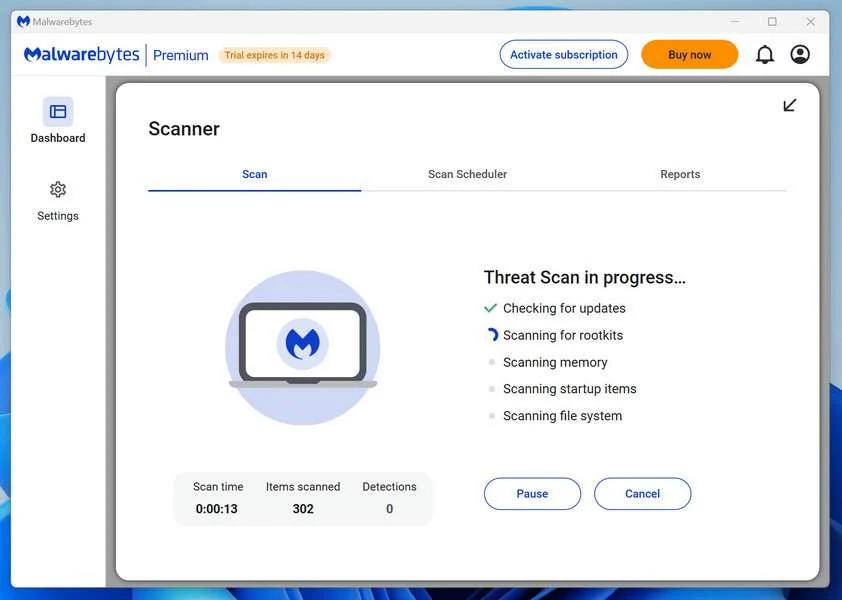
The scan checks your entire system for browser hijackers and other malicious programs, so it can take 5 to 20 minutes depending on your computer. Feel free to do something else — just check back occasionally to see the progress.
-
Quarantine the Detected Threats
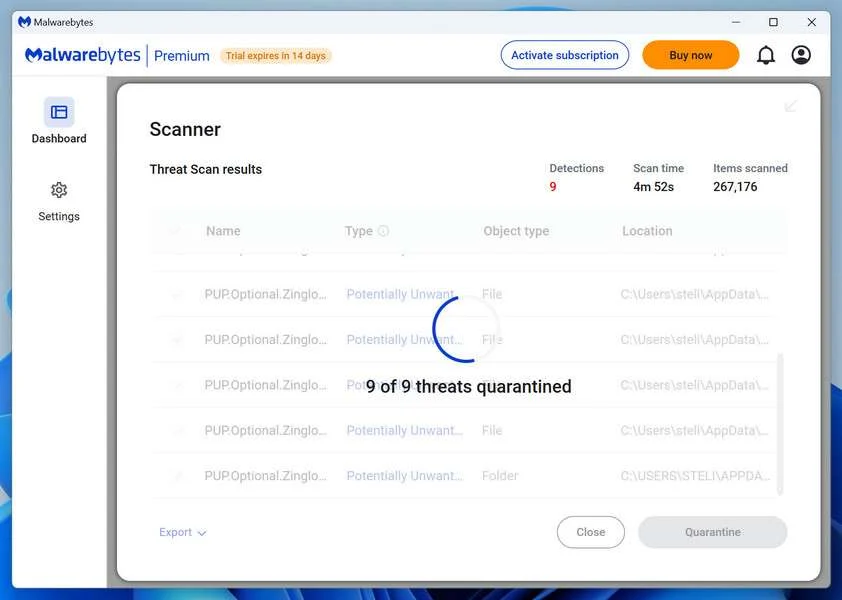
When the scan is done, you’ll see a list of everything Malwarebytes found — malware, adware, and potentially unwanted programs. Click the “Quarantine” button to remove all of them at once.
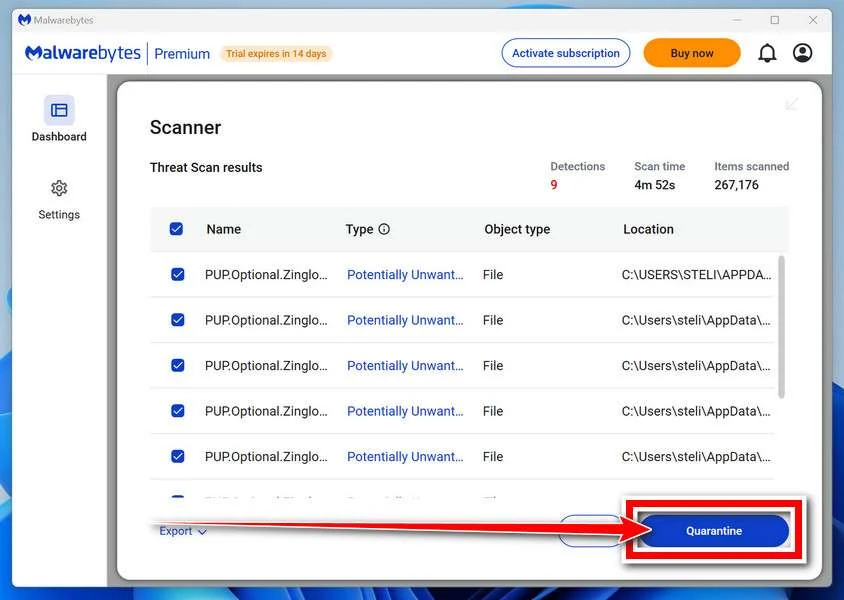
Malwarebytes will now remove the malicious files and registry entries and move them safely into quarantine.
-
Restart Your Computer
Some threats can only be fully removed after a reboot. If Malwarebytes asks you to restart, click Yes. Once you’re logged back in, Malwarebytes has finished removing the threats it found.
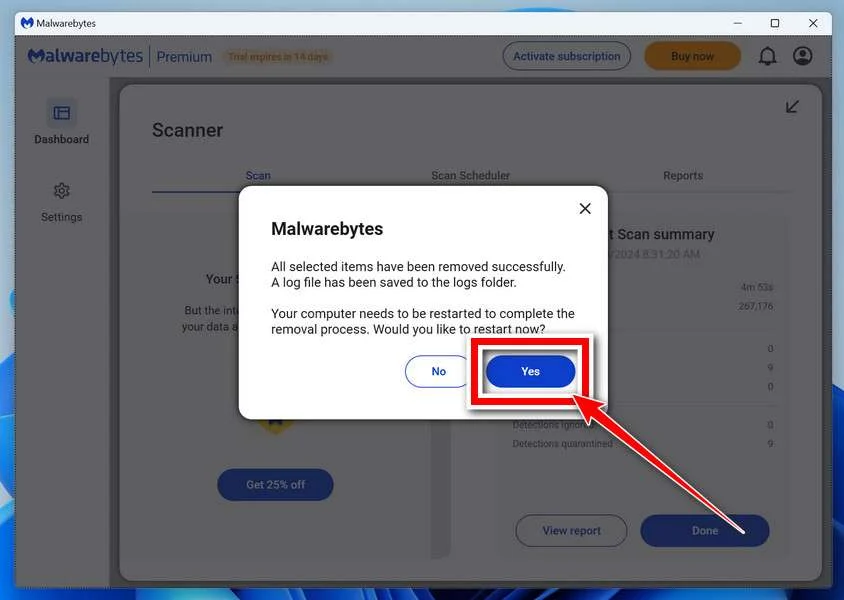
That’s it — your Windows PC is now clean of trojans, adware, and other malware, and should be back to running smoothly.
If you are still having problems with your computer after completing these instructions, then please follow one of the steps:
- Run a computer scan with ESET Online Scanner
- Ask for help in our Windows Malware Removal Help & Support forum.
Run a Malware Scan with Malwarebytes for Mac
Malwarebytes for Mac is a free on-demand scanner that removes the malware other security software tends to miss — adware, browser hijackers, and unwanted programs included. Cleaning an infected Mac with Malwarebytes has always been completely free, and it’s our go-to recommendation. Follow the steps below to scan and clean your Mac in just a few minutes.
-
Download Malwarebytes for Mac
Click the button below to download the latest version of Malwarebytes for Mac.
Download MalwarebytesOfficial installer for macOS. Your download starts right away.Want real-time protection? See Malwarebytes PremiumMalwarebytes Free for MacScans and removes malware at no cost -
Open the Malwarebytes setup file
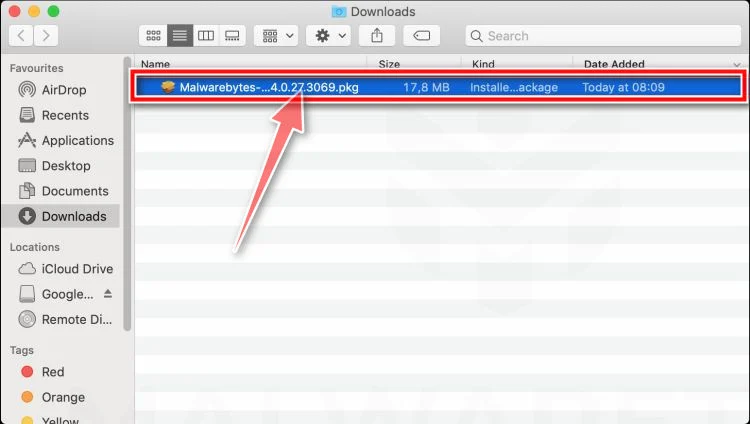
When the download finishes, open your Downloads folder and double-click the setup file to begin the installation.
-
Follow the On-Screen Prompts to Install Malwarebytes
The Malwarebytes for Mac Installer will guide you through a few quick screens. Click “Continue” and keep following the prompts until the installation completes.
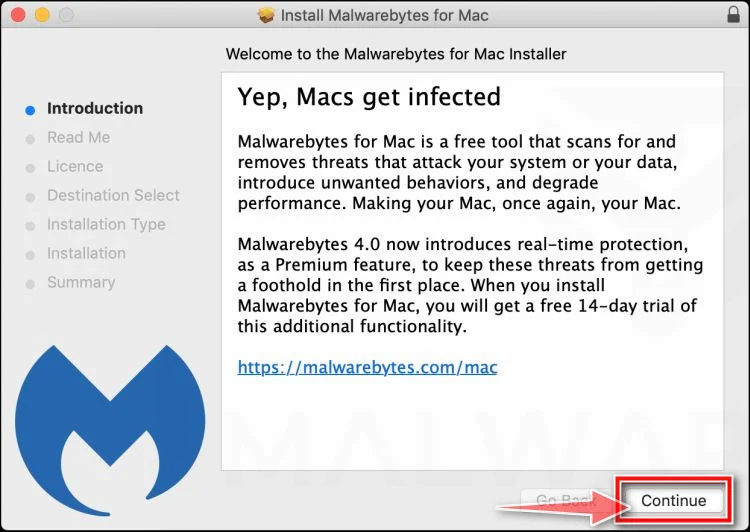
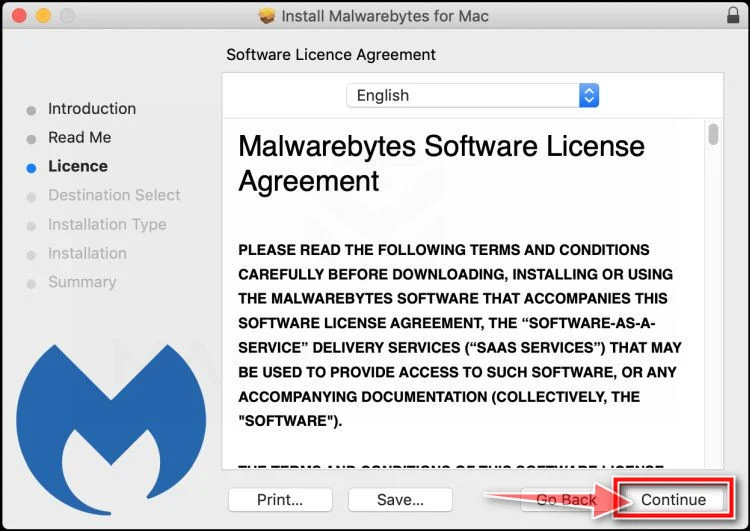
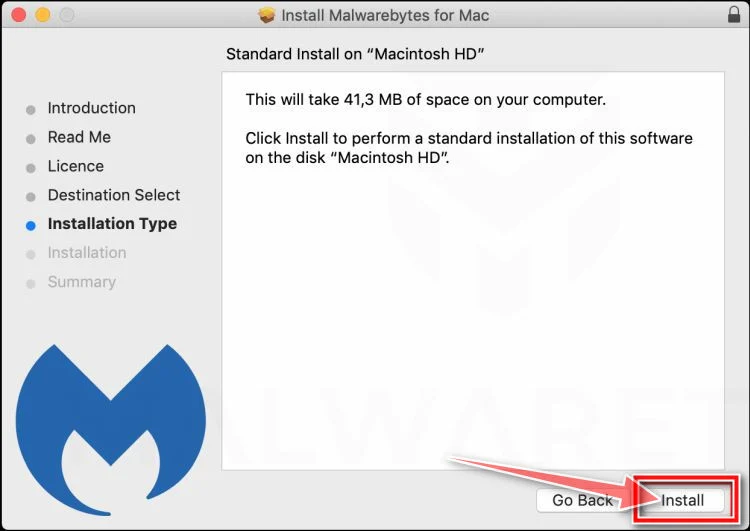
When the installation is complete, Malwarebytes opens to the Welcome to Malwarebytes screen. Click “Get started“.
-
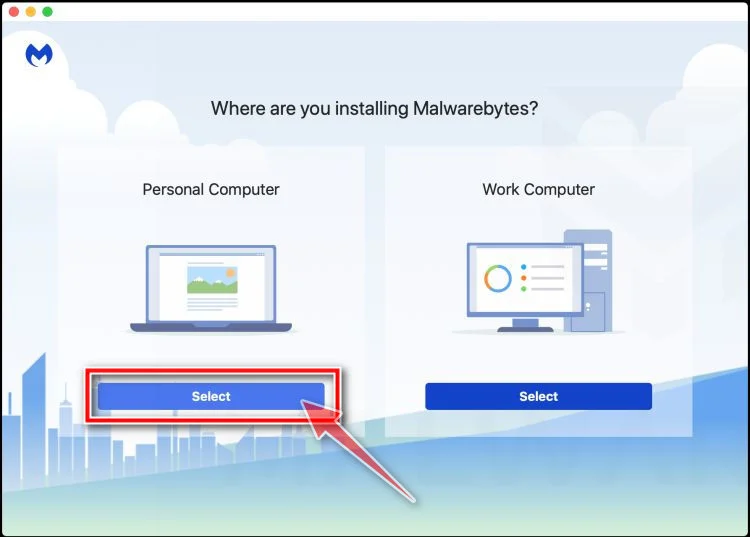
Select “Personal Computer” or “Work Computer”
Malwarebytes will ask what type of computer you’re installing it on. Click either Personal Computer or Work Computer, whichever applies.
-
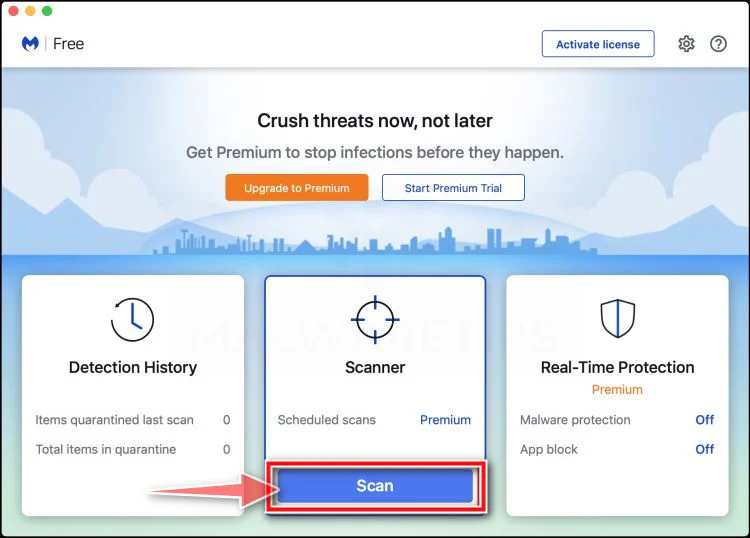
Start the Scan
Click the “Scan” button. Malwarebytes will automatically update its detection database and begin checking your Mac for malware.
-
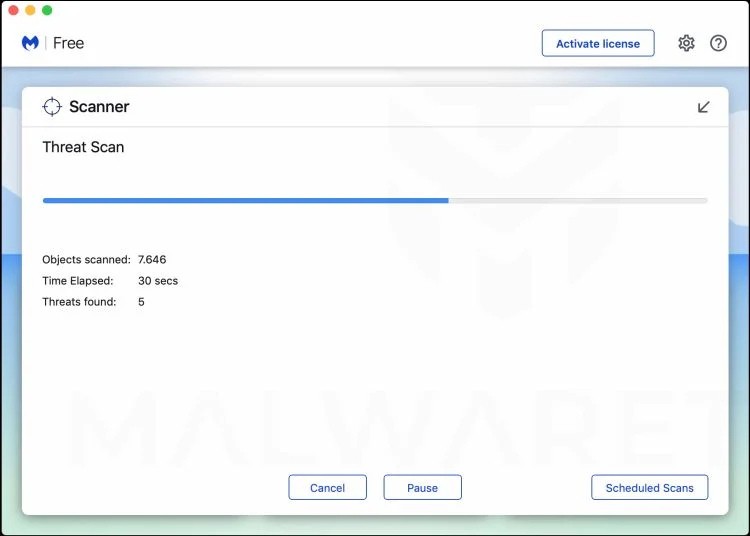
Wait for the Scan to Finish
Malwarebytes will scan your Mac for adware, browser hijackers, and other malicious programs. This can take a few minutes, so feel free to do something else — just check back occasionally to see the progress.
-
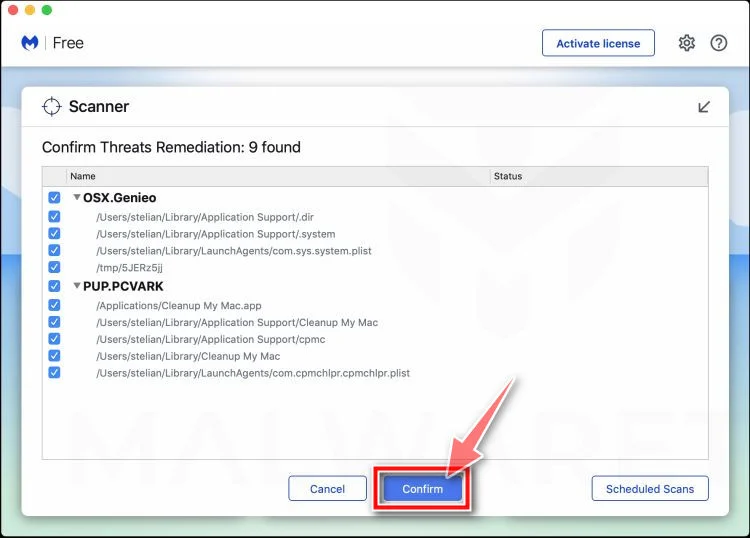
Quarantine the Detected Threats
When the scan is done, you’ll see a list of everything Malwarebytes found. Click the “Quarantine” button to remove all the threats at once.
-
Restart Your Mac
Malwarebytes will now remove all the malicious files it found. Some threats can only be fully removed after a reboot — if Malwarebytes asks you to restart, allow it. Once you’re logged back in, your Mac is clean.
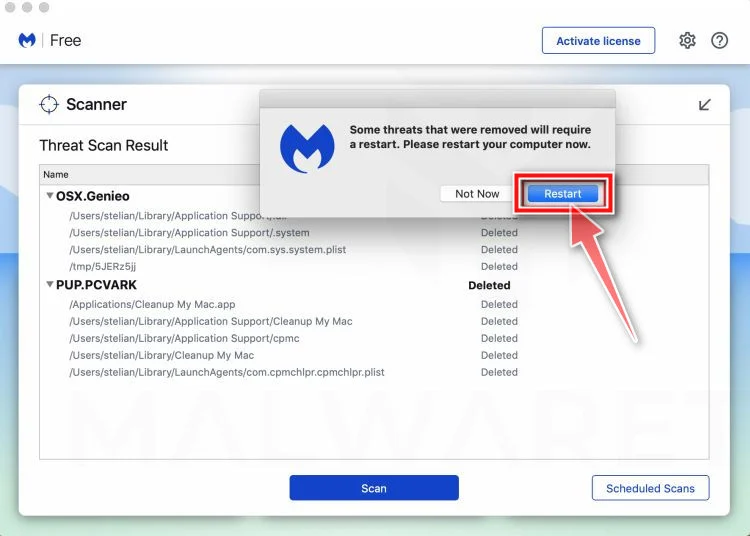
That’s it — your Mac is now free of adware, rogue browser extensions, and other potentially harmful software.
If you are still experiencing problems while trying to remove a malicious program from your computer, please ask for help in our Mac Malware Removal Help & Support forum.
Run a Malware Scan with Malwarebytes for Android
Malwarebytes for Android automatically detects and removes dangerous threats like malware and ransomware so you don’t have to worry about your most-used device being compromised. Aggressive detection of adware and potentially unwanted programs keeps your Android phone or tablet running smooth.
-
Download Malwarebytes for Android.
You can download Malwarebytes for Android by clicking the link below.
Get Malwarebytes for AndroidOpens Google Play in a new tab.Want real-time protection? See Malwarebytes Premium for AndroidMalwarebytes for AndroidScans your phone and removes malware at no cost -
Install Malwarebytes for Android on your phone.
In the Google Play Store, tap “Install” to install Malwarebytes for Android on your device.

When the installation process has finished, tap “Open” to begin using Malwarebytes for Android. You can also open Malwarebytes by tapping on its icon in your phone menu or home screen.

-
Follow the on-screen prompts to complete the setup process
When Malwarebytes will open, you will see the Malwarebytes Setup Wizard which will guide you through a series of permissions and other setup options.
This is the first of two screens that explain the difference between the Premium and Free versions. Swipe this screen to continue.
Tap on “Got it” to proceed to the next step.
Malwarebytes for Android will now ask for a set of permissions that are required to scan your device and protect it from malware. Tap on “Give permission” to continue.
Tap on “Allow” to permit Malwarebytes to access the files on your phone.
-
Update database and run a scan with Malwarebytes for Android
You will now be prompted to update the Malwarebytes database and run a full system scan.

Click on “Update database” to update the Malwarebytes for Android definitions to the latest version, then click on “Run full scan” to perform a system scan.

-
Wait for the Malwarebytes scan to complete.
Malwarebytes will now start scanning your phone for adware and other malicious apps. This process can take a few minutes, so we suggest you do something else and periodically check on the status of the scan to see when it is finished.

-
Click on “Remove Selected”.
When the scan has been completed, you will be presented with a screen showing the malware infections that Malwarebytes for Android has detected. To remove the malicious apps that Malwarebytes has found, tap on the “Remove Selected” button.

-
Restart your phone.
Malwarebytes for Android will now remove all the malicious apps that it has found. To complete the malware removal process, Malwarebytes may ask you to restart your device.
That’s it — your Android phone is now clean — no more malicious apps, adware, or browser redirects.
If you are still having problems with your phone after completing these instructions, then please follow one of the steps:
- Restore your phone to factory settings by going to Settings > General management > Reset > Factory data reset.
- Ask for help in our Mobile Malware Removal Help & Support forum.
Stay Protected: Block Ads and Malicious Sites
Now that your device is clean, keep it that way. Most infections start with a malicious ad or a fake download button — so blocking them at the source is your best defense.
We recommend AdGuard, which blocks malicious ads, phishing pages, and dangerous redirects before they can reach you.
👉 Download AdGuard and browse safely
Conclusion
The Summon To Court For Pedophilia Scam Email is a malicious attempt to extort money from innocent people by accusing them of serious crimes. The email is fake and has no connection with the real authorities. If you receive such an email, do not respond or pay anything, but report it and delete it. Do not let the scammers scare you or make you feel guilty. You are not alone and you can get help.

Join the discussion
0 commentsShare your experience or ask a question about this article.
Discussion
Start the conversation
Have a question or something useful to share? Add the first comment.