

A fraudulent online campaign claiming mega pop star Taylor Swift has collaborated with Le Creuset for an epic holiday giveaway has infiltrated social media through manipulated advertisements and questionable external websites. However, the supposed cookware freebie offer intends stealing users’ money and data rather than reasonable celebrity product charity. This article exposes the systematic deception strategies such appliance scams employ to financially exploit even prudent individuals alongside protection guidance avoiding potential damages.
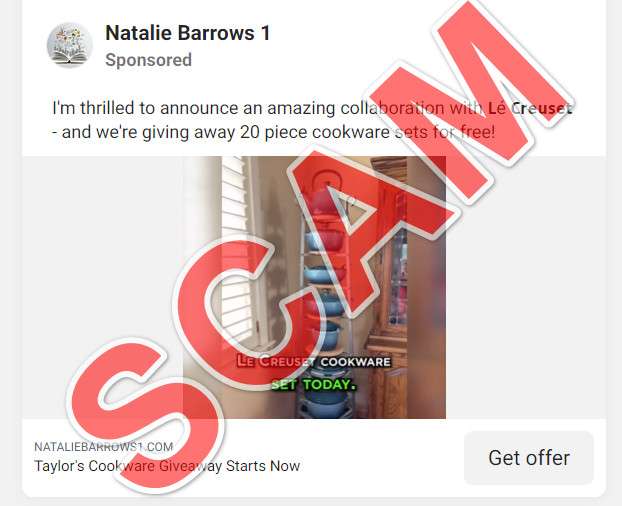
Overview of the Elaborate Taylor Swift Le Creuset Giveaway Scam
The increasingly common celebrity-fronted product giveaway scam starts circulating online ads run across popular platforms like Facebook, Instagram and TikTok. These feature deepfake AI video content portraying Taylor Swift enthusiastically explaining an exclusive deal gifting free Le Creuset cookware sets to random fans who enter in time:
“Hey guys, Taylor Swift here with some exciting news!” exclaims the simulated promotional video spots. “To celebrate the holidays and thank my amazing fans this year, I’ve teamed up with Le Creuset to give away some of their gorgeous Dutch ovens totally FREE!”
The fabricated Swifty representation claims that viewers simply follow included links and pay minor shipping vouchers around $10 to secure contest ownership of the expensive kitchenwares.
However, users then get rerouted outside social media to various elaborate phishing websites completely unassociated with Le Creuset or the real Taylor Swift and her management.
Decoy portal pages like “foxlifestyleoffers.com” showcase the Le Creuset logo alongside fake news articles depicting the giveaway already covered widely by established outlets like Fox and People Magazine. This aims overcoming initial skepticism justifying requests later asking sensitive customer payment and personal data rather than raising red flags.
Website headers trumpet: “Taylor Swift Partners With Le Creuset for Massive Nationwide Cookware Giveaway – Claim Yours Now!”
After scrolling through fake inventory shortage cover stories and customer testimonials, visitors eventually reach customized order forms promising delivery of the free cookware sets solely pending small $9.96 upfront shipping/handling fees.
However hidden subscription clauses discreetly authorize recurring monthly charges from partners rather than reasonable one-time payments expected under $10.
In the end, victims receive no high-end cooking products actually promised. But compromised information enables scammers inflicting financial damages through shady underground data sale channels thanks to unlocked credit card or account access handed over chasing deals seemingly too good to pass up.
How Users Get Systematically Duped By Taylor Swift Le Creuset Scams
The fraudulent Taylor Swift Le Creuset giveaway conducts highly coordinated strategies luring victims through the following deceptive process:
Step 1) Build Hype With Deepfake Celebrity Endorsement Videos
The scam starts using AI deepfake videos falsely portraying Swift herself endorsing the epic holiday Le Creuset giveaway for fans. Her face and name recognition builds initial social hype spreading wider reach.
Step 2) Funnel Traffic Through Intermediate Phishing Websites
Clicking on those videos and captions sends viewers outside social media to fake giveaway portal pages like “foxlifestyleoffers.com” mimicking reputable news brands. These feature more Taylor imagery alongside promotion details overcoming skepticism.
Step 3) Overcome Hesitations With Social Proof and Urgency
Fake customer reviews and claims of limited supply remaining compel urgently desired actions outside logical concerns.
“Hurry! Only 16 free Le Creuset sets left for this exclusive Taylor Swift giveaway!”
Step 4) Discreetly Collect Financial Information and Personal Data
Customized order forms conveniently require private sensitive input exceeding reasonable needs justifying contest shipment logistics.
Step 5) Hide Recurring Subscription and Service Charges in Fine Print
Hidden terms and conditions passages reveal victims actually consent steep recurring charges exceeding $100 monthly when attempting promotions rather than reasonable one-time $10 voucher costs depicted.
Step 6) Continuously Profit From Stolen Data and Unauthorized Billing
With access to now compromised confidential information, recurring charges activate alongside potentials for reselling data through unregulated dark web channels – each inflicting long-term financial damages through deception.
In summary, the celebrity appliance giveaway scam ensnares social media users through emotional triggers, urgency cues and concealed terms disclosing unreasonable financial objectives unrelated to reasonable giveaway transparency initially pitched.
Red Flags Exposing Deceptive Taylor Swift Giveaway Scam Sites
In coordination with manipulated social media posts, the celebrity appliance scam also leverages a network of deceitful phishing websites helping lend false credibility justifying requests for sensitive user payment information and data later.
Let’s explore several consistent suspicious website patterns exposing the underlying scam despite convincingly professional first impressions.
Impersonating Reputable News Authorities Without Consent
Fraudulent pages deliberately feature logos from established media brands like Fox News, ABC and CNN without permission aiming to dupe initial visitors into assuming previous journalistic review vetting unbelievable sweepstakes authenticity already.
Fabricating Celebrity Endorsement Quotes Supporting Scam Legitimacy
Another effective tactic giving the illusion of third-party credibility involves crafting vivid celebrity quotes praising the epic holiday cookware giveaway urgency. But further inspection reveals no records correlating the messages to any actual endorsement press releases.
For example, sites proclaim:
“I can’t wait to see fans unboxing their very own Le Creuset Dutch ovens on TikTok this holiday season after entering my biggest giveaway ever!” says the falsely attributed Taylor Swift quote.
But misinforming visitors intends lowering guard for later requesting financial disclosures rather than reasonable transparency offering free merchandise in exchange for little initial investment.
Burying Fine Print Legalese Detailing Recurring Account Charges
While prominent graphics prompt urgent participation scarcely reviewing rules, buried terms and conditions passages reveal victims registering for expensive $100+ monthly subscription charges rather than reasonable one-time coupon shipping fees securing “free” devices as depicted repeatedly in above advertisements. This clearly demonstrates intention eliciting finances deceptively versus transparency.
So while unbelievable holiday sweepstakes tied closely to celebrity status tempt engagement on surface levels, applying extra scrutiny protects individuals from preventable privacy and financial damages consistently. Carefully assess emotional hooks against objective facts.
Identifying the Taylor Swift Le Creuset Scams
In addition to external fraudulent websites, the supposed Taylor Swift free Le Creuset giveaway also flows heavily through major social media channels like Facebook, Instagram and TikTok using manipulated video content and other deception tactics targeting users.
Let’s review what suspicious signals commonly expose the questionable cookware promotion on each platform.
Facebook Tactics Exploiting the Taylor Swift Le Creuset Scams
Exercise caution towards Facebook posts exhibiting these common problems:
- Video advertisements using deepfake celebrity media endorsing free cookware offers
- Links in unpaid posts and descriptions rerouting outside Facebook to unvetted domains
- Profiles spreading hype demonstrate very limited previous activities
- Hard-sell language pressures readers urgently act before fictional deadlines
- Comment sections emphasize contest excitement rather than reasonably questioning abnormalities
For example, deepfake spots claiming Taylor Swift gifted free Le Creuset sets deserve vetting before engagement.
Suspicious Instagram Approaches Promoting the Cookware Scam
Analyze these questionable Instagram elements connected to free Le Creuset offers:
- Taylor Swift tagged in unrelated side accounts she didn’t create herself
- Captions urge immediate actions through risky external links to “claim” prizes
- Profiles discuss only contest details without expected personal sharing
- Suspicious visual filtering distorts legitimacy
- Locations list foreign countries unrelated to known U.S. corporate operations
Specifically, any Instagram video pretending Taylor Swift gifted Le Creuset sets deserves reasonable scrutiny before proceeding further.
Dangerous TikTok Videos Promoting the Taylor Swift Scam
Apply extra caution towards TikTok videos exhibiting these problems:
- Sophisticated deepfakes depicting Taylor Swift endorsing improbable massive Le Creuset contests
- Links in captions route clicking traffic outside platform protections
- Uniformly positive comments focused exclusively on urgent participation
- Strong calls-to-action incentivize reacting rapidly contradicting prudent vetting
If you spot an oddly persuasive video diverting outside a platform seeming too good believing, trust instincts and independently verify authenticity first. Across all social channels, supposed celebrity-tied opportunities sacrificing little for substantial personal gain warrant reasonable inspection before participation, protecting oneself from preventable damages. What seems too good often is until proven otherwise. Maintain healthy skepticism.
What To Do If You Are A Victim of The Taylor Swift Cookware Scam
If you now face unauthorized recurring charges or services after attempting questionable giveaways, immediately take action:
Step 1) Contact Payment Providers About Detected Fraud
Alert pertinent banking and credit institutions regarding discovery of an appliance scam scheme using celebrity endorsements under false pretenses allowing undisclosed account charges lacking proper consent. Ask about launching fraud disputes and temporary reimbursements during investigations.
Step 2) Attempt Canceling All Related Subscription or Account Access
Collect customer service contact information from documents tied to scam services and subscriptions. Call each provider clearly stating revoked authorization realizing those situations took advantage through deception rather than reasonable terms depicted initially about securing free products requiring only shipping.
Record confirmation details should charges persist anyway which remains common dealing unethical groups demonstrating untrustworthiness. Recheck statements routinely ensuring cancellation holds since follow up contact often proves impossible reaching largely anonymous operators located abroad.
Step 3) Lock Down Accounts And Enable Extra Protection Measures
Since shared personally identifiable information or account access retains vulnerabilities, immediately update passwords and enable stronger multi-factor authentication across logins. Consider proactive credit monitoring or bureau fraud alerts informing suspicious activities requiring quick intervention as well.
Step 4) Submit Complaint Reports to Relevant Fraud Agencies
File complete reports about offending companies, scam portals and damages incurred under false pretenses with government and third-party protection groups documenting events. Provide all available website names, header images displaying unauthorized trademark usage alongside celebrity media facilitating deception.
Such filings support investigating broad repeat offender patterns eventually warranting legal intervention assisting negatively impacted victims previously believing initial misrepresentations without hesitation.
Red Flags Exposing Taylor Swift Cookware Scams
While highly convincing initially, several consistent suspicious signals help reveal when celebrity product giveaways truly intend facilitating financial theft rather than reasonable marketing lead generations or charity:
1. Unauthorized Celebrity Affiliation Claims
- No evidence across Swift’s publicist statements or verified accounts confirms sponsoring free appliance giveaways.
2. Psychological Tactics Incentivizing Urgency Over Logic
- Pressure triggers like ticking countdowns and inventory claims stimulate emotional reactions circumventing critical vetting.
3. Patterned Activities From Key Promoters
- User profiles spreading heavy hype demonstrate very limited previous platform activities bringing legitimacy doubts.
4. Intermediate External Website Links
- Redirects outside legitimate social media platforms detach followers from internal moderation protections.
5. Mismatched Fine Print Terms
- Monthly subscription charges exceeding $100 contradict reasonable one-time $10 shipment fees.
By recognizing these patterns early, individuals avoid compromising privacy, data and finances better scrutinizing unbelievable celebrity free gifts before participation. Apply skepticism before acting inside environments playing emotional triggers.
Frequently Asked Questions About The Viral Taylor Swift Cookware Scam
Find answers below to the most commonly searched questions regarding supposed Taylor Swift sponsored Le Creuset holiday giveaway promotions currently circulating social media and suspicious external websites.
Is the Taylor Swift Le Creuset giveaway real or fake?
Despite advertisements featuring convincing video footage seemingly showing Taylor Swift endorsing an extraordinary Le Creuset giveaway for fans, the entire campaign constitutes an elaborate scam effort aiming to phish peoples’ payment credentials and personal information rather than donate expensive cookware free to random individuals.
No reputable evidence suggests authenticity behind promotions.
What techniques do Le Creuset scammers use to appear real?
This scam often utilizes manipulated “deepfake” style video content falsely depicting Swift endorsing the giveaway alongside imagery showing her baking holiday treats inside Le Creuset branded Dutch ovens.
Additionally, elaborate external portal pages mimic reputable news brand logos alongside urgency cues encouraging desired actions outside reasoned thought. Dense terms and conditions disclosures also bury monthly subscription charges exceeding $100 rather than reasonably covering one-time product shipment costs estimated around $10.
Why would Taylor Swift do a nationwide Le Creuset contest?
No logical reason explains a celebrity randomly gifting total strangers $400+ cookware sets simply covering minor shipping logistics alone. It reasonably makes little sense.
While certainly possible someday in future during album promotions, supposed existing viral Le Creuset contests fronted by Ms. Swift instead likely represent third-party scam attempts trying to falsely suggest advocacy towards subtly advancing personal agendas causing preventable financial harm.
What happens after attempting fake Taylor Swift cookware order forms?
Despite flashy social media incentives promising free high-end Le Creuset sets to fans attempting order processes, unfortunate victims never receive devices.
However, buried terms forms reveal accidentally consenting signing up for expensive $100+ monthly subscription charges rather than reasonable one-time product shipment fees depicted initially.
What immediate steps should appliance scam victims take?
Those discovering unauthorized charges appearing after attempting too good to be true celebrity product giveaways should first urgently notify associated banking and credit sources disputing transactions related sham discovery requesting assistance.
Shutdown compromised account access risks then report details naming businesses behind such practices to appropriate fraud reporting groups exposing schemes warning public faster stopping victimization vulnerabilities. Never assume automatic honesty around online free offers tied closely incredible stories conveniently requiring temporarily relinquishing sensitive data first without external validation.
Protecting Yourself From Celebrity-Fronted Appliance Scams
The bottom line guidance avoiding appliance scams involving famous figures:
1. Independently Verify Legitimacy Through Unbiased Third Party Research
If promotions seem questionable, thoroughly vet key endorsement claims and product availability specifics through impartial objective authoritative sources before acting.
2. Carefully Analyze Legal Terms, Conditions and Disclosures
Closely studying fine print often exposes unreasonable monthly charges contradicting reasonable single sweepstakes shipping costs.
3. Consider Both Individual and Collective Red Flag Warning Signs
While no lone suspicious signal definitively confirms scams, collectively assessing inconsistencies provides clearer fraud likelihood perspective.
4. Responsibly Report All Predatory Scam Attempts
Even if financial damages incurred seem limited, reporting scams through documenting warning signs and damages incurred under false pretenses to national trade complaint databases helps all vulnerable populations avoiding repeated predatory targeting from orchestrators facing no accountability otherwise.
Today’s technologies empower scammers imitating respected celebrity figures through social channels intending to manipulate psychological vulnerabilities rather than demonstrating genuine goodwill. But proactively maintaining heightened skepticism and insisting external validation prior acting puts control back in individuals’ hands avoiding regrettable troubles later.

Join the discussion
0 commentsShare your experience or ask a question about this article.
Discussion
Start the conversation
Have a question or something useful to share? Add the first comment.