

The website Tesla-musk24.com is falsely promoting a cryptocurrency giveaway scam. This fraud promises to double your deposited Bitcoin, Ethereum, Dogecoin or Tether. But it’s a ruse to steal your assets.
By impersonating Tesla and Elon Musk, this complex scam exploits trust and hype around crypto giveaways. Once you send funds to their wallet addresses, your crypto is gone for good. Don’t become a victim.
Let’s examine how this deceitful website operates and why you should never send crypto based solely on promises.
Scam Overview
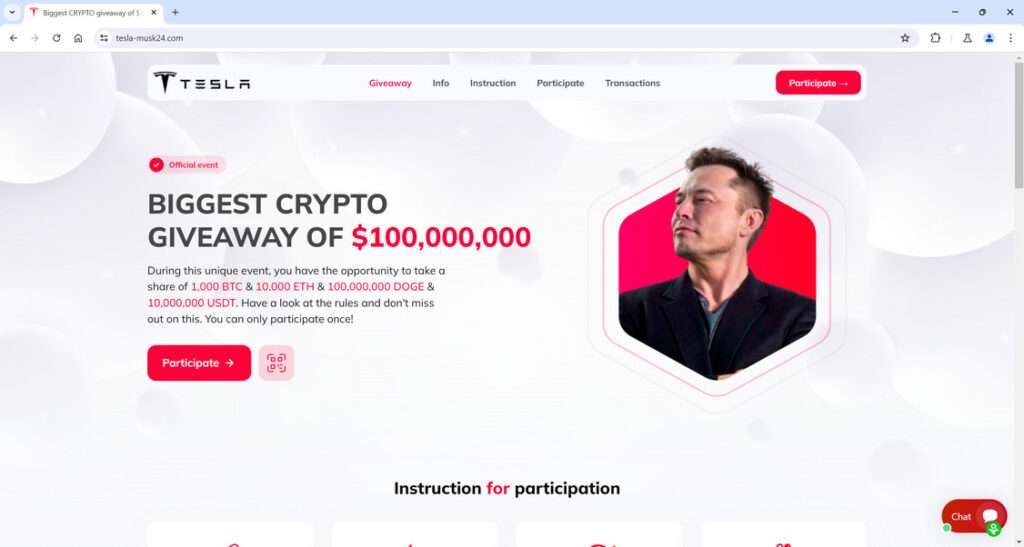
The Tesla-musk24.com website promotes an elaborate cryptocurrency giveaway scam impersonating Tesla and Elon Musk. The site promises a “Tesla Biggest Crypto Giveaway” of $100 million, falsely claiming they will double any Bitcoin, Ethereum, Dogecoin or Tether sent to their provided wallet addresses as part of a “unique event”.
In truth, this is a malicious scam operation completely unaffiliated with the real Tesla company. Its aim is to systematically steal deposited cryptocurrency from as many unwitting victims as possible using deception and impersonation.
The cornerstone of this crypto scam is the promise that Tesla will send back double any digital assets transferred to the listed wallet addresses. For example, they claim sending 1 BTC will get you 2 BTC back. Scammers exploit public excitement around Tesla and Elon Musk to convince victims this unbelievable giveaway is real.
But in actuality, there is no $100 million Tesla crypto giveaway. The company and Elon Musk have no association with this website or the wallet addresses listed on it. All funds sent to those addresses flow directly into the crypto wallets owned by scammers themselves.
By mirroring Tesla’s visual branding and language patterns, producing fake Elon Musk videos, and promising unbelievable 100% returns on deposits, the criminals behind this fraud are able to convince well-meaning crypto holders that this giveaway is credible and legitimate. In reality, they are just executing an elaborate ruse to systematically steal digital assets from as many depositors as possible.
Major red flags exposing this as an outright scam include:
- Claims of doubling deposits are unrealistic and too good to be true
- The site URL “Tesla-musk24.com” is completely unaffiliated with the real Tesla site
- Deposit wallet addresses are not owned by Tesla or Elon Musk
- No official confirmation of this “event” by Tesla or Musk exists anywhere
- Site lacks any verifiable company information or working contacts
By cleverly impersonating a major global brand like Tesla and exploiting public trust in Elon Musk, these scammers are able to orchestrate an effective crypto version of infamous “Nigerian Prince” email scams. But instead of promises of cash, they offer unbelievable crypto giveaways to trick unwary victims into draining their digital wallets straight into the fraudsters’ pockets.
This scam has likely already stolen millions in Bitcoin, Ethereum and other coins from unsuspecting cryptocurrency holders who fell for the false promises. With crypto growth surging worldwide, cybercriminals are drawn more and more to scams like this to reap big gains through deception. Always be wary of promotions online that seem too good to be true – protect your hard-earned crypto assets.
How The Tesla-Musk24.com Crypto Scam Works
The Tesla-musk24 scam operates through an elaborate sequence of deception across social media videos, a fraudulent website, and blockchain transactions. Here is how the cunning ploy works step-by-step to siphon crypto from targets while evading detection:
Step 1: Fake YouTube Livestreams Promote The Scam
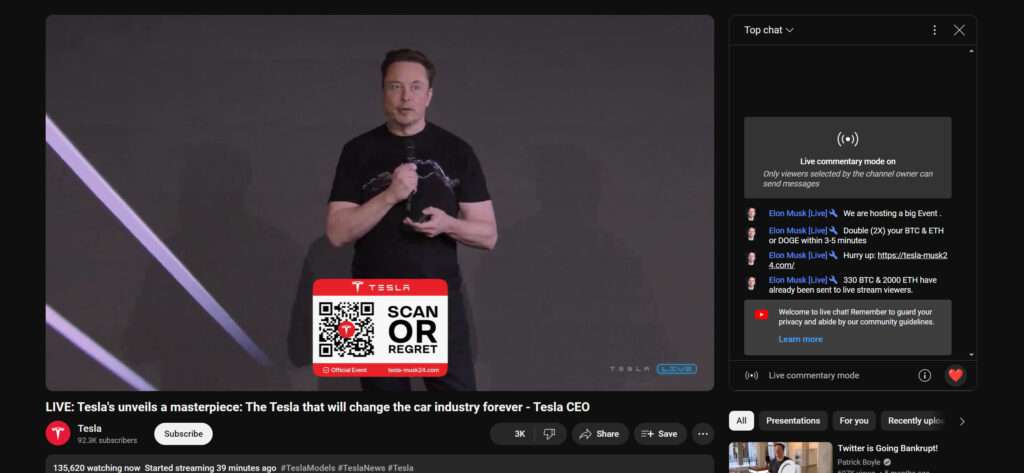
The scammers promote the fake Tesla crypto giveaway through YouTube livestream videos portraying Elon Musk discussing the promotion. In reality, they use deepfake technology to impersonate Musk’s likeness and voice. The deepfakes make the videos appear legit to unwary viewers.
Step 2: Scam Links Route To The Fraudulent Website
The YouTube livestreams include links in the video descriptions that route victims to the Tesla-musk24.com website. This scam portal borrows Tesla imagery such as its logo, fonts and color scheme to further reinforce perceptions of legitimacy to visitors.
Step 3: Website Claims To Double Deposits
The Tesla-musk24.com website prominently claims that for a “limited time” Tesla is running a crypto giveaway offering to double any deposited Bitcoin, Ethereum, Dogecoin or Tether. Scam instructions detail how to participate in the supposed promotion.
Step 4: Scammers Provide Deposit Addresses
A key component of the website scam is cryptocurrency wallet addresses provided for Bitcoin, Ethereum, Dogecoin and Tether. Following the website’s deposit instructions, victims are deceived into transferring crypto funds into these wallet addresses, believing Tesla will send back doubled assets.
Step 5: Victims Transfer Funds To The Fake Deposit Addresses
Victims, tricked into believing the purported Tesla crypto giveaway is real, follow the deposit steps outlined on the fraudulent Tesla-musk24.com website. They transfer their own cryptocurrency to the listed wallet addresses, expecting Tesla to honor the promotion by doubling their funds.
Step 6: Criminals Drain Deposits To Their Own Wallets
But in reality, the deposit wallet addresses are entirely controlled by the scammers themselves. Once victims send crypto funds to the addresses, the criminals immediately drain the transfers to their own private wallets and accounts on decentralized exchanges.
Step 7: Scammers Pressure More “Deposits” From Victims
To maximize stolen funds, the fraudsters often reach out to victims who already sent an initial “deposit”, pressuring them to continue sending more funds in order to eventually receive the non-existent giveaway payouts. This tricks already compromised targets into draining even more of their cryptocurrency.
Step 8: Criminals Cash Out And Disappear
After siphoning potentially millions in stolen crypto from multitudes of unwitting victims, the scammers rapidly cash out the funds into untraceable fiat currency using decentralized exchanges. They then abandon the fraudulent website, social accounts, and wallet addresses. The cybercrime groups disappear with their stolen money, leaving victims with no recourse.
By cleverly impersonating Tesla and Elon Musk using sophisticated deepfakes, social engineering, and cryptocurrency transactions, this scam has managed to hijack millions in digital assets from well-meaning but unsuspecting victims who believed the false promises of a lucrative crypto giveaway.
What To Do If You Are A Victim Of The Tesla-Musk24 Crypto Scam
If you unfortunately already deposited cryptocurrency funds into the wallet addresses associated with the fraudulent Tesla-musk24.com website, here are the steps you should take right away to report the scam and attempt recovery of stolen assets:
1. File Reports With Relevant Authorities
- File reports about the scam with the FBI Internet Crime Complaint Center (IC3), Federal Trade Commission, local law enforcement, and cybercrime teams in your state or country. Provide all relevant details on the scam tactics, wallets, accounts, and impacts. The more who report, the higher priority it becomes to pursue legal action against the scam ring behind this fraud.
2. Contact Crypto Exchanges And Wallet Providers
- If you sent funds from an exchange account wallet, immediately contact the exchange provider to report fraudulent transfers. Request emergency withdrawal freezes on the scam’s deposit address to prevent cashouts.
- If you used a private wallet provider, report the scam wallet addresses and request services blacklist them across their platform to prevent further victims.
3. Retain Any Evidence Of The Scam
- Keep records of any transaction receipts, screenshots, website pages, cryptocurrency addresses, videos, or communications related to the scam. These help investigators corroborate your report and identify the criminals.
4. Monitor The Scam Wallet Addresses
- Carefully monitor the scam’s cryptocurrency wallet addresses using public blockchain explorers to track any outgoing transfers the attackers make as they attempt to cash out funds. This can potentially help identify linked scam accounts.
5. Seek Legal Counsel About Recovery Options
- Retain a lawyer experienced in cryptocurrency fraud recovery to send legal cease and desist letters to exchanges used to liquidate stolen coins. They may advise further civil action against the scammers to recover losses.
6. Secure & Protect Your Remaining Assets
- Make sure all your remaining cryptocurrency assets are stored in cold hardware wallets. Enable two-factor authentication on any other online accounts. Change passwords you used on the scam site. Monitor closely for any new unauthorized withdrawal attempts.
7. Warn Others Publicly Of This Scam
- Prevent more victims by reporting the Tesla-musk24.com scam wherever you see it promoted. Comment warnings on scam YouTube livestreams and post details on social media channels to expose the tactics being used in this fraud. Spreading awareness protects others.
Frequently Asked Questions About The Tesla-Musk24.com Crypto Giveaway Scam
1. What exactly is the Tesla-musk24.com cryptocurrency scam?
This is a fraudulent website promoting a fake “$100 million crypto giveaway” by Tesla and Elon Musk in order to steal digital assets. Using deepfakes and social engineering, they trick victims into transferring Bitcoin, Ethereum, Dogecoin and Tether to scam wallet addresses with the false promise their deposits will be doubled.
2. How are potential victims targeted?
Scammers spread deepfake YouTube videos of Elon Musk discussing the fake giveaway. The videos urge viewers to visit the Tesla-musk24.com website, which promises to double any deposited crypto.
3. What techniques do the scammers use?
Tactics include deepfakes of Elon Musk, lookalike website designs, fake crypto wallet addresses, aggressive social engineering, and exploiting public perception of Tesla’s brand trustworthiness. This fools victims into ignoring clear warning signs.
4. How can I identify this as a scam website?
Non-Tesla URL, unrealistic claims, urging crypto deposits, glitchy videos, no confirmation by Tesla, anonymous operators, disabled contact options, all indicate it is a total scam operation.
5. What happens when I deposit crypto to their addresses?
The provided cryptocurrency wallet addresses are controlled entirely by the scammers. When victims deposit, the funds are immediately stolen and transferred into the criminal’s private wallets across different exchanges.
6. Can I get my money back if I already sent crypto?
Recovery will be extremely difficult to impossible due to irreversible blockchain transactions. Prevention is critical. Immediately secure remaining assets and report to authorities. Consult an attorney about legal options.
7. Who is really behind this scam website?
Anonymous cybercriminal networks coordinate these scams to steal millions in crypto assets. The scam wallets, domains, and accounts are all fraudulent – unassociated with the real Tesla company.
8. How can I avoid cryptocurrency scams like this?
Learn techniques scammers use like deepfakes and social engineering. Always verify giveaways directly through official company channels. Never send crypto solely based on promises. Enable security protections on accounts.
9. Where should I report this scam?
Report immediately to IC3, FTC, cybercrime teams, social networks, crypto exchanges, crypto wallet providers, domain name registrars, advertising networks, and anywhere else the scam appears or is promoted.
10. What should I do if I see this scam promoted?
If you come across any promotions of this scam, urgently report it to the platform being abused. Spread warnings about this fraud to protect other users from being deceived and losing their digital assets.
The Bottom Line
The Tesla-musk24.com website is entirely fraudulent, promoting a fake cryptocurrency giveaway simply to systematically steal digital assets from as many unwitting victims as possible. This complex scam leverages deepfakes, social engineering, and impersonation powered by cryptocurrency’s decentralized nature to siphon millions from unsuspecting targets.
Remember – Elon Musk and Tesla do not engage in random online crypto giveaways requiring deposits. Any promotion along these lines using the Tesla name or imagery is an outright scam attempt. Avoid succumbing to their psychological manipulation and tricks. With caution and education, we can reduce this scam’s impact and eventually shut down its cybercriminal operators for good.

Join the discussion
0 commentsShare your experience or ask a question about this article.
Discussion
Start the conversation
Have a question or something useful to share? Add the first comment.