

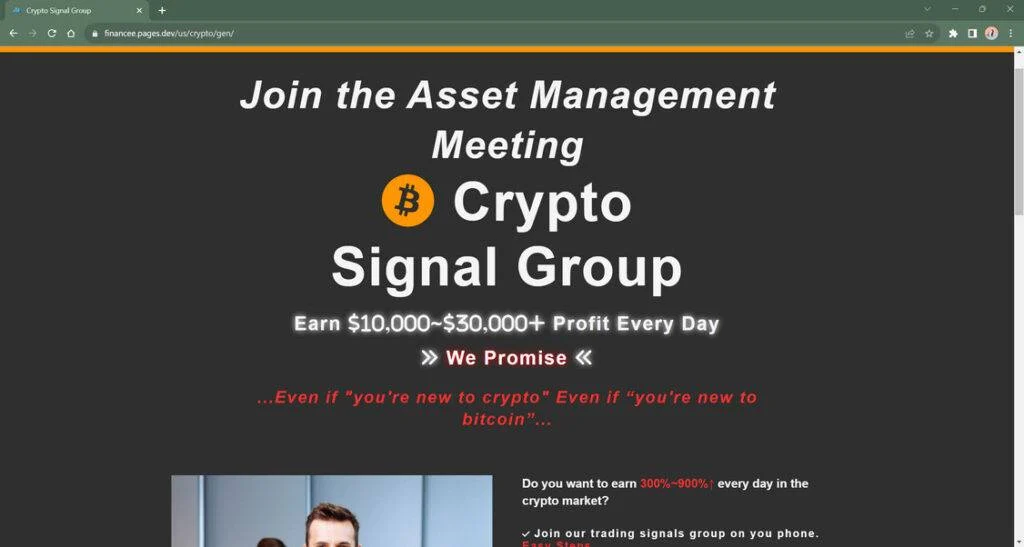
Elon Musk’s name and reputation are being exploited yet again by scammers promoting fake “get rich quick” cryptocurrency schemes. Beware of scam ads on Facebook and Instagram that claim to reveal Elon Musk’s “new plans” for “exclusive growth secrets” about an “AI Crypto Signal Group” that will supposedly allow you to earn massive profits every day from Bitcoin and cryptocurrency trading.
Overview of the Scam
The ads typically claim Elon Musk is revealing special secrets or holding an “asset management meeting” about an exclusive AI crypto trading group. Supposedly this will allow you to earn $10,000 to $30,000+ in daily profits without any prior crypto trading experience.
These outlandish claims are clear red flags of a scam. Elon Musk has no association with any such trading group. The ads are fake and any websites or groups you are directed to after clicking are fraudulent.
The goals of the scammers are:
- Get you to click on the ad and visit their scam website
- Trick you into trusting their lies about earning massive profits
- Steal your personal information and money
How the Scam Works
Here is a step-by-step breakdown of how this sneaky scam operates:
- You see an ad on Facebook or Instagram – The ad uses Elon Musk’s name, image, and reputation with Tesla and SpaceX to grab your attention. Headlines make outrageous claims about Musk revealing exclusive secrets or holding asset management meetings about an AI crypto trading group.
- The ad tries building trust and urgency – The text and images try to convince you the opportunity is real using fake testimonials and claims you need to act fast before the limited spots fill up. This pumps urgency and social proof to get you hooked.
- You click the ad and are instructed to join a WhatsApp or Telegram group – The website or ad directs you to join a fraudulent chat group on WhatsApp or Telegram related to the scam offer.
- The group convinces you to trade cryptocurrency with leverage – Within the group, scammers pressure you to open accounts and trade currencies like Bitcoin on leverage/futures, promising unrealistic returns.
- You are manipulated into giving remote access or sending funds – Scammers manipulate victims within the group chat to install remote access software and transfer funds from your linked bank account or credit cards.
- The scammers steal your money – There is no real trading taking place. The scammers take your funds and disappear or try selling you additional fake services.
How to Spot This Scam
Learning how to recognize the warning signs is key to avoiding this scam’s traps:
- Outrageous claims of massive profits – No legitimate system can generate $10k+ daily returns consistently. It’s mathematically impossible. Any promise of easy riches is a clear scam indicator.
- URGENT calls to act fast – Scammers create a false sense of urgency and scarcity using countdown timers or limited spots. It’s a trick to get you to stop thinking critically.
- Too good to be true – Let common sense be your guide. Ask yourself – if it really was possible to earn tens of thousands per day passively from crypto trading, why would they be telling strangers about it rather than keeping it for themselves?
- Fake endorsements and testimonials – The ads show false claims of being featured in or endorsed by major media outlets. Any testimonials are completely invented.
- Grammatical and spelling errors – Shady websites tend to be riddled with typos and grammar mistakes.
- Unsubstantiated claims – Vague claims using buzzwords like “AI” or “crypto trading signals” sound impressive but lack any proof or technical details explaining how the supposed system generates such massive profits.
- No association with Elon Musk – No evidence exists of Elon Musk endorsing any trading system or holding asset management meetings about an AI crypto group. Any suggestion otherwise is a lie.
How to Avoid This Scam
Here are proactive steps you can take to avoid falling prey:
- Avoid clicking on social media ads in general. Scammers relentlessly pump out scammy ads. It’s best to ignore them altogether.
- Check domain registration info of any website you visit using a tool like Whois.com. Scam sites tend to have anonymous domain owners.
- Search online for the company or product name + words like “scam” or “review” to find warning signs from other victims.
- Beware free trial offers as its a common ploy to get your payment info. Free rarely means free when it comes to sketchy websites.
- See if contact details are provided and actually work. Scammers tend to list fake addresses or phone numbers.
- Don’t believe every “as seen on” logo. Some use actual media outlet logos without permission to look legit. Verify by searching for the company on that media site.
- Check trustworthiness of cryptocurrency brokers using a regulated broker with oversight from entities like the SEC is ideal.
- Set up spam call blocking and filters on email. This prevents follow up harassment from scammers after you unluckily give out your contact information.
What to Do if You Already Fell Victim
If you submitted sensitive information or transferred funds to the scammers, take these steps immediately:
- Contact your bank or credit card company to report fraudulent charges or stop payments from going through. Cancel any cards used.
- Report the fraud to the FTC and FBI via their online reporting tools. The more reports authorities receive about a specific scam, the more urgency it brings to investigate and stop it.
- Be wary of “recovery scams” where someone contacts you claiming they can recover your lost funds, for an upfront fee. This is always a scam trying to victimize you twice with false promises. Any legitimate asset recovery process would not require fees upfront.
- Change passwords on any website or account for which you used the same credentials. Scammers commonly test compromised passwords on other sites like email or financial accounts. Enabling two-factor authentication adds an extra layer of security.
- Watch out for new fraudulent charges or spam. With your email or phone number compromised, you may see an uptick in unrelated scams. Be extra cautious about sharing any sensitive data or opening unexpected attachments for a few months until the scammers move on.
Conclusion & Key Takeaways
Elon Musk crypto scam ads on Facebook and Instagram should be avoided at all costs. They lure victims in with false promises of massive profits by joining an exclusive AI trading group supposedly backed by Elon Musk. In reality, all the claims are completely fabricated in order to steal your money and personal information.
Protect yourself by being skeptical of outlandish claims, checking legitimacy of any website before providing your info, and never sending payment to an unverified source. Be extra vigilant for unexpected calls, emails, or texts after accidentally giving your contact information to scammers. Share this article to help spread awareness about this brazen scam impacting social media users.
Frequently Asked Questions
Is Elon Musk really holding asset management meetings about an exclusive AI crypto trading group?
No. These claims are completely fabricated by scammers trying to misuse Elon Musk’s name and reputation to trick people. Elon Musk has no involvement with any trading groups or asset management meetings as described in the false ads.
Can you really earn $10,000 or more in daily profits from crypto trading?
No, any promise of earning consistent profits of $10,000+ daily from crypto trading is unrealistic and fraudulent. There is no magic system that can generate such outsized returns day after day – it simply does not exist.
Are the testimonials and media logos shown on the scam ads and sites real?
No. The fake testimonials and media logos are completely invented. Any appearance of being endorsed by large media outlets or featured in major publications is just a tactic to build trust and credibility so you believe their lies.
Is there any way to recover my lost funds from this Elon Musk crypto scam?
Unfortunately recovery of lost funds sent to scammers is very rare. Your best bet is to immediately report the fraud to authorities and contact your bank or credit card company. However, do not fall victim to recovery scams – anyone claiming they can magically get your money back for an upfront fee is lying.
How can I spot and avoid similar crypto trading scams in the future?
Be wary of ads or websites promising guaranteed passive profits from crypto trading, even if they use celebrity names like Elon Musk. Check domain registration history of any website, search online for complaints, and never provide payment or personal info to an unverified source making unbelievable claims.

Join the discussion
0 commentsShare your experience or ask a question about this article.
Discussion
Start the conversation
Have a question or something useful to share? Add the first comment.