

The ThermaRocket Heater has exploded in popularity recently, with ads across social media promoting it as a revolutionary portable heater that can heat up any room in minutes while slashing your energy bills. But is the ThermaRocket Heater truly as amazing as it claims, or is it just hype and clever marketing for an underwhelming product? In this in-depth investigation, we’ll take a close look at the ThermaRocket Heater to determine if it’s a legit game-changing heater or just another dropshiping scam.
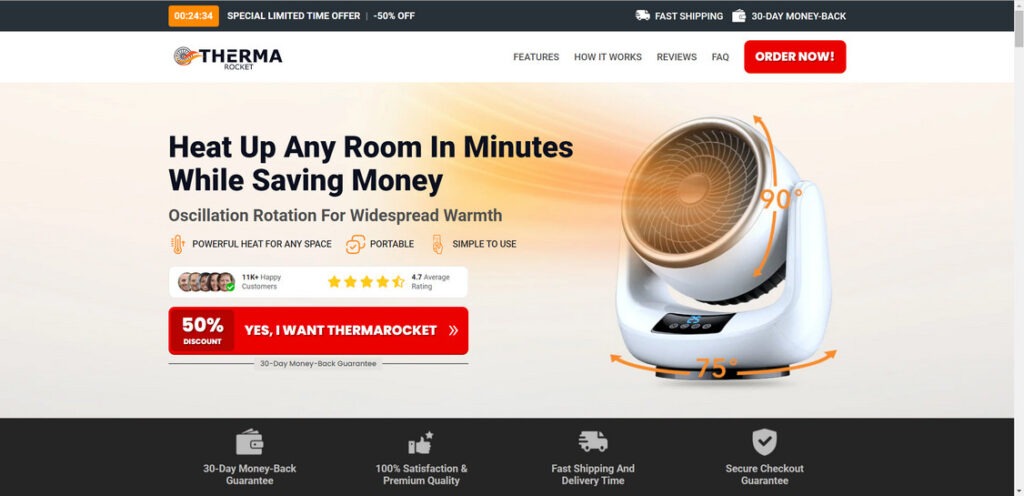
Overview of the ThermaRocket Heater
The ThermaRocket Heater is marketed as a 1500W portable ceramic heater that uses “reverse jet engine heating technology” to provide rapid, intense heat for any room in your home. The ads promise that it can heat up large rooms in just minutes, while helping you save up to 85% on your heating bills compared to traditional space heaters.
Some of the featured benefits highlighted in the ThermaRocket ads and on their website include:
- Powerful 1500W heating power
- Advanced ceramic heating technology
- Rapid heating and thermal efficiency
- Oscillation rotation for widespread warmth
- Smart thermostat for automatic temperature regulation
- Safety features like tip-over protection
- Portable and lightweight design
- Huge energy savings of up to 85%
The ThermaRocket website also claims the heater has amassed over 11,000 positive customer reviews and maintains an average rating of 4.7 stars. The heater is marketed heavily on social media platforms like Facebook and Instagram, often accompanied by testimonials of satisfied customers.
At first glance, the ThermaRocket Heater certainly seems like an impressive and innovative product. But should we take all these claims at face value? Let’s scrutinize them further to determine if this heater is truly as remarkable as advertised.
Questionable and Unrealistic Claims
While the marketing for the ThermaRocket Heater certainly paints a picture of an amazing product, many of the claims being made raise some immediate red flags.
Unrealistic Energy Savings Claims
The claim that the ThermaRocket Heater can help you save up to 85% on energy costs is an extraordinary assertion. Heating a space requires a certain amount of energy input, so achieving drastic savings in energy consumption would violate the laws of thermodynamics.
Energy can neither be created nor destroyed – so to generate enough heat to warm a room requires a minimum energy input. The notion that a 1500W portable heater could slash heating bills by 85% seems wildly exaggerated and unrealistic. Beware of products making outrageous claims like this, as it is often a sign they are misleading potential buyers.
Dubious “Reverse Jet Engine” Technology
The ThermaRocket ads boast that the heater uses innovative “reverse jet engine” heating technology invented by an engineer. However, there is no evidence online about this supposed engineer or any explanation of how this mysterious technology works.
Searches for “reverse jet engine heating” turn up nothing credible besides references to the ThermaRocket Heater itself. This strongly indicates the “technology” is fictional and used as a marketing gimmick to make the heater sound more impressive.
Fake Customer Reviews
While the ThermaRocket website proudly states the heater has over 11,000 customer reviews averaging 4.7 stars, none of this can be verified. There are no links or screenshots of these supposed reviews – and searching for ThermaRocket reviews turns up almost nothing beyond affiliate marketing sites.
Many product review sites advise consumers to be very wary of companies showcasing only positive reviews on their own websites, as these are often fabricated to boost sales. Without being able to authenticate these reviews, they should not be taken at face value.
Negative Customer Experiences
Looking beyond the company’s own website reveals a much less flattering picture of the ThermaRocket Heater. Scores of negative customer reviews present a far different reality than the flawless product portrayed in the marketing.
Many reviewers state the ThermaRocket Heater failed to live up to its heating claims. Although advertised as a powerful 1500W heater, customers consistently commented on its weak heat output and inability to sufficiently warm rooms as promoted.
Customers also widely complained about the great difficulty in getting refunds honored. Many shared frustration with being unable to return the ThermaRocket despite its underperformance, poor quality, and short lifespan.
Overall, real-world experiences with the heater contradict the faultless product shown in the marketing. These negative reviews indicate the true performance and quality of the ThermaRocket Heater fails to match what is promised.
Signs of a Dropshipping Scam
Dropshipping scams have exploded in popularity in recent years, so anytime you come across a product like the ThermaRocket Heater that is marketed aggressively online, it warrants some researching.
There are several red flags that indicate the ThermaRocket Heater is likely a dropshipping operation focused on maximizing profits over product quality:
- Heavy marketing on social media platforms with little organic discussion
- No mention of a physical company address or headquarters
- Cookie-cutter marketing websites with no real unique content
- Private domain registration to conceal ownership
- Nothing known about the company outside of the product itself
- Complaints of damaged, used, or counterfeit items being shipped
- Difficulty getting refunds or reaching actual customer support
In essence, the focus is solely on driving sales through sensationalized marketing rather than developing a legitimate business around a quality product. Everything about the ThermaRocket Heater aligns with the dropshipping e-commerce model.
What Customers Are Actually Receiving
Further confirming that the ThermaRocket Heater is a dropshipping scam are reports that customers receive a cheap personal mini cooler rather than the advertised high-powered ceramic heater.
Product reviews reveal that many customers ended up with a basic tabletop cooler that retails for around $6-13 on sites like Alibaba. Deceptively branded as the “ThermaRocket,” this low-cost device is clearly not capable of heating entire rooms as promoted.
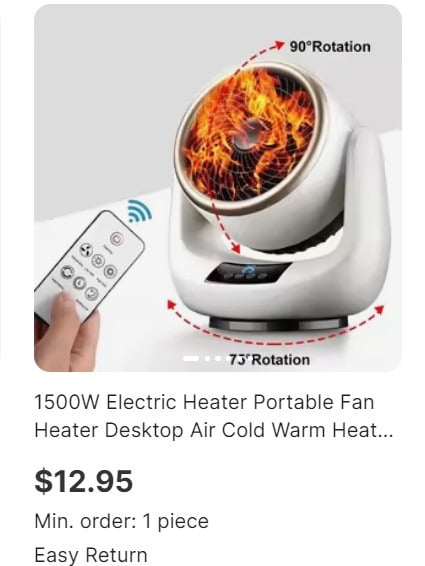
This bait-and-switch tactic is common with dropshipping scams. Slick ads are used to entice buyers with a seemingly amazing product that does not actually exist. Once purchases are made, a cheap generic gadget is shipped that in no way matches the advertised capabilities.
The Bottom Line
When a product seems too good to be true, it almost always is. The ThermaRocket Heater promises revolutionary heating power and massive energy savings that defy the laws of physics. Outlandish claims combined with fake reviews, nonexistent technology, and firsthand negative experiences are glaring red flags.
All evidence indicates the ThermaRocket Heater is a dropshipping scam using exaggeration and deception to peddle cheap personal coolers at inflated prices. Customers are wise to avoid this dubious product and seek proven heating solutions from reputable brands. With winter coming, don’t get caught out in the cold by falling for the ThermaRocket dropshipping scam.
This article is for educational purposes only and does not constitute professional, financial or legal advice. The content is intended for general information and should not be construed as definitive guidance. Information contained herein is subject to change without notice.  For concerns, please contact us via the provided form.
If you are the owner of the website or product in question and wish to offer clarifications regarding your business or website, please reach out to us through the provided Contact Form.








