Your inbox is one of the most trusted places in your digital life. It is where bills, confirmations, business messages, and personal conversations all arrive without much suspicion. This trust is exactly what scammers rely on. One of the most convincing tactics spreading right now is the “Your Mail Is On Hold” email scam. It looks official, it uses the right wording, and it creates pressure that feels real. Many people have clicked without thinking twice.
This guide takes you through the full picture. You will understand how the scam works, why it is so effective, what signs reveal it, and the exact steps to take if you already interacted with it.
Scam Overview
The “Your Mail Is On Hold” scam is a phishing campaign designed to steal sensitive information. It targets people by pretending to be a legitimate email provider, postal service, or secure message delivery platform. The scam message attempts to convince recipients that their mail delivery has been paused due to a problem that must be resolved.
These emails typically claim that:
Incoming mail cannot be delivered
The mailbox has been temporarily frozen
The service needs confirmation of address or identity
The user must click a button or link to restore incoming messages
The layout is clean, simple, and professional. Scammers intentionally mimic the design language of large companies. They use branding styles similar to Microsoft Outlook, Gmail, Yahoo Mail, USPS, FedEx, or general email-security portals. This visual familiarity is one reason people fall victim.
Another key factor in the scam’s success is psychological pressure. Email interruptions feel serious. People worry about missing business deals, banking alerts, confirmations, delivery notices, or other urgent messages. Scammers exploit this anxiety by using urgent language paired with a short, simple call to action like “Resolve Delivery Issue”.
Even though the wording seems harmless, the intention behind it is to push you to act quickly without verifying whether the message is legitimate.
The Goal of the Scam
The primary objective of the scam is to steal personal and financial information. Depending on the version of the scam, criminals may seek:
Email login credentials
Credit card numbers
Full names and addresses
Phone numbers
Recovery email addresses
Security answers
Banking details
Some versions of the scam do not stop at phishing. The link may install malware, keyloggers, or remote-access tools. Once installed, attackers can monitor your activities, intercept logins, and gain deeper access to your system.
How the Fake Email Appears Legitimate
Scammers craft the email so it looks authentic in several ways.
First, they use friendly greetings like “Valued Client” or “Dear Customer”. This creates a sense of professionalism without needing to personalize the message. Since the email goes to thousands of recipients, vague greetings allow it to bypass suspicion.
Second, the formatting is often clean and minimal. There is usually a centered box with a title in bold red letters indicating a problem. Below it, short sentences explain that incoming messages have been placed on hold. The message ends with a button that appears secure and official.
Fourth, scammers craft their phishing links so they resemble real websites. For example:
mail-secure-auth.com
inboxverification.net
deliverysupportmail.com
None of these are official. Real providers do not use strange domains like these, yet many users do not notice the slight variations.
The Sense of Urgency
The scam relies heavily on urgency. People rarely want to risk losing important emails. The message is designed to make you feel that immediate action is required. The instructions are simple to follow and placed directly in front of you.
Scammers capitalize on three psychological triggers:
Fear of missing important communication
Pressure to fix the issue quickly
Trust in familiar design elements
When these triggers combine, the victim’s ability to analyze the situation decreases. Even users who normally detect scams can click before thinking.
Why This Scam Continues to Spread
The “Your Mail Is On Hold” scam is so widespread because it works across all demographics. Everyone uses email, and everyone understands the inconvenience of losing access to incoming messages. This universality makes the scam appealing to cybercriminals.
Large phishing campaigns often involve millions of emails sent per day using compromised mail servers or automated spam tools. Even if only a small percentage of recipients click, scammers profit significantly.
Another reason for its success is that the scam easily adapts. Criminals adjust the wording, logos, button text, and colors to match any service they wish to impersonate. The core structure remains the same, but the details change often enough to bypass traditional spam filters.
Real-World Impact
Victims who fall for this scam may face serious consequences. If they enter their email credentials, scammers immediately take control of their accounts. They can:
Lock the victim out
Reset passwords
Access stored personal data
View private conversations
Search for banking or tax information
Send phishing emails to the victim’s contacts
Access connected accounts like social networks and cloud storage
If the phishing page demands payment information, the risk becomes even greater. Stolen credit card numbers are often sold on the dark web or used to make fraudulent purchases.
In more advanced attacks, malware may be installed on the victim’s device. This can lead to spyware infections, ransomware attacks, or complete system compromise.
Who Is Most at Risk
Although anyone can fall victim, certain groups face higher risk:
People who manage business email accounts
Individuals expecting deliveries or messages
Users who receive a high volume of daily emails
Those who work in customer service or sales
Older adults less familiar with phishing techniques
Individuals who check email quickly on mobile devices
Mobile users are especially vulnerable because they often see only the message preview. They do not inspect the full sender details or hover over links to reveal the true destination.
Indicators That the Message Is Fake
Although the scammers work hard to appear legitimate, several signs reveal the fraud. These may include:
Generic greetings instead of your real name
Pressure to act immediately
Buttons demanding sensitive information
Poor grammar or unnatural phrasing
Suspicious sender addresses
Domains that do not match the real service
Lack of personalization or account-specific details
Threats to disable your mailbox unless you act
As phishing attacks grow more sophisticated, some messages may appear flawless. In these cases, anything that involves verifying personal information through an unsolicited email should be considered suspicious.
How The Scam Works
The mechanics behind the “Your Mail Is On Hold” scam are clever, calculated, and designed to guide victims step by step toward giving up their personal information. Although variations exist, the overall flow remains consistent across major phishing campaigns.
Below is a detailed breakdown of how the scam unfolds from start to finish.
Step 1: The Scam Email Arrives
Everything starts when the victim receives a message that looks like it comes from a trusted source. The subject line often uses wording that creates instant concern. Examples include:
“Your Mail Delivery Has Been Suspended”
“Your Incoming Messages Are On Hold”
“Action Required: Delivery Issue Detected”
“You Have Been Sent a Secure Message”
The email is crafted to appear professional. It typically includes a polished layout with centered text, a bold title, and a prominent button.
Step 2: The Language Creates Urgency
Once the victim opens the email, the message uses short, direct statements. The goal is to create concern while appearing helpful. The content typically explains that incoming emails cannot be delivered until the user confirms their information.
These statements often include phrases such as:
“To proceed with delivery, confirm your address”
“Your messages will remain on hold until the issue is resolved”
“We require immediate action to restore your mailbox”
This is intentional. Scammers know that people are less likely to pause and analyze the message if they believe something important is being blocked.
Step 3: The Victim Clicks the Link
In the center of the email, there is usually a red or blue button. Its label may read:
“Resolve Delivery Issue”
“Restore Messages”
“Reactivate Mailbox”
“Update Information”
The button leads to a phishing site disguised as a legitimate portal. The design is often similar to popular webmail login pages. The colors, fonts, and layout are familiar enough to reduce suspicion.
Step 4: The Fake Website Requests Information
Once on the phishing site, the victim encounters a form. The exact form varies depending on the scammer’s goals.
Common requests include:
Email address
Email password
Full name
Address
Phone number
Credit card details
Security questions
Secondary recovery email
Some phishing pages ask for the email password twice to appear more official. Others display error messages that prompt victims to re-enter the information, ensuring accuracy.
Step 5: Sensitive Data Goes Directly to the Scammers
After the victim submits their details, the information is immediately sent to the scammers. The phishing page might redirect the victim to a generic inbox or display a fake confirmation message stating the issue has been resolved.
At this point, the scammers have everything they need. They can:
Access the victim’s inbox
Reset connected accounts
Search for financial documents
Perform password resets using email verification
Send phishing messages to the victim’s contacts
Monitor communication for valuable data
If credit card information was provided, it will usually be used quickly. Criminals often test cards with small purchases before attempting larger transactions.
Step 6: The Attack Continues With Account Takeover
Once attackers gain access to an email account, they often move quickly. The first step is usually to change the password. This locks the victim out and prevents them from recovering the account through ordinary means.
Next, scammers may change recovery options. They might add new phone numbers, backup emails, or security questions. This makes recovery even harder.
Some attackers enable auto-forwarding rules. These rules silently send a copy of every incoming email to the attacker, even after the victim regains control. This can lead to long-term monitoring if the victim does not check their account settings.
Step 7: Broader Identity Theft
Email accounts serve as gateways to nearly everything online. Once inside, scammers can reset passwords for:
Banking platforms
Investment accounts
Online stores
Social media
Government services
Subscription services
The attacker’s access to the victim’s identity becomes broad and dangerous. For some victims, the fallout extends for months, especially if personal documents or financial information were stored in the inbox.
Step 8: Malware Deployment in Some Variants
Certain versions of the scam go beyond phishing. Instead of a fake login page, the link may trigger a malware download.
Common malware types include:
Keyloggers
Remote-access tools
Screen recorders
Trojans
Ransomware
These tools give attackers persistent access. They allow criminals to monitor keystrokes, steal credentials, capture screenshots, and gain deeper control of the system.
Step 9: Scaling the Scam
Scammers often automate the process. They use stolen email addresses to send the scam to new victims. Because the emails come from trusted contacts, people are more likely to fall for them.
This is how phishing campaigns spread rapidly.
Examples of the “Your Mail Is On Hold” Scam and How To Spot Them
Many victims fall for this scam because the emails look polished and believable. Scammers copy the tone and layout of real service providers, which makes the message feel legitimate at first glance. Below are realistic examples of what these phishing emails look like, followed by detailed explanations of the warning signs you should always check.
Example 1: “Your Incoming Messages Are On Hold”
Subject: Your incoming messages are currently on hold Body preview: We have paused delivery of several new emails due to an issue with your account information. Call to action: Restore Messages
This example uses a simple and credible message. The wording suggests an urgent block that must be resolved. The call to action looks like a normal button you might expect from a mail provider.
Red flags to watch for:
The phrase “messages are on hold” is uncommon among major providers.
The sender address often looks similar but not identical to the real domain.
The message demands immediate action without explaining the issue.
The link in the button leads to a domain that does not match your provider.
Example 2: “We could not deliver your latest email”
Subject: Delivery Failed: Email on Hold Body preview: Your mailbox could not deliver one or more messages. Please verify your details to continue receiving incoming mail. Call to action: Verify Account
This version tries to mimic error notifications from professional email systems. It creates mild panic by implying that something important may have been blocked.
Red flags to watch for:
Legitimate services do not hold emails for identity verification.
The message often uses generic greetings like “Dear Customer.”
The button redirects to a login page that looks similar but is hosted on a strange URL.
Grammatical structure may feel slightly off or overly formal.
Example 3: “Security Alert: Mail Delivery Suspended”
Subject: Security Notice: Your Mailbox Has Been Suspended Body preview: We detected an issue with your security settings. Incoming emails are temporarily suspended until you verify your account. Call to action: Reactivate Account
This example uses stronger language to push the victim into reacting quickly. The message tries to sound like a security department issuing a formal warning.
Red flags to watch for:
Suspension threats are rarely communicated through generic emails.
No specific details about the issue are provided.
The footer usually contains vague copyright text from an unknown company.
The link may display a secure icon but still lead to a fraudulent site.
Example 4: “Your Secure Message Cannot Be Delivered”
Subject: Your secure message is on hold Body preview: A sender attempted to deliver a secure message, but delivery could not be completed. Action required. Call to action: Release Message
This approach imitates secure message services used for medical or financial communications. Many people fall for it because they worry about missing sensitive information.
Red flags to watch for:
Real secure-message platforms never request login credentials through external links.
The link usually points to a domain unrelated to your provider.
The overall formatting is too simplistic for a real secure-message portal.
The email does not include your name, account number, or any personalized identifier.
Example 5: “We Need You to Confirm Your Address”
Subject: Address Verification Required Body preview: To continue receiving incoming mail, please verify your account address. Failure to do so may result in delivery suspension. Call to action: Confirm Address
This variant appears to be from a postal service or delivery company. It uses terms related to physical mail to confuse recipients who may be expecting packages.
Red flags to watch for:
Postal services do not pause email or digital inboxes.
The message blends postal language with email warnings, which is inconsistent.
The return address does not match the official domain of the service.
The message includes a strong threat with no additional context.
How To Spot These Scams Every Time
Even when the design looks flawless, the underlying structure of the scam never changes. Use the indicators below to identify these fraudulent emails instantly.
Check the sender address carefully
Scammers often use addresses that look close to legitimate domains, such as:
support-mail.com
outlook-security.net
mailboxalerts.info
The official domain of your real email provider will never vary or include random words.
Hover over links before clicking
Without clicking, hover your mouse over any button or link. A small preview of the URL will appear. If the domain looks unfamiliar, long, or unrelated to your provider, the message is fraudulent.
Look for generic language
Scam emails often start with phrases like:
Dear Customer
Valued User
Account Holder
Legitimate alerts from providers usually include your name or username.
Watch for pressure tactics
Scammers rush you by using urgent lines such as:
Immediate action required
Your account will be suspended
Delivery paused
Verification needed now
Real providers communicate issues without manipulating your emotions.
Notice formatting inconsistencies
Red flags include:
Strange spacing
Unusual capitalization
Missing contact information
Odd colors or mismatched fonts
These differences might be subtle, but they are often enough to reveal the deception.
Ask yourself whether the message makes sense
Email providers do not “hold” incoming messages because your address is unverified. Postal services do not control your digital inbox. Requests that seem unusual or unnecessary should always prompt skepticism.
What To Do If You Have Fallen Victim to This Scam
If you clicked the link or provided any information, act calmly but quickly. The steps below will help you secure your accounts and minimize damage.
Change your email password immediately Use a strong, unique password. Do not reuse a password you use anywhere else. If you cannot access your account, start the account recovery process right away.
Enable two factor authentication Turn on two factor authentication for your email account and any connected services. This adds a second layer of security that prevents attackers from logging in easily.
Check for unauthorized forwarding rules Attackers often create rules that send your emails to their address. Go through your email settings and delete any unfamiliar rules or filters.
Review recovery settings Make sure no unfamiliar phone numbers or backup emails were added. Remove anything that you did not personally add.
Scan your device for malware Use reputable antivirus software to run a full system scan. If the scam included a file download, this step is essential.
Reset passwords for other accounts If you use the same password anywhere else, change it immediately. Attackers often try compromised credentials across multiple platforms.
Contact your bank if you shared financial information Inform them about the incident. They may monitor your account, issue a new card, or block suspicious transactions.
Check your email account activity logs Most providers show recent login locations. If you see unfamiliar access, report it and sign out of all sessions.
Warn contacts if emails were sent from your account Let them know that a phishing message was sent without your knowledge so they do not click the fraudulent link.
Monitor your identity for unusual activity Watch for unexpected account changes, new credit inquiries, or unusual notifications. Early detection prevents deeper problems.
Is Your Device Infected? Scan for Malware
If your computer or phone is slow, showing unwanted pop-ups, or acting strangely, malware could be the cause. Running a scan with Malwarebytes Anti-Malware Free is one of the most reliable ways to detect and remove harmful software. The free version can identify and clean common infections such as adware, browser hijackers, trojans, and other unwanted programs.
Malwarebytes works on Windows, Mac, and Android devices. Choose your operating system below and follow the steps to scan your device and remove any malware that might be slowing it down.
Malwarebytes for WindowsMalwarebytes for MacMalwarebytes for Android
Run a Malware Scan with Malwarebytes for Windows
Malwarebytes stands out as one of the leading and widely-used anti-malware solutions for Windows, and for good reason. It effectively eradicates various types of malware that other programs often overlook, all at no cost to you. When it comes to disinfecting an infected device, Malwarebytes has consistently been a free and indispensable tool in the battle against malware. We highly recommend it for maintaining a clean and secure system.
Download Malwarebytes
Download the latest version of Malwarebytes for Windows using the official link below. Malwarebytes will scan your computer and remove adware, browser hijackers, and other malicious software for free.
(The above link will open a new page from where you can download Malwarebytes)
Install Malwarebytes
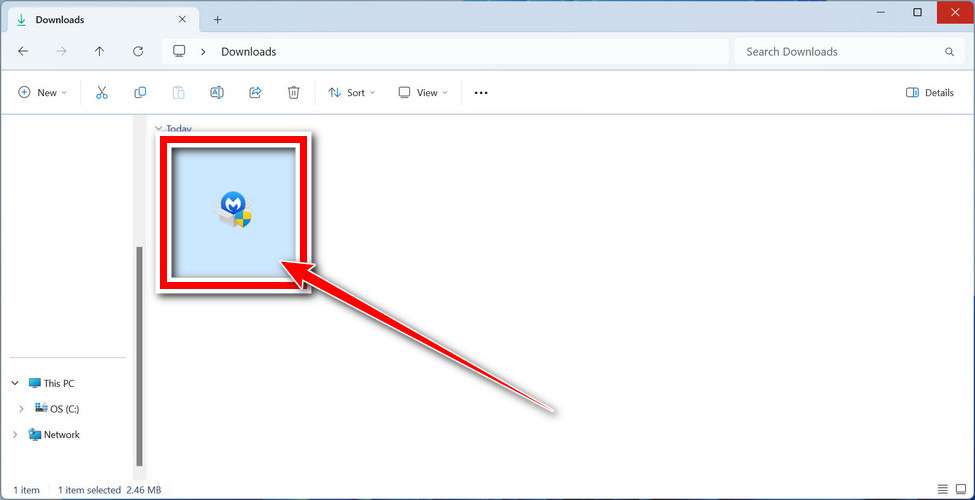
After the download is complete, locate the MBSetup file, typically found in your Downloads folder. Double-click on the MBSetup file to begin the installation of Malwarebytes on your computer. If a User Account Control pop-up appears, click “Yes” to continue the Malwarebytes installation.
Follow the On-Screen Prompts to Install Malwarebytes
When the Malwarebytes installation begins, the setup wizard will guide you through the process.
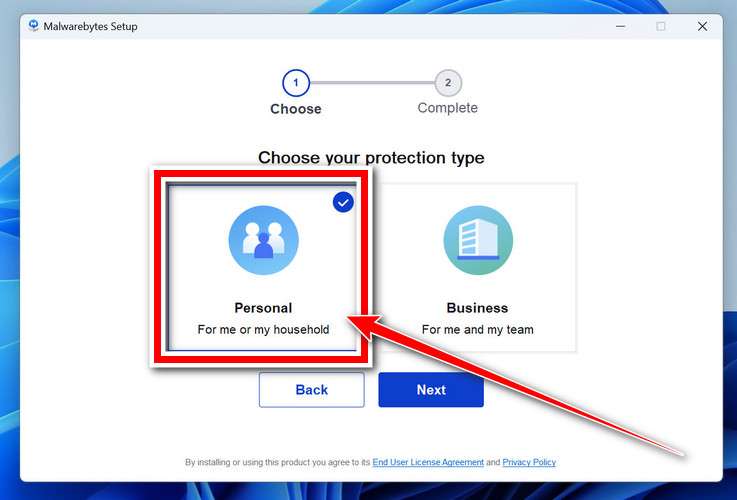
You’ll first be prompted to choose the type of computer you’re installing the program on—select either “Personal Computer” or “Work Computer” as appropriate, then click on Next.
Malwarebytes will now begin the installation process on your device.
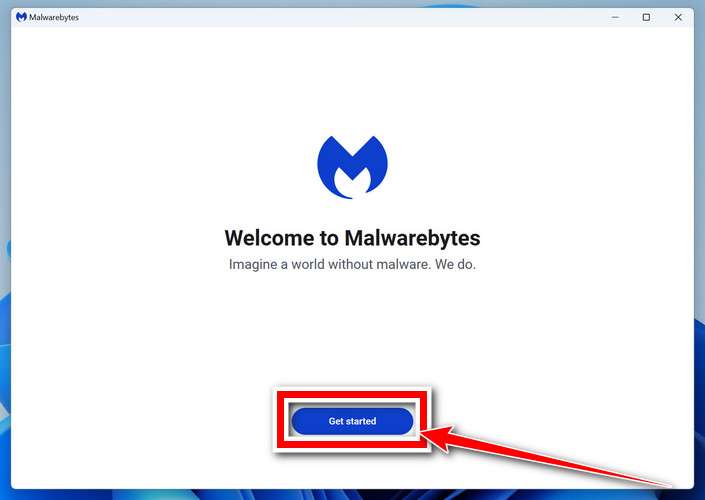
When the Malwarebytes installation is complete, the program will automatically open to the “Welcome to Malwarebytes” screen.
On the final screen, simply click on the Open Malwarebytes option to start the program.
Enable “Rootkit scanning”.
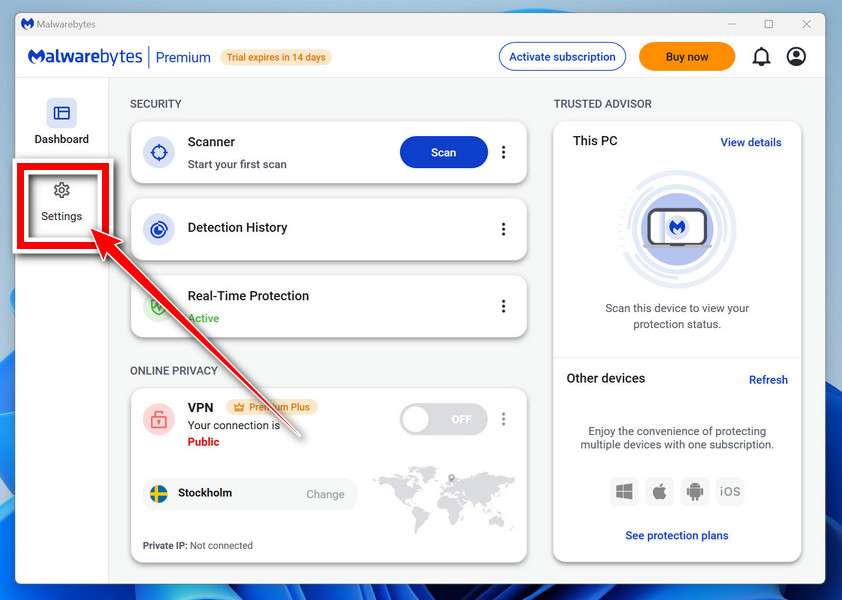
Malwarebytes Anti-Malware will now start, and you will see the main screen as shown below. To maximize Malwarebytes’ ability to detect malware and unwanted programs, we need to enable rootkit scanning. Click on the “Settings” gear icon located on the left of the screen to access the general settings section.
In the settings menu, enable the “Scan for rootkits” option by clicking the toggle switch until it turns blue.
Now that you have enabled rootkit scanning, click on the “Dashboard” button in the left pane to get back to the main screen.
Perform a Scan with Malwarebytes.
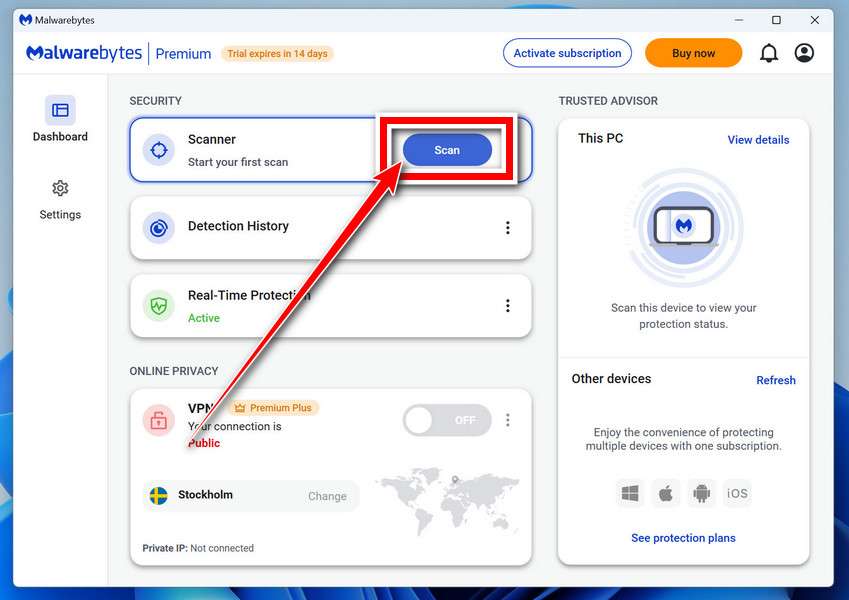
To start a scan, click the Scan button. Malwarebytes will automatically update its antivirus database and begin scanning your computer for malicious programs.
Wait for the Malwarebytes scan to complete.
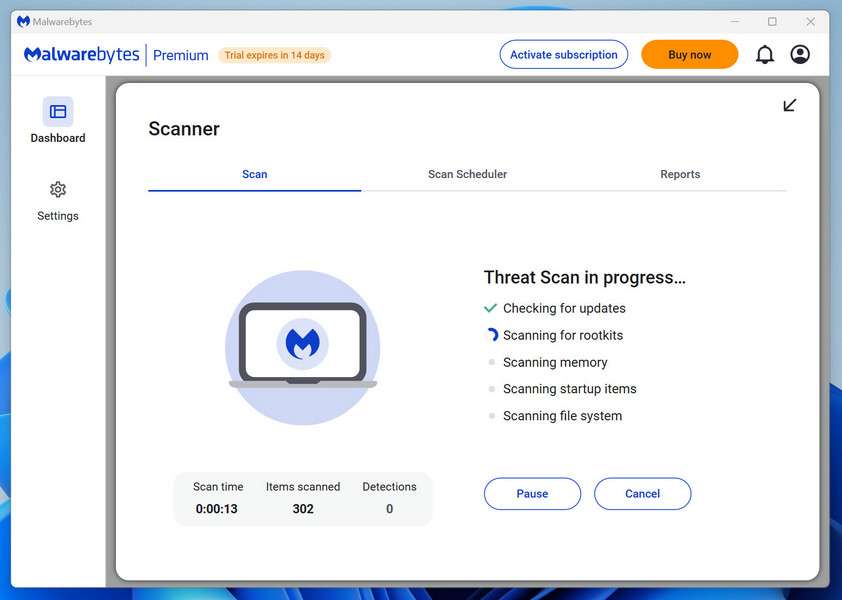
Malwarebytes will now scan your computer for browser hijackers and other malicious programs. This process can take a few minutes, so we suggest you do something else and periodically check the status of the scan to see when it is finished.
Quarantine detected malware
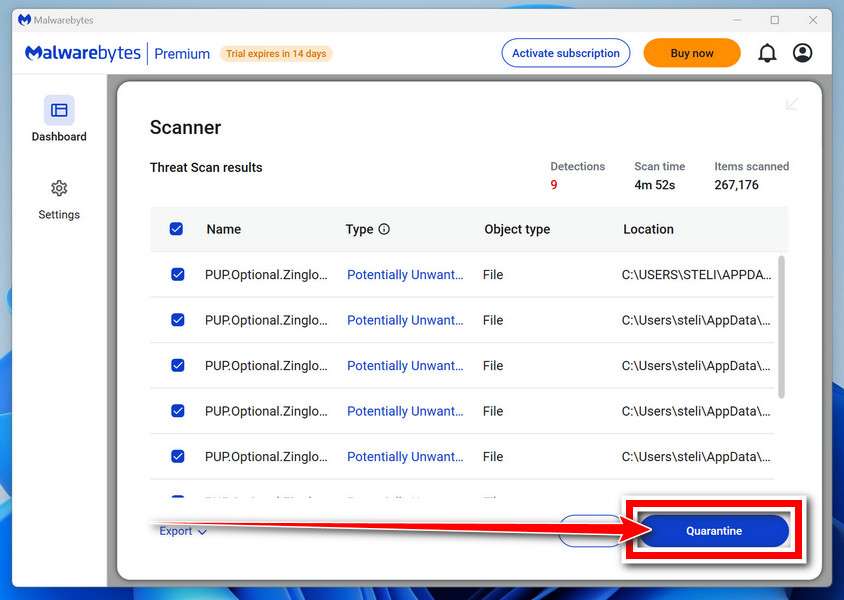
Once the Malwarebytes scan is complete, it will display a list of detected malware, adware, and potentially unwanted programs. To effectively remove these threats, click the “Quarantine” button.
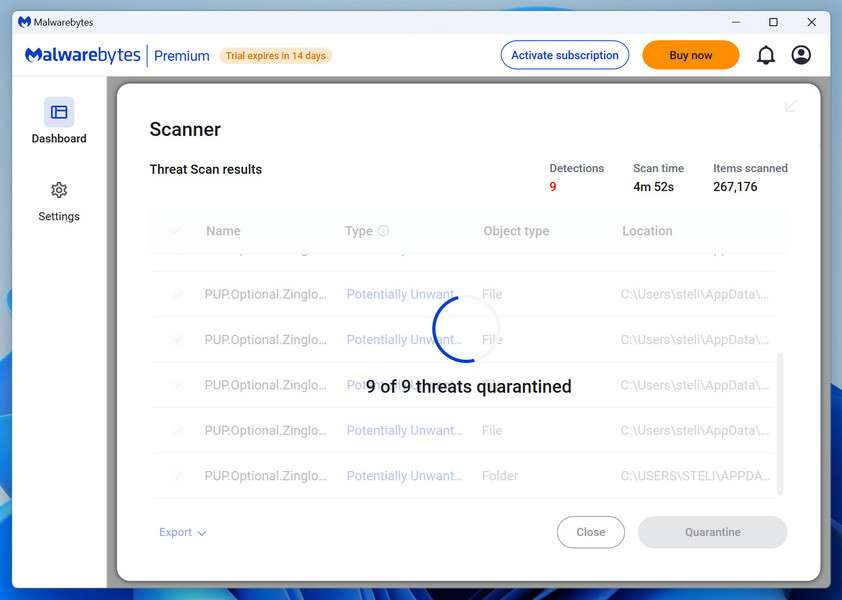
Malwarebytes will now delete all of the files and registry keys and add them to the program’s quarantine.
Restart your computer.
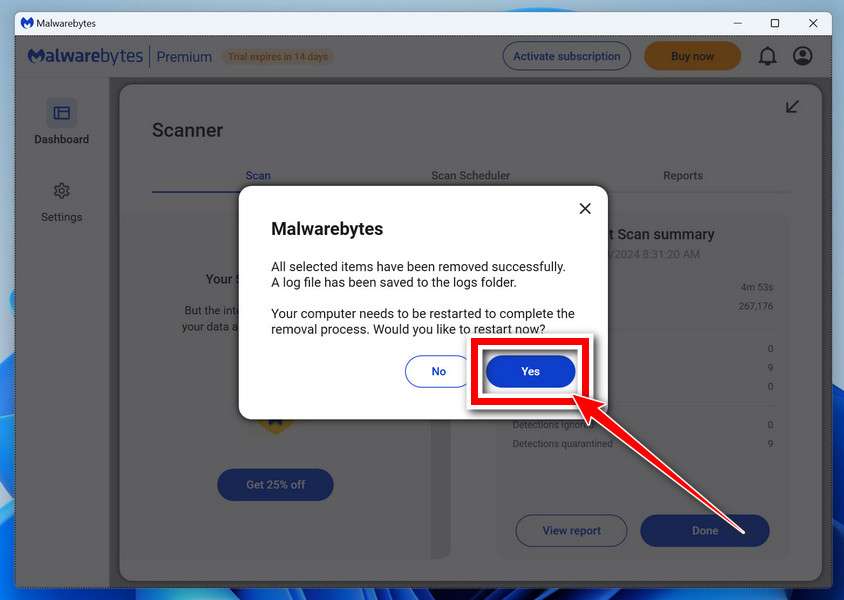
When removing files, Malwarebytes may require a reboot to fully eliminate some threats. If you see a message indicating that a reboot is needed, please allow it. Once your computer has restarted and you are logged back in, you can continue with the remaining steps.
Once the scan completes, remove all detected threats. Your Windows computer should now be clean and running smoothly again, free of trojans, adware, and other malware.
If your current antivirus allowed this malicious program on your computer, you may want to consider purchasing Malwarebytes Premium to protect against these types of threats in the future. If you are still having problems with your computer after completing these instructions, then please follow one of the steps:
Malwarebytes for Mac is an on-demand scanner that can destroy many types of malware that other software tends to miss without costing you absolutely anything. When it comes to cleaning up an infected device, Malwarebytes has always been free, and we recommend it as an essential tool in the fight against malware.
Download Malwarebytes for Mac.
You can download Malwarebytes for Mac by clicking the link below.
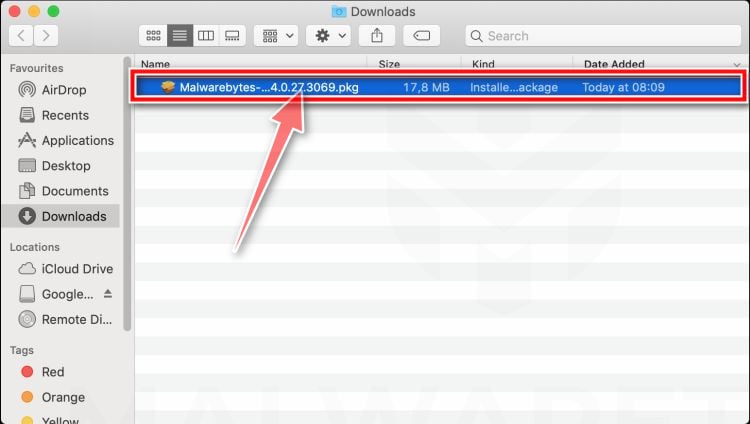
When Malwarebytes has finished downloading, double-click on the setup file to install Malwarebytes on your computer. In most cases, downloaded files are saved to the Downloads folder.
Follow the on-screen prompts to install Malwarebytes.
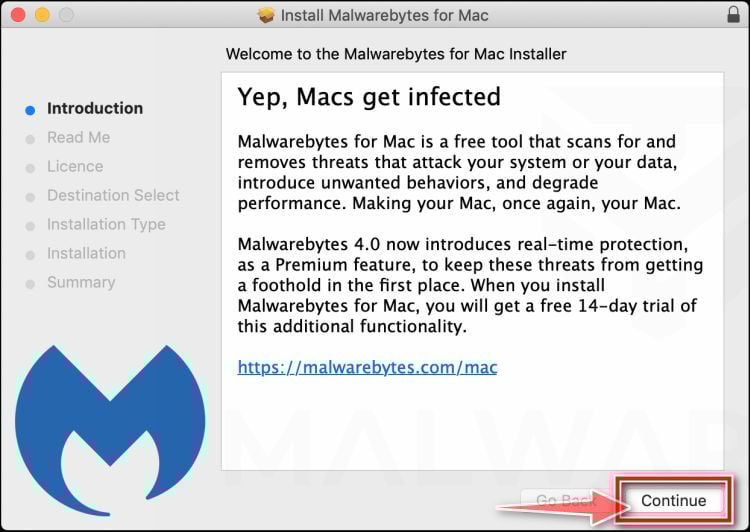
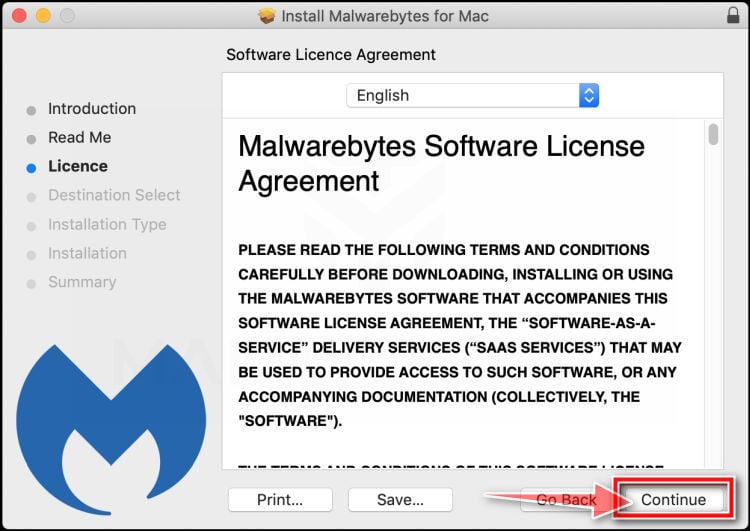
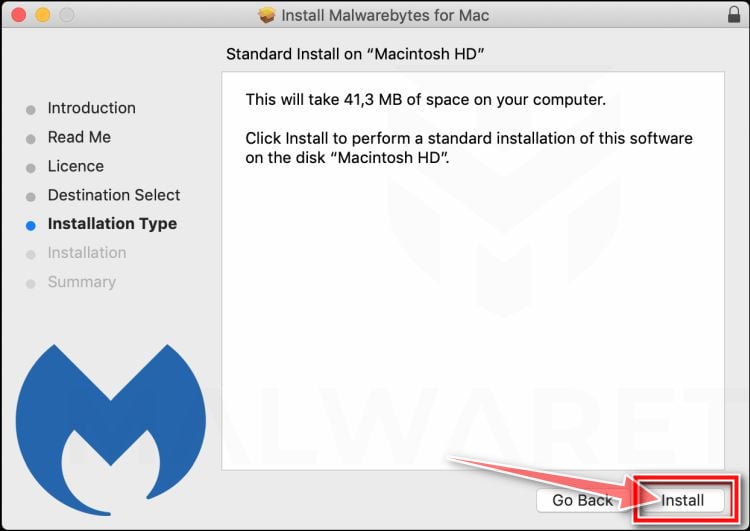
When the Malwarebytes installation begins, you will see the Malwarebytes for Mac Installer which will guide you through the installation process. Click “Continue“, then keep following the prompts to continue with the installation process.
When your Malwarebytes installation completes, the program opens to the Welcome to Malwarebytes screen. Click the “Get started” button.
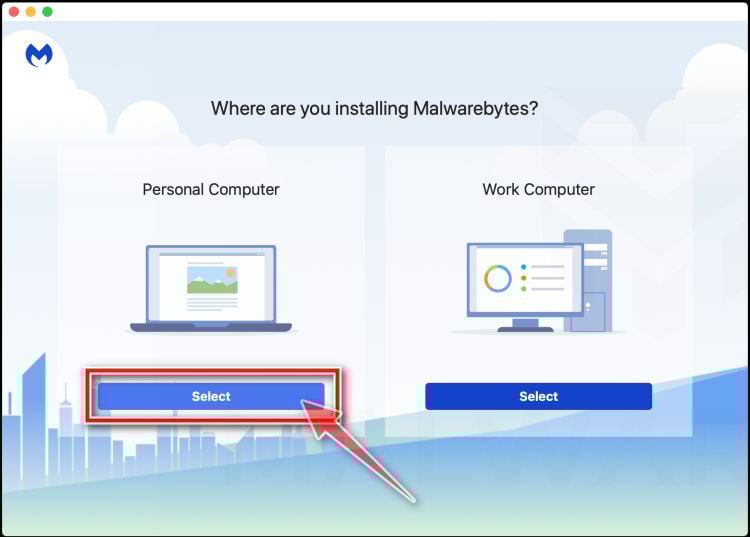
Select “Personal Computer” or “Work Computer”.
The Malwarebytes Welcome screen will first ask you what type of computer are you installing this program, click either Personal Computer or Work Computer.
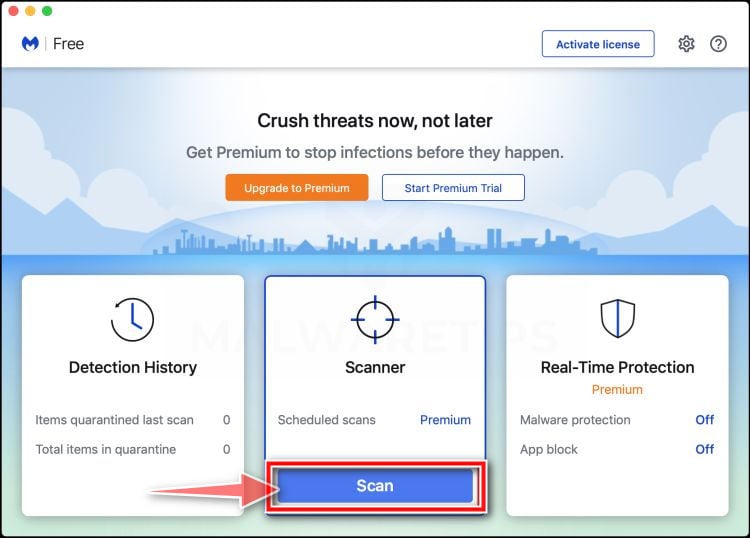
Click on “Scan”.
To scan your computer with Malwarebytes, click on the “Scan” button. Malwarebytes for Mac will automatically update the antivirus database and start scanning your computer for malware.
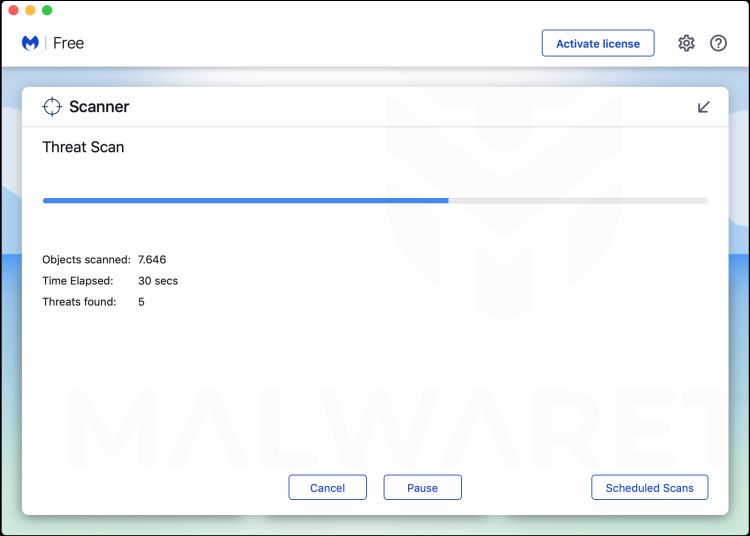
Wait for the Malwarebytes scan to complete.
Malwarebytes will scan your computer for adware, browser hijackers, and other malicious programs. This process can take a few minutes, so we suggest you do something else and periodically check on the status of the scan to see when it is finished.
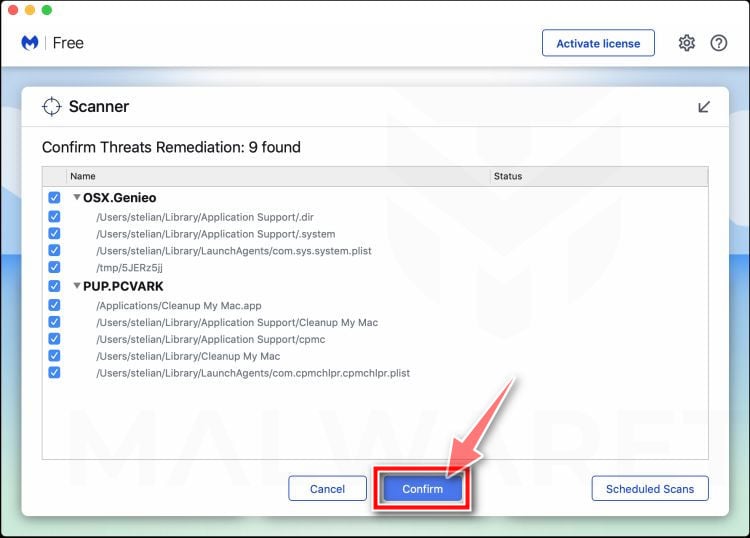
Click on “Quarantine”.
When the scan has been completed, you will be presented with a screen showing the malware infections that Malwarebytes has detected. To remove the malware that Malwarebytes has found, click on the “Quarantine” button.
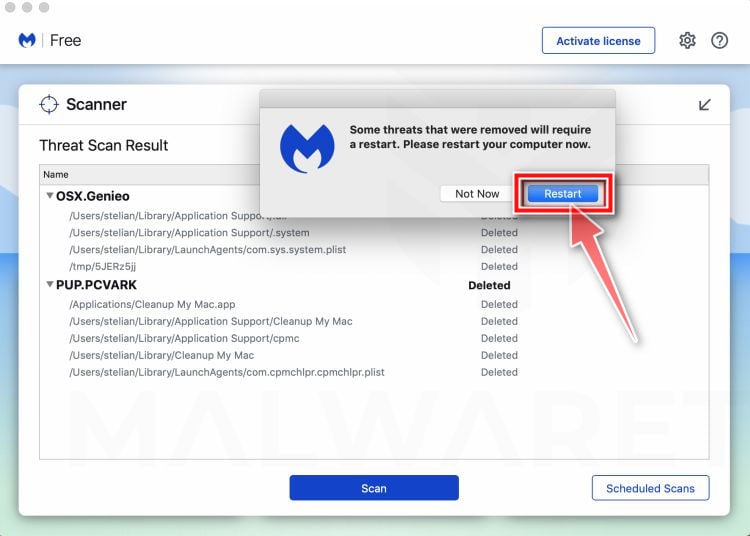
Restart computer.
Malwarebytes will now remove all the malicious files that it has found. To complete the malware removal process, Malwarebytes may ask you to restart your computer.
After scanning, delete any detected threats. Your Mac should now be free from adware, unwanted extensions, and other potentially harmful software.
If your current antivirus allowed a malicious program on your computer, you might want to consider purchasing the full-featured version of Malwarebytes Anti-Malware to protect against these types of threats in the future. If you are still experiencing problems while trying to remove a malicious program from your computer, please ask for help in our Mac Malware Removal Help & Support forum.
Run a Malware Scan with Malwarebytes for Android
Malwarebytes for Android automatically detects and removes dangerous threats like malware and ransomware so you don’t have to worry about your most-used device being compromised. Aggressive detection of adware and potentially unwanted programs keeps your Android phone or tablet running smooth.
Download Malwarebytes for Android.
You can download Malwarebytes for Android by clicking the link below.
In the Google Play Store, tap “Install” to install Malwarebytes for Android on your device.
When the installation process has finished, tap “Open” to begin using Malwarebytes for Android. You can also open Malwarebytes by tapping on its icon in your phone menu or home screen.
Follow the on-screen prompts to complete the setup process
When Malwarebytes will open, you will see the Malwarebytes Setup Wizard which will guide you through a series of permissions and other setup options. This is the first of two screens that explain the difference between the Premium and Free versions. Swipe this screen to continue. Tap on “Got it” to proceed to the next step. Malwarebytes for Android will now ask for a set of permissions that are required to scan your device and protect it from malware. Tap on “Give permission” to continue. Tap on “Allow” to permit Malwarebytes to access the files on your phone.
Update database and run a scan with Malwarebytes for Android
You will now be prompted to update the Malwarebytes database and run a full system scan.
Click on “Update database” to update the Malwarebytes for Android definitions to the latest version, then click on “Run full scan” to perform a system scan.
Wait for the Malwarebytes scan to complete.
Malwarebytes will now start scanning your phone for adware and other malicious apps. This process can take a few minutes, so we suggest you do something else and periodically check on the status of the scan to see when it is finished.
Click on “Remove Selected”.
When the scan has been completed, you will be presented with a screen showing the malware infections that Malwarebytes for Android has detected. To remove the malicious apps that Malwarebytes has found, tap on the “Remove Selected” button.
Restart your phone.
Malwarebytes for Android will now remove all the malicious apps that it has found. To complete the malware removal process, Malwarebytes may ask you to restart your device.
When the scan is finished, remove all detected threats. Your Android phone should now be free of malicious apps, adware, and unwanted browser redirects.
If your current antivirus allowed a malicious app on your phone, you may want to consider purchasing the full-featured version of Malwarebytes to protect against these types of threats in the future. If you are still having problems with your phone after completing these instructions, then please follow one of the steps:
Restore your phone to factory settings by going to Settings > General management > Reset > Factory data reset.
After cleaning your device, it’s important to protect it from future infections and annoying pop-ups. We recommend installing an ad blocker such as AdGuard. AdGuard blocks malicious ads, prevents phishing attempts, and stops dangerous redirects, helping you stay safe while browsing online.
The Bottom Line
The “Your Mail Is On Hold” email scam is effective because it targets something everyone relies on. The message looks official, the language feels urgent, and the call to action is simple. This combination pushes people to respond quickly, which is exactly what the scammers want.
FAQ
What is the “Your Mail Is On Hold” email scam?
It is a phishing attack designed to trick you into believing that your incoming emails cannot be delivered. The scam message claims your mailbox has been paused due to a security issue or an address verification problem. The email includes a link to a fake website that collects your personal information, login credentials, or financial data. Some variations may also attempt to install malware on your device.
Why do scammers use this type of message?
Scammers know that email is essential for everyday communication. When people see a warning that their inbox is frozen or their messages are being held, they react quickly. This urgency makes victims more likely to click the link without verifying the legitimacy of the message. The scam works because it exploits trust, routine, and fear of missing important communication.
How can I tell if the email is fake?
There are several signs that indicate a fraudulent email:
The sender address does not match the official domain of your email provider.
The message uses generic greetings instead of your name.
The email pressures you to act immediately.
The link leads to a suspicious or unfamiliar domain.
The message requests personal information or login details.
The formatting looks slightly off, with unusual spacing or grammar errors.
The email claims your mailbox is “on hold,” which legitimate services rarely use as a warning.
If anything feels unusual, assume the message is fraudulent.
Can legitimate email providers put my inbox on hold?
In most cases, no. Popular email providers do not freeze inboxes without significant cause. Even when unusual activity is detected, official providers direct you to their website without asking you to click a random link. They will never request your password, payment information, or identity verification through an unsolicited email.
What happens if I click the link?
Clicking the link usually takes you to a phishing page designed to look like a real login portal. The page asks for your email address, password, or other sensitive information. Once submitted, the scammers receive your details instantly. Some versions redirect you to a real website afterward to avoid suspicion. Other variants may attempt to download malware onto your device, which can lead to deeper security issues.
What should I do if I entered my email password?
Change your email password immediately. Use a strong and unique password that you do not use on any other accounts. Next, enable two factor authentication, review your account recovery settings, check for unauthorized forwarding rules, and scan your device for malware. Acting quickly helps prevent account takeover and reduces the risk of identity theft.
Can scammers access other accounts if they get my email password?
Yes. Your email account is a gateway to almost everything you do online. If scammers control your inbox, they can:
Reset passwords for connected accounts
Access banking and shopping platforms
Intercept verification codes
Read private conversations
View sensitive documents
Attempt identity theft
This is why securing your email account should be a top priority.
What if I provided credit card information?
Contact your bank and explain the situation as soon as possible. They can monitor your account for suspicious activity, block unauthorized charges, and issue a new card. Scammers often test stolen cards with small purchases before attempting larger ones, so early action is critical.
Can my device be infected with malware from this scam?
Yes, some versions of the scam distribute malware instead of collecting information. If you downloaded a file, opened an attachment, or installed anything from the link, your device might be compromised. Run a full scan with a trusted antivirus tool and remove anything suspicious.
Does responding to the email make me a target?
Responding confirms to scammers that your email address is active. This can lead to more phishing attempts, spam messages, and additional scams. Avoid replying and block the sender instead.
How can I prevent falling for this scam in the future?
A few simple habits greatly reduce your risk:
Do not click unsolicited links.
Always check the sender’s domain.
Hover over links to reveal the true destination.
Use two factor authentication for important accounts.
Keep your operating system and browser updated.
Use strong, unique passwords.
Be cautious with urgent or alarming messages.
Awareness is your strongest defense.
Should I report this scam?
Yes. Reporting phishing emails helps email providers block similar attacks and protects other users. You can mark the message as phishing in your email client or forward it to the official abuse address of your email provider.
Why is this scam so common?
It targets a universal tool that nearly everyone uses. Email is essential for work, banking, shopping, and communication. Because the scam looks credible and uses familiar language, many people fall for it. Criminals continue using this tactic because it produces consistent results and requires little effort to scale.
What if the email looks extremely convincing?
Some phishing emails are designed with near-perfect accuracy. Even skilled users sometimes struggle to identify them. If an email unexpectedly asks you to verify your information, do not trust the message. Instead, visit the official website directly by typing the address in your browser. If there is a legitimate issue, you will see it on the official website without clicking the email link.
Is it safe to open the email without clicking anything?
In most cases, yes. Simply opening the email does not compromise your device. The danger comes from clicking links, downloading attachments, or submitting information. Still, delete the message once you recognize it as a scam.
Can this scam affect businesses?
Yes. Business email accounts are prime targets because they often contain valuable information, financial documents, and sensitive communication. A compromised business account can lead to data breaches, financial loss, or further phishing attacks sent from the employee’s inbox. Companies should train employees to identify phishing attempts and encourage secure authentication practices.
What should I do if my account is already compromised?
Act quickly:
Change your password.
Enable two factor authentication.
Review recovery options.
Check for unauthorized activity.
Remove unknown forwarding rules.
Scan all devices for malware.
The faster you respond, the better your chances of stopping the attacker.
How can I help others avoid this scam?
Share your experience, educate friends and family, and encourage cautious online behavior. Many victims fall for the scam simply because they have never heard of it. Awareness dramatically reduces the success rate of phishing campaigns.
Thomas is an expert at uncovering scams and providing in-depth reporting on cyber threats and online fraud. As an editor, he is dedicated to keeping readers informed on the latest developments in cybersecurity and tech.