

The EpiCooler AC has exploded across social media with bold claims that it can cool an entire room in minutes, slash energy bills, and replace an expensive traditional air conditioner. The ads show comfortable families lounging under a sleek wall unit that supposedly requires no installation. This pitch is designed to attract buyers who want fast cooling without the complexity and cost of real HVAC systems. But behind the polished marketing, there are significant red flags.
This article looks closely at the product, the company behind it, and the dropshipping operation that drives the entire campaign so buyers can understand what they are actually paying for.
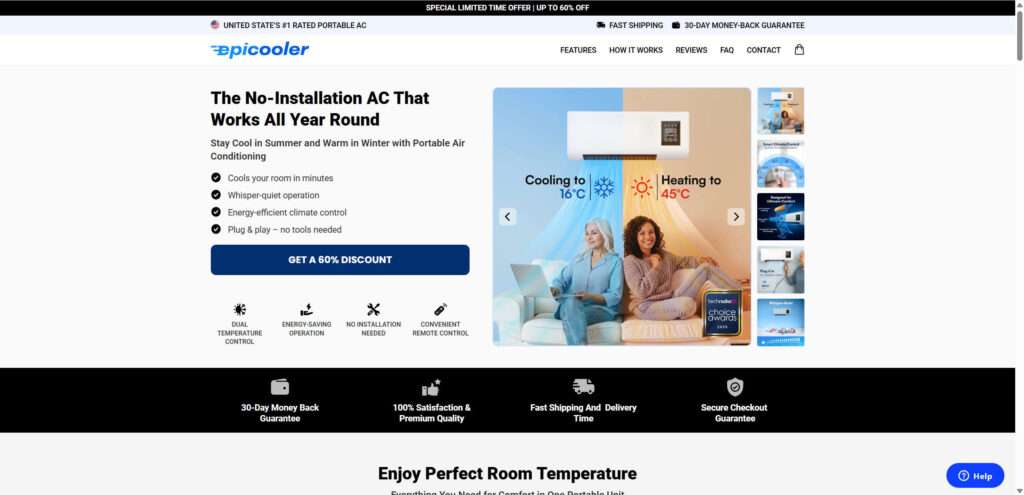
Overview of EpiCooler AC
The EpiCooler AC is marketed as a powerful dual heating and cooling system that requires no installation and can cool or warm a room within minutes. The website includes high quality animations and photos showing the device blowing cold air to 16°C and hot air to 45°C. It is promoted as a plug and play climate control system with remote control, touchscreen panel, and six power modes. The marketing includes phrases such as ultra low energy consumption, whisper quiet operation, and advanced safety protection features.
However, once the glossy presentation is stripped away, a number of inconsistencies emerge. First, the design shown on the EpiCooler website matches a generic Chinese wall mounted hot air blower sold on Alibaba and AliExpress. These wholesale products are priced between $7 and $10 depending on configuration, with minimum orders as low as one unit. The exact same images appear across dozens of unrelated dropshipping stores, each assigning a new brand name and exaggerating the product capabilities.
Real room cooling systems require compressors, refrigerants, proper vents, and significant energy consumption. The product shown in generic listings is essentially a small electric fan heater with a PTC heating element and weak airflow. These units cannot replace an air conditioner. They also do not cool the air according to HVAC standards. Instead, they circulate ambient air at limited speed and temperature. Claims that they cool rooms in minutes are not supported by any credible test or demonstration.
The EpiCooler website additionally claims coverage of up to 51 square meters. This is unrealistic for a device that has no compressor or heat pump mechanism. The unit cannot physically control room temperatures the way an actual HVAC system or portable AC unit can. Even large premium space heaters and air cooling fans do not cover areas this large without dedicated engineering.
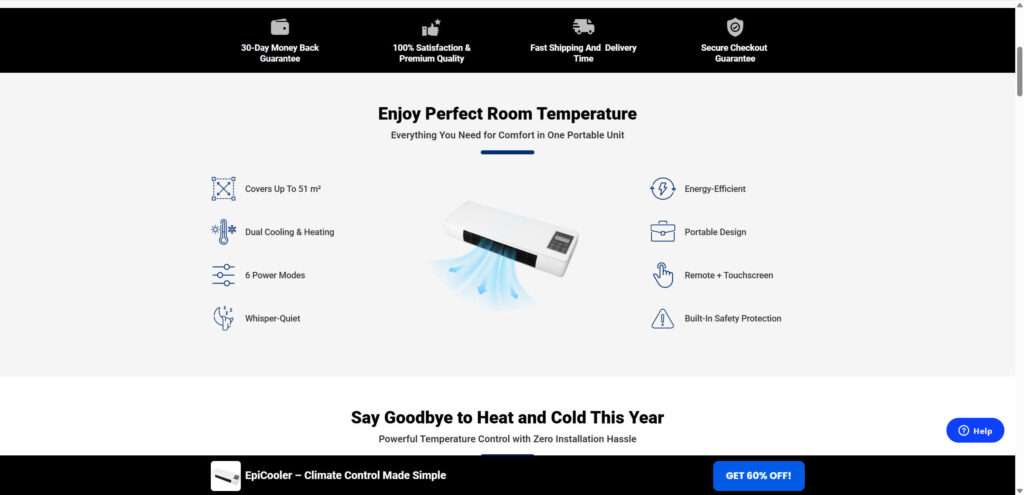
Another concern is the branding pattern. Every element of the website is identical to other viral dropshipping stores that have previously sold products such as mobile heaters, snow blowers, mini projectors, and portable AC units. These websites are typically active only for a short time, sometimes only months, before being abandoned and replaced by new domains with new brand names. The template includes countdown timers, urgency banners, fake stock levels, and fabricated customer review videos that do not show actual users interacting with the real product.
There is no verified manufacturer information, no physical address, and no transparent ownership details. The Trustpilot pages for these stores frequently show complaints about misleading advertising, difficulty obtaining refunds, and unresponsive customer support. The same appears to be happening with EpiCooler, based on early reports from buyers.
Finally, the pricing on the website uses high anchor prices such as $275.98 per unit, crossed out by a so called 50% or 60% discount. This marketing technique aims to create the illusion of premium value. In reality, the wholesale cost is under $10. The product has no certifications relating to refrigeration, climate control, or energy efficiency. It is simply a low cost heater fan repackaged to appear more advanced.
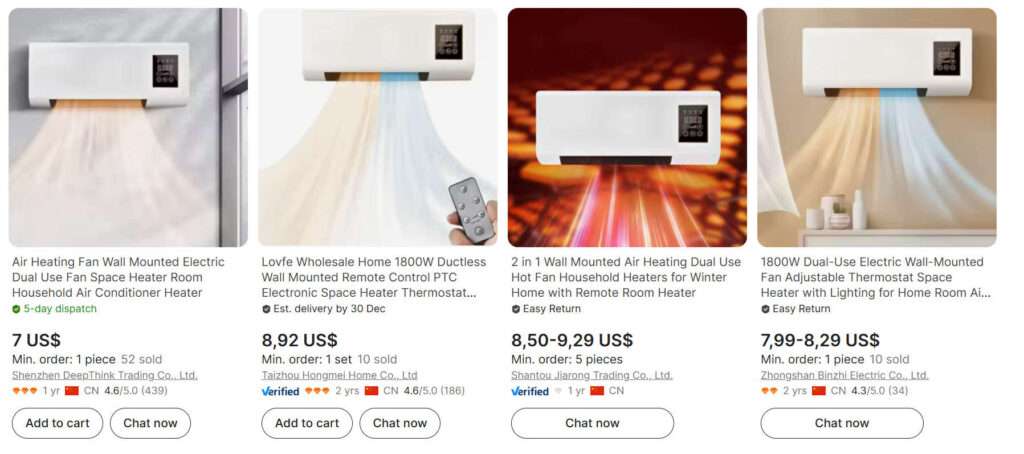
This overview already raises substantial concerns. To fully understand the EpiCooler operation, it is essential to examine how the dropshipping model is structured and why these products can appear in so many viral ads so quickly.
How the Dropshipping Operation Works
The EpiCooler AC is part of a common dropshipping strategy that uses aggressive advertising, psychological marketing triggers, and artificially inflated pricing to maximize profit with minimal investment. Here is a detailed step by step breakdown of how these operations typically work.
Step 1: Identifying a Cheap Generic Product
Dropshippers search platforms like Alibaba, 1688, Taobao, and AliExpress for low cost products with visually appealing designs. Items with bright lights, animated airflow, and modern styling perform especially well in ads.
The wall mounted heater fan that EpiCooler uses is one of the most common wholesale products in this category. It is priced between $7 and $10, weighs little, ships easily, and looks impressive in edited images.
Step 2: Creating a Fake Premium Brand
The dropshipper creates a new brand name like EpiCooler, SnowWarm Pro, ArcticWind, or similar. They register a basic domain. Many of these domains are new, typically less than a year old. In some cases they are weeks old.
The store is built using Shopify templates. Plugins automatically generate urgency messages, discount popups, and social proof banners. Claims like Best Seller, 60% Off Today Only, and Only 105 Left in Stock are added to create pressure.
The site may list fabricated awards such as TechRadar Choice Awards even though the product has never been reviewed by those outlets.
Step 3: Reusing Stock Videos
Ads for these products rarely show the actual device being used in a real home. Instead, dropshippers download videos from TikTok, YouTube, and Chinese product listings. They edit the footage together to appear as customer demonstrations. Some ads even show completely unrelated products while implying they are the same thing.
In the case of EpiCooler, many ads show animations of temperature changes, glowing vents, and digitally added airflow effects. None of these represent real performance.
Step 4: Inflating the Price by a Large Margin
The store lists the product at $275.98, then offers a 50% or 60% discount for a supposedly limited time. These numbers are entirely manufactured. No such retail price exists for this item.
The goal is to make buyers feel they are getting a premium climate control device at a bargain. In reality, they are paying $110.99 for a unit that cost under $10 wholesale.
Step 5: Using Aggressive Paid Advertising
Dropshippers use Facebook Ads, Instagram Ads, TikTok Ads, and Google Ads to push enormous amounts of traffic to the store. The videos are optimized for emotional triggers such as heat discomfort, high AC bills, or viral curiosity.
The ad networks do not verify the accuracy of the claims. This lets sellers market the device as a miracle solution that cools entire rooms instantly.
Step 6: Forwarding Orders to a Chinese Supplier
When a customer purchases the product, the seller forwards the order to a supplier on Alibaba or AliExpress. The supplier ships the product directly to the customer’s home.
The dropshipper never sees or handles the product. They have no control over the packaging, the quality, or the delivery speed. Shipping can take weeks.
Step 7: Avoiding Responsibility for Refunds
If customers email asking for refunds, many dropshipping stores delay, ignore, or deny requests. They often require the buyer to pay for return shipping to China, which can exceed the product’s cost.
Some stores shut down after a wave of negative reviews and reopen under a different name. This cycle repeats continuously.
Step 8: Relaunching Under a New Brand
When a product stops selling well due to negative feedback, brand fatigue, or ad account bans, dropshippers simply create a new website with a new name. The same product is then marketed again as a breakthrough invention.
Products like EpiCooler have appeared under dozens of brand names over the past few years.
What To Do If You Have Bought EpiCooler
If you have already purchased the EpiCooler AC and are unhappy with it, follow these steps to protect your money and secure a refund quickly.
1. Contact the Seller Immediately
Send an email requesting cancellation and full refund. Many dropshipping stores process orders quickly, so the sooner you contact them, the better.
2. If They Deny or Ignore Your Request, Open a Chargeback
For credit cards, contact your bank and request a chargeback. State that the product was misrepresented and does not perform as advertised. Provide screenshots of the exaggerated claims.
3. If You Paid Through PayPal, Open a Dispute
In your claim, select Item Not as Described and include links showing the wholesale version priced at under $10.
4. Do Not Pay Return Shipping to China
Many stores demand that items be shipped back to a Chinese warehouse at the buyer’s expense. This is often more expensive than the product itself. You are not required to accept this, especially if the product was misrepresented.
5. Document Everything
Keep copies of the website, ads, emails, receipts, and tracking numbers. These will help you win a chargeback.
6. Report the Website
You can report the store to platforms such as PayPal, your bank, and fraud reporting tools. This helps prevent others from being misled.
7. Leave a Review
Leave an honest review on Trustpilot or ScamAdvisor so other potential buyers are warned.
8. Block Future Ads
Hide ads from the brand on Facebook or Instagram to prevent retargeting campaigns from appearing again.
The Bottom Line
The EpiCooler AC is not a real air conditioner and cannot cool rooms the way the ads claim. It is a low cost wall mounted fan heater with limited performance that is resold at a huge markup through a dropshipping model. The operation relies on urgency marketing, misleading demonstrations, and inflated specifications to create the illusion of a premium climate control device. Buyers expecting genuine cooling or heating power equivalent to branded systems will be disappointed. Based on the evidence, the questionable business model, and the lack of transparency, the EpiCooler AC is not recommended.









Muchas gracias; estaba a puntp de pedir más datos y por eso investigué los comentarios. Buscaré otras opciones.
Hola, muchas gracias por comentar. Hizo bien en investigar antes de comprar. Cuando un producto parece demasiado bueno para ser verdad, revisar opiniones independientes primero puede ahorrar mucho dinero y problemas.
Hola, muchas gracias por comentar.
Hizo bien en investigar antes de comprar. Cuando un producto parece demasiado bueno para ser verdad, revisar opiniones independientes primero puede ahorrar dinero y problemas.