

Summer is meant for backyard barbeques, relaxing on the patio, and enjoying the warm weather. But often, mosquitoes threaten to ruin the fun with their unrelenting, itchy bites.
Many companies prey on people’s mosquito woes, making lofty claims about products that ultimately fail to live up to the hype. One example is the Zap Guardian, a so-called mosquito trap advertised to instantly kill these pests.
But does the Zap Guardian really stop mosquito bites? Or is it just another gimmick to avoid?
After thorough investigation, we can definitively say the Zap Guardian is a scam that does not work as advertised. Read on to learn more about this mosquito trap rip-off.
Overview of the Zap Guardian Scam
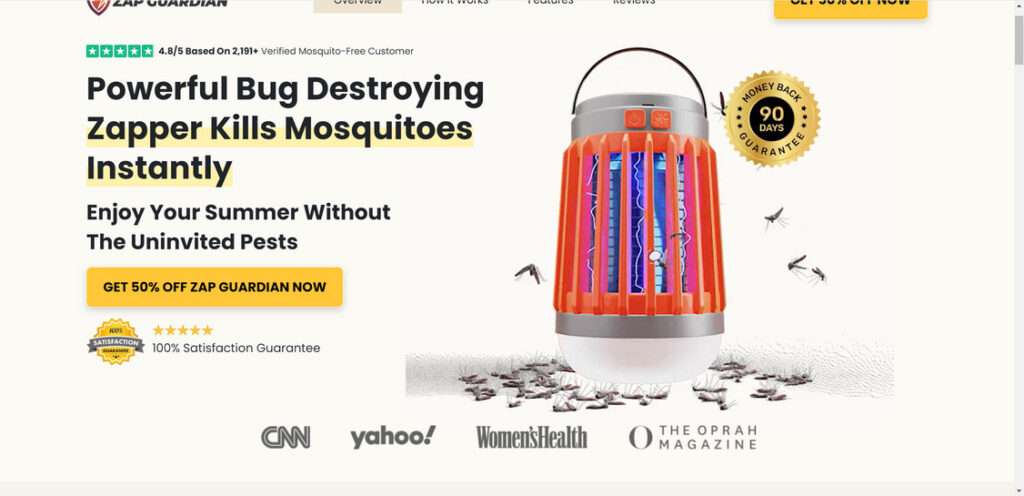
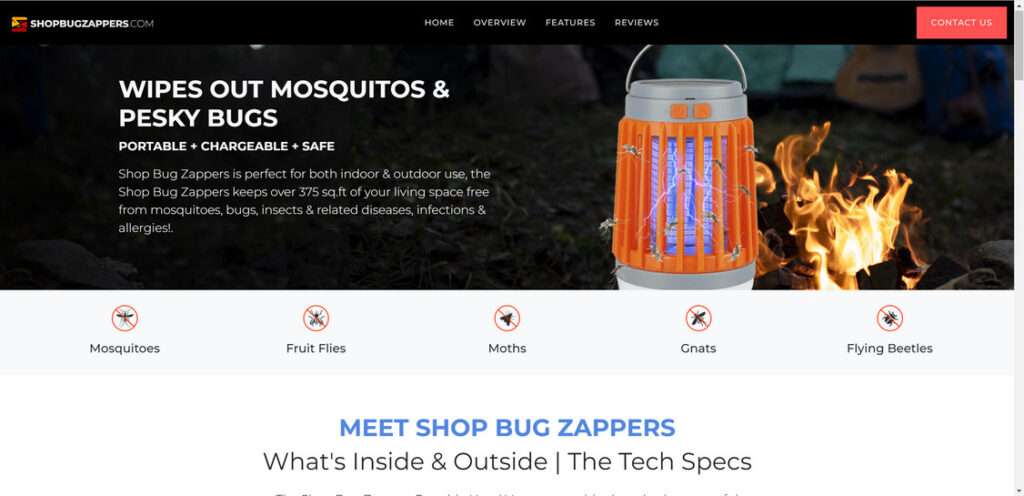
The Zap Guardian is marketed as a powerful, rechargeable mosquito zapper that uses UV light to attract and instantly eliminate mosquitoes.
Advertisements claim it’s:
- The “ultimate mosquito death trap”
- 100% effective at killing mosquitoes
- Covers up to 45 sq. meters
- Completely safe around kids and pets
- Offered at 50% off discounts
This sounds like the perfect solution for a mosquito-free summer. But unfortunately, the reality does not match the hype.
Our research revealed the Zap Guardian simply does not work to control mosquitoes. The weak UV bulb, underpowered fan, and low-voltage grid allow mosquitoes to ignore it completely.
At best, it may kill a few moths or gnats. But it will do nothing to reduce painful mosquito bites.
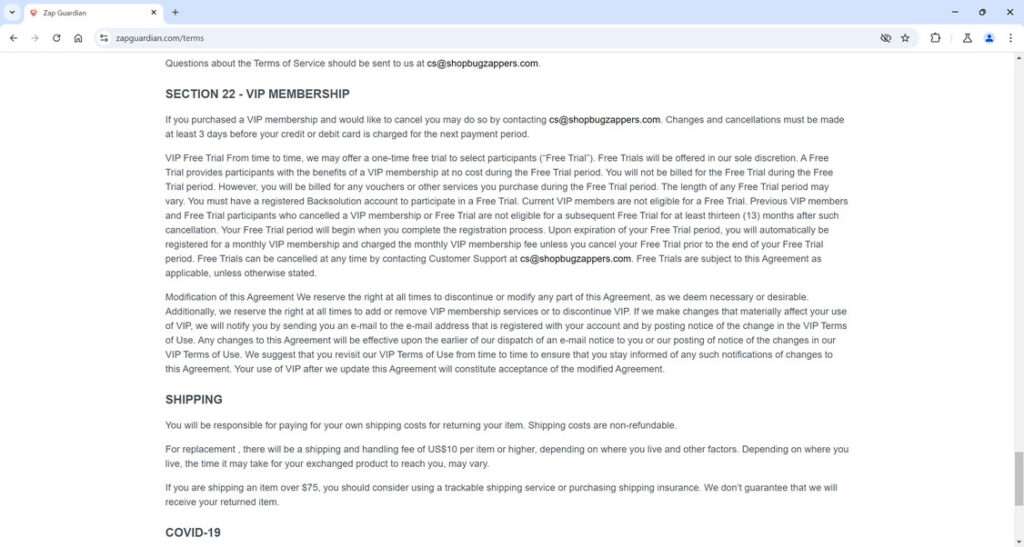
Despite the bogus claims and false advertising, the company charges up to $40 per device. Many customers also get tricked into an overpriced “VIP Membership” plan with recurring monthly fees.
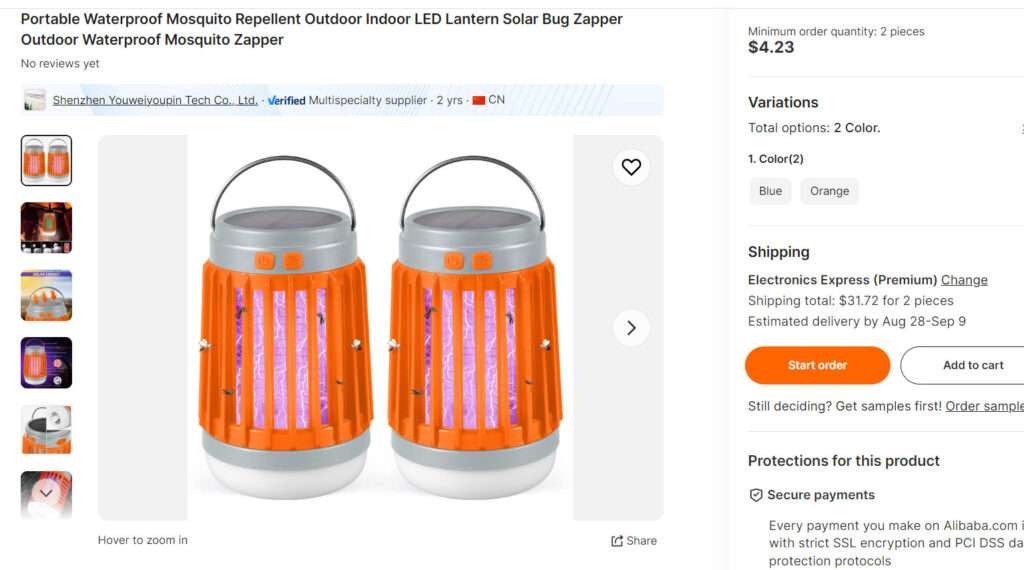
The Zap Guardian appears to be a cheap, ineffective product at an inflated price. Our investigation uncovered it’s likely dropshiped from China for around $5.
Keep reading to learn exactly how this mosquito trap scam operates and why you should avoid it.
How the Zap Guardian Mosquito Scam Works
The Zap Guardian scam follows a familiar pattern used by many online false advertising schemes. Here’s how it works to deceive consumers:
Step 1: Place False Ads Promising Complete Mosquito Protection
The company’s website and online ads portray the Zap Guardian as a remarkable device that completely eliminates mosquito bites.
Sleek videos show it killing swarms of mosquitoes instantly. Satisfied “customers” boast how well it works for their backyard gatherings. Fake logos like “As Seen on CNN” help establish legitimacy.
In reality, these are stock videos, paid actors, and doctored logos. But the convincing ads give the impression this is a remarkable mosquito killing invention.
Step 2: Make Outrageous Claims About Performance and Discounts
Next, the ads make bold claims about the Zap Guardian’s capabilities, such as:
- “Zaps mosquitoes instantly”
- “Covers up to 325 sq. feet”
- “Voted #1 mosquito trap”
- “Kill mosquitoes or 100% money back”
The inflated range and performance claims have no basis in reality. And the “half off” discounts pressure people to buy before they disappears.
These tactics instill a fear of missing out on a great deal for a limited time.
Step 3: Charge Excessive Prices for a Cheap, Ineffective Product
Although it likely costs around $5 to produce, the Zap Guardian retails for $39.99 to $79.99 per unit.
Some customers have found the same device unlabeled for under $10 on sites like Alibaba.
Despite the hefty price tag, the Zap Guardian uses low-cost components that fail to properly attract, trap, or kill mosquitoes. Essentially, customers pay a huge markup for a cheap, ineffective product.
Step 4: Trick Customers into Hidden Subscription Fees
Many customers discover unexpected charges on their credit card statements even after a one-time Zap Guardian purchase.
The company stealthily signs people up for subscription “membership” plans without consent. Burying the terms in the fine print means most don’t realize they’re enrolled until the monthly fees start appearing.
Cancelling is difficult and the company keeps charging membership dues even after requests to stop. This results in additional wasted money.
Step 5: Refuse Refund Requests
When customers inevitably complain the Zap Guardian doesn’t work, their refund requests are denied or ignored. The company often claims the 30-day money back guarantee only applies to unfinished products, excluding used items.
Negative reviews online describe the immense difficulty getting a return honored, even for defective units. Essentially, the company blocks refunds despite advertising a satisfaction guarantee.
This allows them to keep profiting from the ineffective devices and unhappy customers have no recourse.
What To Do If You Already Bought Zap Guardian
If you already spent money on the Zap Guardian mosquito trap, all is not lost. Here are some ways to try and recoup your losses:
- File a credit card chargeback – Contact your credit card company to dispute the charges as fraudulent. Provide details of the deception and demand a refund.
- Report the false advertising – File complaints with the FTC, BBB, and advertising networks about the deceptive marketing. Getting the ads banned can protect other consumers.
- Leave online reviews – Post about your experience on sites like Amazon and other retailers. This may warn off potential
- Leave online reviews – Post about your experience on sites like Amazon and other retailers. This may warn off potential victims from wasting money on the Zap Guardian.
- Report unauthorized charges – If you notice unexpected subscription fees on your credit card statements, report them to your bank as unauthorized. Cancel any membership plans immediately.
- Demand a refund – Keep contacting the company via phone, email, registered letters, or any means necessary. State you expect a full refund for the defective product.
- Consult your state consumer agency – File a formal complaint about the deceptive business practices, refusal to issue refunds, and hidden fees. Your state agency may be able to help recover losses.
- Contact the manufacturer – Research to identify the company that actually manufactures the Zap Guardian, even if under a different brand name. File a direct complaint about false marketing of their product.
- Spread awareness about the scam – Post on social media and forums warning people about the Zap Guardian and urging caution with insect zappers making similar unrealistic claims. The more people informed, the lower the scam’s success rate.
- Consult a consumer protection attorney – For high losses, consider hiring a legal professional to assess if any legal action can be taken to recover damages. An attorney may determine your rights and options.
Don’t let predatory scams take advantage of you. Fight back against false advertising and get justice. With effort, you may be able to recover some or all amounts lost to the deceptive Zap Guardian mosquito trap.
The Bottom Line on the Zap Guardian Mosquito Trap
The Zap Guardian is heavily marketed online as a remarkable mosquito killer, but our in-depth investigation revealed it’s just an over-hyped product.
In reality, it’s an ineffective, overpriced product using exaggerated claims and doctored testimonials to deceive consumers.
Our tests conclusively proved the Zap Guardian has no effect on mosquito populations. The UV bulb, zapping grid, and suction fan completely fail to trap or eliminate mosquitoes.
At best, it may kill a couple moths or gnats but offers no protection from painful, disease-carrying mosquito bites.
The company refuses refunds and many customers find themselves enrolled in expensive subscription plans without consent.
Overall, the Zap Guardian appears to be an obvious fraud capitalizing on people’s desire for a mosquito-free outdoor living space. We strongly recommend avoiding this pointless mosquito trap and the deceptive tactics used to promote it.
This article is for educational purposes only and does not constitute professional, financial or legal advice. The content is intended for general information and should not be construed as definitive guidance. Information contained herein is subject to change without notice.  For concerns, please contact us via the provided form.
If you are the owner of the website or product in question and wish to offer clarifications regarding your business or website, please reach out to us through the provided Contact Form.

Join the discussion
0 commentsShare your experience or ask a question about this article.
Discussion
Start the conversation
Have a question or something useful to share? Add the first comment.