

A text saying “Monday meeting at 4PM” may look like an innocent scheduling mistake. But when it arrives unexpectedly from an unknown number such as 1-561-594-0653, replying could open the door to a much larger scam.
The message reported from this number was sent twice:
monday meeting at 4PM
There is no name, company, location, or explanation. That vagueness is likely intentional. The sender wants you to wonder whether the message was meant for you—and respond.
This closely matches the opening stage of a wrong-number scam, sometimes used to begin a long-term cryptocurrency investment fraud known as pig butchering.
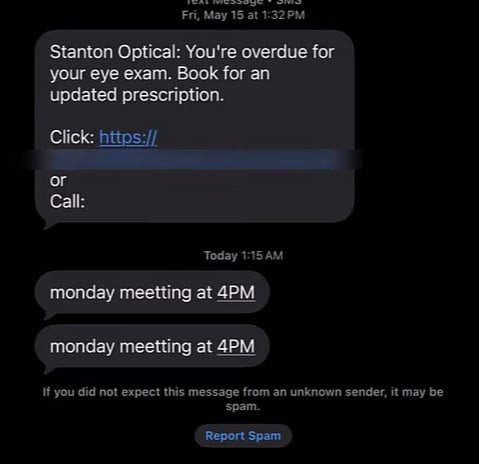
Is the “Monday Meeting at 4PM” Text Legitimate?
If you were not expecting a meeting confirmation and do not recognize the number, treat the message as suspicious.
A legitimate coworker, client, medical office, or other organization would normally provide identifying information. A vague message from a stranger gives you nothing to verify.
Do not reply with:
- “Who is this?”
- “You have the wrong number.”
- “What meeting?”
- “I think you meant to text someone else.”
Even a polite correction confirms that your phone number is active and that you are willing to engage.
How the Wrong-Number Scam Works
The scam usually develops slowly.
1. You receive a harmless-looking message
The opening text might mention a meeting, dinner reservation, golf game, business appointment, or travel plan. Examples include:
- “Monday meeting at 4PM”
- “Are we still having dinner tonight?”
- “When are you free for coffee?”
- “I’ll see you at the conference tomorrow.”
- “Is this Anna’s number?”
The message is deliberately ordinary. There may be no suspicious link or urgent demand because the scammer’s first goal is simply to get you talking.
2. You respond to correct the “mistake”
Once you reply, the sender may apologize and act embarrassed:
“I’m so sorry. My assistant must have saved the wrong number.”
This is where a normal wrong-number exchange should end. Instead, the person keeps talking.
3. The stranger becomes unusually friendly
The scammer may ask your name, location, occupation, or age. They might send a photo of an attractive person and claim that meeting you was a lucky coincidence.
Typical responses include:
- “You seem like a kind person.”
- “Maybe this mistake was fate.”
- “It’s nice meeting new friends.”
- “What do you do for work?”
- “I’m visiting your city soon.”
These are not innocent attempts at friendship. They are social-engineering tactics designed to learn about you and identify whether you have money to steal.
4. The conversation moves to another app
The scammer may ask you to continue chatting on WhatsApp, Telegram, Signal, or another messaging platform. Moving the conversation can help them avoid carrier filters and maintain contact from different accounts.
They may spend days or weeks discussing work, family, travel, luxury purchases, or romantic interests.
5. Cryptocurrency enters the conversation
Eventually, the stranger claims to make impressive profits through cryptocurrency, gold trading, foreign exchange, or an exclusive investment platform.
They may say that a relative, financial expert, or “uncle” has access to special trading information. You will be directed to a professional-looking website or app that displays fabricated profits.
The FBI describes pig-butchering fraud as a confidence-based scheme in which criminals develop a relationship with the victim before introducing a fake cryptocurrency investment opportunity. Victims are encouraged to deposit increasing amounts of money, only to discover that they cannot withdraw it.
What Happens After You Invest?
The first deposit may appear to generate a quick profit. In some cases, the platform even allows a small withdrawal to make the operation appear legitimate.
That apparent success is bait.
The scammer then pressures you to invest more by claiming there is:
- A limited trading window
- A guaranteed profit opportunity
- An exclusive crypto signal
- A special bonus for larger deposits
- A penalty for leaving funds inactive
- An urgent chance to recover a supposed loss
The numbers shown in the account are not real. The trading platform may be entirely controlled by the criminals.
When you attempt to withdraw your money, the site may demand additional payments for “taxes,” “verification,” “liquidity,” “security,” or “account unlocking.” Paying these fees does not release the money. It creates another opportunity for the scammers to steal from you.
Does 1-561-594-0653 Belong to the Scammer?
The message was displayed as coming from 1-561-594-0653, a number using Florida’s 561 area code. However, a displayed number does not prove where the message originated or who sent it.
Scammers can spoof caller ID information to disguise their real identity or make communications appear local. The FCC defines spoofing as deliberately falsifying the caller ID information shown to the recipient.
Therefore, the number may have been:
- Used directly by the sender
- Temporarily assigned to a disposable account
- Compromised
- Falsified through spoofing
- Recycled after being used in a campaign
Do not call the number to investigate. The safest response is no response.
What Should You Do With the Text?
If you received the “Monday meeting at 4PM” message from 1-561-594-0653 or another unknown number:
- Do not reply. Not even to say that they have the wrong number.
- Do not call the sender.
- Do not click any links they send afterward.
- Use your phone’s “Report Junk” or “Report Spam” option.
- Block the number.
- Delete the conversation after preserving screenshots if you plan to report it.
- Never move the conversation to WhatsApp or Telegram.
- Do not share personal details, photos, or financial information.
You can also forward suspicious texts to 7726 (SPAM) if supported by your U.S. mobile carrier.
What If You Already Replied?
Replying once does not mean that your phone has been hacked. However, it may confirm that your number is active, so you could receive more spam or scam attempts.
Stop communicating immediately. Block the sender and remain alert for follow-up messages from different numbers.
If you shared personal information, be cautious about personalized phishing attempts. Details such as your employer, city, family members, or interests can be reused to make future scams sound more convincing.
What If You Sent Money or Cryptocurrency?
Act quickly:
- Contact your bank, card issuer, payment service, or cryptocurrency exchange.
- Explain that the transaction was connected to fraud.
- Ask whether any transfer can be frozen or reversed.
- Save the phone numbers, wallet addresses, transaction IDs, websites, screenshots, and conversations.
- Report the incident to the FTC at ReportFraud.ftc.gov.
- Submit a complaint to the FBI’s Internet Crime Complaint Center.
Cryptocurrency transactions are difficult to reverse, but reporting quickly may help investigators trace funds or identify connected accounts.
Beware of anyone who later promises to recover your cryptocurrency for an upfront fee. “Recovery agents” who contact victims unexpectedly are often running a second scam.
Final Verdict
The 1-561-594-0653 “Monday meeting at 4PM” text should be treated as a scam attempt, not as a genuine meeting reminder.
The message is short because it is bait. Its purpose is to make you curious enough to respond. From there, the sender may manufacture a friendship, move the conversation to another platform, and eventually introduce a fake cryptocurrency investment.
Do not engage, do not investigate the stranger, and do not assume the displayed Florida number identifies the real sender. Report the text, block the number, and delete it.








