

A polished voicemail from a woman who may call herself Savannah says a tax balance has reached a review stage and needs to be resolved. The voice sounds calm and professional, then directs the recipient to call 771-222-6944 before an eligibility window or filing deadline closes.
The reported campaign is a tax scam. The message does not establish access to IRS records, and the callback number is not proof of a government contact. Its purpose is to start a high-pressure conversation that collects personal information, fees or both.
771-222-6944 Tax Scam Call Overview
An AI-style voice makes a mass robocall sound personal
The 771-222-6944 tax scam uses a natural-sounding recorded agent rather than the harsh robotic voice people expect from older scams. The caller may introduce herself by name, pause at realistic moments and refer to a balance, filing review or settlement program. Those details can be generated for thousands of telephone numbers without any IRS file behind them.
The voicemail is deliberately vague about tax year, notice number and exact government office. It says enough to make a worried taxpayer call back, but not enough to verify a real account. Once someone responds, a live agent can collect the missing details and reshape the script around the caller’s answers.
Caller ID cannot authenticate the message. A displayed local number, Washington area code or official-sounding label can be spoofed, while a callback line can be replaced as soon as complaints accumulate.
The callback turns uncertainty into a sales or payment demand
A fake specialist may claim the taxpayer qualifies for penalty relief, Fresh Start assistance or a limited settlement. A more aggressive version says collection action, a lien or wage problems are approaching. The agent requests a Social Security number, income, bank details or an upfront investigation fee before providing a written explanation of the supposed debt.
- The opening: a smooth AI voicemail from a named tax specialist.
- The claim: an unresolved balance or expiring relief opportunity.
- The callback: 771-222-6944, presented as the only route to stop escalation.
- The request: identity details, tax documents, card data or an immediate fee.
- The risk: financial loss, identity theft and later impersonation using the information collected.
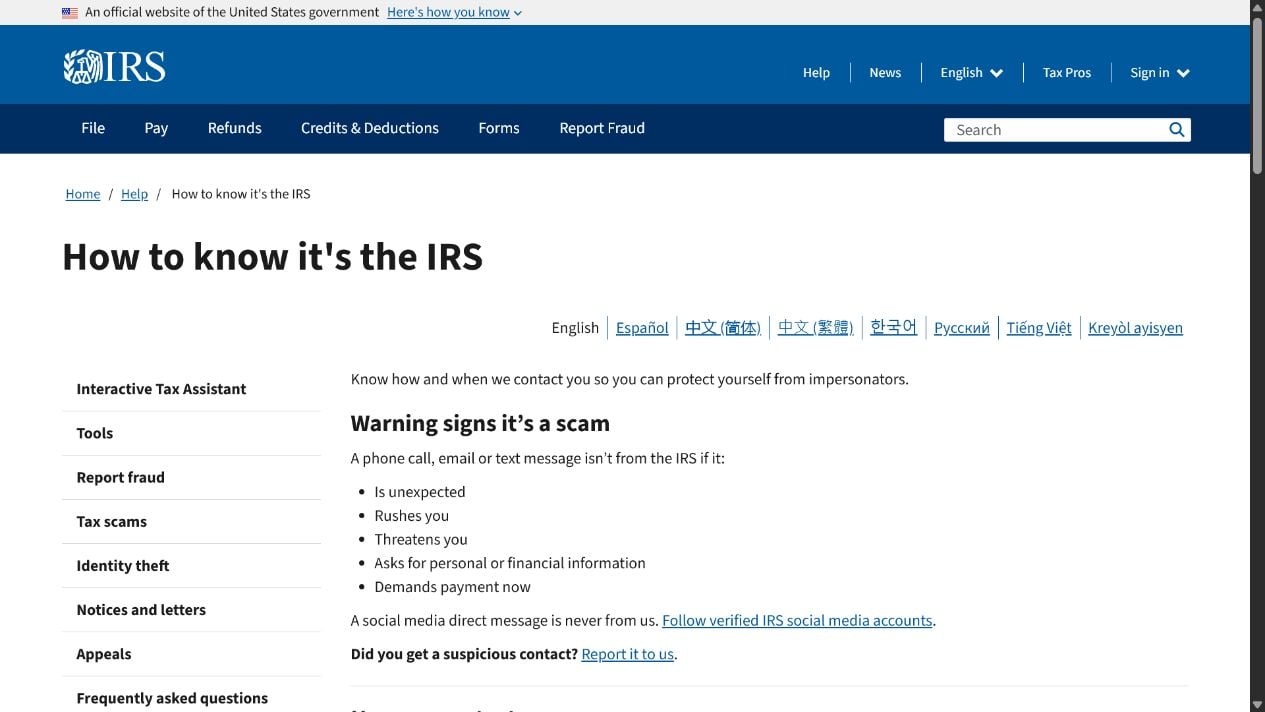
The IRS says a call, email or text is not from the agency when it is unexpected, rushes or threatens the recipient, asks for personal or financial information, or demands payment now. The agency normally begins contact by mail. A genuine tax issue can be checked through an independently opened IRS Online Account or contact details typed from irs.gov.
Warning Signs of the 771-222-6944 Tax Voicemail
The message creates a deadline without identifying a verifiable notice
A legitimate balance has a tax period, notice history and account record. The voicemail avoids those details while asking the recipient to trust one callback number.
Do not let a realistic voice or personal name replace documentation. AI can make a scripted campaign sound patient, local and human.
Red Flags at a Glance
- The call is unexpected. No matching IRS letter or Online Account notice was received.
- The agent speaks vaguely about your file. No tax year, notice number or assessed balance can be verified.
- A benefit or deadline expires today. Urgency is used to prevent a callback through official channels.
- Personal data is requested before documentation. The agent asks for a Social Security number, birth date or bank details.
- An upfront tax-relief fee is demanded. Payment comes before any transcript review or written engagement.
- The caller promises guaranteed settlement. IRS relief depends on eligibility and financial facts, not a robocall.
- The number must be kept secret. The recipient is discouraged from checking with the IRS, an accountant or family member.
Why the AI Voice Does Not Make the Call Legitimate
Synthetic speech can run thousands of personalized scripts
Voice systems can insert a name, location, balance range or callback prompt into a recording and deliver it at scale. Pauses, breaths and conversational rhythm are no longer reliable signs that a live professional reviewed a file.
The operation benefits when recipients stay on the line to correct the agent. Each correction supplies information that the caller did not have. A vague claim becomes personalized because the taxpayer explains income, notices, filing status and fears.
A callback number is not an identity document
The number 771-222-6944 has been reported with this campaign, but numbers can be changed, spoofed, disconnected or reassigned. Blocking it is useful, yet the next call may display a different number. Judge the behavior and verification path, not only the digits.
Do not call back from the voicemail. Open irs.gov independently, sign in to the Online Account or obtain the correct telephone number from the official website. If the caller story is real, the account record will survive that change of channel.
Tax relief exists, but eligibility is not determined by robocall
Payment plans, penalty relief and offers in compromise can be legitimate options for qualifying taxpayers. None is guaranteed because an unsolicited agent says a file was pre-approved. The IRS considers the balance, ability to pay, income, expenses and assets.
A responsible professional identifies credentials, provides a written engagement and reviews transcripts before recommending a remedy. An operation that starts with a large fee and a guaranteed reduction is selling certainty it cannot legitimately provide.
How the 771-222-6944 Tax Scam Works
Step 1: A natural-sounding voicemail introduces a tax problem
An AI-style agent uses a friendly name and says a balance, filing review or relief opportunity needs attention. The message may sound more professional than an ordinary robocall.
It avoids enough detail to fit recipients with very different tax situations.
Step 2: A short deadline encourages a callback
The voicemail says a review is closing, penalties are growing or a program will expire. Calling 771-222-6944 is presented as the responsible way to prevent a worse outcome.
The deadline exists to stop the recipient from checking mail or an IRS account first.
Step 3: A live agent collects the missing facts
The callback begins with broad questions about debt, unfiled returns, employment and income. The recipient answers because the agent appears to be confirming a file.
In reality, the operation is discovering which fear and payment amount will be most effective.
Step 4: A solution is presented as pre-approved
The agent claims special access to Fresh Start, penalty forgiveness or a settlement program. A large reduction may be quoted before any transcript or financial analysis.
Government vocabulary turns an ordinary sales script into something that sounds official.
Step 5: Sensitive information and documents are requested
The caller asks for a Social Security number, birth date, address, bank information, tax returns or wage documents. A portal may be sent by text or email.
The material can support identity theft even if the recipient refuses the eventual fee.
Step 6: An upfront payment is required
A card charge, wire, payment-app transfer, gift card or cryptocurrency payment is described as enrollment, investigation or protection from collection.
The operation may charge again for filings, release documents or an urgent escalation that it invented.
Step 7: Follow-up calls reuse the tax profile
If the first caller obtains information or money, another person may pose as an IRS officer, bank fraud agent or refund specialist. The second script references facts collected earlier.
The apparent knowledge makes the follow-up feel official while creating another payment or identity request.
How To Verify a Tax Balance Without Calling 771-222-6944
Use records and contact details outside the voicemail
Open irs.gov by typing the address yourself and sign in to the IRS Online Account. Review balances, payment history, notices and available transcripts. Do not use a text link or portal sent by the caller.
If you received a paper notice, compare its number and tax period with information on the official website. Call the IRS through a number shown on irs.gov or the verified notice, not through the unexpected voicemail.
A Safer Verification Sequence
- Check the IRS Online Account. Look for a balance and notice that match the story.
- Review physical mail. The IRS normally begins contact with a mailed notice.
- Type irs.gov yourself. Do not follow search ads, text links or caller-supplied portals.
- Verify a tax professional. Check credentials and get a written engagement before sharing returns.
- Reject guaranteed reductions. Relief depends on eligibility and documented finances.
- Do not pay by gift card or crypto. Those methods are not how the IRS collects tax.
- Ask for time to verify. A legitimate matter will not disappear because you ended an unsolicited call.
What To Do If You Called 771-222-6944
Secure the information that was discussed
End contact and write down exactly what was disclosed. Separate basic information, such as a name and telephone number, from high-risk data such as a Social Security number, IRS login, bank details, card information or copies of tax returns.
If login credentials were entered into a portal, change them from the official service on a trusted device. Secure the connected email account first if its password was reused or if it can reset the tax account.
If money was paid, contact the payment provider immediately. Ask for a fraud recall, dispute or account freeze. Do not pay a second person who claims a fee is required to cancel the original transaction.
Recovery Checklist
- Block the callback number after saving the voicemail, timestamp and any text messages.
- Change exposed passwords and enable stronger two-factor authentication.
- Contact the bank or card issuer if account data or payment was provided.
- Freeze credit if a Social Security number or identity document was disclosed.
- Review the IRS Online Account for unknown access, authorizations or activity.
- Report IRS impersonation to TIGTA and the number to phishing@irs.gov with IRS Phone Scam in the subject.
- Submit a fraud report to the FTC and preserve confirmation numbers.
- Warn family members if the scammer knows enough information to impersonate you.
Expect a second call with a different identity
The same operation may return as a tax investigator, bank security department or recovery service. A new number and a more accurate story do not make the contact legitimate.
Monitor bank, credit and tax records for delayed activity. Continue resolving any genuine tax issue only through the IRS or a professional whose credentials and written terms were independently verified.
Frequently Asked Questions
Is 771-222-6944 an IRS telephone number?
The number has been reported in a fraudulent tax-voicemail campaign. Do not use it to resolve an IRS matter. Find current contact details directly on irs.gov.
Can the IRS ever telephone a taxpayer?
Some IRS contacts can involve a call, but the agency normally begins with mail. An unexpected call that rushes, threatens, demands payment or requests sensitive information is not legitimate.
How can I tell whether the voice is AI-generated?
You may not be able to tell reliably. Verification should focus on the account record, mailed notice, behavior and independently reached contact channel rather than the realism of the voice.
What if I really owe back taxes?
A real balance does not make the caller legitimate. Review the IRS Online Account and contact the agency or a verified tax professional through details you find independently.
The Bottom Line
The 771-222-6944 voicemail uses a realistic voice and a vague tax balance to manufacture a reason to call. The polished delivery does not create an IRS file or a legitimate relief offer.
Do not call back. Check irs.gov, the Online Account and mailed notices independently. A real tax issue can be handled without surrendering information or money to an unsolicited agent.








