

Rev Float is being promoted online as a flashy inflatable car float for pools, lakes, rivers, and summer parties. The product looks fun, unusual, and made for social media. In the ads, it appears like the kind of summer item people would instantly want to share.
But behind the glossy visuals and viral-style marketing, there are serious concerns.
Rev Float appears to be sold through hype-heavy social media ads, polished product images, and pre-order terms that put buyers in a risky position. There is a real chance customers may receive a cheap inflatable product that does not look or perform like the ads suggest. In some cases, buyers may receive nothing at all.
This is why shoppers should be extremely careful before ordering.
What Is Rev Float?
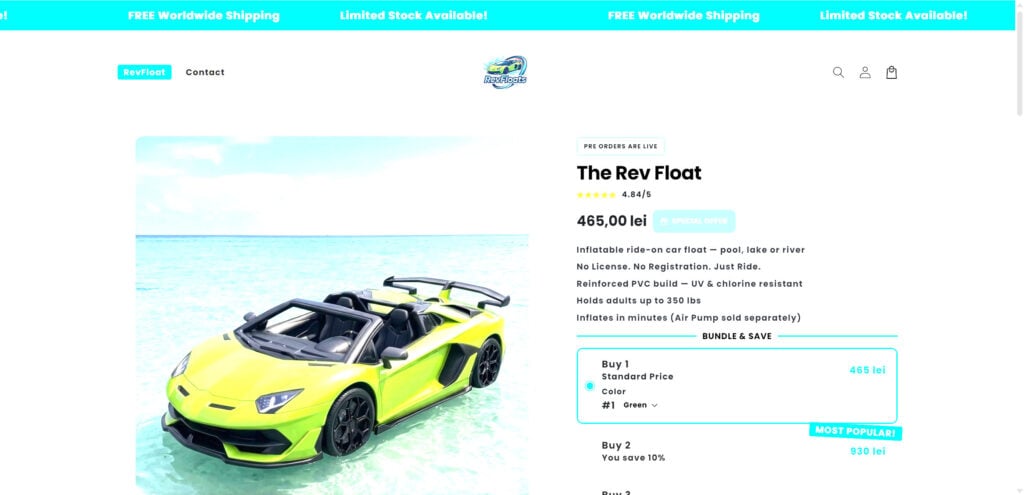
Rev Float is sold through RevFloats.store as “The Rev Float,” an inflatable ride-on car float designed for use in pools, lakes, and calm water. The product is marketed as a fun, car-shaped float that can support adults and bring a luxury-style summer experience to the water.
The website presents it as a bold alternative to normal pool floats. It looks like a mini sports car on water, with a large seating area, steering-wheel-style design, and enough visual impact to stand out in short videos and social media clips.
That is exactly what makes it attractive.
It is also what makes it suspicious.
The product is not being sold like a normal pool accessory from an established outdoor brand. It is being promoted like a viral impulse-buy product, with dramatic visuals, discount pricing, urgency messages, and pre-order language. The entire presentation feels built to make people buy quickly before they stop and question whether the product is real, available, or likely to match the advertisement.
The Main Problem With Rev Float
The biggest issue with Rev Float is not just the float itself. The bigger problem is the gap between the marketing and the buyer risk.
The product is made to look impressive, premium, and highly desirable. The ads and product images create the impression of a large, stylish, luxury water toy that people can use for fun summer content. But the website does not provide enough proof that buyers will receive the same product shown in the marketing.
This is a common pattern with risky viral products. A store launches with a product that looks exciting, uses polished or AI-style images, pushes the item through social media ads, and offers a discount that creates urgency. Buyers order because the product looks too good to miss. Then they wait weeks, receive a cheap version, or never receive anything at all.
That is the concern with Rev Float.
AI-Generated Images and Social Media Videos Are a Major Red Flag
Rev Float appears to rely heavily on glossy visuals and social media-style promotion. The product looks almost designed for viral ads, where quick clips and polished images make the float seem bigger, cooler, and more impressive than a normal inflatable toy.
The problem is that AI-generated images and edited videos can make almost anything look real. A product can appear polished, premium, and functional even if the real item is much cheaper, smaller, weaker, or not actually available to ship.
That matters because many scam-style stores now use AI-generated product images to sell items that either do not exist or do not match what customers receive. The ad creates the dream. The customer pays. The actual product, if anything arrives, can be a low-quality imitation.
With Rev Float, buyers should not treat social media videos or glossy product images as proof. A real product should have clear, independent customer reviews, real unedited videos from buyers, transparent shipping proof, clear business details, and a reliable refund policy.
Without that, the visuals are just marketing.
The Pre-Order Setup Creates Buyer Risk
Rev Float becomes especially risky because of how the order is structured. The product is not clearly being sold as something ready to ship immediately. It is presented as a pre-order, with dispatch taking around 40–45 business days.
That means buyers may pay now and then wait weeks before the seller even sends the product.
This is not a small detail. A long pre-order window gives the seller a lot of time while the buyer has very little control. During that waiting period, the buyer may receive vague updates, delayed tracking, or no meaningful information at all.
The cancellation terms make the situation even more concerning. The site gives buyers only a short 24–48 hour window to cancel the order. After that, the order is treated as committed, even though the product may not ship for more than a month.
That puts the customer in a weak position. A buyer could order impulsively after seeing an ad, notice red flags the next day, try to cancel later, and be told the cancellation period has already passed.
For a product that has not even shipped yet, that is not buyer-friendly.
The Return Policy Does Not Offer Much Comfort
The return policy also raises concerns because it appears to limit what buyers can do if the product disappoints them.
Change-of-mind returns are not accepted, and refunds seem to be focused mainly on damaged or defective items. That means a buyer may not be protected if the product arrives late, looks cheaper than expected, feels flimsy, or does not match the social media ads.
This is important because the biggest risk with viral products is not always that nothing arrives. Sometimes something does arrive, but it is nothing like what was advertised.
A customer may receive a thin inflatable float instead of the premium-looking car float from the ads. It may be smaller, weaker, poorly finished, or simply unimpressive in real life. If the seller decides that the product is not “defective,” getting a refund could become difficult.
That is why the return policy matters. A flashy product with restrictive refund terms is a bad combination.
Weak Contact Information Makes Things Worse
Another issue is the lack of strong company information. A serious business selling physical products should make it easy to know who is behind the store, where the company is located, how support works, and what customers should do if something goes wrong.
With Rev Float, the public contact details appear weak. The site uses basic email-style support instead of clear business information, full company details, phone support, or a visible physical return address.
That becomes a problem if the order is delayed, the tracking does not update, or the item arrives completely different from the ads. If the seller ignores emails or gives vague answers, the buyer may have no easy way to resolve the issue directly.
This is one of the classic risks with suspicious ecommerce stores. The checkout process is simple, but customer support after payment can become slow, unclear, or useless.
The Product May Not Match the Ads
The biggest practical risk is that buyers may not receive the product they think they are buying.
Rev Float is advertised like a cool, premium, car-shaped water toy. It looks like something that would stand out at a pool party or lake day. But there is not enough proof that the real product will match that presentation.
A buyer may receive a cheaper-looking inflatable float with thinner material, weaker seams, poor printing, or a smaller size than expected. The product may look impressive in edited videos but disappointing in real life.
There is also the possibility that the item may take a very long time to arrive, arrive damaged, or never arrive at all.
That is the danger with products sold mainly through viral social media ads. The marketing is often much stronger than the product.
Why Rev Float Looks Risky
Rev Float looks risky because several warning signs appear at the same time.
The product is promoted with glossy, viral-style visuals that may not reflect the real item. The order is structured as a pre-order, meaning buyers may wait weeks before dispatch. The cancellation window is very short, even though shipping may take much longer. The refund policy appears restrictive, especially if the buyer simply receives a product that looks cheap or fails to match expectations.
The company information also does not feel strong enough for a product being sold at scale. When an online store asks customers to pay upfront, wait weeks, and accept limited cancellation options, it needs to provide serious transparency. Rev Float does not appear to do that.
This does not prove that every order will fail. But it does make the purchase too risky to recommend.
You May Receive a Cheap Product — Or Nothing
The main warning is simple: do not assume the product in the ads is what will arrive at your door.
Buyers may receive a cheap inflatable item that does not look like the marketing images. They may receive a product that feels flimsy, poorly made, or much less impressive than expected. They may receive tracking that does not update properly. They may struggle to get a useful response from customer service.
In the worst case, they may receive nothing at all.
This is why shoppers should be careful with viral products that appear suddenly, look unusually polished, and rely on urgency-driven ads. The more exciting the product looks, the more important it is to verify the seller before ordering.
Final Verdict: Do Not Order Rev Float
Rev Float looks like a risky viral product being sold through social media-style hype, polished visuals, and restrictive pre-order terms.
Do not order it.
The product may not match the ads. The shipping timeline is long. The cancellation window is short. The refund policy may not protect buyers if the item arrives looking cheap or disappointing. The company information is not strong enough to inspire confidence.
There is a real risk of wasting money, receiving a low-quality inflatable product, or receiving nothing at all.
Until Rev Float has real independent reviews, verified customer videos, transparent company details, clear fulfillment proof, and buyer-friendly refund terms, shoppers should avoid it.
What To Do If You Already Ordered Rev Float
If you already placed an order, act quickly.
Start by saving screenshots of everything. Keep a copy of the product page, the price, the checkout page, the shipping policy, the refund policy, the order confirmation, and any ads that convinced you to buy.
Contact the seller immediately and ask for written confirmation of the exact shipping date, tracking number, and cancellation options. Keep all replies in case you need them later.
If the seller ignores you, gives vague answers, refuses to cancel, or provides tracking that does not update, contact your bank, credit card company, or PayPal and ask about opening a dispute.
Do not wait too long. The longer you wait, the harder it may become to recover your money.
FAQ
Is Rev Float legit?
Rev Float looks risky. The product is promoted with viral-style marketing, the order appears to be structured as a pre-order, and the buyer protection terms are not strong enough to make the purchase feel safe.
Is Rev Float a scam?
There is not enough public proof to say every order is definitely a scam, but there are enough red flags to warn buyers not to order.
Why should I avoid Rev Float?
You should avoid Rev Float because you may receive a cheap inflatable product that does not match the ads, face long delays, struggle to get a refund, or receive nothing at all.
Are the Rev Float ads real?
The ads and images should not be treated as proof. Viral products are often promoted using AI-generated images, edited videos, or staged marketing that makes the item look better than it really is.
Is Rev Float motorized?
The product appears to be marketed mainly as an inflatable ride-on leisure float, not a true motorized water vehicle. Buyers should not assume social media-style videos prove advanced performance.
How long does Rev Float take to ship?
The site presents the product as a pre-order and mentions a long dispatch window of around 40–45 business days. That means buyers may wait weeks before the item is even sent.
Can I cancel a Rev Float order?
The site appears to allow cancellation only within a short 24–48 hour window. After that, canceling may become difficult or impossible.
What happens if Rev Float arrives and looks cheap?
That is one of the biggest risks. If the product arrives but simply looks cheaper, smaller, or worse than expected, the refund policy may not make it easy to get your money back.
What should I do if I already ordered?
Save all evidence, contact the seller immediately, request tracking and cancellation details, and contact your payment provider if the seller does not help.
Should I buy Rev Float?
No. Based on the current red flags, Rev Float is too risky to recommend.








