

A page offering a £750 John Lewis reward can look like a welcome break from rising everyday costs. The design is clean, the instructions are simple, and a notification may even announce that another shopper has just claimed the same amount.
StudentSavingsHub.com is not an official John Lewis website. Our investigation found a rotating brand-themed landing page whose main purpose is to send visitors through an affiliate link to unrelated third-party offers.
Overview
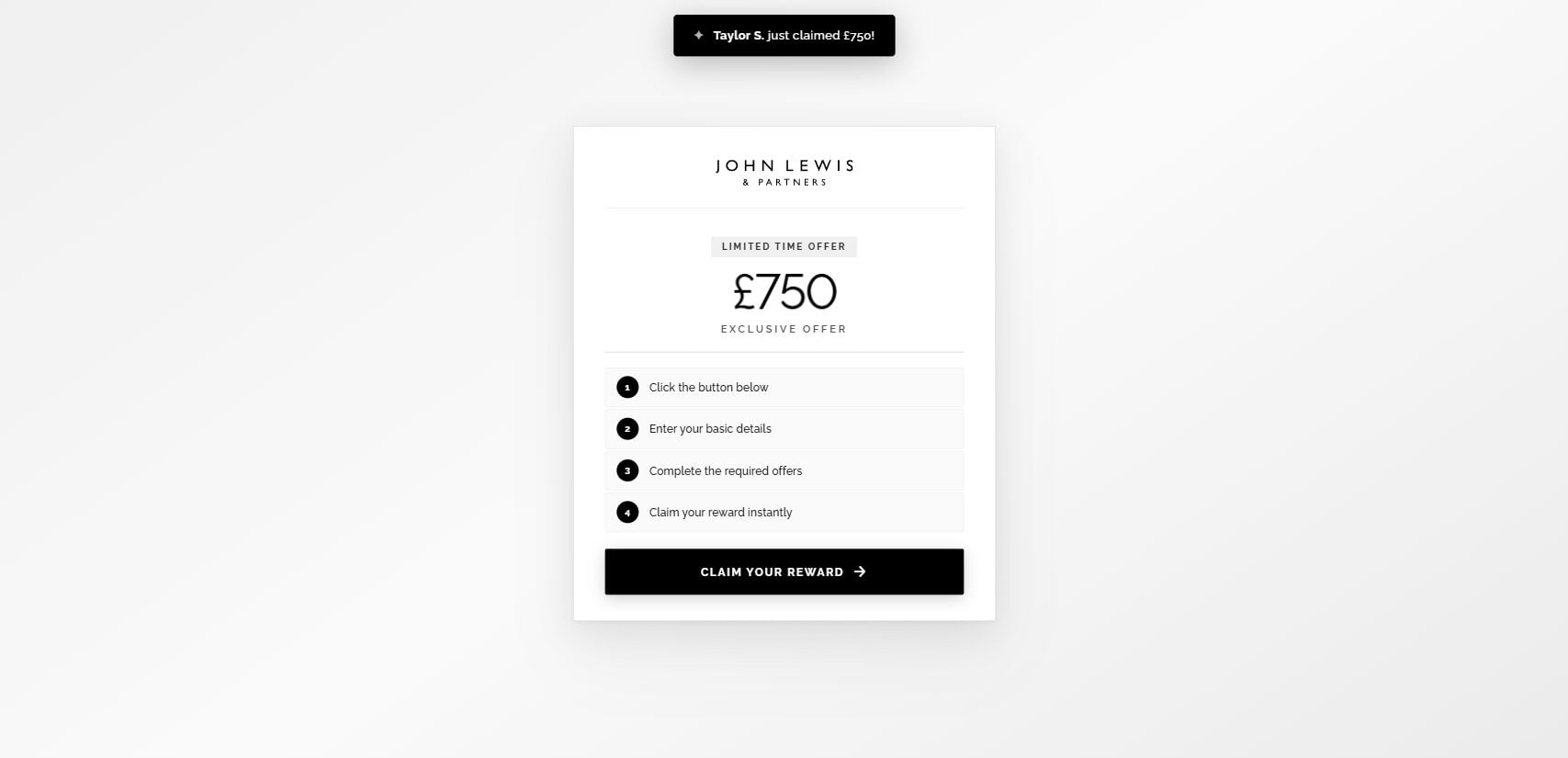
The StudentSavingsHub scam is a misleading affiliate reward funnel that uses recognizable retail brands to attract clicks. At the time of our latest check, StudentSavingsHub.com showed the John Lewis & Partners logo above a large £750 figure and described the promotion as an “Exclusive Offer.”
The page tells visitors to click a button, enter basic details, complete required offers, and claim the reward. That four-step explanation makes the process sound direct, predictable, and connected to the retailer shown on the screen.
It is not. The “Claim Your Reward” button links to linkthem.net with an affiliate offer ID and affiliate ID in the address. Following that link did not take us to John Lewis, a John Lewis promotion, or even a page explaining how to receive a John Lewis voucher.
Instead, the link redirected to an “Opportunity Search” page that selected offers according to our location. The page promoted a paid-survey service and online casino bonuses. Its footer said it was part of an advertisement and that the brands shown did not imply affiliation, sponsorship, or endorsement.
That destination is the clearest way to understand StudentSavingsHub. The familiar retailer and large reward create the click. The visitor is then handed to an affiliate advertising system where completed registrations, surveys, trials, or gambling offers may generate revenue for people in the referral chain.
The brand on StudentSavingsHub keeps changing
StudentSavingsHub has not consistently presented itself as a John Lewis promotion. Public scan history shows the same domain wearing several different brand identities over a short period.
A URLScan capture from August 5, 2026 shows a LEGO-themed page promising a $500 “Exclusive Offer.” An earlier public scan recorded the title “Seat Geek Landing Page Design.” Other automated snapshots indexed the domain under Argos and JB Hi-Fi branding.
When we checked the live site, it had already changed again to John Lewis and £750. Search engines were still showing the recent LEGO page while the website itself displayed the new British retailer theme.
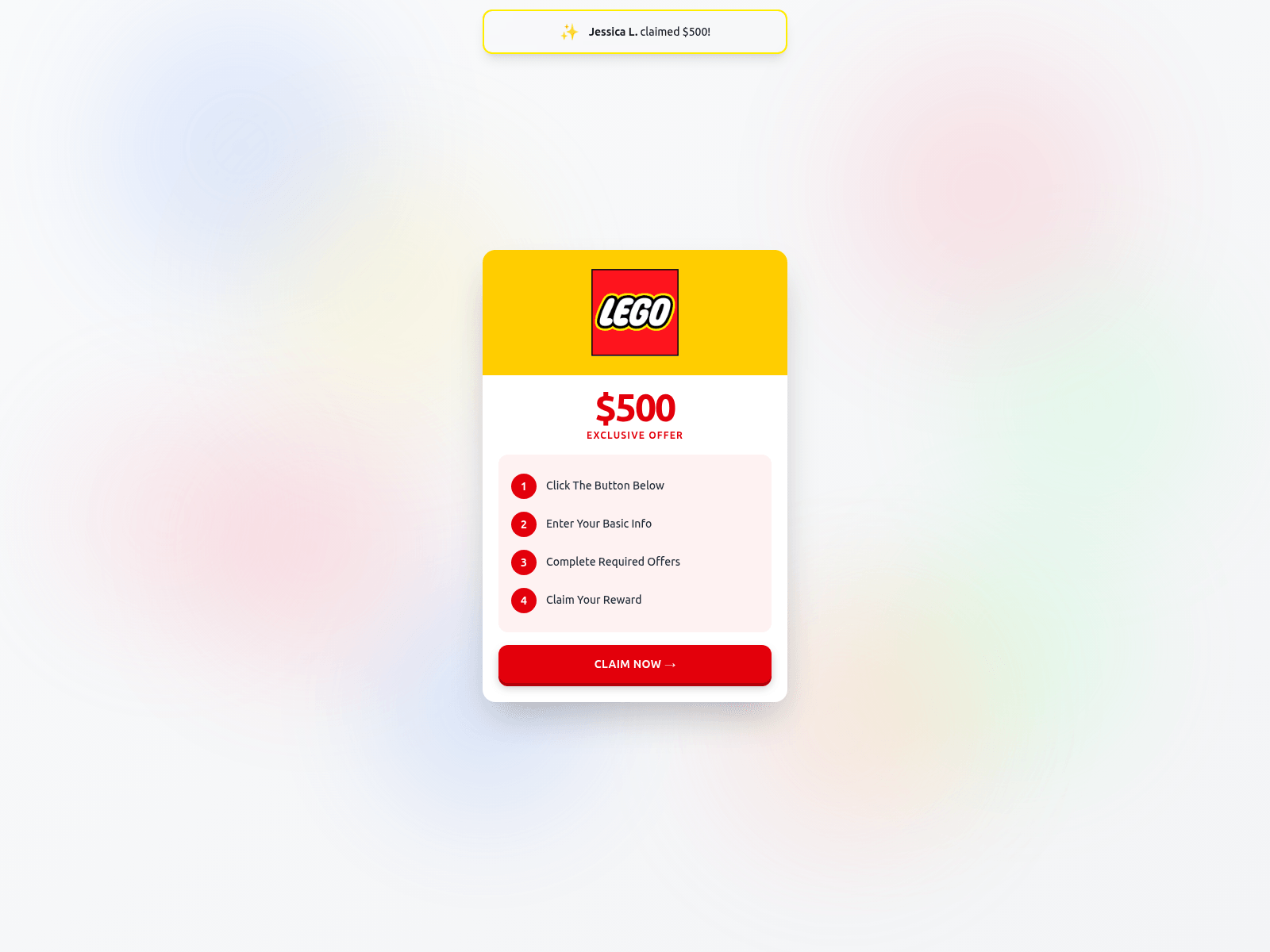
A genuine retailer promotion does not normally change from LEGO to SeatGeek, Argos, JB Hi-Fi, and John Lewis while keeping the same generic claim process. This rotation strongly suggests that the brand is a replaceable marketing prop, not the organization running the offer.
The brands mentioned in this article are not accused of operating the funnel. Their names and visual identities appear to be used to make an independent affiliate landing page feel familiar.
The “just claimed” alerts are generated by the page
The John Lewis version displayed notices such as “Taylor S. just claimed £750!” and “Ashley K. just claimed £750!” These messages look like live social proof. They imply that real people are successfully collecting rewards while the visitor is deciding what to do.
Inspection of the site’s public code tells a different story. The page contains a fixed list of first names and initials, including Sarah M., Jessica L., Emily R., Ashley K., Madison T., Taylor S., Morgan B., Jordan P., Charlotte B., Olivia W., Sophie H., and Amelia T.
A script randomly selects one of those names and pairs it with the fixed £750 amount. The notifications therefore do not demonstrate that the named person exists, visited the page, completed any offers, or received anything.
This is manufactured social proof. It is designed to reduce hesitation by creating the appearance of frequent successful claims without providing verifiable evidence.
What appears after the claim button
Our destination page was headed “Opportunity Search” and said special offers were available in Constanța. This geographic personalization may make the result feel relevant, but it had no visible connection to John Lewis.
The offers included Surveoo paid surveys, a Slotoro casino welcome bonus of €2,500 plus 250 free spins, and a Lussurio casino bonus of 550% up to €3,400 plus 400 free spins. The mix can change according to country, browser, advertising inventory, and campaign rules.
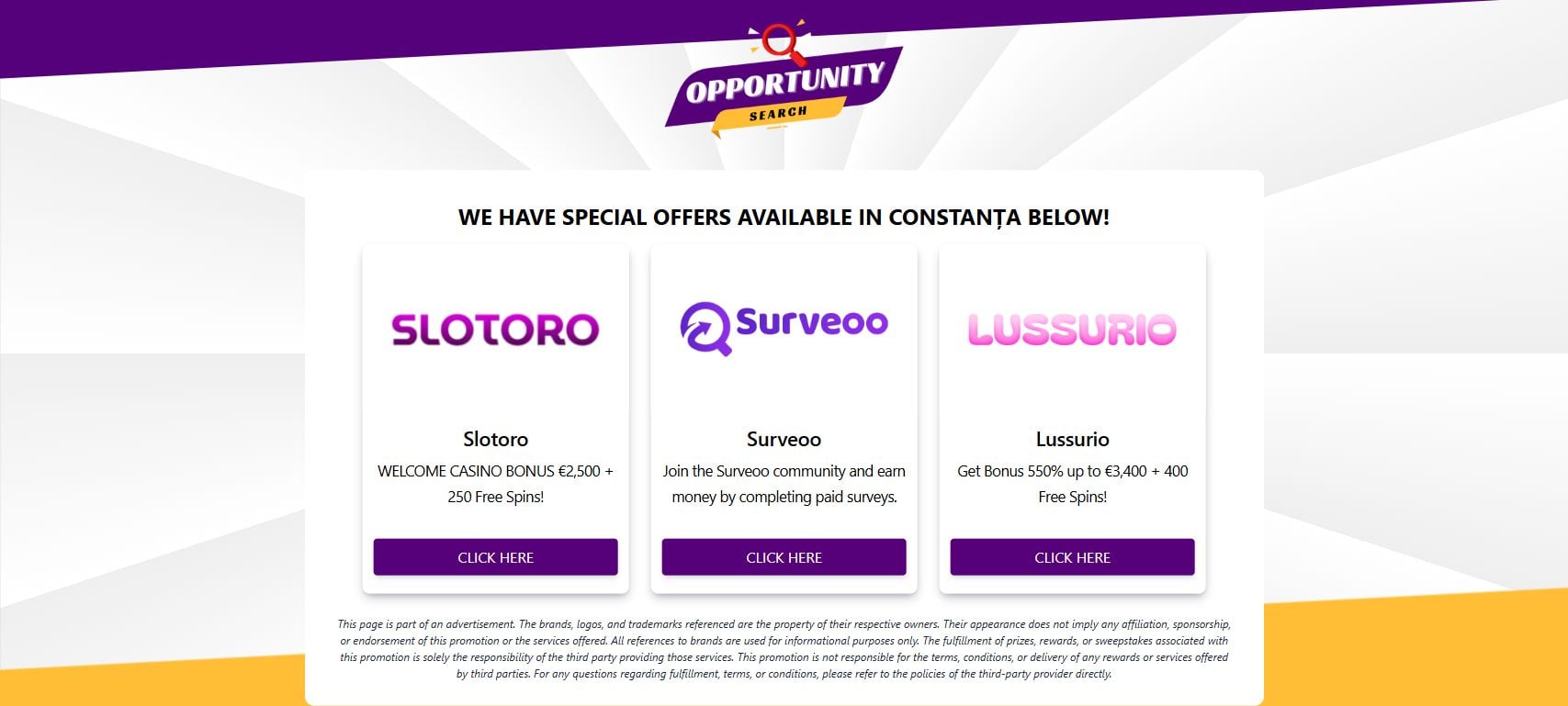
A different visitor may see questionnaires, app downloads, sweepstakes, subscriptions, insurance leads, or other sponsored offers. That variation does not make the original retailer reward more credible. It shows that the funnel is optimized to monetize traffic rather than deliver one clearly defined promotion.
StudentSavingsHub and the wider reward-funnel pattern
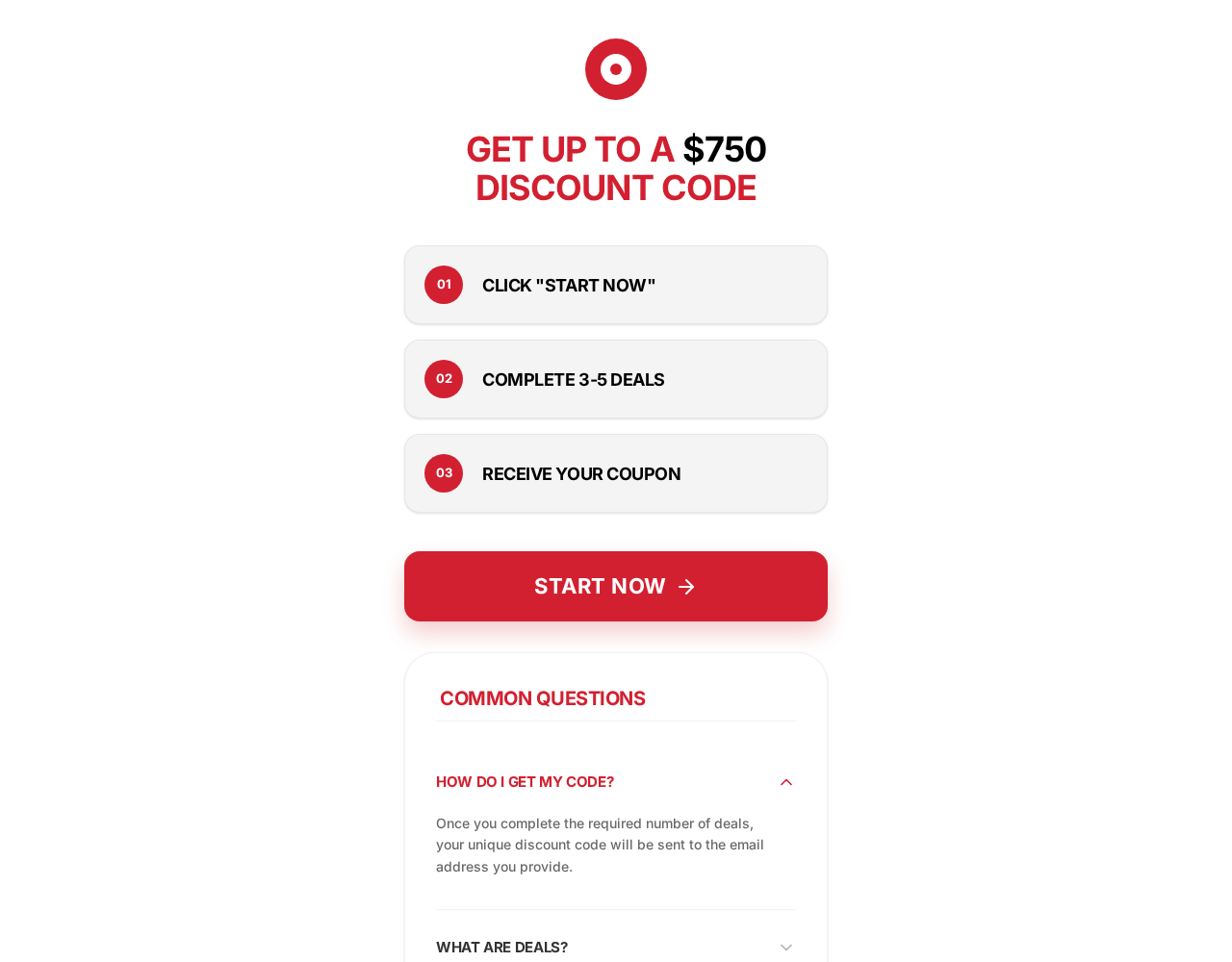
The site closely resembles other “complete offers to claim $750” campaigns. Our earlier investigation of TarPerks.com found a Target-themed page that directed visitors toward apps, surveys, trials, and sponsored deals.
StudentSavingsHub also shares a visible affiliate identifier with StudentDealHub.com, another rotating-brand reward page we investigated. Both claim buttons included aff_id=157286, although they used different offer IDs and tracking domains.
That common identifier connects the campaigns at the affiliate-account level. It does not by itself identify the individual behind the account, but it is stronger evidence than a visual resemblance alone.
StudentSavingsHub.com was registered on February 18, 2026. A recently created domain is not automatically fraudulent, but its short history matters when it claims to represent large, established retailers and rapidly changes the brand displayed to visitors.
Why the offer is misleading
The landing page leads with the retailer logo and £750 amount, while important realities appear only after the visitor leaves the domain. There is no prominent company identity, no clear relationship disclosure next to the main claim, and no retailer-hosted terms explaining eligibility.
The page also says users can “claim your reward instantly.” The claim button did not take us to an instant claim. It took us into an advertising page with unrelated commercial offers.
A disclaimer at the end of a later page cannot fully undo the impression created by a retailer logo, an exclusive-reward headline, fake claimant alerts, and a direct claim button. The overall journey is likely to leave many visitors believing the retailer is involved when the destination itself says brand appearance does not imply affiliation.
What StudentSavingsHub may collect or expose
The first landing page is only the front door. The real privacy and financial risk develops as the visitor moves through partner pages.
- Contact information: Forms may request a name, email address, phone number, date of birth, postal code, or home address.
- Marketing consent: Survey and lead-generation pages may ask for consent to email, text, or call.
- Payment details: Trials, subscriptions, purchases, and casino deposits can require a card or another payment method.
- Behavioral data: Affiliate parameters, cookies, device details, location, and completed steps can be used to measure and retarget visitors.
- Account registrations: Each offer may create a separate account governed by a different privacy policy and cancellation process.
The Federal Trade Commission warns that contest promoters may sell participant information to advertisers, leading to targeted ads, promotional mail, telemarketing calls, and spam. It also notes that some affiliate marketers exaggerate claims because they are paid for clicks or completed actions.
Red flags that should make you leave
- The website domain does not belong to the retailer featured on the page.
- The same domain has recently used several unrelated retail brands.
- A large reward is shown before clear eligibility rules and sponsor details.
- Random “just claimed” notifications create unverifiable social proof.
- The button contains affiliate tracking parameters.
- The destination promotes unrelated surveys, subscriptions, or gambling offers.
- The landing page says the reward is instant, but the visitor must complete unspecified third-party actions.
- There is no clear customer-service path for the advertised retailer reward.
- Important privacy, payment, and cancellation terms are spread across separate partner sites.
Any one of these signs deserves caution. Together, they show that StudentSavingsHub should not be treated as an official retailer reward program.
How The Scam Works
The exact advertisement and final offers can change, but the underlying StudentSavingsHub affiliate funnel follows a recognizable sequence.
1. A social media ad or shared link promises a large reward
The first contact may appear on Facebook, Instagram, TikTok, a display ad, or a message forwarded by a friend. A high-value gift card or voucher is paired with a recognizable brand so the viewer understands the promise instantly.
The reward is intentionally much larger than an ordinary coupon. £750 or $500 is enough to interrupt scrolling and make a quick click feel worthwhile.
2. StudentSavingsHub copies the appearance of a known retailer
The visitor lands on a page using the retailer’s logo, colors, and brand name. There is little content to examine, so attention stays on the amount and the claim button.
When the campaign changes, the template can be updated with a different logo, currency, and reward amount. The domain and basic four-step structure remain available for the next promotion.
3. Urgency and fake social proof reduce hesitation
A “Limited Time Offer” label suggests the visitor may lose the opportunity by researching it. Random claimant notifications imply that other people are receiving the money right now.
Because those names are selected from a fixed list in the code, the alerts are persuasion elements, not proof of fulfillment.
4. The claim button records the affiliate referral
The visible button points to a tracking domain instead of the retailer. Parameters identify the offer and the referring affiliate so actions can be attributed for commission purposes.
At this stage, the operator does not necessarily need to charge the visitor directly. Sending valuable traffic into the advertising network can be the business model.
5. Several redirects select a monetizable destination
The tracking system evaluates factors such as location, device, campaign availability, and advertiser rules. It then sends the visitor to an offer wall or another lead-generation page.
This explains why two people may click the same reward page and see different results. It also allows the campaign to replace an offer without rebuilding the original landing page.
6. The retailer reward fades into the background
On the destination we reached, the promised John Lewis reward was no longer the main subject. Surveys and casino bonuses took over the page.
The visitor may continue because of sunk-cost thinking. After clicking and reading several screens, completing “just one more” form can feel easier than admitting the original promise was misleading.
7. Each offer asks for another action
A survey may request demographic details. An app offer may require installation and activity. A free trial may request a card and renew automatically. A casino promotion may require registration, identity checks, and a deposit.
These are separate commercial relationships. Completing one does not necessarily satisfy the conditions of another, and cancelling one subscription does not cancel any others.
8. The affiliate can earn even when the visitor never receives £750
Affiliate programs commonly pay for leads, registrations, deposits, purchases, or other qualifying events. The person who clicked may spend time and money across several offers while the original reward remains undefined or unreachable.
This mismatch is why the large brand-themed promise is so effective. It motivates actions that many visitors would never take if the page simply advertised a survey site or casino.
9. The visitor may receive more marketing
Once an email address or phone number is entered, it can be used for reminders, related promotions, and follow-up campaigns according to the consent language on each page.
People who respond to a high-value reward offer may also be treated as promising targets for future prize, delivery, subscription, or account-verification messages.
10. The campaign changes brands when necessary
If a retailer complains, an advertising platform removes a post, or public warnings begin ranking in search results, the front page can be switched to another brand. Historical scans then preserve the old identity while new visitors see the latest version.
This rotation is why consumers should evaluate the domain and destination, not only the logo displayed today.
What To Do If You Have Fallen Victim
Stay calm. Many people stop the process before losing money, and even those who entered information can reduce the risk by acting methodically.
- Stop completing offers. Close StudentSavingsHub and every page it opened. Do not continue merely because you have already spent time on earlier steps.
- Write down what you submitted. List each site you visited and whether you shared an email address, phone number, password, home address, identity document, or card. Screenshots and browser history can help reconstruct the path.
- Cancel trials and subscriptions individually. Check confirmation emails for every offer. Use the provider’s official cancellation process, save the confirmation, and note when access or billing should end.
- Contact your card issuer about unexpected charges. Call the number printed on the card. Explain which transactions resulted from a misleading reward funnel, ask about disputes, and request a replacement if the card details may be exposed.
- Monitor bank and card statements. Watch for small test charges as well as recurring payments. Continue checking after the first billing cycle because some trials convert later.
- Change reused passwords. If you created an account using a password that appears elsewhere, replace it everywhere it was reused. Start with your email account and enable multi-factor authentication.
- Reduce unwanted marketing. Use legitimate unsubscribe tools when you recognize the sender, block persistent callers, and revoke browser notification permission if you allowed it. Do not click unsubscribe links in clearly fraudulent messages.
- Protect identity information. If you supplied sensitive identity documents or financial identifiers, follow the recovery plan at IdentityTheft.gov. Consider a credit freeze or fraud alert when appropriate.
- Report the advertisement and domain. Report the original social media ad to the platform. US consumers can file a report at ReportFraud.ftc.gov. UK consumers can report scam ads through the Advertising Standards Authority and contact their bank promptly if money was lost.
- Ignore recovery scammers. Anyone who unexpectedly promises to recover the £750 or obtain a refund for an upfront fee is creating a second risk. Work only with your bank, card issuer, the actual merchant, or an official consumer-protection agency.
If you only opened the landing page and did not download anything or enter information, the main action is to close it and report the ad. Simply viewing the page does not mean your device or identity was automatically compromised.
If you installed an unfamiliar app or browser extension, remove it, update the device, review its permissions, and run a scan with trusted security software.
The Bottom Line
StudentSavingsHub is not an official John Lewis reward page. It is a rotating-brand affiliate funnel that has also appeared with LEGO and other retailer identities, uses generated claimant notifications, and redirects visitors to unrelated commercial offers.
Do not enter personal or payment information to chase the advertised £750. Verify promotions on the retailer’s official website, and remember that a famous logo cannot make an unrelated domain trustworthy.








