

MemoHoney is being promoted online as a memory and cognitive-support supplement, with ads and promotional pages appearing across social media and numerous websites.
The marketing is polished, the claims are attention-grabbing, and the product is often wrapped inside a much bigger story about memory decline and brain health. But once you follow the sales funnel beyond the advertisement, there are several details buyers should understand before placing an order.
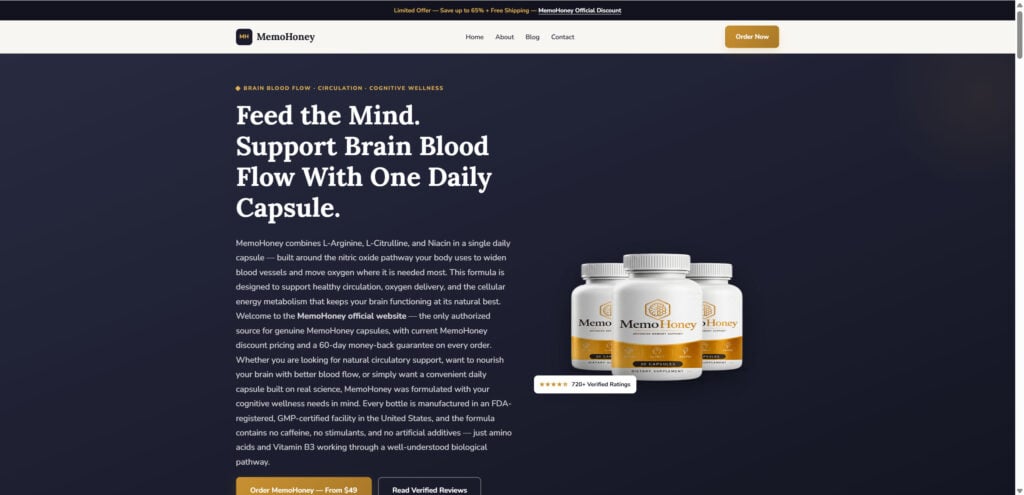
MemoHoney Overview: This Is More Than a Simple Supplement Offer
MemoHoney is marketed as a dietary supplement intended to support memory, focus, mental clarity, circulation, and cognitive wellness. On its face, that makes it one of countless supplements competing in the enormous brain-health market.
What makes MemoHoney more interesting is the machinery being used to sell it.
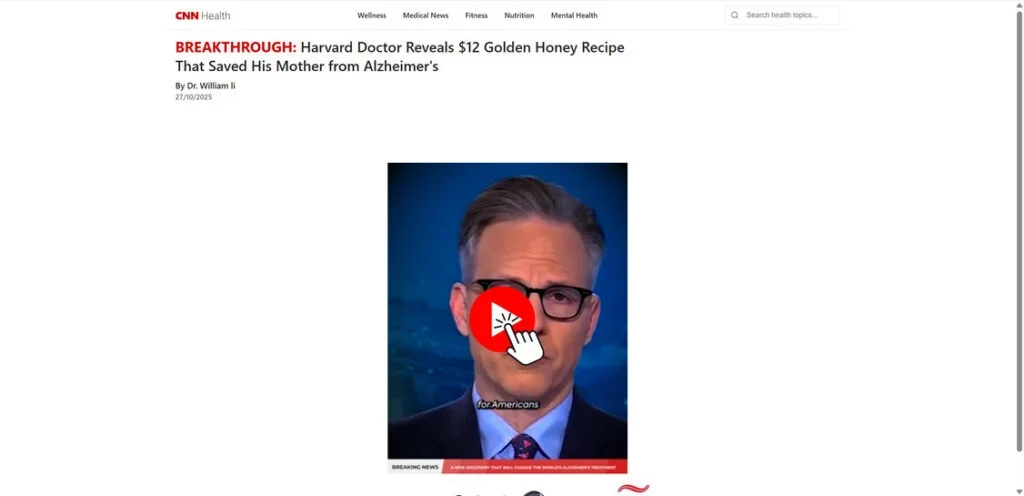
Instead of relying on a conventional product page and ordinary advertising, MemoHoney is appearing across a network of promotional websites, affiliate pages, social-media campaigns, advertorials, and long-form sales funnels. Some advertisements reportedly use AI-generated or heavily manipulated video content designed to resemble interviews, medical reports, celebrity endorsements, or breaking health news.
For someone casually scrolling Facebook, Instagram, YouTube, or another platform, the advertisement may not immediately look like an advertisement for capsules. It can begin with an extraordinary story about memory loss, Alzheimer’s disease, a supposedly overlooked discovery, or a simple honey-based ritual that conventional medicine has somehow missed.
Only later does MemoHoney enter the picture.
That distinction matters because the consumer is not being asked to evaluate a supplement from a neutral starting point. They are being taken through a carefully constructed story designed to create curiosity, fear, trust, and urgency before the actual purchase is presented.
Why Are There So Many MemoHoney Websites?
One of the first things consumers notice when researching MemoHoney is the sheer number of websites discussing or promoting it.
There are sites using variations of the MemoHoney name, sites claiming to be official sources, review pages, health-style articles, and affiliate websites directing visitors toward a checkout.
Affiliate marketing itself is not inherently suspicious. Thousands of legitimate products are sold this way. An affiliate promotes a product and receives a commission when a visitor clicks through and makes a purchase.
The problem is that affiliate relationships can make supposedly independent information far less independent than it appears.
A website with a headline such as “MemoHoney Reviews,” “Is MemoHoney Legit?” or “MemoHoney Official Website” may look like a neutral resource to someone searching Google for answers. If that same site earns money whenever the reader purchases MemoHoney, however, it has an obvious financial incentive to push the visitor toward the sale.
That does not automatically make everything written on the page false. It does mean consumers should understand who is speaking and why.
When five websites all enthusiastically recommend the same product, it can create the illusion of widespread independent approval. If several of those sites are actually affiliates participating in the same sales ecosystem, the apparent consensus becomes much less impressive.
The “Official Website” Question Gets Complicated
The situation becomes even more confusing when a site describes itself as the official MemoHoney source.
One MemoHoney promotional website we reviewed presented itself as the authorized place to purchase the product and warned consumers against buying elsewhere. Yet its purchase button redirected visitors away from that domain toward another MemoHoney sales destination, with an affiliate-tracking parameter included in the URL.
That detail does not prove the transaction itself is fraudulent, but it reveals something important about the structure of the operation.
The website persuading you to buy may not be the same website processing the next stage of the sale.
For the average customer, that distinction is easy to miss. The logos are similar, the branding remains consistent, and the transition can feel like one continuous purchase.
It becomes much more relevant if something goes wrong.
If you receive an unexpected charge, want to cancel an order, discover an automatic refill, or need to return several bottles, you need to know which business actually processed the payment. Returning to the affiliate article or promotional landing page may not solve anything because that website may only have been responsible for generating the referral.
Before paying, consumers should therefore identify the actual merchant, checkout provider, customer-service contact, and refund terms attached to the transaction.
AI-Generated Social Media Ads Raise the Stakes
The social-media side of the MemoHoney campaign deserves particular scrutiny.
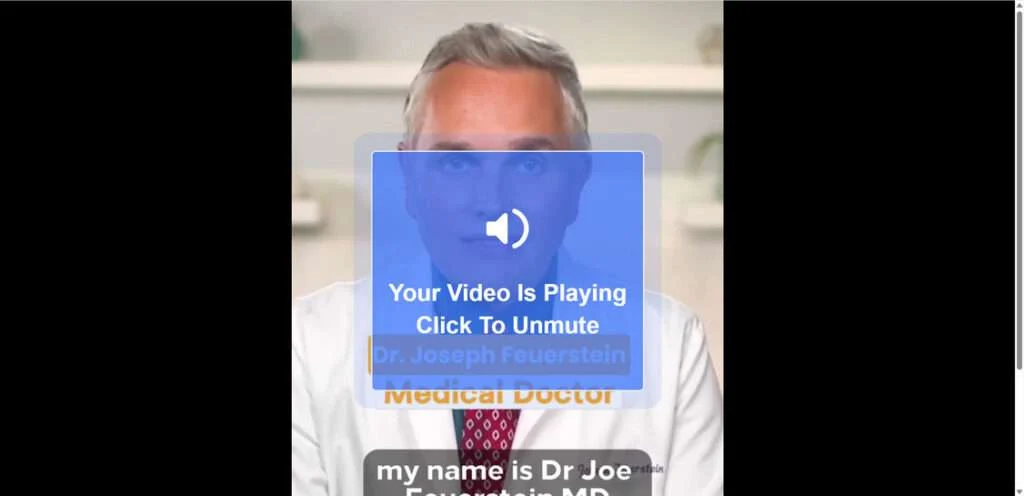
AI-generated and AI-manipulated health advertisements have become increasingly convincing. Modern tools can recreate a person’s voice, facial expressions, mannerisms, and even the visual style of a television interview. A video can appear to feature a recognizable billionaire, doctor, television host, or public figure even when that person never recorded the promotion.
This is especially dangerous in the memory and dementia market because the target audience may already be emotionally vulnerable.
Someone worried about their own memory or the cognitive decline of a parent is much more likely to pay attention when an advertisement appears to feature a famous person discussing an astonishing new discovery.
The video does not need to convince the viewer that MemoHoney is worth buying immediately. It only needs to make the story believable enough for the viewer to click.
Once that click happens, the consumer moves deeper into the sales funnel, where longer explanations, testimonials, medical terminology, and purchasing offers can take over.
Consumers should therefore stop treating a familiar face in a social-media advertisement as proof of endorsement. The only reliable approach is independent verification. If a video appears to show Bill Gates, a prominent doctor, or another recognizable personality recommending a memory supplement, search outside the advertisement and determine whether the person actually made that statement.
If the supposed endorsement exists only inside ads and sales pages, it should carry virtually no weight.
The Honey Story Is the Perfect Hook
The name MemoHoney itself fits neatly into another recurring marketing strategy: taking something familiar and harmless-sounding, such as honey, and connecting it with a dramatic medical discovery.
A supplement advertisement is easy to recognize.
A story about a spoonful of honey, cinnamon, or another household ingredient supposedly connected to memory improvement feels completely different.
It sounds accessible. It sounds natural. Most importantly, it creates curiosity.
A viewer may click because they expect to discover a simple recipe they can make at home. The sales presentation then has plenty of time to introduce a much larger narrative involving cognitive decline, blood circulation, brain function, toxins, plaques, inflammation, or another scientific-sounding mechanism.
As the story develops, the original home remedy becomes less important and the supplement becomes more important.
This transformation can happen gradually enough that the consumer hardly notices the shift. What started as curiosity about a supposedly free memory trick eventually becomes a decision about whether to buy several bottles of MemoHoney.
That is why the opening hook matters so much. The advertisement is not merely selling capsules; it is selling the feeling that the consumer has discovered something other people do not know.
Borrowed Authority Makes the Story More Convincing
The next ingredient is credibility.
Promotional funnels in the memory-supplement space frequently use recognizable visual cues from medicine, science, and journalism. A page may contain doctor imagery, university references, laboratory photographs, anatomical graphics, television-style layouts, or language associated with clinical research.
None of those things establishes that the finished product works.
A doctor photograph does not prove that the doctor endorses MemoHoney. A university name does not establish that researchers at the institution tested it. A scientific paper about one ingredient does not prove that the complete MemoHoney formula produces the same results being implied by the advertisement.
Even phrases that sound impressive need context.
“Made in the USA,” “GMP manufactured,” “science-backed,” “clinically researched ingredients,” and “doctor formulated” can all sound reassuring, but they answer very different questions from the one most consumers actually care about: Has this exact product been shown in reliable clinical research to produce the result being advertised?
That is the evidence that matters.
If the strongest proof for MemoHoney appears on websites earning money from MemoHoney sales, consumers should look for better evidence before making a health-related decision.
Alzheimer’s and Dementia Claims Deserve Far More Scrutiny
The most concerning versions of this marketing are those that move beyond general memory support and begin invoking Alzheimer’s disease or dementia.
These are serious neurological conditions, not ordinary wellness problems.
Advertising aimed at people frightened about cognitive decline has an enormous emotional advantage. The consumer is not simply choosing between two vitamins; they may be worried about losing independence, forgetting family members, or watching a parent deteriorate.
A marketing funnel can exploit that fear by first presenting a frightening explanation of cognitive decline and then positioning a supplement as the answer.
The scientific language can make the transition seem plausible. The presentation may talk about brain plaques, nitric oxide, circulation, inflammation, oxidative stress, cellular function, or another biological process before connecting that explanation with MemoHoney.
Some of those topics are legitimate areas of scientific research. That does not mean a commercial supplement has been proven to prevent, reverse, or treat Alzheimer’s disease.
Consumers should be especially cautious whenever the advertisement makes the medical story dramatically stronger than the disclaimers found later on the actual product website.
If an ad implies an Alzheimer’s breakthrough but the seller later describes MemoHoney only as a dietary supplement for general cognitive wellness, that difference should not be ignored.
Then Comes the Checkout — and This Is Where Buyers Need to Slow Down
Even consumers who dismiss the more dramatic medical claims can still run into another problem: the order itself.
The MemoHoney offers we reviewed were structured around multi-bottle packages rather than a simple one-bottle trial.
At the time of review, one promotional site displayed two-, three-, and six-bottle options. The largest package received the lowest advertised per-bottle price, while the smaller package cost considerably more per unit.
This is standard direct-response marketing.
It is also extremely effective.
The visitor arrives thinking about trying a supplement and is immediately encouraged to think in terms of a 60-day, 90-day, or six-month supply.
The lowest price displayed prominently on the page can make the offer appear inexpensive, but consumers need to understand what that number represents. A price such as $49 may refer to the cost of each bottle inside a six-bottle package, not the amount that will actually be charged to the card.
The total can therefore be several times larger than the number attracting attention on the page.
Before entering payment information, forget the advertised per-bottle discount and look at the final transaction total.
That is the number that matters.
Being Sent More Bottles Than Expected Is a Real Risk in This Type of Funnel
Multi-bottle pricing creates another potential source of confusion.
A visitor may believe they are simply choosing the best price for MemoHoney without fully processing how many bottles are included. On mobile devices, where package cards, discount badges, shipping offers, and purchasing buttons are compressed onto a small screen, the distinction can become even easier to overlook.
Consumers should verify the quantity twice: once immediately before paying and again in the confirmation email.
If you intended to purchase two bottles and the confirmation says six, address the issue immediately.
Do not wait until the box arrives.
The longer you wait, the easier it becomes for a seller to argue that the transaction was completed exactly as shown during checkout.
Screenshots are useful here. Capturing the selected package and final total before submitting payment creates a record of what was displayed.
The MemoHoney Subscription Question Is Even More Important
Recurring billing deserves special attention because information across the MemoHoney promotional ecosystem has not always been consistent.
Some MemoHoney marketing material describes the purchase as one-time and says there is no autoship.
Other MemoHoney-related promotional material has described an optional “Subscribe & Save” arrangement connected with the checkout.
Those two things are not necessarily impossible to reconcile. Different landing pages, checkout configurations, promotions, or affiliates can offer different purchasing options.
But from the consumer’s perspective, that explanation changes nothing.
You must read the checkout you are actually using.
If there is a checkbox, toggle, discount, or option connected with words such as Subscribe & Save, automatic refill, recurring delivery, autoship, continuity, membership, or monthly shipment, understand exactly what selecting it will do.
Do not rely on something you read earlier in the funnel.
A page claiming “no subscription” is not a substitute for reading the terms directly beside the credit card form.
A Refill Program Can Turn One Purchase Into Several Charges
Recurring supplement orders deserve more attention than many consumers give them because the amounts involved can be significant.
This is not necessarily a $9 monthly digital service that someone forgets to cancel.
If a multi-bottle package costs hundreds of dollars and that package is attached to a recurring arrangement, an accidental subscription can quickly become expensive.
The buyer may not realize what happened until another charge appears or another package arrives.
By then, the original advertisement may be difficult to locate, the affiliate page may not provide customer service, and the merchant name displayed on the credit card statement may not obviously say MemoHoney.
This is why consumers should save their confirmation email and merchant descriptor after ordering.
If another charge appears later, those details make it much easier to determine whether it is connected with the original transaction.
How the MemoHoney Sales Funnel Works
Understanding the entire operation makes each individual red flag much easier to recognize.
Step 1: The Social Media Video Creates Curiosity
The first advertisement may look less like a supplement commercial and more like a fascinating health discovery. AI-generated video, dramatic narration, celebrity-style appearances, medical imagery, or a story about a simple honey ritual can make the content feel more important than an ordinary ad.
The objective is not necessarily to sell MemoHoney in the first 15 seconds. It is to make the viewer curious enough to continue.
Step 2: The Viewer Enters an Advertorial or Long Sales Presentation
After clicking, the consumer may land on a page that resembles a health article, investigation, interview, or educational presentation.
This format is powerful because it allows the advertiser to build an argument before revealing the product.
The visitor may spend several minutes reading or watching information about memory decline before MemoHoney is introduced.
By that point, the purchase has already been framed as the solution to a problem the funnel has spent considerable time defining.
Step 3: Scientific and Medical Language Builds Credibility
The presentation may introduce biological explanations that make the sales story sound more sophisticated.
Instead of simply saying MemoHoney supports memory, the funnel can explain why memory allegedly deteriorates, what conventional approaches supposedly overlook, and why a particular ingredient or mechanism could provide the missing answer.
The quality of that narrative should never be confused with the quality of the evidence.
A beautifully animated explanation can still be advertising.
Step 4: Testimonials and Authority Lower Skepticism
Next come people who supposedly experienced extraordinary results, along with references to experts, research, institutions, manufacturing standards, or public figures.
Each additional credibility cue makes the final offer feel safer.
The consumer needs to separate independently verifiable evidence from material created specifically for the sales campaign.
Step 5: The Visitor Reaches a MemoHoney-Branded Sales Page
The product finally becomes the focus, but the website may not necessarily be the same domain where the journey began.
Affiliate redirects can move consumers from an advertisement to an advertorial, from an advertorial to a promotional page, and from that page into another checkout environment.
The branding can remain consistent enough that the transitions are almost invisible.
Step 6: Multi-Bottle Packages Become the Default Choice
Instead of asking whether you want one bottle, the offer can immediately frame the decision around larger quantities.
The smallest package may already contain several bottles, while the largest option receives the strongest discount and most prominent “best value” treatment.
This dramatically increases the potential value of each customer generated through paid advertising or affiliate commissions.
Step 7: A Subscription or Refill Option May Appear
Depending on the checkout path, the consumer may encounter an optional recurring arrangement.
This is the point where reading becomes more important than clicking.
A small extra discount attached to Subscribe & Save can look attractive without the customer fully considering what will happen the following month or shipment cycle.
Step 8: The Purchase Is Completed, but the Funnel May Continue
After payment, additional offers may appear.
This is common in direct-response commerce and can include complementary supplements, larger packages, upgraded products, or other add-ons.
Never assume another button must be clicked simply to finish an order you have already completed.
Read every screen.
Step 9: The Affiliate Is No Longer the Person You Need
If a customer later has a problem, the affiliate website that generated the sale may have little involvement in fulfillment or billing.
The customer now needs the actual seller or checkout provider.
This is why identifying the merchant before purchase is so important. A beautifully written “MemoHoney review” is not particularly useful when you need to stop a recurring card charge.
Be Careful With “MemoHoney Reviews” in Google
Another part of the operation is search marketing.
Someone who sees a suspicious MemoHoney advertisement may do exactly what a careful consumer should do: search Google for reviews.
Unfortunately, that does not automatically take them outside the marketing funnel.
Affiliate marketers understand that consumers search phrases such as “MemoHoney reviews,” “MemoHoney scam,” “MemoHoney complaints,” “Is MemoHoney legit?” and “MemoHoney official website.”
Promotional pages can be built specifically to rank for those searches.
The result is an unusual situation where the consumer believes they are conducting independent research but may simply be moving from one stage of the sales campaign into another.
Always check whether a review contains an affiliate disclosure.
Look at where its Buy Now links lead.
Consider whether the article provides meaningful criticism or merely introduces several small concerns before concluding that the reader should purchase the largest package.
Independent research should eventually lead somewhere other than another checkout button.
What to Do If You Already Ordered MemoHoney
If you have already purchased MemoHoney and are concerned about the quantity, billing terms, or recurring charges, focus on documenting the transaction and stopping anything you did not knowingly authorize.
- Check your order confirmation immediately. Verify exactly how many bottles were purchased, the total amount charged, shipping fees, and the merchant name. Do not rely on the price you remember seeing in the advertisement because that may have been a per-bottle figure rather than the complete transaction.
- Search for subscription language. Look through the confirmation email and checkout receipt for words such as Subscribe & Save, autoship, automatic refill, membership, continuity, recurring, monthly, replenishment, or next shipment. If anything suggests future billing, determine whether you knowingly selected it.
- Cancel unwanted recurring shipments in writing. Contact the merchant and clearly state that you want any subscription, refill program, autoship, membership, or recurring delivery canceled. Ask for written confirmation and keep the response.
- Save evidence. Preserve the social-media advertisement if possible, along with screenshots of the landing page, checkout, selected package, order confirmation, refund policy, card charge, and any claims that influenced your purchase.
- Check your card statement regularly. Watch for another transaction in the following weeks or months, particularly one using the same merchant descriptor as the original MemoHoney purchase.
- Contact your bank or card issuer if an unauthorized charge appears. Explain what happened and ask about your options for disputing the transaction and preventing additional charges from the same merchant.
- Act quickly if the wrong number of bottles was ordered. If your confirmation shows six bottles when you intended to buy two, contact the seller before fulfillment whenever possible rather than waiting until the shipment arrives.
- Do not rely on the advertisement for medical advice. If you or a family member is experiencing significant memory decline, confusion, personality changes, or other cognitive symptoms, seek qualified medical evaluation rather than treating a supplement advertisement as a diagnosis or treatment plan.
The Bottom Line
MemoHoney is being promoted through a sales ecosystem that deserves considerably more scrutiny than the polished advertising initially suggests.
The product appears across numerous MemoHoney-themed and affiliate websites. Social-media promotions can use AI-generated or manipulated video content that makes extraordinary memory claims feel more credible. The advertising may begin with an enticing honey ritual or supposed cognitive breakthrough before moving the consumer into a lengthy sales presentation and eventually toward a supplement checkout.
Then there is the purchase itself.
The MemoHoney offers reviewed have emphasized multi-bottle packages, meaning someone attracted by a low per-bottle price can end up making a much larger initial purchase than expected. Consumers also need to pay particular attention to refill and subscription terms because different promotional sources have provided different descriptions of whether recurring purchasing options are available.
None of this means every MemoHoney customer will receive unwanted bottles or experience recurring charges.
It does mean buyers should assume nothing.
Do not trust an advertisement simply because it appears to feature a famous person. Do not treat an affiliate review as independent just because it ranks highly in Google. Do not assume the website calling itself “official” is the company that will ultimately appear on your card statement, and never interpret a low per-bottle price as the final total without checking the complete order.
Most importantly, inspect the checkout before you pay.
If you intend to buy MemoHoney once, make sure the order is clearly a one-time purchase. If you only want a certain number of bottles, verify that exact quantity. If a Subscribe & Save or refill option appears, understand the billing schedule before selecting it.
A supplement purchase should not require detective work after the charge has already gone through.
FAQ
Is MemoHoney a scam?
MemoHoney is a supplement being sold through active online sales funnels, but the marketing surrounding it raises several concerns worth investigating. These include multiple affiliate-style websites, AI-generated or manipulated social-media advertising, dramatic memory-related claims, multi-bottle pricing, and uncertainty across different promotional paths about recurring purchase options.
The safest approach is to evaluate the exact seller and checkout rather than making a decision based on the advertisement.
Are the MemoHoney celebrity videos real?
Do not assume so. AI-generated and AI-manipulated celebrity advertising is now sophisticated enough to create convincing fake endorsements. If a MemoHoney video appears to feature Bill Gates, a physician, television host, or another public figure, verify the endorsement independently outside the advertisement.
Is Bill Gates behind MemoHoney?
Consumers should not assume that Bill Gates created, funded, or endorsed MemoHoney simply because his image or name appears in promotional material. Any genuine endorsement of that magnitude should be independently verifiable through reliable sources outside the sales funnel.
Why are there so many MemoHoney websites?
Affiliate marketing is likely an important reason. Different marketers can create their own pages and earn commissions when visitors purchase through their links. This can result in numerous “review,” “official,” and informational websites all promoting the same product.
Are MemoHoney reviews independent?
Some may be, but many promotional review pages can contain affiliate relationships. Check for disclosures explaining whether the publisher earns a commission from MemoHoney purchases.
Is memohoneyofficial.com really the official MemoHoney website?
The site presents itself as an official MemoHoney source, but the purchasing path we reviewed redirected visitors toward another MemoHoney domain using affiliate tracking. Consumers should therefore pay attention to the actual checkout provider and merchant rather than relying solely on the label “official.”
Can I buy just one bottle of MemoHoney?
The promotional offer reviewed previously emphasized packages containing multiple bottles, with the smallest prominently displayed option containing two bottles. Offers can change, so verify the current package selection directly before paying.
Why does MemoHoney advertise a low price per bottle?
The lowest advertised figure can apply only when purchasing a larger bundle. A six-bottle package might display an attractive per-bottle rate while the customer’s card is charged for the entire package at once.
Always check the total rather than focusing on the unit price.
Could I accidentally receive several bottles?
That risk exists whenever a checkout is built around multi-bottle packages. Verify the selected quantity before payment and confirm it again immediately afterward in your receipt or order email.
Does MemoHoney automatically enroll customers in a subscription?
Do not assume either way. Some MemoHoney promotional material has described purchases as one-time, while other material has referenced an optional Subscribe & Save arrangement. The checkout associated with your specific purchase is what matters.
What is Subscribe & Save?
It generally refers to an arrangement in which a customer receives a discount in exchange for agreeing to future recurring deliveries and payments. The exact terms depend on the offer, so read the billing frequency, cancellation rules, and amount before accepting one.
What should I do if MemoHoney charges my card again?
Check your original confirmation for recurring-purchase terms. If you did not knowingly authorize another payment, contact the merchant in writing to stop future charges and speak with your card issuer about your dispute options.
What if I ordered more bottles than I wanted?
Contact the seller immediately, preferably before the order ships. Save your confirmation, screenshots, and correspondence in case the transaction later needs to be disputed.
Does MemoHoney cure Alzheimer’s disease or dementia?
A dietary supplement should not be treated as a proven treatment or cure for Alzheimer’s disease or dementia based on social-media advertising. Claims involving serious cognitive conditions require strong medical evidence, and people experiencing significant memory changes should seek appropriate professional evaluation.
What is the biggest MemoHoney red flag?
It is not one isolated detail but the complete sales environment: AI-style social ads, sensational memory stories, affiliate websites, confusing claims of “official” status, multi-bottle package pressure, and the possibility of recurring purchasing options appearing in some checkout paths.
The best protection is simple: ignore the hype long enough to understand exactly who is selling the product, how many bottles you are buying, how much your card will be charged, and whether the transaction can repeat.








