

The “Arterial Flush Ritual” has become a recurring sales hook in online supplement advertising aimed at people worried about high blood pressure, poor circulation, cholesterol, clogged arteries, and heart disease.
The bottle may change. The website may change. The supposed doctor may change. Even the ingredients can be completely different from one campaign to another. What remains remarkably consistent is the story: your arteries are supposedly being damaged by a hidden problem that mainstream medicine has overlooked, a simple natural ritual can correct it, and a supplement sold at the end of the video contains the answer.
That pattern should immediately raise suspicion.
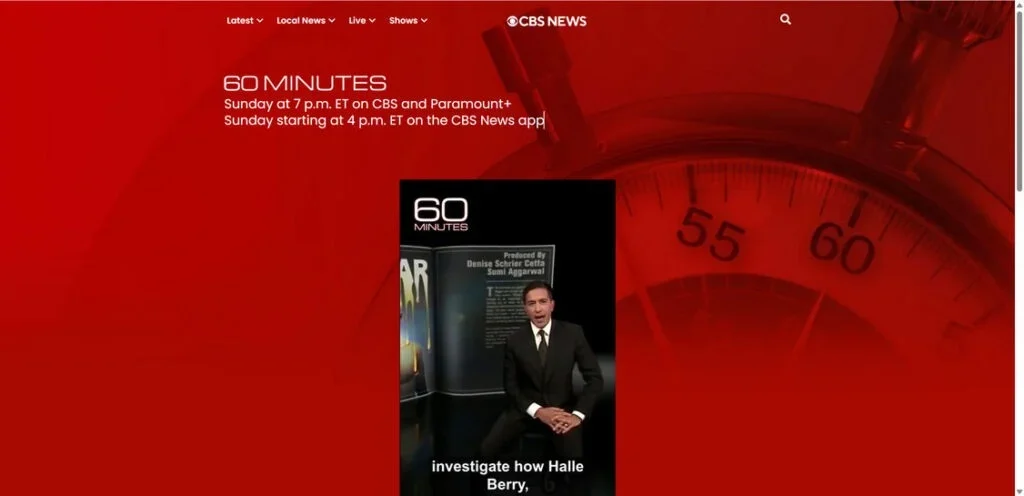
The Arterial Flush Ritual Is a Marketing Story, Not a Medical Treatment
There is no recognized cardiovascular treatment called the “Arterial Flush Ritual.”
The phrase is designed for advertising because it instantly creates a simple mental picture. If your arteries are “clogged,” then perhaps they can be “flushed.” If something is blocking circulation, the advertisement suggests that a natural ingredient can clear it away.
That explanation sounds intuitive, but cardiovascular disease does not work like household plumbing.
Atherosclerosis develops through a complicated biological process involving cholesterol-containing plaque, inflammation, changes to artery walls, calcification, endothelial dysfunction, and numerous risk factors that can accumulate over many years. High blood pressure can also have multiple causes and is influenced by genetics, age, kidney function, weight, diet, physical activity, medication, and other health conditions.
Reducing all of that to a mysterious substance that simply needs to be “washed out” makes a complicated medical problem easier to sell, not easier to treat.
The language is deliberately simple because simple explanations convert well in advertising.
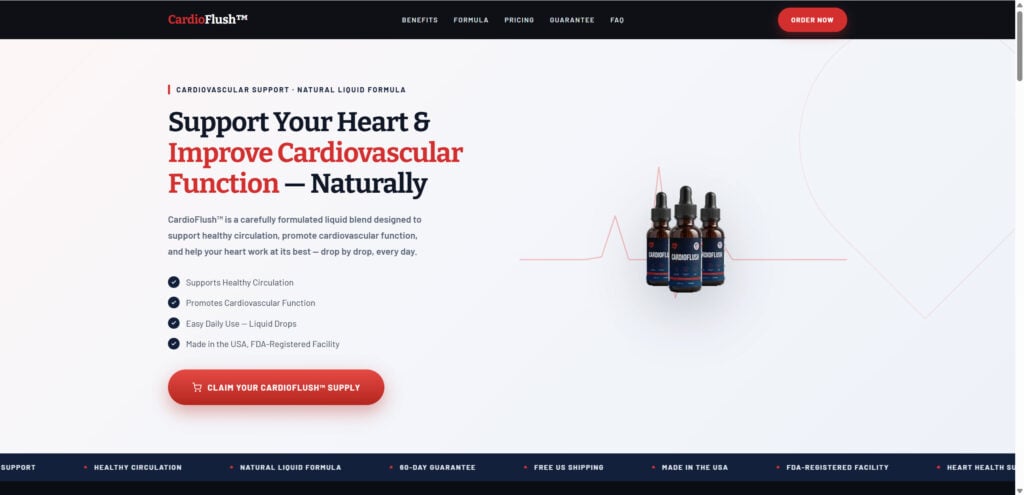
The Product Name Changes Because the Product Is Not the Important Part
Consumers often search for the supposedly “real” Arterial Flush supplement after seeing an advertisement.
That is the wrong question.
There may be no permanent product attached to the idea.
One marketer can use the Arterial Flush story to sell drops. Another can sell capsules. Another can attach the same script to a nitric-oxide supplement, a blood-pressure formula, or an herbal circulation product.
The next campaign can use a completely new brand name while preserving almost the entire sales presentation.
This flexibility is one of the reasons the scheme is so effective.
If a product accumulates complaints, poor reviews, refund disputes, or too many Google searches containing the word “scam,” the advertiser does not necessarily need to abandon the campaign. A new bottle can replace the old one.
The domain changes.
The label changes.
A new “official website” appears.
The ads start again.
The Arterial Flush story survives because the story is what attracts the customer.
The Hidden Cause Comes First
Most of these campaigns begin by convincing the viewer that doctors have misunderstood cardiovascular disease.
The advertisement introduces a supposedly hidden cause that sounds scientific enough to be believable but simple enough to explain in a few minutes.
It might be described as “arterial cement,” microscopic debris, toxic buildup, calcium deposits, microplastics, restricted nitric oxide, hardened plaque, or another unusual obstruction.
The terminology can change because the precise explanation is less important than its function.
The viewer must believe that there is one overlooked problem responsible for their high blood pressure, poor circulation, fatigue, cold hands, headaches, dizziness, or other symptoms.
Once the advertisement creates that belief, the supplement becomes much easier to sell.
Instead of competing with ordinary heart-health products, the bottle is now presented as the only thing targeting the supposed root cause.
Why the “Arterial Cement” Story Is So Effective
“Arterial cement” is particularly effective marketing language because it gives consumers a visual explanation for something they cannot see.
Most people cannot visualize endothelial dysfunction, inflammatory signaling, arterial remodeling, or lipid accumulation inside blood-vessel walls.
They can easily imagine cement blocking a pipe.
The marketer can then present the supplement as something that softens, dissolves, or flushes that material away.
The scientific reality is far less convenient.
Plaque inside an artery cannot simply be treated as loose debris waiting to be washed out with herbal drops. Cardiovascular risk is generally managed through appropriate medical treatment, blood-pressure control, cholesterol management, smoking cessation, exercise, diet, and other evidence-based interventions depending on the patient’s condition.
A dietary supplement may contain ingredients associated with general cardiovascular nutrition, but that is very different from proving that a commercial formula can remove arterial plaque.
The advertisement intentionally blurs that distinction.
Then Comes the Supposed Doctor
The hidden-cause story becomes much more persuasive when it is delivered by someone who looks like a physician.
Modern campaigns increasingly use doctors, television personalities, researchers, or celebrities to create instant authority.
Sometimes the person is real but has no relationship with the supplement.
Sometimes an old interview is edited into an unrelated advertisement.
Sometimes the voice is synthetic.
Sometimes the entire video is AI-generated.
The result can still look convincing, particularly on a phone screen.
A recognizable medical personality explaining why conventional blood-pressure treatment supposedly fails can eliminate much of the skepticism viewers would normally have toward an unknown supplement company.
This is why AI-generated medical endorsements are so useful to scammers.
They borrow decades of trust in a matter of seconds.
Consumers should no longer assume that seeing a person’s face and hearing their voice proves they endorsed anything.
If the supposed doctor really discovered a revolutionary cardiovascular treatment, the connection should be independently verifiable outside the advertisement and outside websites selling the product.
The Fake Interview Makes Advertising Look Like Journalism
The presentation is often designed to feel less like advertising and more like a medical investigation.
You may see a studio interview, television graphics, a health-news layout, laboratory imagery, diagrams of arteries, white coats, charts, and dramatic patient stories.
The objective is to change how the viewer interprets the content.
People know advertisements exaggerate.
They expect journalists and doctors to provide information.
So the funnel tries to look like the second while functioning as the first.
This distinction becomes obvious when almost every major claim eventually leads to the same conclusion: buy the supplement.
A genuine medical report should still make sense if the product is removed.
A supplement advertorial usually collapses without the checkout.
The Government and “Big Pharma” Story Keeps Viewers From Fact-Checking
The next stage frequently introduces suppression.
The doctor was allegedly silenced.
The discovery is supposedly being hidden.
Pharmaceutical companies do not want people learning about it.
The government supposedly knows.
The video may be taken down.
The method has allegedly been used overseas for generations while Americans remain dependent on medication.
This narrative solves a major problem for the advertiser.
A viewer might otherwise ask why cardiologists are not recommending the Arterial Flush Ritual if it really works.
The conspiracy story provides an answer before that question can damage the sale.
You have not heard about it, the advertisement suggests, because powerful institutions do not want you to know.
This makes almost any lack of evidence appear to support the claim rather than contradict it.
No clinical trials? Suppressed.
No cardiologists discussing it? They are part of the establishment.
No legitimate news coverage? The media will not report it.
That is persuasion, not scientific reasoning.
Prescription Medication Is Often Cast as the Villain
Many Arterial Flush advertisements target people who already take medication for high blood pressure or cholesterol.
That audience is particularly valuable because chronic treatment can be frustrating.
Some people experience side effects. Others dislike taking medication every day or worry that they will remain on prescriptions for life.
The advertising exploits that frustration by suggesting conventional medicine merely controls the numbers while ignoring the “real cause.”
Blood-pressure drugs can be portrayed as temporary patches.
Statins can be described as incomplete.
Doctors may be presented as treating symptoms rather than healing the arteries.
Then the ritual appears as the natural solution that supposedly fixes everything underneath.
This comparison is dangerous because a viewer can begin interpreting a supplement advertisement as an argument for reducing or abandoning prescribed treatment.
People taking cardiovascular medication should never make those decisions because of an online sales video.
Eventually, the “Free Ritual” Becomes a Bottle
One of the cleverest aspects of the funnel is that the advertisement does not always begin with the product.
The viewer may click expecting to discover a natural recipe or simple technique.
Perhaps the secret comes from Sardinia.
Perhaps it takes seven seconds every morning.
Perhaps it involves an unusual herb or a combination of ingredients already found at home.
The presentation delays the commercial reveal because curiosity keeps people engaged far longer than an obvious supplement advertisement would.
As the story progresses, however, the supposedly simple ritual becomes increasingly dependent on the commercial formula.
The viewer eventually learns that buying the supplement is the easiest, strongest, or only reliable way to reproduce the supposed discovery.
At that point, the free health tip has completed its real purpose.
It has delivered a customer to the checkout.
The Checkout Usually Pushes a Large Initial Order
Once the supplement appears, the marketing changes from medical storytelling to pricing psychology.
A typical offer presents several quantities.
The smallest package has the highest price per bottle.
A medium package receives a better discount.
The six-bottle package is presented as the obvious winner.
This makes a large purchase feel financially responsible.
A consumer may see “only $49 per bottle” and mentally classify the product as a $49 purchase.
The actual transaction can be close to $300.
That distinction matters because many buyers have never tried the product before.
They are being encouraged to commit months of money and product based primarily on a video they may have watched minutes earlier.
When evaluating these offers, ignore the per-bottle figure and look at the complete amount that will leave the card.
That is the real price.
Why Six Bottles Are So Common
Six-bottle packages are not simply about convenience.
They make direct-response advertising much more profitable.
Social-media ads cost money.
Affiliates expect commissions.
Long-form video funnels, advertorials, checkout systems, and email campaigns all have acquisition costs.
Selling one $50 bottle may not produce enough profit.
Selling six bottles for $294 can.
The customer is therefore encouraged to believe that cardiovascular improvement requires several months of continuous use.
The largest package is described as the best protocol, strongest value, or recommended treatment duration.
The medical story and the business model conveniently arrive at the same conclusion: buy more bottles.
The Guarantee Often Does Not Match the Recommended Usage Period
Another common red flag appears when comparing the recommended protocol with the refund policy.
The advertisement may tell consumers that meaningful cardiovascular improvements require three, four, or six months.
The seller then offers a 60-day guarantee.
This creates an obvious problem.
If consumers actually follow the recommended long-term protocol before deciding whether the product worked, they may discover that their refund period expired months earlier.
The guarantee helps close the sale because it makes a $300 purchase feel safe.
The shorter deadline protects the merchant if the consumer waits too long.
Before purchasing a long-term supply, always compare the recommended evaluation period with the refund deadline.
They should make sense together.
Post-Purchase Upsells Can Turn One Order Into Several
Submitting the first payment may not end the funnel.
Many direct-response supplement checkouts immediately show another offer.
The customer may be told that they qualified for an exclusive upgrade, a year’s supply, an additional cardiovascular formula, faster results, or a heavily discounted bottle package.
The page can look like part of the original checkout.
This is where buyers need to slow down.
If another screen contains another dollar amount, another bottle quantity, or another product, clicking the confirmation button may create another transaction rather than modify the first one.
A $294 order can therefore become $450, $600, or considerably more within minutes.
The psychology is effective because the customer has already crossed the hardest barrier: entering the card number.
Every subsequent purchase becomes easier.
Refill Subscriptions Are Another Risk to Watch For
Not every Arterial Flush funnel automatically creates a subscription.
That distinction matters.
However, recurring billing is common enough across aggressive supplement marketing that consumers should actively search for it before paying.
The terminology may include:
- autoship
- automatic refill
- continuity
- monthly supply
- membership
- recurring shipment
- replenishment
- Subscribe & Save
Sometimes the recurring option is attached to a small discount.
Sometimes it appears during checkout.
Sometimes it is part of an additional offer.
If you want to purchase once, verify that the checkout explicitly describes a one-time transaction.
Do not assume it.
The fact that one Arterial Flush website does not use subscriptions does not mean the next product using the same advertising script will operate identically.
Search Results Can Keep Consumers Inside the Funnel
A skeptical consumer may do exactly what they are supposed to do.
They leave the social-media advertisement and search Google.
The problem is that marketers prepare for this.
Search results can be filled with articles targeting phrases such as:
“Arterial Flush Ritual reviews”
“Arterial Flush Ritual scam”
“Cardio supplement reviews”
“Does Arterial Flush work?”
“Arterial Flush official website”
Some of those pages may look independent while earning affiliate commissions from purchases.
Others may be press releases, sponsored advertorials, or promotional material syndicated onto recognizable websites.
The result is that consumers believe they escaped the sales funnel when they have merely entered another part of it.
A page ranking highly in Google is not automatically independent.
A supplement article appearing on a large finance or news domain is not automatically journalism.
Always check who created the content and whether the page earns money when you buy the product.
“FDA Registered” Is Frequently Used to Create a False Impression
Supplement websites often display FDA-related badges because consumers associate the agency with medical safety and approval.
The wording, however, is usually carefully chosen.
“Made in an FDA-registered facility” is not the same thing as saying the FDA approved the supplement.
Dietary supplements generally are not approved by the FDA for safety and effectiveness before they are marketed in the same way prescription drugs are.
That distinction is especially important when the advertisement implies that the product can lower blood pressure, dissolve plaque, unclog arteries, or replace conventional treatment.
A manufacturing badge does not prove any of those claims.
Consumers should pay attention to exactly what has been registered, certified, tested, or approved rather than relying on the logo alone.
Ingredient Studies Do Not Prove the Finished Product Works
Another common strategy involves displaying scientific studies related to individual ingredients.
A cardiovascular supplement may contain L-citrulline, L-arginine, CoQ10, beetroot, magnesium, antioxidants, or plant extracts that have legitimate research associated with them.
The advertisement then presents those studies as evidence for the entire formula.
That leap is not necessarily justified.
A study may use a much higher dose than the supplement contains.
It may involve different participants.
It may measure a different outcome.
It may examine one purified ingredient rather than a mixture of fifteen compounds.
Most importantly, research showing that an ingredient affects nitric oxide or another cardiovascular marker does not automatically prove that the commercial supplement can “flush” arterial plaque.
Evidence for an ingredient is not automatically evidence for every claim made about the finished bottle.
The Review Counter Is Part of the Persuasion
Large customer counts are another common feature.
The website may claim tens of thousands of satisfied buyers, a 4.9-star rating, or an overwhelmingly positive success rate.
Those numbers reduce hesitation because consumers assume that a large crowd has already tested the product.
The important question is whether those reviews can actually be independently inspected.
Seller-controlled testimonials are not equivalent to independently accessible third-party reviews.
Ask where the reviews are hosted, how verification works, whether negative reviews are displayed, and whether the company itself controls what appears.
Social proof is useful marketing.
It is not clinical evidence.
Why Older Consumers Are Particularly Vulnerable
The Arterial Flush Ritual targets an audience with genuine concerns.
High blood pressure becomes more common with age.
Many older adults take multiple medications.
They may have experienced dizziness, poor circulation, fatigue, high cholesterol, or cardiovascular scares.
Some have watched spouses or friends suffer heart attacks or strokes.
A video promising a natural way to improve arterial health therefore arrives in an emotionally powerful context.
AI-generated doctors make the problem worse.
Someone who would never trust an anonymous supplement advertiser may trust a familiar television physician immediately.
That is why fake medical endorsements should be treated as more than misleading marketing.
They can fundamentally change health decisions.
The Real Risk Is Bigger Than Losing Money
A consumer losing $300 to a questionable supplement is serious.
A consumer stopping effective cardiovascular treatment because a video convinced them that doctors are hiding the real cure is far more serious.
High blood pressure can damage the heart, brain, kidneys, and blood vessels even when a person feels completely normal.
Cardiovascular disease requires appropriate medical assessment.
Supplements may sometimes be used alongside conventional care when appropriate, but they should not be treated as substitutes for treatment because of a viral advertisement.
Anyone taking blood-pressure medication, cholesterol medication, anticoagulants, or other cardiovascular prescriptions should discuss new supplements with a healthcare professional because interactions are also possible.
How the Arterial Flush Ritual Scam Works
The funnel usually begins with a social-media advertisement that presents itself as medical information rather than an obvious commercial. A doctor, researcher, celebrity, or television-style host introduces a supposedly hidden explanation for hypertension or clogged arteries.
The viewer is then taught that conventional medicine has misunderstood the problem. A new cause is introduced, perhaps arterial cement, toxins, calcium buildup, microplastics, or another dramatic mechanism that makes the disease easy to visualize.
The presentation explains why doctors have supposedly failed to address this hidden cause and may suggest that pharmaceutical companies benefit from keeping people dependent on medication.
Next comes the secret ritual. It sounds natural, simple, and inexpensive, which keeps the viewer engaged because they still may not realize a commercial supplement is coming.
Eventually the ritual becomes a product.
The product is offered in increasingly large bottle packages, with the deepest discount attached to the largest order. The six-bottle option can approach $300 while still being marketed primarily through a low per-bottle figure.
After payment, additional offers may appear. Some funnels push more bottles, while others introduce complementary supplements or recurring deliveries.
By the time the consumer realizes how much they purchased, the original social-media advertisement may already be difficult to locate.
That is why understanding the pattern before entering the funnel is so important.
What to Do If You Already Bought an Arterial Flush Supplement
1. Identify the Actual Product
“Arterial Flush Ritual” is not enough.
Find the brand name, merchant, website, order number, checkout provider, and exact company appearing on your card statement.
2. Check Every Charge
Open your bank or credit-card account immediately.
Do not rely solely on the seller’s confirmation email.
Look for multiple transactions from the same purchasing session.
3. Confirm the Number of Bottles
Review every confirmation and make sure the quantity matches what you intended to purchase.
A post-checkout offer may have created a second order.
4. Check for Recurring Billing
Search your order documents for any mention of autoship, subscription, continuity, monthly shipment, membership, automatic replenishment, or refill.
Cancel unwanted recurring arrangements immediately.
5. Save the Advertisement
Preserve screenshots, URLs, or videos if the advertisement involved a recognizable doctor, secret artery cure, conspiracy claim, supposed FDA endorsement, or dramatic promise about eliminating medication.
6. Save the Refund Policy
Take a screenshot of the refund terms and calculate the deadline.
Do not assume the guarantee will still apply after completing a three- or six-month protocol.
7. Cancel in Writing
If you want to cancel, clearly state that you want the order stopped, subscriptions terminated, recurring shipments canceled, and no future charges authorized.
Ask for written confirmation.
8. Monitor Your Card
Continue checking transactions after cancellation.
Merchant names can differ from the supplement brand shown in the advertisement.
9. Contact Your Card Issuer if Necessary
If charges appear that you did not knowingly authorize and the merchant does not resolve them, contact your card issuer and ask about your dispute options.
Documentation can be important.
10. Do Not Stop Cardiovascular Medication Because of the Ad
Never stop or reduce prescribed blood-pressure, cholesterol, or cardiovascular medication based on an Arterial Flush sales video.
Discuss treatment changes with an appropriate healthcare professional.
The Bottom Line
The Arterial Flush Ritual should be understood as a reusable supplement marketing script rather than as one genuine cardiovascular discovery.
The individual bottle is almost secondary.
A campaign can introduce an alarming hidden cause of high blood pressure, borrow the face of a trusted doctor, claim mainstream medicine has overlooked the problem, and promise a simple natural ritual capable of restoring healthy circulation. Once the viewer accepts that story, the supposed free discovery quietly becomes a multi-bottle supplement purchase.
Tomorrow, the brand name can change.
The formula can change. The domain can disappear. A different “official website” can replace it. The advertisement can use another doctor.
The checkout can introduce different upsells or subscription terms.
The funnel still works because the emotional argument remains the same.
That is why consumers should not waste time trying to determine which Arterial Flush supplement is the authentic version of the viral ritual.
There is no established medical Arterial Flush Ritual waiting to be discovered through a Facebook advertisement.
If a social-media video tells you that doctors, pharmaceutical companies, or the government have hidden a simple way to flush dangerous material from your arteries, and the revelation ultimately asks you to spend hundreds of dollars on supplements, treat the entire presentation as a major scam warning.
Do not buy first and investigate later.
Verify the doctor.
Verify the medical claim.
Check the complete order total.
Read the subscription terms.
Understand the refund window.
And if the concern is genuinely high blood pressure or cardiovascular disease, talk to a qualified healthcare professional rather than an AI-generated one.
The product name may keep changing.
The scam script does not need to.








