

People living with constant ringing, buzzing, poor sleep, or fear of hearing loss are understandably interested in a safe treatment. The Neurozen campaign exploits that search for relief with a fake news page, an invented Dr. Oz endorsement, and a supposed Vicks VapoRub trick that leads to supplement sales.
The page is not a CNN report, Dr. Oz did not verify the offer, and the dramatic cure story is not supported by a clinical trial of the finished Neurozen formula. Do not use this funnel as medical guidance.
Overview
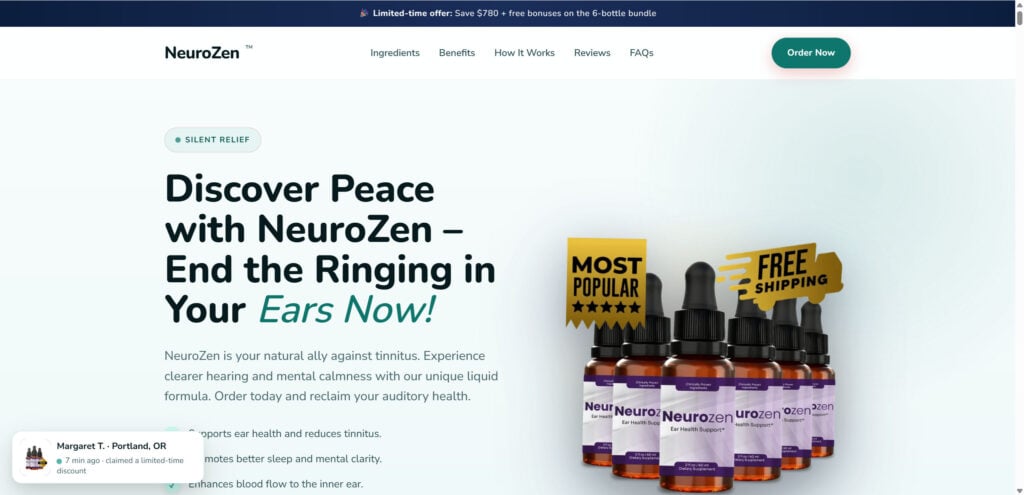
Neurozen is a liquid dietary supplement promoted for ear health and tinnitus symptoms. Online advertisements use several hooks, including a Vicks trick, tinnitus drops, an ear-ringing solution, a toxic enzyme theory, and a protocol supposedly investigated by famous television personalities.
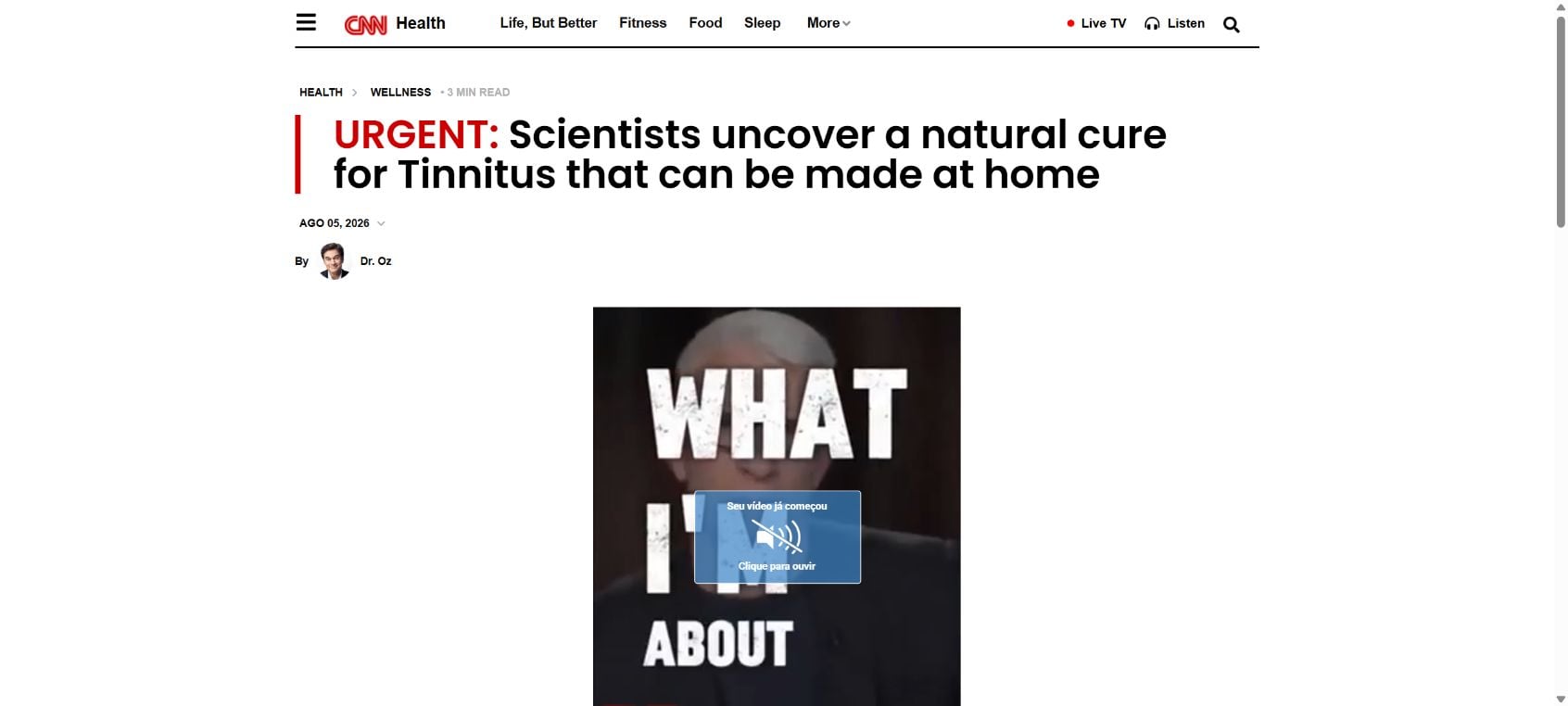
One documented funnel began with a Taboola-style advertisement and led to a website designed to resemble CNN Health. The address was not CNN.com, but the page copied CNN colors, navigation, typography, and the appearance of a health article.
The page claimed Anderson Cooper revealed a new Vicks trick that silences tinnitus. It also invoked Dr. Oz, Eric Clapton, Whoopi Goldberg, and a supposed “60 Minutes” investigation.
We checked a live related page on August 10, 2026. It displayed the CNN logo, labeled the content as Health and Wellness, used the headline “Scientists uncover a natural cure for Tinnitus that can be made at home,” and listed Dr. Oz as the author.
This was not a page on CNN.com. The browser address showed ForNeurozen.com, and the page title itself included affiliate-marketing language. The famous name and newsroom design were presentation elements inside a sales funnel.
The page played a long video and used urgency language saying the recording might be removed soon. Its goal was not to teach a verified home remedy. The story moved visitors toward buying bottles of a supplement.
There is no proven supplement cure for tinnitus
The National Institute on Deafness and Other Communication Disorders says there is currently no cure for tinnitus, although treatments and coping strategies can reduce its impact.
The agency also states that vitamins, herbal extracts, and dietary supplements are commonly advertised as tinnitus cures, but none has been proven effective. Consumers can read the full NIDCD tinnitus guidance.
That does not mean every person experiences the same condition or that help is unavailable. Tinnitus has many possible causes and associations, including hearing loss, noise exposure, ear problems, medications, and other health conditions.
Audiologists and doctors can evaluate hearing, review medications, identify red flags, and discuss evidence-based options such as hearing aids, sound therapy, counseling, or treatment of an underlying condition.
A supplement advertisement cannot diagnose the cause of a viewer’s tinnitus. A generic story about inflammation, toxins, enzymes, nerves, or blood flow cannot establish what is happening in a particular person’s ears or brain.
The Neurozen formula does not prove the advertising claims
Available Neurozen marketing describes a liquid product with chromium and a proprietary blend of many botanical extracts, amino acids, and other ingredients. The blend lists numerous components under one total weight rather than giving the amount of each.
A long ingredient list can look comprehensive, but it creates basic evidence questions. A buyer cannot determine whether each ingredient is present at a studied amount, whether the combination has been tested, or whether one component may interact with medication.
Research about an individual ingredient does not automatically prove that the finished bottle reduces tinnitus. The relevant evidence would be a well-designed human clinical trial of the exact formula, dose, population, outcome, and duration sold to consumers.
The fake news page does not provide that evidence. It relies on a celebrity narrative, medical-style language, urgency, and testimonials.
The Federal Trade Commission’s Health Products Compliance Guidance explains that objective health claims require competent and reliable scientific evidence. Testimonials do not replace that evidence.
The fake comments expose a recycled template
The ForNeurozen page displayed what looked like a large social media discussion with 24,321 comments, reaction totals, reply links, and recent timestamps.
These were page elements, not a live CNN or Facebook discussion. Visitors could not inspect genuine profiles, sort a complete comment history, or verify the claimed purchases.
More tellingly, several testimonials praised a product called SonusZen rather than Neurozen. One claimed that SonusZen almost eliminated ringing after three weeks, while another said SonusZen produced dramatic improvement.
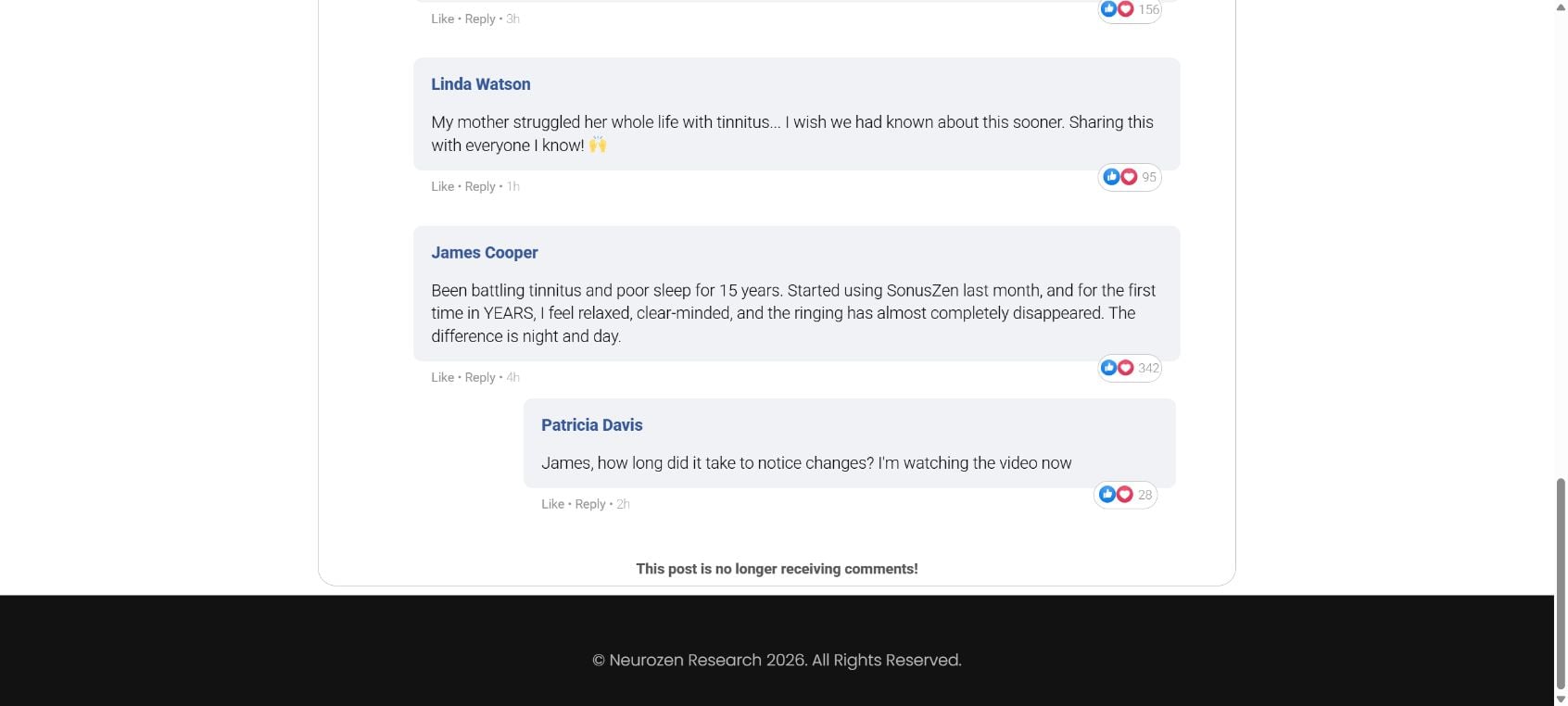
This mismatch is not a harmless spelling error. It suggests the comments and emotional stories were copied or adapted from another product campaign.
The page also said the post was no longer receiving comments, which prevents visitors from testing whether the conversation is interactive. The reaction counts and timestamps simply reinforce the appearance of popularity.
The Vicks trick is a curiosity hook
Vicks VapoRub is a familiar household product. Mentioning it makes the story feel accessible and gives people a specific phrase to search.
The funnel promises to reveal a home protocol but gradually shifts attention to the supplement. This is a common structure in health-product advertising: a pantry ingredient, household item, or brief ritual attracts the click, while the video ultimately sells pills, drops, gummies, or spray.
Do not put Vicks VapoRub in the ear or use it in a way not directed by its official label. A sales video is not a safe source for instructions involving an ear canal, damaged eardrum, infection, or unexplained hearing symptoms.
Neurozen warning signs at a glance
- The advertisement leads to a page that copies CNN Health.
- The website is not CNN.com.
- The page falsely lists Dr. Oz as its author.
- It invokes Anderson Cooper, “60 Minutes,” and other famous people.
- The headline claims scientists found a natural tinnitus cure.
- A Vicks VapoRub trick is used to attract curiosity.
- The video claims the recording may be removed soon.
- The page uses medical language without a trial of the finished product.
- A seller-controlled comment section claims tens of thousands of responses.
- The comments cannot be verified through real social media profiles.
- Testimonials praise SonusZen even though the funnel sells Neurozen.
- Package discounts encourage customers to buy several bottles at once.
- The refund may require returning bottles at the customer’s expense.
How The Operation Works
The Neurozen operation begins with a real and distressing symptom, then surrounds a supplement offer with layers of borrowed authority. Each stage is designed to make the viewer feel that delaying the purchase could mean missing a medical breakthrough.
1. An advertisement identifies a desperate audience
People searching for tinnitus relief may have been living with ringing for months or years. Poor sleep, anxiety, concentration problems, and fear of worsening hearing can make a quick solution especially attractive.
The ad uses phrases such as Vicks trick, silence protocol, ear drops, nerve reset, or toxic enzyme. These specific hooks sound new enough to deserve a click.
2. A fake news page borrows trust
The visitor lands on a layout resembling CNN Health. Familiar branding creates the impression that journalists and medical experts investigated the story before publication.
Most readers focus on the headline and logo, not the domain. The operation depends on that habit. A quick look at the address bar reveals that the page belongs to a marketing domain.
3. Famous names replace verifiable evidence
Dr. Oz, Anderson Cooper, Eric Clapton, and Whoopi Goldberg are used because recognition reduces uncertainty. The viewer may assume that a famous person would not appear in a fraudulent advertisement.
Scammers and aggressive affiliates do not need permission to place a name or photograph on a webpage. AI tools also make it easier to create fake voices, edited videos, and realistic endorsements.
4. The story announces a hidden cause
The video may claim that one toxin, enzyme, nerve problem, or circulation issue explains tinnitus. A simple cause allows the seller to introduce a simple product.
Real tinnitus is not that uniform. The same symptom can have different causes, and treatment decisions depend on a proper history and examination.
5. The home remedy is withheld
Viewers are promised a Vicks protocol or natural trick, but the explanation is delayed. The narrator repeats the benefits, tells emotional patient stories, and warns that the recording may disappear.
This keeps the viewer engaged long enough for the supplement to become the answer. The original hook does not have to produce a useful home recipe.
6. Fake comments create a crowd
Thousands of claimed comments and reaction counts tell visitors they are not alone. Emotional stories describe spouses sleeping again, retirees finding silence, and long-term sufferers improving within weeks.
The SonusZen naming mistake reveals how easily these testimonials can be reused. Changing the headline and product bottle is cheaper than collecting genuine, independently verified customer evidence.
7. Package pricing raises the order value
The sales section usually makes a multi-bottle package look like the rational choice. The per-bottle price falls as the quantity rises, and the largest package may include free shipping or bonus bottles.
A person worried that the offer will disappear may spend several hundred dollars before trying one bottle. That increases the loss if the product disappoints or causes an unwanted effect.
8. A guarantee reduces hesitation
A 60-day guarantee suggests that the customer can test the supplement without risk. The practical process may require contacting support, receiving authorization, returning every bottle, paying postage, and meeting a deadline measured from the order date.
Shipping time and several weeks of use can consume a meaningful part of that window. Buyers should never rely on a guarantee without reading the actual return instructions.
9. Follow-up marketing can continue after purchase
The checkout collects contact and payment information from someone identified as interested in hearing products. That data can be used for related supplements, upgrades, discount calls, or future health offers.
Do not interpret a follow-up caller’s knowledge of your order as proof of medical expertise. Never share medication details, insurance numbers, remote access, or additional payment information with an unsolicited caller.
If You Have Bought This
If you ordered Neurozen, do not panic and do not abruptly stop prescribed treatment. Focus on your health, the return deadline, and the payment record.
- Do not use it as a substitute for medical care. Continue prescribed treatment unless your clinician advises otherwise. Contact a doctor or audiologist about persistent, new, worsening, one-sided, or pulsatile tinnitus.
- Seek urgent help for serious symptoms. Sudden hearing loss, severe dizziness, weakness, facial symptoms, head injury, or neurological changes require prompt medical assessment.
- Photograph the product and label. Save the ingredient panel, lot number, expiration date, distributor, seals, package, receipt, and shipping label before opening or returning anything.
- Review ingredients with a professional. Ask a pharmacist or doctor about allergies, stimulant ingredients, grapefruit, licorice derivatives, blood-pressure effects, and interactions with your medicines or conditions.
- Stop and seek advice after an adverse reaction. Difficulty breathing, swelling, severe rash, fainting, chest symptoms, or other serious effects may require emergency care.
- Save the deceptive advertising. Capture the fake CNN page, Dr. Oz attribution, Vicks claim, cure language, package price, guarantee, and checkout. These records may be important for a refund or dispute.
- Request a refund within the stated window. Contact the seller and payment processor in writing. Include the order number, amount, date, and a clear request for return authorization.
- Return only to a confirmed address. Ask for written instructions and use tracking. Keep photographs of the package and proof of delivery.
- Contact the card issuer if necessary. If the seller refuses a valid return, the charge is higher than authorized, or additional transactions appear, ask about a dispute and blocking future charges.
- Report adverse effects. U.S. consumers can use the FDA’s MedWatch program for serious product problems.
- Report deceptive marketing. Submit the domain, screenshots, receipt, and claims at ReportFraud.ftc.gov.
If you entered your phone number, be skeptical of callers claiming to be tinnitus specialists, refund agents, or billing departments. Use contact details from your receipt, bank, or an independently verified official website.
People with tinnitus deserve calm, evidence-based support. A failed supplement purchase does not mean nothing can help. An audiologist can discuss hearing evaluation and symptom-management options without promising an instant cure.
The Bottom Line
The Neurozen tinnitus campaign is built on impersonation and unsupported medical promises. A fake CNN Health page, a false Dr. Oz byline, a Vicks trick, famous names, and recycled SonusZen comments do not prove that the drops treat tinnitus.
Do not buy Neurozen through this funnel. If you already ordered, preserve the advertising, check the ingredients with a healthcare professional, request the refund promptly, and contact your payment provider if the seller does not resolve the problem.








