

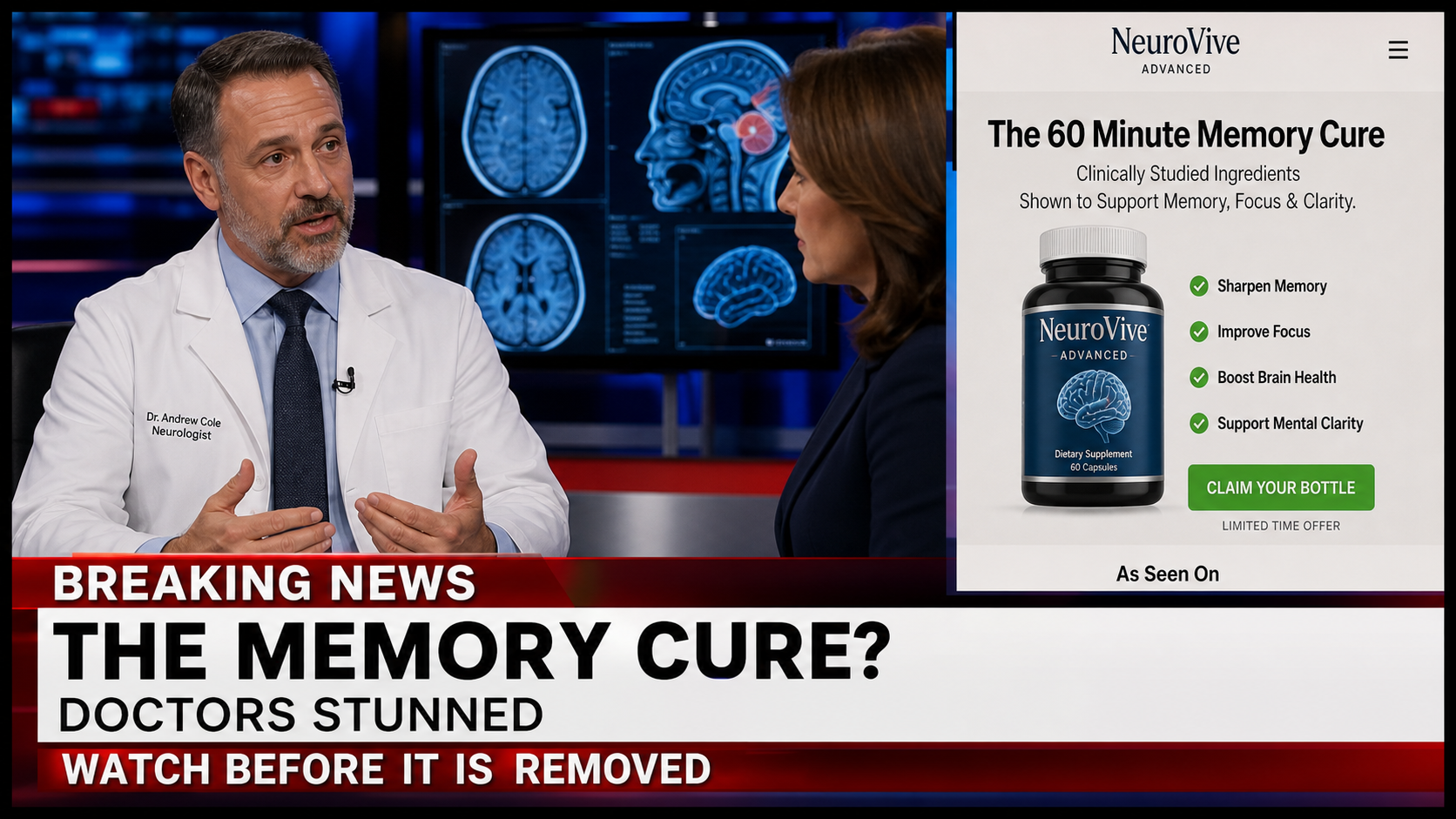
A grave television interview appears to reveal the memory cure families have been waiting for. Dr. Peter Attia seems to explain the discovery, a trusted presenter asks the questions, and a supplement offer appears before the viewer has time to verify the broadcast.
The interview is not a genuine medical-news endorsement. It is an AI-driven sales story that exploits fear of dementia, borrows the visual language of “60 Minutes,” and can redirect the same promise to different memory supplements.
Overview
What the Fake Dr. Peter Attia Video Claims
The campaign portrays Dr. Peter Attia as the source of a suppressed memory breakthrough. Edited clips may place him beside former CBS anchor Norah O’Donnell or inside a “60 Minutes” or “CBS Evening News” style interview.
The script claims a simple formula can clear brain fog, restore lost memories, or reverse Alzheimer’s disease and dementia. It may invoke Stanford, an FDA insider, a honey recipe, or a little-known cause of cognitive decline.
What Is Real and What Was Fabricated
Peter Attia is a real physician and longevity author. That real professional identity is what gives the fake ad its initial credibility. We found no authentic “60 Minutes” endorsement in which he promotes the campaign’s miracle memory supplement.
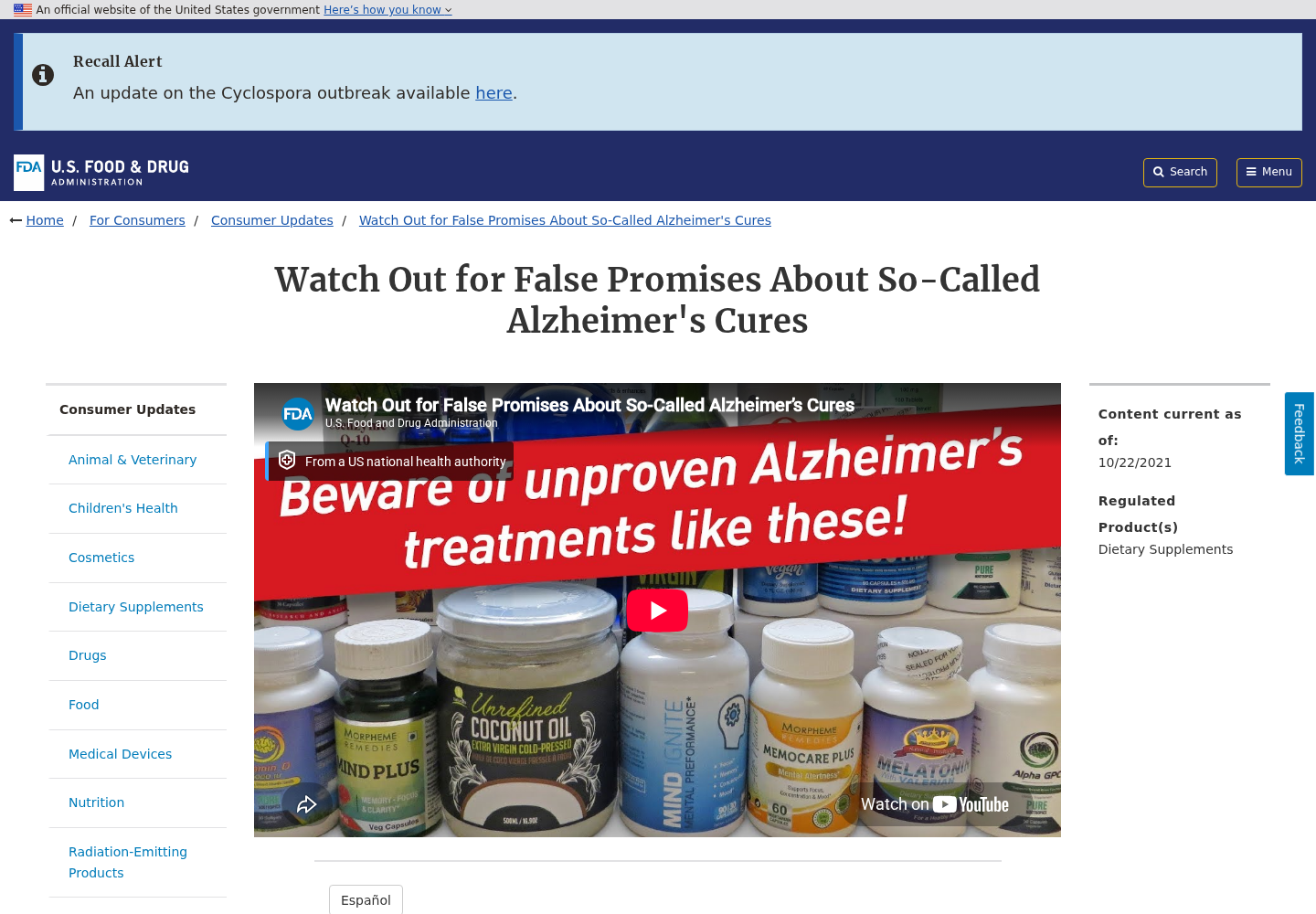
The FDA states that no supplement has been shown to stop or reverse Alzheimer’s disease and warns that fraudulent products can delay proper diagnosis, interact with medication, or expose consumers to unsafe ingredients.
- The television-style interview is manipulated or assembled from unrelated footage.
- The presenter and physician did not jointly endorse the advertised bottle.
- The disease-reversal claims are not supported by an approved treatment.
- The “recipe” is delayed until a commercial supplement becomes the answer.
- The final product can change while the celebrity story remains the same.
Why This Article Focuses on the Story, Not One Bottle
Memopezil has appeared at the end of a documented version of this funnel, but the operation is modular. A marketer can replace the bottle, checkout, domain, or company while keeping the fake Dr. Attia interview and the same claims about memory restoration.
MalwareTips has a separate investigation of the Memopezil supplement funnel. This report focuses on the stolen-authority narrative so readers can recognize it even when tomorrow’s ad names a different product.
Did Dr. Peter Attia Endorse a “60 Minutes” Memory Cure?
No verified evidence supports that endorsement. A video can contain real footage of Dr. Attia while the voice, lip movement, captions, questions, and product references are synthetic or edited in from another source.
The same test applies to Norah O’Donnell, “60 Minutes,” CBS News, or any other media identity. Search the broadcaster’s real archive and the person’s official channels. If the clip exists only in sponsored posts, anonymous advertorials, or a supplement checkout, it is not verified journalism.
Scammers choose a physician known for long-form health discussions because viewers expect nuance and research. They then compress that credibility into a dramatic promise the real doctor did not make.
The unauthorized use of a real person’s image does not become genuine because some words sound medically plausible. The endorsement and the product-specific conclusion must both be verified independently.
Why Alzheimer’s and Dementia Claims Are Especially Harmful
Memory loss creates fear for both the person experiencing it and the family watching. A confident promise of reversal can feel like a lifeline, particularly when appointments, testing, and treatment decisions are already stressful.
The funnel uses that vulnerability. It may say doctors treat only symptoms, pharmaceutical companies hide a natural answer, or a television network is about to remove the interview. That story converts uncertainty into urgency.
The FDA warns that purported Alzheimer’s cures sold online often make unsupported claims and have not been evaluated for safety and effectiveness. Some can interact with essential medication or cause people to delay appropriate care.
The National Institute on Aging similarly states that no vitamin or supplement has been proven to prevent Alzheimer’s disease. A phrase such as “supports memory” on a bottle cannot justify a video claiming dementia reversal.
How the Dr. Peter Attia Memory Cure Scam Works
Step 1: A Deepfake Video Uses a Trusted Face
The scam begins in a Facebook, Instagram, YouTube, or TikTok feed. Dr. Attia appears to speak directly about a memory crisis, a forbidden discovery, or a household ingredient that neurologists supposedly ignore.
Cloned audio can be placed over real interview footage. The mouth may not match every word, but captions, background music, and small-screen viewing hide imperfections.
Step 2: The Click Opens a Counterfeit News Advertorial
The next page resembles CBS News, “60 Minutes,” CNN Health, Fox News, or another trusted outlet. It uses a headline, byline, navigation bar, and embedded interview to make the visitor feel they are reading reporting.
The domain usually does not belong to that outlet. Menus may be decorative, comments can be fabricated, and all prominent links lead toward the same sales presentation.
Step 3: A Hidden Cause Replaces Real Diagnosis
The video blames one simple mechanism for brain fog, normal forgetfulness, mild cognitive impairment, dementia, and Alzheimer’s disease. Toxins, parasites, plaque, inflammation, blood flow, or a missing nutrient may be used depending on the campaign.
Those conditions are not interchangeable. Sudden confusion, medication effects, depression, sleep disorders, vitamin deficiency, stroke, and neurodegenerative disease require very different evaluation.
Step 4: The Free Recipe Is Teased but Never Delivered
A honey mixture, kitchen ritual, or inexpensive ingredient keeps viewers watching. The narrator says the exact instructions arrive near the end and warns that skipping ahead will cause failure.
The delay is a retention technique. By the time the viewer reaches the “recipe,” the script has usually explained why the household version is too weak and a bottled formula is necessary.
Step 5: The Supplement Landing Page Becomes the Destination
Memopezil or another brain-support product appears as the standardized solution. The page uses bottle stacks, ingredient badges, laboratory imagery, customer stories, and claims such as “doctor formulated” or “made in the USA.”
None of those elements authenticates the stolen Dr. Attia endorsement. A product may physically exist while the television story that delivered the buyer is false.
Step 6: Bundles Turn Fear Into a Larger Order
One bottle is priced to look inefficient, while three or six bottles are labeled recommended or best value. The script may say the brain needs a 90- or 180-day protocol, making a large purchase feel medically necessary.
Check whether the number shown is per bottle or the full total. Also inspect shipping, handling, add-ons, and any preselected package before entering payment information.
Step 7: Refill Terms and Upsells Can Follow
Some supplement checkouts include continuity plans, memberships, or repeat shipments in the terms. Others are one-time bundles but add several upsell pages. The exact arrangement can change between domains.
Never infer the billing model from the ad. Save the terms that appear beside the final order button and confirm in writing that the transaction is one-time if that is what you want.
Step 8: Cancellation Becomes Harder Than Ordering
After the charge, the buyer may encounter email-only support, long holds, strict return authorizations, unopened-bottle rules, overseas postage, or a merchant name different from the product.
The advertised guarantee may still exist on paper, but practical friction can consume the refund window. Contact the seller and payment provider quickly.
How AI Makes the Fake Interview Feel Real
A scammer does not need to generate an entire video. They can take a real public interview, replace only the audio, animate a few mouth movements, and add captions that tell viewers what they expect to hear.
Other shots can come from stock libraries or fully synthetic presenters. Brain scans, laboratories, capsules, and television control rooms fill the gaps, while fast editing prevents close inspection.
Look for inconsistent lip shapes, strange blinking, abrupt changes in vocal tone, warped teeth, captions that do not match speech, and a product name spoken without a matching camera cut. These clues are useful, but not decisive.
The decisive check is provenance. Can the full interview be found on the broadcaster’s official website? Does Dr. Attia link to the product from an authenticated channel? Does a real clinical paper test the exact finished formula? If not, the sales page has not earned trust.
Company, Address, and Fulfillment Checks
The Product Label Is Not the Legal Seller
A rotating bottle name can conceal several businesses: the advertiser, affiliate, checkout operator, manufacturer, importer, and fulfillment warehouse. Compare the legal entity across the terms, privacy policy, receipt, package, and card statement.
If those names do not match or the operator is absent, the customer cannot easily determine who is responsible for the false video, formula, charge, or refund.
The Address May Lead Only to Returns
Search the listed location. It may be a fulfillment center handling many unrelated brands, a virtual mailbox, a residence, or a copied address. A warehouse that scans returns is not necessarily the manufacturer or company headquarters.
Never send bottles to an address found in an ad without written authorization linked to the order. Keep the tracking number and photograph the package.
Phone and Email Support Can Vanish
Call before ordering. Ask whether the number handles the exact product, who owns the brand, whether refills are automatic, and where opened bottles can be returned. Generic agents, unanswered emails, and disconnected lines turn a large guarantee badge into empty decoration.
Untraceable Supplements Can Create Real Health Risks
Rotating funnels may use generic private-label products sourced through brokers or contract factories, including manufacturers in China. Origin alone does not prove danger. The problem is a seller that hides the actual factory, importer, batch records, testing, and complete ingredient amounts.
Without traceability, buyers cannot verify identity, dose, contaminants, allergens, or undeclared drug ingredients. “Natural,” “GMP,” “FDA registered,” and “doctor formulated” are not a certificate of analysis for the bottle delivered to your home.
Warning Signs in Memory Cure Ads
- Dr. Peter Attia appears to promise a fast cure or reversal.
- The clip imitates “60 Minutes” or CBS but sits on another domain.
- A single hidden cause explains every type of memory problem.
- A cheap recipe is promised but withheld for a long video.
- The presentation claims doctors or pharmaceutical companies hide the truth.
- A supplement appears only after the viewer is emotionally invested.
- Six-bottle packages are framed as a medical protocol.
- Clinical claims are not linked to a study on the exact product.
- Company, factory, address, and support details are difficult to reconcile.
- Cancellation and recurring terms are less visible than the order button.
What to Do if You Have Fallen Victim to This Scam
- Do not take more based on the ad. Speak with a physician or pharmacist, especially if the person has dementia, takes prescriptions, is pregnant, or developed a reaction. Seek urgent care for severe symptoms.
- Save the evidence. Keep the ad, fake interview, advertorial, product page, checkout, terms, receipt, bottle label, package, and statement descriptor. Record every domain and support number.
- Cancel in writing. Tell the merchant to cancel the order, membership, auto-ship, and all future refills. Request written confirmation and the authorized return address.
- Call the card issuer. Explain the false endorsement, disease claims, unexpected quantity, or repeat billing. Ask about a dispute, merchant block, and card replacement when appropriate.
- Monitor statements. The descriptor may not match the bottle name. Review transactions for several months and report any rebill promptly.
- Secure the device. If you downloaded a file, app, or extension, remove it and scan with Malwarebytes. Never grant remote access to someone offering a refund.
- Reduce scam-ad exposure. AdGuard can block many malicious ads and tracking links. It cannot verify medical claims, so continue checking official sources.
- Report the incident. Report the ad for impersonation, file at ReportFraud.ftc.gov, and report serious supplement reactions through FDA MedWatch.
Frequently Asked Questions
Did Dr. Peter Attia endorse a memory supplement on “60 Minutes”?
No verified broadcast supports that claim. The campaign uses edited or synthetic media to make a real physician and trusted television format appear connected to a supplement offer.
Is the Norah O’Donnell interview real?
The promotional version is not a verified joint endorsement. Real footage can be recut, dubbed, or lip-synced. Search CBS’s official archive rather than trusting the clip embedded on a sales page.
Can a supplement reverse Alzheimer’s disease?
The FDA warns against supplements marketed as Alzheimer’s cures. No dietary supplement has been proven to stop or reverse the disease. Medical evaluation and approved care should not be delayed for an online product.
Is Memopezil always the product behind the ad?
No. Memopezil has appeared in a documented version, but the sales story can be redirected to another brain-support bottle. That is why the fake endorsement pattern matters more than one brand name.
How can I tell if the video is a deepfake?
Visual glitches may help, but source verification is stronger. Look for the full interview on the real broadcaster’s site, the product on the doctor’s authenticated channels, and independent evidence for the exact formula.
What if I already took the supplement?
Do not panic. Keep the bottle and ingredient label, stop relying on the ad, and ask a clinician or pharmacist for guidance. Seek prompt medical care for a serious reaction and report adverse events to FDA MedWatch.
The Bottom Line
Dr. Peter Attia did not reveal a “60 Minutes” supplement cure for Alzheimer’s disease or dementia. The fake interview uses trusted identities to move frightened viewers into a rotating product and billing funnel.
Do not judge the bottle separately from the deception that produced the order. Verify medical claims through official sources, protect the payment method quickly, and seek qualified care for memory changes.

Join the discussion
0 commentsShare your experience or ask a question about this article.
Discussion
Start the conversation
Have a question or something useful to share? Add the first comment.