

A familiar actor appears on a polished health program and shares a frightening secret about memory loss. The clip says a hidden protein is quietly erasing the memories of millions of people over 50.
It looks like a serious interview. It is actually the opening scene of the Anthony Hopkins “evil proteins” scam, a carefully built sales funnel that turns fear about dementia into an impulse supplement purchase.
Overview
What Viewers Are Told
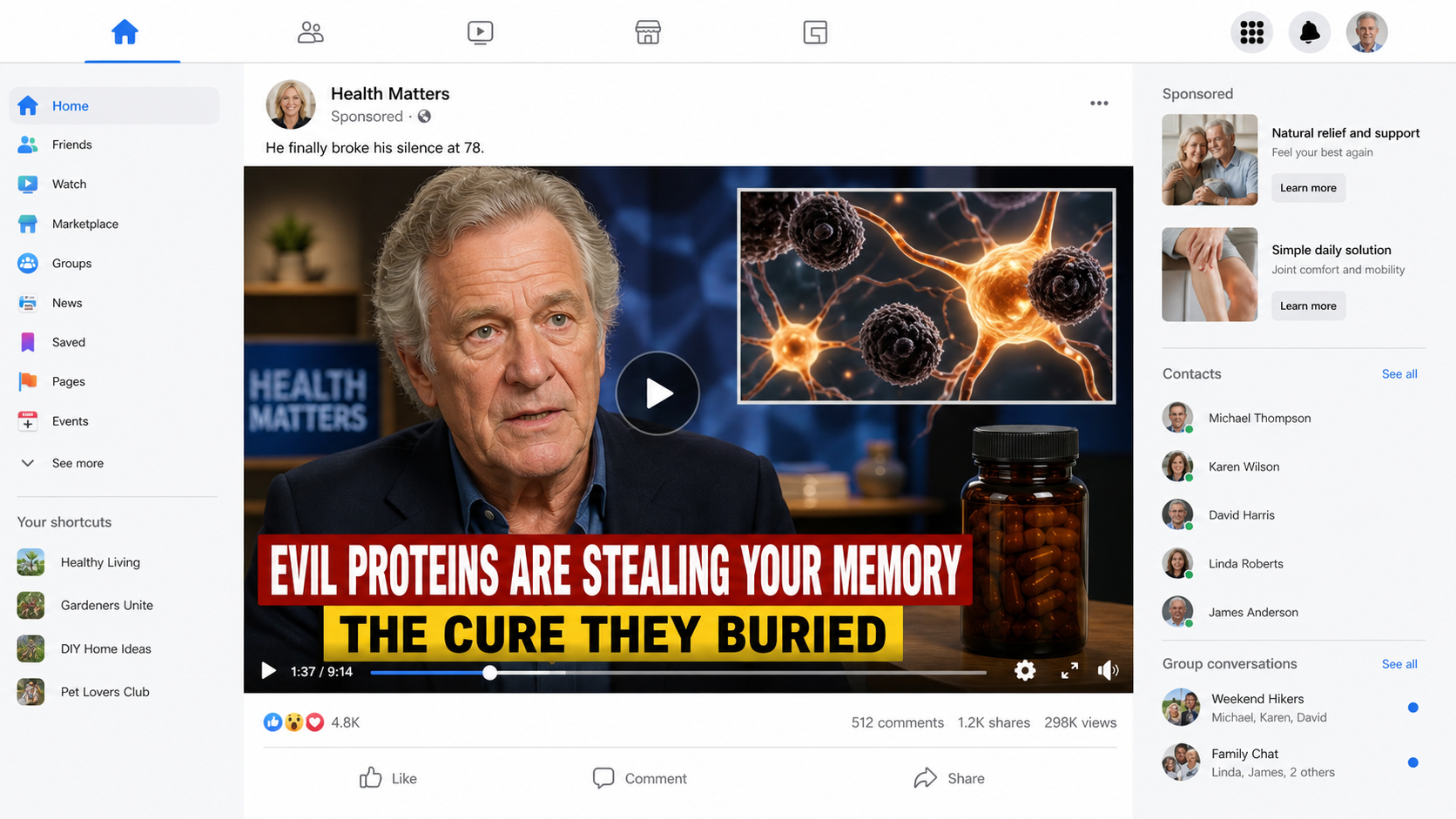
The presentation places Anthony Hopkins on a supposed program called “Health Matters.” A headline claims that Harvard exposed “evil proteins” that are devouring the memories of nearly every American over 50.
The story then widens. A famous philanthropist supposedly funded a breakthrough, other actors allegedly recovered their memory, and an unnamed expert says ordinary doctors have misunderstood the real cause of cognitive decline.
What the Evidence Shows
There is no verified evidence that Anthony Hopkins recorded this interview or endorsed the memory supplement offered at the end. The unusual medical clothing, artificial delivery, dramatic captions, and unsupported cure claims are signs of an AI-generated or manipulated promotion.
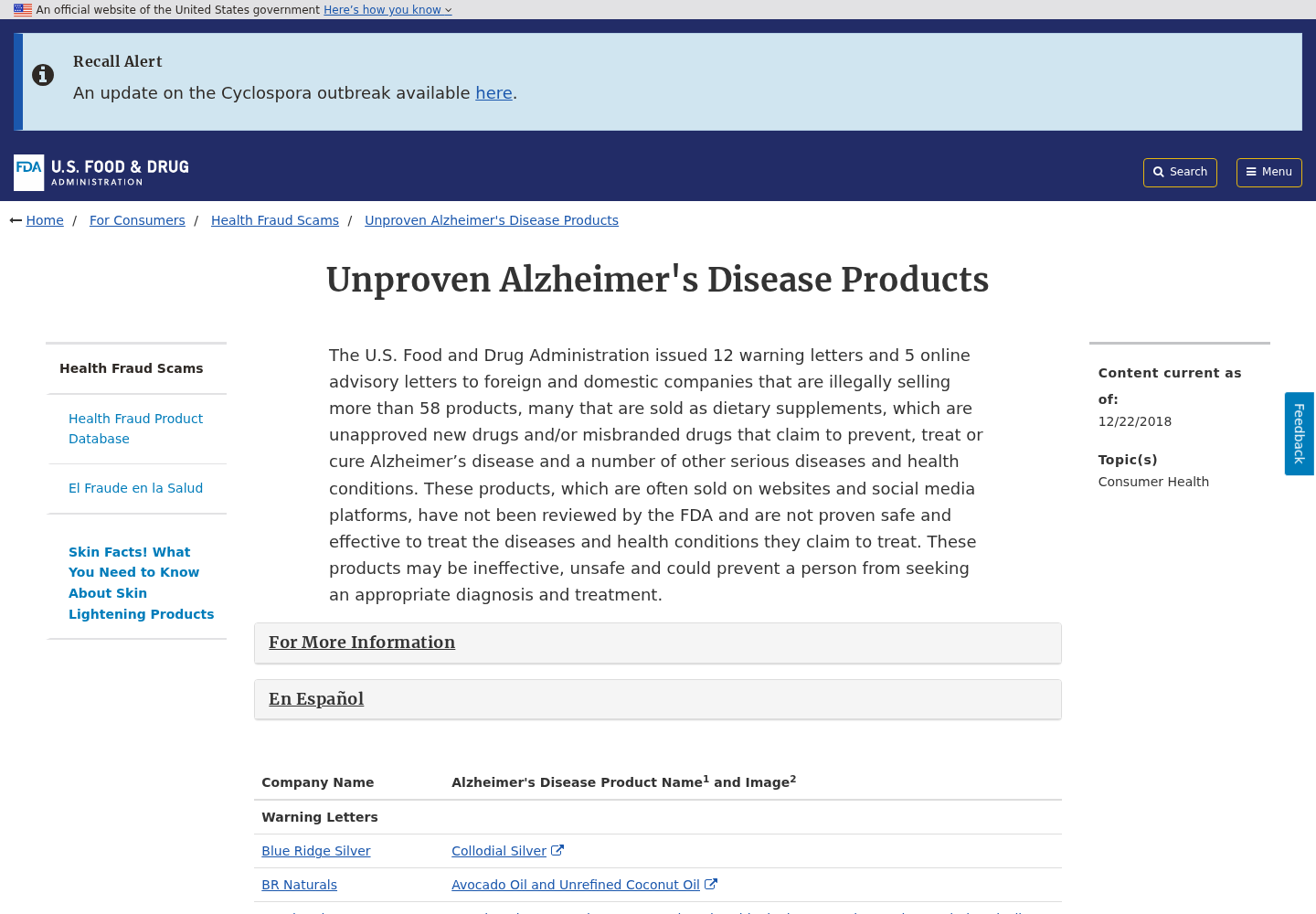
The FDA warns about unproven Alzheimer’s products because they may be ineffective, unsafe, or delay appropriate care. A cinematic interview does not turn a supplement into an approved treatment.
- The celebrity endorsement cannot be verified through a genuine interview or official channel.
- The show title and news presentation are used to imitate independent reporting.
- The “evil proteins” phrase oversimplifies complex brain disease into one frightening villain.
- A free discovery or home ritual becomes a paid bottle near the end.
- The product, seller, checkout domain, and guarantee can change while the script remains.
- Bundle pricing or recurring refills may be disclosed only in checkout terms.
Why MemoPryl Is Only One Example
One observed version of this story directed viewers toward MemoPryl capsules. That does not mean every “evil proteins” ad will show the same bottle. Advertisers can attach the finished video to another landing page as soon as complaints collect around the first name.
MalwareTips has already published a separate MemoPryl supplement investigation. This article examines the Anthony Hopkins story that creates the trust and urgency before the bottle ever appears.
The Fake “Health Matters” Interview Is Medical Theater
The video borrows the visual language of daytime health television. There is a studio desk, a confident host, medical imagery, audience reactions, and a guest presented as if he is finally ready to reveal a private struggle.
None of those elements proves the program exists. A convincing set can be generated, rented, or copied from unrelated footage. A show logo is easy to create, and the person asking questions may be fictional, hired, or generated.
Scammers understand that viewers rarely stop to search for a complete broadcast. Most people encounter a short clip while scrolling. The logo and production style provide just enough familiarity to make the first claim feel possible.
A real medical report should be traceable. Viewers should be able to find the original broadcaster, air date, full interview, named specialists, published research, and an accountable editor. The fake “Health Matters” segment offers drama but not that chain of evidence.
Why the “Evil Proteins” Claim Sounds Scientific
Researchers do study proteins and other biological processes in Alzheimer’s disease. Scam copywriters borrow a genuine scientific vocabulary, remove the uncertainty, and reshape it into a simple story with a simple product solution.
The phrase “evil proteins” is especially effective because it is vivid and easy to remember. It makes a complicated group of conditions sound like an invader that can be flushed away with the right ingredient.
The presentation may mention Harvard, laboratory images, percentages, or brain scans. Those references are not evidence unless they lead to an identifiable study that actually tested the finished product in people and supports the exact claim being made.
A study about one ingredient or one biological mechanism does not prove that a commercial blend reverses memory loss. The dose, formulation, participants, comparison group, outcomes, and independent replication all matter.
The sales video avoids that careful work. It moves from a dramatic theory to testimonials, then from testimonials to a checkout. That is persuasion, not clinical validation.
Anthony Hopkins, Bill Gates, and Other Famous Names Build Borrowed Trust
Anthony Hopkins brings emotional authority to the opening. Bill Gates may be added later to suggest research funding, while another actor or television host supplies a recovery story. Each famous name handles a different doubt the viewer might have.
AI tools make the combination cheap. A marketer can clone a voice, alter lip movement, generate a studio, and assemble unrelated clips into a conversation that never happened.
Look closely and the illusion may weaken. Facial movement can appear stiff, words may not match the mouth, lighting can change between shots, and a voice may have strange pacing. Captions and music often hide those defects.
Perfect editing would not make the claim genuine. The decisive question is whether the supposed speaker confirmed the endorsement through a verified channel and whether the medical claim is supported by reliable evidence.
A sponsored social ad, anonymous advertorial, or supplement checkout is not confirmation. When the only proof of an endorsement comes from the seller who profits from it, the viewer is being asked to trust the interested party.
Real Memory Problems Need Real Medical Evaluation
New forgetfulness does not automatically mean Alzheimer’s disease. Sleep problems, depression, medication effects, vitamin deficiencies, thyroid disorders, infections, stroke, and other conditions can affect memory or concentration.
That is one reason a one-bottle answer is dangerous. Different causes require different tests, treatments, and levels of urgency. A supplement seller cannot diagnose a viewer through a Facebook video.
The FDA says products marketed with unproven Alzheimer’s claims may prevent people from seeking timely treatment. They can also interact with medicines or contain ingredients that are not appropriate for every buyer.
Anyone concerned about gradual memory changes should arrange an evaluation with a qualified clinician. Sudden confusion, trouble speaking, weakness, severe headache, or loss of coordination can be an emergency and should receive immediate medical attention.
How the Anthony Hopkins “Evil Proteins” Scam Works
Step 1: A Deepfake Health Clip Creates Fear
The funnel begins with a sponsored video on Facebook, Instagram, YouTube, or another platform. It appears to show Anthony Hopkins discussing forgetfulness, Alzheimer’s disease, or a discovery that restored a fading memory.
The first seconds are emotionally loaded. A frightening headline, urgent warning, and recognizable face stop the scroll before the viewer has time to verify the clip.
Step 2: The Click Opens a Fake Trusted Publication
The ad sends the viewer to an advertorial that resembles CNN, Fox News, a health magazine, or a medical news site. It may copy a masthead, breaking-news banner, byline, menu, and comment section.
The domain usually reveals the truth. It belongs to an unrelated marketing site, not the publication displayed in the header. Menu items may be decorative, while every useful button leads to the same presentation.
Step 3: The Presentation Invents One Hidden Cause
A long video claims that “evil proteins” are responsible for ordinary brain fog, cognitive decline, dementia, and Alzheimer’s disease. Different conditions are blended together so one dramatic explanation can appear to solve them all.
The narrator may accuse drug companies or doctors of hiding the discovery. That conspiracy makes missing evidence sound like proof that the method is powerful.
Step 4: Famous People and Fake Experts Confirm the Story
Additional celebrities, philanthropists, universities, or doctors are introduced. Their purpose is not to add verifiable evidence. It is to make the viewer feel that too many respected people are involved for the story to be false.
Testimonials claim dramatic improvement in days or weeks. The people, diagnoses, medical records, and follow-up results cannot be independently checked.
Step 5: A Free Breakthrough Turns Into a Bottle
The video promises a natural protocol or easy home solution, but it delays the details. Near the end, viewers are told that sourcing the ingredients or preparing the formula correctly is difficult.
A supplement such as MemoPryl then appears as the convenient, concentrated version. The educational tone disappears and the page becomes a direct-response sales pitch.
Step 6: The Checkout Pushes More Than One Bottle
The order page may advertise a low price per bottle while selecting a three-bottle or six-bottle package. Countdown clocks, low-stock notices, free bonuses, and expiring discounts pressure the buyer to act.
The total charge can be far higher than the number that first caught the buyer’s attention. Upsells may appear after payment details are entered.
Step 7: Refill Terms and Refund Barriers Appear Later
Some supplement funnels add automatic shipments or recurring charges. The disclosure may sit in small print, a terms link, or a checkbox that is easy to miss on a mobile screen.
Cancellation can involve long waits, unanswered email, return shipping, restocking conditions, or a short refund window. By the time a complaint appears publicly, the advertiser can rotate to another domain and bottle.
Warning Signs You Can Check in Two Minutes
- The celebrity clip cannot be found on a verified account or real broadcast archive.
- The headline promises to reverse dementia or restore memory rapidly.
- The page uses a trusted logo on a domain that does not belong to that organization.
- A supposedly suppressed video demands that you watch before it is removed.
- Harvard or another institution is named without a direct link to relevant research.
- A free recipe becomes a branded supplement.
- The price per bottle is prominent, but the total charge is not.
- The legal seller and recurring-billing terms are difficult to locate.
The more of these signs appear together, the less likely you are looking at a genuine medical report. Close the page before entering contact or payment information.
Company, Address, and Fulfillment Checks
The Seller May Hide Behind the Bottle Name
A brand is not a company. Deceptive supplement funnels may show one name on the label, another in the terms, and a third on the credit-card statement.
If you cannot identify the legal entity taking the payment, do not order. A business that will not clearly own the sale is unlikely to make refunds simple.
The Address May Be a Mailbox or Shipping Warehouse
Search every listed address. It may belong to a virtual mailbox, a residential property, an unrelated company, or a fulfillment center that only packs and returns bottles.
A warehouse address does not prove the seller, management, laboratory, or manufacturer operates there. It may only be the final link in an otherwise hidden supply chain.
The Phone and Email May Stop Working
Call before buying. Scam-linked sellers often use outsourced agents who cannot answer product questions, disconnected numbers, and email inboxes that send templates without resolving cancellations.
Ask for the total charge, refill schedule, cancellation method, and return address. Evasion on any of those points is a reason to walk away.
The Product May Be Impossible to Trace
Look for complete Supplement Facts, ingredient amounts, warnings, lot details, and an identifiable responsible company. “Natural,” “doctor formulated,” and “FDA registered facility” do not prove that a product is effective or approved.
Some generic supplements are mass produced overseas, including in China, and relabeled for many storefronts. That does not make every imported product unsafe, but missing traceability leaves buyers unable to verify contents, contamination controls, or who handles an adverse reaction.
What to Do if You Have Fallen Victim to This Scam
- Cancel in writing immediately. Tell the seller to cancel the order and any refill plan. Request the cancellation date, refund amount, return authorization, and written confirmation that no future charge will be attempted.
- Call the card issuer. Explain whether the amount was misrepresented, a recurring plan was not clearly disclosed, or later charges were unauthorized. Ask about a dispute and a block on future merchant attempts.
- Save the evidence. Keep screenshots of the ad, fake news page, checkout, terms, receipt, emails, shipping label, bottle, and statement descriptor. The domains may disappear quickly.
- Do not start an unknown supplement blindly. Show the label to a pharmacist or physician, especially if you take prescription medicine. Seek urgent help for a severe reaction.
- Protect exposed accounts. Change any password reused on the checkout and enable multi-factor authentication. Watch the card and email account for follow-up fraud.
- Scan the device. If the page downloaded a file, requested a browser extension, or produced security warnings, run a full scan with Malwarebytes.
- Block repeat scam traffic. AdGuard can reduce malicious ads, trackers, and known scam domains. Continue verifying every seller because no blocker catches everything.
- Report the promotion. Report the social ad to the platform and submit the transaction to the FTC at ReportFraud.ftc.gov. Include the seller name, URLs, phone numbers, and statement descriptor.
- Arrange legitimate care. If memory concerns led to the purchase, speak with a qualified clinician. Do not stop prescribed medicine because an anonymous video says ordinary care is harmful.
- Ignore recovery offers. Anyone promising to recover the money for an upfront fee may be running a second scam. Work directly with your bank, card issuer, regulator, or a lawyer you independently verify.
Frequently Asked Questions
Did Anthony Hopkins Endorse an Alzheimer’s Cure?
We found no verified evidence that Anthony Hopkins endorsed the “evil proteins” story, MemoPryl, or a memory-restoration supplement. A clip inside a sponsored ad is not proof of consent.
Is the “Health Matters” Interview Real?
The segment used in this campaign is not supported by a traceable broadcast, accountable publisher, or verified full interview. It functions as a sales device rather than independent journalism.
Are “Evil Proteins” the Cause of Every Memory Problem?
No. Memory changes have many possible causes, and Alzheimer’s disease is complex. The phrase reduces real science to a frightening slogan that can be connected to one product.
Is MemoPryl the Only Supplement Used in This Scam?
No. MemoPryl is one observed example. Advertisers can attach the same celebrity story to another bottle, domain, or checkout when the original campaign attracts complaints.
Can a Supplement Cure Alzheimer’s Disease?
No over-the-counter supplement has been proven to cure Alzheimer’s disease. Claims of rapid reversal should be treated as a health-fraud warning sign.
How Do I Stop Possible Recurring Charges?
Cancel with the seller in writing, retain proof, and contact the card issuer promptly. Ask whether it can dispute eligible charges and block further attempts by the merchant.
The Bottom Line
The Anthony Hopkins “evil proteins” scam uses a fabricated health show, borrowed celebrity trust, and distorted science to guide frightened viewers toward a supplement checkout. MemoPryl is one possible bottle, not the heart of the scheme.
Do not let a familiar face replace verification. Check the original source, inspect the domain and seller, read every billing term, and take memory concerns to a qualified medical professional.

Join the discussion
0 commentsShare your experience or ask a question about this article.
Discussion
Start the conversation
Have a question or something useful to share? Add the first comment.