

The promise sounds almost insultingly easy: copy a link, paste it, and watch an AI bot send cash to your account. The sales video even claims you have earned hundreds in cash before you understand what the software supposedly does.
That instant balance is the hook. Behind it is a high-pressure digital-product funnel with unsupported income claims, AI-made testimonials, unclear ownership, and a long chain of paid upgrades.
Overview
What Copy/Paste Millionaire Bot Promises
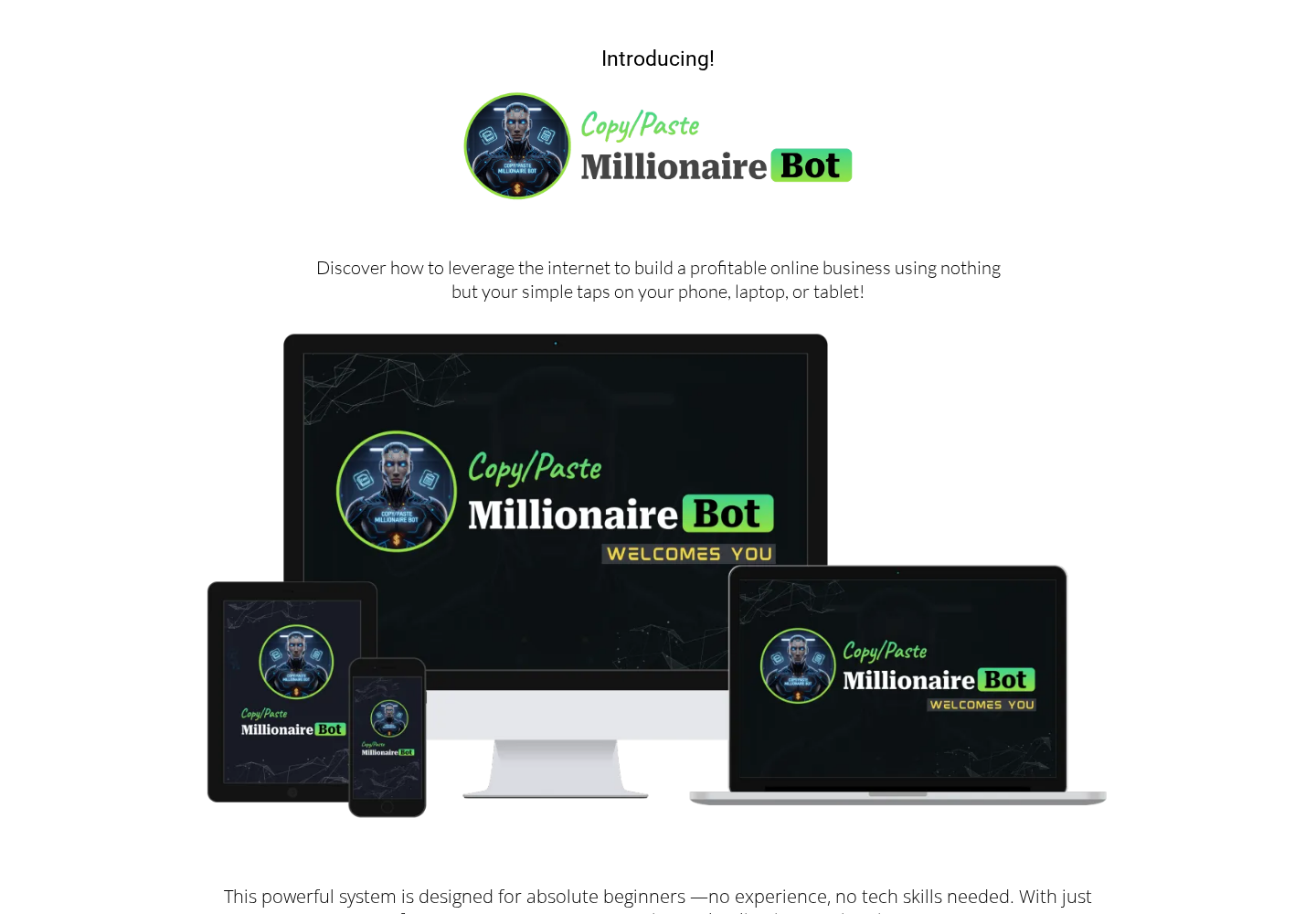
Ads and sales pages present Copy/Paste Millionaire Bot as an AI-powered shortcut to online income. One pitch claims users can make $500, $1,500, or even $2,000 a day. The current public sales page promises a “repeatable income system” that beginners can run with a few taps.
The explanation shifts between copying “money links,” creating affiliate videos, generating viral hashtags, and activating automated traffic. The constant theme is that skill, audience, advertising, and experience are unnecessary.
What the Live Pages Actually Show
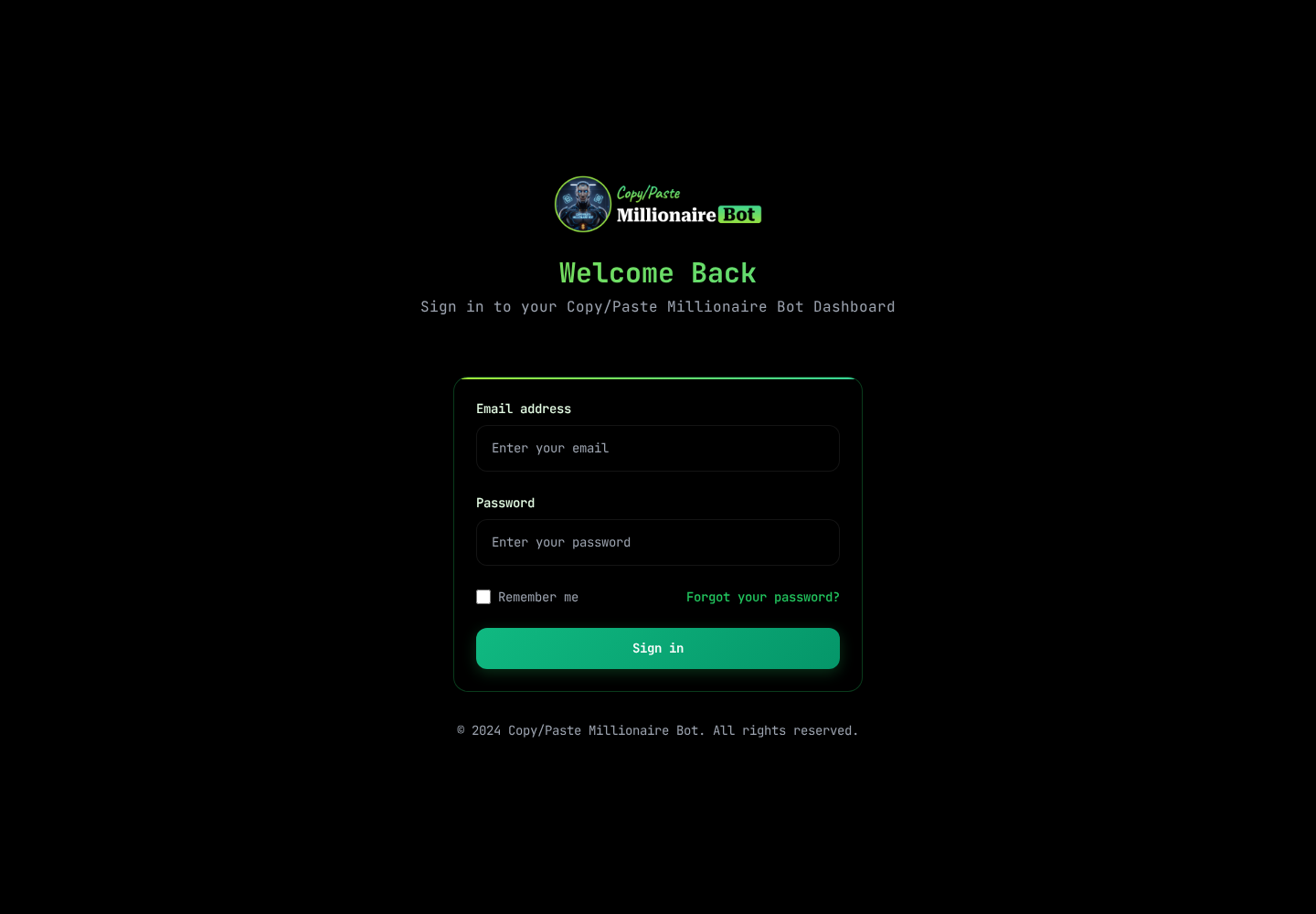
Two related domains are currently accessible. Copypaste-millionaire.com contains a direct-response page selling the system for $67 through Digistore24. Copypastemillionairebot.com displays a separate email-and-password login interface.
The public page identifies a supposed founder named “Robert Smith,” but its legal pages do not provide a verifiable company name, street address, registration number, named operator, or clear jurisdiction. The terms use the generic identity “Copy/Paste Trick.”
- The home page makes broad, rapid-income claims without typical-result data.
- The terms do not identify the legal business operating the offer.
- The checkout is handled by a third-party platform.
- The funnel contains multiple one-time-offer pages priced from $47 to $147.
- The refund language on the sales page is clearer than the generic legal terms.
Why We Recommend Avoiding the Offer
Affiliate marketing is a real business model, but it is not automatic money. A person still needs a useful offer, compliant content, traffic, trust, tracking, and conversions. A link produces no commission when nobody sees it or buys through it.
The gap between that reality and the “tap and profit” presentation is enormous. Unsupported earnings, synthetic success stories, false scarcity, unclear ownership, and a layered upsell path make the offer too risky to recommend.
Is Copy/Paste Millionaire Bot Legit?
We could verify that websites and a checkout exist. We could not verify that ordinary purchasers achieve the income advertised in the campaign, that an AI bot produces guaranteed commissions, or that viewers receive the large cash totals shown during the pitch.
A digital product can contain videos or software and still be sold deceptively. The important question is not merely whether a login works. It is whether the claims that caused the purchase are truthful, substantiated, and representative of what buyers normally experience.
The FTC’s guidance on business opportunities explains that sellers making earnings claims need written substantiation and, where the Business Opportunity Rule applies, specific disclosures. Statements about extraordinary daily income cannot be validated by anonymous testimonials alone.
The Contradictions Inside the Sales Pitch
One version of the presentation starts with a fake visual CAPTCHA, then tells the viewer they earned $575.70 simply by watching. The displayed total changes to $573 without a transaction explaining the difference.
The narration describes secret banking routes, a rogue engineer, automated payouts, and technology that powerful institutions supposedly tried to destroy. Those dramatic details do not explain the actual commercial mechanism.
The current sales page offers a more ordinary story. It says users choose an affiliate offer, copy a link, generate a review video, add the link, and activate traffic. That is not a money-printing bot. It is a simplified description of affiliate promotion with crucial difficulties removed.
The same page says there are “no ads” and later promotes built-in traffic strategies. It promises instant profits but also includes a disclaimer saying examples are not intended to represent or guarantee similar results. The bold promise sells the dream; the fine print retreats from it.
How the Copy/Paste Millionaire Bot Scam Works
Step 1: Social Ads Promise Automated Daily Income
Facebook and Instagram ads target people searching for side income, remote work, or relief from rising expenses. The videos use phrases such as “first AI ever built to rewrite a human life” and suggest the opportunity remained secret until now.
Some ads cloak the destination or load only when opened from a specific campaign. That can make the page harder to share with someone who might recognize the warning signs.
Step 2: A Fake Eligibility Test Creates Exclusivity
The visitor may see a CAPTCHA-style task or a short questionnaire. It looks like the system is checking access, but the same scripted presentation follows regardless of the answer.
This small interaction converts a public sales page into an apparent private invitation. It also makes the viewer feel they passed a gate that others might fail.
Step 3: The Video Manufactures Earnings and Authority
Graphics show accounts being configured, money links loading, and payments arriving. AI-generated presenters or news anchors describe instant payouts, while fictional users celebrate results that cannot be independently verified.
A supposed user from Chicago is shown receiving $472 in PayPal after pasting one link. Another display claims the system generated more than $17 million in 30 days. No audited records, customer list, or representative-results data supports those numbers.
Step 4: Fictional Technology Distracts From Missing Proof
The script may introduce a rogue Chinese engineer, banking systems, crypto engines, and servers that could not destroy the bot. This cinematic story makes the system feel powerful while avoiding a testable explanation of where customer commissions originate.
Real affiliate networks do not pay because a link was copied. They pay when tracked actions meet program rules. Traffic quality, consumer interest, refund rates, platform policies, and competition all matter.
Step 5: A Low Front-End Price Opens the Funnel
Earlier campaigns advertised an entry price around $47. The current public page lists $67 and sends buyers to a Digistore24 checkout. A 60-day guarantee is prominently displayed to reduce resistance.
The legal terms are much less specific. They say a refund policy, “if applicable,” is outlined separately. Before relying on any guarantee, a buyer would need the exact merchant, deadline, exclusions, contact route, and proof required.
Step 6: One-Time Offers Raise the Real Cost
Public page data reveals a sequence of additional offers, including a $147 done-for-you upgrade, a $67 accelerated-income edition, a $97 profit-multiplier edition, a $47 “missing piece,” and a further income accelerator.
These upgrades undermine the idea that the front-end product is a complete automated solution. Each new page can imply the buyer needs one more component to obtain the results used to sell the original purchase.
Step 7: A Dashboard Makes the Purchase Feel Substantial
A separate login page can reassure buyers that they received something. Inside, they may find training, content generators, affiliate links, or other tools. None of that proves the bot generates the advertised daily income.
The buyer must judge the product against the claims that prompted payment, not against the lowest standard of whether a members area exists.
Step 8: Refund Friction Can Outlast the Excitement
When results fail to appear, customers may need to identify whether the vendor, payment platform, or support email handles the refund. Vague legal identity and multiple domains complicate that process.
Act within the published refund window, keep every page and receipt, and do not accept another paid upgrade as a substitute for the requested cancellation.
What Affiliate Marketing Really Requires
Affiliate marketing pays a commission when a tracked visitor completes an approved action. The affiliate does not create money by copying the URL. They must first earn attention and persuade the right audience without violating advertising or platform rules.
That typically requires some combination of research, writing or video production, disclosure, search optimization, email permission, paid traffic, conversion testing, and customer trust. Even competent affiliates can spend time and money without earning a profit.
AI can help draft content or organize ideas, but it does not guarantee distribution, accuracy, or sales. Mass-produced reviews can be ignored by audiences, removed as spam, or expose the publisher to complaints when claims are false.
A responsible course would discuss costs, failure rates, platform restrictions, refund liabilities, and the % of purchasers who achieved the featured results. “Five taps equals instant profits” removes every risk that a buyer most needs to understand.
Company, Address, and Fulfillment Checks
The Legal Operator Is Not Clearly Identified
The public sales page calls the product Copy/Paste Millionaire Bot and presents “Robert Smith” as founder. The terms refer only to “Copy/Paste Trick.” They do not give a company registration, complete legal name, director, street address, or even a specific governing jurisdiction.
A generic brand name is not enough when a seller is asking for payment and making substantial income claims. The merchant shown on the checkout and card statement should match an identifiable business.
There Is No Verifiable Office or Return Address
Digital products do not require a shipping warehouse, but the business still needs a service address and accountable operator. No street address appears in the public terms we reviewed. That leaves customers with fewer independent ways to identify or contact the seller.
Support Is Reduced to a Generic Email
The terms display an email address but no phone number, response hours, or named support company. Test it before purchasing. Ask which legal entity handles refunds and request the complete policy in writing.
If the answer is vague or points repeatedly to another platform, the guarantee may be far harder to use than the sales headline suggests.
The “Fulfillment” Is a Stack of Websites and Upsells
Here, fulfillment means access to a members area and digital content. The public funnel data shows many sequential upgrade pages. A login screen and hosted videos can be delivered cheaply while the revenue comes from moving buyers through those upgrades.
Record every accepted and declined offer. A one-click upsell can use payment details already entered, so confirm each total and never assume closing a page cancels a charge.
Red Flags That Matter Most
- The video claims you earned money before performing real work.
- Daily income claims reach $500, $1,500, or $2,000 without substantiation.
- AI-generated people and fake news graphics serve as testimonials.
- The technical story changes and does not explain a real revenue source.
- The current page promises instant income with a few taps.
- The legal operator and business address are not clearly disclosed.
- A $67 purchase leads into several upgrades costing up to $147 each.
- The sales page and legal terms describe the refund promise differently.
- A dashboard exists, but typical earnings remain unverified.
- Scarcity and urgency discourage research before payment.
What to Do if You Have Fallen Victim to This Scam
- Stop buying upgrades. Do not pay for a done-for-you package, traffic booster, income accelerator, or coaching call to repair the original purchase.
- Save the full funnel. Capture the ad, video, sales page, checkout, every upsell, guarantee, terms, dashboard, receipt, and support conversation. Note which offers you accepted or declined.
- Request a refund in writing. Contact both the listed vendor support and the payment platform within the advertised window. State the order number, amount, purchase date, and that the product did not match the income presentation.
- Contact your card issuer if needed. If charges were unauthorized, duplicated, or not refunded, explain the funnel and provide your evidence. Ask about a dispute and blocking further merchant charges.
- Secure reused credentials. Change any password reused on the dashboard, beginning with your email account. Enable two-factor authentication and review active sessions.
- Check your device. If the system required a download or browser extension, remove unknown software and scan with Malwarebytes. Do not install remote-access tools for “support.”
- Block malicious advertising. AdGuard can reduce exposure to scam ads and tracking. Still verify money-making offers independently, because no filter catches every new domain.
- Report deceptive claims. Report the social ad, file a complaint with the payment platform, and submit the offer to ReportFraud.ftc.gov if you are in the U.S.
Frequently Asked Questions
Can Copy/Paste Millionaire Bot really make $500 a day?
We found no independent evidence that typical purchasers earn that amount. The campaign’s testimonials and dashboard graphics do not replace substantiated, representative earnings data.
Is there a real Copy/Paste Millionaire Bot website?
Yes, related websites and a login page are live. Their existence proves only that an offer and members interface exist. It does not verify the advertised income or automated results.
Who owns Copy/Paste Millionaire Bot?
The public materials we reviewed do not clearly identify a legal company. A page presents “Robert Smith” as founder, while the terms use the generic name “Copy/Paste Trick” without a complete address or registration.
How much does the system cost?
The current front-end page lists $67. Public funnel data also identifies additional offers priced at $47, $67, $97, and $147, so the total can rise substantially if upgrades are accepted.
Does the 60-day money-back guarantee protect buyers?
A guarantee is only as useful as its written procedure and responsive merchant. Save the promise before ordering, verify who handles it, and submit any refund request promptly to both the vendor and payment platform.
Is affiliate marketing itself a scam?
No. Legitimate affiliate programs pay disclosed commissions for qualifying actions. The problem is presenting a difficult, competitive marketing activity as automatic money that requires only copying and pasting a link.
The Bottom Line
Copy/Paste Millionaire Bot wraps ordinary affiliate-marketing concepts in an extraordinary AI-income story. The unsupported daily earnings, synthetic proof, unclear operator, and layered upsell funnel make it an offer to avoid.
A website and dashboard can be real while the financial promise is not. Do not pay for a system whose strongest evidence is the balance it creates inside its own sales presentation.

Join the discussion
0 commentsShare your experience or ask a question about this article.
Discussion
Start the conversation
Have a question or something useful to share? Add the first comment.