

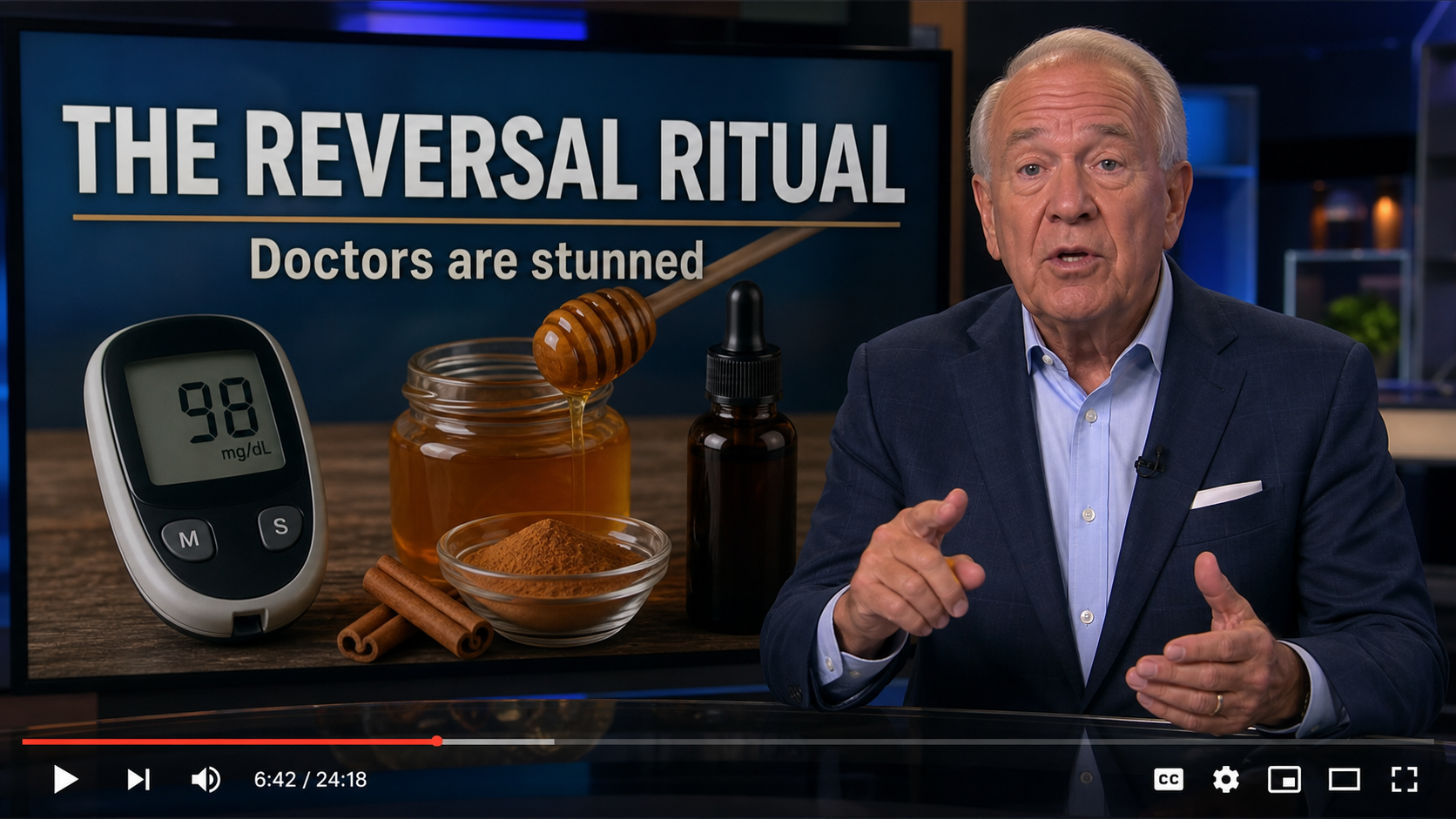
You may have seen it late at night in a social feed: a familiar-looking expert leans toward the camera and promises a tiny ritual that changes everything. The story feels personal, urgent, and just believable enough to keep watching. That is where the Diabetes Reversal Ritual begins.
In this version, the promise is a hidden ritual can reactivate hormones, repair organs, and restore normal blood sugar without conventional treatment. What happens after the click is far more revealing than the recipe teased in the ad. This is the diabetes reversal ritual scam examined here.
Overview
The promise is bigger than the evidence
The campaign has circulated with fake television segments and apparent appearances by Dr. Phil, Dr. Oz, Dr. Sanjay Gupta, Tom Hanks, Halle Berry, Randy Jackson, and Dr. Robert Lustig. The presentation mixes AI-like clips with a long promise of a recipe.
The central claim is that a hidden ritual can reactivate hormones, repair organs, and restore normal blood sugar without conventional treatment. That is an extraordinary health promise, yet the funnel does not provide transparent product-level trials that establish it.
The authority is manufactured
No credible evidence connects those people to Sugar Clean Drops. The ritual is never delivered as a testable medical protocol. The current product page instead makes aggressive GLP-1, GIP, liver, pancreas, and glucose claims while also displaying a standard supplement disclaimer.
A real interview can be found on the broadcaster’s own domain, and a real medical claim can be traced to a published study. This campaign asks the viewer to accept both on appearance alone. Here, Sugar Clean Drops is the destination.
The story survives when the bottle changes
This script can point to Sugar Clean today and another drops brand tomorrow. The fake interview, GLP-1 vocabulary, and reversal language have more marketing value than the bottle name.
Keep these four parts separate when evaluating the offer: It gives the Diabetes Reversal Ritual borrowed credibility.
- the sponsored ad and the account that paid for it;
- the celebrity, doctor, or publisher being impersonated;
- the advertorial or video that makes the medical claim;
- the seller, checkout processor, and bottle that receive the payment.
Why the Story Feels So Convincing
The best deceptive health ads rarely begin with a bottle. They begin with a problem the viewer already understands: a frightening diagnosis, a difficult symptom, or months of frustration. A kitchen ingredient or foreign tradition then makes the solution feel safe and accessible. That matters in the Sugar Clean Drops pitch.
Next comes borrowed trust. A television studio, medical coat, publisher layout, or familiar face lets the ad skip the hard work of proving its claims. AI voice cloning and lip-sync editing now make this stage cheaper and more convincing. The delay keeps the Diabetes Reversal Ritual moving.
The final ingredient is delay. The presentation keeps promising the useful part is seconds away. By the time the product appears, the viewer has invested attention and emotion, so leaving feels like giving up just before the answer. It is a key test for Sugar Clean Drops.
Our Sugar Clean Drops review covers the product page in more detail. Here we examine the fake reversal ritual used to make the sale.
What the Evidence Actually Shows
GLP-1 and GIP are real hormones, but using their names does not prove an anonymous blend works like an approved medication. Diabetes treatment requires diagnosis, monitoring, and an individualized plan. A dropper cannot safely replace that process.
The correct question is not whether one ingredient has ever been studied. It is whether the exact finished product, dose, population, outcome, and duration in the ad were tested in a reliable trial. Ingredient-level research cannot be stretched into proof that a branded blend cures a disease. That distinction undercuts the Diabetes Reversal Ritual.
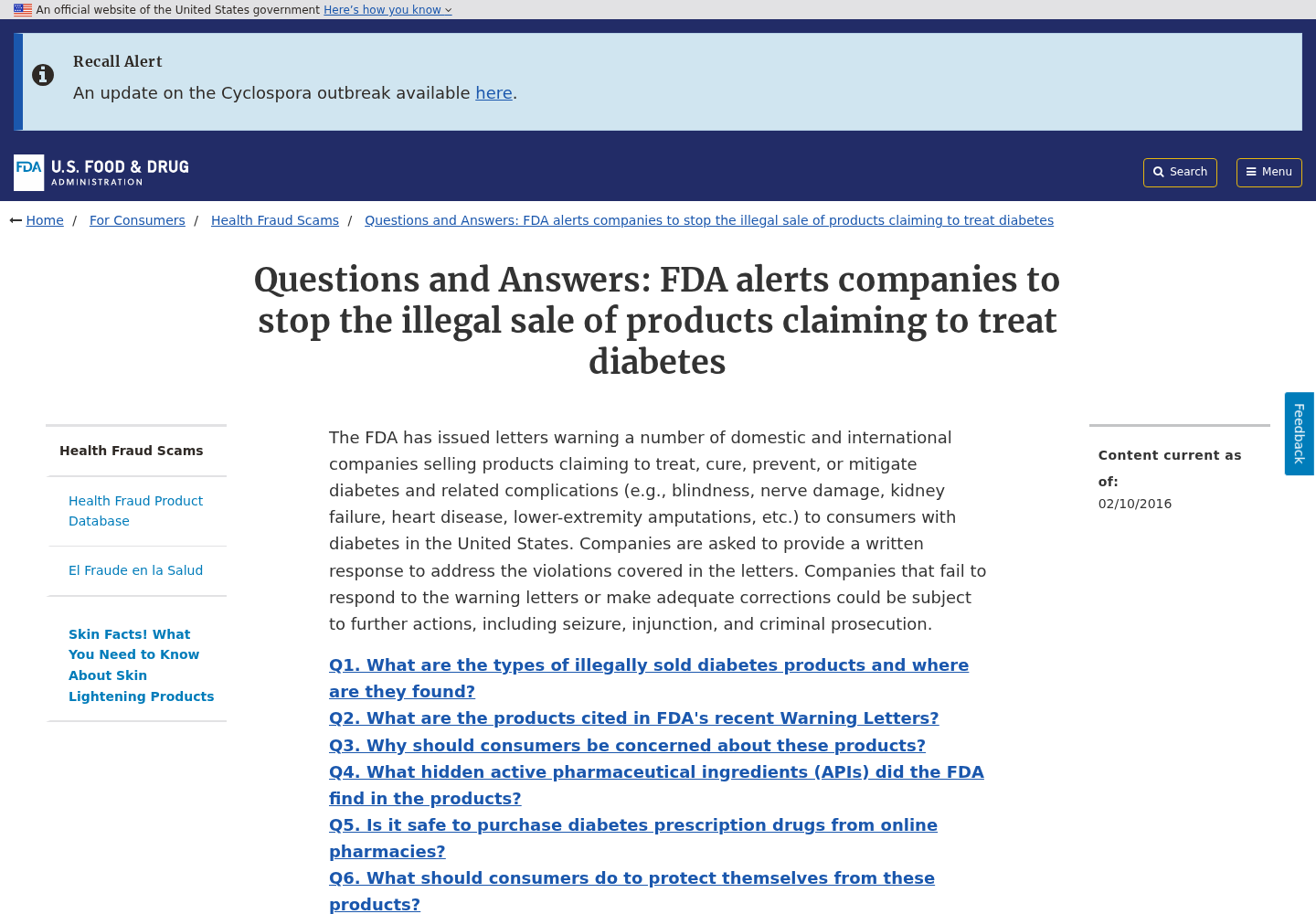
Regulatory wording also matters. A dietary supplement may be produced in a facility that is registered with the FDA, but that phrase does not mean the FDA approved the finished product or verified the advertising claims. This opening suits the Sugar Clean Drops funnel.
How the the Diabetes Reversal Ritual Scam Works
Step 1: A social ad finds a worried viewer
The first contact is usually a sponsored Facebook, Instagram, YouTube, or native ad. It targets people already searching for help and frames the message as news rather than marketing. The the Diabetes Reversal Ritual ad uses that pressure.
The thumbnail often shows a recognizable face, ordinary ingredients, or a dramatic medical image. Captions such as “watch before it is removed” make verification feel like a delay the viewer cannot afford. It makes Sugar Clean Drops look familiar.
Step 2: AI or stolen footage supplies instant authority
The video can splice real footage with a synthetic voice, alter mouth movement, or generate a presenter from scratch. The result may look imperfect, but viewers listen to the authority of the face and overlook visual mistakes. That is how the Diabetes Reversal Ritual borrows trust.
Multiple names and testimonials create social proof. None of that is a substitute for an endorsement posted by the person on an official channel or a statement from the institution being imitated. The Sugar Clean Drops story needs that bridge.
Step 3: The click opens a fabricated television-style health segment and a long video sales letter
The page borrows familiar colors, navigation, breaking-news labels, or interview graphics. The domain in the address bar is unrelated, but the layout encourages the reader to trust the page before checking it. It keeps the the Diabetes Reversal Ritual page feeling urgent.
This advertorial exists to bridge the emotional ad and the commercial offer. It may hide menus, disable easy navigation, or redirect visitors differently depending on device, location, or referral source. That repetition prepares the Sugar Clean Drops sale.
Step 4: The video delays the promised answer
The viewer is drawn into a sequence of celebrity-style clips, emotional recovery accounts, and a recipe reveal that never arrives. Each segment promises the practical instructions will appear after one more explanation.
That delay is deliberate. Long videos reduce comparison shopping and allow the script to repeat the same medical fear, conspiracy, and testimonial until the product feels like the only remaining choice. The missing proof is crucial for the Diabetes Reversal Ritual.
Step 5: Pseudoscience invents one simple cause
The campaign blames a supposedly dormant GLP-1 pathway and damaged organs that the drops promise to restore. Real biology is complicated, so the script selects one plausible-sounding term and presents it as the master switch behind every symptom.
Look for the missing bridge: evidence that the exact product changes that mechanism in humans and produces the promised clinical outcome. The funnel usually replaces that evidence with diagrams and ingredient citations. Only then does Sugar Clean Drops appear.
Step 6: The free trick becomes Sugar Clean Drops
The advertised ritual is never provided in a useful, testable form. Instead, the viewer reaches a sales page where the supposedly simple discovery is available only inside a proprietary bottle. The the Diabetes Reversal Ritual package cards exploit that gap.
Package cards emphasize the price per bottle. A shopper expecting one bottle can overlook that the selected choice contains 3 or 6 and that the full amount is charged at once. That can enlarge a Sugar Clean Drops order.
Step 7: Upsells and possible refills increase the cost
After the first order, the funnel may offer extra bottles, expedited shipping, digital programs, or related formulas. Each click can add a new line item, so the final confirmation must be read from top to bottom. The exact the Diabetes Reversal Ritual checkout still controls.
Some supplement funnels also use continuity or auto-ship terms. That pattern should never be assumed without evidence from the exact checkout. Save the terms, confirmation, and cancellation process that apply to your order. That comparison is essential for Sugar Clean Drops.
Company, Address, and Fulfillment Red Flags
The bottle name is not a legal company
The page reviewed routes order buttons to a different domain and sends policy links to yet another Sugar Clean domain. That domain hopping makes it difficult to identify one stable legal operator before payment.
Compare the brand on the label with the name in the terms, privacy policy, receipt, package, and card statement. If those names differ, the seller should explain each entity’s role before taking payment. The the Diabetes Reversal Ritual address needs this check.
A return address can hide a shared warehouse
An address used for returns may belong to a fulfillment depot, mailbox, residential property, or unrelated business. It can receive packages without owning the brand or manufacturing the product. It separates Sugar Clean Drops from its warehouse.
Search the address with several product names. When many unrelated supplements share it, describe it as fulfillment infrastructure unless independent records prove a headquarters or factory. Ask this before buying through the Diabetes Reversal Ritual.
Support can become slippery after payment
The refund text says buyers must obtain an RMA by email, return the product at their own cost, and ship within 14 days after authorization. Yet the public page does not present a clear legal entity and complete support identity next to the purchase choices.
Before ordering, ask support to state the total, package count, refill status, cancellation method, return deadline, and physical return location in writing. Vague or inconsistent answers are a reason to leave. Traceability matters more than the Sugar Clean Drops label.
An untraceable supply chain is a health risk
The site names unusual ingredients and says they are clinically tested, while the label and finished-product evidence remain unclear. A shopper should demand the exact Supplement Facts panel, serving amounts, manufacturer, lot, and independent batch result before trusting organ-repair or glucose claims.
Private-label supplements can be mass-produced in the U.S. or overseas, including China. Country alone is not the verdict. The danger is an unnamed factory, importer, lot, or test result that makes contamination, dosage, allergens, and undeclared drugs impossible to check. The the Diabetes Reversal Ritual funnel contains many such signs.
Warning Signs to Check Before You Order
- The celebrity endorsement exists only inside a sponsored ad.
- The trusted publisher’s logo appears on an unrelated domain.
- The recipe is repeatedly promised but never shown.
- One scientific term is presented as the single cause of a complex disease.
- The seller cites ingredient studies but no trial of the finished formula.
- The package card highlights per-bottle cost more clearly than the total.
- A countdown or low-stock notice resets when the page reloads.
- The legal company, manufacturer, and fulfillment center are blurred together.
- The return policy requires steps that are difficult to discover before purchase.
- The disclaimer contradicts the cure language used higher on the page.
One warning sign can be a mistake. A chain of them is a business model. The safest time to test support and read the policy is before the seller has your card number. That is where the Diabetes Reversal Ritual begins.
What to Do if You Have Fallen Victim to This Scam
- Stop additional orders and write to the seller. Ask for immediate cancellation of unshipped items, any continuity plan, and future billing authority. Use email or a support ticket so the request has a timestamp.
- Call the card issuer using the number on the card. Explain that the purchase followed deceptive medical advertising. Identify unauthorized or unexpected charges separately, ask about a dispute, and request a merchant block or replacement card if recurring billing is suspected.
- Preserve the complete funnel. Save the ad, advertiser profile, URL, fake article, video headline, package selection, checkout total, terms, receipt, tracking page, bottle, label, and card descriptor. Screenshots help when a page disappears.
- Monitor your accounts. Review every statement for at least several months. A second charge may use a descriptor that differs from the bottle name, so compare amounts and dates rather than searching only for Sugar Clean Drops.
- Talk to a medical professional. If you took the product, bring the bottle and Supplement Facts panel to a doctor or pharmacist. Do not stop prescribed treatment because of the ad. Seek urgent care for severe symptoms or dangerous readings.
- Check the device used for the purchase. If the page requested a download, notification permission, or browser extension, remove anything unfamiliar. Run a full scan with Malwarebytes to detect malicious or unwanted software that may have arrived through the redirect chain.
- Reduce repeat exposure. AdGuard can block many malicious advertising domains, pop-ups, and known scam pages before they load. It cannot make every offer truthful, but it removes part of the distribution channel that brought you to the funnel.
- Report the campaign. Report the ad to the platform and submit the seller, URLs, receipts, and billing details to the FTC at ReportFraud.ftc.gov. For a serious medical reaction, use the FDA’s MedWatch reporting system.
- Ignore recovery agents. People who promise a guaranteed refund for an upfront fee are often running a second scam. Work directly with the card issuer, regulator, marketplace, or a licensed attorney you independently verify.
Frequently Asked Questions
Is the Diabetes Reversal Ritual real?
No verified medical protocol matching the sales presentation was found. The video delays the promised ritual and ultimately promotes Sugar Clean Drops.
Did Dr. Phil or the other celebrities endorse Sugar Clean Drops?
No credible endorsement was established. AI-generated voices, altered video, and fully synthetic scenes can make a false appearance look convincing.
What does the current Sugar Clean page charge?
The page reviewed displayed 2, 3, and 6-bottle choices, with the 6-bottle option listed at a $294 total. Prices can change, so capture the final checkout before paying.
Is Sugar Clean an automatic subscription?
The current page explicitly describes the order as a one-time transaction. That is important evidence and should not be replaced with a generic subscription accusation. Buyers still need to watch for upsells and verify the final terms.
Why are there several Sugar Clean domains?
The marketing page, checkout destination, and policy links do not all stay on one domain. This fragmentation makes ownership, governing terms, and support responsibility harder to verify.
What should I do if I used the drops instead of my medicine?
Contact your diabetes care professional promptly and resume treatment only as directed. Seek urgent care for severe symptoms or dangerous readings. Bring the bottle and ingredient label.
The Bottom Line
The Diabetes Reversal Ritual is a bait-and-switch. It borrows television authority and medical vocabulary, keeps the promised recipe offscreen, then presents Sugar Clean Drops as the only practical answer. That is sales choreography, not clinical proof.
The current page says its orders are one-time, so the strongest warning is not a guessed subscription. It is the fake endorsement, extraordinary disease claim, domain hopping, unclear operator, and aggressive 6-bottle option. Those verified red flags are enough reason to step away.
Seen as a whole, the diabetes reversal ritual scam fails the basic checks for verified authority, traceable ownership, transparent evidence, and proportionate health claims.








