

A new network appears in your crypto group. People are already bridging ETH, and the settings seem to match the project everyone has been watching.
Before following that rush, the fake GIWA bridge scam deserves a closer look. The detail that reassured early users raises a much bigger question.
Overview
A real project became the cover for a counterfeit network
GIWA is a real blockchain project associated with Upbit. The incident examined here involved a separate network presented as its mainnet.
That distinction matters. A fraudulent bridge using a project’s name is not evidence that the project’s own bridge was hacked.
During the September 27, 2026 incident, GIWA’s mainnet had not launched. The supposed early access route therefore could not be treated as an official production service.
The lure appealed to people who wanted an early position in a new ecosystem. A functioning interface made the opportunity feel further along than it was.
What the transaction evidence establishes
Bitquery’s investigation recorded 766.25 ETH leaving the counterfeit bridge in one transaction on September 27, worth approximately $2.08 million at that time.
Its September 28 analysis counted deposits from 1,333 addresses. Addresses are not the same as identified individual victims, since one person can control several wallets.
SlowMist’s incident tracker also documented the fake network and bridge. These findings support a specific impersonation and deposit theft case.
They do not establish that every wallet connecting to a GIWA-related page lost funds or that merely adding a network exposed a recovery phrase.
The details that should change your decision
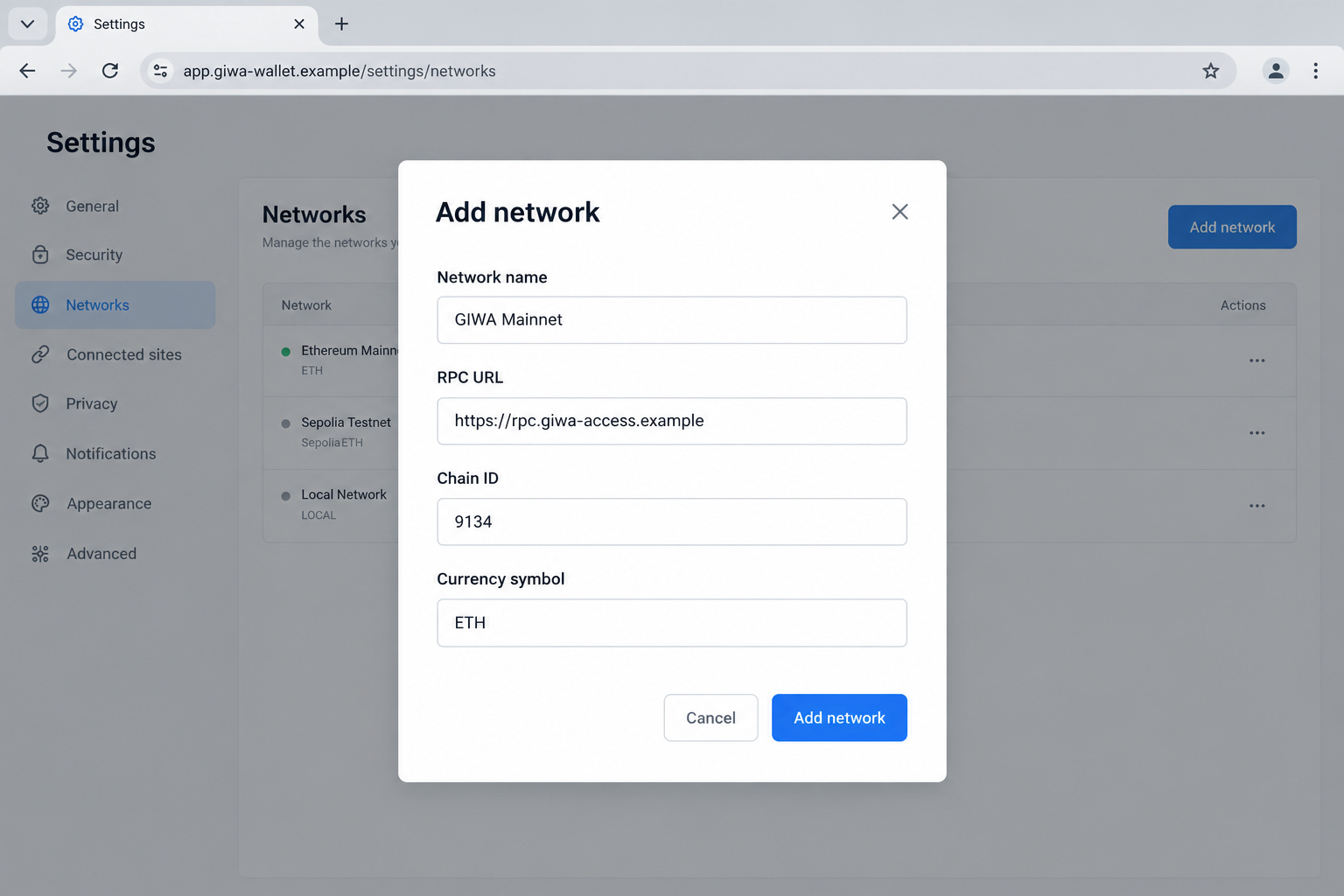
- The counterfeit network used chain ID 9134, a number associated with the anticipated mainnet.
- A matching network number did not authenticate the operator receiving deposits.
- Real ETH on Ethereum was at risk when users funded the fraudulent bridge.
- A familiar exchange interface or community recommendation did not replace confirmation from the underlying project.
- Recovery announcements needed separate verification after the theft.
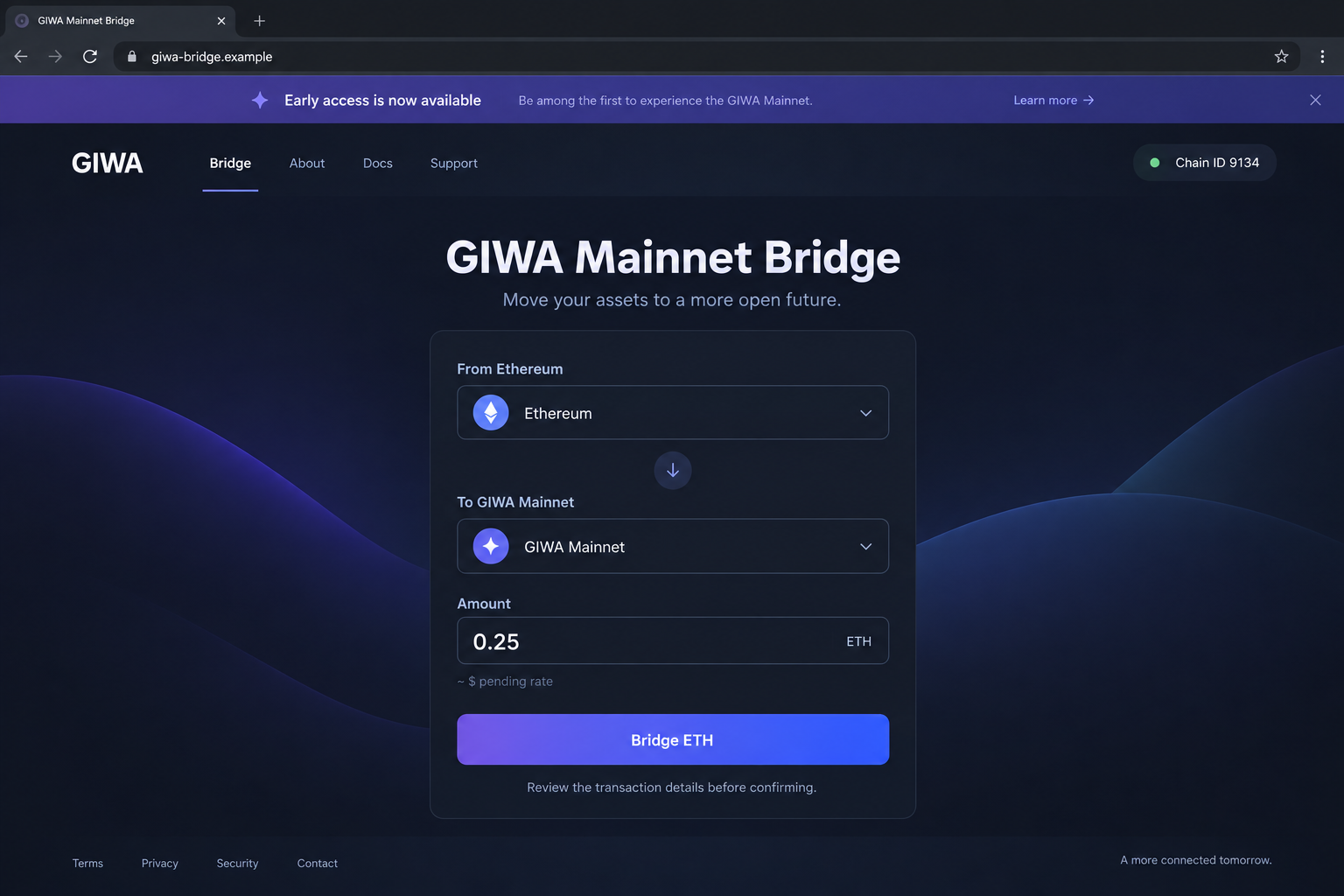
The illustrations in this article use fictional addresses. They show the bridge and network-setting decisions involved, rather than original screens from the operators.
Why a Matching Chain ID Can Be Misleading
Think of a chain ID as a network label used by software. It helps a wallet distinguish one transaction environment from another.
It is not a certificate issued after someone verifies the business, developers, or ownership of the network.
A person running blockchain software can configure a familiar number. Seeing the expected value answers a technical question, not the trust question that actually matters.
The same problem applies to a network name. A wallet displaying a recognizable project name may simply be repeating the configuration someone supplied.
An RPC endpoint is the connection through which a wallet talks to a network. An unfamiliar endpoint can supply information from infrastructure controlled by someone else.
This does not mean custom RPC endpoints are inherently fraudulent. Many legitimate networks use them. Their source and relationship to the project need verification.
For an ordinary user, the practical question is simple: did the project’s independently located documentation direct you to this exact network and bridge?
A community message saying the documentation is outdated is not an adequate substitute. Neither is a screenshot showing that another person successfully added the network.
How the Fake GIWA Bridge Scam Works
Step 1: Early-access excitement replaces an official launch announcement
The starting attraction is access before everyone else. A rumor about an available mainnet connection creates a reason to hurry.
In this case, the suggestion that an RPC had appeared early helped explain why normal official confirmation seemed to be missing.
That explanation reverses the usual safety test. Missing confirmation becomes part of the opportunity rather than a reason to pause.
Imagine receiving network settings alongside several enthusiastic replies. You might feel that checking the announcement will cost time while other traders get ahead.
That is an illustrative decision point, not a quotation from a documented victim. The risk is allowing social urgency to decide where valuable assets go.
Step 2: A working network makes the story appear credible
The deception was more substantial than a static page promising free coins. Users could interact with a network that appeared to behave like a blockchain.
Working software can still belong to an impostor. Successful requests and visible balances prove that a service responds, not that its claimed identity is true.
This is why testing whether a page loads is a weak security check. A scam operator benefits when the system works convincingly before money leaves.
Check the provenance of the settings before checking their appearance. Start with an official site you found independently, then follow its documentation.
Do not build your confidence from several accounts repeating the same unverified link. Repetition can amplify a mistake without adding any independent evidence.
Step 3: The wallet accepts plausible network settings
The user adds or selects the proposed network. Its name, currency symbol, and chain ID appear familiar enough to continue.
Approving a network addition is different from approving a transfer. That distinction helps explain both the danger and the appropriate response.
Adding a network alone does not automatically hand over all assets. The next transaction, requested permission, or disclosed secret determines the actual exposure.
However, the added network can place the user inside an environment whose displayed information they mistakenly trust.
A warning about an unknown network deserves attention even when the numbers match a community guide. The guide itself may be the unreliable component.
Step 4: A bridge request moves real ETH into the wrong custody
The bridge step is where an apparently technical setup becomes a financial decision. The user authorizes a transaction involving valuable assets on the source chain.
A legitimate bridge has a specific design for holding or transferring assets and representing them elsewhere. A counterfeit can imitate the interface without honoring that relationship.
Before approving, inspect the destination and the transaction’s purpose. Do not assume a button labeled Bridge is inherently safer than a button labeled Send.
A small test deposit can reveal obvious problems, but it cannot prove an operator will remain honest when larger deposits arrive.
Even a successful test withdrawal would establish only what happened to that transaction. It would not certify the ownership or future behavior of the service.
Step 5: Depositors discover that apparent access did not protect their funds
The on-chain drain showed the central problem: money sent into the counterfeit bridge could be removed by the operation controlling it.
A balance shown on another network cannot compel the source-chain custodian to return ETH. The interface and the recoverable asset are separate things.
Once a theft becomes public, the immediate instinct may be to search for an exit button, refund portal, or support account.
That is another point at which verification matters. An urgent recovery message can exploit the same trust gap that enabled the original deposit.
Do not send additional ETH to unlock a refund. A new payment to an unverified address increases exposure without proving that any recovery will occur.
What to Check Before Using Any New Crypto Bridge
Start with the project’s actual release status
Look for a clear announcement that the relevant network is available for real assets. A testnet launch and a production launch are different milestones.
Check dates carefully. An old roadmap, third-party listing, or planned chain ID cannot establish that a mainnet has opened today.
For this incident, the meaningful fact is the project’s status when deposits were solicited. Future launches would not retroactively legitimize the counterfeit bridge.
Verify the route, not just the destination’s branding
Reach the bridge through independently located official documentation. Compare the domain and contract information with that documentation before connecting a wallet.
Search advertisements, replies beneath announcements, and direct messages can introduce a different destination while preserving the same visual branding.
A padlock indicates an encrypted connection to a domain. It does not establish that the domain belongs to GIWA or another project it names.
Read what the wallet is actually asking you to approve
A connection request, network addition, message signature, token allowance, and transfer have different consequences. Treat them as separate decisions.
Do not approve an unexplained request simply because the previous step worked. Ask whether the requested action is necessary for the transaction you intended.
If you cannot explain where the asset will go, the amount at risk, and who controls the destination, pause rather than guessing.
Compensation Claims Need Their Own Verification
A transaction hash can establish that funds moved, but it cannot establish that the recipient will return them. Keep those two questions separate.
When comparing a reimbursement announcement with your own activity, identify the actual network, asset, deposit time, and address involved. Similar-looking records may concern different transactions.
Do not connect a wallet just to discover whether you are eligible. Read published information first and confirm the announcement through independently located project channels.
A request to pay an eligibility fee introduces a new financial decision. It is not automatically justified by an earlier loss or a genuine compensation discussion.
Save the version of any announcement you relied on. Eligibility rules can change, and a dated copy helps explain what was represented when you acted.
DYORSWAP announced partial compensation after the incident. The existence of that announcement should not be interpreted as a guarantee that every loss will be repaid.
Eligibility, amounts, and payment progress can change. Read the current official statement directly instead of relying on a copied message or an old article.
A genuine announcement can also be copied into a fake form. The copied wording does not authenticate the form collecting wallet information.
No recovery process needs the secret words that control your wallet. A public address and transaction hash are fundamentally different from a private key.
Someone offering guaranteed recovery for an advance payment should be treated with extreme caution. Screenshots of supposed recovered balances do not demonstrate access to your funds.
What to Do if You Have Fallen Victim to This Scam
- Stop using the suspect bridge.
Do not make another deposit to test whether withdrawals have resumed. Save the address and transaction details without continuing the financial interaction.
- Separate what you actually did.
Record whether you added a network, connected a wallet, transferred ETH, approved token spending, installed software, or entered a recovery phrase.
Those actions require different remedies. A browser connection alone does not justify assuming that every wallet secret has been stolen.
- Preserve the source-chain transaction evidence.
Keep transaction hashes, sending addresses, destination contracts, timestamps, amounts, and screenshots of the solicitation. Use a reputable explorer reached independently.
Write down the sequence while it is fresh. Distinguishing a deposit from a subsequent fee request can help investigators understand the loss.
- Review permissions through trusted wallet tools.
Disconnect unfamiliar sites and review any token allowances you granted. Revoking an allowance can limit future spending but cannot reverse an already completed transfer.
Native ETH deposits are not undone by removing an ERC-20 allowance. Match the action to the actual transaction rather than applying an unrelated fix.
- Treat disclosed wallet secrets as compromised.
If you entered a recovery phrase or private key, seek trusted wallet guidance from a clean device about securing remaining assets in a newly generated wallet.
A different password on the same exposed seed does not erase another person’s knowledge of that seed. Never send it to someone offering assistance.
- Check the device if software was involved.
If the page prompted an installation, stop sensitive activity on that device and run a reputable scanner such as Malwarebytes from its official source.
AdGuard may help reduce exposure to some malicious ads or sites. It cannot validate a blockchain, recover ETH, or make a suspicious bridge trustworthy.
- Report through established channels.
Contact relevant wallet or exchange support through independently verified websites and report the loss to your local cybercrime authority. Include transaction evidence, not secret keys.
If an exchange receives identified stolen funds, prompt reporting may matter. Do not assume reporting guarantees a freeze, recovery, or reimbursement.
- Check compensation without responding to strangers.
Follow official project communications directly. Reject private messages demanding a release fee, wallet synchronization, or seed verification before a payment can be received.
Frequently Asked Questions
Was the real GIWA project the scam?
The documented incident involved a counterfeit network using GIWA’s identity. That is different from evidence that the legitimate project’s own infrastructure stole deposits.
Why did chain ID 9134 look correct?
The number matched expectations associated with the proposed mainnet. A chain ID can be copied, so matching it does not authenticate a network operator.
Did adding the network automatically drain a wallet?
Adding network settings is not itself a blanket transfer authorization. Review subsequent transactions, permissions, downloads, and any secrets you entered to understand your exposure.
Can disconnecting the wallet recover bridged ETH?
Disconnecting can stop a site’s ongoing connection to the wallet interface. It does not reverse an Ethereum transaction that has already moved funds.
Does a small successful bridge test prove safety?
No. It only shows that a particular interaction worked at that moment. Ownership, custody controls, and official project authorization still need independent checks.
Should I pay a fee to receive compensation?
Do not send money to an unverified recovery address. Confirm any compensation process through official communications, and never disclose your recovery phrase to claim it.
The Bottom Line
The fake GIWA bridge scam shows why convincing network settings are not enough. The critical question is who controls the infrastructure receiving your real assets.
Verify launch announcements and bridge details independently. If funds have already moved, preserve the transactions, secure any additional exposure, and avoid paying for promises of recovery.

Join the discussion
0 commentsShare your experience or ask a question about this article.
Discussion
Start the conversation
Have a question or something useful to share? Add the first comment.