

The caller did not sound calm or polished. He sounded frantic, as if money was disappearing while he spoke and only an immediate response could stop it.
The Jazz Powell-Loggins scam shows what can happen when that brief interruption overlaps with a real account event: a $12,145 wire transfer emptied her investment account.
Overview
A frightening call arrived before the wire alert
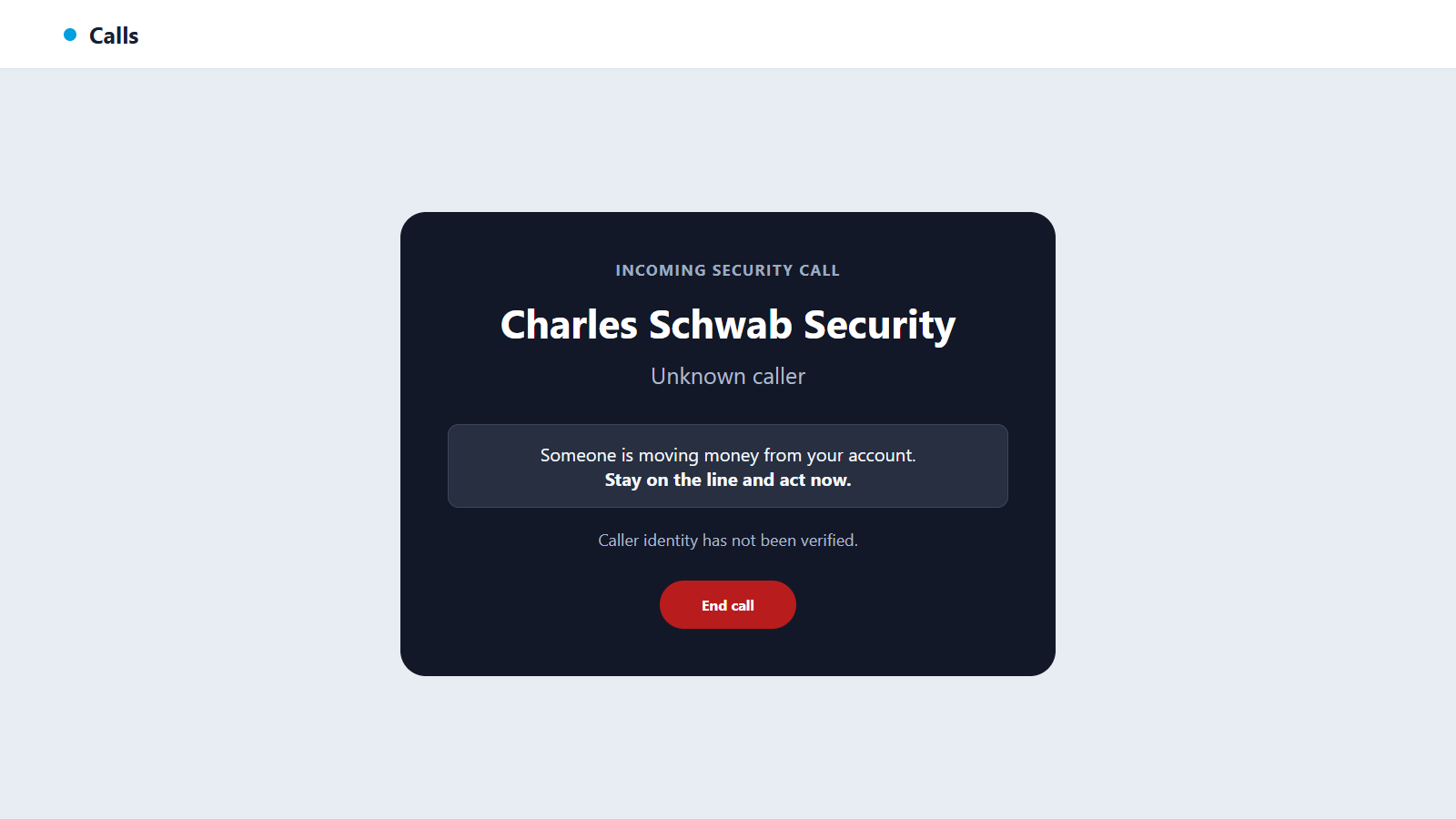
The Jazz Powell-Loggins scam became public after she described the incident to ABC7 News Bay Area. She said an unknown caller claimed to represent Charles Schwab and urgently warned that someone was trying to move money from her account.
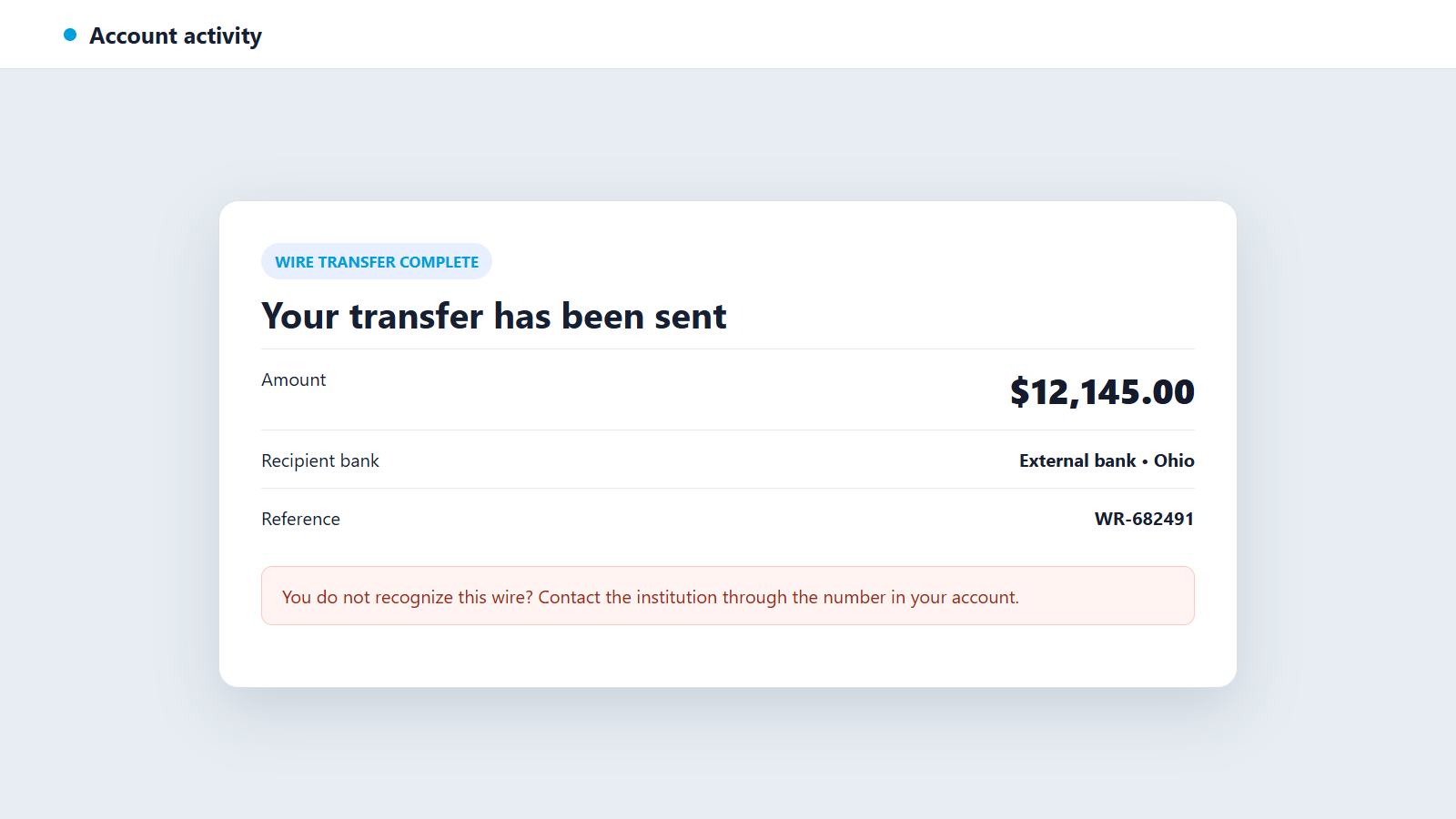
Powell-Loggins said the caller spoke loudly and created immediate panic. She ended the conversation after roughly two minutes to take a call from her doctor. A notification then showed that the entire $12,145 balance had been sent by wire.
The disputed detail is an account verification code
Charles Schwab declined her reimbursement request after an investigation. According to the letter described by ABC7, the company said she had provided a verification code to a third party, allowing the wire to be completed.
Powell-Loggins firmly disputed that conclusion and said she did not give the caller any information. That disagreement remains unresolved, so it would be irresponsible to state exactly how the account was accessed without the technical records.
The call may have been theft, distraction, or both
The public account leaves several possible paths. The criminal may already have possessed stolen credentials, may have triggered a real security code, or may have used the chaotic call to distract Powell-Loggins from genuine alerts while the wire was processed.
The confirmed and reported parts of the story include:
- An unexpected call from someone claiming to be a Schwab representative
- A deliberately frantic warning about money leaving the account
- A call lasting only about two minutes
- A $12,145 wire notification immediately afterward
- A reimbursement denial based on a disputed verification-code finding
- Reports made to local police and the FBI
- A planned arbitration challenge by Powell-Loggins
This is not evidence that every unexpected Schwab call uses the same technical method. It is a clear warning that a criminal may contact a victim during an account takeover, not merely before one.
What Is Known About the Jazz Powell-Loggins Case
The incident reportedly began on July 13, 2026. Powell-Loggins answered a telephone number she did not recognize, breaking her normal habit of ignoring unfamiliar callers.
The man on the line claimed that someone was attempting to remove money from her Schwab account. Rather than calmly identifying himself and giving her a safe way to verify the warning, he raised his voice and kept her focused on the emergency.
That behavior matters. A genuine security department wants a customer to understand what is happening. A scammer benefits when the target cannot pause, read an alert carefully, call a trusted number, or ask another person for help.
The $12,145 was reportedly wired to a bank in Ohio. Powell-Loggins said the money was intended to help her son complete college without debt, while her family was already facing medical and employment pressures.
ABC7 reported that Schwab expressed sympathy and described the incident as an example of growing impersonation fraud. The firm did not publicly disclose the underlying authentication logs or provide an on-camera explanation of the disputed code.
Those missing records are important. A complete technical review would examine sign-in history, trusted-device changes, telephone and email updates, code delivery, wire creation, wire approval, IP addresses, device fingerprints, and the timing of every alert.
Why a Frantic Fraud Call Can Be So Effective
A security warning normally causes a person to look for danger. This scam reverses that instinct by making the caller appear to be the person already fighting the danger.
Shouting can also overload attention. When someone is trying to hear an urgent explanation, the person may miss a real text, approve a prompt without reading it, or fail to notice that a caller is fishing for small pieces of information.
The caller may already know the victim’s name, financial institution, telephone number, or partial account details. Such information can come from earlier data breaches, phishing, malware, stolen mail, compromised email, or underground data markets.
Correct personal information is not proof of identity. It may simply show that the criminal prepared before calling.
Possible Account-Takeover Paths Behind the Call
No public evidence proves which path was used in this case. Still, understanding the common methods helps explain why an unexpected fraud call should be treated as part of an attack.
- Stolen password: A reused or phished password lets the attacker start a login before calling.
- Verification-code theft: The attacker triggers a legitimate code and invents a reason for the victim to repeat or approve it.
- Email compromise: Access to email can expose alerts, reset links, statements, and security messages.
- SIM-related attack: A telephone account takeover may redirect calls or texts used for authentication.
- Trusted-device abuse: A previously authorized session can sometimes bypass a fresh password challenge.
- Alert distraction: A noisy call keeps the victim occupied while a criminal completes actions with access obtained elsewhere.
These possibilities should guide an investigation, not replace one. The transaction records and authentication evidence determine what actually happened.
How the Jazz Powell-Loggins Scam Works
Step 1: The attacker gathers enough information to sound credible
A criminal may begin with a name, telephone number, email address, and the name of a financial institution. None of that requires access to the investment account itself.
Data can be assembled from breaches, public records, social profiles, previous scam responses, or malicious software. The caller uses these fragments to make an invented security story feel personal.
Step 2: An account action may begin before the telephone rings
The attacker can attempt a login, password reset, new device enrollment, wire creation, or contact-detail change. That action may generate a genuine alert or verification code.
The timing makes the later call persuasive. When a real message arrives during the conversation, the victim may assume it confirms the caller’s identity.
Step 3: The fake representative creates intense confusion
The caller claims money is moving now and speaks as though every second matters. Questions are answered with more urgency rather than a clear explanation.
This pressure discourages the safest response, which is to hang up and contact the institution through a trusted number or authenticated app.
Step 4: A legitimate security prompt becomes part of the deception
If a code or approval prompt appears, the caller may label it a cancellation code, fraud-blocking number, or identity check. In reality, it can authorize the attacker’s login or transaction.
A verification code is meant to prove that the person entering it controls the account’s trusted channel. Sharing it lets someone else borrow that proof.
Step 5: The wire is sent to an account controlled by the operation
Wire transfers move quickly and can be difficult to reverse. The receiving account may belong to a money mule who was recruited through a fake job or romance story.
Funds can be moved again soon after arrival, divided among other accounts, withdrawn, or converted into cryptocurrency.
Step 6: The call keeps the victim away from real warnings
The attacker may continue talking while transaction alerts arrive. Loud speech, repeated instructions, and new threats make it harder to study the screen or call the real fraud department.
Even without collecting a code, the conversation can serve as a distraction during the most important minutes.
Step 7: The criminal disconnects when the transfer is complete
Once the money moves, the caller may hang up, promise a follow-up, or claim the problem is resolved. The victim sees the real account status only after leaving the controlled conversation.
Calling the same number back rarely helps. It may be spoofed, disconnected, or routed to another member of the operation.
Step 8: The victim faces a difficult recovery dispute
The financial institution investigates whether the account was hacked or whether authentication was completed using the customer’s credentials or code. That distinction can affect reimbursement.
The victim should request the complete decision in writing, preserve all evidence, and use the formal complaint or arbitration process rather than accepting a vague telephone explanation.
Company, Address, and Fulfillment Checks
The caller’s claim is not a verified company identity
A person can say “Charles Schwab security” while calling from any number. Caller ID can also be spoofed to display a recognizable company or local area code.
Real identity is established only after the customer ends the call and reconnects through the official app, statement, or website.
The callback route matters more than the displayed number
Do not use a number supplied by the caller, a text that arrives during the call, or a sponsored search result. Use the contact details already printed on a statement or visible inside the authenticated account.
A genuine representative will not object to that independent check.
Support should provide a traceable case record
Ask for a written case number, the exact transaction status, and instructions available inside the real account. Do not give a caller a password, code, PIN, or remote access.
If money has moved, request escalation to the wire or fraud department immediately.
The receiving bank and wire trail require preservation
A wire has an amount, time, recipient, routing path, reference number, and approval history. Those details matter more than the criminal’s story.
Report the transfer promptly so the sending institution can attempt a recall and notify the receiving bank before the funds move again.
How to Handle an Unexpected Schwab Security Call
End the conversation, even if the caller knows private details. Open the financial institution’s app yourself and inspect alerts, messages, contact information, trusted devices, and recent transactions.
If an unfamiliar wire is pending, contact the real institution immediately and state clearly that the transfer is unauthorized. Ask whether it can be stopped, recalled, or flagged at the receiving bank.
Never read a verification code to an incoming caller. Do not approve a sign-in prompt you did not initiate, even when the person on the telephone predicts that it will appear.
Charles Schwab’s own wire-safety guidance warns that wires move quickly and can be difficult to recover. A request to act instantly is a reason to slow down, not proof that the caller is legitimate.
What to Do if You Have Fallen Victim to This Scam
- Call the real fraud department immediately. Use the number inside the authenticated app or on an existing statement. Report the wire as unauthorized and ask for an urgent recall.
- Ask the sending institution to contact the receiving bank. Provide the wire reference, exact amount, time, recipient, and destination. Speed can determine whether funds are frozen before another transfer.
- Secure the investment account. Change the password from a trusted device, remove unfamiliar trusted devices, review beneficiaries, and reset security questions or PINs.
- Protect the linked email and telephone accounts. Replace reused passwords, inspect forwarding rules, verify recovery details, and ask the mobile carrier whether a SIM or account change occurred.
- Preserve the entire timeline. Save call logs, voicemails, texts, code messages, screenshots, wire confirmations, emails, and notes describing what the caller said.
- Request the investigation findings in writing. Ask which authentication event supported the transaction, when it occurred, where it originated, and what appeal options remain.
- File official reports. Contact local police, the FBI through its official tip portal when appropriate, and the FTC fraud-reporting portal. Keep every report number.
- Consider a formal financial complaint. If the response is incomplete, ask the appropriate regulator, consumer attorney, or arbitration professional about the available dispute process.
- Check the device for unwanted access. If you installed software, opened a file, or allowed screen sharing, disconnect and run a complete Malwarebytes scan.
- Block malicious pages and ads. AdGuard can reduce exposure to known phishing destinations and deceptive ads, although it cannot reverse a completed wire.
- Watch for recovery scammers. Someone who knows the amount or institution may promise guaranteed recovery for another fee. Do not send money or disclose a new code.
Frequently Asked Questions
Did Jazz Powell-Loggins give the caller a verification code?
She says she did not provide the caller with information. Schwab’s reported denial letter says a code was provided to a third party. The public reporting does not resolve that disagreement.
How could money move during a two-minute call?
The attacker may have started the takeover earlier and used the call for a final code or distraction. Only the account logs can establish the exact path.
Can caller ID prove that Schwab is calling?
No. Displayed names and numbers can be spoofed. End the call and contact the institution through a number you already trust.
Will a bank always refund an impersonation-scam wire?
No. Outcomes depend on the facts, authentication evidence, applicable rules, and whether the institution considers the transfer unauthorized or customer-authorized.
What should I do with an unexpected security code?
Do not share or approve it. Open the real account independently, change credentials if needed, and tell the institution that someone may be attempting access.
Is it too late to report a completed wire?
No. Recovery becomes harder with time, but the institution can still attempt a recall, alert the receiving bank, preserve records, and support a law-enforcement report.
The Bottom Line
The Jazz Powell-Loggins scam shows how an account takeover can unfold while a victim is occupied by the person pretending to help. Urgency and accurate personal details do not authenticate a financial caller.
Hang up, inspect the account independently, and treat every unexpected verification prompt as a possible attack. If a wire appears, start the recall and evidence process immediately.

Join the discussion
0 commentsShare your experience or ask a question about this article.
Discussion
Start the conversation
Have a question or something useful to share? Add the first comment.