

You have probably seen the clip already. Bloating. Tired for no good reason. A little fog after lunch. Then a calm voice says the problem is not food. Something is hiding in your gut. Two droppers a day, and it leaves.
That is why people land on the Alora shop at midnight. The bottle on the page is Black Walnut Wormwood Parasite Cleanse. If your stomach has been bad for a while, talk to a doctor, not a checkout page.
This is the same pattern as the other cleanse campaigns. A scare about something living in you. A finished product page. A sale clock. A refund that sounds easy until you try to use it. Then, if Subscribe and Save is still ticked, a monthly charge that is harder to stop than the first one.
Overview
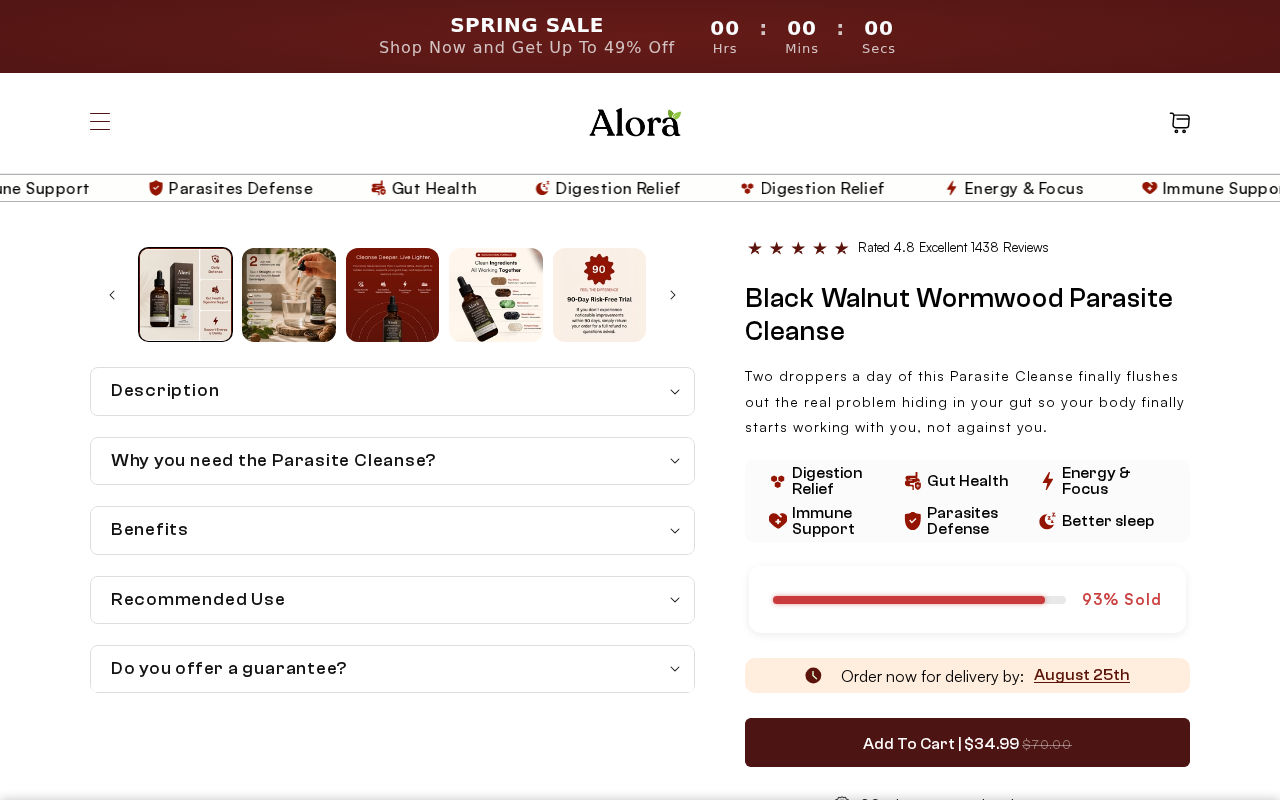
You see a scare ad about bloating and something living in your gut. The shop then shows one bottle at $34.99, with $70.00 crossed out, and a two-hour sale clock that is built to start over. Subscribe and Save is already ticked at $29.74. The 4.8 score and 1,438 reviews are printed in the theme. The 90-day trial picture is not the refund. The refund is 30 days, unused, to a Gmail inbox.
That is the whole close. There is no second product, no live review wall, and no clinic behind the dropper. If you came from a clip, you are already on the only page they need.
The scare, then the bottle
The pitch starts before the shop. A short video, a gut-reset post, or a search for signs you have parasites tells you the problem is not food. Something is hiding in you. Doctors miss it. Two droppers a day and it leaves.
By the time tryalora.co loads, the diagnosis is already done. The bottle is Black Walnut Wormwood Parasite Cleanse. The copy says it “finally flushes out the real problem hiding in your gut so your body finally starts working with you, not against you.” It never names what is supposedly in you. It never asks you to test. A bad week in your stomach is treated as enough.
Then the buy box does the rest. $34.99. $70.00 struck through. A spring sale banner of up to 49% off. SAVE 50% printed on the bottle itself. A bar that says 93% sold. A delivery date a week out. A two-hour countdown that starts over when it hits zero. Those numbers want you to feel late. None of them is a real deadline.
The $70.00 is just a crossed-out number. A shop created in July can print any “was” it wants. There is no public history of people paying $70.00 for this bottle. Look at the button, not the number they struck through. Search for the same drops and you find a catalog, not a rare formula. One factory listing sells a 60ml bottle for $3 if you order a thousand. That does not prove Alora bought from that factory. It proves the liquid is not scarce.
The herbs themselves are old. Black walnut hull and wormwood, often with clove, have been sold as a parasite pair for decades. A lab dish is not a stool test. Bloating is common. Worms are not the default. Wormwood is not a casual tea. Used high or used long, it has a real toxicity conversation. Alora does not lead with that. It leads with flush.
If a stool test is positive, a clinician uses a named drug. They do not start with a $34.99 dropper from a July storefront. If you are still holding the card, the scare already did its job. The bottle is only there to collect it.
The reviews that never move
“Rated 4.8 Excellent 1438 Reviews” is text and stars in the theme. There is no live review list with dates and photos. Read More Reviews opens more of the same block. You cannot sort it. You cannot open a bad night. You cannot see when anyone wrote it.
The shop went live on July 6, 2026. A store that young does not grow 1,438 reviews in a few weeks unless the number is painted on. Real reviews have dates, photos, and people who would say the drops did nothing. This line has none of that. It is there so you do not leave and type the shop name into a search bar.
If you type Vello you can still land here and pay. If you type Alora it is the same cart. Some pictures still load from the older Vello shop, including review avatars on vellocleanse.com. On a phone, a leftover heading still says Vello is different from everything you have tried. The score stays 4.8 either way. The count stays 1,438. That is how you know the number is not counting anyone.
The subscribe box already ticked
The product has a real monthly plan. 15% off, which comes to $29.74. The subscribe option is ticked by default. No minimum. No maximum. It can run until you stop it.
You can still buy once if you untick it. People miss that, especially on a phone, where the toggle sits under the sale clock and the 93% sold bar. The first charge is the one you remember. The second one is the one that shows up after you already forgot the toggle.
Cancel from the Manage Subscription link in the footer, or from the order email. Then watch the next two statements, not just the first one. helptryalora@gmail.com is a free inbox, not a mailbox on their own domain. If you write on a Saturday, the footer already told you they answer Monday to Friday, 9AM to 5PM EST. A second $29.74 does not wait for Monday.
The 90-day picture vs the 30-day refund
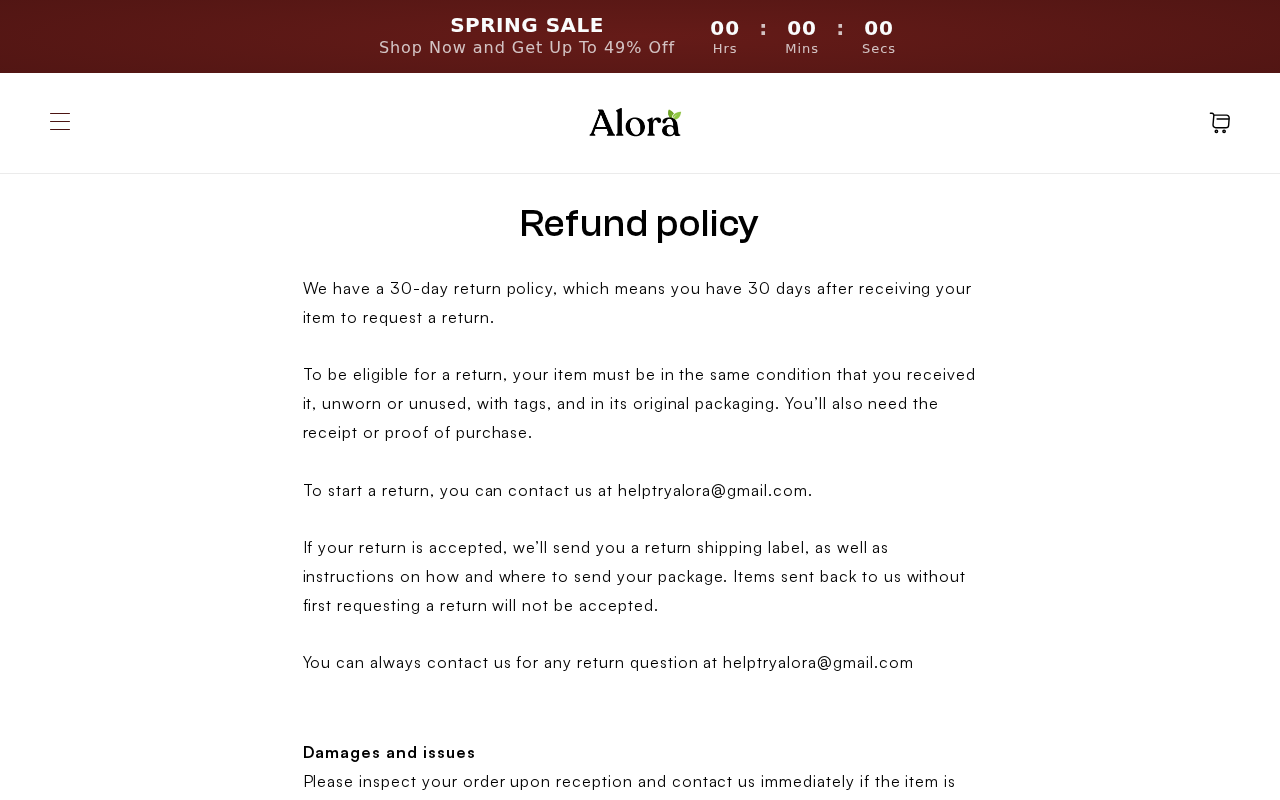
A later heading on the product page says 90-Day Risk-Free Trial. One of the copied slides is already a 90-day trial graphic. The guarantee drawer on the same page already says 30 days. The refund policy says 30 days after the box arrives, unused, tags on, original box. You email helptryalora@gmail.com first. They decide if the return is accepted.
Sale items cannot be returned. The banner is up to 49% off. The bottle says SAVE 50%. If they hold that line, the sale sticker also kills the return. The refund page also blocks “personal care goods (such as beauty products).” A dropper that goes in your mouth is, in practice, as opened as a product gets.
The privacy page names Alora LLC and gives no address. It says it was last updated on 31.03.2026 and talks about data from the past 12 months. The product went live on July 6, 2026. That March date was already in a template. Terms say “we” is Alora. There is no founder and no building. Do not mix this shop up with Alora Pharmaceuticals. That is a different company. This page is a July storefront with a Gmail inbox.
Open the refund page in a second tab while the 90-day badge is still on the screen. Keep both open. If those two tabs do not agree, the kind trial is the costume. Saturday does not count as a reply day. A chargeback deadline still does.
How The Scam Works
Nobody is stealing a password here. The page scares you about parasites, takes the card, and if Subscribe and Save is still ticked, it can keep billing you.
1. The ad finds you first
Most people never type the shop name. They see a short video, a gut-reset post, or a search for signs you have parasites. By the time the page loads, the diagnosis is already done: a hidden problem, a simple fix, two droppers.
In the first five seconds you are not looking at a bottle. You are looking at a secret: something is living in you, and doctors miss it. Once that lands, $34.99 feels cheaper than booking a clinic.
Maybe you watched it twice. Maybe you forwarded it to someone who has been tired for months. The page is ready either way. It already knows what is wrong with you, and it has a bottle waiting under the stars. You can close the video. The cart is still there.
2. The one-page close
The ad does not send you into a catalog. It drops you on one product URL with the clock, the reviews line, and Add to Cart. That is the whole storefront for the sale. You are not meant to browse. You are meant to pay before you open a new tab.
On that page the voice changes. Suddenly the shop has 1,438 reviews and a 4.8 score. A stock bar and a delivery date sit next to a 90-day trial. The stack is there so you hit Add to Cart while the scare is still warm.
The rest of the theme can stay leftover because you were never meant to open it. Leftover theme labels still sit on the front door. That is a tell that someone cloned a cleanse shop and finished the checkout, not a story about a brand that ran out of time.
3. The 1,438 reviews stay on the page
“Rated 4.8 Excellent 1438 Reviews” is text and stars in the theme. There is no live review list with dates and photos. Read More Reviews opens more of the same block.
A shop that young does not grow 1,438 reviews in a few weeks unless the number is painted on. Real reviews have dates, photos, and bad nights. This line has none of that. It is there so you do not leave and type the shop name into a search bar.
4. The leftover brand on the bottle image
On a phone, the Alora image still talks like Vello. A leftover heading says Vello is different from everything you have tried. Some pictures still load from the older Vello shop, including review avatars on vellocleanse.com. Alora has its own files on a newer store. Someone copied the theme and did not clean the name.
That leftover handle is the tell. It is not a lecture about how the photo was made. It is proof the shop was cloned from an older cleanse page and rushed to the same $34.99 close. Type Vello and you can still land here and pay. Type Alora and it is the same cart.
5. The 90-day trial does not match the refund page
A later heading on the product page says 90-Day Risk-Free Trial. The guarantee drawer on the same page already says 30 days. The refund policy says 30 days after the box arrives, unused, tags on, original box. You email the Gmail first. They decide if the return is accepted.
Sale items cannot be returned. The banner is up to 49% off. The bottle says SAVE 50%. If they hold that line, the sale sticker also kills the return. The refund page also blocks “personal care goods (such as beauty products).” A dropper that goes in your mouth is, in practice, as opened as a product gets.
Open that refund page in a second tab while the 90-day badge is still on the screen. Keep both open. That is the moment the sale stops feeling kind. If you already paid, this is the night you sit with the order email and try to guess whether anyone is on the other side. The footer says they answer on weekdays. Saturday does not count.
6. Subscribe and Save is ticked by default
The product has a real monthly plan. 15% off, which comes to $29.74. The subscribe option is ticked by default. No minimum. No maximum. It can run until you stop it.
You can still buy once if you untick it. People miss that, especially on a phone, where the toggle sits under the sale clock. Cancel from the Manage Subscription link in the footer, or from the order email. Then watch the next two statements, not just the first one.
The first charge is the one you remember. The second one is the one that shows up after you already forgot the toggle.
7. You have seen this bottle before
The older Vello shop created the same bottle in June 2025 and published it in October 2025. The vellocleanse page is the same product, same $34.99, same two droppers.
Then there is Ellora Parasite Cleanse. Open that page and you will hear the same lines: two droppers, ten clinically-backed herbs, your body finally working with you, not against you. Those complaints, hidden subscriptions and refunds that stall, belong to Ellora. They show what this pitch looks like after months of billing people. Alora is the newer shop. Same pitch. Same one-page close.
8. The $70.00 is just a crossed-out number
A shop created in July can print any “was” it wants. There is no public history of people paying $70.00 for this bottle. Look at the button, not the number they crossed out.
Shipping is 1 to 3 business days to pack, then 7 to 12 business days on the road, and only to the United States, the United Kingdom, New Zealand, Canada, and Australia. That is a short list for a shop that talks like a clinic. They also sell shipping protection and say they are not liable if you skip it.
If you are still holding the card, open the refund page in a second tab. Keep it open while you look at the 90-day badge. Then look at the subscribe toggle. If those three things do not agree, put the card down.
What To Do If You Have Fallen Victim to This Scam
If the charge is already on the statement, do this in order. Do not wait for a kind email from Gmail.
- Save the evidence. Screenshot the $34.99 / $70.00 button, the 1,438 reviews line, the 90-day badge, the 93% sold bar, the cart (especially if Subscribe and Save is checked), the order email, and the refund page that says 30 days unused. Write down dates, amounts, and the merchant name as it actually printed.
- Read the statement today. Look for a second charge, or the words subscribe or monthly. If it is already recurring, call the bank. Ask them to block the merchant and dispute the charge.
- Cancel in writing. Use the Manage Subscription link in the shop footer if it still works, then email helptryalora@gmail.com once from the address on the order. Subject: cancel and refund, plus the order number. Ask for the money back on the original card. Save the sent mail.
- If they hide behind the 30-day unused rule, or the line that sale items cannot come back, send that reply to the bank with your screenshots of the 90-day badge.
- Stop the drops if you feel worse. Cramps are not proof you had parasites. If you are pregnant, nursing, or on other medicine, take the bottle to a clinician. Keep any medicine you were prescribed.
- If you truly worry about parasites, get a stool test. A positive test gets a named drug. A negative test means you can stop buying these pages.
- File a report if the subscribe box was easy to miss. In the US, use the FTC fraud report form. Watch the card for two or three months. Ignore anyone who messages you offering to recover the money.
- Cut the ads. Install Malwarebytes if the ad pushed a player or a codec. Use AdGuard so the next clip has a harder time finding you. Neither tool refunds the bottle.
If someone dropped the ad in a family chat, send them this page instead of the sales page. These pitches move through worried texts. That is part of how they travel.
The Bottom Line
Alora is a July 2026 shop selling a Vello-named dropper through one product page. The reviews are a printed line. The 90-day badge turns into a 30-day unused return to a Gmail address. Subscribe and Save is ticked by default at $29.74.
If you are still holding the card, you do not need a spring sale whose clock starts over every two hours. If the charge already landed, cancel in writing and call the bank. helptryalora@gmail.com is slower than a chargeback deadline.
The shop can change the badge overnight. The bank cannot see a 90-day promise you never saved. Take the screenshots first, then write, then call.








